

P0299 on 2015-2022 Ford Expedition 3.5L EcoBoost: Underboost Causes and Fixes
Code P0299 on a 2015-2022 Expedition most often means there is a boost leak from a torn turbocharger bypass valve (blow-off valve) diaphragm or a loose charge pipe. On 2021+ models, a faulty wastegate actuator is also a primary suspect per a Ford TSB. A replacement bypass valve (OEM Part No. AA5Z-9U465-A) costs around $60 and is a very common DIY fix.
- P0299 on the 3.5L EcoBoost indicates the engine isn't receiving the commanded amount of boost pressure.
- Before assuming an expensive turbo failure, always inspect for cheaper and more common issues first.
- The most likely culprit is a torn diaphragm in the turbocharger bypass valve (blow-off valve), which is an inexpensive part and relatively easy to replace.
- Thoroughly inspect all charge air piping for loose clamps or cracks, and consider a smoke test to find hidden leaks.
- If you have a 2021 or newer model and hear a rattling noise, suspect a faulty wastegate actuator as noted in Ford's TSB SSM 54392.
What's Unique About the 2015-2022 Ford Expedition

The 3.5L EcoBoost engine is a twin-turbocharged, direct-injection engine where boost pressure is critical for performance. Unlike naturally aspirated engines, it relies on a complex system of pipes, valves, and sensors to maintain boost. Common failure points specific to this platform include the electronic bypass valve (blow-off valve) diaphragm tearing and, on later models (2021+), issues with the electronic wastegate actuators, which are documented in a Ford Technical Service Bulletin (TSB). Warped or cracked exhaust manifolds are another known issue, particularly on the first-generation (pre-2017) 3.5L EcoBoost, that can cause exhaust leaks, preventing the turbos from spooling up correctly.
Generation note: This range covers the end of the third generation (2015-2017) and the start of the fourth generation (2018-2022). The 3.5L EcoBoost engine was updated for the 2017 model year, creating a 'Gen 2' version with a new block design, dual fuel injection (port and direct), larger turbos with electronic wastegates, and a dual-chain timing system. A TSB for faulty wastegate actuators specifically applies to 2021-2025 models.
Symptoms You May Notice
- Significant loss of engine power and sluggish acceleration.
- Check Engine Light is on.
- Vehicle enters 'limp mode', limiting turbo boost.
- Hissing or whistling sounds from the engine bay, especially under acceleration.
- Reduced fuel economy.
- Rattling noise from the turbo area (especially on 2021+ models, pointing to wastegate issues).
- Blue or gray smoke from the exhaust if turbo seals have failed.
- A loud 'bang' or 'pop' if a charge hose blows off completely.
- Replacing the turbochargers immediately without first checking for simpler, cheaper causes like a torn bypass valve diaphragm or a loose hose clamp.
- Replacing the boost pressure sensor without first performing a smoke test to rule out physical leaks.
Most Likely Causes

- Failed Turbocharger Bypass Valve (Blow-Off Valve) 🔴 High Probability → Shop Turbocharger The rubber diaphragm inside the valve is known to tear or the plunger shaft can stick due to rust, creating an internal boost leak that won't be found with a smoke test. This is a very common failure point on EcoBoost engines.
How to confirm: Remove the valve, which is mounted on the intercooler, and inspect the orange rubber diaphragm for any rips or holes. A video guide shows this process clearly. The valve should be normally closed; if the plunger is stuck open, it has failed.
Typical fix: Replace the bypass valve assembly. This is a straightforward repair for DIYers, often taking less than an hour.
Est. part cost: $50-$80 - Boost Leaks (Charge Air System) 🟡 Medium Probability The charge air system uses numerous plastic pipes and rubber couplers that can crack, or their clamps can loosen over time, allowing pressurized air to escape. A common failure is a hose coming loose or a crack in the intercooler itself.
How to confirm: Visually inspect all hoses and clamps from the turbos to the intercooler and up to the throttle body. Look for oil residue around connections, which indicates a leak. A smoke test is the most effective method to find leaks that are not visible.
Typical fix: Tighten any loose clamps or replace the cracked hose, pipe, or damaged intercooler.
Est. part cost: $20-$400 - Faulty Turbocharger Wastegate Actuator 🟡 Medium Probability → Shop Turbocharger For 2021-2022 models, Ford issued TSB SSM 54392 (later superseded by TSB 23-2255 and 24-2264) for P0299 accompanied by a rattle, pointing to a faulty wastegate actuator or linkage. The linkage can develop excessive play or the actuator can fail, preventing the wastegate from closing fully.
How to confirm: With the engine off, check the wastegate actuator rods for excessive play or disconnection. A professional may need to use a scan tool like FORScan or IDS to command the wastegates to check for proper movement.
Typical fix: Replacement of the faulty wastegate actuator or the entire turbocharger assembly if the actuator is integral. Ford offers an actuator kit to avoid replacing the whole turbo.
Est. part cost: $100-$2000 - Cracked Exhaust Manifold(s) ⚪ Low Probability → Shop Exhaust Manifold First-generation 3.5L EcoBoost engines (pre-2018) are known for exhaust manifolds warping from heat, which can break the mounting studs and cause a leak. This prevents the turbo from getting enough exhaust gas pressure to spool up.
How to confirm: Listen for a ticking or puffing noise, especially on a cold start. Visual inspection may reveal cracks or black soot trails near the cylinder head mating surface. A user on a Reddit forum reported this symptom on their 2017 Expedition at 139,000 miles.
Typical fix: Replace the cracked exhaust manifold and any broken studs. This is a labor-intensive job.
Est. part cost: $200-$500
Rare But Worth Checking
- Complete Turbocharger Failure: → Shop Turbocharger While less common than leaks, internal failure due to oil starvation (clogged oil feed lines) or age can cause this code. This is often accompanied by a loud whining or grinding noise and possibly blue smoke from the exhaust, and may be preceded by a squealing noise under acceleration.
- Faulty Boost Pressure Sensor (MAP/TIP): A sensor that is providing incorrect readings to the PCM can falsely trigger a P0299 code. These can sometimes be cleaned if contaminated with oil, but often require replacement. One owner on a forum reported a dealer fixed their P0299 by replacing the throttle body after a MAP sensor replacement didn't work.
- Deformed Upper Radiator Air Deflector: → Shop Radiator On 2021+ models, TSBs 22-2198 and 24-2264 mention that a deformed upper air deflector near the radiator can restrict airflow to the right-side turbo intake, causing P0299. The updated part is ML3Z-8310-D.
- Clogged Catalytic Converters: → Shop Catalytic Converter A restricted exhaust, such as from a clogged or failing catalytic converter, can create excessive backpressure, preventing the turbos from spooling up effectively. One F-150 owner with a P0299 code had their dealer diagnose a bad bank 2 catalytic converter.
Diagnosis Steps

- Check for other stored DTCs that could provide more clues.
- Perform a thorough visual inspection of the entire air intake system, from the air filter to the throttle body. Look for loose clamps (especially on the intercooler boots), disconnected hoses, and cracked plastic components.
- Remove and inspect the turbocharger bypass valve (blow-off valve) on the intercooler. Check its orange diaphragm for tears, a very common failure.
- If no visual leaks are found, perform a smoke test on the charge air cooler system to pinpoint any hidden leaks.
- For 2021+ models, listen for a rattle and inspect the turbocharger wastegate actuator rods. Check for looseness, binding, or disconnection from the wastegate arm, per TSB 23-2255.
- Listen for exhaust leaks near the manifolds, especially on a cold start. A ticking or puffing sound is a key indicator of a cracked manifold or broken stud.
- Inspect the turbochargers for turbine shaft play (in-and-out movement is bad), fin damage, or signs of oil leaks, which would indicate internal failure.
Parts You'll Likely Need
- Turbocharger Bypass Valve (Blow-Off Valve)
(OEM #AA5Z-9U465-A)— The internal orange rubber diaphragm is a very common failure point that causes an internal boost leak, directly leading to code P0299. It is a cheap and easy fix.
Trusted brands: Motorcraft, Bosch
OEM price range: $57-$80
Aftermarket price range: $25-$60 - Turbocharger Assembly
(OEM #ML3Z-6K682-B (Right Side, 2021+))— Required if the wastegate actuator has failed (and is integral to the turbo) or if the turbo has failed internally due to oil starvation or wear. The right-side turbo is a common failure point on some model years.
Trusted brands: Motorcraft, BorgWarner
OEM price range: $800-$1500
Aftermarket price range: $400-$900 - Exhaust Manifold — These are known to warp and crack on first-gen 3.5L EcoBoost engines, causing an exhaust leak that prevents the turbo from building sufficient pressure.
Trusted brands: Motorcraft, Dorman
OEM price range: $250-$400
Aftermarket price range: $150-$250
Related Codes That Often Appear With This One
- P0019 - Crankshaft Position - Camshaft Position Correlation Bank 2 Sensor B: A user reported getting P0299 and P0019 simultaneously while towing, which can point towards a stretched timing chain affecting both engine timing and the PCM's ability to control boost.
Technical Service Bulletins (TSBs) & Recalls

- TSB 23-2255 / SSM 54392: Some 2021-2025 F-150/Expedition/Navigator vehicles with a 3.5L EcoBoost engine may exhibit a rattle noise and/or a P0299 DTC. This may be due to a faulty turbocharger wastegate actuator.
Platform-Specific Known Issues
- TSB 23-2255 (superseding SSM 54392) applies to 2021-2025 models and identifies faulty turbocharger wastegate actuators, often causing a rattle, as a direct cause for P0299.
- The electronically controlled bypass valve (blow-off valve), part number AA5Z-9U465-A, has a high failure rate due to its internal diaphragm tearing.
- On 2021+ models, a deformed upper radiator air deflector can restrict intake airflow and trigger P0299, per TSB 24-2264.
Mechanic-Grade Diagnostic Values
- Wastegate Actuator Pressure Test (Gen 1, pre-2018) — expected: Using a hand pump, the wastegate arm should begin to move at 3-6 PSI and be fully open around 15-18 PSI. It should hold this pressure without bleeding off.. Failure: The actuator does not move, moves at the wrong pressure, or the pressure bleeds off, indicating a leaking diaphragm.
- Exhaust Backpressure — expected: Below 3 PSI (20.7 kPa) at idle and below 8 PSI (55.2 kPa) at wide-open throttle under load.. Failure: Readings higher than spec indicate a restriction, likely a clogged catalytic converter, preventing the turbo from spooling correctly.
- FORScan PID: TIP_PRS_DES (Desired Throttle Inlet Pressure) — expected: This value should closely match the actual Throttle Inlet Pressure (TIP_PRS) PID during acceleration.. Failure: If TIP_PRS is consistently 4 PSI or more below TIP_PRS_DES for several seconds, it confirms the underboost condition the PCM is detecting.
Scan Tool Commands That Help
- FORScan / Ford IDS: Wastegate Control Solenoid (WGS) Duty Cycle Command — For Gen 2 (2018+) engines with electronic wastegates, this bidirectional control allows a technician to command the wastegate open and closed to verify the actuator's range of motion and check for binding without physical disassembly.
- FORScan / Ford IDS: Live Data PID Monitoring (TIP_PRS vs. TIP_PRS_DES) — Graphing the desired boost pressure versus the actual boost pressure during a test drive is the primary way to confirm the P0299 fault is occurring and under what specific load/RPM conditions.
Wiring & Ground Locations
- C1672 (Wastegate Regulating Valve Solenoid Connector) — On the vacuum solenoid that controls the wastegates on Gen 1 (pre-2018) engines. The solenoid is typically mounted on the intake manifold.. The plastic nipples on these solenoids are known to become brittle and break, causing a vacuum leak that prevents the wastegates from closing properly, leading directly to an underboost condition.
- MAP Sensor Connector — The Manifold Absolute Pressure (MAP) sensor is located on the intake manifold.. This 4-terminal connector provides the PCM with a primary reading of boost pressure. Corrosion or a loose connection can cause incorrect readings, falsely triggering a P0299 code.
Real Owner Repair Stories
- Expedition Forum user (2017 Expedition with ~6,500 miles) — P0299 code
❌ Tried (didn't work) Dealer replaced the MAP sensor.
✅ What actually fixed it The dealer replaced the entire throttle body assembly, which resolved the P0299 code. - Expedition Forum user (2015 Expedition EL XLT with 80,000 miles) — P0299 code, sudden loss of boost from 13psi to 5psi while towing.
❌ Tried (didn't work) Initially clearing the code worked temporarily., Considered replacing wastegate actuator solenoid.
✅ What actually fixed it Replaced the turbocharger bypass valve (blow-off valve) after suspecting its internal rubber diaphragm had torn. This solved the problem. - Ford F150 Forum user (2013 F-150 3.5L EcoBoost) — P0299 code, bogging down and loss of turbo noise/power, especially when towing.
❌ Tried (didn't work) Dealer diagnosed and replaced bad catalytic converters, which improved power but did not fix the P0299 code under load.
✅ What actually fixed it The user's thread suggests the issue might be related to timing chain stretch, as another user with similar symptoms reported that a timing chain replacement was the ultimate fix for their underboost issue, not the turbos themselves. The original poster's issue remained unresolved in the thread, but highlights a common misdiagnosis path.
"I Checked Everything" — The Actual Cause
- A very common scenario for the 3.5L EcoBoost is a smoke test showing no leaks, but the P0299 code persists. The cause is often a torn diaphragm inside the turbocharger bypass valve (blow-off valve). This creates an internal leak where boost pressure is bled off before it reaches the engine, but since the air doesn't escape the sealed charge-air system, a smoke test will not detect it.
When the Usual Fixes Don't Work
- While a torn bypass valve diaphragm or a simple boost leak are the most common culprits, there are documented cases where the fix was more obscure. One 2017 Expedition owner had the code persist after a MAP sensor replacement, and the final solution was a new throttle body assembly. This highlights that if the common causes do not resolve the issue, problems with electronic components that measure or control airflow should be investigated.
OEM Part Supersession History
AA5Z-9U465-A→This part number appears to be the current and long-standing revision for the bypass valve.— N/A
Model Year Variations Within This Range
- 2015-2017 (Gen 1 3.5L EcoBoost): These engines use vacuum-actuated wastegates controlled by a solenoid. Diagnosis often involves testing vacuum lines and the wastegate actuator diaphragms with a pressure/vacuum pump. They are also more prone to timing chain stretch and warped exhaust manifolds.
- 2018-2022 (Gen 2 3.5L EcoBoost): These engines feature a redesigned block, dual (port and direct) fuel injection, and larger turbochargers with electronic stepper-motor wastegates. Diagnosis for wastegate issues requires a scan tool (like FORScan) to command the actuators and check for response, rather than a vacuum pump.
- 2021-2022: These model years are subject to specific TSBs (like 23-2255) pointing to faulty electronic wastegate actuators (causing a rattle) and deformed upper radiator air deflectors as primary causes for P0299.
Diagnostic Flowchart
Real Owner Stories
Aggregated from forums and TSBs cited above. Mileages and costs reflect what owners reported in those sources.
2016 Ford Expedition 3.5L EcoBoost — 75000 miles
Symptoms: Experienced P0299 and significant power loss while towing.
What fixed it: Replaced the blow-off valve (part # AA5Z-9U465-A). The old valve had a torn diaphragm. Replacing it completely resolved the power loss.
Source hint: Ford Expedition Forum - 'P0299 - Low Boost Pressure'
2016 Ford Expedition 3.5L EcoBoost — 84000 miles
Symptoms: Received the P0299 code intermittently while towing, but without a noticeable drop in power.
What fixed it: Not specified in the thread; owner highlighted that symptom severity can vary without immediate total power loss.
Source hint: Ford Expedition Forum - 'Another P0299 issue'
2016 Ford F-150 3.5L EcoBoost
Symptoms: Got the P0299 code and experienced zero boost immediately after having the passenger-side exhaust manifold replaced.
What fixed it: Suspected an issue with the reinstallation of the turbo components during the manifold repair.
Source hint: F150Forum.com - 'ecoboost p0299 DTC'
Related OBD-II Codes
Frequently Asked Questions
Does TSB 23-2255 apply to my 2015 Ford Expedition?
What is the most common part failure causing P0299 on the 3.5L EcoBoost?
I have a 2021 Expedition and hear a rattling noise from the turbo area along with the P0299 code. What does this mean?
Can a cracked exhaust manifold cause a P0299 code on my older Expedition?
Why did my Expedition throw a P0299 code and lose power while towing?
Can a deformed air deflector cause this code on newer models?
Used OEM Parts in Stock
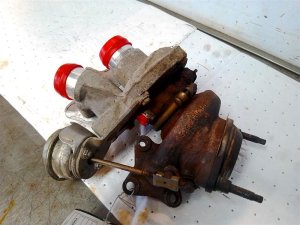
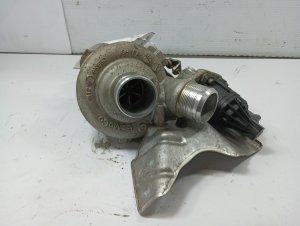
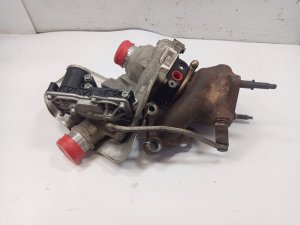
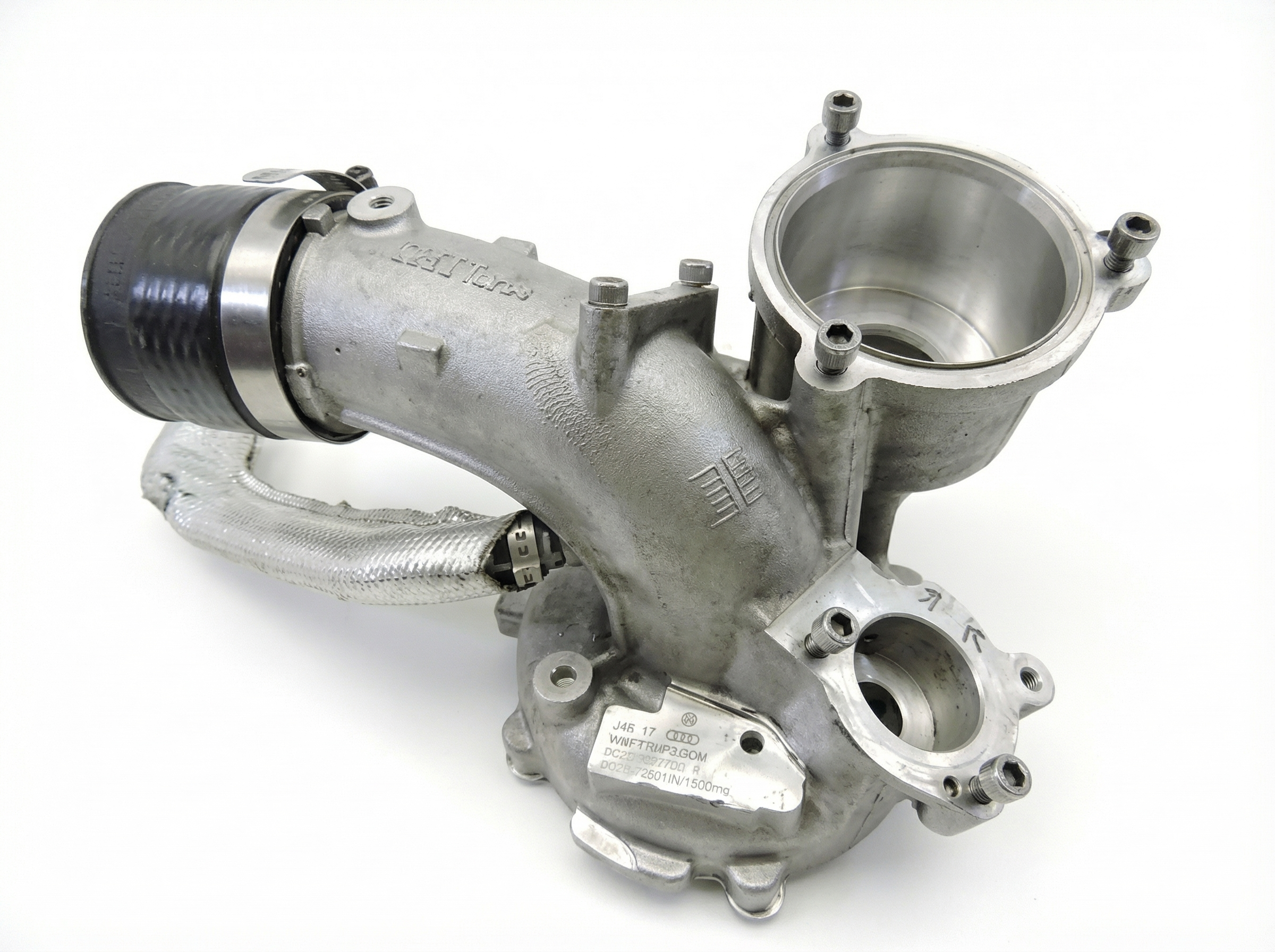
New Aftermarket Parts Available


The information in this article is provided for general reference and educational purposes only. Vehicle specifications, procedures, and part compatibility can vary by production date, trim level, and region. Always consult your vehicle's factory service manual and verify part numbers before purchasing or performing repairs. Safety-critical components such as airbags, seat belts, and braking systems should be installed by a qualified professional.
- Ford Expedition:
- 🧭 Diagnostic Flowchart
- 🛍️ Shop This Part
- What's Unique About the 2015-2022 Ford Expedition
- Symptoms You May Notice
- Most Likely Causes
- Rare But Worth Checking
- Diagnosis Steps
- Parts You'll Likely Need
- Related Codes That Often Appear With This One
- Technical Service Bulletins (TSBs) & Recalls
- Platform-Specific Known Issues
- Mechanic-Grade Diagnostic Values
- Scan Tool Commands That Help
- Wiring & Ground Locations
- Real Owner Repair Stories
- "I Checked Everything" — The Actual Cause
- When the Usual Fixes Don't Work
- OEM Part Supersession History
- Model Year Variations Within This Range
- Real Owner Stories
- 2016 Ford Expedition 3.5L EcoBoost — 75000 miles
- 2016 Ford Expedition 3.5L EcoBoost — 84000 miles
- 2016 Ford F-150 3.5L EcoBoost
- Related OBD-II Codes
- Frequently Asked Questions
- 🎟️ Get 5% Off