

P0299 on 2016-2019 Ford Explorer 2.3L EcoBoost: Turbo Underboost Causes and Fixes
On a 2016-2019 Explorer with the 2.3L EcoBoost, code P0299 is most often caused by a disconnected or faulty turbocharger wastegate actuator. Before any other repairs, visually inspect the actuator rod and its retaining clip, as this is a common failure point addressed by Ford in TSB 16-0122 and other related service messages. Other potential causes include boost leaks from charge pipes and a failed bypass valve.
- Before buying any parts, visually inspect the turbocharger wastegate actuator rod to see if it has disconnected from the wastegate arm. This is a free check and the most common cause of P0299 on this vehicle.
- Do not immediately assume the entire turbocharger needs to be replaced. The issue is far more likely to be a smaller, less expensive component like an actuator, a hose, or a valve.
- If you can't see an obvious issue with the wastegate actuator, the next step should be a smoke test to check for boost leaks in the hoses and intercooler.
- Ford offers a specific service kit (part #LB5Z-9G488-B) to replace the wastegate actuator without needing to buy a whole new turbo assembly.
What's Unique About the 2016-2019 Ford Explorer
The 2.3L EcoBoost engine in the fifth-generation Explorer is well-known for a specific mechanical failure that causes P0299. Ford issued Technical Service Bulletin (TSB) 16-0122 for the 2016 model year, noting that the turbocharger wastegate actuator rod can disconnect from the wastegate itself, often due to a missing or failed e-clip. This issue is so prevalent across Ford's 2.3L EcoBoost lineup that multiple Special Service Messages (SSMs) like 49427 and 50171 also address it. This makes a visual inspection of the wastegate linkage the mandatory first step, potentially avoiding an expensive and unnecessary turbocharger replacement.
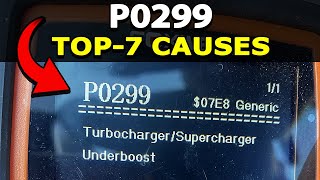
🎬 Watch: A breakdown of the top 7 causes for P0299 codes.Symptoms You May Notice
- Significant loss of engine power and sluggish acceleration.
- Check Engine Light (Malfunction Indicator Lamp) is on.
- Wrench icon may also illuminate on the dashboard.
- Vehicle enters 'limp mode' with reduced performance.
- Audible hissing or whistling sounds from the engine bay due to boost leaks.
- Unusual noises from the turbocharger area.
- Sporadic or fluctuating RPMs, especially when going up hills.
- Replacing the entire turbocharger assembly without first inspecting the wastegate actuator linkage and e-clip.
- Replacing boost pressure sensors (MAP/TIP) without confirming a leak in the system first.
- Performing a PCM software update (per TSB 20-2246 for 2020 models) without first checking for mechanical faults like a disconnected actuator or restricted intake. 🎬 Watch: How to diagnose underboost issues on newer Explorer models.
Most Likely Causes
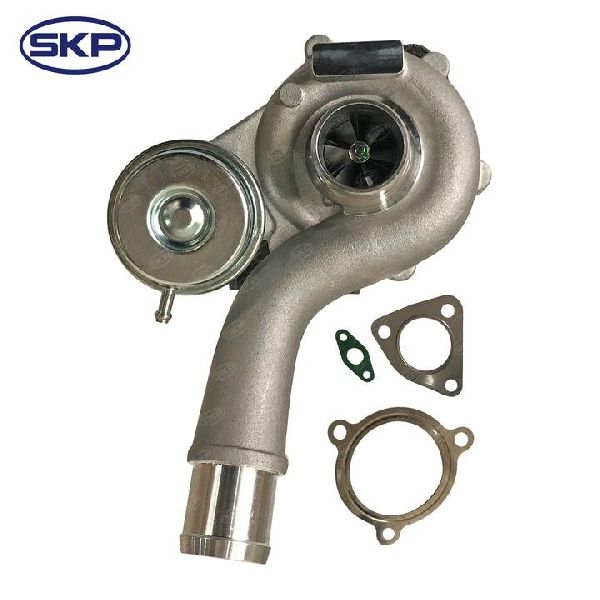
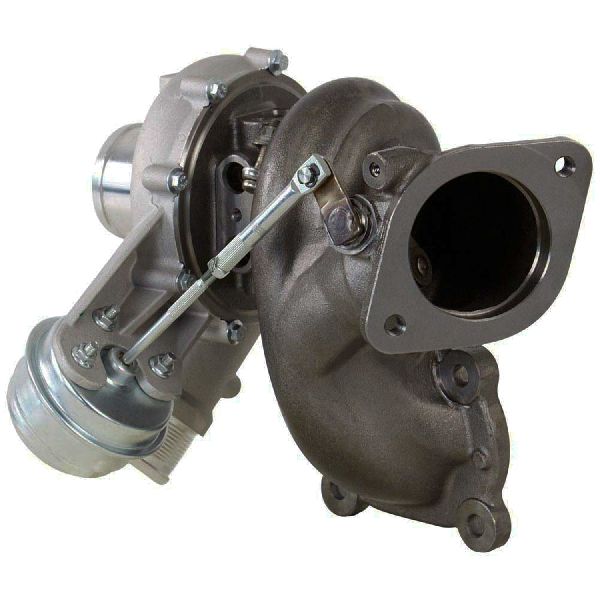
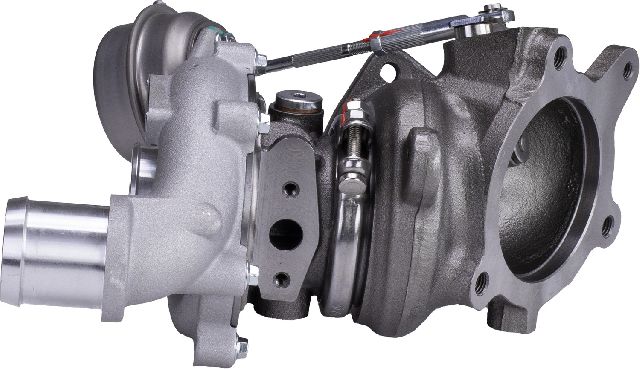
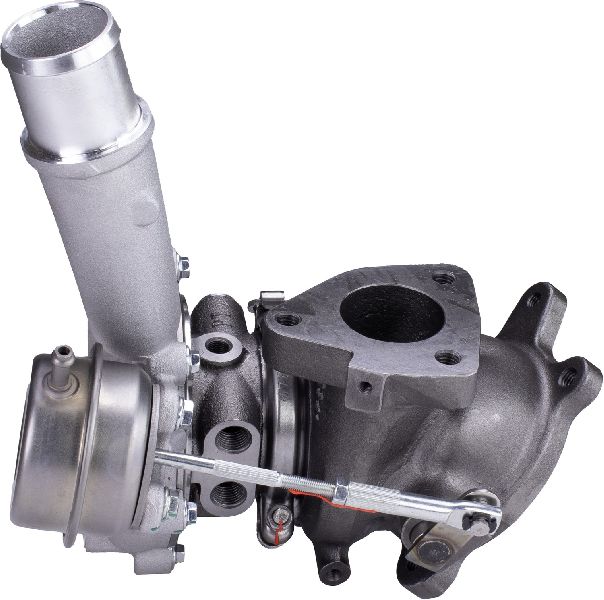
- Disconnected or Faulty Turbocharger Wastegate Actuator 🔴 High Probability → Shop Turbocharger Ford TSB 16-0122 specifically calls out the wastegate actuator rod disconnecting from the wastegate lever as a cause for P0299 on the 2016 Explorer 2.3L. This is often due to a failed or missing retaining e-clip. Subsequent SSMs (49427, 50171) confirm this is a persistent issue on 2.3L EcoBoost engines in Explorers and other models. The actuator itself can also fail internally.
How to confirm: Visually inspect the turbocharger, which is located at the rear of the engine. Check if the actuator rod is disconnected from the wastegate arm and if the small retaining e-clip is present and secure. This may require raising the vehicle for better access.
Typical fix: If the rod is disconnected, reattach it and install a new retaining clip. If the actuator itself is faulty, it can be replaced without replacing the entire turbocharger. Ford offers a service kit (part number LB5Z-9G488-B) for this repair, which includes the actuator, rod, and clips.
Est. part cost: $5-$250 - Boost/Vacuum Leaks 🟡 Medium Probability The intake and charge air system consists of multiple plastic and rubber hoses, clamps, and an intercooler. Over time, these components can degrade, crack, or become loose, causing pressurized air to escape. A user on explorerstforum.com reported their P0299 was caused by a charge pipe to the intercooler that had come slightly apart.
How to confirm: Perform a smoke test on the intake and charge air system to identify any leaks from hoses, the intercooler, or connections. Visually inspect all piping for cracks or loose clamps. A user on Reddit suggested spraying soapy water on the intake system while the engine is running to look for bubbles.
Typical fix: Tighten loose clamps or replace the damaged hose or component. The plastic charge air cooler pipes are a common failure point.
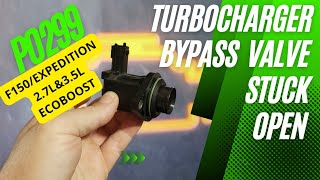
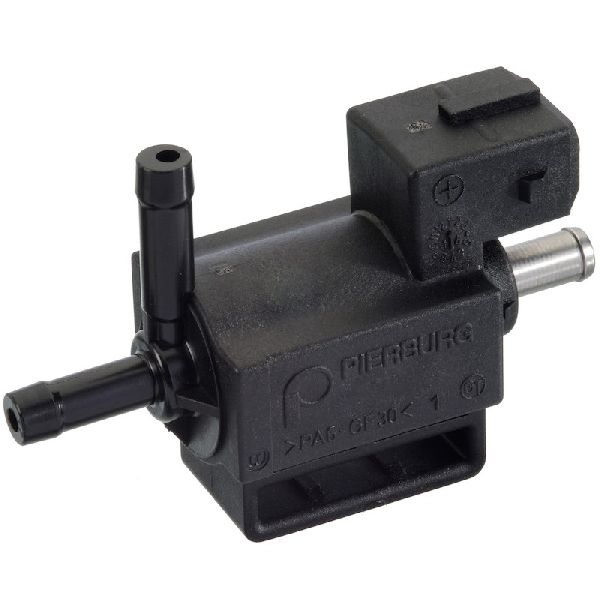
Est. part cost: $50-$300 - Faulty Turbocharger Bypass Valve 🟡 Medium Probability → Shop Turbocharger The bypass valve (also called a diverter valve or pressure relief valve) uses a rubber diaphragm that can tear or the valve can get stuck open due to internal corrosion, creating a boost leak. This is a common failure item on many EcoBoost engines. A Reddit user fixed their P0299 by replacing this valve, which had a hole in it.
How to confirm: Remove the valve and inspect the rubber diaphragm for tears or holes. The valve is typically mounted on the turbocharger housing or the intercooler piping with three small bolts. If the valve is stuck open, it will constantly recirculate boost, but this may not be found with a smoke test as it's an internal leak.
Typical fix: Replace the bypass valve. It is a relatively inexpensive and accessible part.
Est. part cost: $50-$100
Rare But Worth Checking
- Cracked Exhaust Manifold: → Shop Exhaust Manifold The exhaust manifold on the 2.3L EcoBoost is integrated with the turbocharger's turbine housing. High exhaust temperatures can cause the manifold to crack, leading to an exhaust leak before the turbine, which reduces the energy available to spin the turbo and creates an underboost condition.
- Restricted Air Intake: → Shop Engine Air Intake Resonator While more common on 2020+ models, a dislodged internal component in the air intake tube can restrict airflow to the turbo, causing an underboost code. In one documented case, a plastic finned insert inside the tube came loose and blocked the turbo inlet. In another case, a plastic bag was sucked into the airbox.
- Failing Turbocharger: → Shop Turbocharger While often misdiagnosed, it is possible for the turbocharger itself to fail due to worn bearings or damaged turbine/compressor wheels. This is less likely than the other listed causes. In a severe case on a 3.5L EcoBoost, internal turbo failure caused oil to leak into the exhaust, creating heavy white smoke.
Diagnosis Steps
- Scan the PCM for codes and review freeze-frame data to understand the conditions when the code was set.
- Visually inspect the turbocharger wastegate actuator rod and its retaining clip. This is the most common cause. Ensure the rod is securely connected to the wastegate arm. This is the specific instruction of TSB 16-0122.
- Inspect the air filter and the entire air intake tube leading to the turbocharger. Check for any restrictions, blockages, or dislodged internal components.
- Perform a smoke test on the entire intake system, from the air filter to the throttle body. Check all hoses, the intercooler, and all connection points for leaks.
- Remove and inspect the turbocharger bypass/diverter valve. Check its diaphragm for tears and ensure it is not stuck in the open position.
- If no leaks are found, use a scan tool to monitor desired vs. actual boost pressure during a test drive to confirm the underboost condition. The PCM may cut desired boost once it flags the fault.
- If all other components are confirmed to be working, inspect the turbocharger itself for shaft play or damage to the compressor/turbine wheels. Inspect the integrated exhaust manifold for cracks.
Parts You'll Likely Need
- Turbocharger Wastegate Actuator Service Kit
(OEM #LB5Z-9G488-B)— This is the most frequent cause of P0299 on this platform, as the actuator rod clip can fail or the actuator itself can become inoperative. This kit allows for replacement of the actuator without replacing the whole turbo.
Trusted brands: Motorcraft
OEM price range: $80-$150
Aftermarket price range: $50-$100 - Turbocharger Bypass Valve
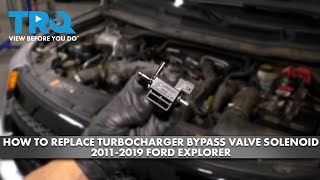
(OEM #CJ5G-9U465-BA)— The diaphragm in this valve is a known weak point 🎬 See this step-by-step walkthrough for replacing the bypass valve solenoid. on EcoBoost engines and can tear, or the valve can stick open, causing a boost leak.
Trusted brands: Motorcraft, Bosch
OEM price range: $70-$100
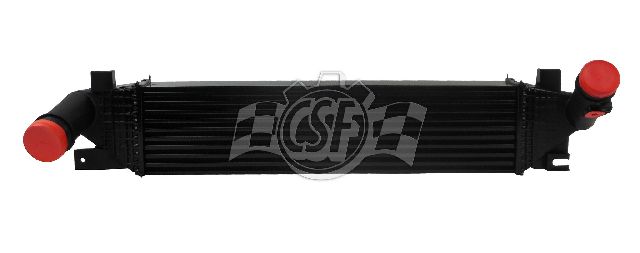
Aftermarket price range: $40-$80 - Charge Air Cooler Hose — Cracks or loose connections in the hoses leading to and from the intercooler are a common source of boost leaks that trigger P0299.
Trusted brands: Motorcraft
OEM price range: $80-$150
Aftermarket price range: $50-$100
Related Codes That Often Appear With This One
- P0171 — A vacuum leak large enough to cause P0299 can also allow unmetered air to enter the engine, leading to a lean fuel condition.
- P02AB, P25B3, P25B4 — These codes are related to the wastegate position and control circuits and are often set alongside P0299 when the wastegate actuator or its linkage is the root cause.
Technical Service Bulletins (TSBs) & Recalls
- TSB 16-0122: Addresses the turbocharger wastegate actuator rod disconnecting from the wastegate, causing P0299 on 2016 Explorer 2.3L models.
- SSM 49427 & SSM 50171: Special Service Messages that also cover a missing wastegate actuator e-clip or an inoperative actuator.
Platform-Specific Known Issues
- TSB 16-0122 was issued for 2016 Explorer models with the 2.3L engine specifically for the wastegate actuator rod disconnecting and causing a P0299 code.
- A user on Ranger5G.com with a 2.3L engine experienced P0299 and found a TSB indicating the wastegate actuator, rod, or e-clips needed replacement. The dealer confirmed the wastegate needed replacement, which was covered under warranty.
Mechanic-Grade Diagnostic Values
- Wastegate Control Solenoid Resistance — expected: 11-14 ohms. Failure: A reading significantly outside this range, or an open/short circuit, indicates a failed solenoid.
- MAP Sensor vs. BARO Sensor Voltage (Key On, Engine Off) — expected: Readings should be within 0.5 volts of each other.. Failure: A difference greater than 0.5 volts suggests a potential fault in the MAP sensor or its circuit.
- Exhaust Backpressure — expected: Below 3 psi at idle and below 8 psi at wide-open throttle under load.. Failure: Higher readings indicate a restriction in the exhaust system (e.g., clogged catalytic converter) that can prevent the turbo from spooling correctly.
Scan Tool Commands That Help
- Ford IDS (or equivalent): Turbocharger Test — This is a guided routine that commands the electronic wastegate actuator through its full range of motion while monitoring sensor feedback. It is used to confirm if the actuator is physically stuck, slow, or if related sensors are reading incorrectly after initial visual checks are complete.
- Ford IDS (or equivalent): Monitor PID: WGATE_PRES_F — This PID (Parameter ID) shows the status of the wastegate. It can be monitored during a test drive to see if the PCM's command to the wastegate matches the physical response and resulting boost pressure, helping to isolate a control-side issue from a mechanical one.
Real Owner Repair Stories
- YouTube video 'P0299 Underboost on a 2020 Ford Explorer' (2020 Ford Explorer, 2.3L EcoBoost, 14,000 miles) — Check engine light with P0299 code.
❌ Tried (didn't work) Checked for TSB related to missing wastegate clip (SSM 49427), but the clip was present., Performed a PCM software update per TSB 20-2246., Confirmed underboost condition by monitoring live data.
✅ What actually fixed it The plastic finned insert/diffuser inside the air tube leading directly into the turbocharger inlet had become dislodged and turned sideways, creating a major air restriction. Removing the obstruction and securing the tube resolved the code. - Ranger5G.com forum user (Ford Ranger with 2.3L EcoBoost) — Vehicle went into limp mode with check engine light on, codes P0299 and P2AB9 stored.
❌ Tried (didn't work) Owner immediately suspected the known TSB issue and took it to the dealer without trying other fixes.
✅ What actually fixed it The dealer service department confirmed the wastegate actuator rod had popped off the turbo. They reconnected the linkage, which resolved the codes and symptoms.
"I Checked Everything" — The Actual Cause
- A system can pass a smoke test (indicating no external leaks) but still have a P0299 code if the turbocharger bypass valve is stuck open internally due to corrosion or a torn diaphragm. This creates a boost leak that recirculates pressurized air back to the intake pre-turbo, which a smoke test will not identify.
- In some cases, a smoke test will show no leaks, but the cause is a completely detached wastegate actuator rod. Since the wastegate defaults to an open position, it prevents boost from building, but this is a mechanical failure, not a pressure leak in the charge piping.
OEM Part Supersession History
CJ5G-9U465-BA→CJ5Z-9U465-A— Part number consolidation and potential minor revision for the Turbocharger Bypass/Diverter Valve.
Heads up: Both parts are generally interchangeable for this application, but using the latest revision (CJ5Z-9U465-A) is recommended.K2GZ-9G488-B→LB5Z-9G488-B— Revision of the wastegate actuator service kit. The TSBs for this issue were updated to reflect the new part number.
Heads up: LB5Z-9G488-B is the current, correct service kit for this repair.
Model Year Variations Within This Range
- 2016: The 2016 model year was the first to feature the 2.3L EcoBoost and was specifically called out in TSB 16-0122 for the wastegate actuator rod issue. Later models are also affected, but the initial TSB was for 2016.
- 2016-2019: The 2016 model year was part of a mid-cycle refresh that introduced the 2.3L EcoBoost engine and the SYNC 3 infotainment system, replacing the previous 2.0L engine. While the engine is mechanically similar through 2019, minor running changes to parts and software calibrations may exist.
Diagnostic Flowchart
Other Known Issues on This Vehicle
Issues unrelated to this code that are worth knowing about as an owner of this generation:
- 2.3L EcoBoost Coolant Intrusion 🔴 High — A known issue, though less common on the Explorer than on the Focus RS or Mustang. Can occur at various mileages. Ford has issued TSBs like 23-2073 for other models. (Ref: TSB 23-2073 (for other models))
- Premature Wheel Bearing Failure 🟠 Medium — Fairly common, with owners reporting humming or grinding noises typically starting between 60,000 and 120,000 miles. It can affect both front and rear bearings.
- 6F35 Transmission Issues 🟠 Medium — Some owners and technicians report that the 6F35 transmission paired with the 2.3L engine can be a weak point, potentially leading to failure, though it is not as widespread as other Ford transmission problems.
- Engine Block Heater Failure 🟡 Low — Affects vehicles equipped with the optional engine block heater. The heater element can crack, leak coolant, and short circuit when plugged in. (Ref: Ford Recall 16S14)
Used vs. New Parts: Buying Guide for This Vehicle
When a used part is the smart pick: Used parts are a reasonable choice for static, non-wear components like charge air cooler pipes or the intercooler itself, provided they are from a low-mileage, non-wrecked donor vehicle. A complete used turbocharger assembly can be a cost-effective option if the failure is confirmed to be internal to the turbo (e.g., bearing failure) and not one of the common external components.
Donor-vehicle mileage cap: roughly under 60000 miles for the part to have meaningful remaining life.
What to inspect on the donor part:
- For a used turbo assembly, check for excessive shaft play (both in-and-out and side-to-side).
- Inspect turbine and compressor wheels for any signs of chipping, bending, or contact with the housing.
- Ensure the wastegate arm moves freely without binding.
- For charge pipes and intercoolers, inspect for any hairline cracks, especially near mounting points and welds.
OEM-only on this vehicle (don't cheap out):
- Turbocharger Wastegate Actuator: While aftermarket options exist, the OEM service kit (LB5Z-9G488-B) is designed to address the specific failure mode and is the most reliable fix.
Aftermarket brands forum-validated for this vehicle:
- Go Fast Bits (GFB): Offers an upgraded diverter/bypass valve (Model T9484) that replaces the factory plastic valve with a more durable metal unit, which can be a permanent solution for repeated bypass valve failures.
- Turbosmart / Forge Motorsport: Both offer upgraded, more robust wastegate actuators for performance applications, which can also serve as a durable replacement for a failed stock unit.
Brands owners have reported issues with on this vehicle:
- Unbranded, generic electronic actuators and bypass valves from online marketplaces should be avoided, as they often have high failure rates and may not be calibrated correctly for the vehicle's ECU.
Real Owner Stories
Aggregated from forums and TSBs cited above. Mileages and costs reflect what owners reported in those sources.
2016 Ford Explorer 2.3L EcoBoost
Symptoms: The wastegate actuator rod disconnected from the wastegate lever, causing an underboost condition and triggering the P0299 code.
What fixed it: Reattached the actuator rod and installed a new retaining e-clip as per TSB 16-0122.
Source hint: TSB 16-0122
2019 Ford Ranger 2.3L EcoBoost
Symptoms: Check engine light with codes P29AB and P0299, and the vehicle entered limp mode.
What fixed it: The dealer replaced the wastegate actuator using service kit LB5Z-9G488-B under warranty.
Source hint: Ranger5G.com thread titled 'Check engine P29AB P0299, Limp mode'
Ford Explorer 2.3L EcoBoost
Symptoms: Underboost code P0299 on a tuned vehicle.
What fixed it: Found that a charge pipe to the intercooler had come apart slightly; reattaching the pipe solved the problem.
Source hint: ExplorerSTForum.com thread titled 'DTC P0299'
2020 Ford Explorer
Symptoms: P0299 underboost code.
What fixed it: Replaced the Pressure Relief Valve (bypass valve) after finding a hole in the internal diaphragm.
Source hint: Reddit r/FordExplorer thread titled 'p0299_code'
Related OBD-II Codes
Frequently Asked Questions
Does TSB 16-0122 apply to my 2016 Ford Explorer 2.3L EcoBoost?
Is there a specific Ford part kit to fix the wastegate actuator issue on my Explorer?
What are SSM 49427 and SSM 50171 regarding my P0299 code?
Can a leak in the intercooler piping cause the P0299 underboost code?
I hear a whistling sound from the engine; is this related to the P0299 code?
Is the turbocharger bypass valve a known failure point on the 2.3L EcoBoost?
Helpful Videos

Used OEM Parts in Stock
New Aftermarket Parts Available

The information in this article is provided for general reference and educational purposes only. Vehicle specifications, procedures, and part compatibility can vary by production date, trim level, and region. Always consult your vehicle's factory service manual and verify part numbers before purchasing or performing repairs. Safety-critical components such as airbags, seat belts, and braking systems should be installed by a qualified professional.
- Ford Explorer:
- 🧭 Diagnostic Flowchart
- 🎬 Helpful Videos
- 🛍️ Shop This Part
- What's Unique About the 2016-2019 Ford Explorer
- Symptoms You May Notice
- Most Likely Causes
- Rare But Worth Checking
- Diagnosis Steps
- Parts You'll Likely Need
- Related Codes That Often Appear With This One
- Technical Service Bulletins (TSBs) & Recalls
- Platform-Specific Known Issues
- Mechanic-Grade Diagnostic Values
- Scan Tool Commands That Help
- Real Owner Repair Stories
- "I Checked Everything" — The Actual Cause
- OEM Part Supersession History
- Model Year Variations Within This Range
- Other Known Issues on This Vehicle
- Used vs. New Parts: Buying Guide for This Vehicle
- Real Owner Stories
- 2016 Ford Explorer 2.3L EcoBoost
- 2019 Ford Ranger 2.3L EcoBoost
- Ford Explorer 2.3L EcoBoost
- 2020 Ford Explorer
- Related OBD-II Codes
- Frequently Asked Questions
- 🎟️ Get 5% Off