

P0299 on 2015-2018 Ford Focus 1.0L EcoBoost: Turbo Underboost Causes and Fixes
On a 2015-2018 Ford Focus 1.0L, code P0299 is most often caused by a failed one-way check valve in the vacuum pump, which controls the turbo wastegate. This is a cheap part to replace, often available for $15-$40 from aftermarket suppliers. Before suspecting an expensive turbo failure, this valve should be the first component checked.
- Before suspecting an expensive turbo failure for code P0299, first check the inexpensive vacuum pump check valve, as it is a very common failure point on the 1.0L EcoBoost.
- Thoroughly inspect the entire intake and charge air system for leaks, as cracked hoses or loose clamps are a frequent cause of underboost.
- Be aware of Safety Recall 23S64, which addresses a faulty oil pump belt tensioner. A failure here can starve the turbo of oil, leading to its destruction and causing a P0299 code.
- Symptoms are straightforward: a lit Check Engine Light and a noticeable lack of power during acceleration.
- Diagnosis should follow a logical path: check vacuum supply, check for leaks, check electrical components, and only then inspect the turbocharger itself for mechanical failure.
What's Unique About the 2015-2018 Ford Focus
The 1.0L EcoBoost is a small, three-cylinder engine that relies heavily on its turbocharger for power. A very common and specific failure point for this P0299 code is a small, inexpensive one-way check valve inside the vacuum pump. This valve provides vacuum to the turbo's wastegate actuator, and when its internal diaphragm ruptures or collapses, the wastegate doesn't operate correctly, preventing the turbo from building boost. Many technicians or owners may mistakenly suspect a major turbo failure when this simple valve is the actual culprit. Additionally, this engine has a known history of oil system issues, including a "wet" timing belt that can degrade and clog oil passages, potentially starving the turbo of oil and leading to failure.
Symptoms You May Notice
- Significant loss of engine power and sluggish acceleration, especially at low RPM.
- Check Engine Light is on.
- Vehicle may enter "limp mode" with very restricted performance.
- Whining or whistling noises from the engine bay, especially during acceleration.
- No boost or power until the engine reaches high RPMs (e.g., 4,000 RPM).
- Replacing the entire turbocharger assembly when only the vacuum pump check valve, wastegate solenoid, or a boost hose has failed.
Most Likely Causes
- Faulty Vacuum Pump Check Valve 🔴 High Probability This is a well-documented, widespread failure on the 1.0L EcoBoost. The small internal plastic valve's diaphragm collapses, breaks apart, or gets stuck, causing a complete loss of vacuum to the wastegate actuator.
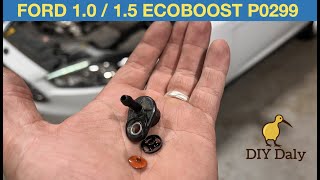
How to confirm: Connect a vacuum gauge to the vacuum pump outlet port for the turbo system. With the engine idling, a healthy pump should pull a steady vacuum of around 20-25 inHg. If the reading is low (e.g., 5-7 inHg) or the needle bounces erratically near zero 🎬 Watch: How to fix the P0299 code on your Focus, the check valve has failed. Visually, the old valve may be visibly collapsed or have pieces missing.
Typical fix: Replace the one-way check valve. Ford only sells the entire vacuum pump assembly (OEM Part# CM5G-2A451-GA or CM5G-2A451-GB), but the valve is available separately and inexpensively from aftermarket suppliers like Klifex, URO Parts, or on sites like eBay and AliExpress.
Est. part cost: $15-$40 (aftermarket valve), $150-$300 (full OEM pump assembly). - Boost/Intake Air Leak 🟡 Medium Probability Engine bay heat and vibration can cause plastic and rubber components to crack or loosen over time. Common leak points include the charge pipes connecting the turbo to the intercooler and the intercooler to the throttle body.
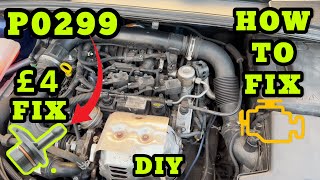
How to confirm: Visually inspect all intake hoses and clamps for cracks, oil residue, or loose connections. A smoke test is the most effective way 🎬 See this DIY guide for fixing EcoBoost underboost issues to pressurize the charge air system and pinpoint the exact location of any leaks.
Typical fix: Tighten loose clamps or replace the cracked hose/pipe.
Est. part cost: $50-$200 - Faulty Turbocharger Wastegate Solenoid 🟡 Medium Probability → Shop Turbocharger
How to confirm: Use a scan tool to command the solenoid on and off while checking for vacuum at the wastegate actuator. If the solenoid is commanded on but no vacuum is passed, the solenoid is likely faulty. Oil contamination in the solenoid or its vacuum lines is a strong indicator that the vacuum pump is failing and sending debris, requiring replacement of the pump, solenoid, and hoses. NHTSA ODI #11567565 describes a scenario where rubber and oil were found in the vacuum lines along with internal buildup, leading to recurring P0299 codes.
Typical fix: Replace the wastegate regulating valve solenoid. OEM part numbers include CJ5Z-9K378-B and F1FG-9S468-BA. It is often sold with new hoses.
Est. part cost: $40-$90 - Sticking or Failed Wastegate Actuator ⚪ Low Probability → Shop Turbocharger
How to confirm: Apply vacuum directly to the actuator with a hand pump. The actuator arm should move smoothly through its full range of motion and hold vacuum. If it doesn't move, is jerky, or leaks vacuum, it has failed.
Typical fix: The wastegate actuator is often considered part of the turbocharger assembly, but some aftermarket actuators are available (e.g., part numbers 1808366, 1799852). In many cases, this fault requires a full turbo replacement.
Est. part cost: $800-$1500 (for full turbo)
Rare But Worth Checking
- Complete Turbocharger Failure: → Shop Turbocharger While often misdiagnosed, actual turbo failure can occur, especially if the engine has suffered from oil contamination or starvation due to timing belt degradation. Confirm by checking for excessive shaft play or visible damage to the turbine wheels.
- Clogged Catalytic Converter: → Shop Catalytic Converter A restriction in the exhaust can prevent the turbo from spooling up properly. This can be confirmed by checking exhaust backpressure. A clogged converter can be a symptom of other engine issues, like burning oil.
- Faulty Boost Pressure Sensor (MAP/T-MAP): A sensor providing incorrect low-pressure readings can trick the ECU into setting a P0299 code. This is less common than mechanical faults. Check sensor readings with a scan tool to ensure they are plausible.
Diagnosis Steps
- Read the fault codes with an OBD-II scanner to confirm P0299 and check for any other codes.
- Check the engine oil level and condition. Dark, sludgy oil or a low level can indicate maintenance issues that harm the turbo.
- Test the vacuum pump output. This is the most critical step for this engine. Connect a vacuum gauge to the pump's outlet port for the turbo system. With the engine idling, you should see a steady vacuum of 20-25 inHg. If it's low (5-7 inHg) or fluctuating wildly, the internal check valve has failed.
- If vacuum is good at the pump, check the vacuum lines to the wastegate solenoid and actuator for cracks, brittleness, or leaks.
- Inspect all charge air pipes and hoses between the turbo, intercooler, and throttle body for cracks, loose clamps, or signs of oil leaks, which indicate a boost leak.
- Perform a smoke test on the intake and charge air system to find hard-to-see leaks.
- Use a scan tool to monitor live data for the Manifold Absolute Pressure (MAP) and Turbocharger Boost Pressure sensors to see if their readings are logical during a drive.
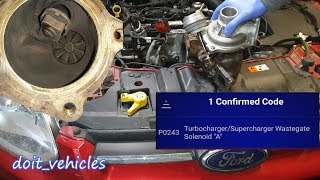
- If all else fails, inspect the turbocharger itself for excessive radial or axial shaft play and check for a stuck 🎬 Watch: Full turbocharger replacement and testing walkthrough wastegate arm.
Parts You'll Likely Need
- Vacuum Pump Check Valve Repair Kit
(OEM #N/A (Not sold by Ford))— This is the most common and specific point of failure for P0299 on this engine, causing a loss of vacuum to the wastegate actuator.
Trusted brands: Klifex, URO Parts, Various unbranded on eBay/AliExpress
OEM price range: $150-$300 (for full pump assembly, OEM # CM5G-2A451-GA, CM5G-2A451-GB).
Aftermarket price range: $15-$40 (for valve only). - Turbocharger Wastegate Solenoid
(OEM #CJ5Z-9K378-B (replaces CJ5Z-9K378-A), F1FG-9S468-BA)— This solenoid controls the vacuum sent to the wastegate. It can fail electronically or become clogged with debris from a failing vacuum pump.
Trusted brands: Motorcraft, Bosch, Dorman
OEM price range: $60-$100
Aftermarket price range: $40-$80 - Charge Air Cooler Hose (Intercooler Pipe) — These hoses can crack or the clamps can loosen, creating a boost leak that directly causes an underboost condition.
Trusted brands: Motorcraft
OEM price range: $100-$200
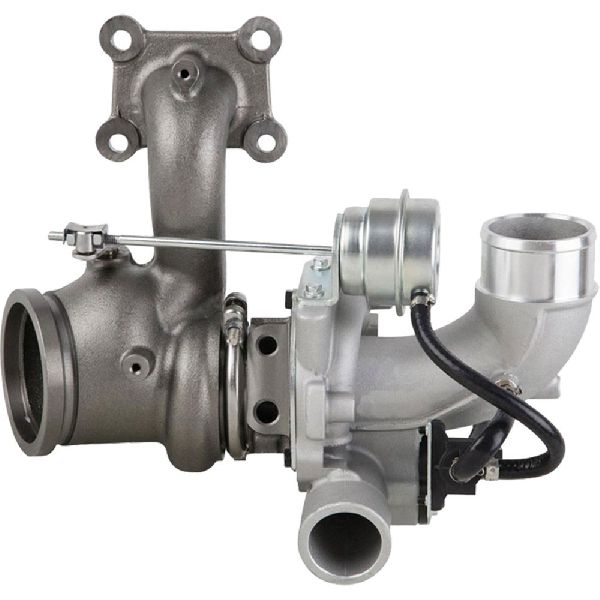
Aftermarket price range: $50-$120 - Turbocharger Assembly — Required if the turbo has failed due to oil starvation, bearing failure, or if the integrated wastegate actuator has failed and cannot be sourced separately.
Trusted brands: Garrett, Motorcraft
OEM price range: $1000-$1500
Aftermarket price range: $600-$1000
Related Codes That Often Appear With This One
- P0016 — A stretched or degraded 'wet' timing belt on the 1.0L EcoBoost can cause camshaft/crankshaft correlation errors (P0016). The degradation of this belt also contaminates the oil, which can lead to oil starvation and failure of oil-lubricated components like the turbocharger, indirectly contributing to P0299.
Platform-Specific Known Issues
- Recall 23S64 / NHTSA 23V-905: Ford issued a safety recall for 2016-2018 Focus models with the 1.0L engine due to a faulty oil pump drive belt tensioner. The tensioner arm can fracture, or the belt itself can degrade and cause a loss of oil pressure, which can lead to engine failure and a loss of power brake assist.
Mechanic-Grade Diagnostic Values
- Vacuum Pump Output (at turbo system port) — expected: Steady 20-25 inHg at idle. Failure: Reading is low (5-7 inHg) or needle is erratic/bouncing near zero.
- P0299 Trigger Condition (Ford Specific) — expected: Actual Throttle Intake Pressure (TIP) should be within 4 psi of desired pressure.. Failure: Actual TIP is 4 psi or more below desired TIP for 5 seconds or longer.
- Manifold Absolute Pressure (MAP) Sensor Voltage — expected: 0.4V to 4.65V operating range. Failure: Voltage is stuck, or does not correlate with engine load/boost.
- Manifold Absolute Pressure (MAP) Sensor Resistance — expected: ~2080 Ohms. Failure: Significantly higher or lower resistance, or an open/short circuit.
- Exhaust Backpressure (pre-catalytic converter) — expected: Below 3 psi at idle; Below 8 psi at wide-open throttle under load.. Failure: Pressure readings higher than specified, indicating a restriction in the exhaust (e.g., clogged catalytic converter).
Hidden / Shadow Codes Worth Checking
- Mode $06 Test IDs (TID): Accessing Mode $06 data shows the results of the PCM's internal self-tests for various components. A failure in a TID related to the MAP or boost sensor can indicate a performance issue even before a persistent P0299 code is set. (see via Professional-grade scan tools or Ford-specific software like FORScan.)
- P0299-00 / P0299-20: The two digits following the main code are a Failure Type Byte (FTB) or sub-code. While the exact definition for each can vary, they indicate the specific type of fault detected (e.g., performance, circuit low, etc.). A P0299-20 was noted in one diagnostic report. (see via Most comprehensive OBD-II scan tools will display the full code with its suffix.)
Scan Tool Commands That Help
- FORScan, IDS, Professional Scanners: Live Data: Desired vs. Actual Boost Pressure — This is the primary data to monitor during a test drive to confirm the underboost condition. Graphing both parameters helps visualize the gap between what the PCM is requesting and what the turbo is delivering.
- Professional Scanners with Bidirectional Control: Turbocharger Wastegate Regulating Valve Solenoid - ON/OFF — At idle, command the solenoid 'ON' (open) while a vacuum gauge is attached to the line at the wastegate. The gauge should read full engine vacuum. If it doesn't, it confirms a problem in the vacuum supply path (pump, lines) or the solenoid itself.
Wiring & Ground Locations
- G104 — On the left side of the engine compartment, near the airbox and/or battery, bolted to the chassis frame rail.. This is a primary engine and PCM ground point. A loose or corroded connection here can cause erratic voltage to sensors and actuators in the turbo control system, leading to false codes or incorrect operation.
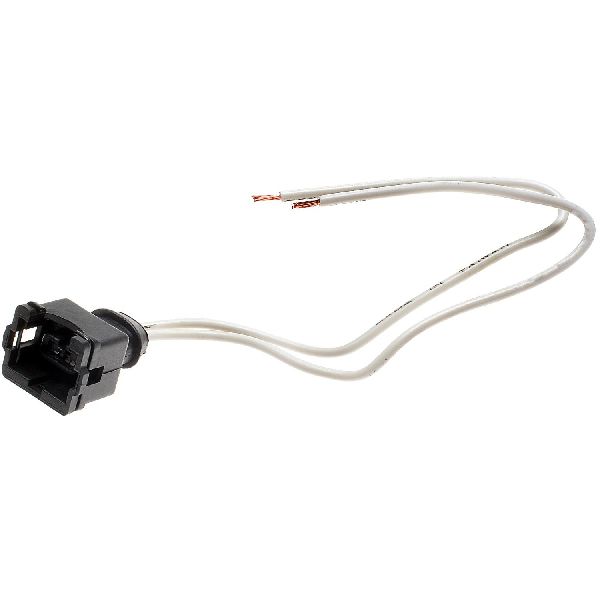
- Wastegate Solenoid Connector — Connected to the turbocharger wastegate regulating solenoid, typically near the turbocharger assembly.. This is the direct electrical connection for controlling the wastegate. Check for 12V power and the PCM control signal at its pins. Oil contamination from a failing vacuum pump can also foul this connector and its associated vacuum lines.
- ECM Ground — On the frame rail below the air box.. This is the direct ground for the Powertrain Control Module. A bad ground here can cause the PCM to misinterpret sensor data or fail to properly control actuators like the wastegate solenoid, leading to a P0299 code.
Real Owner Repair Stories
- YouTube channel 'DIYDaly' (2017 Ford Focus 1.0L EcoBoost) — Intermittent Check Engine Light, limp mode, no boost.
✅ What actually fixed it The one-way check valve inside the vacuum pump had failed. A vacuum test on the pump's turbo outlet showed an erratic reading of only 5-7 inHg. Replacing this cheap, aftermarket-sourced valve restored proper vacuum (20-25 inHg) and fixed the underboost code. - YouTube channel 'Under 5K Cars' (Ford Focus 1.0L EcoBoost (year not specified)) — P0299, oil warning light on, loss of power.
❌ Tried (didn't work) Initially just addressing the P0299 code without checking the oil system.
✅ What actually fixed it The root cause was a degrading wet timing belt, which clogged the oil pump pickup strainer. This led to low oil pressure, which caused the vacuum pump to fail. The oil contamination from the failing pump then destroyed the turbo wastegate actuator diaphragm. The ultimate fix required addressing the entire chain: replacing the timing belt, cleaning the oil sump, and replacing the oil pump, vacuum pump, and turbo wastegate actuator/solenoid assembly. - AliExpress Product Review/Guide (2017 Ford Fiesta 1.0L EcoBoost) — P0299 (Insufficient Turbo Boost) returned intermittently.
❌ Tried (didn't work) Installing a cheap, generic $12 wastegate control solenoid valve.
✅ What actually fixed it The cheap solenoid's plastic body warped from engine heat, causing an internal leak and the return of the P0299 code. The implied fix is to use an OEM or high-quality, heat-resistant aftermarket solenoid that won't deform under normal operating conditions.
"I Checked Everything" — The Actual Cause
- A technician reported a 2019 Ford Escape 1.5L EcoBoost (similar system) with P0299 where the original turbo had failed and was pushing oil into the intake. After replacing the turbo and MAP sensor, the code returned despite a clean smoke test for boost leaks. The actual cause was an internally clogged Charge Air Cooler (CAC) / Intercooler. The oil from the old turbo had filled the cooler's passages, creating an airflow restriction that a smoke test for external leaks would not find.
OEM Part Supersession History
CM5G-2A451-GA→CM5G-2A451-GB, DS7G-2A451-CA, DS7G-2A451-CB— Ongoing revisions and application across multiple vehicle models (Focus, Fiesta, C-Max, etc.). The core aftermarket repair valve is often listed as compatible with all these numbers.
Heads up: While the aftermarket repair valve is widely compatible, ensure the full vacuum pump assembly part number matches your vehicle's VIN if replacing the entire unit.CJ5Z-9K378-A→CJ5Z-9K378-B— Revision of the turbocharger wastegate solenoid.
Model Year Variations Within This Range
- 2015: The 2015 model year marked the mid-generation refresh (C346) for the Focus and the introduction of the 1.0L EcoBoost engine option in the North American market, paired exclusively with a manual transmission initially. The fundamental causes of P0299 on this engine are consistent across the 2015-2018 range.
Diagnostic Flowchart
Other Known Issues on This Vehicle
Issues unrelated to this code that are worth knowing about as an owner of this generation:
- Timing Belt Degradation (Wet Belt) 🔴 High — Common on models produced between 2012-2019, especially if incorrect oil is used or oil change intervals are extended. Failures can start appearing around 60,000-80,000 miles. (Ref: Recall 23S64 addresses the oil pump belt, which is related, but the main timing belt itself has been subject to service actions and revised service intervals.)
- Coolant System Leaks & Overheating 🔴 High — Early models were particularly prone to issues with plastic coolant pipes, thermostat housings, and expansion tanks cracking. Internal coolant leaks (e.g., head gasket) are also a known, severe problem. (Ref: Ford had a Field Service Action for early model coolant pipes.)
- Carbon Buildup on Intake Valves 🟠 Medium — As a direct injection engine, fuel doesn't wash over the intake valves, leading to carbon accumulation over time (typically 50,000+ miles), which can cause rough idling and reduced performance.
- Excessive Oil Consumption 🟠 Medium — Some engines are known to consume oil due to issues like worn piston rings or failed turbo seals, often exacerbated by overheating or poor maintenance.
Used vs. New Parts: Buying Guide for This Vehicle
When a used part is the smart pick: For purely mechanical, non-wear items like charge pipes, intercoolers (if thoroughly cleaned and inspected), or engine covers, a used part from a reputable salvage yard is a reasonable cost-saving measure.
Donor-vehicle mileage cap: roughly under 60000 miles for the part to have meaningful remaining life.
What to inspect on the donor part:
- For charge pipes, inspect for any hairline cracks, especially near mounting points and bends.
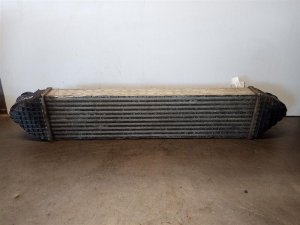
- For an intercooler, check for bent or damaged fins and ensure it is completely free of oil or debris internally. A heavily contaminated donor suggests the source car had a turbo failure.
OEM-only on this vehicle (don't cheap out):
- Turbocharger Assembly: Given the 1.0L EcoBoost's sensitivity to oil contamination from the wet belt, a used turbo is extremely high-risk. A new or professionally remanufactured unit from a reputable supplier (e.g., Garrett, Motorcraft) is strongly recommended.
- Timing Belt ('wet belt'): This is a critical maintenance item that should only be replaced with a new, OEM-spec kit. Never reuse or install a used wet belt.
Aftermarket brands forum-validated for this vehicle:
- Vacuum Pump Check Valve: Klifex, URO Parts, and various unbranded kits from online retailers are the primary way to fix the most common cause without buying a full OEM pump assembly.
- Wastegate Solenoid: Bosch, Motorcraft (OEM). A quality aftermarket brand is crucial to prevent heat-related failure.
Brands owners have reported issues with on this vehicle:
- Unbranded/Generic Wastegate Solenoids: There are reports of cheap, generic solenoids made from low-grade plastic that can warp from engine heat, causing the P0299 code to return shortly after repair.
Real Owner Stories
Aggregated from forums and TSBs cited above. Mileages and costs reflect what owners reported in those sources.
2018 Ford Focus 1.0L EcoBoost
Symptoms: P0299 code and sluggish performance. Owner logged data and suspected the vacuum system.
What fixed it: Replaced the check valve on the vacuum pump.
Source hint: Ford Owners Club forum thread titled '1.0 Ecoboost P0299 Underboost'
2017 Ford Focus SE 1.0L EcoBoost
Symptoms: Classic P0299 symptoms of sluggish acceleration.
What fixed it: Diagnosis focused on common culprits like the vacuum pump check valve and boost leaks.
Source hint: Reddit r/MechanicAdvice thread 'P0299 - 2017 Ford Focus SE 1.0L Ecoboost'
2016 Ford Focus 1.0L EcoBoost
Symptoms: P0299 code and the oil light was on.
What fixed it: Diagnosis revealed a link between the failing vacuum pump, oil contamination of the solenoid, and broader oil system issues.
Source hint: YouTube (Mels Motors Ltd): 'Focus, Fiesta 1.0 EcoBoost P0299, oil light on'
Documented NHTSA Reports
Recurring Underboost Failures
Symptoms: An owner reported that the vehicle experienced a P0299 failure for the second time. While attempting to accelerate on a freeway, the engine revved quickly but failed to change gears, accompanied by the underboost code.
Source hint: NHTSA ODI #11330491
Loss of Power and Safety Mode
Symptoms: A report describes a vehicle being in the shop six times for a P0299 turbo underboost error. The engine loses power when the code triggers as a protective measure for the vehicle.
Source hint: NHTSA ODI #11290067
Related OBD-II Codes
Frequently Asked Questions
Is there a recall for the 2016-2018 Ford Focus 1.0L EcoBoost that might be related to my loss of power?
Do I have to replace the entire vacuum pump assembly (CM5G-2A451-GA) to fix the P0299 code?
Why does my Focus 1.0L only seem to get boost or power once I hit 4,000 RPM?
Could my P0299 code be related to the 'wet belt' timing system on my 2015 Focus?
What is the most critical diagnostic step for a P0299 on the Focus 1.0L EcoBoost?
Helpful Videos
Used OEM Parts in Stock
New Aftermarket Parts Available


The information in this article is provided for general reference and educational purposes only. Vehicle specifications, procedures, and part compatibility can vary by production date, trim level, and region. Always consult your vehicle's factory service manual and verify part numbers before purchasing or performing repairs. Safety-critical components such as airbags, seat belts, and braking systems should be installed by a qualified professional.
- Ford Focus:
- 🧭 Diagnostic Flowchart
- 🎬 Helpful Videos
- 🛍️ Shop This Part
- What's Unique About the 2015-2018 Ford Focus
- Symptoms You May Notice
- Most Likely Causes
- Rare But Worth Checking
- Diagnosis Steps
- Parts You'll Likely Need
- Related Codes That Often Appear With This One
- Platform-Specific Known Issues
- Mechanic-Grade Diagnostic Values
- Hidden / Shadow Codes Worth Checking
- Scan Tool Commands That Help
- Wiring & Ground Locations
- Real Owner Repair Stories
- "I Checked Everything" — The Actual Cause
- OEM Part Supersession History
- Model Year Variations Within This Range
- Other Known Issues on This Vehicle
- Used vs. New Parts: Buying Guide for This Vehicle
- Real Owner Stories
- 2018 Ford Focus 1.0L EcoBoost
- 2017 Ford Focus SE 1.0L EcoBoost
- 2016 Ford Focus 1.0L EcoBoost
- Documented NHTSA Reports
- Recurring Underboost Failures
- Loss of Power and Safety Mode
- Related OBD-II Codes
- Frequently Asked Questions
- 🎟️ Get 5% Off