

P0299 on 2017 GMC Sierra 6.6L L5P Duramax: Turbo Underboost Causes and Fixes
On a 2017 GMC Sierra with the 6.6L L5P Duramax, code P0299 is most often caused by a boost leak from a cracked charge air cooler (CAC) hose (specifically the cold-side pipe) or a failing electronic turbocharger actuator (GM Part No. 12683993 or 12723306). Expect to pay $100-$400 for a replacement hose or $600-$900 for a new actuator.
- P0299 on a 2017 Sierra Duramax means the turbo isn't making enough boost, leading to a major loss of power.
- The most likely causes are a leak in a charge air hose or a faulty electronic turbo actuator.
- Always perform a smoke test to check for air leaks before assuming a more expensive component like the turbo or actuator has failed.
- If codes P003A or P0046 are also present, the turbo actuator is the primary suspect.
- Do not immediately replace the entire turbocharger; the actuator is often the true cause and can be replaced separately.
What's Unique About the 2017-2017 Gmc SIERRA

The 2017 model year was the debut for the L5P Duramax engine in the GMC Sierra HD. This engine introduced a new Denso variable-geometry turbocharger (VGT) with an electronic actuator. While boost leaks are a common cause of P0299 on any turbocharged engine, this specific platform is known for issues with the electronic turbo actuator, which controls the VGT vanes. A failure in this component is a frequent culprit for underboost conditions and may be accompanied by other actuator-specific codes like P003A or P0046. Additionally, GM issued TSB PIP5468F specifically for the 2017-2018 model years, acknowledging that loose connections in the charge air cooler ductwork are a primary cause for P0299 and a host of other codes.
Diagnostic Flowchart

Tap your situation to follow the diagnostic path that matches what you're seeing on this vehicle.
Symptoms You May Notice

- Check Engine Light is on
- "Reduced Engine Power" message displayed on the instrument cluster
- "Service Emissions System" message on the dash
- Significant loss of power and sluggish acceleration
- Hesitation or jerky acceleration under load
- Unusual hissing or whistling sounds from the engine bay (indicating a boost leak)
- High-pitched squeal when the exhaust brake is active, indicating an exhaust leak before the turbo
- Decreased fuel economy
- Black smoke from the exhaust under acceleration
- Replacing the entire turbocharger assembly when only the actuator has failed. The actuator is a separate, serviceable part (GM Part No. 12723306) that can be replaced without removing the turbo.
- Replacing sensors without first performing a smoke test to check for much more common air leaks in the charge pipes, as recommended by GM TSB PIP5468F.
Most Likely Causes

- Leaking Charge Air Cooler (CAC) Hoses or Clamps 🔴 High Probability → Shop Intercooler The charge air system operates under high pressure. GM TSB PIP5468F directly addresses this issue, stating that loose connections at the turbo outlet, intercooler, or throttle body are a common cause for P0299. The factory plastic cold-side pipe (GM Part No. 84189332) is a known weak point and can crack or blow off completely under load.
How to confirm: Visually inspect all hoses, especially the passenger-side (cold side) pipe, for cracks, oil residue, or loose clamps. TSB PIP5468F notes that a static visual inspection may not be enough and recommends a full system smoke test to find leaks that only appear under pressure or with engine movement.
Typical fix: Replace the cracked or damaged hose and/or tighten the loose clamps. Many owners upgrade the failure-prone plastic cold-side pipe to a more durable metal version. 🎬 See how to upgrade your failure-prone plastic intercooler pipes.
Est. part cost: $80-$350 - Faulty Turbocharger Vane Control Actuator 🔴 High Probability → Shop Turbocharger The electronic actuator on the L5P's VGT turbo is a widely reported failure point. It controls the vanes inside the turbo to regulate boost. If it fails or becomes sluggish, it cannot adjust the vanes correctly to build the commanded boost. This is a known issue that can occur even at relatively low mileage.
How to confirm: A professional scan tool can command the actuator to move and verify its position. An Edge CTS monitor can be used to compare 'desired vane position' vs 'actual vane position' to diagnose a faulty actuator. This fault is often accompanied by codes P003A or P0046, which point directly to the actuator.
Typical fix: The actuator can be replaced separately from the turbocharger. The OEM part is made by Borg-Warner (GM Part No. 12683993 or 12723306). The new actuator must be calibrated after installation using a capable scan tool.
Est. part cost: $600-$900 - Restricted Engine Air Filter 🟡 Medium Probability → Shop Air Cleaner Assembly A severely clogged air filter will restrict the amount of air entering the turbocharger, making it impossible to build the required boost pressure. This is a basic maintenance item that is often overlooked.
How to confirm: Visually inspect the engine air filter. If it is visibly dirty, black, or full of debris, it needs to be replaced.
Typical fix: Replace the engine air filter.
Est. part cost: $30-$70 - Leaking Exhaust Manifold or Up-Pipes ⚪ Low Probability → Shop Exhaust Manifold Heat cycles can cause the exhaust manifolds or the pipes leading to the turbo (up-pipes) to crack or the gaskets to fail. This allows exhaust gas to escape before it can spin the turbo's turbine wheel, reducing boost. Some owners report this as a recurring issue on L5P engines.
How to confirm: Listen for an audible ticking or high-pitched squeal, especially when the engine is cold or the exhaust brake is on. Look for black soot trails around the exhaust manifolds or up-pipe connections.
Typical fix: Replace the cracked component and/or the failed gaskets.
Est. part cost: $200-$1000+ - Faulty MAP / Boost Pressure Sensor ⚪ Low Probability The Manifold Absolute Pressure (MAP) sensor measures the boost pressure. On the L5P, this sensor (GM PN 12681993) is prone to getting clogged with soot from the EGR system, which can cause inaccurate low-pressure readings. This can trigger P0299 even if the boost is mechanically normal.
How to confirm: With a scan tool, check the MAP sensor reading with the key on and engine off; it should be close to the barometric pressure reading. The sensor can be removed and visually inspected for soot buildup. A faulty sensor may also trigger codes P0106 or P0069.
Typical fix: Clean the soot off the sensor carefully or replace the MAP sensor.
Est. part cost: $50-$150
Rare But Worth Checking
- Internal Turbocharger Failure: → Shop Turbocharger While the turbo itself is generally robust, internal wear (bearings, seals) or damage to the compressor/turbine wheels from debris can cause it to fail, preventing it from building boost. This is usually a last resort after ruling out more common causes like leaks and actuator failure.
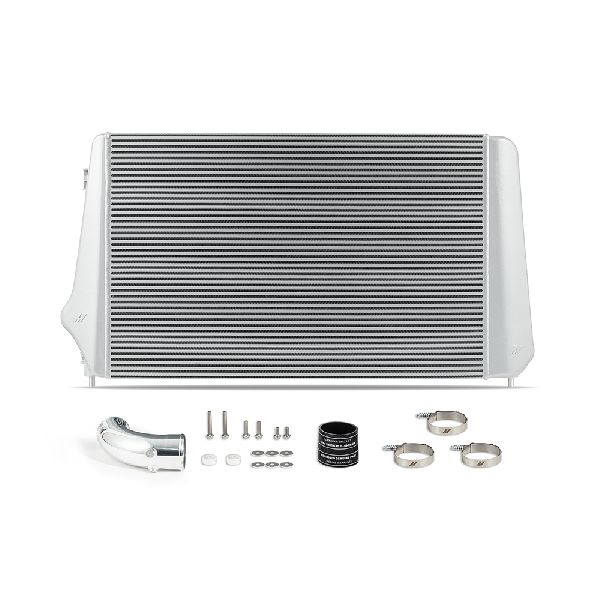
- Cracked Intercooler: → Shop Intercooler Less common than a hose failure, the charge air cooler (intercooler) itself can develop cracks or leaks from road debris or corrosion, leading to a loss of boost pressure.
- Clogged Diesel Particulate Filter (DPF): → Shop Diesel Particulate Filter (DPF) A severely clogged DPF can create excessive exhaust backpressure, which impedes the turbocharger's ability to spin freely and generate boost. This is often accompanied by DPF-specific codes like P2463 (DPF Soot Accumulation).
Diagnosis Steps
- Read all diagnostic trouble codes with an OBD-II scanner. Pay close attention to any other codes present, especially P003A, P0046, or P0101, as they provide critical clues.
- Perform a thorough visual inspection of the entire intake tract, per TSB PIP5468F. Check the cold-side (passenger side) charge pipe especially carefully for cracks or separation at the throttle body.
- Inspect the engine air filter. Replace if it is dirty or clogged.
- Perform a smoke test on the charge air system. This is the most reliable method for finding leaks and is recommended by GM. Pressurize the system with smoke to identify any leaks from hoses, clamps, or the intercooler itself.
- Using a scan tool with live data, monitor Commanded Boost vs. Actual Boost while driving. A significant and consistent difference confirms an underboost condition. Also monitor 'Desired Vane Position' vs 'Actual Vane Position' if your tool supports it; a discrepancy points to the actuator.
- Inspect the exhaust manifolds and up-pipes for any signs of soot, which indicates an exhaust leak robbing the turbo of energy. Listen for ticking or whistling noises.
- Remove and inspect the MAP sensor for soot buildup. Clean it carefully if it's dirty.
- If no leaks are found and the MAP sensor is clean, test the turbocharger actuator. This requires a bi-directional scan tool to command the actuator through its range of motion to check for response and proper calibration.
- If all other possibilities have been exhausted, inspect the turbocharger itself for excessive shaft play or damage to the turbine/compressor wheels.
Parts You'll Likely Need
- Turbocharger Vane Position Actuator
(OEM #12723306 (supercedes 12683993))— This electronic component is a frequent failure point on the L5P Duramax and directly controls the turbo's ability to make boost. It can be replaced separately from the turbocharger.
Related Codes That Often Appear With This One
- P003A — This code indicates an issue with the turbocharger vane position control, pointing directly to a problem with the electronic actuator, a common cause of P0299 on the L5P engine.
- P0046 — Similar to P003A, this code relates to the performance/range of the turbocharger boost control solenoid/actuator, further suggesting the actuator is the root cause. GM TSB 21-NA-113 addresses this code being set by low voltage during cranking.
- P0101 — This code for Mass Air Flow (MAF) sensor performance is listed in TSB PIP5468F as a code that can appear alongside P0299 when there is a major air leak in the charge air system.
Technical Service Bulletins (TSBs) & Recalls
- PIP5468F: This is the most relevant TSB. It states that P0299, along with many other codes, can be caused by loose charge air cooler ductwork. It advises technicians to check all connections from the turbo to the throttle body and perform a smoke test, as visual inspection alone may not be sufficient.
Platform-Specific Known Issues

- Cold-Side Charge Air Pipe Failure: The factory-installed plastic charge air pipe on the passenger side (cold side) is a notorious failure point. It is known to crack or completely separate at the throttle body connection, causing a sudden and major boost leak that immediately triggers P0299 and limp mode. The OEM part number is 84189332. Many owners opt for an aftermarket metal pipe for a permanent solution.
- Soot-Clogged MAP Sensor: → Shop Manifold Absolute Pressure Sensor Due to the EGR system, the MAP sensor on the L5P can become coated in soot over time. This insulates the sensor, causing it to read lower-than-actual boost pressure, which can falsely trigger a P0299 code. Cleaning the sensor is often a quick fix.
Mechanic-Grade Diagnostic Values
- MAP Sensor Voltage (Key On, Engine Off) — expected: ~4.5V at sea level, should match barometric pressure.. Failure: Voltage significantly different from barometric pressure reading or stuck at a specific value.
- MAP Sensor Voltage (Engine Idling) — expected: ~1.0V to 1.5V depending on vacuum.. Failure: Voltage higher than expected, indicating the sensor is not reading engine vacuum correctly.
- Turbocharger Actuator Mounting Nut Torque — expected: 119 in-lbs (13.4 Nm). Failure: N/A
- Turbocharger Actuator Lever Bolt Torque — expected: 93 in-lbs (10.5 Nm). Failure: N/A
Scan Tool Commands That Help
- GDS2 (GM Dealer Software): Turbocharger Boost Control Initial Position Learn — Required after replacing the turbocharger actuator or if TSB 21-NA-113 for code P0046 is being performed. This function calibrates the new actuator's start and end positions.
- GDS2 (GM Dealer Software): Turbocharger Vane Position Control — This is a bidirectional test to command the actuator vanes from 20% to 90% to verify smooth mechanical movement and sensor feedback after a repair or during diagnosis.
- GDS2 (GM Dealer Software): Immobilizer Relearn (Engine control module IMMO LEARN) — This is required after replacing the Engine Control Module (ECM), not directly for P0299, but critical if the ECM is suspected and replaced.
Wiring & Ground Locations
- E41 Engine Control Module (ECM) — On 2017-2019 models, the ECM is located behind the driver-side headlight, between the battery and the power steering reservoir.. The ECM controls the turbo actuator and processes all sensor data. A poor connection at one of its three main connectors could cause erratic behavior or codes.
- Fuse F57 (TCM/ECM) — In the underhood fuse block.. This fuse supplies power to the ECM. Some aftermarket tuning procedures require temporarily removing this fuse.
- Turbocharger Vane Position Sensor Signal — Pin 20 (Yellow wire) on the ECM connector.. This is the specific wire carrying the vane position signal from the actuator back to the ECM. It can be tested for voltage/continuity if a wiring issue is suspected.
- MAP Sensor Signal — Pin 19 (Light Green wire) on the ECM connector.. This wire carries the boost pressure reading to the ECM. It can be back-probed to verify the sensor's output voltage.
Real Owner Repair Stories
- YouTube channel 'Denny Diesel' (2017+ L5P Duramax) — Reduced Engine Power message, Check Engine Light, turbo codes.
❌ Tried (didn't work) Replacing pigtails for related sensors., Clearing codes with a standard scanner., Disconnecting batteries to reset modules.
✅ What actually fixed it Using the GM GDS2 software to perform a 'Turbocharger Boost Control Position Learn' function. After running the relearn procedure and clearing the codes, the 'Reduced Engine Power' message disappeared and normal turbo operation was restored. - YouTube channel 'C Farmer' (L5P Duramax with 432,000 miles) — Check Engine Light, Reduced Engine Power message, codes P003A and P0046.
❌ Tried (didn't work) Clearing codes with the engine running.
✅ What actually fixed it Replaced the turbocharger actuator. After installation, the codes were cleared, and the key was left in the 'on' position for 5-10 minutes. This allowed the new actuator to cycle and learn its position, which resolved the issue.
"I Checked Everything" — The Actual Cause
- In some cases on older Duramax models (LLY), a P0299 code would set despite no boost leaks being present. The issue was traced to a clogged internal passage within the charge air cooler, which restricted airflow but did not show up as an external leak during a pressure test. The fix was to bypass or replace the intercooler.
OEM Part Supersession History
12665348, 12683983, 12708802→12723306— Standard part revision and improvement by the manufacturer.
Heads up: Part number 12723306 is specified for 2017-2019 L5P Duramax engines. Later model years (2020+) use a different actuator.
Helpful Videos
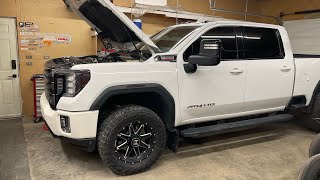
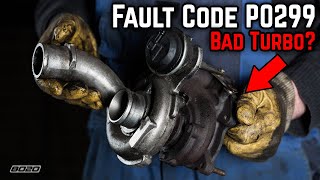
We Have This Part in Stock

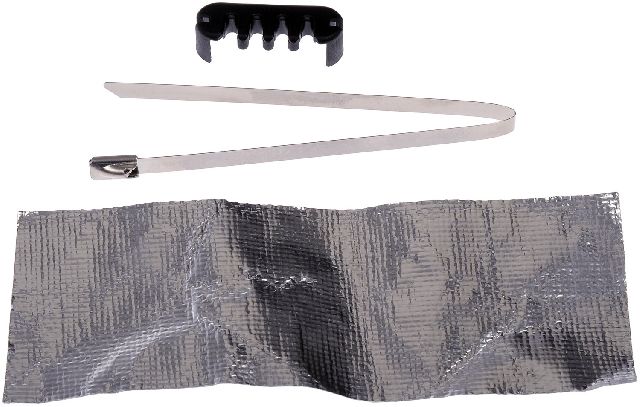
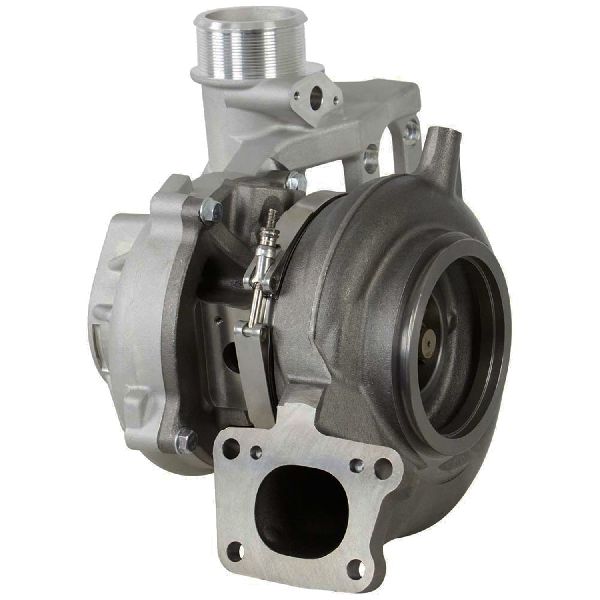

The information in this article is provided for general reference and educational purposes only. Vehicle specifications, procedures, and part compatibility can vary by production date, trim level, and region. Always consult your vehicle's factory service manual and verify part numbers before purchasing or performing repairs. Safety-critical components such as airbags, seat belts, and braking systems should be installed by a qualified professional.
- Gmc SIERRA:
- 🧭 Diagnostic Flowchart
- 🎬 Helpful Videos
- 🛍️ Shop This Part
- What's Unique About the 2017-2017 Gmc SIERRA
- Symptoms You May Notice
- Most Likely Causes
- Rare But Worth Checking
- Diagnosis Steps
- Parts You'll Likely Need
- Related Codes That Often Appear With This One
- Technical Service Bulletins (TSBs) & Recalls
- Platform-Specific Known Issues
- Mechanic-Grade Diagnostic Values
- Scan Tool Commands That Help
- Wiring & Ground Locations
- Real Owner Repair Stories
- "I Checked Everything" — The Actual Cause
- OEM Part Supersession History
- 🎟️ Get 5% Off