

P0299 on 2022 GMC Terrain 1.5L: Turbo Underboost Causes & Fixes
On a 2022 GMC Terrain, code P0299 is most often caused by issues with the turbocharger's charge air system, especially in cold weather. Common culprits include a disconnected charge air cooler pipe at the throttle body, a frozen or contaminated charge air cooler, or a faulty/frozen wastegate regulator solenoid. The fix often involves inspecting for leaks, cleaning or replacing components, installing a grille cover per TSBs, and potentially a software update to change transmission shift patterns
- For a 2022 GMC Terrain, P0299 is very frequently related to cold weather and moisture freezing in the air intake system.
- Before assuming the turbo has failed, perform a thorough visual inspection of all charge air pipes for disconnections, especially at the throttle body.
- Be aware of the numerous Technical Service Bulletins (TSBs) for this issue. A complete repair may involve not just parts, but also software updates performed by a dealer.
- Common parts to fix this code include the charge air cooler, the wastegate control solenoid, or the entire turbocharger if the wastegate is mechanically worn.
What's Unique About the 2022-2022 Gmc TERRAIN NA

The 1.5L turbo engine (RPO code LYX) used in the GMC Terrain and its sibling, the Chevy Equinox, is known to have specific vulnerabilities that trigger P0299, particularly in cold climates. Multiple GM Technical Service Bulletins (TSBs) point to a design susceptibility where moisture from the PCV system and ambient air can accumulate and freeze inside the charge air cooler (CAC) or the turbocharger wastegate regulator solenoid valve. This freezing restricts airflow or component movement, directly causing an underboost condition and setting the P0299 code. GM has released updated ECM calibrations that alter transmission shift patterns in cold weather to keep engine RPMs higher, reducing the likelihood of ice buildup in the CAC.
Diagnostic Flowchart

Tap your situation to follow the diagnostic path that matches what you're seeing on this vehicle.
Symptoms You May Notice
- Check Engine Light is on
- "Reduced Engine Power" message displayed on the dashboard
- Sluggish or weak acceleration, especially under load.
- Noticeable loss of power, especially when trying to accelerate hard or go uphill
- Hissing or whistling sounds from the engine bay, indicating a possible air leak.
- Vehicle may enter "limp mode," restricting power output to prevent engine damage.
- Replacing only the boost pressure sensor without checking for physical leaks or blockages.
- Replacing the wastegate solenoid when the root cause is a frozen charge air cooler or a mechanical issue with the wastegate arm.
- Assuming the turbo is bad before performing a thorough smoke test to find boost leaks in the charge pipes or intercooler.
Most Likely Causes

- Frozen or Contaminated Charge Air Cooler (CAC) 🔴 High Probability → Shop Intercooler As documented in multiple TSBs (e.g., 18-NA-020), the 1.5L engine is prone to moisture buildup from the PCV system and ambient air in the CAC. In freezing temperatures, this moisture can turn to ice, creating a physical blockage that restricts airflow.
How to confirm: This typically occurs in freezing weather. A technician may need to remove the CAC to inspect for ice or an oily water mixture. A smoke test can also reveal leaks if the cooler is cracked from ice expansion.
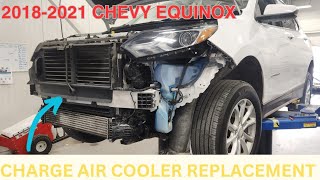
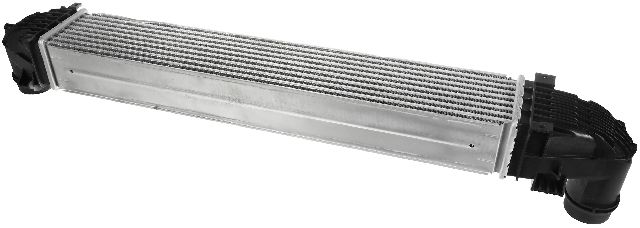
Typical fix: GM has issued procedures that involve cleaning the CAC, installing a grille cover (sometimes a soft cover or an active shutter) to reduce cold air exposure, and updating the ECM software to alter shift patterns. If the CAC is damaged or leaking, it must be replaced. The OEM part number for the intercooler is 85046823. 🎬 Watch: Step-by-step guide to replacing the charge air cooler.
Est. part cost: $190-$500 - Disconnected Charge Air Cooler Pipe 🔴 High Probability → Shop Intercooler TSB #PIP5651G and its successor #22-NA-224 specifically call out the charge air cooler outlet pipe connection at the throttle body becoming disconnected, causing a massive boost leak. This is a widely reported failure point on forums for both the Terrain and Equinox.
How to confirm: Visually inspect the entire charge air piping system, from the turbo outlet, to the intercooler, and up to the throttle body. The connection at the throttle body is the key point of failure. It may look connected but can be loose enough to leak under pressure.
Typical fix: Reconnect the pipe and ensure the clamp/retainer is secure. TSB #PIP5651C mentions a retainer kit (WPC part number 836) for a more robust fix. If the pipe end or O-ring is damaged from blowing off, the entire pipe assembly must be replaced as the O-ring is not serviced separately. A common charge air cooler inlet pipe part number is 84498032.
Est. part cost: $10-$50 for a clamp, $100-$250 for a new pipe section. - Faulty/Frozen Turbocharger Wastegate Regulator Solenoid Valve (TCV) 🟡 Medium Probability → Shop Turbocharger TSB #PIP5812C notes that oil and moisture condensate can freeze in the TCV during cold weather, preventing it from operating correctly. This prevents the wastegate from closing properly to build boost. This issue is often concurrent with CAC freezing.
How to confirm: A technician can test the solenoid's function with a scan tool or a vacuum pump. Visual inspection may show contamination. The solenoid may click when commanded but still be stuck internally.
Typical fix: The solenoid may need to be cleaned or, more commonly, replaced. The OEM part number for the regulator solenoid valve is 55573259. Another related part is the Turbocharger Bypass Valve Solenoid, part number 55499323.
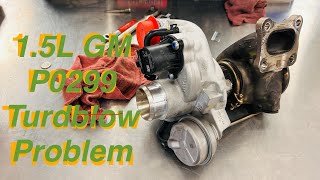
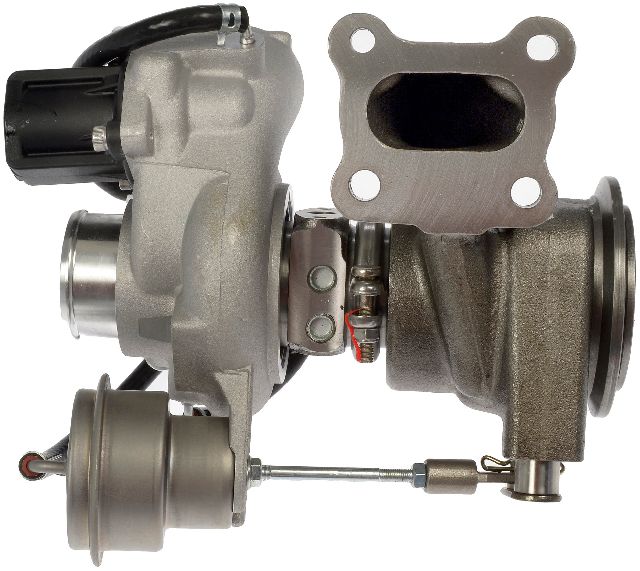
Est. part cost: $25-$150 - Worn or Damaged Turbocharger Wastegate 🟡 Medium Probability → Shop Turbocharger Owners and technicians report that the wastegate actuator arm pivot point can wear out, creating excessive play and preventing the wastegate flapper from sealing properly. In other cases, the actuator itself can get stuck or the housing can develop cracks over time, leading to a loss of efficiency.
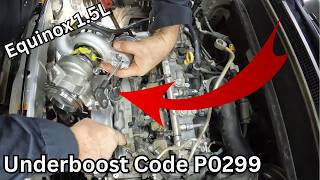
How to confirm: A visual inspection of the turbocharger's external wastegate arm may reveal looseness or a stuck condition. 🎬 See how to inspect the wastegate arm for excessive play. A borescope can be used to inspect the internal wastegate flapper and housing for cracks. A technician in a YouTube video for a 2019 Equinox with P0299 ultimately had to replace the turbo after fixing boost leaks.
Typical fix: Unfortunately, the wastegate actuator and arm are often integral to the turbocharger assembly, requiring the replacement of the entire turbocharger.
Est. part cost: $800-$1500 for a new turbocharger assembly.
Rare But Worth Checking
- Clogged or Restricted Air Filter: → Shop Air Cleaner Assembly A severely clogged air filter can starve the turbocharger of air, preventing it from building the required boost. This is a simple but sometimes overlooked check.
- Leaking Vacuum Lines: The wastegate actuator is often vacuum-controlled. A cracked or disconnected vacuum line can prevent the wastegate from operating correctly.
- Clogged Catalytic Converter: → Shop Catalytic Converter A clogged catalytic converter can increase exhaust backpressure, preventing the turbo from spinning up to speed effectively. One owner on an Equinox forum reported this as the final fix for their P0299 code after other attempts failed.
Diagnosis Steps
- Check for other Diagnostic Trouble Codes (DTCs) that may provide more clues.
- Perform a thorough visual inspection of the entire air intake system, from the air filter box to the throttle body. Pay extremely close attention to the charge air cooler pipes and their connections, especially the outlet pipe at the throttle body. 🎬 Watch: Finding a common boost leak on the 1.5L engine.
- If in a cold climate (especially below freezing), consider the possibility of a frozen charge air cooler or wastegate solenoid, as outlined in GM TSBs #18-NA-020 and #PIP5812C. The vehicle may need to be thawed in a heated garage.
- Inspect the turbocharger wastegate actuator arm for any looseness, binding, or signs of it being stuck. Check for excessive play.
- Perform a smoke test on the intake and charge air system to pinpoint any hard-to-see leaks in hoses, clamps, or the charge air cooler itself. This is a critical step before condemning the turbo.
- Use a scan tool to monitor desired boost pressure vs. actual boost pressure in real-time while driving. On a healthy 1.5L, desired and actual boost should be very close and can reach over 20 PSI under load.
- Test the function of the Turbocharger Wastegate Regulator Solenoid Valve (TCV) using a vacuum gauge and/or a capable scan tool to command it on and off.
- If no leaks or component failures are found, inspect the turbocharger for internal oil leaks (check the charge pipe for oil) or internal damage. The turbo itself may be failing and require replacement.
Parts You'll Likely Need

- Charge Air Cooler (Intercooler)
(OEM #85046823)— Prone to internal contamination and freezing in cold weather, leading to blockage and underboost. Can also crack from ice expansion or collision damage.
Trusted brands: ACDelco, Spectra Premium, GM Genuine
OEM price range: $190-$300
Aftermarket price range: $100-$200 - Turbocharger Wastegate Regulator Solenoid Valve
(OEM #55573259)— Can fail or freeze due to moisture, preventing proper wastegate control. A very common and relatively inexpensive part to replace.
Trusted brands: ACDelco, Dorman, GM Genuine
OEM price range: $25-$45
Aftermarket price range: $20-$40 - Charge Air Cooler Outlet Pipe
(OEM #84836352)— The connection at the throttle body is a known weak point and can blow off, causing a major boost leak. The pipe or its integrated O-ring can be damaged.
Trusted brands: ACDelco, GM Genuine
OEM price range: $100-$160
Aftermarket price range: $70-$120 - Turbocharger Assembly — Required if the integrated wastegate actuator arm has failed, the housing is cracked, or if the turbo has internal damage (e.g., bearing failure, oil leaks).
Trusted brands: ACDelco, Garrett
OEM price range: $800-$1500
Aftermarket price range: $500-$1000
Related Codes That Often Appear With This One
- P0234 — This is an 'Engine Overboost' code. It can appear with P0299 if the wastegate control system is erratic, sometimes sticking open (underboost) and sometimes sticking closed (overboost). TSB #PIP5812C and #18-NA-020 mention both codes occurring together due to freezing issues.
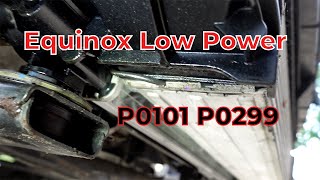
- P0101 — Mass Airflow (MAF) Sensor Performance. A large air leak after the MAF sensor but before the engine (like a disconnected charge pipe) will cause the measured airflow to be different from the calculated airflow, triggering this code along with P0299. TSB #22-NA-224 and #PIP5651G list these together.
- P0172 — System Too Rich. A significant boost leak can cause the engine to run rich, as the oxygen sensors detect excess fuel relative to the unmetered air. TSB #22-NA-224 and #PIP5651G also list this code.
- P0300 — Random/Multiple Cylinder Misfire. Moisture being ingested from a frozen charge air cooler can cause misfires, setting this code alongside P0299. TSB #18-NA-020 explicitly links these codes.
- P2227 — Barometric Pressure Circuit Range/Performance. This can be set along with P0299 when a frozen charge air cooler restricts airflow, as noted in TSB #18-NA-020. An owner on a forum also reported this code combination after front-end damage.
Technical Service Bulletins (TSBs) & Recalls
- 18-NA-020: Malfunction Indicator Lamp Illuminated with DTCs P0300, P0299, P0234 and/or P2227 Set (due to frozen/contaminated CAC).
- PIP5812C: DTC P0299/P0234 setting due to oil/moisture condensate freezing in Turbocharger Wastegate Regulator Solenoid Valve (TCV).
- 22-NA-224: Reduced Engine Power, MIL Illuminated - DTCs P0101, P0172, P0299, P0506, and/or P1101 Set (often due to disconnected CAC outlet tube).
- PIP5651G: Predecessor to 22-NA-224, highlighting the disconnected charge air cooler pipe at the throttle body.
Platform-Specific Known Issues
- Cold Climate Vulnerability: The 1.5L LYX engine in the Terrain and Equinox is highly susceptible to P0299 in freezing temperatures due to moisture from the PCV system and ambient air freezing inside the Charge Air Cooler (CAC) and/or the wastegate solenoid. GM's official fix involves a multi-step approach including potential hardware (grille covers), cleaning, and a software update that changes transmission behavior to keep engine temps higher.
- Charge Pipe Connection Failure: The specific connection of the charge air cooler outlet pipe to the throttle body is a known weak point. It can become disconnected, causing a sudden and complete loss of boost. TSBs detail inspecting the connection and replacing the pipe or using an updated retainer kit if damage is found.
Helpful Videos
We Have This Part in Stock

The information in this article is provided for general reference and educational purposes only. Vehicle specifications, procedures, and part compatibility can vary by production date, trim level, and region. Always consult your vehicle's factory service manual and verify part numbers before purchasing or performing repairs. Safety-critical components such as airbags, seat belts, and braking systems should be installed by a qualified professional.
- Gmc TERRAIN NA:
- 🧭 Diagnostic Flowchart
- 🎬 Helpful Videos
- 🛍️ Shop This Part
- What's Unique About the 2022-2022 Gmc TERRAIN NA
- Symptoms You May Notice
- Most Likely Causes
- Rare But Worth Checking
- Diagnosis Steps
- Parts You'll Likely Need
- Related Codes That Often Appear With This One
- Technical Service Bulletins (TSBs) & Recalls
- Platform-Specific Known Issues
- 🎟️ Get 5% Off