

P0299 on 2011-2020 Kia Optima 2.0T: Turbo Underboost Causes and Fixes
P0299 on a Kia Optima 2.0T most often means there is a boost leak from a cracked intercooler or a problem with the electronic wastegate actuator. Expect to spend $200-$600 for a new intercooler or a similar amount for wastegate actuator repairs.
- Before buying any parts for a P0299 code, perform a smoke test to check for boost leaks. It is the most important diagnostic step.
- The most likely sources of a boost leak are the intercooler (especially on 2011-2015 models) and the charge pipes.
- If no leaks are found, the next step is to check the electronic wastegate actuator voltage with a scan tool.
- Do not automatically assume the turbocharger has failed. It is more often a less expensive, related component that is the root cause.
What's Unique About the 2011-2020 Kia Optima
The Kia Optima's 2.0L Turbo (Theta II) engine, particularly in the 2011-2015 generation, has well-documented weak points that directly cause the P0299 code. Unlike a generic underboost issue, problems on this platform are frequently traced to either a cracked factory intercooler with plastic end-tanks or a faulty/misadjusted electronic wastegate actuator. While any turbocharged car can have boost leaks, these two specific failures are disproportionately common on the Optima 2.0T, making them the primary suspects.
Generation note: This range covers two Optima generations: the 3rd Gen (TF, 2011-2015) and 4th Gen (JF, 2016-2020). The TF generation is particularly known for intercoolers cracking at the plastic end-tanks and issues with the electronic wastegate actuator requiring adjustment, as detailed in Kia Service Action SA078. The JF generation uses a different turbo (Part # 28231-2GTA1) and intercooler setup but can still suffer from general boost leaks and wastegate problems.
Symptoms You May Notice
- Significant loss of engine power, feels sluggish
- Car enters 'limp mode,' limiting RPM and speed
- Check Engine Light is on
- Loud hissing or whistling sound from the engine bay when accelerating
- Difficulty accelerating, especially up hills or when merging
- Reduced fuel economy
- Fluttering or chattering noise from the turbo area on deceleration
- Replacing the entire turbocharger when the actual problem is a simple boost leak from the intercooler or a misadjusted wastegate actuator. A Reddit thread in r/Justrolledintotheshop highlighted a case where a dealer replaced a turbo for P0299, but the real issue was a completely separated intercooler end tank. Always perform a boost leak (smoke) test and check actuator voltage before condemning the expensive turbo assembly.
Most Likely Causes
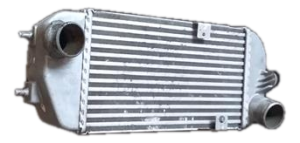
- Cracked Intercooler / Boost Leak 🔴 High Probability → Shop Intercooler The factory intercooler on 2011-2015 models uses plastic end tanks crimped to an aluminum core. These crimps often fail, or the plastic cracks, creating a large boost leak. This is a very common failure point discussed frequently in owner forums.
How to confirm: Perform a smoke test on the intake system. Smoke will pour out of the crack in the intercooler or any other leaking hose/connection. A visual inspection may also reveal oil residue and dirt collected around the leak. The leak is often where the plastic end tank meets the aluminum core.
Typical fix: Replace the intercooler. Upgraded all-aluminum intercoolers (e.g., from Wagner Tuning or Mishimoto) are available and highly recommended over the OEM design to prevent recurrence.
Est. part cost: $150-$400 - Electronic Wastegate Actuator (EWGA) Malfunction or Misadjustment 🔴 High Probability → Shop Turbocharger The electronic actuator that controls the turbo's wastegate can fail or its adjustment rod can drift out of its correct voltage range over time, causing the wastegate to stay partially open and prevent boost from building. This is a well-documented issue, leading Kia to issue Service Action SA078 for 2011 models.
How to confirm: Using a capable OBD-II scanner, check the wastegate position sensor voltage with the key on, engine off. For 2011-2013 models, the target is often ~3.9V-4.1V. For 2014+ models, it's often cited as being slightly higher, around 4.0V-4.2V. If the voltage is out of spec (e.g., below 3.8V or above 4.4V), it needs adjustment. If it doesn't respond to adjustment or tests, the actuator is likely faulty.
Typical fix: Adjust the length of the actuator rod to bring the voltage into specification. This is a common DIY fix detailed in many online videos. If the actuator motor has failed, it can be replaced. Aftermarket actuators are available (e.g., 39400-2G700 for Gen 1, 394002GTA0 for Gen 2), making replacement possible without buying a whole new turbo.
Est. part cost: $0 (adjustment) or $100-$250 (aftermarket actuator) - Leaking or Disconnected Charge Pipe 🟡 Medium Probability
How to confirm: Visually inspect all the piping between the turbo, intercooler, and throttle body. Check for loose clamps or pipes that have popped off. A smoke test is the most effective way to reveal leaks in the piping or couplers.
Typical fix: Tighten the clamp or reconnect the pipe. If a hose is cracked or torn, it must be replaced.
Est. part cost: $5-$150 - Faulty Turbo Boost Control Solenoid ⚪ Low Probability
How to confirm: This solenoid (also known as a wastegate control valve) manages the vacuum/pressure sent to the wastegate. If it fails, it can't properly control the wastegate, leading to underboost. Diagnosis involves testing the solenoid's operation with a scan tool or multimeter.
Typical fix: Replace the boost control solenoid. On the 2011-2015 models, this is often part number 39400-2G700.
Est. part cost: $50-$100
Rare But Worth Checking
- Complete Turbocharger Failure: → Shop Turbocharger While often blamed, a total turbo failure is less common than leaks or actuator issues. It's usually caused by oil starvation, which is a major concern linked to the broader Theta II engine issues (rod bearing failure), and would be accompanied by heavy blue/white smoke from the exhaust or a loud grinding/siren noise. A user on Reddit reported being quoted $3,100 by a dealer for a new turbo on a 2016 Optima with P0299.
- Restricted Catalytic Converter: → Shop Catalytic Converter A clogged catalytic converter can create excessive backpressure, preventing the turbo from spooling up effectively. This would typically be accompanied by other symptoms like a sulfur smell from the exhaust and a more gradual, severe loss of all-around engine power, not just during boost.
Diagnosis Steps
- Read fault codes with an OBD-II scanner. Note if P2562 or P2565 are present alongside P0299, as this strongly points to the wastegate actuator.
- Perform a visual inspection of the engine bay. Look for obviously disconnected hoses, loose clamps, or cracks in the plastic intake piping.
- Listen for a loud hissing sound during a brief, sharp throttle rev in park. A distinct hiss strongly suggests a large boost leak.
- Conduct a boost leak test (smoke test). Pressurize the intake system from the turbo inlet. Look and listen for smoke/air escaping from the intercooler (especially the end tanks), charge pipes, or throttle body connections. This is the most reliable way to find leaks.
- If no leaks are found, check the Electronic Wastegate Actuator (EWGA) voltage. With the key on and engine off, use a scan tool that can read live data to view the wastegate position sensor voltage. Compare it to the specification for your model year (~3.9V-4.2V).
- If voltage is out of spec, attempt to adjust the actuator rod. Loosen the locknut and turn the rod to change its length. Shortening the rod generally increases voltage; lengthening it decreases voltage. Cycle the ignition 5 times after each adjustment for the ECU to adapt.
- If adjustment doesn't work or the actuator is unresponsive, test the actuator motor itself. If it has failed, replace it.
- As a final check, inspect the turbocharger itself for excessive shaft play (wobble) or signs of damaged fins, which would indicate mechanical failure.
Parts You'll Likely Need
- Intercooler (Charge Air Cooler)
(OEM #28190-2T500 (for 2011-2015 models))— This is the most common failure point on 2011-2015 models, where the plastic end tanks crack and leak boost pressure.
Trusted brands: Mishimoto, Wagner Tuning, Spectra Premium, TYC
OEM price range: $350-$500
Aftermarket price range: $150-$400 - Electronic Wastegate Actuator
(OEM #39400-2G700 (for 2011-2015 models), 394002GTA0 (for 2016-2020 models))— The actuator fails or goes out of adjustment. Aftermarket replacements are now readily available, making this a much cheaper fix than replacing the entire turbo.
Trusted brands: Vertex, Standard Motor Products, Dorman
OEM price range: Not sold separately
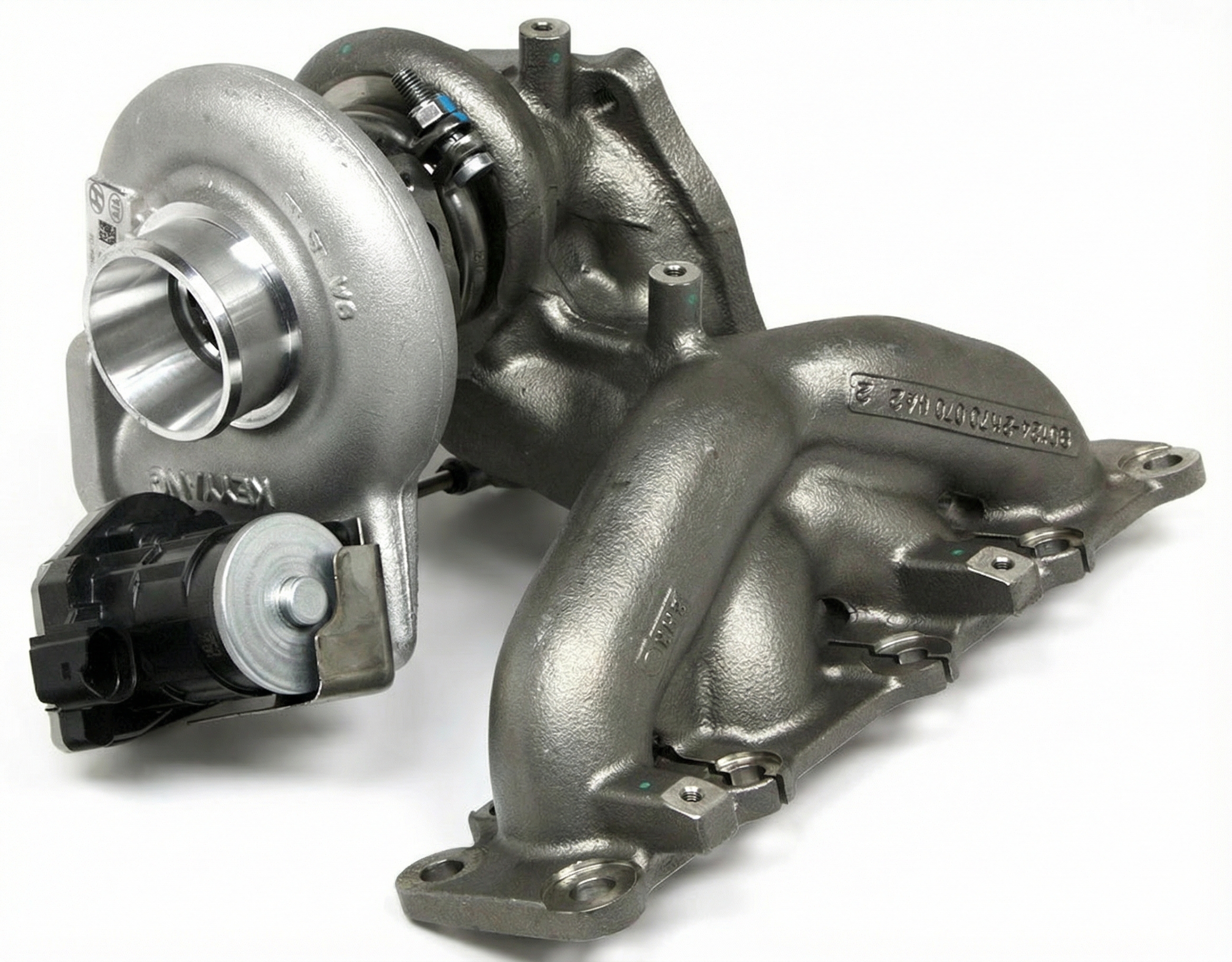
Aftermarket price range: $100-$250 - Turbocharger Assembly
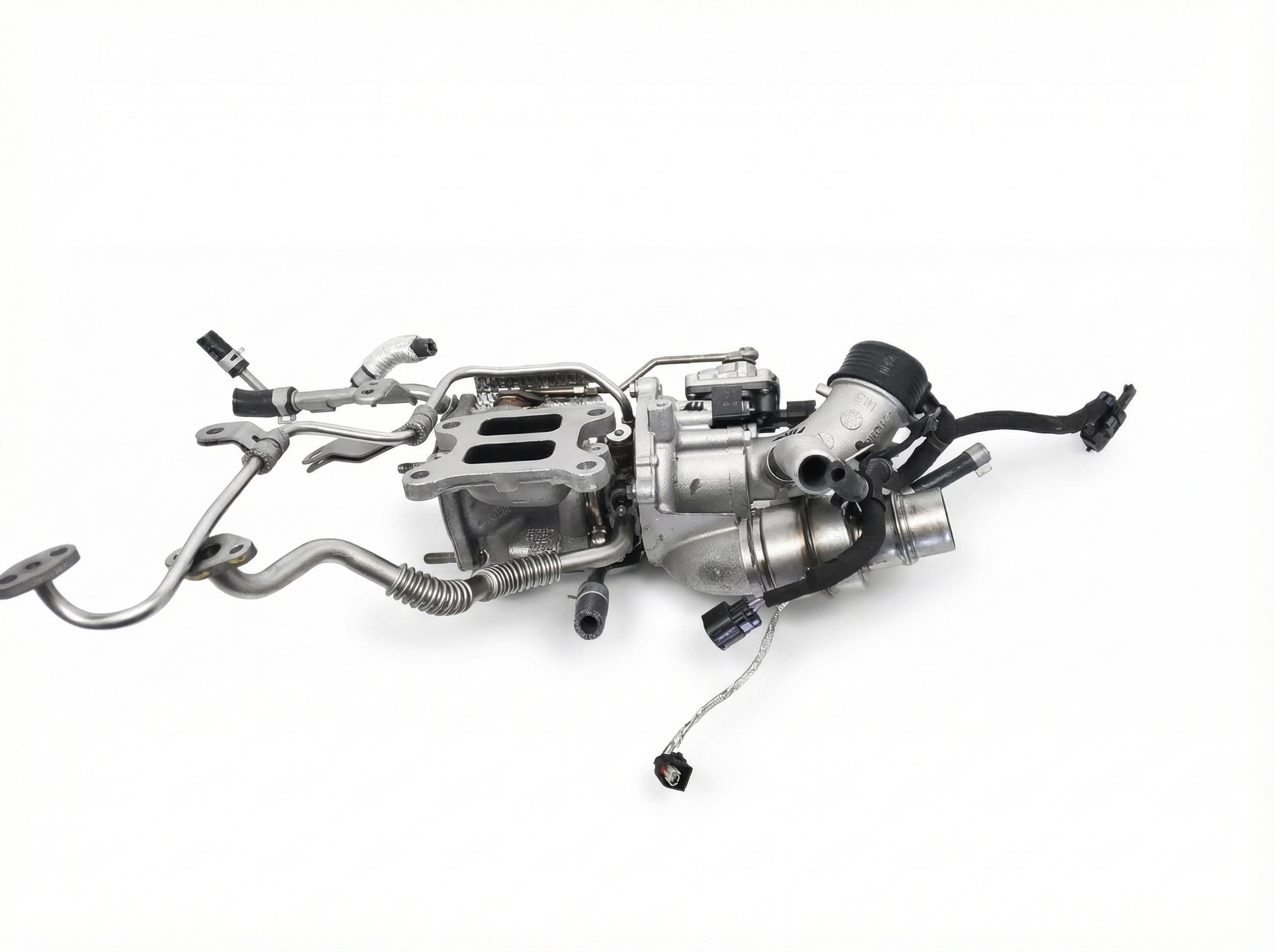
(OEM #28231-2G410 (for 2011-2015), 28231-2GTA1 (for 2016-2020))— Required if the turbo has failed mechanically (e.g., seized bearings, damaged turbine wheels). This is often misdiagnosed.
Trusted brands: OEM Mitsubishi, Rotomaster, A-Premium
OEM price range: $1500+
Aftermarket price range: $500-$900
Related Codes That Often Appear With This One
- P2562 — This code ('Turbocharger Boost Control Position Sensor 'A' Circuit') directly points to a problem with the electronic wastegate actuator's position sensor, often because the voltage is out of the expected range. Kia Service Action SA078 specifically addresses this code alongside P2565.
- P2565 — Similar to P2562, this code ('Turbocharger Boost Control Position Sensor 'A' Circuit High') indicates a fault in the wastegate actuator's position sensor circuit, reinforcing the diagnosis of an actuator issue.
Technical Service Bulletins (TSBs) & Recalls
- SA078: OPTIMA (TF) EWGA INSPECTION AND ADJUSTMENT - This service action from April 2011 addresses DTCs P2562 and P2565 on early 2011 Optima 2.0T models by inspecting and adjusting the electronic wastegate actuator rod length to correct the sensor voltage.
Platform-Specific Known Issues
- Wastegate Adjustment is a Common Fix: Many owners and technicians have successfully resolved the P0299 code by simply adjusting the electronic wastegate actuator rod to bring its voltage back into the correct specification, typically around 4.0V. This is often a no-parts-required fix, but it does require a scan tool capable of reading the live voltage data.
Mechanic-Grade Diagnostic Values
- Electronic Wastegate Actuator (EWGA) Position Sensor Voltage (Key On, Engine Off) — expected: 2011-2013 Models: ~3.9V - 4.1V. 2014-2015 Models: ~4.0V - 4.2V.. Failure: A voltage reading below ~3.8V or above ~4.3V indicates the actuator rod needs adjustment or the actuator may be faulty.
- Manual EWGA Voltage Test (using multimeter) — expected: Back-probe the yellow wire on the EWGA connector. With the key on, engine off, the DC voltage should match the scan tool reading.. Failure: If the multimeter reading is correct but the scan tool shows an erratic or incorrect value, it could indicate a wiring or ECU issue rather than a faulty actuator.
Scan Tool Commands That Help
- Kia GDS (or advanced aftermarket scanner): EWGA Closed Position Voltage Display — This is the primary live data PID (Parameter ID) to monitor when diagnosing P0299. It provides the real-time voltage of the wastegate actuator, which is critical for determining if adjustment is needed.
- Kia GDS: Actuator Re-learn/Adaptation — After adjusting the wastegate actuator rod or replacing the actuator, a re-learn procedure is often required. This typically involves cycling the ignition on and off several times to allow the ECU to learn the new end-stop positions.
Wiring & Ground Locations
- EWGA Connector — On the electronic wastegate actuator itself, attached to the turbocharger assembly on the front side of the engine.. This is the connector where voltage readings must be taken. The yellow wire is typically the signal wire used for diagnostics.
Real Owner Repair Stories
- Reddit user in r/Justrolledintotheshop (Kia Optima 2.0T with 140,000 miles) — P0299 Turbo Underboost code, audible whooshing sound.
❌ Tried (didn't work) A Kia dealer replaced the entire turbocharger assembly.
✅ What actually fixed it The actual cause was a completely separated plastic end tank on the factory intercooler. The crimp holding the end tank to the core had failed entirely. Replacing the intercooler resolved the issue. - YouTube video by 'Repairs101' (Vehicle not specified, but demonstrates a common turbo issue applicable to the Optima.) — P0299 Turbo Underboost
❌ Tried (didn't work) Checking for boost leaks.
✅ What actually fixed it The hole for the wastegate flapper arm pivot had become worn and oval-shaped, creating excessive play. This prevented the wastegate from closing fully, causing a constant boost leak. The fix involved peening the metal around the hole to tighten the fit of the bushing/arm, eliminating the play.
"I Checked Everything" — The Actual Cause
- A worn wastegate flapper arm bushing/pivot point inside the turbo's exhaust housing can cause a leak that a smoke test on the intake side will not detect. The wastegate will not seal properly against the exhaust pressure, allowing exhaust gas to bypass the turbine wheel, which prevents the turbo from building boost. This can be diagnosed by checking for excessive play in the wastegate arm.
- A failing diverter valve (or bypass valve) can leak boost internally. The valve is supposed to recirculate boost pressure when the throttle closes. If the internal diaphragm tears or the valve sticks, it can continuously leak pressurized air from the charge pipe back to the turbo inlet. Since this is an internal leak within the closed system, a smoke test may not reveal it, but it will cause a loss of metered, compressed air before it reaches the engine.
OEM Part Supersession History
28231-2G400, 28231-2G410→28231-2G420— Revisions to address reliability issues with the turbocharger assembly on the 2011-2015 Theta II engines.
Heads up: While the parts are physically interchangeable, the later revisions are generally considered more reliable. When replacing, using the latest part number (28231-2G420 or a quality aftermarket equivalent) is recommended.
Model Year Variations Within This Range
- 2011-2015 (TF Generation): Uses turbo P/N 28231-2G410 (and its predecessors/successors). Prone to cracked plastic intercooler end tanks and requires EWGA voltage of ~3.9-4.2V.
- 2016-2020 (JF Generation): Uses a different turbo, P/N 28231-2GTA1, and a different intercooler design that is less prone to cracking. While still susceptible to general boost leaks and actuator issues, the specific common failure points of the earlier generation are less prevalent. The 2.0T engine was also revised, producing slightly less peak horsepower (245 hp vs 274 hp).
- 2013-2014: A facelift occurred for the 2014 model year, but major mechanical components related to P0299 (turbo, intercooler, actuator) remained largely the same as the 2011-2013 models. However, there were recalls for low-pressure fuel hoses on these models that could be a related area of inspection.
Diagnostic Flowchart
Used vs. New Parts: Buying Guide for This Vehicle
When a used part is the smart pick: A used turbocharger assembly from a low-mileage (under 60k miles) donor vehicle that was rear-ended can be a cost-effective option, provided the engine had a clean history. Used charge pipes or sensors are also generally safe bets.
Donor-vehicle mileage cap: roughly under 60000 miles for the part to have meaningful remaining life.
What to inspect on the donor part:
- For a turbocharger, check for zero in-and-out shaft play and minimal side-to-side play.
- Inspect turbine wheels for any signs of chipping or contact with the housing.
- Ensure the wastegate arm is not seized and has no excessive play in its pivot.
- Check the vehicle history of the donor car for any indication of the major Theta II engine recall work; a replaced engine often came with a new turbo.
OEM-only on this vehicle (don't cheap out):
- While not OEM-only, it is strongly advised to AVOID used OEM intercoolers for 2011-2015 models. The original plastic end-tank design is flawed, and a used part is likely to fail again. Opt for a new, all-aluminum aftermarket unit instead.
Aftermarket brands forum-validated for this vehicle:
- Intercoolers: Mishimoto, Wagner Tuning, CXRacing
- Wastegate Actuators: Dorman, Standard Motor Products (SMP)
- Full Turbochargers: Rotomaster (remanufactured), A-Premium
Brands owners have reported issues with on this vehicle:
- Unnamed, no-brand turbochargers or actuators from online marketplaces can be a significant gamble with poor quality control and materials.
Real Owner Stories
Aggregated from forums and TSBs cited above. Mileages and costs reflect what owners reported in those sources.
2016 Kia Optima SX Turbo — 111000 miles
Symptoms: very slow to accelerate, P0299 'turbo underboost' code
What fixed it: Owner was quoted for a completely new turbo.
Cost: $3100
Source hint: Reddit r/kia
2011-2015 Kia Optima 2.0T
Symptoms: P0299 code, loss of power, car feels sluggish
What fixed it: Adjusted the length of the electronic wastegate actuator rod to bring the sensor voltage back into the correct specification (around 4.0V).
Source hint: Vehicle Specific Issues section noting wastegate adjustment as a common fix
2011-2015 Kia Optima 2.0T
Symptoms: P0299 code and a loud hissing sound when accelerating.
What fixed it: Replaced the factory intercooler, which had a crack in its plastic end tank, with an upgraded all-aluminum unit.
Source hint: optimaforums.com (Numerous threads discussing P0299, wastegate adjustment, and intercooler replacement)
Related OBD-II Codes
Frequently Asked Questions
My 2011 Kia Optima 2.0T has a P0299 code. Is there a specific service action for this?
I hear a loud hissing sound when I accelerate. Is this related to the P0299 code?
My mechanic says I need a new turbo for $3,000+. Is there a cheaper fix for P0299 on my Optima?
My intercooler is cracked. Should I replace it with another OEM part?
My scanner shows P2562 and P2565 along with P0299. What does that mean?
How can I check if my wastegate actuator needs adjustment?
Is the P0299 underboost issue also common on the Hyundai Sonata 2.0T?
Used OEM Parts in Stock
New Aftermarket Parts Available



The information in this article is provided for general reference and educational purposes only. Vehicle specifications, procedures, and part compatibility can vary by production date, trim level, and region. Always consult your vehicle's factory service manual and verify part numbers before purchasing or performing repairs. Safety-critical components such as airbags, seat belts, and braking systems should be installed by a qualified professional.
- Kia Optima:
- 🧭 Diagnostic Flowchart
- 🛍️ Shop This Part
- What's Unique About the 2011-2020 Kia Optima
- Symptoms You May Notice
- Most Likely Causes
- Rare But Worth Checking
- Diagnosis Steps
- Parts You'll Likely Need
- Related Codes That Often Appear With This One
- Technical Service Bulletins (TSBs) & Recalls
- Platform-Specific Known Issues
- Mechanic-Grade Diagnostic Values
- Scan Tool Commands That Help
- Wiring & Ground Locations
- Real Owner Repair Stories
- "I Checked Everything" — The Actual Cause
- OEM Part Supersession History
- Model Year Variations Within This Range
- Used vs. New Parts: Buying Guide for This Vehicle
- Real Owner Stories
- 2016 Kia Optima SX Turbo — 111000 miles
- 2011-2015 Kia Optima 2.0T
- 2011-2015 Kia Optima 2.0T
- Related OBD-II Codes
- Frequently Asked Questions
- 🎟️ Get 5% Off