

P0299 on 2019-2021 Lincoln Nautilus (MKX successor): Turbo Underboost Causes and Fixes
For the 2019-2021 Lincoln Nautilus (which replaced the MKX), code P0299 is most often caused by a faulty turbocharger wastegate actuator or a missing e-clip on the actuator rod, as highlighted in Lincoln's technical service bulletins. This is a common issue on the 2.0L and 2.3L EcoBoost engines, often leading to a significant loss of power and the vehicle entering a reduced-power 'limp mode'.
- The vehicle in question is a Lincoln Nautilus, which replaced the MKX in 2019.
- P0299 on this vehicle is very likely caused by a problem with the turbocharger wastegate actuator or its retaining clip, as per multiple manufacturer bulletins.
- Before considering expensive repairs, perform a careful visual inspection of the wastegate actuator linkage for a missing e-clip.
- Other causes like boost leaks are possible, but the wastegate system should be the first area of focus in your diagnosis.
- If the actuator has failed, verify if it can be replaced separately or if the entire turbocharger assembly is required for your specific model year.
What's Unique About the 2019-2021 Lincoln MKX
First, it's important to note that the Lincoln MKX was renamed the Lincoln Nautilus starting with the 2019 model year. So, a 2019-2021 vehicle is a Nautilus, the direct successor to the MKX. On this specific platform with the 2.0L and 2.3L EcoBoost engines, Lincoln has issued multiple Technical Service Bulletins (TSBs) that directly link the P0299 code to problems with the turbocharger's wastegate actuator, specifically a missing e-clip or a faulty actuator. This indicates a known pattern of failure on these engines, making the wastegate system the primary suspect, rather than other potential causes like boost leaks.
Diagnostic Flowchart
Tap your situation to follow the diagnostic path that matches what you're seeing on this vehicle.
Symptoms You May Notice
- Illuminated Malfunction Indicator Lamp (MIL) / Check Engine Light
- Significant lack of engine power and acceleration
- Vehicle may enter "limp mode," limiting RPM and speed
- Unusual whooshing, hissing, or whistling noises from the engine bay, especially during acceleration
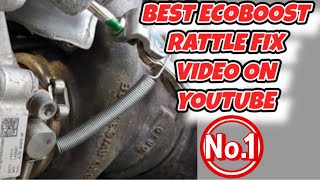
- Loud rattling sound from the turbo area, which may indicate a worn internal wastegate flapper. 🎬 Listen to this example of a wastegate rattle and the fix.
- Replacing the entire turbocharger assembly when only the wastegate actuator clip was missing or the actuator itself was faulty.
- Replacing boost pressure sensors without first performing a smoke test to check for physical air leaks in the charge pipes or intercooler.
- Overlooking a simple, loose hose clamp on the intake piping, leading to a chase for more complex issues.
Most Likely Causes
- Faulty or Inoperative Wastegate Actuator / Missing E-Clip 🔴 High Probability → Shop Turbocharger This is a well-documented issue for Ford/Lincoln 2.0L and 2.3L EcoBoost engines, as confirmed by multiple manufacturer TSBs (SSM 50485, SSM 50171, SSM 49427). The actuator can fail internally, or the small e-clip holding its linkage rod can fall off, disconnecting the rod from the wastegate arm.
How to confirm: Visually inspect the turbocharger wastegate actuator. Check if the actuator rod is connected to the wastegate arm on the turbo. If it is, check for the presence of the small retaining e-clip. You can also use a handheld vacuum pump to test if the actuator holds vacuum and moves the arm smoothly through its full range of motion.
Typical fix: If the clip is missing, reconnect the rod and install a new retaining clip. If the actuator itself has failed (e.g., ruptured diaphragm), it will need to be replaced. In some cases, the actuator is integral to the turbocharger, requiring a full turbo replacement.
Est. part cost: $5-$20 for a clip, $100-$300 for an actuator, $800-$2000+ for a full turbo assembly. - Air Leak in the Intake/Charge System 🟡 Medium Probability Modern engines use many plastic and rubber components in the intake tract. Over time, heat and pressure can cause cracks in the charge pipes or intercooler end tanks, or cause hose clamps to loosen.
How to confirm: Perform a visual inspection of all air intake hoses from the turbo to the throttle body, and the intercooler itself, for cracks, loose connections, or signs of oil residue (which can indicate a leak). A smoke test is the most effective method, where smoke is forced into the intake system to reveal the location of any leaks. 🎬 Watch a pro mechanic demonstrate how to properly diagnose underboost.
Typical fix: Tighten loose clamps or replace the cracked hose, pipe, or damaged intercooler.
Est. part cost: $50-$500 depending on the specific hose, pipe, or intercooler. - Faulty Boost Pressure Sensor (MAP Sensor) or Boost Control Solenoid ⚪ Low Probability While not a primary failure point, electronic sensors and solenoids can fail and provide incorrect readings to the computer or fail to control the wastegate correctly.
How to confirm: Use an OBD-II scan tool to monitor the boost pressure sensor reading with the key on, engine off. It should read close to atmospheric pressure. Compare the live data reading under boost to the specified values. The boost control solenoid (often called a wastegate solenoid) can be tested for proper electrical function and to see if it holds vacuum.
Typical fix: Replace the faulty boost pressure/MAP sensor or the boost control solenoid.
Est. part cost: $40-$120
Rare But Worth Checking
- Worn or Damaged Turbocharger: → Shop Turbocharger While the actuator is more common, internal turbo failure (worn bearings, damaged turbine/compressor wheels, or a worn wastegate flapper valve) can also cause underboost. This is usually accompanied by a loud whining or grinding noise and sometimes blue smoke from the exhaust.
- Restricted Air Filter or Intake: → Shop Air Cleaner Assembly A severely clogged engine air filter can starve the turbo of air, preventing it from building boost. This is a simple and inexpensive item to check first.
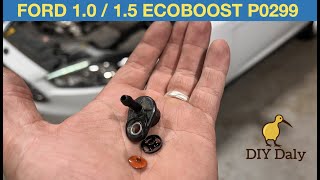
- Dislodged Turbocharger Inlet Tube Insert: → Shop Turbocharger On some 2.3L EcoBoost engines, a plastic insert/diffuser inside the air tube leading directly into the turbocharger inlet can become dislodged and turn sideways, creating a major air restriction and causing a P0299 code. This was documented in a detailed repair on a 2020 Ford Explorer. 🎬 See how a dislodged inlet tube insert causes this P0299 code.
- PCM Software Issue: In some specific cases, such as on the 2019 Ford Ranger with the 2.3L engine, Ford issued a TSB (20-2152) to reprogram the PCM to correct software parameters that could falsely trigger a P0299 code.
Diagnosis Steps
- Read all stored Diagnostic Trouble Codes (DTCs) with an OBD-II scanner. Note any other codes present with P0299.
- Visually inspect the engine bay, focusing on the turbocharger area. Look for the wastegate actuator rod and confirm it is connected and the retaining clip is in place, as per TSBs.
- Inspect all intake air piping from the air filter to the throttle body for cracks, damage, or loose clamps. Pay close attention to the plastic charge pipes and the intercooler end tanks.
- Check the air filter to ensure it is not excessively dirty or clogged.
- On 2.3L engines, remove the air inlet tube to the turbo and inspect for a dislodged plastic insert that may be blocking airflow.
- If no visual faults are found, perform a smoke test on the charge air system to check for leaks in hoses, gaskets, or the intercooler.
- If no leaks are present, test the wastegate actuator using a vacuum pump to ensure it holds vacuum and moves the wastegate arm through its full range of motion. Check for excessive play in the linkage.
- Using a scan tool, monitor live data for the boost pressure sensor. Check if the readings are plausible at idle and under load, comparing desired boost to actual boost.
- If all other components check out, inspect the turbocharger itself for excessive shaft play or damage to the compressor/turbine wheels.
Parts You'll Likely Need
- Turbocharger Wastegate Actuator Retaining E-Clip
(OEM #W717304-S300 (Potential, unconfirmed for this specific application))— This is a known failure point identified in multiple manufacturer TSBs. The clip can fall off, disconnecting the actuator from the wastegate. Note: The part number W717304-S300 is for a similar Ford clip, but may not be the exact one; it's often used for wheel moldings. A similar part number W711304-S300 also exists.
Trusted brands: Motorcraft
OEM price range: $5-$20
Aftermarket price range: $2-$10 - Turbocharger Wastegate Actuator — The actuator itself can fail internally, either by a ruptured diaphragm in vacuum-operated units or an electronic failure. This is a very common point of failure.
Trusted brands: Motorcraft
OEM price range: $150-$300
Aftermarket price range: $80-$200 - Turbocharger Assembly
(OEM #K2GZ-6K682-B (Example for 2019 2.0L))— On some EcoBoost models, the wastegate actuator is not sold separately from the turbocharger, or the internal wastegate flapper valve itself is worn out, requiring the replacement of the entire unit.
Trusted brands: Motorcraft, Garrett
OEM price range: $700-$2000
Aftermarket price range: $500-$1200 - Charge Air Cooler Pipe (Intercooler Hose)
Related Codes That Often Appear With This One
- P0243 — Relates to the wastegate solenoid circuit, often set alongside P0299 when the electronic control for the wastegate fails. A user on the Ford Edge Forum reported this combination when their wastegate solenoid failed.
- P02AB — Relates to boost control, often set with P0299 due to the same underlying wastegate issue. (Cited in TSB SSM 50485)
- P25B3 — Relates to the turbocharger wastegate, indicating a mechanical problem that directly causes the P0299 underboost condition. (Cited in TSB SSM 50485)
Technical Service Bulletins (TSBs) & Recalls
- SSM 50485: Lack of power and P0299 due to inoperative wastegate actuator or missing e-clip.
- SSM 50171: Lack of power and P0299 due to inoperative wastegate actuator or missing e-clip.
- SSM 49427: Lack of power and P0299 due to a missing wastegate actuator e-clip.
- TSB 16-0122: Details the inspection and repair procedure for a detached wastegate actuator rod on the 2.3L GTDI engine.
- TSB 20-2152: Notes a potential PCM software issue causing P0299 on some 2019 Ford Rangers, fixed by a reprogram.
Platform-Specific Known Issues
- TSB SSM 50485, SSM 50171, and SSM 49427 all point to an inoperative wastegate actuator or a missing wastegate actuator e-clip as a primary cause for P0299 on 2.0L/2.3L EcoBoost engines, resulting in a lack of power.
- An older TSB for the related 2.3L GTDI engine (TSB 16-0122) details a procedure for reconnecting a detached wastegate actuator rod and installing a new retaining clip to resolve P0299.
- On the platform-mate Ford Edge, owners report excessive play in the wastegate arm causing the flapper valve to not seal properly, leading to P0299. One owner noted, "My problem was the waste gate. Even when the actuator was closed the waste gate could flap open because of the slop in the arm connecting the waste gate."
Mechanic-Grade Diagnostic Values
- MAP Sensor Signal Voltage (Key On, Engine Off) — expected: 2.0V to 3.0V for turbo applications. Should be equivalent to the Barometric Pressure (BARO) sensor reading.. Failure: A difference of more than 0.5 volts between the MAP and BARO sensor readings indicates a potential sensor fault.
- MAP Sensor Signal Voltage (Engine Idling) — expected: Should vary between 1.0V and 2.0V. Voltage should drop when the throttle is applied.. Failure: Voltage does not fluctuate or drops to zero when revving the engine.
- MAP Sensor 5V Reference Wire — expected: 4.5V to 5.0V. Failure: Voltage outside this range indicates a wiring or PCM issue.
- Fuel Injector Coil Resistance — expected: 1 to 2 ohms. Failure: Resistance outside this range indicates a faulty injector, which can affect combustion and indirectly contribute to performance codes.
Scan Tool Commands That Help
- FORScan: Live Data Monitoring (PIDs: BOOST, TC_VP, WGSOL) — To monitor Desired vs. Actual boost pressure, Turbocharger Vane Position, and Wastegate Solenoid duty cycle in real-time during a test drive to see if the PCM is commanding boost and if the turbo is responding.
- Ford IDS (or equivalent high-end scanner): Powertrain > PCM Reprogram — To apply a software update as specified by TSBs like 20-2152 or 20-2246, which address software parameters that could falsely trigger a P0299 code.
Wiring & Ground Locations
- Engine Block Ground Strap — Typically a braided metal strap connecting the engine block to the vehicle's chassis/firewall.. A poor engine ground can cause incorrect readings from various sensors, including the MAP sensor and wastegate position sensor, leading to false codes. It's crucial to ensure this connection is clean and tight.
- Battery Negative Terminal Ground — The main ground point from the battery negative terminal to the chassis. On a Nautilus, the negative terminal is far back and a dedicated ground post near the front of the engine bay is often used for jumping.. The primary ground for the entire electrical system. All sensor ground circuits ultimately rely on this connection. A voltage drop test between the battery negative post and the engine block can quickly identify a poor ground connection.
- PCM Fuses — In the under-hood fuse box. For a 2019 Nautilus, these are typically fuses F78, F79, F81, and F82.. These fuses supply power to the Powertrain Control Module (PCM). An intermittent connection or fault here can cause a wide range of driveability issues and codes, including P0299.
Real Owner Repair Stories
- YouTube - 'P0299 Underboost on a 2020 Ford Explorer' (2020 Ford Explorer, 2.3L EcoBoost, 14,000 miles) — Check engine light with P0299 code.
❌ Tried (didn't work) Checked for TSBs; found one for a missing wastegate actuator clip (SSM 49427), but the clip was present., Performed a PCM software update per TSB 20-2246., Monitored live data, which confirmed actual boost was significantly lower than desired boost.
✅ What actually fixed it A plastic insert/diffuser inside the air inlet tube leading to the turbocharger had dislodged and turned sideways, severely restricting airflow into the turbo. Replacing the inlet tube resolved the underboost condition. - Ranger5G.com forum user (2019 Ford Ranger) — Vehicle died, wrench symbol illuminated, P0299 code stored.
❌ Tried (didn't work) Initial diagnosis was unclear.
✅ What actually fixed it The dealer found TSB 20-2152, which indicated the cause was a software parameter issue. Reprogramming the PCM resolved the problem completely. - YouTube - 'P0299 BY FAULTY TURBOCHARGER BYPASS VALVE' (2018 Ford F-150, 2.7L EcoBoost (similar design)) — Check engine light with P0299, slightly underpowered on acceleration.
❌ Tried (didn't work) General diagnosis pointed to underboost.
✅ What actually fixed it The Turbocharger Bypass Valve (TCBY), also known as a diverter valve, was stuck in the open position due to rust on its internal shaft. This caused boost pressure to be constantly bled off. Replacing the valve fixed the issue.
"I Checked Everything" — The Actual Cause
- In a documented case on a 2.3L EcoBoost, a smoke test and all visual inspections for leaks came back clean. The actual cause was a dislodged plastic insert inside the turbocharger's air inlet tube, which acted as a major air restriction before the turbo, something a smoke test on the charge-air side would never find.
OEM Part Supersession History
CB5Z-6K682-H (2012 2.0L Turbo)→CB5Z-6K682-G (2013-2014 2.0L Turbo)— A design change was made to the outlet flange where the catalytic converter mounts. The groove is deeper on the newer part.
Heads up: The 2012 turbo will not fit a 2013-2014 vehicle's exhaust correctly due to the flange difference, and vice-versa.
Model Year Variations Within This Range
- 2020: For 2020 Explorer models with the 2.3L EcoBoost built on or before July 14, 2020, Ford issued TSB 20-2246. It states that a P0299 code may be caused by a PCM software issue, and the fix is to reprogram the module. This suggests a software calibration change occurred after this date.
Helpful Videos


The information in this article is provided for general reference and educational purposes only. Vehicle specifications, procedures, and part compatibility can vary by production date, trim level, and region. Always consult your vehicle's factory service manual and verify part numbers before purchasing or performing repairs. Safety-critical components such as airbags, seat belts, and braking systems should be installed by a qualified professional.
- Lincoln MKX:
- 🧭 Diagnostic Flowchart
- 🎬 Helpful Videos
- What's Unique About the 2019-2021 Lincoln MKX
- Symptoms You May Notice
- Most Likely Causes
- Rare But Worth Checking
- Diagnosis Steps
- Parts You'll Likely Need
- Related Codes That Often Appear With This One
- Technical Service Bulletins (TSBs) & Recalls
- Platform-Specific Known Issues
- Mechanic-Grade Diagnostic Values
- Scan Tool Commands That Help
- Wiring & Ground Locations
- Real Owner Repair Stories
- "I Checked Everything" — The Actual Cause
- OEM Part Supersession History
- Model Year Variations Within This Range
- 🎟️ Get 5% Off