

P0299 on 2013-2019 Mazda Mazda3 2.2L SKYACTIV-D: Underboost Causes and Fixes
On the Mazda3 SKYACTIV-D 2.2L, code P0299 is most often caused by a failure in the turbocharger's vacuum control system, like a bad solenoid or leaking line, or a broken internal turbocharger bypass valve. Expect a diagnostic-heavy repair that can range from a ~$150 solenoid to a much more expensive turbo repair or replacement. It can also be a symptom of deeper engine problems like a worn exhaust camshaft.
- P0299 on a Mazda SKYACTIV-D 2.2L is a serious code indicating a lack of power, and it should be diagnosed promptly.
- Do not assume the turbo has failed. The most common causes are cheaper, external parts like vacuum hoses and control solenoids.
- Diagnosis must be systematic: check live data, test the vacuum system, then inspect for mechanical faults.
- Due to the complexity of the sequential turbo system and the difficult access, this is a job best left to a professional or a very experienced DIY mechanic with the right tools.
What's Unique About the 2013-2019 Mazda Mazda3
The Mazda SKYACTIV-D 2.2L engine uses a sophisticated sequential twin-turbocharger system to provide power across the rev range. This system is heavily reliant on a complex network of vacuum lines, actuators, and control solenoids to direct exhaust flow and manage boost. Unlike a simple boost leak on other cars, the P0299 code on this specific engine frequently points to failures within this intricate control system or to specific, known mechanical failure points within the turbo assembly itself, such as a broken bypass valve flap. Furthermore, P0299 can be a secondary symptom of the engine's more notorious issues, such as a worn exhaust camshaft which sheds metal particles that damage the small turbo's bearings.
Generation note: This guide primarily covers the third-generation (BM/BN) Mazda3 produced from 2013-2018, which is the generation most commonly equipped with the 2.2L SKYACTIV-D engine. While the engine may be found in some 2019 models in certain markets, the issues described are characteristic of this engine across its applications in the Mazda6 and CX-5 as well.
Symptoms You May Notice
- Check Engine Light is on
- Drastic loss of engine power, often described as 'limp mode' or feeling like the turbo isn't working.
- Sluggish or slow acceleration, especially from a stop or at low RPMs (below ~2800 RPM).
- Difficulty reaching or maintaining highway speeds.
- Reduced fuel economy (MPG).
- Other warning lights (DSC, SCBS, TPMS) may illuminate simultaneously as a secondary effect of the powertrain fault, often confusing the diagnosis.
- A quiet whirring or whistling noise from the engine bay may precede or accompany the fault.
- Replacing the MAP/Boost pressure sensor. While sensors can fail, it's uncommon for this code. The sensor is usually accurately reporting the low boost, it is not the cause of it.
- Immediately replacing the entire turbocharger assembly. The issue is often a much cheaper and simpler external control component, like a vacuum line or solenoid, which should be diagnosed thoroughly first.
- Ignoring the cascade of other warning lights (SCBS, DSC, TPMS). These are often false flags triggered by the ECU in response to the primary powertrain fault (P0299) and will clear once the boost issue is resolved.
Most Likely Causes
- Faulty Turbocharger Control Solenoid 🔴 High Probability → Shop Turbocharger The sequential turbo system uses multiple vacuum solenoids to direct pressure and control actuators. The solenoid controlling the regulating valve (which directs flow between turbos) is a common failure point. It can fail electrically or become clogged, preventing proper turbo operation.
How to confirm: Using a scan tool, monitor the solenoid's operation. A more direct test involves applying vacuum to the actuator it controls to see if it moves. If the actuator moves but doesn't when the engine is running, test for vacuum supply to the solenoid and command from the PCM. A faulty solenoid will fail to pass vacuum to the actuator when commanded.
Typical fix: Replace the faulty solenoid. There are several solenoids in a block under the battery tray; correct diagnosis is key. The regulating valve control solenoid is often the culprit.
Est. part cost: $80-$200 - Vacuum Leak 🔴 High Probability The engine bay contains a complex network of rubber and plastic vacuum lines that control the turbo system. Over time, these lines can become brittle, crack, or disconnect, especially the small lines feeding the turbo actuators.
How to confirm: Visually inspect all vacuum lines connected to the turbochargers, actuators, and solenoids. Use a hand-held vacuum pump to test individual line segments for leaks. A key diagnostic check is to monitor the 'Brake Booster Pressure' PID on a scan tool at idle; a healthy system should read around 7.6 kPa. A much higher reading (e.g., 15.7 kPa) indicates a significant vacuum leak or a failing vacuum pump.
Typical fix: Replace the cracked or leaking vacuum hose section(s). It is often wise to replace all the small-diameter turbo control hoses as a preventative measure. 🎬 See this video for the full vacuum pipe layout.
Est. part cost: $10-$50 - Broken Turbocharger Bypass Valve Flap 🟡 Medium Probability → Shop Turbocharger A specific, well-documented failure where an internal flap that directs exhaust gas between the two turbos breaks off its pivot shaft. This causes a major loss of boost, particularly at low RPMs, as exhaust gas fails to spool the small turbo.
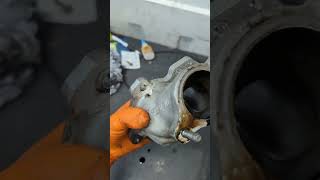
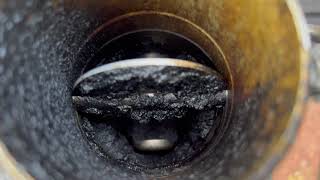
How to confirm: This is a difficult diagnosis that often follows ruling out all vacuum and control issues. Physical inspection, by removing the high-pressure turbo outlet pipe, may reveal the broken valve flap loose inside the turbo housing. 🎬 Watch: How to repair the broken turbo bypass valve flap. The symptom is typically no boost, then a sudden surge of power at higher RPMs.
Typical fix: A repair kit is available for the valve itself, but installation is labor-intensive as the turbo assembly must be partially removed. In many cases, this leads to a full turbocharger replacement, especially if the broken flap has caused secondary damage.
Est. part cost: $50-$100 for a repair kit, $1500+ for a replacement turbo assembly. - Sticking/Failed Turbo Actuator 🟡 Medium Probability
How to confirm: Disconnect the vacuum line from the actuator in question (e.g., the large canister for the regulating valve) and connect a hand-held vacuum pump. Apply vacuum and watch to see if the actuator rod moves smoothly through its full range of motion and holds vacuum. The regulating valve actuator should have its position tracked by a sensor, which can be monitored on a scan tool; desired vs. actual position should match.
Typical fix: Replace the faulty turbocharger actuator. In some cases, the actuator is integral to the turbocharger assembly, requiring full replacement.
Est. part cost: $150-$300
Rare But Worth Checking
- Worn Exhaust Camshaft Lobes: → Shop Engine Camshaft A severe and systemic issue on early SKYACTIV-D engines where the exhaust camshaft wears prematurely. Metal particles from the worn lobes travel into the oil system, pass through the vacuum pump (which is driven by the camshaft), and can destroy the bearings of the small turbocharger, leading to underboost, oil consumption, and eventual turbo failure. This is often the root cause of a recurring P0299.
- Charge Air Leak (Boost Leak): While common on many turbo cars, on this engine it's less frequent than control system issues. A crack in an intercooler pipe or a loose clamp can still cause P0299. A smoke test is the best way to confirm. There was a service campaign (AF069A) to replace weak clamps on the turbo outlet pipe.
- Clogged Intake System / EGR: These engines are prone to severe carbon buildup in the intake manifold and EGR passages, especially with short-trip driving. While this more commonly sets EGR codes, a severe restriction can disrupt airflow enough to contribute to an underboost condition.
Diagnosis Steps
- Connect a high-level scan tool and verify the presence of P0299 and any other codes like P2263.
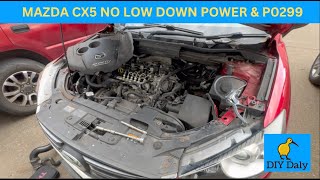
- Monitor live data. Key parameters are 'Desired Boost' vs. 'Actual Boost', 'Brake Booster Pressure Sensor' (should be ~7.6 kPa at idle), and 'Turbocharger Regulating Valve Position' (should be ~19mm at idle). 🎬 Watch: How to diagnose boost issues using live data. A high brake booster pressure reading points to a vacuum supply issue.
- Perform a thorough visual inspection of all vacuum lines running to and from the turbochargers and control solenoids. Look for cracks, loose fittings, or collapsed hoses. Pay close attention to the small diameter hoses.
- With the engine off, connect a hand-held vacuum pump to the main vacuum line from the pump to test its integrity and the pump's ability to hold vacuum.
- Test the individual turbo actuators by applying vacuum with the hand pump and observing if the actuator rods move smoothly and hold vacuum. Check the regulating valve actuator and the wastegate actuator.
- Test the control solenoids. Check for power and ground. Test them manually with a vacuum gauge to ensure they switch correctly when commanded by the scan tool or by applying power. The solenoid block is located under the battery tray.
- If all control systems check out, perform a smoke test on the charge air system (from the turbo outlet to the engine intake) to rule out boost leaks.
- If no external faults are found, the final step is to inspect the internal turbocharger bypass valve, which requires removing the high-pressure turbo outlet pipe for visual confirmation.
- As a final, deeper check, especially if turbos fail repeatedly, inspect the exhaust camshaft for lobe wear, which is a known root cause of turbo failure on this engine.
Parts You'll Likely Need
- Turbocharger Vacuum Control Solenoid
(OEM #SH02-18-741)— These solenoids are a frequent failure point, causing a loss of control over the turbo actuators and leading to an underboost condition.
Trusted brands: Mazda OE, Bosch, Pierburg, Hoffer
OEM price range: $150-$250
Aftermarket price range: $80-$150 - Vacuum Hose — The complex vacuum system has many rubber hoses that can crack and leak over time, which is a primary cause of P0299 on this engine.
Trusted brands: Mazda OE, Continental
OEM price range: $15-$40 per section
Aftermarket price range: $5-$20 per section - Turbocharger Assembly
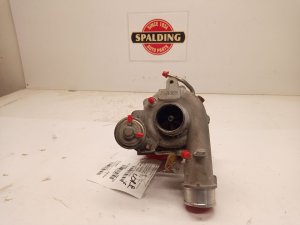
(OEM #SH01-13-700)— Required if an internal, non-serviceable part like the bypass valve flap, bearings, or wastegate fails. This is the most expensive repair and can be necessitated by underlying issues like camshaft wear.
Trusted brands: Mazda OE, Mitsubishi (OEM supplier)
OEM price range: $2000-$3000
Aftermarket price range: $1200-$1800 (Remanufactured) - Turbocharger Bypass Valve Repair Kit — A cost-effective solution if only the internal bypass flap has broken off its pivot, and there is no other damage to the turbocharger.
Trusted brands: Aftermarket specialty suppliers
OEM price range: N/A
Aftermarket price range: $50-$100
Related Codes That Often Appear With This One
- P2263 — P2263 ('Turbocharger/Supercharger Boost System Performance') often appears with P0299. This combination strongly points to a problem with the turbo's mechanical or control system, rather than a simple boost leak. It is often triggered by issues with vacuum lines or solenoids.
Platform-Specific Known Issues
- A known issue involves the internal turbocharger bypass valve/flap breaking, which requires either a special repair kit or a full turbo replacement.
- The SKYACTIV-D engine can be prone to carbon buildup in the intake system and premature wear of the exhaust camshaft if oil change intervals are not strictly followed, which can lead to secondary turbo damage.
Mechanic-Grade Diagnostic Values
- Vacuum Pump Output at Idle — expected: ≥ -22 inches Hg (approx. -74.5 kPa). Failure: A reading below -18 inHg (approx. -61 kPa) indicates a failing pump.
- Brake Booster Pressure Sensor PID (Scan Tool) — expected: ~7.6 kPa at idle. Failure: A significantly higher reading, such as 15.7 kPa or 26 kPa, points to a major vacuum leak in the system between the pump and the turbo control solenoids.
- Boost Pressure Sensor (MAP Sensor No.2) Voltage Range — expected: 0.5V to 4.5V. Failure: Voltage outside this range may indicate a sensor or wiring fault.
- Boost Pressure Sensor (MAP Sensor No.2) Pressure Range — expected: 50 kPa to 350 kPa (0.5 bar to 3.5 bar). Failure: Sensor should accurately read pressure within this range.
- PCM Trigger Condition for P0299 — expected: Actual boost pressure is lower than target boost for a continuous 7 seconds.. Failure: This condition being met while engine speed is between 1,750-5,000 RPM and fuel injection is >= 25 mm3/stroke will set the code.
Scan Tool Commands That Help
- FORScan or Mazda M-MDS: Isolating Vacuum System via Hose Clamping — When the 'Brake Booster Pressure' PID reads high at idle, clamping the main vacuum hose that feeds the turbo solenoids can confirm if the leak is in the turbo control circuit. If clamping the hose causes the pressure reading to drop to the normal ~7.6 kPa, the leak is downstream in the turbo control lines or solenoids. If the pressure stays high, the issue is with the vacuum pump or the line leading to the clamp point.
- Mazda M-MDS: Live Data Road Test: MAP_DSD vs MAP — To confirm underboost during a drive cycle. While accelerating in 2nd gear from 40 km/h to 55 km/h over at least 5 seconds, the difference between desired boost (MAP_DSD) and actual boost (MAP) should not be more than 80 kPa for 3 continuous seconds. A larger, sustained difference confirms the underboost condition the PCM is detecting.
Real Owner Repair Stories
- Reddit user in r/mazda (2015 Mazda 6 2.2L SKYACTIV-D, 98,000 miles) — Check engine light on, struggling to find power under 3000 RPM on the motorway.
❌ Tried (didn't work) The user took it to a garage for diagnosis immediately.
✅ What actually fixed it The garage diagnosed that two internal turbo flaps were broken and the turbo assembly needed replacement. This aligns with the common failure of the internal bypass/regulating valve flap breaking off its pivot. - YouTube video by 'LM Auto Repairs' (Mazda with 2.2L SKYACTIV-D engine) — P0299, no boost at low RPMs then a sudden surge of power.
❌ Tried (didn't work) Checked vacuum supply - OK, Checked solenoid control - OK, Checked vacuum control components - OK
✅ What actually fixed it After removing the high-pressure turbo outlet pipe, the internal bypass valve flap was found to be broken and detached. A repair kit was installed for the bypass valve assembly, which resolved the underboost condition.
"I Checked Everything" — The Actual Cause
- In many documented cases for the SKYACTIV-D 2.2L, a smoke test on the charge air system comes back clean. The actual cause is often not a boost leak, but a failure in the vacuum control system (leaking lines, bad solenoids) or a mechanical failure inside the turbocharger itself, like the infamous broken bypass valve flap, which a smoke test cannot detect.
OEM Part Supersession History
SH01-13700A, SH01-13700B, SH01-13700C, SH01-13700D→SHY11370ZB (and other revisions like SH01-13700E)— Likely revisions to address reliability issues, possibly related to the internal bypass valve flap or bearing durability.
Heads up: While mechanically interchangeable, later revisions are generally preferred for improved reliability.SH01-18-G00A→SH15-18-G00A, SHY2-18-G00A— Revisions to the vacuum pump, which is a critical component for the turbo control system.
Heads up: The part numbers appear to be interchangeable across the affected models (Mazda 3, 6, CX-5).
Model Year Variations Within This Range
- 2013-2019: The 2.2L SKYACTIV-D engine was available in different power outputs, such as 150hp and 175hp versions. These differences are primarily achieved through ECU mapping (adjusting fuel and boost pressure) rather than major mechanical changes. However, a fault causing P0299 will affect both versions similarly, resulting in a loss of low-RPM power.
Diagnostic Flowchart
Other Known Issues on This Vehicle
Issues unrelated to this code that are worth knowing about as an owner of this generation:
- Premature Exhaust Camshaft Wear 🔴 High → Shop Engine Camshaft — Common on pre-2018 models, particularly those with poor service history or frequent short trips. Can occur from 70,000 miles onwards. (Ref: TSB R073/15 addresses diagnosis and replacement.)
- Oil Dilution & Rising Oil Level 🔴 High — Very common, especially on vehicles used for short-distance city driving that prevents DPF regeneration. (Ref: Multiple recalls (e.g., AK016A) and TSBs address related components like injector seals and software updates.)
- Severe Intake System Carbon Buildup 🟠 Medium — Inevitable on all engines over time, but becomes problematic and requires cleaning typically between 60,000-100,000 miles. (Ref: Recalls in some markets (e.g., Australia) addressed intake shutter valve cleaning.)
- Leaking Fuel Injector Seals 🔴 High — A known issue on earlier models which used copper seals. Mazda later updated to improved steel seals. Failure leads to oil contamination and sludge. (Ref: Addressed in recalls and TSBs related to carbon buildup and oil issues.)
- Clogged Oil Pump Pickup Strainer 🔴 High → Shop Engine Oil Pump — A direct consequence of leaking injector seals and carbon/sludge in the oil. Leads to oil starvation and catastrophic engine failure. (Ref: No specific recall, but a known failure mode documented by independent specialists.)
Used vs. New Parts: Buying Guide for This Vehicle
When a used part is the smart pick: A used vacuum control solenoid block (PN: SH02-18-741) can be a cost-effective choice, as they are relatively easy to access and replace. A complete used turbocharger assembly is a high-risk, high-reward option; it can save significant money but should only be considered if sourced from a low-mileage, reputable donor vehicle with a known history free of engine issues.
Donor-vehicle mileage cap: roughly under 60000 miles for the part to have meaningful remaining life.
What to inspect on the donor part:
- For a used turbo: Ask for video/photos showing minimal shaft play (both in/out and side-to-side).
- For a used turbo: Inspect the small turbine wheel for any signs of chipping or damage from foreign objects (like a broken bypass flap rivet).
- For a used turbo: Ensure the actuator arms move freely and are not seized.
- Verify the donor vehicle did not suffer from the 'worn exhaust camshaft' issue, as this contaminates the oil and destroys the turbo bearings.
OEM-only on this vehicle (don't cheap out):
- Turbocharger Assembly: Due to the high failure rate of the internal bypass flap and the risk of oil contamination from camshaft wear, a new or professionally remanufactured OEM (Garrett) unit is strongly recommended for long-term reliability.
- Vacuum Pump: Given its critical role and the link to camshaft wear, a new OEM pump is the safest choice to ensure proper vacuum supply and avoid repeat failures.
Aftermarket brands forum-validated for this vehicle:
- Garrett (OEM supplier for the turbocharger).
Brands owners have reported issues with on this vehicle:
- Unbranded, cheap turbocharger assemblies from online marketplaces. Many forum stories detail these failing quickly or not performing to spec, leading to a repeat of the P0299 code and wasted labor.
Real Owner Stories
Aggregated from forums and TSBs cited above. Mileages and costs reflect what owners reported in those sources.
2015 Mazda 3 2.2d
Symptoms: Just miles after purchase, the car displayed a P0299 error along with a cascade of system errors including DSC, SCBS, TPMS, and a general vehicle system malfunction.
What fixed it: Diagnosis of the vacuum system and turbo control components.
Source hint: Reddit r/mazda3 - Mazda 3 2015 2.2d P0299 error
2013-2019 Mazda Mazda3 SKYACTIV-D 2.2L
Symptoms: Classic symptom cluster of P0299 accompanied by DSC, SCBS, and TPMS malfunction lights, along with sluggish acceleration and reduced MPG.
What fixed it: Identified as a P0299 code causing non-related electrical warnings.
Source hint: Reddit r/mazda - P0299 code causing non-related electrical warnings
2013-2019 Mazda Mazda3 SKYACTIV-D 2.2L
Symptoms: Low-end boost fault where the car struggled at low RPMs. Visual inspection confirmed an internal component had failed.
What fixed it: Installation of an aftermarket turbo bypass valve repair kit after removing the high-pressure turbo outlet pipe to confirm the broken flap.
Source hint: YouTube - Mazda 2.2 skyactiv P0299 low end boost fault & turbo bypass valve repair
2013-2019 Mazda Mazda3 SKYACTIV-D 2.2L
Symptoms: P0299 and P2263 codes present. Sluggish performance.
What fixed it: Vacuum system fault identified by monitoring live scan tool data, specifically the Brake Booster Pressure and Regulating Valve Position.
Source hint: YouTube - Mazda P2263 and P0299 Fault Code Diagnosed and Fixed
Related OBD-II Codes
Frequently Asked Questions
Why are my DSC, SCBS, and TPMS lights on when the problem seems to be the turbo?
Is there a specific part number for the solenoid that often fails on the 2.2L diesel?
My car has no power at low RPMs but surges at high RPMs. What could be the cause?
How can I check if my vacuum pump is failing using a scan tool?
Is there a repair kit for the turbo bypass valve, or do I need a whole new turbocharger?
What should I check if I keep having recurring turbo failures on my SKYACTIV-D?
Helpful Videos



We Have This Part in Stock

The information in this article is provided for general reference and educational purposes only. Vehicle specifications, procedures, and part compatibility can vary by production date, trim level, and region. Always consult your vehicle's factory service manual and verify part numbers before purchasing or performing repairs. Safety-critical components such as airbags, seat belts, and braking systems should be installed by a qualified professional.
- Mazda Mazda3:
- 🧭 Diagnostic Flowchart
- 🎬 Helpful Videos
- 🛍️ Shop This Part
- What's Unique About the 2013-2019 Mazda Mazda3
- Symptoms You May Notice
- Most Likely Causes
- Rare But Worth Checking
- Diagnosis Steps
- Parts You'll Likely Need
- Related Codes That Often Appear With This One
- Platform-Specific Known Issues
- Mechanic-Grade Diagnostic Values
- Scan Tool Commands That Help
- Real Owner Repair Stories
- "I Checked Everything" — The Actual Cause
- OEM Part Supersession History
- Model Year Variations Within This Range
- Other Known Issues on This Vehicle
- Used vs. New Parts: Buying Guide for This Vehicle
- Real Owner Stories
- 2015 Mazda 3 2.2d
- 2013-2019 Mazda Mazda3 SKYACTIV-D 2.2L
- 2013-2019 Mazda Mazda3 SKYACTIV-D 2.2L
- 2013-2019 Mazda Mazda3 SKYACTIV-D 2.2L
- Related OBD-II Codes
- Frequently Asked Questions
- 🎟️ Get 5% Off