

P0299 on 2019-2020 Ram ProMaster: Turbo Underboost Causes and Fixes
For a 2019-2020 Ram ProMaster with the 3.0L EcoDiesel (Iveco F1C), code P0299 is most often caused by a required powertrain software update per TSB S2018000008 or a cracked/loose charge air cooler (CAC) hose, particularly the outlet hose. Before starting mechanical repairs, contact a dealer with your VIN to check for the software update, then visually inspect all boost hoses for splits and oily residue.
- For a 2019 model, your first step should be to contact a dealer about TSB S2018000008 for a potential software fix.
- Do not assume the turbo has failed. The most common mechanical faults are boost leaks from cracked hoses, which are much cheaper to fix.
- A thorough visual inspection of all charge air pipes and a smoke test are the best ways to diagnose boost leaks.
- The 3.0L EcoDiesel is prone to soot buildup; inspect and clean the MAP sensor and EGR valve as part of your diagnosis.
- If the vehicle is in 'limp mode', you may need a scan tool to clear the code to restore power, even after fixing the issue.
What's Unique About the 2019-2020 Ram PROMASTER
For the 2019 ProMaster specifically, this code is directly addressed by a manufacturer's Technical Service Bulletin (TSB S2018000008). This TSB points to a software issue within the Powertrain Control Module (PCM) that can cause an engine surge and trigger the P0299 code, particularly after a previous software update. Unlike other vehicles where this code immediately suggests a mechanical fault, the first step for a 2019 ProMaster should be checking if this software update has been performed. Additionally, the 3.0L Iveco F1C diesel engine is known for producing significant soot, which can lead to clogged MAP sensors and sticking EGR valves, common secondary causes of this code. A visual inspection of charge air hoses is also a top priority, as splits are very common.
Diagnostic Flowchart
Tap your situation to follow the diagnostic path that matches what you're seeing on this vehicle.
Symptoms You May Notice
- Significant loss of engine power and acceleration
- Vehicle enters 'limp mode' with reduced speed
- Check Engine Light illuminated
- Service Electronic Throttle Control light may be on
- Engine surge feeling, especially after a PCM software update [TSB #S2018000008]
- Audible hissing, whistling, or 'whooshing' sound from the engine bay under acceleration
- Decreased fuel economy
- Hesitant or jerky acceleration
- Black smoke from exhaust under acceleration due to a rich fuel mixture
- Immediately replacing the turbocharger without performing proper diagnostics. Leaks, sensor issues, and software updates are far more common and cheaper to fix.
Most Likely Causes
- Powertrain Control Module (PCM) Software Issue 🔴 High Probability → Shop Engine Control Module (ECM) A specific TSB (#S2018000008) was issued for 2019 models to correct a software condition causing this code, often with an engine surge, sometimes appearing after a previous PCM update.
How to confirm: Contact a Ram dealership with your VIN to verify if TSB S2018000008 applies and has been completed. A forum user confirmed a dealer referenced this TSB for their 2019 truck.
Typical fix: The dealer will update or re-flash the PCM with the revised software.
Est. part cost: $0-$200 - Leaking or Damaged Charge Air Cooler (CAC) Hoses 🔴 High Probability → Shop Intercooler The rubber and plastic hoses carrying pressurized air from the turbo to the engine are subject to high temperatures and pressure, causing them to crack, split, or have their clamps loosen over time. This is a very frequent point of failure.
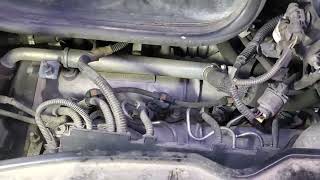
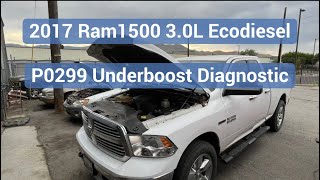
How to confirm: Visually inspect all hoses between the turbo, intercooler, and intake manifold for splits, especially on the underside. Oily residue on a hose is a strong indicator of a leak. A smoke test is the most effective way to find small, hard-to-see leaks. A technician on YouTube found a split hose on a ProMaster via visual inspection. 🎬 Watch: A quick diagnostic walkthrough for the ProMaster P0299 code.
Typical fix: Replace the damaged hose and/or tighten the clamps. The outlet hose is a common culprit. A Reddit user confirmed a hole in the CAC hose was their issue.
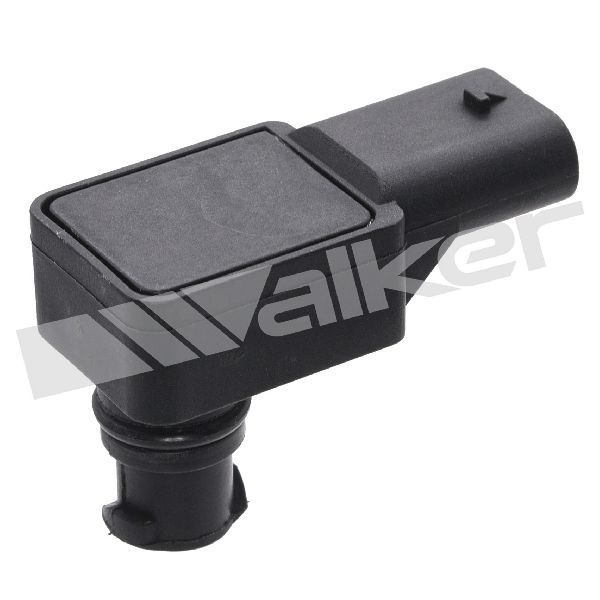
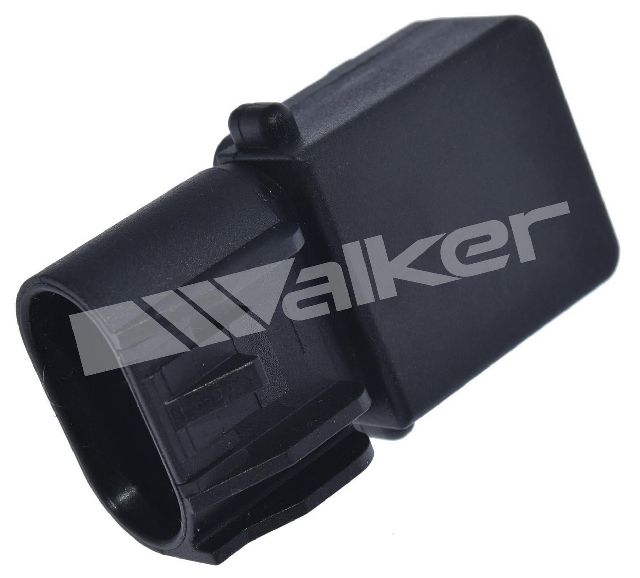
Est. part cost: $50-$250 - Clogged or Faulty Boost Pressure (MAP) Sensor 🟡 Medium Probability The 3.0L Iveco F1C EcoDiesel engine is known for heavy soot production, which can completely clog the small port on the MAP sensor, causing it to send inaccurate (low) pressure readings to the PCM.
How to confirm: Remove the MAP sensor (located on the intake manifold) and visually inspect it for soot and carbon buildup. The sensor can be carefully cleaned, but if the reading is still incorrect on a scan tool, it may have failed. A YouTube video from "Fix it Angel" showed this exact failure fixing a P0299 code. 🎬 See how to clean and fix the MAP sensor for free.
Typical fix: Clean the sensor port carefully with electrical contact or dedicated MAP sensor cleaner, spraying with the tip pointed down. Avoid touching the internal membrane. If cleaning doesn't resolve the issue, replace the sensor.
Est. part cost: $40-$100 - Sticking or Faulty EGR Valve 🟡 Medium Probability → Shop Exhaust Gas Recirculation (EGR) Valve Heavy soot buildup can cause the EGR valve to stick open or closed, disrupting expected airflow and pressure in the intake manifold, which can trigger an underboost code.
How to confirm: A scan tool may show other EGR-related codes (like P0401/P0402). The valve can be removed for inspection and cleaning. A stuck valve will often be caked in carbon.
Typical fix: Remove and clean the EGR valve and passages. If the valve is electrically or mechanically failed, it must be replaced.
Est. part cost: $150-$400 - Faulty Turbocharger Actuator or Sticking Vanes ⚪ Low Probability → Shop Turbocharger The electronic actuator controls the variable geometry vanes in the turbo. It can fail electrically, or the vanes can get stuck with soot, preventing proper boost generation. TSB #18-038-15 REV. B links P0299 and P226C, pointing to this issue on earlier models.
How to confirm: Use a high-end scan tool to perform a turbo actuator test. Visually check if the actuator arm moves when the engine is started. Confirming stuck vanes may require turbo removal.
Typical fix: Replace the electronic actuator, which may require calibration with a scan tool. If the internal vanes are stuck, the entire turbocharger assembly is typically replaced.
Est. part cost: $250-$500 for actuator, $1500+ for turbo
Rare But Worth Checking
- Restricted Air Filter: → Shop Air Cleaner Assembly A severely clogged engine air filter can starve the turbo of air, preventing it from making boost. This is a simple and cheap item to check first.
- Restricted Diesel Particulate Filter (DPF) / Exhaust: → Shop Diesel Particulate Filter (DPF) A clogged DPF or catalytic converter creates high exhaust backpressure, which prevents the turbocharger from spinning up to speed effectively. This may be accompanied by DPF-related codes.
- Cracked or Leaking Intercooler: → Shop Intercooler While less common than hose failures, the intercooler (charge air cooler) itself can develop cracks or leaks, especially at the end tanks. A smoke test is the best way to confirm this.
- Internal Turbocharger Failure: → Shop Turbocharger While often suspected, complete mechanical failure of the turbo (e.g., worn bearings, damaged fins) is less common than leaks, sensor, or software issues.
Diagnosis Steps
- First, contact a Ram dealer with your VIN to check for open recalls and to see if TSB #S2018000008 (PCM update for P0299) applies to your vehicle and has been performed.
- Scan the PCM for any other stored trouble codes that could provide clues (e.g., EGR, MAF, MAP sensor codes).
- Perform a thorough visual inspection of the entire air intake system. Look for cracked, disconnected, or collapsed hoses, especially the large charge air cooler (CAC) pipes running to and from the intercooler. Pay close attention to the underside of hoses and look for oily residue.
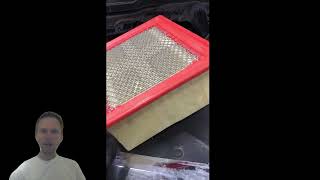
- Check the engine air filter to ensure it is clean and not restricting airflow. Some owners report that only an OEM Mopar filter will prevent the code from setting.
- Remove and inspect the boost pressure (MAP) sensor, which is located on the intake manifold. Clean any soot buildup carefully with an appropriate sensor-safe cleaner.
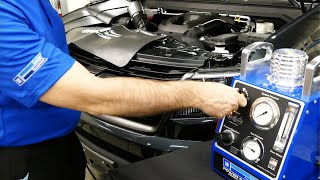
- If no visual leaks are found, perform a smoke test on the intake system to pressurize it and reveal any hidden leaks from hoses, gaskets, or the intercooler itself. 🎬 Watch: Professional tips for diagnosing low boost with specialized tools.
- Using a scan tool, monitor commanded boost vs. actual boost pressure while driving. A large, consistent discrepancy confirms the underboost condition.
- If leaks and sensors are ruled out, test the turbocharger wastegate actuator using a scan tool command to ensure it has a full and smooth range of motion.
Parts You'll Likely Need
- Charge Air Cooler (CAC) Hose
(OEM #52014864AA or 52014842AA)— These hoses are a very common failure point, developing splits that cause boost leaks. The outlet hose is particularly prone to failure. - MAP Sensor (Boost Pressure Sensor)
Related Codes That Often Appear With This One
- P226C — Stands for 'Turbocharger Boost Control Slow Response' and often indicates a problem with the actuator or sticking VGT vanes, which are direct causes of underboost. [TSB #18-038-15 REV. B]
- P0401 / P0402 — These codes relate to EGR flow. A malfunctioning EGR system can directly cause the P0299 code by disrupting intake air pressure.
- P0101 — This Mass Air Flow (MAF) sensor code can be caused by a large air leak downstream from the sensor, which is also a primary cause of P0299.
Technical Service Bulletins (TSBs) & Recalls
- S2018000008
- 18-038-15 REV. B
- 0901316
- 18-018-15 REV B
Platform-Specific Known Issues
- TSB S2018000008 was released for 2019 models to address this specific code via a PCM software update, particularly if an engine surge is felt.
Mechanic-Grade Diagnostic Values
- MAP Sensor Voltage (Key On, Engine Off at Sea Level) — expected: ~1.0 V. Failure: Significant deviation from 1.0V suggests a potential sensor or wiring issue.
- MAP/IAT Sensor Reference Voltage (Key On, Engine Off) — expected: ~5.0 Volts. Failure: Voltage significantly below 4.8V or above 5.2V points to a problem with the PCM or wiring, not the sensor itself.
- Freeze Frame Data: Actual Boost vs. Accelerator Position — expected: Boost pressure should rise from atmospheric pressure as accelerator is applied under load.. Failure: Freeze frame data showing actual boost at 0 PSI while the accelerator pedal is pressed (e.g., 15%) under light load can point to a sensor or logic issue rather than a mechanical failure.
Scan Tool Commands That Help
- wiTECH (FCA Dealer Tool): Transmission 'Quicklearn' procedure — Required after reprogramming the PCM/ECM to ensure proper transmission and engine communication.
- wiTECH (FCA Dealer Tool): Particulate Matter (PM) Sensor Regeneration Test — To manually initiate a DPF regeneration and test the PM sensor, which can help diagnose exhaust restrictions that may cause P0299.
- wiTECH (FCA Dealer Tool): Fuel Injector Cutoff Test — To test individual injectors, helping to rule out fueling issues that might be occurring alongside the underboost condition.
Wiring & Ground Locations
- Charge Air Cooler (CAC) Pipe Routing — The pipe running from the turbo to the intercooler.. There are owner reports of this pipe rubbing through on the battery cable, creating a boost leak that directly causes code P0299.
- Mass Airflow Sensor Signal Wire — On the MAF sensor electrical connector.. A diagnostic video identifies this as a gray and white wire, which can be back-probed to check for a correct voltage signal (around 2.6V at idle was seen in one case) to verify sensor operation without a circuit code being present.
Real Owner Repair Stories
- Reddit user Spoogebob (2020 Dodge RAM (engine not specified, but context implies diesel)) — Recurring P0299 engine light, but no limp mode. Was able to tow a 15k 5th wheel with the light on.
❌ Tried (didn't work) Cleaning the EGR system (code returned an hour later).
✅ What actually fixed it A hole in the CAC (Charge Air Cooler) hose was found and replaced, along with the EGR valve which was damaged by the incorrect airflow. - Turbo Diesel Register forum user CToney (Ram Truck (year/model not specified)) — P0299 code, decreased fuel efficiency.
❌ Tried (didn't work) Initial diagnosis was uncertain.
✅ What actually fixed it The dealer found the 'CAC Pipe from turbo to Intercooler rubbed through from battery cable'. Replacing the pipe resolved the issue. - RamForum.com user MyDR1500LLH4by4 (2014 Ram 1500 EcoDiesel (similar issue pattern)) — P0299 error code.
❌ Tried (didn't work) Was about to spend $3000 on major repairs, likely including a turbo.
✅ What actually fixed it The dealer discovered that the connections to the Turbo air supply pipe were loose. They tightened the pipe, and the error code was resolved without replacing the turbo. - Reddit user CamRan18 (2021 Ram 1500 EcoDiesel) — Limp mode, Electronic Throttle Control warning, P0299 code.
❌ Tried (didn't work) Driving home carefully.
✅ What actually fixed it The final diagnosis was a broken charge air cooler duct hose clamp.
"I Checked Everything" — The Actual Cause
- In one documented case for a different vehicle, a P0299 code persisted despite the intake system passing a smoke/pressure test. The root cause was a clogged catalytic converter. The high exhaust backpressure prevented the turbo from spinning up to speed, causing the underboost condition. This would not be found with a standard intake smoke test and required separating the exhaust from the turbo to diagnose.
When the Usual Fixes Don't Work
- While the most common causes are mechanical boost leaks (cracked hoses) or software issues, there are multiple owner and technician reports where the final fix for P0299 was replacing a new-looking aftermarket air filter with an official Mopar factory air filter. This suggests the engine's control module is highly sensitive to specific airflow characteristics, and a deviation caused by a non-OEM filter can be enough to trigger an underboost code, even when no actual leak or mechanical fault exists.
Model Year Variations Within This Range
- 2019: A specific Technical Service Bulletin, #S2018000008, was issued for 2019 models. It addresses a P0299 code that can appear after a PCM software update, often accompanied by an engine surge. This makes a software check a critical first step for this model year, even before mechanical inspection. [TSB #S2018000008, 22]
Helpful Videos
We Have This Part in Stock


The information in this article is provided for general reference and educational purposes only. Vehicle specifications, procedures, and part compatibility can vary by production date, trim level, and region. Always consult your vehicle's factory service manual and verify part numbers before purchasing or performing repairs. Safety-critical components such as airbags, seat belts, and braking systems should be installed by a qualified professional.
- Ram PROMASTER:
- 🧭 Diagnostic Flowchart
- 🎬 Helpful Videos
- 🛍️ Shop This Part
- What's Unique About the 2019-2020 Ram PROMASTER
- Symptoms You May Notice
- Most Likely Causes
- Rare But Worth Checking
- Diagnosis Steps
- Parts You'll Likely Need
- Related Codes That Often Appear With This One
- Technical Service Bulletins (TSBs) & Recalls
- Platform-Specific Known Issues
- Mechanic-Grade Diagnostic Values
- Scan Tool Commands That Help
- Wiring & Ground Locations
- Real Owner Repair Stories
- "I Checked Everything" — The Actual Cause
- When the Usual Fixes Don't Work
- Model Year Variations Within This Range
- 🎟️ Get 5% Off