

P0299 on 2013-2016 Volkswagen CC: Turbo Underboost Causes and Fixes
For a 2013-2016 VW CC with a P0299 code, the most common culprit is a failed turbocharger diverter valve (DV), a known issue on the 2.0T TSI engine where the original diaphragm tears. An updated piston-style OEM part is available. Other very common causes include a worn turbocharger wastegate actuator causing a leak, or a boost leak elsewhere in the system.
- P0299 on a 2013-2016 VW CC almost always points to a problem with the turbo system, not a general engine issue.
- The first and most likely part to check is the turbocharger diverter valve (DV); the original version is known to fail and is a relatively inexpensive and easy part to replace.
- Before considering a costly turbocharger replacement, thoroughly inspect for boost leaks, a failed PCV valve, and wastegate actuator play.
- An updated, more durable piston-style diverter valve is available and is a highly recommended upgrade even if the original has not yet failed.
- Symptoms are straightforward: a Check Engine Light and a noticeable lack of power when you try to accelerate.
What's Unique About the 2013-2016 Volkswagen CC

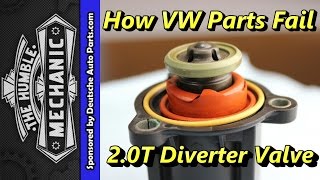
The 2.0T TSI (EA888 Gen 2) engine used in the Volkswagen CC is notorious for a few specific failures that directly cause a P0299 code. The original equipment diverter valve used a rubber diaphragm that is prone to tearing, creating a 🎬 Watch: See exactly how the rubber diaphragm fails. significant boost leak right at the turbo. Additionally, the wastegate pivot point on the turbocharger itself is known to wear and become loose, causing the wastegate flap to not seal properly. This allows exhaust gas to bypass the turbine, preventing the turbo from building sufficient boost. The vacuum-operated actuator controlling the wastegate can also fail.
Diagnostic Flowchart

Tap your situation to follow the diagnostic path that matches what you're seeing on this vehicle.
Symptoms You May Notice

- Significant loss of engine power, especially during acceleration
- Check Engine Light illuminated
- Vehicle may enter "limp mode," severely restricting power
- Hesitation or sluggishness when accelerating
- Audible hissing or whistling sounds from the engine bay, indicating a boost leak
- Reduced fuel economy
- A rattling noise from the turbo area, especially on deceleration, indicating wastegate linkage play
- Replacing the turbocharger immediately without checking for simpler issues like a torn diverter valve, a boost leak, or a failed PCV valve. Many shops may condemn the turbo due to wastegate play when a simpler, cheaper fix like the wastegate clip might be sufficient.
- Replacing the diverter valve and assuming the problem is fixed without checking for other issues. Sometimes multiple faults exist, such as a bad DV and a worn wastegate.
Most Likely Causes

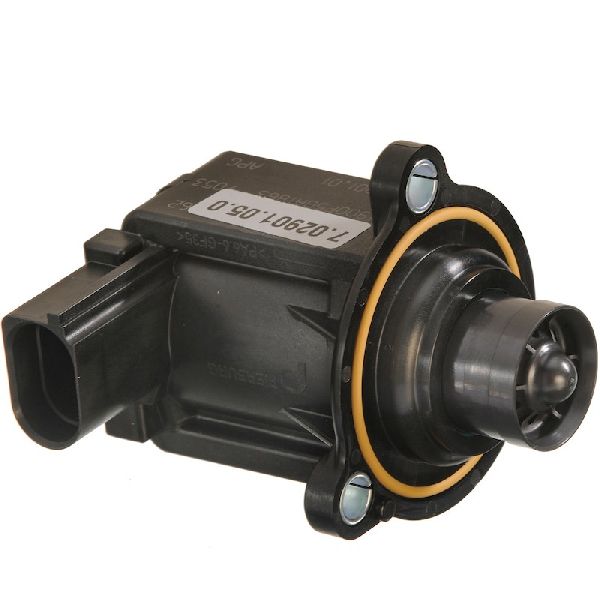
- Failed Turbocharger Diverter Valve (DV) 🔴 High Probability → Shop Turbocharger The original DV used a rubber diaphragm that frequently tears from heat and pressure cycling, causing a direct boost leak. Volkswagen has since released an updated piston-style valve (Revision D and later) that is much more durable. This is often the first part to check.
How to confirm: Remove the DV from the turbocharger (located on the passenger side, accessible from underneath the car) and inspect the rubber diaphragm for tears or holes. If it has the old diaphragm style (often black plastic with a rubber insert), it's best to replace it regardless of visible failure, as it's a known weak point.
Typical fix: Replace the diverter valve with the updated OEM piston-style version (Revision 'D' or later, part number 06H145710D). Aftermarket solutions like the Go Fast Bits (GFB) DV+ also exist, which retain the factory solenoid but replace the failure-prone plastic valve mechanism with a metal one.
Est. part cost: $80-$150 - Worn Turbocharger Wastegate or Actuator 🟡 Medium Probability → Shop Turbocharger The pivot point for the wastegate arm wears over time, creating excessive play ('rattle'). This prevents the wastegate flap from closing and sealing properly, allowing exhaust gas to bypass the turbine and leak boost. The vacuum-operated actuator can also fail or its diaphragm can tear, preventing it from holding the wastegate closed.
How to confirm: Visually inspect the wastegate actuator arm for excessive play where it connects to the turbo. With the engine cool, you should be able to feel for wiggle in the linkage. A few millimeters of up-and-down play is too much and confirms a leak. A vacuum pump can be used to test if the actuator holds vacuum and moves the arm smoothly through its range of motion. A borescope can also be used to inspect the wastegate flap through the O2 sensor port.
Typical fix: In cases of minor wear, a special clip (Part No. 06J145220A) can be installed on the actuator rod to reduce rattling and improve sealing. For more significant wear, some technicians bend the actuator rod slightly to add preload. The official VW fix for significant wear is turbocharger replacement, as the wastegate is integrated. Aftermarket repair kits and services are also available.
Est. part cost: $20 (clip) to $1200+ (new turbo) - Boost/Vacuum Leak 🟡 Medium Probability Plastic and rubber hoses in the engine bay become brittle over time with heat cycles. Common leak points include the PCV valve assembly, charge pipes (especially at the connections), and intercooler connections. An exhaust leak before the turbo can also cause this code.
How to confirm: Perform a visual inspection of all hoses for cracks or loose connections. A smoke test is the most effective way to pressurize the intake system and reveal the source of any leaks. Soapy water can be sprayed on connections during a pressure test to look for bubbles.
Typical fix: Replace the cracked hose, faulty gasket, or tighten the loose clamp that is causing the leak.
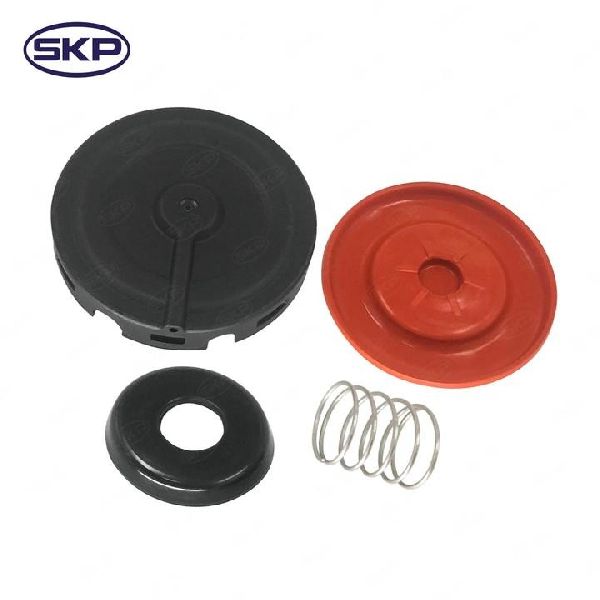
Est. part cost: $20-$200 - Failed PCV Valve (Crankcase Ventilation) ⚪ Low Probability → Shop PCV Valve The diaphragm inside the PCV valve (also called an oil separator) can rupture. This creates a large unmetered air leak (essentially a massive vacuum leak) that the boost system cannot overcome, leading to underboost and often other codes like P2279.
How to confirm: With the engine running at idle, try to remove the oil cap. If there is extreme vacuum holding it down, the PCV has likely failed. You may also hear a loud hissing or whistling sound from the PCV valve itself, located on top of the engine.
Typical fix: Replace the PCV valve assembly. It is recommended to use an OEM or high-quality OEM supplier part, as cheap aftermarket versions are known to fail quickly.
Est. part cost: $120-$200
Rare But Worth Checking
- Faulty Boost Pressure Sensor (MAP Sensor): While not common, the sensor that measures boost pressure can fail and send incorrect readings to the ECM, tricking it into thinking there is an underboost condition when pressures are actually normal.
- Clogged Catalytic Converter: → Shop Catalytic Converter A restriction in the exhaust system downstream of the turbo can prevent the turbine from spinning up to speed, leading to low boost. This is usually accompanied by other symptoms like a rotten egg smell or a more severe, progressive loss of power across the entire RPM range.
- Failing Turbocharger (Internal Failure): → Shop Turbocharger Beyond the common wastegate issue, the turbo itself can fail due to worn bearings or damaged turbine/compressor wheels. This is the most expensive possibility and should be confirmed only after all other causes are ruled out. A 'jingling' or 'coins in a can' sound can indicate a failing bearing.
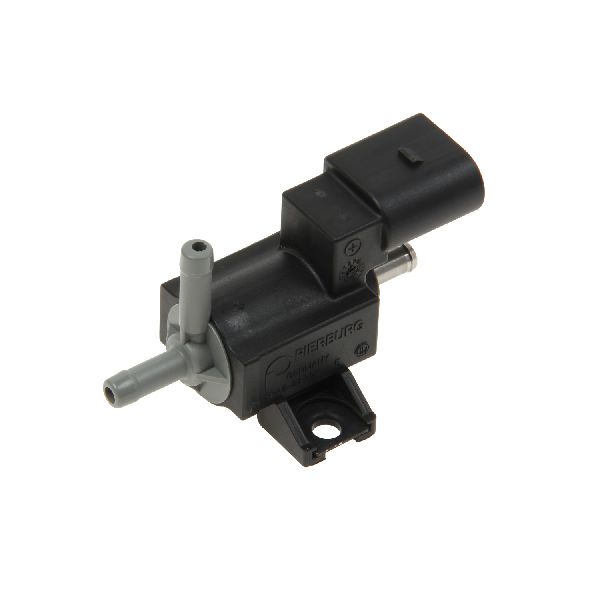
- Faulty N75 Valve (Wastegate Frequency Valve): This solenoid controls the vacuum sent to the wastegate actuator. If it fails, it may not properly command the wastegate to close, causing a loss of boost. This can be tested with a multimeter and vacuum gauge.
Diagnosis Steps
- Read the fault codes with an OBD-II scanner (like VCDS for VW/Audi) to confirm P0299 and check for any other related codes. Log specified vs. actual boost pressure while driving; a large discrepancy under load confirms the underboost condition.
- Perform a thorough visual inspection of the engine bay. Look for any disconnected, cracked, or collapsed vacuum lines and boost hoses, especially around the turbo, intercooler, and intake manifold.
- Inspect and test the Diverter Valve (DV). Remove it (3x T30 bolts) and check for a torn diaphragm. If it's the older diaphragm style, replace it with the updated piston version (06H145710D) as a preventative measure.
- Inspect the turbocharger wastegate actuator arm for excessive play. With the engine off and cool, reach down and try to move the arm; it should be firm with minimal movement. More than 1-2mm of play indicates wear and a likely boost leak.
- Perform a boost leak test using a smoke machine. This will pressurize the system from the turbo inlet and make any leaks in the charge pipes, intercooler, or gaskets visible.
- Test the PCV system. With the engine idling, check for excessive vacuum at the oil cap (it should be difficult to remove). A loud hissing from the PCV area is also a strong indicator of failure.
- If all other components check out, inspect the turbocharger itself for signs of failure, such as excessive shaft play or damage to the compressor/turbine wheels. This is the last step before condemning the turbo.
Parts You'll Likely Need
- Turbocharger Diverter Valve (Piston Style)
(OEM #06H145710D)— This is the most common failure point for P0299 on the 2.0T TSI engine due to the original part's weak diaphragm design. The 'D' revision is the updated, more durable piston design.
Trusted brands: Volkswagen (OEM), Pierburg, Go Fast Bits (GFB DV+)
OEM price range: $120-$160
Aftermarket price range: $50-$140 - Turbocharger Wastegate Actuator Clip
(OEM #06J145220A)— A low-cost OEM part designed to fix minor looseness and rattling in the wastegate linkage, which can cause an underboost condition. It's a much cheaper first step than replacing the entire turbo.
Trusted brands: Volkswagen (OEM)
OEM price range: $15-$30
Aftermarket price range: $10-$20 - PCV Valve / Oil Separator
(OEM #06H103495AH (or latest revision like AE, AK))— A failed diaphragm in the PCV creates a massive vacuum leak that the turbo cannot overcome, leading to an underboost code. It's a common failure item on this engine.
Trusted brands: Volkswagen (OEM), Vaico, Hengst
OEM price range: $150-$200
Aftermarket price range: $80-$130
Related Codes That Often Appear With This One
- P0234 — Turbocharger Overboost Condition. This can sometimes appear intermittently if the wastegate or diverter valve is sticking, causing erratic boost control.
- P2279 — Intake Air System Leak. This code often points directly to a vacuum or boost leak (like a failed PCV valve), which is a primary cause of P0299.
- P2015 — Intake Manifold Runner Position Sensor/Switch Circuit Range/Performance. While a separate issue, it's not uncommon for multiple age-related problems to appear on these engines around the same time. A user on Reddit reported this code appearing alongside P0299.
Technical Service Bulletins (TSBs) & Recalls
- This Tech Tip/TSB addresses intermittent P0299, P0234, or P0236 codes on 2.0L TSI engines. It instructs technicians to check if the wastegate valve and lever have dropped or seized, and to check for proper clearance (approx. 3.0mm) between the turbo housing and the wastegate lever.
- Although for Audi models with the CAEB engine (a 2.0T TSI variant), this Technical Problem Information (TPI) is highly relevant. It details issues with excessive turbocharger wastegate play causing underboost conditions.
Platform-Specific Known Issues
- The original diaphragm-style diverter valve (DV) is a known weak point and a primary cause of P0299. An updated piston-style OEM part (06H145710D) or aftermarket upgrades like the GFB DV+ are common and effective fixes.
- Wastegate linkage wear is extremely common, causing a rattling noise and a boost leak that is internal to the turbo. The OEM wastegate clip (06J145220A) is a well-known fix for minor cases.
- The mileage for these issues to appear is often between 65,000 and 100,000 miles.
Mechanic-Grade Diagnostic Values
- N75 (Wastegate Frequency Control Valve) Resistance — expected: 15-17 Ohms (cold). Failure: A reading significantly outside this range indicates a faulty solenoid coil.
- Wastegate Actuator Position Sensor Voltage (VCDS) — expected: 3.55V to 3.8V (for IS38 turbo, similar principle for K03). Failure: Voltage outside this range (e.g., over 4.0V or under 3.4V) indicates the actuator rod needs adjustment or the sensor is failing. An adaptation is required after adjustment.
Scan Tool Commands That Help
- VCDS (VAG-COM): Selective Output Test: Solenoid Valve for Boost Pressure Control (N75) — Use this in [01-Engine] to manually cycle the N75 valve. You should hear a clicking sound from the valve, confirming the ECU can command it and the solenoid is mechanically actuating. This helps isolate a faulty valve from a wiring or actuator problem.
- VCDS (VAG-COM): Basic Settings: Charge Pressure Control — Used to cycle the turbo wastegate actuator to check for proper movement and to help set the adjustment rod after replacing a turbo or actuator. For later models, this is called 'First Adaptation of charge pressure actuator'.
- VCDS (VAG-COM): Adv. Meas. Values: Group 115 (or search 'boost') — Log 'Boost Pressure (specified)' vs. 'Boost Pressure (actual)' during a test drive (3rd gear, wide open throttle from 2000-3500 RPM). A large, consistent gap where actual pressure is lower than specified confirms the underboost condition.
Wiring & Ground Locations
- Engine Block Ground — There are several ground points. A primary one is located on the chassis frame rail near the battery/fuse box, with brown wires leading to it. Another is on the transmission housing.. A poor ground connection for the engine harness can cause erratic sensor readings for the MAP sensor, N75 valve, and other components involved in boost control, leading to incorrect calculations and fault codes.
- N75 Valve Connector — Attached to the turbocharger assembly, controlling vacuum to the wastegate actuator.. This is the electrical connection for the valve that directly controls boost. Checking for voltage here during an output test can confirm if the signal from the ECU is reaching the valve.
- MAP (Boost Pressure) Sensor Connector — Located on the charge pipe just before the throttle body.. This sensor provides the 'actual' boost reading to the ECU. Checking for reference voltage, ground, and signal voltage at this connector is critical if a faulty sensor is suspected.
Real Owner Repair Stories
- Reddit user on /r/Volkswagen (2013 VW CC, 140k miles) — Permanent P0299 code, oil coating inside throttle body, 'coins jingling' noise from turbo area.
❌ Tried (didn't work) Smoke test passed with no leaks found. Ordered a new PCV valve and intake manifold runner sensor but had not yet installed them.
✅ What actually fixed it The user's diagnosis was ongoing, but the combination of symptoms (P0299, oil in intake, jingling noise) strongly pointed towards an internal turbocharger failure (bearings or wastegate) despite the clean smoke test. The story highlights that a clean smoke test does not rule out a bad turbo.
"I Checked Everything" — The Actual Cause
- A common scenario is a smoke test showing no leaks, but the P0299 code persists. The cause is often not a leak in the charge piping itself, but a component that a smoke test doesn't fully check. The most frequent culprits are: 1) A torn diaphragm in the PCV valve, which acts as a massive vacuum leak under engine operation but may not show on a low-pressure smoke test. 2) A worn wastegate flap/linkage on the turbo's exhaust housing, which leaks exhaust pressure before it can spin the turbine. This cannot be found with a smoke test on the intake side. 3) A faulty diverter valve that holds pressure during a static test but leaks under dynamic load/heat.
OEM Part Supersession History
06F145710B, 06F145710C, 06F145710G→06H145710D— The original parts used a rubber diaphragm that was prone to tearing, causing a boost leak. The updated 'D' revision (and later) uses a more durable piston-style design.N/A→06J145220A— This part is not a supersession but a fix. It's a clip designed by VW to add tension to the wastegate actuator rod, reducing rattle from wear and helping the wastegate flap seal more tightly to prevent boost leaks.
Model Year Variations Within This Range
- 2013-2016: The 2.0T engine in this range can have either a CCTA or CBFA engine code. While mechanically very similar for this fault, the CBFA has additional secondary air injection components. However, the primary causes of P0299 (Diverter Valve, Wastegate, PCV) are identical between them.
Helpful Videos


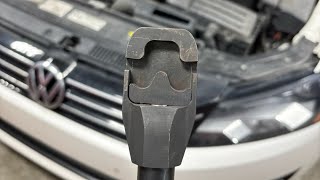
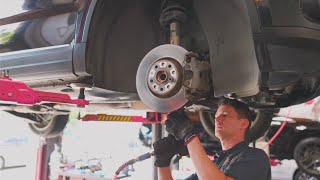

We Have This Part in Stock
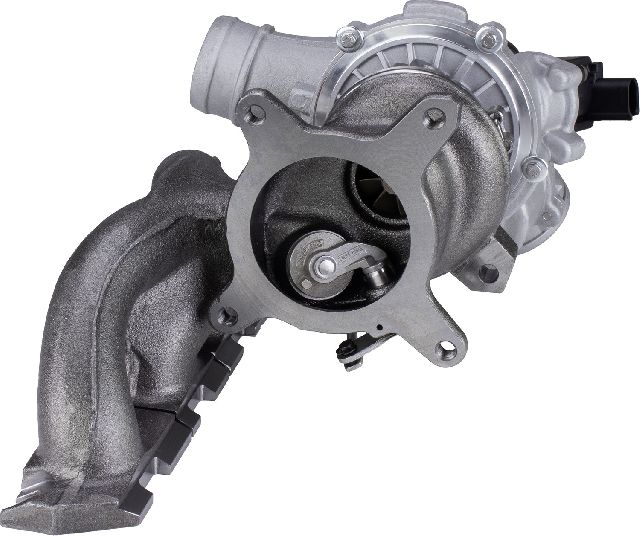
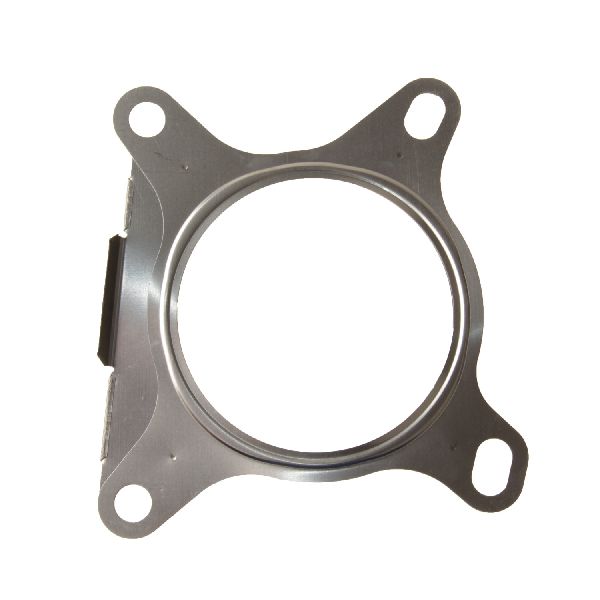

The information in this article is provided for general reference and educational purposes only. Vehicle specifications, procedures, and part compatibility can vary by production date, trim level, and region. Always consult your vehicle's factory service manual and verify part numbers before purchasing or performing repairs. Safety-critical components such as airbags, seat belts, and braking systems should be installed by a qualified professional.
- Volkswagen CC:
- 🧭 Diagnostic Flowchart
- 🎬 Helpful Videos
- 🛍️ Shop This Part
- What's Unique About the 2013-2016 Volkswagen CC
- Symptoms You May Notice
- Most Likely Causes
- Rare But Worth Checking
- Diagnosis Steps
- Parts You'll Likely Need
- Related Codes That Often Appear With This One
- Technical Service Bulletins (TSBs) & Recalls
- Platform-Specific Known Issues
- Mechanic-Grade Diagnostic Values
- Scan Tool Commands That Help
- Wiring & Ground Locations
- Real Owner Repair Stories
- "I Checked Everything" — The Actual Cause
- OEM Part Supersession History
- Model Year Variations Within This Range
- 🎟️ Get 5% Off