

P0299 on 2016 Volkswagen Golf R: Turbo Underboost Causes and Fixes
For a 2016 VW Golf R, code P0299 is most often caused by a faulty electronic wastegate actuator or a failed diverter valve on the IS38 turbocharger. A failing actuator is the most common culprit, often requiring turbo replacement, though actuator repair kits are available. Checking for a loose/rattling actuator arm and incorrect voltage with a scan tool are key diagnostic steps.
- P0299 on a 2016 Golf R means the turbo is not making its target boost.
- The most likely cause is a faulty electronic wastegate actuator on the turbocharger, a known weak point.
- The second most common cause is a failed diverter valve, which is a cheaper and easier part to check and replace first.
- A standard intake smoke test may not find the problem if it's an internal wastegate leak.
- While a full turbo replacement was once the only fix for a bad wastegate, actuator repair kits are now an option.
What's Unique About the 2016-2016 Volkswagen GOLF R

The 2016 Golf R uses the high-performance EA888 Gen 3 engine with an IHI IS38 turbocharger (OEM P/N: 06K145722H, 06K145874P). Unlike earlier generations that used vacuum-operated wastegates, this model has an electronic wastegate actuator (OEM P/N: 06K145725T). This specific actuator is a known high-failure item, where play develops in the linkage arm or the electronic motor fails, causing exhaust gas to leak past the wastegate flap. This internal exhaust leak prevents the turbo from spooling correctly and is a primary cause of P0299 that won't be found with a standard intake smoke test.
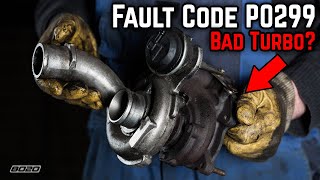
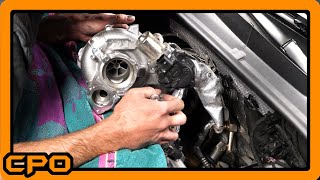
🎬 Learn more about common causes for the P0299 code.Diagnostic Flowchart

Tap your situation to follow the diagnostic path that matches what you're seeing on this vehicle.
Symptoms You May Notice
- Significant loss of engine power and acceleration.
- Check Engine Light is on.
- Vehicle may enter 'limp mode,' severely restricting power.
- Sluggish or hesitant throttle response.
- Whining or hissing noises from the engine bay.
- Reduced fuel economy.
- A metallic rattling sound from the turbo area, especially at idle or on shutdown, indicating a loose wastegate flapper arm.
- Replacing the diverter valve when the actual problem is the wastegate actuator. Many owners replace the DV first as it is cheaper and easier, only to have the P0299 code return.
Most Likely Causes

- Faulty Turbocharger Wastegate Actuator 🔴 High Probability → Shop Turbocharger The electronic wastegate actuator on the IHI IS38 turbo is a very common failure point. The linkage arm develops excessive play ('wastegate rattle'), the pivot point seizes, or the motor/sensor inside fails, preventing the wastegate from closing properly.
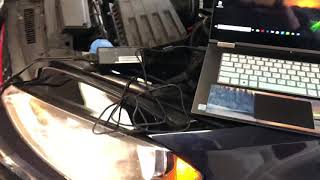
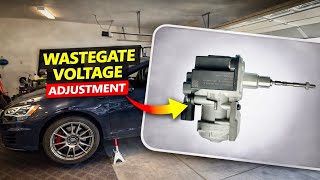
How to confirm: With the engine off, reach down to the turbo and physically wiggle the wastegate actuator arm. Any significant side-to-side or in-and-out play indicates wear. With a diagnostic tool like VCDS or OBDeleven, check the actuator's voltage with the key on, engine off. A healthy actuator should read between 3.5V and 3.7V. A reading outside this range (e.g., 1.5V or 0.8V) points to a failed actuator.
Typical fix: Historically, VW dealers would only replace the entire turbocharger assembly (P/N 06K145722H). Now, the actuator can be purchased separately (P/N 06K145725T or aftermarket CTS-WGA-200) and replaced, though access is difficult. Aftermarket wastegate rattle repair kits (e.g., from Mambatek) are also available to fix the flapper arm itself. The new actuator must be calibrated using a diagnostic tool.
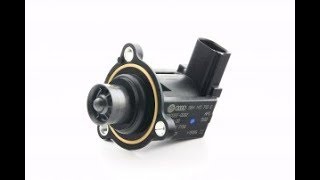
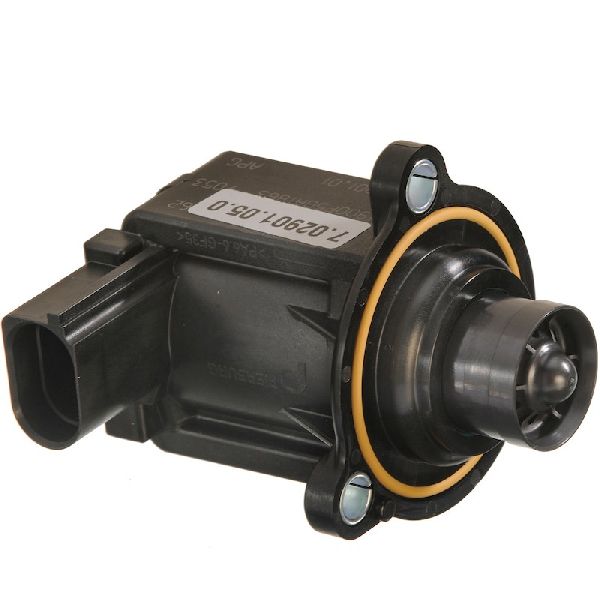
Est. part cost: $200-$300 for a new actuator, $1200-$2000 for a new OEM turbocharger. - Failed Diverter Valve (DV) 🟡 Medium Probability → Shop Turbocharger While the Mk7 uses an updated piston-style valve (Revision D, P/N 06H145710D) that is more durable than older diaphragm styles, the plastic piston can still crack or the solenoid can fail electronically.
How to confirm: Remove the diverter valve from the turbocharger housing (held by three T30 bolts) and inspect it for physical damage like cracks in the plastic or a torn seal. A user on r/GolfGTI confirmed this fixed their P0299.
Typical fix: Replace the diverter valve. Many owners choose to upgrade to more robust aftermarket options like the Go Fast Bits (GFB) DV+ (P/N T9351), which replaces the plastic piston with a metal one while retaining the OEM solenoid.
Est. part cost: $80-$150 for OEM or GFB DV+. - Boost/Intake Air Leak 🟡 Medium Probability High pressure in the charge pipes can cause connections to loosen or hoses to crack over time. Common leak points include the turbo outlet pipe connection, intercooler connections, and the throttle body pipe.
How to confirm: Perform a boost leak test or a smoke test on the intake system. Listen for hissing sounds during acceleration. Visually inspect all charge pipes, hoses, and the intercooler for cracks or loose clamps. A user on the Ross-Tech forums found a hole in their intercooler endtank causing P0299.
Typical fix: Tighten the loose clamp or replace the cracked hose or damaged component (e.g., intercooler).
Est. part cost: $20-$300 depending on the leaking part.
Rare But Worth Checking
- Faulty Boost Pressure Sensor (MAP/MAF): A faulty sensor can send incorrect data to the ECU, making it think there is an underboost condition when there isn't one. This will usually be accompanied by other sensor-specific fault codes like P0235-P0242.
- Clogged Catalytic Converter: → Shop Catalytic Converter An exhaust restriction prevents the turbo from spooling up effectively. This is less common but can be diagnosed by checking exhaust backpressure or temporarily removing a pre-cat O2 sensor to see if performance improves.
- Worn Turbocharger: → Shop Turbocharger While the wastegate is the most common failure point, it is also possible for the turbo's internal bearings or turbine/compressor wheels to fail from high mileage or oiling issues, leading to underboost.
- PCV Valve Failure: → Shop PCV Valve A failed PCV valve (cracked diaphragm) can create a significant vacuum leak, which the ECU may interpret as an underboost condition. This is often accompanied by other codes like P2279 (intake air system leak).
Diagnosis Steps
- Scan the ECU for any other fault codes. A code like P00AF00 strongly points to the wastegate actuator.
- With a tool like VCDS or OBDeleven, check the wastegate actuator voltage (Key On, Engine Off). Look for a value between 3.5V-3.7V. Readings far outside this are a clear sign of actuator failure.
- Visually inspect all intake and charge piping from the airbox to the throttle body for obvious cracks, loose connections, or disconnected hoses. A popped-off charge pipe is a common find.
- Perform the 'wastegate rattle test': With the engine cool and off, physically grasp the wastegate actuator rod and attempt to move it. It should be firm with minimal play. Excessive looseness indicates a worn wastegate bushing/flapper.
- If the wastegate feels solid, remove and inspect the diverter valve (3x T30 bolts on the turbo compressor housing). Check for cracks in the plastic housing or a torn seal.
- If no obvious issues are found, perform a smoke test on the intake system to identify any hard-to-see leaks.
- Log specified vs. actual boost while driving using VCDS (Advanced Measuring Values, IDE00190 & IDE00191). A large, consistent discrepancy under load where actual boost fails to meet specified boost points towards a turbo/wastegate issue.
- As a final check, a technician can remove the downpipe to visually inspect the wastegate flapper for a proper seal and check for excessive movement.
Parts You'll Likely Need

- Turbocharger Wastegate Actuator
(OEM #06K145725T)— This is the most common failure point on the IS38 turbo leading to P0299. The actuator's internal sensor fails, causing incorrect voltage readings and improper wastegate control.
Trusted brands: VW/Audi Genuine Part, CTS Turbo (P/N: CTS-WGA-200)
OEM price range: $250-$350
Aftermarket price range: $200-$250 - Turbocharger Diverter Valve
(OEM #06H145710D)— A common failure point on VW turbocharged engines that can cause a boost leak. It's a relatively inexpensive and easy part to replace as a first step.
Trusted brands: Pierburg (OEM), Go Fast Bits (GFB) DV+ T9351
OEM price range: $100-$150
Aftermarket price range: $140-$160 - IHI IS38 Turbocharger Assembly
(OEM #06K145722H / 06K145874P)— Required if the internal wastegate flapper valve or bushing is worn out, or if the dealer/owner opts to replace the entire unit instead of just the actuator.
Trusted brands: IHI (OEM)
OEM price range: $1200-$2000
Related Codes That Often Appear With This One
- P0101 — This code relates to the Mass Air Flow (MAF) sensor. A large air leak can cause both codes to appear as the measured airflow doesn't match the engine's expectations.
- P00AF00 — This is a manufacturer-specific code for 'Boost Control 'A' Module Stuck'. It directly points to a problem with the electronic wastegate actuator, either being mechanically stuck or electrically failed, and is often seen with P0299.
Technical Service Bulletins (TSBs) & Recalls
- Bulletin #VIN-4-A-PIN AUGU - A very generic bulletin that mentions "MIL-ON P0299" as a known issue for the 2016 Golf R among a list of other unrelated issues.
- TSB 2040480/3 (also referenced as TPI 2031245 for Audi) - A more specific bulletin for 2.0T engines that addresses 'turbocharger excessive waste gate play' as a cause for underboost, which is the root mechanical failure on many IS38 turbos.
Platform-Specific Known Issues
- The electronic wastegate actuator on the IHI IS38 turbo is prone to developing excessive play or electronic failure, which is a well-documented cause of P0299 on the Mk7 Golf R platform.
- Volkswagen issued TSB 2040480/3 which describes checking for excessive wastegate play on related 2.0T engines as a cause for underboost faults.
- A user on GolfMK7.com documented their P0299 diagnosis, which ultimately pointed to a failed actuator based on an incorrect voltage reading of 1.57V instead of the required ~3.6V.
- Another user on GolfMK7.com shared a story where the dealer initially quoted $3000 for a new turbo, but after contacting VW Canada, they covered 75% of the cost, highlighting that VW is aware of the issue.
Mechanic-Grade Diagnostic Values
- Wastegate Actuator Voltage (Key On, Engine Off) — expected: 3.5V - 3.7V. Failure: A voltage significantly outside the expected range, such as 1.57V, indicates a failed position sensor within the actuator.
Hidden / Shadow Codes Worth Checking
- P00AF00: Boost Control 'A' Module Performance/Stuck Off. This is a manufacturer-specific code that points directly to a fault with the electronic wastegate actuator, either mechanical or electrical. (see via VCDS, OBDeleven, or other professional-grade VW/Audi scan tools. It may not show on all generic OBD-II readers.)
Scan Tool Commands That Help
- VCDS (VAG-COM): Basic Settings - 04, then select 'First adaptation of charge pressure actuator' from the dropdown menu. — This command is required after replacing the turbocharger or the wastegate actuator. It allows the ECU to learn the end-stop positions of the new actuator. The test will run and report 'Finished correctly' if the mechanical adjustment and electronic function are within specification.
- VCDS or OBDeleven: Advanced Measuring Values, search for 'Charge pressure actuator acknowledgement'. — This is used to read the live voltage of the wastegate actuator with the Key On, Engine Off (KOEO) to diagnose the health of its internal position sensor.
Wiring & Ground Locations
- Engine Wiring Diagram Series 134 / 6 — Within the official VW service manual's current flow diagrams.. This specific diagram details the wiring for the 'Turbocharger Control & Wastegate Actuator', which is essential for a technician to trace wiring, check for continuity, and find pin assignments for the actuator connector if a wiring issue is suspected.
- N249 - Turbocharger air recirculation valve — Located on the turbocharger compressor housing.. This component, also known as the Diverter Valve, is shown in the vehicle's wiring diagrams. A technician can use the diagram to test the solenoid's wiring and connector if it's suspected of failing electronically.
Real Owner Repair Stories
- golfmk7.com forum user (2016 Golf R, APR Stage 2 tune) — Failing emissions for a lean O2 sensor reading, also had a hidden P00AF00 code. P0299 was likely also present or related.
❌ Tried (didn't work) Smoke testing the intake system (no leaks found), Smoke testing the exhaust system (no leaks found), Flashing the ECU back to the stock tune
✅ What actually fixed it The owner diagnosed a failed wastegate actuator by checking its voltage with the key on, engine off. It read a static 1.57V instead of the correct 3.5-3.7V, proving the internal sensor was dead. Replacing the wastegate actuator resolved the issue. - VWROC forum user (MK7 Golf R with a Mountune tune) — Persistent P0299 code appearing after drives, but with no Check Engine Light or perceptible loss of power.
❌ Tried (didn't work) Data logging and sending to the tuner (tuner said all was fine), Initially suspecting the aftermarket TT inlet pipe
✅ What actually fixed it The owner replaced their existing aftermarket turbo inlet elbow with a different design (a Raceline turbo elbow). This change resolved the P0299 code, suggesting that certain intake hardware combinations on a tuned car can create airflow characteristics that the ECU interprets as an underboost fault.
"I Checked Everything" — The Actual Cause
- A common scenario for the P0299 code on the Golf R is for a full intake and exhaust smoke test to show no leaks. The root cause is often an internal failure of the electronic wastegate actuator. The actuator's position sensor fails and reports an incorrect voltage (e.g., 1.57V instead of ~3.6V), or the internal linkage is worn, preventing the wastegate flap from sealing properly. This is an internal turbocharger fault that a smoke test cannot detect.
OEM Part Supersession History
06K145722H (and others)→Multiple revisions exist (e.g., G, P, T).— VW/IHI has released several revisions of the IS38 turbo since its introduction to improve reliability and address early failures.
Heads up: While all revisions are physically interchangeable, earlier build dates (2015-early 2016) are more likely to have earlier turbo revisions which had a higher failure rate. Part numbers 06K145722H, 06K145722A, 06K145722P, 06K145722T, and 06K145874F/N are all commonly referenced for the same IS38 assembly.
Model Year Variations Within This Range
- 2016: The 2016 model year was the first time the Golf R was available in North America with a 6-speed manual transmission in addition to the DSG. It also received the updated MIB II infotainment system. However, there were no significant mid-year changes to the EA888 Gen 3 engine or the IHI IS38 turbocharger that would alter the diagnosis or common causes of code P0299 compared to a 2015 model.
Helpful Videos

We Have This Part in Stock




The information in this article is provided for general reference and educational purposes only. Vehicle specifications, procedures, and part compatibility can vary by production date, trim level, and region. Always consult your vehicle's factory service manual and verify part numbers before purchasing or performing repairs. Safety-critical components such as airbags, seat belts, and braking systems should be installed by a qualified professional.
- Volkswagen GOLF R:
- 🧭 Diagnostic Flowchart
- 🎬 Helpful Videos
- 🛍️ Shop This Part
- What's Unique About the 2016-2016 Volkswagen GOLF R
- Symptoms You May Notice
- Most Likely Causes
- Rare But Worth Checking
- Diagnosis Steps
- Parts You'll Likely Need
- Related Codes That Often Appear With This One
- Technical Service Bulletins (TSBs) & Recalls
- Platform-Specific Known Issues
- Mechanic-Grade Diagnostic Values
- Hidden / Shadow Codes Worth Checking
- Scan Tool Commands That Help
- Wiring & Ground Locations
- Real Owner Repair Stories
- "I Checked Everything" — The Actual Cause
- OEM Part Supersession History
- Model Year Variations Within This Range
- 🎟️ Get 5% Off