

P0300 on 2017-2022 Alfa Romeo GIULIA: Multiple Misfire Causes and Fixes
On a 2017-2022 Alfa Romeo Giulia, a P0300 code is most commonly caused by worn spark plugs or failing ignition coils. However, official Alfa Romeo TSBs also point to issues with the crankshaft position sensor, fuel delivery, and necessary PCM software updates, which should be investigated if plugs and coils don't solve the problem. Owner experiences frequently confirm that starting with spark plugs is the correct first step.
- P0300 on a Giulia is a serious code; stop driving if the Check Engine Light is flashing.
- Always start diagnosis with the basics: check the age and condition of spark plugs and ignition coils.
- Be aware of Alfa Romeo-specific issues. Ask a dealer to check for required PCM software updates per TSBs.
- If plugs and coils are good, the next most likely culprits are the crankshaft position sensor or a fuel delivery issue.
- Always check for other codes. A P0335 or P0087 alongside P0300 provides a clear diagnostic path.
What's Unique About the 2017-2022 Alfa Romeo GIULIA
While spark plugs and coils are common culprits on any vehicle, the Alfa Romeo Giulia platform has specific documented issues leading to P0300. Manufacturer Technical Service Bulletins (TSBs) directly link this code to problems with the crankshaft position sensor circuit and cold start issues that may require a PCM software update. Furthermore, a known defect with the low-pressure fuel pump, subject to a safety recall, can cause fuel starvation and trigger P0300 alongside fuel pressure codes like P0087. Owner complaints also correlate P0300 with these specific issues, making it crucial to look beyond just a basic tune-up.
Diagnostic Flowchart
Tap your situation to follow the diagnostic path that matches what you're seeing on this vehicle.
Symptoms You May Notice
- Flashing or solid Check Engine Light
- Rough idle or engine shaking, particularly on cold starts
- Engine hesitation, stumbling, or lack of power during acceleration
- Reduced fuel economy
- Engine stalling
- Noticeable fuel smell from the exhaust
- Popping or backfiring sounds from the exhaust
- Replacing only one spark plug or coil when a full set is due.
- Replacing oxygen sensors, which are more likely to be a symptom of the misfire (due to unburnt fuel) rather than the cause.
- Assuming a major engine problem before checking for required PCM software updates, which is a documented issue for this platform.
- Using incorrect, non-OEM brand spark plugs, which has been reported to cause misfires even when new.
Most Likely Causes
- Worn Spark Plugs or Faulty Ignition Coils 🔴 High Probability → Shop Ignition Coil Spark plugs are a regular maintenance item with a recommended replacement interval of 25-30k miles for the 2.0L and 30k miles for the 2.9L. 🎬 Watch: Step-by-step spark plug replacement for your Giulia. Ignition coils can fail with heat and age. These are the most frequent cause of misfires on virtually all modern engines, including the Giulia, and are the first items to check. Using non-OEM spark plugs, such as certain Champion models, has been reported by owners to cause misfires.
How to confirm: Inspect spark plugs for wear (worn electrodes), fouling (black, sooty deposits), or incorrect gap. The recommended gap for the 2.0L is .024"-.025". Test ignition coils by swapping a suspected bad coil with a known good one to see if the misfire follows the coil (if accompanied by a cylinder-specific code like P0301). A more advanced method involves using an oscilloscope to analyze the ignition primary waveform, as a worn plug can cause turbulence in the cylinder under boost, creating a distinctive jagged waveform. 🎬 Watch: How to diagnose a misfire under load.
Typical fix: Replace all spark plugs as a set with OEM-spec NGK plugs. Replace the faulty ignition coil(s). Many owners on forums like giuliaforums.com report that replacing old or incorrect brand spark plugs resolves the P0300 code.
Est. part cost: $80-$200 for a set of spark plugs, $50-$150 per ignition coil. - PCM Software Update Required 🟡 Medium Probability TSB #S2018000014 specifically notes that P0300 can occur with rough running on cold starts, and TSB #S2018000011 mentions misfire codes can be set after a PCM update process. This indicates the engine's control logic is sensitive and may need refinement from the manufacturer to address specific running conditions.
How to confirm: A dealership or a specialized shop with access to Alfa Romeo's service network (using a tool like wiTECH) can check if the vehicle's PCM software is current by comparing it against the latest available versions.
Typical fix: Flashing the Powertrain Control Module (PCM) with the latest manufacturer software. This is a dealer-only or specialist repair.
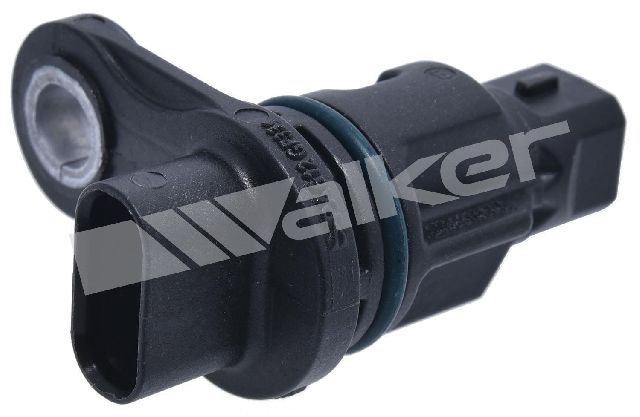
Est. part cost: $0 if covered by warranty/campaign, otherwise labor cost for flashing ($150-$300). - Faulty Crankshaft Position Sensor (CKP) 🟡 Medium Probability → Shop Engine Crankshaft Position Sensor TSB #18-014-25 explicitly links P0300 with a potential fault in the Crankshaft Position Sensor Circuit (P0335) on the 2.9L V6 model. 🎬 See how to diagnose a P0335 crankshaft sensor code. A failing CKP sensor provides incorrect data about the engine's speed and piston position to the PCM, which is critical for ignition and fuel timing, leading to misfires.
How to confirm: Scan for code P0335 alongside P0300. Test the sensor's output and wiring harness for continuity and correct voltage/resistance values as per the service manual.
Typical fix: Replace the crankshaft position sensor and inspect the wiring connector for damage. On some related FCA vehicles, a shim was required to properly space the new sensor.
Est. part cost: $50-$150 - Low Fuel Pressure / Fuel Delivery Issues 🟡 Medium Probability NHTSA ODI #11597827 documents an owner experiencing P0300 with low-pressure fuel system codes (P008A, P0087). This is a known issue, with Stellantis issuing safety recall 93C for failing low-pressure fuel pumps on 2017-2019 models that can cause stalling and misfires. The failure is often due to components warping from engine heat.
How to confirm: Connect a fuel pressure gauge to test both low and high-pressure sides of the fuel system. The high-pressure system on the 2.9L V6 should be capable of reaching up to 3,600 psi. Scan for accompanying fuel system codes like P0087 or P008A, which strongly point to a fuel delivery problem. Check with a dealer if recall 93C is open for your VIN.
Typical fix: Replace the failing low-pressure fuel pump (in-tank) or high-pressure fuel pump (HPFP). If under recall, the low-pressure pump replacement will be performed for free by a dealer.
Est. part cost: $300-$1200+
Rare But Worth Checking
- Cracked Intake Manifold: → Shop Engine Intake Manifold A Reddit user on a Giulia Quadrifoglio reported that a crack in the intake manifold was the ultimate cause of their P0300, creating a vacuum leak specifically between 5000-6000 RPM. The repair at a dealership cost approximately $1200. This is an expensive and less common cause but worth considering if all else fails.
- Vacuum Leak: A leak in a vacuum hose, PCV line, or intake gasket can allow unmetered air into the engine, leaning out the air-fuel mixture and causing random misfires. This can be diagnosed with a smoke test, which is the most effective method to find small leaks.
- Corroded Main Engine-to-Chassis Ground Strap: There are multiple owner reports of the main ground strap, located under the car connecting the transmission to the chassis, corroding and failing. This can cause a variety of severe electrical problems, including no-start conditions or the starter motor attempting to ground through smaller wires, melting the engine harness. This degradation can cause intermittent electrical issues leading to misfires before a total failure.
Diagnosis Steps
- Check if the Check Engine Light is flashing. If so, reduce driving to an absolute minimum to prevent catalytic converter damage.
- Use an OBD-II scanner to confirm the P0300 code and check for any other stored codes (e.g., P0301-P0306, P0335, P0087). Freeze frame data can help identify conditions (RPM, load) when the misfire occurs.
- Review the vehicle's service history. If spark plugs are past their 30k mile service interval, or if non-OEM plugs were installed, start there.
- Inspect the ignition coils and their wiring for any signs of cracking, melting, or corrosion. Perform a swap test if a cylinder-specific code is also present.
- Contact an Alfa Romeo dealer to check for open recalls (like 93C for the fuel pump) or available PCM software updates, referencing TSBs S2018000014 and S2018000011.
- If code P0335 is present (especially on a 2.9L), test the crankshaft position sensor and its circuit as per TSB #18-014-25.
- If fuel-related codes like P0087 are present, test the fuel pressure of both the low and high-pressure systems.
- If no other codes are present and the above steps yield no results, perform a smoke test to check for vacuum leaks from hoses, the PCV system, or the intake manifold.
- During the next oil change or service, visually inspect the main engine/transmission-to-chassis ground strap for corrosion or damage.
- If misfires only occur at high RPM on a Quadrifoglio, carefully inspect the intake manifold for cracks, as reported by owners.
Parts You'll Likely Need
- Spark Plugs (2.0L I4)
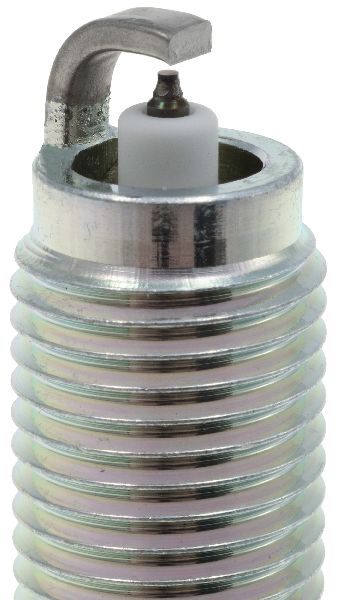
(OEM #68292346AA)— This is the most common maintenance item responsible for misfires. The OEM plug is an NGK Iridium model. Recommended replacement is every 25-30k miles.
Trusted brands: NGK (ILZKR7G7G / 90219), Mopar
OEM price range: $115-$150 (Set of 4)
Aftermarket price range: $80-$120 (Set of 4) - Spark Plugs (2.9L V6)
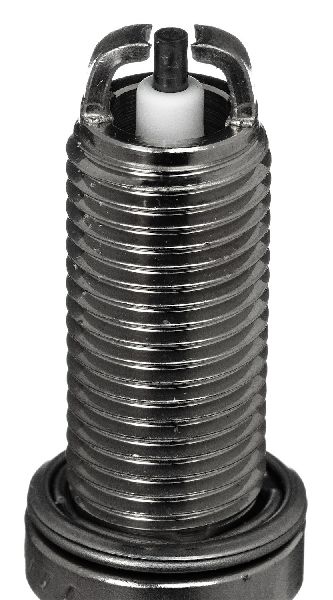
(OEM #68316113AA)— Regular maintenance item for the high-performance V6. The OEM plug is an NGK Laser Platinum model. Recommended replacement is every 30k miles.
Trusted brands: NGK (LKAR8AP7JDS / 96748), Mopar
OEM price range: $250-$280 (Set of 6)
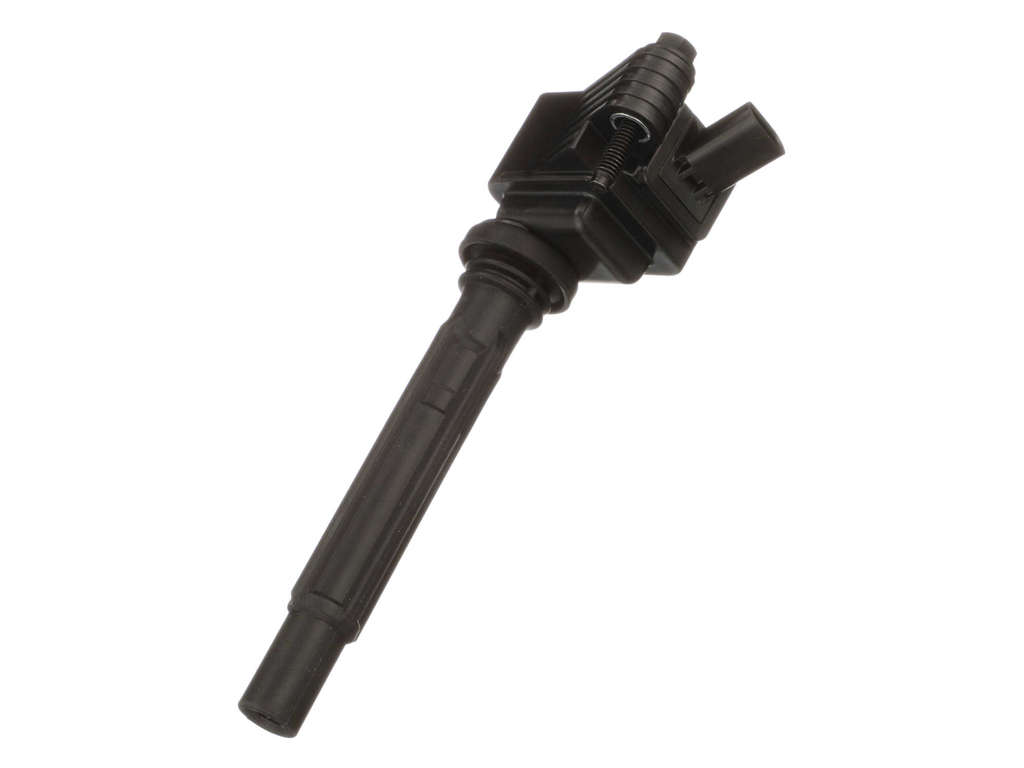
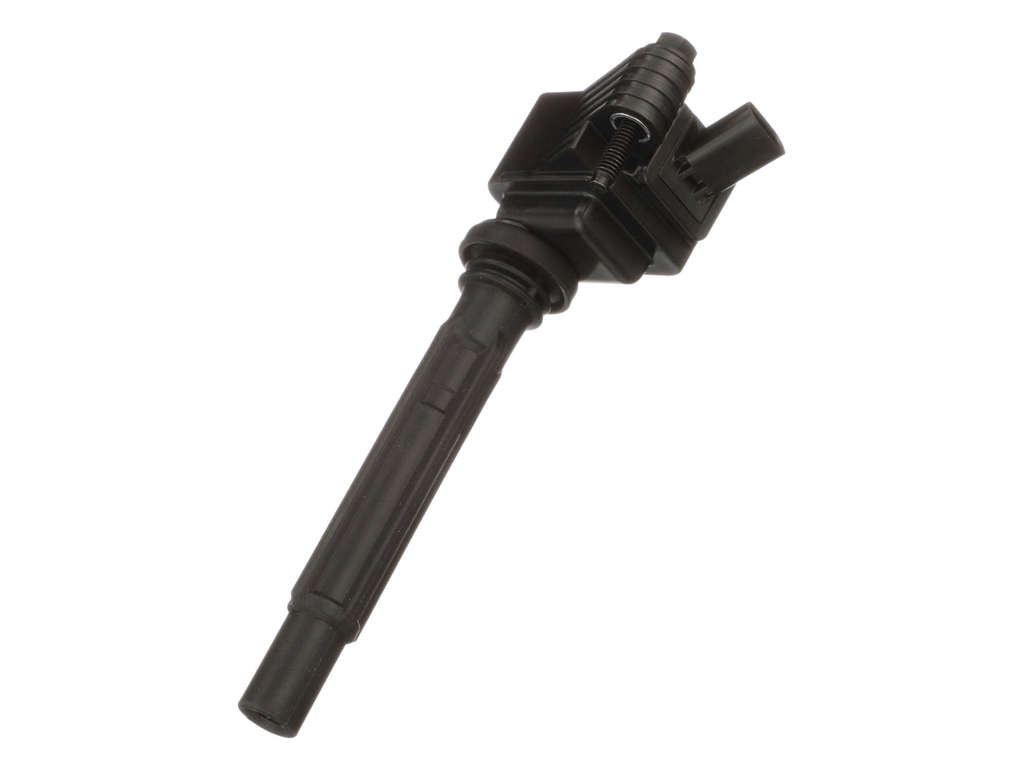
Aftermarket price range: $120-$180 (Set of 6) - Ignition Coil
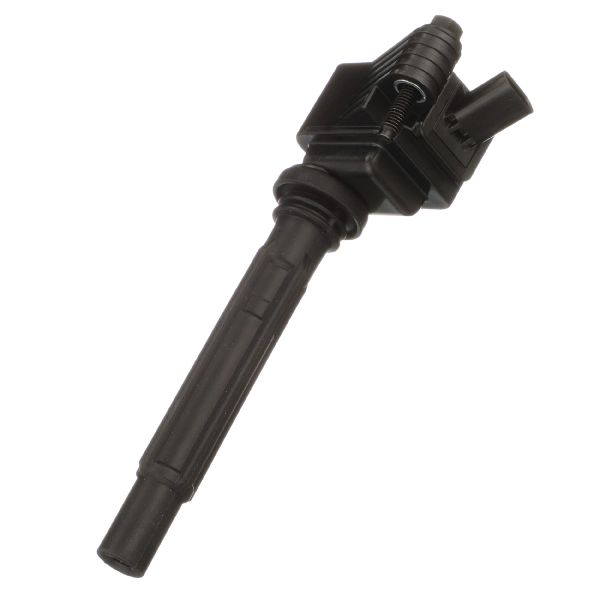
(OEM #68242286AB)— Ignition coils provide the high voltage needed for spark. They can fail over time, leading to weak or no spark. The part is often shared with other FCA vehicles.
Trusted brands: Mopar, Bosch, Delphi, NGK
OEM price range: $85-$120
Aftermarket price range: $50-$100 - Crankshaft Position Sensor — A documented cause of P0300 per TSB #18-014-25, especially when paired with DTC P0335 on the 2.9L V6.
Trusted brands: Mopar, Bosch
OEM price range: $70-$120
Aftermarket price range: $40-$80
Related Codes That Often Appear With This One
- P0301, P0302, P0303, P0304, P0305, P0306 — These are cylinder-specific misfire codes. They may appear with P0300 if the random misfires begin to occur more frequently on certain cylinders, helping to narrow down the issue.
- P0335 — As per TSB #18-014-25, this code for the Crankshaft Position Sensor Circuit is directly linked to P0300 on the 2.9L V6 model.
- P0087, P008A — As per NHTSA ODI #11597827 and safety recall 93C, these low fuel pressure codes can accompany P0300, indicating a fuel delivery problem from a failing fuel pump.
- P0299 — This code for 'Turbocharger Underboost' can appear with P0300. A misfire under load can sometimes be misinterpreted by the system or be a related symptom. TSB #S2018000011 also links these codes.
Technical Service Bulletins (TSBs) & Recalls
- 18-014-25: Links P0300 with Crankshaft Position Sensor Circuit issues.
- S2018000014: Connects P0300 to rough running on cold starts.
- S2018000011: Notes P0300 can appear after certain PCM software updates.
Platform-Specific Known Issues
- A Malfunction Indicator Lamp (MIL) with DTC P0300 may be related to a P0335 (Crankshaft Position Sensor Circuit) fault on 2.9L V6 models. (Bulletin #18-014-25)
- Rough running for 60-90 seconds after a cold start may be accompanied by a pending, stored, or active P0300 code, potentially requiring a software update. (Bulletin #S2018000014)
- Misfire codes including P0300 can be set in the PCM after a specific software update process for Customer Satisfaction Notification W05. (Bulletin #S2018000011)
- Owners have reported P0300 appearing with low-pressure fuel system codes P008A and P0087, indicating a failing low-pressure fuel pump, which is subject to safety recall 93C. (NHTSA ODI #11597827)
- A Reddit user with a 2017 Giulia reported rough cold starts and a P0300 code at only 34k miles, even after replacing plugs and coils, highlighting the need to investigate software and other causes.
Mechanic-Grade Diagnostic Values
- High-Pressure Fuel System (2.9L V6) — expected: Up to 3,600 psi. Failure: Pressure significantly below specification, especially under load. May be accompanied by codes P0087 or P008A.
- Spark Plug Torque (2.0L I4) — expected: 19 Nm or 14 ft-lbs. Failure: Incorrect torque can lead to improper heat transfer or sealing, potentially contributing to misfires. Do not use anti-seize, as it can alter torque values.
Scan Tool Commands That Help
- wiTECH (Dealer Tool): PCM Reprogram/Flash — To apply manufacturer software updates that address misfires, as specified in TSBs #S2018000014 and #S2018000011.
- Manual Procedure (No Tool): Clear Non-Active Codes — To clear spurious warning lights after a battery replacement or disconnect. Turn the car to accessory mode (engine off) and then fully off, repeating 7 times. Then start the engine and turn the steering wheel fully left and fully right. This will not clear codes for persistent faults.
Wiring & Ground Locations
- Main Engine Ground Strap — Under the car, connecting the transmission case to the vehicle chassis.. This strap is exposed to the elements and is known to corrode, causing a poor ground connection. This can lead to a wide range of electrical faults, including no-start conditions, a melted wiring harness, or intermittent misfires as the electrical system struggles for a proper ground path.
- Remote Negative (-) Post — An exposed stud located next to the passenger side hood lock on the upper frame rail.. This is a manufacturer-designated, clean, and reliable ground point in the engine bay, useful for performing electrical tests with a multimeter or other diagnostic tools.
Real Owner Repair Stories
- Reddit user Vexuli (Alfa Romeo Giulia Quadrifoglio (2.9L V6)) — P0300 misfire code, occurring specifically in the 5000-6000 RPM range in any drive mode.
❌ Tried (didn't work) Replacing spark plugs, Replacing ignition coils
✅ What actually fixed it Replacement of a cracked intake manifold. The repair was performed at a dealership for approximately $1200. - YouTube channel 'Max Shepherd' (Alfa Romeo Giulia (engine not specified, but likely 2.0L)) — Check engine light, car shaking, loss of compression at higher RPM.
❌ Tried (didn't work) A shop initially suggested a software update was needed.
✅ What actually fixed it Replacing aftermarket Champion brand spark plugs with OEM-spec plugs. The video explicitly warns against using Champion plugs for this application. - Reddit user 'SteadySurvivalMode' (2018 Alfa Romeo Stelvio (shares platform/drivetrain with Giulia)) — Car would not start, acted like a dead battery, followed by a large cloud of white smoke from the driver's side wheel well.
❌ Tried (didn't work) Multiple start attempts
✅ What actually fixed it The root cause was a corroded main ground strap under the car. The failure overloaded a smaller ground wire, melting the engine wiring harness. The final fix required replacing both the ground strap ($200) and the entire engine wiring harness ($6,000 in damages).
"I Checked Everything" — The Actual Cause
- A cracked intake manifold on a Quadrifoglio caused a P0300 only at high RPM (5000-6000). A standard smoke test at idle may not reveal such a crack, which might only open under the specific pressures and vibrations of high engine speed.
- A cracked flexplate on a 2.0L model could theoretically cause a P0300 if the damage affects the tone ring for the crankshaft position sensor. This mechanical failure would not be detected by a vacuum system smoke test.
OEM Part Supersession History
50547819→50553343— Update to address failures in the low-pressure fuel pump module for the 2.9L Quadrifoglio, which is a known cause of stalling and fuel-related misfire codes.
Heads up: Using the old part number may result in a repeat failure.
Model Year Variations Within This Range
- Pre-06/2017: Early models used a brittle plastic coolant bleeder screw on a hose at the rear of the engine that was prone to breaking, causing a massive coolant leak. This was updated in later models. While not a direct cause of P0300, the resulting overheating from a failure can cause severe engine damage leading to misfires.
Helpful Videos
We Have This Part in Stock

The information in this article is provided for general reference and educational purposes only. Vehicle specifications, procedures, and part compatibility can vary by production date, trim level, and region. Always consult your vehicle's factory service manual and verify part numbers before purchasing or performing repairs. Safety-critical components such as airbags, seat belts, and braking systems should be installed by a qualified professional.
- Alfa Romeo GIULIA:
- 🧭 Diagnostic Flowchart
- 🎬 Helpful Videos
- 🛍️ Shop This Part
- What's Unique About the 2017-2022 Alfa Romeo GIULIA
- Symptoms You May Notice
- Most Likely Causes
- Rare But Worth Checking
- Diagnosis Steps
- Parts You'll Likely Need
- Related Codes That Often Appear With This One
- Technical Service Bulletins (TSBs) & Recalls
- Platform-Specific Known Issues
- Mechanic-Grade Diagnostic Values
- Scan Tool Commands That Help
- Wiring & Ground Locations
- Real Owner Repair Stories
- "I Checked Everything" — The Actual Cause
- OEM Part Supersession History
- Model Year Variations Within This Range
- 🎟️ Get 5% Off