

P0300 on 2012-2018 Audi A6 3.0T: Random Misfire Causes and Fixes
P0300 on a C7 Audi A6 3.0T most often points to worn spark plugs and/or failing ignition coils. If the car has over 60,000 miles, carbon buildup on intake valves and a failing PCV valve are also highly probable causes. Start with ignition components, as they are the easiest and most affordable to replace.
- P0300 on the Audi A6 3.0T is a serious code that requires prompt attention to avoid damaging the catalytic converters.
- Always start diagnosis with the simplest and most common causes: spark plugs and ignition coils, especially if the vehicle has over 40,000 miles.
- If ignition components don't fix the issue, the next most likely causes are a failed PCV valve (oil separator) or significant carbon buildup on the intake valves.
- A flashing check engine light indicates a severe misfire; you should pull over and stop driving to prevent expensive damage.
- Due to the labor involved in accessing components under the supercharger, it is often cost-effective to replace the PCV valve, thermostat, and clean the intake valves at the same time.
What's Unique About the 2012-2018 Audi A6
The 2012-2018 Audi A6 (C7 platform) with the 3.0L TFSI engine is a direct-injection (GDI) platform. This design is inherently prone to carbon buildup on the intake valves, as fuel is injected directly into the cylinder and never washes over the valves to clean them. This carbon accumulation is a very common cause of misfires, especially on cold starts, that might not be as prevalent on port-injected engines. Additionally, the PCV (oil separator) valve is a known failure point that can create a vacuum leak, leading to lean conditions and random misfires.
Symptoms You May Notice
- Rough or vibrating idle
- Engine hesitation or jerking during acceleration
- Flashing or solid Check Engine Light
- Reduced engine power
- Decreased fuel economy
- EPC (Electronic Power Control) light may illuminate
- Replacing only one spark plug or ignition coil when the others are of a similar age and condition.
- Replacing oxygen (O2) sensors without evidence of failure. While they affect fuel trim, they are less likely to be the root cause of a significant misfire compared to ignition components or vacuum leaks.
- Assuming a bad catalytic converter is the cause, when it is more often the victim of unburnt fuel from a persistent misfire.
Most Likely Causes
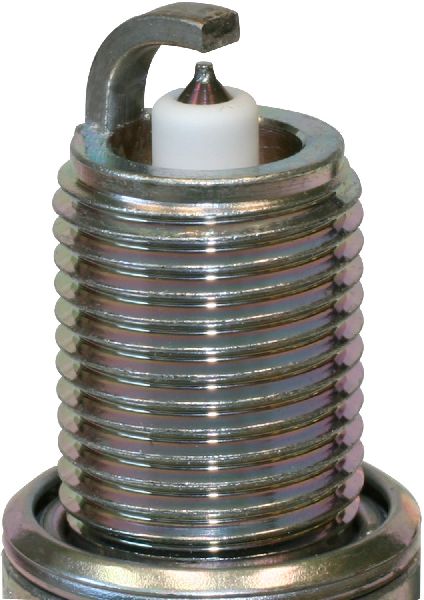
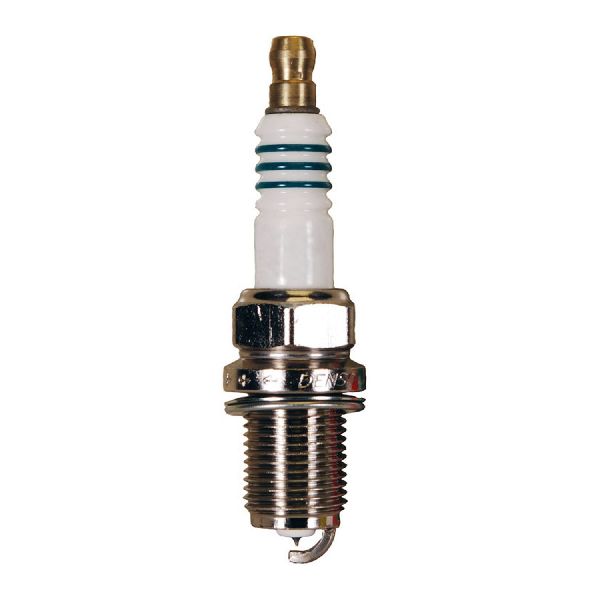
- Worn or Fouled Spark Plugs 🔴 High Probability → Shop Spark Plug Supercharged, direct-injection engines are hard on spark plugs. The recommended service interval is around 35,000-55,000 miles, and many misfire issues appear when this is overdue.
How to confirm: Remove and inspect the spark plugs. Look for wear on the electrode, carbon fouling, or oil/coolant contamination. If their age is unknown or they are past the service interval, replace them.
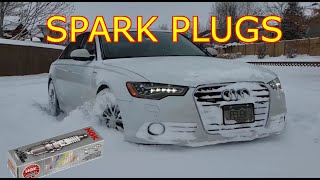
Typical fix: Replace all six spark plugs as a set. Use only high-quality OEM-equivalent plugs from brands like NGK or Bosch. Torque to specification (typically 22 ft-lbs or 30 Nm). 🎬 See this DIY walkthrough for replacing your spark plugs
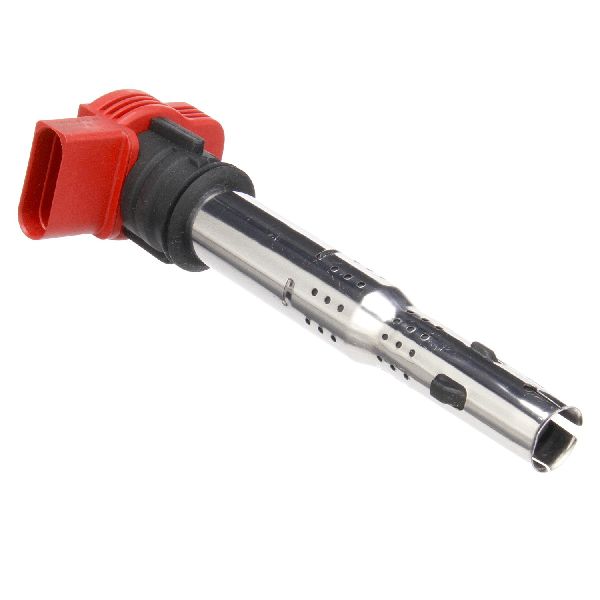
Est. part cost: $90-$180 - Failing Ignition Coils 🔴 High Probability → Shop Ignition Coil Ignition coils are a common wear item on VAG engines due to constant heat exposure. When one fails, others are often near the end of their life.
How to confirm: If you have cylinder-specific codes (e.g., P0304), swap the ignition coil from the misfiring cylinder with a coil from a known good cylinder. Clear the codes and drive. If the code 'moves' to the new cylinder, the coil is bad.
Typical fix: Replace the faulty ignition coil. It is best practice to replace all six coils at the same time to ensure reliability.
Est. part cost: $180-$350 for a set of six - Carbon Buildup on Intake Valves 🟡 Medium Probability The TFSI engine's direct-injection design means fuel doesn't clean the intake valves. Oil vapor from the PCV system bakes onto the hot valves, restricting airflow and causing misfires, especially on cold starts. This is very common on engines with over 60,000-80,000 miles.
How to confirm: This requires a borescope inspection of the intake ports, which usually involves removing the supercharger and intake manifolds. Symptoms like cold-start misfires that clear up when warm are a strong indicator.
Typical fix: The valves must be physically cleaned. The most effective method is walnut shell blasting, which is a labor-intensive job requiring removal of the supercharger.
Est. part cost: $20-$50 for gaskets and seals; professional service is $700-$2000+ - Failed PCV Valve (Oil Separator) 🟡 Medium Probability → Shop PCV Valve The diaphragm inside the PCV valve is known to tear, creating a significant unmetered vacuum leak. This leans out the air-fuel mixture and causes random misfires.
How to confirm: A strong vacuum at the oil cap (making it difficult to remove) while the engine is running is a classic sign. A professional smoke test is the definitive diagnostic method. Codes P0171 or P2187 (System Too Lean) often accompany P0300 when the PCV has failed.
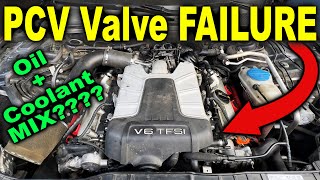
Typical fix: Replace the entire PCV valve assembly, which is located under the supercharger. 🎬 Watch: Step-by-step guide to replacing the 3.0T PCV valve
Est. part cost: $80-$250
Rare But Worth Checking
- Leaking Fuel Injector: → Shop Fuel Injector While less common than on the 2.0T engine, a 3.0T injector can fail, typically by sticking open and fouling a spark plug. This usually results in a specific cylinder misfire code but can contribute to a P0300.
- Leaking Intercooler Cores: → Shop Intercooler The 3.0T engine has air-to-water intercoolers (one for each bank) located under the supercharger. They can develop internal leaks, allowing coolant to enter the intake manifold and cause misfires. This may be accompanied by slow, unexplained coolant loss and can leave white/pink ash fouling on the spark plugs.
- Low Engine Compression: In high-mileage examples, issues like a burnt valve can lead to low compression and persistent misfires on one or more cylinders. A compression and leak-down test should be performed if ignition and fuel system checks do not resolve the issue.
Diagnosis Steps
- Read all fault codes with an OBD-II scanner. 🎬 Watch: How to diagnose specific cylinder misfire codes on an A6 Note any codes that accompany P0300, such as specific cylinder misfires (P0301-P0306) or lean codes (P0171/P0174).
- Check the service history. If spark plugs are past their 35-55k mile service interval, replace them.
- If specific cylinder misfire codes are present, swap the ignition coil from a misfiring cylinder with one from a non-misfiring cylinder. Clear the codes and drive. If the misfire code follows the coil, you have found the faulty part. Replace all coils as a set for best results.
- If plugs and coils are good, check for vacuum leaks. The most common is the PCV valve. With the engine running, try to remove the oil cap. If there is strong resistance, the PCV diaphragm is likely torn. A professional smoke test is the most definitive way to find vacuum leaks.
- If no vacuum leaks are found, inspect the fuel system. Check fuel pressure to ensure the pump is working correctly. Consider having fuel injectors professionally cleaned and tested, especially on higher-mileage vehicles.
- For persistent misfires, especially on cold starts, investigate carbon buildup. This requires a borescope to visually inspect the intake valves, which involves removing the supercharger.
- As a final step for stubborn issues, perform an engine compression test and a leak-down test to rule out mechanical problems like a burnt valve.
Parts You'll Likely Need
- Ignition Coil
(OEM #06E905115G)— This is one of the most common failure points for misfires on the 3.0T engine. They are exposed to high heat and fail electrically over time.
Trusted brands: Bosch, NGK, Eldor
OEM price range: $50-$80 per coil
Aftermarket price range: $30-$50 per coil - Spark Plug
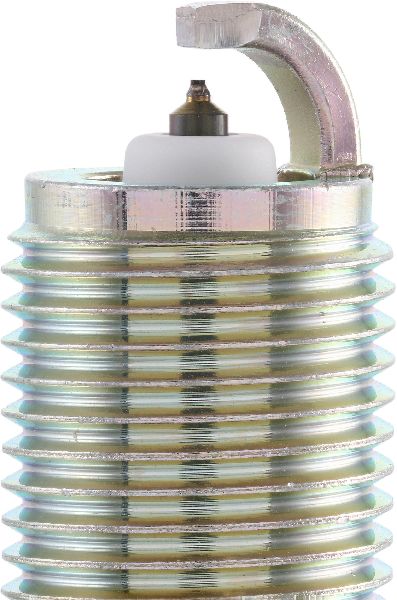
(OEM #NGK PFR8S8EG)— Spark plugs are a regular maintenance item. Worn or fouled plugs are a primary cause of incomplete combustion and misfires.
Trusted brands: NGK, Bosch
OEM price range: $20-$30 per plug
Aftermarket price range: $15-$25 per plug - PCV Valve / Oil Separator
(OEM #06E103547Q)— The diaphragm in the PCV valve is a known weak point that tears, causing a large vacuum leak that leads to random misfires and lean codes.
Trusted brands: Audi Genuine, Vaico
OEM price range: $200-$250
Aftermarket price range: $80-$150
Related Codes That Often Appear With This One
- P0301-P0306 — These codes specify which cylinder is misfiring. They often appear with P0300 when the ECU can identify the primary misfiring cylinders, even if the issue is random.
- P0171 / P0174 — These 'System Too Lean' codes for Bank 1 and Bank 2 often point to a vacuum leak as the cause of the misfire, most commonly a failed PCV valve.
- P130A — This is an Audi-specific code for 'Hide Cylinder'. The ECU actively shuts down a cylinder that is misfiring severely to protect the catalytic converter. Its presence confirms a serious misfire.
Technical Service Bulletins (TSBs) & Recalls
- A01166520354544 - Describes a procedure for pressure washing intake ports to resolve issues, which relates to the carbon buildup problem.
- Bulletin #A0123362058038_4 notes that the MIL may illuminate with DTCs P0300 through P0306 stored, requiring technicians to open a PSS record.
- Bulletin #A0124212069038_5 provides diagnostic information for instances where the MIL is illuminated specifically due to cylinder misfires P0300, P0301, P0302, P0303, P0304, P0305, and P0306.
- Bulletin #A0123912069038_5 and Bulletin #A0123802069038_4 both provide guidance for technicians when the MIL is illuminated with the full range of misfire codes from P0300 to P0306.
- Bulletin #A0123852058038_5 requests that technicians create a Pending Service Solutions record when misfires occur with DTCs P0300 through P0306.
- While several TSBs exist for P0300 codes on newer generation A6 models (2019+) related to software updates (e.g., 2069038/5, 2058038/4), no specific software-related TSBs for the 2012-2018 C7 generation were prominently found in search results for this specific issue. The causes for the C7 are typically mechanical or maintenance-related.
Platform-Specific Known Issues
- This engine is well-known for requiring intake valve carbon cleaning every 60,000-80,000 miles to prevent misfires and rough running.
- The water pump and thermostat, located behind the supercharger, are also common failure points. While not a direct cause of P0300, a coolant leak from these components could foul a sensor or cause other issues, and they are often replaced preventatively during a carbon cleaning or PCV valve job due to the labor overlap.
Mechanic-Grade Diagnostic Values
- High-Pressure Fuel Pump (HPFP) Rail Pressure — expected: Can exceed 2000-2900 PSI (138-200 BAR) under load. After hot shutdown, pressure should hold and rise to 110-120 BAR.. Failure: Pressure that plateaus at a lower value (e.g., 50-90 BAR) after shutdown, or inability to meet requested pressure during operation (often logged with code P0087), can indicate a failing HPFP.
- Low-Pressure Fuel Pump (LPFP) Feed Pressure — expected: 4.0-6.0 bar (58-87 PSI) feeding the HPFP.. Failure: Pressure below this range will starve the HPFP, leading to misfires, especially under load.
- Engine Compression — expected: 10 BAR (145 PSI) or higher, with minimal variation between cylinders. New engines are often in the 160-200 PSI range.. Failure: A cylinder reading significantly lower than others, or below the 145 PSI wear limit, points to a mechanical issue like a burnt valve, damaged piston, or poor ring seal.
Hidden / Shadow Codes Worth Checking
- Live Misfire Counters: The ECU tracks misfire events for each cylinder in real-time, even if they are not frequent enough to set a specific P030x code. This is invaluable for identifying which cylinders are contributing to a P0300. (see via Use a VAG-specific scan tool like VCDS or OBDeleven. In VCDS, view Measuring Block Groups 014, 015, and 016 on older controllers, or search for 'misfire' in Advanced Measuring Values on newer UDS controllers.)
- Mode $06 Misfire Data: Generic OBD-II scanners can access Mode $06, which stores test results for non-continuous monitors. This includes raw misfire counts from recent driving cycles that can help identify problematic cylinders. (see via A professional scan tool with Mode $06 capability. The data will show test IDs (TID) and component IDs (CID) with a value and a pass/fail threshold.)
Scan Tool Commands That Help
- VCDS (VAG-COM) or ODIS: Advanced Measuring Values / Measuring Blocks — Use this to monitor live data streams for 'Misfire sum counter', 'Fuel pressure: specified value', and 'Fuel pressure: actual value'. Watching these values during a test drive under the conditions that trigger the misfire is a critical diagnostic step.
- VCDS (VAG-COM) or equivalent: Clear Fault Codes / Reset Misfire Adaptations — After a repair, clearing codes is necessary. Some sources suggest that on related VAG engines, clearing codes multiple times in quick succession may be needed to fully reset stored misfire adaptations in the ECU.
Wiring & Ground Locations
- Engine Block Ground Strap — On the C7 platform, a primary engine-to-chassis ground strap is located on the right (passenger side in the US) of the engine compartment, near the alternator.. A corroded, loose, or damaged main ground can cause a host of difficult-to-diagnose electrical issues, including weak or erratic spark from ignition coils, leading to random misfires.
- Ignition Coil Connector Ground — Each ignition coil connector has a small ground wire integrated into its harness connector.. These wires are exposed to extreme heat cycles and can become brittle and break, especially during spark plug or coil replacement. A broken ground at the connector will cause a persistent misfire on that specific cylinder.
- ECU Water Ingress — The Engine Control Unit (ECU) is located in the plenum area near the base of the windshield, which can be prone to collecting water if the plenum drains are clogged.. Water can enter the ECU housing or its connectors, causing corrosion and short circuits. This can lead to bizarre electrical symptoms, including multiple injector circuit faults (e.g., P0202, P0204) and random misfires that appear after a repair or without a clear mechanical cause.
Real Owner Repair Stories
- AudiWorld Forums user (2014 Audi A6 3.0T) — Persistent misfire on cylinder 2, even after swapping ignition components. Had previously replaced 3 fuel injectors on separate occasions.
❌ Tried (didn't work) Swapping ignition coils and cables, Replacing multiple fuel injectors over time, A carbon cleaning was suggested but declined
✅ What actually fixed it A compression test revealed a leak. Upon engine disassembly, a burnt exhaust valve stem was found on cylinder 2. The final repair was a complete replacement of the passenger side cylinder head. - YouTube Creator 'Garage Taught' (Audi C7 with 3.0T engine) — Misfire on cylinder 3.
❌ Tried (didn't work) Swapping the ignition coil from cylinder 3 to cylinder 2 did not move the misfire.
✅ What actually fixed it Inspection of the spark plug from cylinder 3 showed white ash fouling, indicative of coolant contamination. The user concluded the root cause was a leaking internal supercharger intercooler core, which drips coolant directly into the intake ports, causing the misfire. - Reddit user on r/Audi (Audi A6 C7 3.0T with 260,000 km) — Rough idle, hard acceleration, shaky engine with P0300, P0302, P0304 and multiple injector circuit codes (P0202, P0204, P2151).
❌ Tried (didn't work) Replacing all 6 ignition coils and spark plugs, Replacing 2 fuel injectors
✅ What actually fixed it The user discovered the ECU had water inside it. After removing, opening, drying, and cleaning the circuit board with IPA, the issue persisted, but the water ingress was identified as the likely root cause of the electrical and injector circuit faults that were causing the misfires. The ultimate fix would be ECU repair or replacement.
"I Checked Everything" — The Actual Cause
- A common scenario on the 3.0T is a misfire that isn't caused by a vacuum leak, so a smoke test will come back clean. The actual cause is often an internal coolant leak from one of the supercharger's intercooler cores. Coolant slowly drips into an intake runner, fouling the spark plug and causing a misfire, particularly on cylinders 3 and 6. This is diagnosed by seeing white/pink crusty deposits on a spark plug, unexplained coolant loss, or by pressure testing the cores after removing the supercharger.
OEM Part Supersession History
06E103547F, 06E103547Q, 06E103547C→06E103547AC (or later, verify by VIN)— The PCV valve (oil separator) has gone through multiple revisions to improve the durability of the internal diaphragm, which is prone to tearing and causing a massive vacuum leak.
Heads up: Some revisions altered the internal crankcase pressure regulation. Using an incorrect version for your specific engine code and ECU software can potentially lead to oil consumption or other seal issues. It is critical to use the latest revision specified for your VIN.
Model Year Variations Within This Range
- 2012-2015 vs 2016-2018: The 3.0T engine saw a transition from the Gen 1 (e.g., CGXB, CTUB) to the Gen 2 or 'EVO' (e.g., CREC) engine around the 2016 model year facelift. While the core architecture is similar, the CREC engine features updates like a clutch-based supercharger pulley and dual injection (both direct and port injection), which can alter the pattern of carbon buildup. However, both engine generations are still susceptible to PCV, thermostat, and intercooler leak issues.
Diagnostic Flowchart
Used vs. New Parts: Buying Guide for This Vehicle
When a used part is the smart pick: For this specific repair, using used parts is generally not recommended for the common failure items due to the high labor cost to access them. If a major component like a cylinder head or the supercharger housing itself is needed, a low-mileage used part from a reputable salvage yard could be a cost-effective option.
Donor-vehicle mileage cap: roughly under 60000 miles for the part to have meaningful remaining life.
What to inspect on the donor part:
- For a major component, always request the VIN of the donor car to verify its history.
- Look for evidence of proper storage; parts exposed to the elements are a high risk.
- Inspect for any signs of overheating (discolored plastic, warped surfaces) or physical damage.
OEM-only on this vehicle (don't cheap out):
- PCV Valve / Oil Separator: Due to the multiple revisions and critical function, using the latest genuine Audi part is strongly advised to ensure durability and correct crankcase pressure.
- Thermostat: This is a high-labor job located under the supercharger. The cost savings of an aftermarket part do not justify the risk of a premature failure and having to do the job again.
- Sensors (Camshaft, Crankshaft, O2): These are critical for engine management. Stick with OEM or the original OE supplier (e.g., Bosch) to avoid compatibility and performance issues.
Aftermarket brands forum-validated for this vehicle:
- Ignition Coils: Bosch, NGK, Eldor
- Spark Plugs: NGK (PFR8S8EG is the specified plug), Bosch
- Supercharger Intercooler Cores: While OEM is safest, some performance brands offer upgraded replacements.
Brands owners have reported issues with on this vehicle:
- Unbranded or 'white box' ignition coils and sensors from online marketplaces. These are notorious for high failure rates right out of the box or shortly after installation.
Real Owner Stories
Aggregated from forums and TSBs cited above. Mileages and costs reflect what owners reported in those sources.
2012 Audi A6 3.0T — 100000 miles
Symptoms: Engine is losing power and it jerks a lot. Misfire codes on cylinders 4, 5, 6 and a random misfire code P0300.
What fixed it: While the owner eliminated spark plugs and coils, the suggested fix for these specific symptoms was addressing carbon deposits in the secondary air ports, which may be covered by an extended warranty.
Source hint: AudiWorld Forums - 4,5,6 cyl. misfire 3.0T
2014 Audi A6 3.0T
Symptoms: Persistent misfire on a single cylinder, Check Engine Light. P0300 is often related if the issue becomes intermittent or affects other cylinders.
What fixed it: A compression test revealed a leak, which led to the discovery of a burnt exhaust valve stem. The entire cylinder head for that bank was replaced.
Source hint: Go-Parts article referencing AudiWorld Forums user
2012-2018 Audi A6 3.0T — ~70000 miles
Symptoms: Cold-start misfires that clear up when warm; rough running.
What fixed it: Physical cleaning of the intake valves using walnut shell blasting after removing the supercharger.
Source hint: AudiWorld Forums / Audizine.com carbon buildup discussions
Related OBD-II Codes
Frequently Asked Questions
Does TSB A01166520354544 apply to my 3.0T A6 misfire issue?
I see TSBs 2069038/5 and 2058038/4 for P0300; do these apply to my 2012-2018 Audi A6?
How often should I change the spark plugs on my 3.0L TFSI to prevent P0300 codes?
Can a bad PCV valve cause a P0300 code on this specific Audi engine?
Why does my A6 misfire mostly on cold starts but run better when warm?
Is there a way to test if my ignition coils are causing the P0300?
Helpful Videos

We Have This Part in Stock


The information in this article is provided for general reference and educational purposes only. Vehicle specifications, procedures, and part compatibility can vary by production date, trim level, and region. Always consult your vehicle's factory service manual and verify part numbers before purchasing or performing repairs. Safety-critical components such as airbags, seat belts, and braking systems should be installed by a qualified professional.
- Audi A6:
- 🧭 Diagnostic Flowchart
- 🎬 Helpful Videos
- 🛍️ Shop This Part
- What's Unique About the 2012-2018 Audi A6
- Symptoms You May Notice
- Most Likely Causes
- Rare But Worth Checking
- Diagnosis Steps
- Parts You'll Likely Need
- Related Codes That Often Appear With This One
- Technical Service Bulletins (TSBs) & Recalls
- Platform-Specific Known Issues
- Mechanic-Grade Diagnostic Values
- Hidden / Shadow Codes Worth Checking
- Scan Tool Commands That Help
- Wiring & Ground Locations
- Real Owner Repair Stories
- "I Checked Everything" — The Actual Cause
- OEM Part Supersession History
- Model Year Variations Within This Range
- Used vs. New Parts: Buying Guide for This Vehicle
- Real Owner Stories
- 2012 Audi A6 3.0T — 100000 miles
- 2014 Audi A6 3.0T
- 2012-2018 Audi A6 3.0T — ~70000 miles
- Related OBD-II Codes
- Frequently Asked Questions
- 🎟️ Get 5% Off