

P0300 on 2019-2022 Audi A6: Random Misfire Causes and Fixes
P0300 on a 2019-2022 Audi A6 indicates random cylinder misfires. The first step should be to check for available ECM software updates with a dealer, as several TSBs address this code with a reflash. If software is current, the most common culprits are failing ignition coils or worn spark plugs. Replacing all coils and plugs is a good starting point and a manageable DIY job.
- P0300 indicates a random misfire, not tied to one specific cylinder.
- The most likely and easiest fixes are replacing the spark plugs and ignition coils. Always replace these in full sets.
- A flashing check engine light is a critical warning. Stop driving to prevent expensive damage to the catalytic converter.
- Due to the direct-injection engine design, carbon buildup on intake valves is a possible, though more complex, cause of misfires.
- Audi is aware of misfire issues on this platform, as evidenced by multiple Technical Service Bulletins.
What's Unique About the 2019-2022 Audi A6
The 2019-2022 Audi A6 (C8 generation) features advanced TFSI direct-injection engines, often paired with a 48V mild-hybrid (MHEV) system. A critical first step in diagnosis is checking for software updates. Audi has issued multiple Technical Service Bulletins (TSBs) for this specific year range where the sole fix for P0300-P0306 codes is an ECM software update. TSB A0122312069038_1 explicitly states "The software needs to be updated. The optimized software will correct the misfire and prevent the MIL from illuminating." Another TSB mentions software calibration issues with winter-blend fuels causing misfires. Beyond software, these direct-injection engines are known to be susceptible to carbon buildup on intake valves, which can disrupt airflow and cause misfires. Finally, failures in the 48V MHEV system, specifically the Belt Starter Generator (BSG), can cause a host of electrical issues and in some cases, stalling or no-start conditions that can be confused with severe misfires.
Diagnostic Flowchart
Tap your situation to follow the diagnostic path that matches what you're seeing on this vehicle.
Symptoms You May Notice
- Rough or shaky idle
- Engine hesitation or stumbling during acceleration
- Flashing Check Engine Light
- Reduced engine power and sluggish performance
- Decreased fuel economy
- Difficulty starting the engine
- Whistling or hissing noise from the engine bay, potentially indicating a failed PCV valve
- Replacing oxygen (O2) sensors. While misfires will cause abnormal O2 sensor readings, the sensors are almost never the root cause of a P0300 code.
- Replacing the Mass Airflow (MAF) sensor without proper diagnosis. While a faulty MAF can cause misfires, it's less common than ignition or vacuum issues and should be tested first.
Most Likely Causes
- Engine Control Module (ECM) Software Calibration 🔴 High Probability → Shop Engine Control Module (ECM) Audi has released multiple TSBs (e.g., A0122312069038_1, A0124212069038_5) specifically to address P0300-P0306 codes via a software update. One TSB notes that certain software calibrations can cause misfires with winter-blend fuels. This should be the first check.
How to confirm: Contact an Audi dealership or a qualified independent shop with access to Audi's systems and provide the vehicle's VIN. They can check for open campaigns or required software updates against your vehicle.
Typical fix: Update the ECM software to the latest version. This must be done by a dealer or a shop with the appropriate ODIS diagnostic tool.
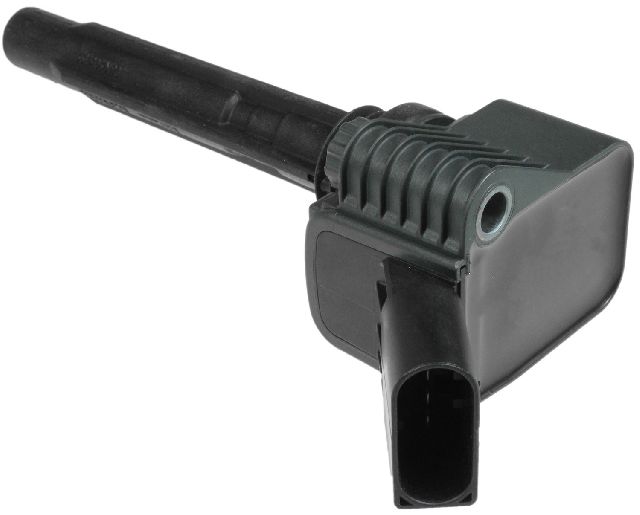
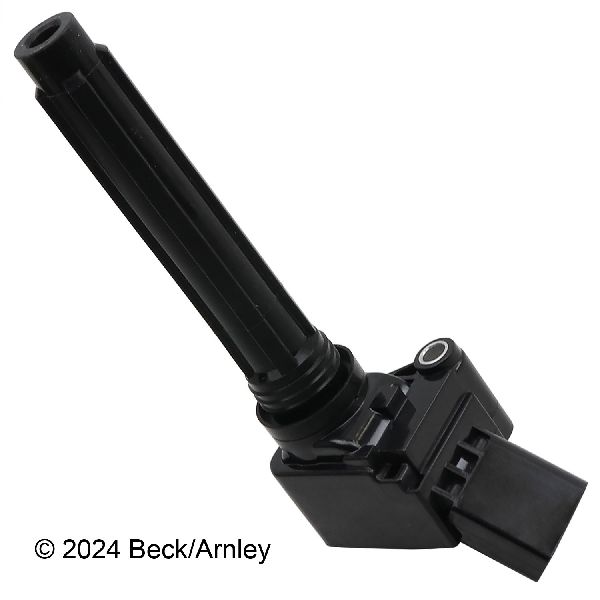
Est. part cost: $0 if under warranty, otherwise $150-$300 for labor. - Failing Ignition Coils 🔴 High Probability → Shop Ignition Coil Ignition coils are a very common wear item on modern VAG engines and can fail due to heat and electrical stress, causing misfires.
How to confirm: If a specific cylinder misfire code (e.g., P0302) is also present, swap the ignition coil from that cylinder with one from a cylinder that is not misfiring (e.g., cylinder 1). Clear the codes and drive the car. If the code 'moves' to the new cylinder (e.g., now shows P0301), the coil is bad.
Typical fix: Replace the faulty ignition coil. It is highly recommended to replace all coils at the same time, as they have been subjected to the same wear and tear.
Est. part cost: $40-$100 per coil - Worn or Fouled Spark Plugs 🔴 High Probability → Shop Spark Plug Turbocharged direct-injection engines are hard on spark plugs. The service interval is typically every 40,000 miles, and worn or fouled plugs are a primary cause of misfires.
How to confirm: Remove and inspect the spark plugs for signs of wear (eroded electrode), carbon fouling, or oil contamination. Even if they look acceptable, they should be replaced if their service life is exceeded. A DIY replacement on the 3.0T requires moving the coolant reservoir to access the driver's side bank.
Typical fix: Replace all spark plugs as a set. Use only high-quality Iridium plugs from OEM-equivalent brands like NGK or Bosch. Torque to spec (typically 22 ft-lbs or 30 Nm).
Est. part cost: $15-$30 per plug - Vacuum Leak (especially PCV Valve) 🟡 Medium Probability The PCV (Positive Crankcase Ventilation) system's diaphragm can tear, creating a significant vacuum leak. This is a common failure point on VAG engines, leading to unmetered air entering the intake, which disrupts the air-fuel ratio and causes random misfires.
How to confirm: A professional smoke test is the most effective method. A classic sign of a failed PCV diaphragm is a loud whistling or sucking noise from the engine 🎬 See this video for diagnosing a failing 3.0T PCV valve. at idle, or a strong vacuum making the oil cap difficult to remove while the engine is running.
Typical fix: Replace the entire PCV valve/oil separator assembly.
Est. part cost: $80-$250 depending on brand - Clogged or Faulty Fuel Injectors 🟡 Medium Probability → Shop Fuel Injector Direct injection (DI) fuel injectors operate under high pressure and can become clogged with carbon deposits or fail electronically, leading to poor fuel atomization and misfires.
How to confirm: This requires advanced diagnostics, such as using a scan tool like VCDS to monitor fuel trims and misfire counters per cylinder. A professional may need to perform an injector flow test.
Typical fix: Professional ultrasonic cleaning or replacement of the faulty injector(s).
Est. part cost: $150-$400 per injector
Rare But Worth Checking
- Carbon Buildup on Intake Valves: This is a well-documented issue on direct-injection engines like Audi's TFSI. Fuel is injected directly into the cylinder, so it never washes over the intake valves to clean them. Over time, oil vapors from the PCV system bake onto the hot valves, restricting airflow and causing misfires, especially on cold starts. The only effective fix is physical cleaning, typically via walnut shell blasting, which can cost $700-$2000+.
- Low Fuel Pressure: A weak in-tank low-pressure fuel pump (LPFP) or a failing high-pressure fuel pump (HPFP) can starve the engine of fuel, causing lean conditions and random misfires, especially under high load.
- Faulty Crankshaft Position Sensor: → Shop Engine Crankshaft Position Sensor A failing crankshaft position sensor can send erratic signals to the ECM, disrupting ignition and injection timing and causing random misfires. This sensor is the primary input the ECM uses to detect misfires in the first place.
- Rocker Arm / Camshaft Failure: → Shop Engine Rocker Arm A known issue on the EA839 3.0T engine involves premature failure of the rocker arm needle bearings. This causes the rocker to damage the camshaft lobe, leading to a rhythmic ticking noise from the top of the engine and eventual misfire codes, including P0300. This is a major, expensive repair.
Diagnosis Steps
- Check for TSBs first. Contact an Audi dealer or qualified shop to see if your VIN has an open campaign or requires an ECM software update for misfire detection, as this is a common and documented fix.
- Read all fault codes with an OBD-II scanner (VCDS is preferred for VW/Audi 🎬 Watch: How to use VCDS to detect specific cylinder misfires.). Note any codes accompanying P0300 and check freeze frame data to see the engine conditions when the misfire occurred.
- Inspect the ignition system. Start with the easiest and most common items: spark plugs and ignition coils. Look for wear, damage, or oil in the spark plug tubes (which would indicate a leaking valve cover gasket).
- If a specific cylinder misfire code is present (e.g., P0302), perform a 'coil swap' test by moving the suspected coil to another cylinder to see if the fault follows.
- If plugs and coils are good, check for vacuum leaks. Listen for hissing or whistling sounds around the engine bay. A smoke test is the most definitive way to find leaks from the PCV system, intake gaskets, or cracked hoses.
- Check fuel pressure (both low and high pressure systems) to rule out a weak fuel pump or clogged filter.
- If other steps fail, the issue may be more complex, such as clogged fuel injectors, internal carbon buildup requiring walnut blasting, or mechanical issues like low compression or camshaft/rocker arm failure.
Parts You'll Likely Need
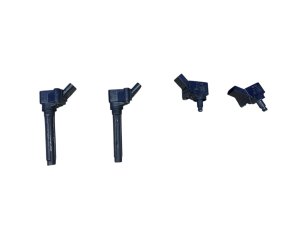
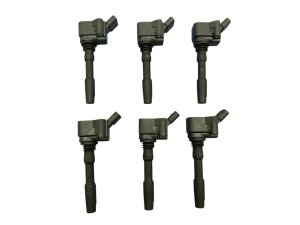
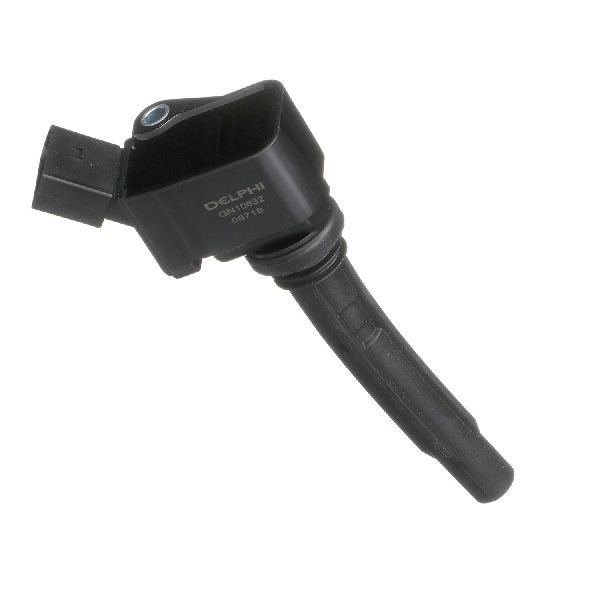
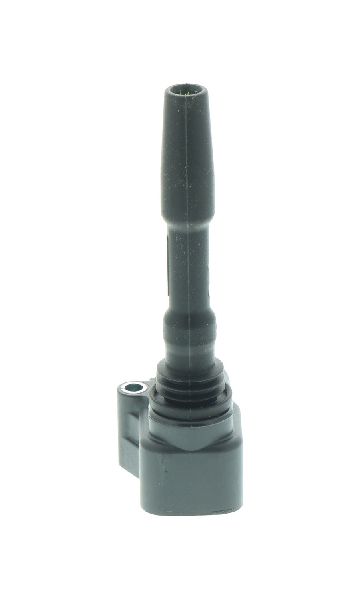
- Ignition Coil
(OEM #06E905115G (Note: Part numbers are often superseded, verify latest version with a dealer. Another possible number is 06H905110P))— Ignition coils are a very common failure point on VAG engines leading to misfires. It's best practice
Related Codes That Often Appear With This One
- P0301-P0306 — These codes indicate a misfire on a specific cylinder (e.g., P0301 for Cylinder 1). A random P0300 may eventually be accompanied by or turn into a specific cylinder code as the fault worsens, which can help in diagnosis.
- P0171 / P0174 — These codes for 'System Too Lean' on Bank 1 and Bank 2 often appear with P0300 if the root cause is a significant vacuum leak, which allows too much unmetered air into the engine.
- P0299 — This code for 'Turbocharger/Supercharger Underboost' can appear alongside P0300 if a major vacuum leak (like a failed PCV) is present, as the system cannot build or hold boost pressure correctly.
Technical Service Bulletins (TSBs) & Recalls
- A0123362058038_4: Requests technicians to open a PSS record for data collection on misfires.
- A0124212069038_5: Provides information and directs a software update for P0300-P0306 codes.
- A0123912069038_5: Provides information for when the MIL is illuminated with P0300-P0306 codes.
- A0123802069038_4: Provides information for when the MIL is illuminated with P0300-P0306 codes.
- A0123852058038_5: Instructs technicians to create a Pending Service Solutions record for misfire DTCs P0300-P0306.
- A0122312069038_1: Explicitly states a software update is available and will correct misfire conditions causing P0300-P0306.
- TSB 2058038: Referenced in an article as a software update fix for misfire codes on C8 models.
- PSS TSB 2058038: Notes that software calibration can cause misfires with winter blend fuel and a software solution was in development.
Platform-Specific Known Issues
- Audi has released multiple Technical Service Bulletins (TSBs) where the prescribed fix for P0300-P0306 is a software update. TSB A0122312069038_1 is a prime example, stating an update will correct the misfire. This should always be the first diagnostic step.
- Other TSBs, such as A0123362058038_4 and A0123852058038_5, instruct technicians to create a special service record when these misfire DTCs are stored, indicating an ongoing effort by Audi to track and understand the root cause of these issues on the platform.
- The 3.0T V6 engine (Code: DLZA) used in the A6 is known for a potential rocker arm bearing failure, which can escalate to camshaft damage and cause ticking noises along with misfire codes.
- Models equipped with the 48V mild-hybrid system can suffer from a failure of the Belt Starter Generator (BSG). While this typically presents as an "Electrical system: malfunction!" warning and can lead to a no-start condition, the associated power fluctuations and rough running could be confused with engine misfires.
Mechanic-Grade Diagnostic Values
- High-Pressure Fuel Pump (HPFP) Pressure at Idle — expected: Approximately 40 bar (580 PSI). Failure: Significantly lower pressure, or pressure that does not rise with RPM, indicates a failing HPFP.
- High-Pressure Fuel Pump (HPFP) Pressure under Load — expected: 120-200 bar (1740-2900 PSI), depending on engine demand.. Failure: Inability to reach or maintain requested fuel pressure, which can be logged with VCDS, points to a weak HPFP or a leak.
- Low-Pressure Fuel Pump (LPFP) Pressure — expected: 4.0-6.0 bar (58-87 PSI) feeding the HPFP.. Failure: Pressure below this range will starve the HPFP, causing misfires under load.
- VCDS Misfire Counter — expected: 0 counts on all cylinders at idle and during normal driving.. Failure: Any accumulating counts in Measuring Value Blocks (MVB) 015, 016, or in Advanced Measuring Values, indicate which cylinders are misfiring, even if it's not enough to set a specific P030x code.
Hidden / Shadow Codes Worth Checking
- Misfire Counters per Cylinder: While not a 'code' in the traditional sense, Audi's ECM tracks misfire events for each cylinder long before they cross the threshold to set a P0301-P0306 fault. A P0300 can be set with low counts across multiple cylinders. (see via Using a VAG-specific scan tool like VCDS or ODIS, navigate to Engine (01) -> Advanced Measuring Values. Select 'Misfire sum counter' and individual cylinder misfire counters to see live data.)
Scan Tool Commands That Help
- VCDS (VAG-COM): Advanced Measuring Values — This is critical for P0300. Use it to monitor 'Misfire sum counter' for all cylinders simultaneously during a test drive under the conditions noted in the freeze frame data. This can help pinpoint if the 'random' misfire is actually biased towards one or two cylinders.
- VCDS (VAG-COM): Fuel Pressure Monitoring (Requested vs. Actual) — When suspecting a fuel delivery issue, log both the 'Fuel pressure: specified value' and 'Fuel pressure: actual value' for the high-pressure rail. A significant deviation where the actual value cannot keep up with the requested value under load points to a failing HPFP or LPFP.
Wiring & Ground Locations
- Main Engine Ground Strap — Typically located on the right (passenger side in US) of the engine, running from the engine mount area to a stud on the frame rail.. A corroded or loose main engine ground can cause unstable voltage to the ECM and ignition coils, leading to erratic behavior and random misfires that are difficult to trace. The ECM relies on a stable ground reference to accurately time spark and injection.
- Secondary Cylinder Head Ground — A smaller ground braid often runs from one of the cylinder heads (sometimes near the coolant pipe) to the chassis or a bracket like the ABS module mount.. This provides a dedicated ground path for sensors and components on the cylinder head. A poor connection here can affect sensor readings and coil performance for that specific bank, contributing to misfires.
Real Owner Repair Stories
- AudiWorld & Audizine Forum Threads, Reddit posts (2018-2020 Audi S4/S5/SQ5/A6 with EA839 3.0T engine) — Starts with a faint, rhythmic ticking noise from the top of the engine, especially when warm. Progresses over months to a louder tick, rough idle, and eventually a flashing check engine light with P0300 and specific cylinder misfire codes (e.g., P0305, P0306) and sometimes camshaft position sensor faults.
❌ Tried (didn't work) Replacing spark plugs, Swapping ignition coils, Replacing fuel injectors, Mechanics dismissing the initial ticking as 'normal' direct injector noise.
✅ What actually fixed it Replacement of all 24 rocker arms and, in most cases, at least one camshaft that was scored by the failed rocker arm's needle bearings. This is a major, labor-intensive repair. The failure is due to premature wear of the needle bearings in the original rocker arm design, which was updated in later model years (around mid-2019).
"I Checked Everything" — The Actual Cause
- A known issue on the EA839 engine is the failure of an internal check valve in the PCV breather hose that connects to the intake. A standard smoke test at idle may not reveal a leak. However, under boost, the failed check valve allows pressurized air to enter the crankcase, overwhelming the PCV diaphragm and causing a massive vacuum leak, oil consumption, and misfires. The fix is to replace the entire PCV breather hose assembly, not just the oil separator.
OEM Part Supersession History
06E-905-115, 06E-905-115-A, B, C, D, E, F→06E-905-115-G— Revisions to improve reliability and prevent premature failure, which is a common cause of misfires.
Heads up: While older revisions may physically fit, it is critical to use the latest specified part number for your vehicle's VIN to ensure correct performance and longevity. Always verify with a dealer.Rocker Arms (pre-2019 design)→Updated design with larger, more robust needle bearings (post mid-2019).— The original design's small needle bearings were prone to premature wear and failure, leading to camshaft destruction.
Heads up: When replacing, all rocker arms should be updated to the new design. It is not recommended to mix old and new designs.
Model Year Variations Within This Range
- 2019-early 2020: Vehicles in this range were more susceptible to failures of the 48V Belt Starter Generator (BSG), which could cause a wide range of electrical issues, including symptoms that mimic misfires. Audi issued recalls and warranty extensions for this part.
- 2019 (and some early 2020): Engines produced before mid-2019 were fitted with an earlier revision of the camshaft rocker arms that are prone to premature needle bearing failure, a known cause of P0300 and catastrophic engine damage. Later models use an updated part.
Helpful Videos

Used OEM Parts in Stock
New Aftermarket Parts Available


The information in this article is provided for general reference and educational purposes only. Vehicle specifications, procedures, and part compatibility can vary by production date, trim level, and region. Always consult your vehicle's factory service manual and verify part numbers before purchasing or performing repairs. Safety-critical components such as airbags, seat belts, and braking systems should be installed by a qualified professional.
- Audi A6:
- 🧭 Diagnostic Flowchart
- 🎬 Helpful Videos
- 🛍️ Shop This Part
- What's Unique About the 2019-2022 Audi A6
- Symptoms You May Notice
- Most Likely Causes
- Rare But Worth Checking
- Diagnosis Steps
- Parts You'll Likely Need
- Related Codes That Often Appear With This One
- Technical Service Bulletins (TSBs) & Recalls
- Platform-Specific Known Issues
- Mechanic-Grade Diagnostic Values
- Hidden / Shadow Codes Worth Checking
- Scan Tool Commands That Help
- Wiring & Ground Locations
- Real Owner Repair Stories
- "I Checked Everything" — The Actual Cause
- OEM Part Supersession History
- Model Year Variations Within This Range
- 🎟️ Get 5% Off