

P0300 on 2024-2025 Buick Enclave: Random Misfire Causes & Fixes
P0300 indicates a random/multiple cylinder misfire. On the 2024-2025 Enclave, this is most commonly due to worn ACDelco iridium spark plugs or faulty ignition coils, especially on the hard-to-access rear bank of the V6. Carbon buildup on intake valves is another frequent cause for the 3.6L V6. A rare but severe GM Technical Service Bulletin (18-NA-115) points to a potential cold start misfire on 2024 models caused by engine block porosity requiring dealer diagnosis.
- P0300 means multiple cylinders are misfiring, and it should be addressed promptly to avoid expensive catalytic converter damage.
- The most likely culprits are worn spark plugs and/or failing ignition coils.
- For the 2024 3.6L V6, accessing the rear three cylinders (1, 3, 5) is labor-intensive, so it's wise to replace all rear plugs and coils at once.
- A specific GM bulletin exists for cold start misfires on the 2024 model, so if the problem only happens when the engine is cold, dealer diagnosis might be necessary.
- Do not drive if the check engine light is flashing.
What's Unique About the 2024-2025 Buick ENCLAVE
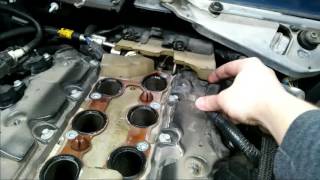
This year range covers a major powertrain change. The 2024 Enclave uses the established 3.6L V6 (LFY), while the all-new 2025 model introduces a 2.5L Turbo I4 (LK0). While ignition components are a common cause on both, the 3.6L V6 has a well-documented history of carbon buildup on intake valves 🎬 See how to clean intake ports to resolve carbon-related misfires. causing misfires, particularly when cold, because it is a direct-injection engine. For the 2024 model specifically, GM has issued TSB #18-NA-115 regarding cold start misfires. This TSB outlines a diagnostic procedure for a rare but severe condition where engine block porosity allows coolant to leak into a cylinder overnight, causing a misfire on startup that disappears as the engine warms. The prescribed fix for this condition is engine replacement.
Diagnostic Flowchart
Tap your situation to follow the diagnostic path that matches what you're seeing on this vehicle.
Generation note: The 2024 model is the final year of the second generation, equipped with a 3.6L V6 engine (LFY). The 2025 model marks the start of the third generation, featuring a new 2.5L Turbo I4 engine (LK0). While the code's meaning is the same, specific causes, parts, and known issues are well-documented for the 3.6L V6, whereas data for the new 2.5L Turbo is still emerging.
Symptoms You May Notice
- Rough or shaking idle.
- Hesitation or stumbling during acceleration.
- Solid or flashing Check Engine Light.
- Reduced fuel economy.
- Difficulty starting the engine.
- Noticeable loss of power.
- Strong smell of gasoline from the exhaust.
- Stabilitrak/Traction Control light may illuminate.
- Replacing only one spark plug or ignition coil when others are of a similar age and condition, especially when accessing the rear bank of the V6 engine requires significant labor.
- Replacing oxygen sensors, as they may report issues caused by the misfire (like rich or lean conditions) but are not the root cause themselves.
- Assuming a vacuum leak is a simple cracked hose, when on the 3.6L V6 it can be related to a complex internal PCV system failure within the valve cover.
Most Likely Causes
- Worn or Fouled Spark Plugs 🔴 High Probability → Shop Spark Plug Spark plugs are a standard maintenance item. The direct-injection 3.6L engine can contribute to faster fouling if other issues like minor oil consumption or carbon buildup are present.
How to confirm: Inspect the spark plugs for wear (worn electrode), carbon fouling, oil, or coolant contamination. On the 3.6L V6, accessing the rear bank (cylinders 1, 3, 5) requires removing the upper intake manifold.
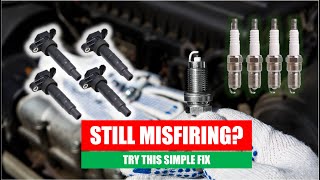
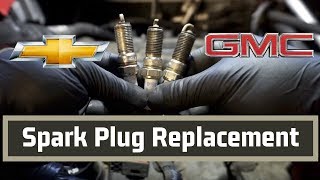
Typical fix: Replace all six spark plugs as a set. It is highly recommended to use the specified ACDelco Iridium plugs (Part No. 41-109) which are pre-gapped.
Est. part cost: $60-$150 - Faulty Ignition Coils 🔴 High Probability → Shop Ignition Coil Heat and vibration cause ignition coils to fail over time. A single failing coil can sometimes cause random misfires before it fails completely and sets a cylinder-specific code.
How to confirm: Use a scan tool to monitor misfire counts on each cylinder (Mode $06). Swap the suspected coil with one from a known good cylinder and see if the misfire follows the coil.
Typical fix: Replace the faulty ignition coil. The OEM part is ACDelco P/N: 12632479. Due to the labor involved in accessing the rear bank on the V6, it is often recommended to replace all three rear coils and all six spark plugs at the same time.
Est. part cost: $50-$100 per coil - Vacuum Leak 🟡 Medium Probability A leak in the intake system allows unmetered air into the engine, creating a lean condition (often with P0171/P0174) that causes misfires. Common sources include degraded intake manifold gaskets or cracked PCV hoses/tubes.
How to confirm: A smoke test is the most effective method. Pay close attention to the intake manifold gaskets, PCV hoses, and the EVAP purge valve solenoid. A hissing sound near the engine is also a strong indicator.
Typical fix: Replace the leaking gasket or hose. The intake manifold gaskets should always be replaced when removed for other service.
Est. part cost: $20-$200 - Fuel System Issues 🟡 Medium Probability
How to confirm: Check fuel pressure to rule out a weak fuel pump. Listen to each fuel injector with a mechanic's stethoscope; they should all have a consistent clicking sound. For the direct-injection engine, a professional may need to perform a fuel injector balance test, as clogged or leaking injectors are a known GM issue.
Typical fix: Clean or replace clogged fuel injectors. Sometimes a high-quality fuel system cleaner can help, but replacement is often necessary.
Est. part cost: $100-$500+ - Cold Start Misfire (TSB #18-NA-115) ⚪ Low Probability Manufacturer TSB #18-NA-115 addresses a cold start misfire that sets a P0300. It is caused by engine block porosity creating a pinhole coolant leak into a cylinder. This is a rare but documented manufacturing defect.
How to confirm: The condition is a misfire that only occurs on a cold start and goes away when warm. Diagnosis requires a dealer to follow the TSB: add UV dye to the coolant, run the engine to temperature, let it cold soak, then use a borescope to inspect the cylinder for the glow of coolant dye.
Typical fix: If the condition is verified, the only prescribed fix is engine replacement.
Est. part cost: $0 (if under warranty) - $8000+
Rare But Worth Checking
- Carbon Buildup on Intake Valves: This is a very well-known issue on GM's direct-injection engines like the 3.6L V6. Fuel is sprayed directly into the cylinder, so it doesn't wash over the intake valves to keep them clean. Carbon from the PCV system bakes onto the valves, disrupting airflow and causing misfires, especially on a cold engine before the valves have fully heated up. Diagnosis requires a borescope, and the fix is professional media blasting (e.g., walnut blasting).
- Restricted Exhaust / Clogged Catalytic Converter: → Shop Catalytic Converter A clogged catalytic converter creates excessive backpressure, leading to misfires across multiple cylinders. This is often a consequence of long-term misfiring that has already damaged the converter by dumping raw fuel into it.
- Low Engine Compression: Internal mechanical engine problems like worn piston rings, a leaking head gasket, or valvetrain issues (e.g., timing chain stretch, though less common on the LFY engine than its predecessor) can cause a loss of compression and misfires. A compression test is needed to diagnose this.
Diagnosis Steps
- Read all stored fault codes with an OBD-II scanner. Note any other codes besides P0300, especially lean codes (P0171/P0174) or specific cylinder codes.
- Check the freeze frame data to see the engine conditions (RPM, load, temperature) when the misfire occurred. This can help determine if it happens when cold, under load, etc.
- Use the scanner's live data (or Mode $06) to monitor misfire counts for each cylinder to see if any are more frequent offenders, even if they haven't set a specific code yet.
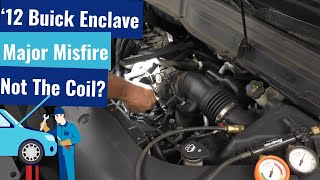
- Inspect the ignition system. For the 3.6L V6, this will involve removing the upper intake manifold to access the rear bank (cylinders 1, 3, 5). Check spark plugs for wear and proper gap, and inspect ignition coils for damage or carbon tracking.
- If ignition components look good, check for vacuum leaks using a smoke machine. Pay close attention to the intake manifold gaskets and all PCV system hoses.
- Test fuel pressure to ensure the fuel pump is supplying adequate pressure. Consider a professional fuel injector balance test if injectors are suspected.
- If misfires are primarily on cold starts, consider carbon buildup on the intake valves as a likely cause, which requires a borescope to inspect.
- If the misfire is ONLY on cold starts and cannot be explained, review TSB #18-NA-115 with a dealer for a potential coolant intrusion test.
- If no cause is found, a mechanical issue is possible. Perform an engine compression test and cylinder leak-down test to check the health of each cylinder.
Parts You'll Likely Need
- Spark Plugs
(OEM #ACDelco 41-109)— These are the most common wear item that causes a P0300 code. They should always be replaced as a full set.
Trusted brands: ACDelco
Related Codes That Often Appear With This One
- P0301-P0306 — These codes indicate a misfire on a specific cylinder. A random misfire (P0300) may eventually become consistent enough to trigger one of these more specific codes, helping to pinpoint a failing coil or injector.
- P0171 / P0174 — These 'System Too Lean' codes often point to a vacuum leak from sources like intake manifold gaskets or a failed PCV system, which is a common cause of random misfires.
- P0420 / P0430 — These 'Catalyst Efficiency' codes indicate the catalytic converter has been damaged, which is a common and expensive result of driving for too long with a misfire condition.
- P050D — This 'Cold Start Rough Idle' code is often seen with P0300, particularly when the cause is carbon buildup on intake valves or the rare coolant leak described in TSB 18-NA-115.
Technical Service Bulletins (TSBs) & Recalls
- Bulletin #18-NA-115: Addresses a cold start misfire and/or rough idle with DTC P0300 on 2024 models. [⭐ MANUFACTURER TSB — highest authority]
- Bulletin #PIP5628G: Mentions diagnostic information needed for P0300 codes on older models, showing a history of GM addressing this issue. [⭐ MANUFACTURER TSB — highest authority]
Platform-Specific Known Issues
- Loose Ignition Coil Ground Bolt: → Shop Ignition Coil On a platform-mate GMC Acadia with the same engine, an intermittent misfire on an entire bank of cylinders was traced to a single loose 8mm ground bolt for the ignition coils, a simple but easily missed failure point that can cause a P0300.
- Combination Failure: A Chevrolet Traverse owner found their P0300 was caused by a combination of three common problems at once: worn spark plugs, carbon-caked intake valves, and a faulty EVAP purge valve that was fouling the new plugs, demonstrating the need for comprehensive diagnosis.
Mechanic-Grade Diagnostic Values
- Fuel System Pressure (Low Side - 3.6L LFY Engine) — expected: 50-60 PSI (Key On, Engine Off); 35-45 PSI (At Idle). Failure: Pressure that is significantly lower than specifications can cause a lean condition and random misfires across all cylinders.
- Ignition Coil Primary Winding Resistance — expected: 0.4 to 2.0 ohms. Failure: A reading outside this range (often OL for open or a high resistance) indicates a faulty primary winding in the coil.
- Ignition Coil Secondary Winding Resistance — expected: 6,000 to 11,000 ohms (6kΩ - 11kΩ). Failure: A reading significantly outside this range suggests the secondary coil winding has failed.
Scan Tool Commands That Help
- GDS2 / Tech2 (or equivalent professional scanner): Crankshaft Position Variation Learn — This procedure is required if the Engine Control Module (ECM), crankshaft position sensor, or the crankshaft itself has been replaced. Failure to perform the relearn can cause a P1336 code and may contribute to misfire detection issues.
- GDS2 / Tech2 (or equivalent professional scanner): Misfire Graphic / Misfire Counters (Mode $06) — Use this to view live and historical misfire counts for each individual cylinder. Even if only a P0300 is set, this data can reveal if one or two cylinders are the primary source of the random misfires, helping to isolate a failing coil, plug, or injector.
- GDS2 / Tech2 (or equivalent professional scanner): Injector Balance Test — This command systematically fires each injector while monitoring fuel pressure drop to identify a weak or clogged injector that may be causing misfires on one or more cylinders.
Wiring & Ground Locations
- G113 — Located on the left side of the engine, at the engine-to-transmission stud.. This is a primary engine block ground. A loose or corroded connection here can cause a host of issues, including erratic sensor readings and weak ignition spark, leading to random misfires.
- G101 — Located on the left side of the engine compartment, on the left frame rail.. This ground serves the Engine Control Module (ECM) and Transmission Control Module (TCM). A poor connection can directly impact ECM function, causing miscalculation of fuel and spark timing, resulting in P0300.
- G110 — Located on the right front of the engine, mounted to the cylinder head.. This is another critical engine ground. Ensuring it is clean and tight is a fundamental step in diagnosing any electrical issue, including ignition system faults that cause misfires.
OEM Part Supersession History
12590990, 12610626, 12618542→12632479— Standard part evolution for improved durability and performance. The coil features coated windings to protect against internal shorts and dielectric breakdown.ACDelco 41-123→ACDelco 41-109 (for some applications)— GM frequently updates spark plug specifications for drivability and emissions performance. In some GM engine families, the 41-123 was superseded by other plugs. For the 3.6L LFY, the 41-109 is the specified plug.
Heads up: Crucially, ACDelco Iridium plugs like the 41-109 are pre-gapped and should never be manually gapped, as this can damage the fine iridium tip.
Model Year Variations Within This Range
- 2024 vs 2025: The 2024 model uses the 3.6L V6 (LFY) engine and a 9-speed automatic transmission. The 2025 model introduces a new 2.5L Turbo I4 (LK0) engine paired with an 8-speed automatic. Diagnostic procedures, common failure points, and parts will be significantly different between these two powertrains. Data on common P0300 causes for the new 2.5L Turbo engine is still emerging.
Helpful Videos


The information in this article is provided for general reference and educational purposes only. Vehicle specifications, procedures, and part compatibility can vary by production date, trim level, and region. Always consult your vehicle's factory service manual and verify part numbers before purchasing or performing repairs. Safety-critical components such as airbags, seat belts, and braking systems should be installed by a qualified professional.
- Buick ENCLAVE:
- 🧭 Diagnostic Flowchart
- 🎬 Helpful Videos
- What's Unique About the 2024-2025 Buick ENCLAVE
- Symptoms You May Notice
- Most Likely Causes
- Rare But Worth Checking
- Diagnosis Steps
- Parts You'll Likely Need
- Related Codes That Often Appear With This One
- Technical Service Bulletins (TSBs) & Recalls
- Platform-Specific Known Issues
- Mechanic-Grade Diagnostic Values
- Scan Tool Commands That Help
- Wiring & Ground Locations
- OEM Part Supersession History
- Model Year Variations Within This Range
- 🎟️ Get 5% Off