

P0300 on 2006-2011 Buick Lucerne: Random Misfire Causes and Fixes
P0300 on a Buick Lucerne indicates a random engine misfire. The most common culprits are worn spark plugs and faulty ignition coils. For the 3.8L V6, a failed ignition control module is a very frequent cause. For V6 models, a leaking intake manifold gasket is also a frequent cause, while some V6s can have timing-related misfires due to low oil pressure, as noted in a GM Technical Service Bulletin.
- P0300 means your Lucerne's engine is misfiring on multiple cylinders.
- Start your diagnosis with the simplest and most common causes: old spark plugs and bad ignition coils.
- If you have a V6 model, be aware that leaking intake manifold gaskets are a common problem that can cause this code.
- A flashing Check Engine Light is a serious warning that requires you to stop driving to prevent expensive catalytic converter damage.
- For V6 engines, especially if you see timing-related codes, check the engine oil level and pressure, as this is a known issue outlined in a TSB.
What's Unique About the 2006-2011 Buick LUCERNE

The Buick Lucerne was available with three different engines: the 3.8L V6 (L26), 3.9L V6 (LZ9), and the 4.6L Northstar V8 (LD8). While all are susceptible to common ignition failures, the V6 models have specific known issues. The 3.8L V6 uses a waste-spark ignition system with three coils mounted on an Ignition Control Module (ICM). Failure of the ICM is a very common cause of misfires on two cylinders simultaneously (e.g., cylinders 2 and 5), which triggers a P0300. The V6 engines are also known for intake manifold gasket failures that cause vacuum or coolant leaks. The 3.9L V6, which replaced the 3.8L in 2009, features variable valve timing (VVT). A GM Technical Service Bulletin (PIP5064C) specifically links P0300 on some V6 engines to low engine oil pressure, which can affect the VVT system and lead to misfires.
Diagnostic Flowchart

Tap your situation to follow the diagnostic path that matches what you're seeing on this vehicle.
Symptoms You May Notice

- Rough or shaking idle
- Hesitation or stumbling during acceleration
- Flashing or solid Check Engine Light
- Noticeable loss of engine power
- Reduced fuel economy
- Engine may be hard to start
- Smell of unburnt gasoline from the exhaust
- Replacing only one spark plug or coil when others are near the end of their service life.
- On the 3.8L V6, replacing a good ignition coil when the underlying Ignition Control Module (ICM) is the actual point of failure.
- Replacing oxygen sensors when the issue is actually a vacuum leak from an intake gasket causing incorrect fuel trim readings.
- Condemning the catalytic converter without first diagnosing and fixing the root cause of the misfire, which is what damages the converter.
Most Likely Causes

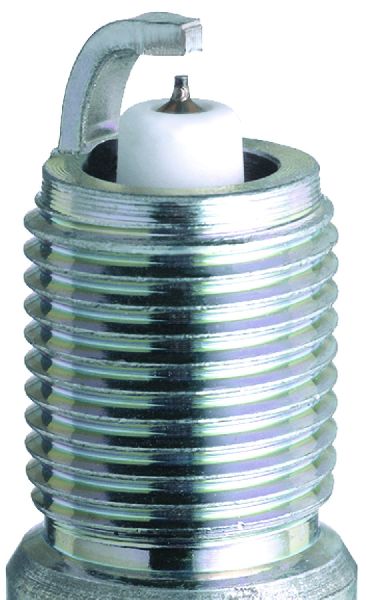
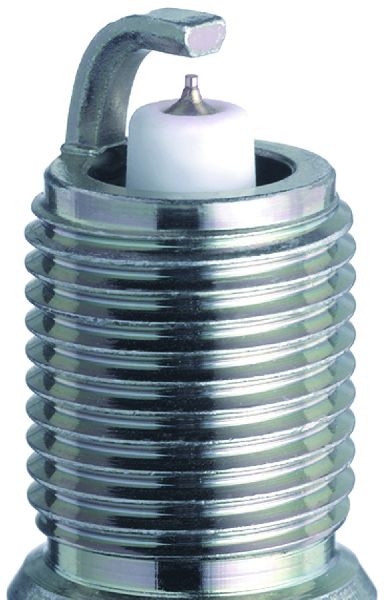
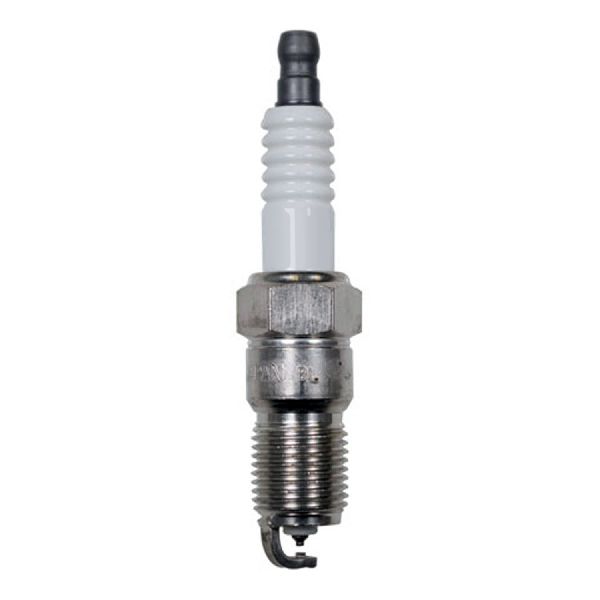
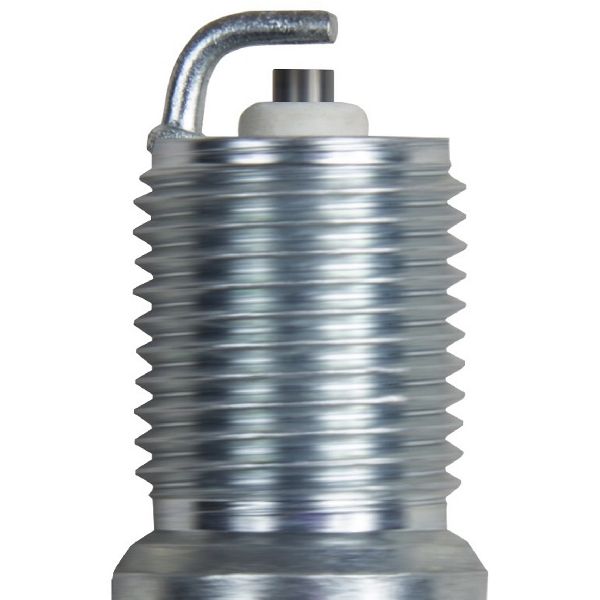
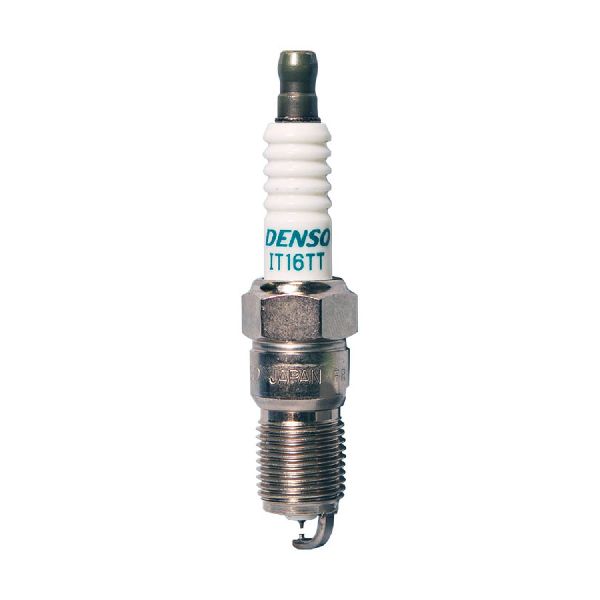
- Worn or Fouled Spark Plugs 🔴 High Probability → Shop Spark Plug Spark plugs are a routine maintenance item and a primary cause of misfires on any gasoline engine. They wear out over time, leading to a weak or inconsistent spark. On the V6 models, the rear three plugs are difficult to access, making them more likely to be neglected.
How to confirm: Visually inspect the spark plugs for wear, corrosion, or fouling. The recommended service interval is a good indicator. A scan tool may show misfire counts concentrated on one or two cylinders even with a P0300 code.
Typical fix: Replace all spark plugs as a set. It's also wise to replace the spark plug wires (on V6 models) at the same time.
Est. part cost: $40-$120 - Faulty Ignition Coil(s) or Ignition Control Module (ICM) 🔴 High Probability → Shop Ignition Coil On the 3.8L V6, the Ignition Control Module (ICM) that sits under the three coil packs is a very common failure point. A bad driver in the ICM can stop sending a signal to one coil, causing a misfire on the two cylinders it fires (e.g., 2 and 5), triggering a P0300. On the 3.9L V6 and 4.6L V8, individual coil-on-plug units fail.
How to confirm: For the 3.8L, swap the suspected bad coil pack with a known good one. If the misfire stays on the same cylinders, the ICM is the likely culprit. A definitive test is to use a spark tester; no spark from both towers of a single coil points to a bad ICM or coil. For coil-on-plug engines, swap the coil to another cylinder and see if the misfire follows.
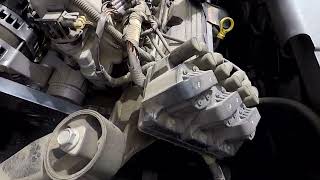
Typical fix: Replace the faulty ignition coil(s) or, for the 3.8L V6, replace the Ignition Control Module. 🎬 Watch: Diagnostic and fix for a bad ICM Many owners replace the ICM and all three coils at the same time as a preventative measure.
Est. part cost: $50-$170 per coil, $80-$200 for an ICM - Leaking Intake Manifold Gaskets 🟡 Medium Probability → Shop Engine Intake Manifold The V6 engines, particularly the 3.8L, are notorious for intake manifold gasket failures. The original plastic-framed gaskets degrade, causing vacuum leaks that lean out the air-fuel mixture and cause random misfires. On the 3.8L, they can also leak coolant into the engine oil, creating a 'milky' appearance on the oil cap or dipstick.
How to confirm: Perform a smoke test to check for vacuum leaks around the intake manifold. Look for signs of coolant leaks near the manifold or milky, contaminated engine oil. A common aftermarket fix is the Fel-Pro MS 98014 T gasket set, which uses a more durable metal frame.
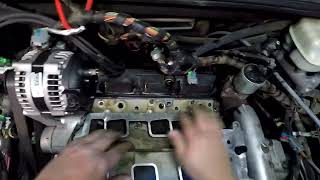
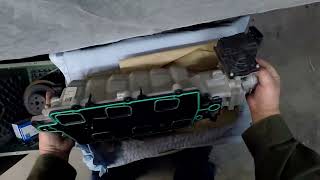
Typical fix: Replace the upper and lower intake manifold gaskets. This is a labor-intensive job. Using an upgraded metal-frame gasket set like the Fel-Pro MS 98014 T is highly recommended 🎬 See how to identify and clean intake gasket leaks over the OEM-style plastic ones.
Est. part cost: $40-$120 for the gasket set - Low Engine Oil Pressure (V6 Engines) ⚪ Low Probability TSB #PIP5064C specifically notes that on some GM V6 engines, a P0300 code can be accompanied by camshaft timing codes (P0011/P0016) due to low engine oil pressure. This affects the variable valve timing (VVT) system, leading to misfires.
How to confirm: Check the engine oil level and condition. If the level is correct, use a mechanical gauge to verify the actual engine oil pressure and compare it to manufacturer specifications.
Typical fix: Address the cause of the low oil pressure, which could range from using the wrong oil filter to a failing oil pump or worn engine bearings.
Est. part cost: $10-$500+
Rare But Worth Checking
- Clogged Fuel Injectors: → Shop Fuel Injector If multiple injectors become restricted, it can lead to a lean condition and random misfires. This is less common than ignition issues but can be diagnosed with a fuel injector balance test.
- Weak Fuel Pump: → Shop Fuel Pump Low fuel pressure affects all cylinders and can cause a lean misfire condition across the engine, triggering a P0300 before any other codes.
- Clogged Catalytic Converter: → Shop Catalytic Converter A restricted exhaust can create excessive backpressure, leading to poor engine performance and random misfires, often accompanied by a P0420 code.
- Failed Crankshaft Position Sensor (CKP): → Shop Engine Crankshaft Position Sensor An intermittent failure of the CKP sensor can send erratic signals to the ECM, causing it to misinterpret engine speed and falsely report misfires. Replacing the sensor often requires a "crankshaft variation learn" procedure with a scan tool to sync the new sensor with the PCM. 🎬 Watch: Diagnosing a faulty crankshaft position sensor
Diagnosis Steps
- Read all stored trouble codes with an OBD-II scanner. Note any codes accompanying P0300 and check freeze frame data to see when the misfire occurred.
- Using the scanner's live data, monitor misfire counts for each cylinder to identify which cylinders are misfiring, even if specific codes aren't set.
- Check the engine oil level and condition. A milky appearance on V6 models strongly suggests a failed intake manifold gasket.
- Inspect the ignition system. For V6 models, pull the spark plug wires and check for corrosion. For the 4.6L V8, inspect the coil-on-plug boots for oil contamination or damage.
- Test the ignition system for spark. Use an inline spark tester. On the 3.8L V6, if both terminals of a single coil pack are dead, the fault is likely the coil or the ICM.
- Isolate the faulty component by swapping parts. On the 3.8L, swap the suspect coil pack with a known good one. If the misfire does not move, the ICM is likely bad. On coil-on-plug engines (3.9L, 4.6L), swap the coil to a different cylinder and see if the misfire code follows it.
- Perform a smoke test to check for vacuum leaks, paying close attention to the intake manifold gaskets, vacuum hoses, and PCV system.
- Check fuel pressure with a gauge to rule out a weak fuel pump.
- If a crankshaft position sensor was replaced, perform a CKP System Variation Learn Procedure using a capable scan tool to prevent future misfire detection issues.
Parts You'll Likely Need
- Spark Plugs
(OEM #ACDelco 41-962 (for 3.9L V6), ACDelco 41-100 (for 4.6L V8), ACDelco 41-101 (for 3.8L V6))— These are the most common wear-and-tear items that cause misfires. Replacing them is a fundamental part of a tune-up.
Trusted brands: ACDelco, NGK
OEM price range: $8-$15 per plug
Aftermarket price range: $5-$12 per plug - Ignition Control Module (3.8L V6)
(OEM #ACDelco D555)— A very common failure point on the 3.8L V6 engine, this module controls when the ignition coils fire. Failure leads to a no-spark condition on two cylinders at once.
Trusted brands: ACDelco, Duralast
OEM price range: $80-$150
Aftermarket price range: $60-$120
Related Codes That Often Appear With This One
- P0301-P0308 — These codes indicate a misfire on a specific cylinder (e.g., P0301 for Cylinder 1). They often appear alongside P0300 as the ECM tries to narrow down the problem.
- P0171 / P0174 — These codes indicate a "System Too Lean" condition on Bank 1 and Bank 2, respectively. They are commonly caused by a vacuum leak, such as a faulty intake manifold gasket, which also causes misfires.
- P0011 / P0016 — As per TSB #PIP5064C, these camshaft position timing codes can appear with P0300 on V6 engines if low oil pressure is affecting the variable valve timing system.
Technical Service Bulletins (TSBs) & Recalls
- PIP5064C: Notes that P0300 on V6 engines can be caused by low oil pressure affecting the VVT system, often appearing with codes P0011/P0016.
- PIP5628G: Provides general diagnostic aids and a data template for technicians to use when contacting GM's Technical Assistance Center (TAC) for persistent misfire issues (P0300-P0308).
Platform-Specific Known Issues
- TSB #PIP5064C: On some V6 engines, a rough idle and P0300 code can be caused by low engine oil pressure affecting the camshaft actuators. Diagnosis requires checking the actual oil pressure with a gauge.
- TSB #PIP5628G: This bulletin provides diagnostic assistance information for technicians when a vehicle presents with misfire codes P0300-P0308, indicating it's a common enough issue to warrant special instructions.
Mechanic-Grade Diagnostic Values
- 3.8L V6 Ignition Control Module (ICM) Power Supply — expected: Battery Voltage (approx. 12.6V with key on, engine off). Failure: Voltage is significantly lower than battery voltage, or zero.
- 3.8L V6 Ignition Control Module (ICM) Ground Circuit — expected: Near 0V when probing the ground wire, or Battery Voltage when probing from the positive battery terminal to the ICM ground wire.. Failure: Significant voltage reading on the ground wire indicates a poor ground connection.
- 3.8L V6 Ignition Coil Secondary Resistance — expected: 5,000 - 7,000 Ohms (Ω). Failure: Resistance is significantly outside of this range, indicating a bad coil winding.
- 3.8L V6 Crankshaft Position Sensor (CKP) 3x Sync Signal — expected: Voltage should switch between 0V and 5-6V as the engine is manually cranked.. Failure: Voltage does not switch, indicating a problem with the CKP sensor or its circuit.
Hidden / Shadow Codes Worth Checking
- Mode $06, Test ID $A2-$AC: Generic OBD-II Mode $06 data can store misfire counts for each cylinder even when a specific P0301-P0308 code has not been set. This is crucial for identifying which cylinders are contributing to a P0300 code. (see via A professional scan tool or an advanced OBD-II app that can access Mode $06 test results.)
Scan Tool Commands That Help
- Tech2 / GDS2 or equivalent professional scan tool: Crankshaft Position (CKP) System Variation Learn — This procedure is required after replacing the PCM, crankshaft, crankshaft balancer, crankshaft position sensor, or performing any engine repair that disturbs the relationship between the crankshaft and the sensor. Failure to perform this relearn can result in the ECM falsely detecting misfires and setting a P0300.
- Tech2 / GDS2 or equivalent professional scan tool: Fuel Injector Balance Test — This command individually fires each fuel injector and measures the corresponding drop in fuel pressure. It is used to identify clogged or malfunctioning injectors that could be causing a lean misfire on one or more cylinders.
Wiring & Ground Locations
- G102 — Located at the left rear of the engine.. This ground point is for the ignition coils on the 4.6L V8. A poor connection here can cause weak or no spark, leading to misfires.
- G103 — Located at the left rear of the engine compartment on the cowl, above the brake booster.. This is a critical ground for the Engine Control Module (ECM) and the Data Link Connector (DLC). A fault here can cause numerous random codes, including P0300, and communication issues.
- ICM Connector (3.8L V6) — Under the ignition coil packs, on the front of the engine.. This connector provides power, ground, and signals from the CKP/CMP sensors to the Ignition Control Module. A corroded or loose pin can interrupt signals and cause misfires or a no-start condition.
Real Owner Repair Stories
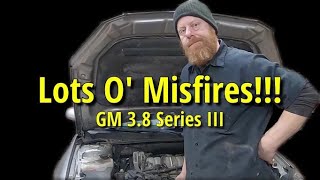
- YouTube channel 'Anderson's Garage' (2008 Buick Lucerne 3.8L V6 with 147,000 miles) — Sudden onset of misfire immediately upon starting, P0300 code present. Live data showed misfires on cylinders 3 and 6.
❌ Tried (didn't work) Swapping the ignition coil from the misfiring cylinders (3/6) with a known good coil (2/5). The misfire did not follow the coil, remaining on cylinders 3 and 6.
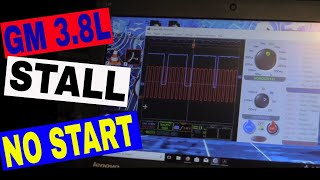
✅ What actually fixed it The Ignition Control Module (ICM) had failed and was not sending a spark signal to one of the three coil packs. Replacing the ICM, along with the original spark plugs and wires, resolved the P0300 code and the misfire. - YouTube channel 'FrugalPrepper's Garage and Garden' (2007 Buick Lucerne 3.8L V6) — Stalling, intermittent no-start (just a click), and a pending code for the crankshaft position sensor. Tachometer would intermittently stop working.
❌ Tried (didn't work) Initially, cleaning a bad ground temporarily resolved the no-start, but the stalling and tachometer issue returned.
✅ What actually fixed it The crankshaft position sensor was failing intermittently. When it failed, the tachometer would drop to zero and the engine would stall or hesitate. Replacing the crankshaft position sensor and performing a relearn procedure fixed the issue.
OEM Part Supersession History
ACDelco D555→Discontinued— The original equipment ignition control module for the 3.8L V6 is listed as discontinued by GM.
Heads up: While the OEM part is discontinued, numerous aftermarket replacements are available from brands like Delphi, Standard Motor Products, and others. Quality can vary, so choosing a reputable brand with a warranty is recommended.
Model Year Variations Within This Range
- 2006-2008: The standard V6 engine was the 3.8L (L26), which uses a distributorless ignition system with an Ignition Control Module and three waste-spark coil packs. This engine does not have Variable Valve Timing (VVT).
- 2009-2011: The base V6 was updated to the 3.9L (LZ9). This engine uses a coil-on-plug ignition system (no ICM) and features Variable Valve Timing (VVT). It is also FlexFuel capable (E85). The TSB regarding low oil pressure causing misfires is more relevant to this engine due to its VVT system.
- 2008: The high-performance 'Super' trim was introduced, featuring a 292-hp Northstar V8, replacing the previous 275-hp V8 CXS model.
Helpful Videos

We Have This Part in Stock

The information in this article is provided for general reference and educational purposes only. Vehicle specifications, procedures, and part compatibility can vary by production date, trim level, and region. Always consult your vehicle's factory service manual and verify part numbers before purchasing or performing repairs. Safety-critical components such as airbags, seat belts, and braking systems should be installed by a qualified professional.
- Buick LUCERNE:
- 🧭 Diagnostic Flowchart
- 🎬 Helpful Videos
- 🛍️ Shop This Part
- What's Unique About the 2006-2011 Buick LUCERNE
- Symptoms You May Notice
- Most Likely Causes
- Rare But Worth Checking
- Diagnosis Steps
- Parts You'll Likely Need
- Related Codes That Often Appear With This One
- Technical Service Bulletins (TSBs) & Recalls
- Platform-Specific Known Issues
- Mechanic-Grade Diagnostic Values
- Hidden / Shadow Codes Worth Checking
- Scan Tool Commands That Help
- Wiring & Ground Locations
- Real Owner Repair Stories
- OEM Part Supersession History
- Model Year Variations Within This Range
- 🎟️ Get 5% Off