

P0300 on 2002-2006 Buick Rendezvous: Random Misfire Causes & Fixes
On a 2002-2005 Rendezvous with the 3.4L V6, P0300 is most often caused by leaking lower intake manifold gaskets, a repair costing $650-$850. The recommended fix uses an updated metal-frame gasket set like the Fel-Pro MS98014T. On 2004-2006 models with the 3.6L V6, this code is a strong indicator of stretched timing chains, a much more expensive fix often exceeding $2,000 that requires a special kit like ACDelco 12651450. For the 2006-2007 3.5L V6, causes are similar to the 3.4L, often involving
- The first step is to identify your engine: 3.4L V6 (2002-2005) or 3.6L V6 (2004-2006).
- For the 3.4L V6, the most likely cause of P0300 is a leaking lower intake manifold gasket.
- For the 3.6L V6, the most likely cause is stretched timing chains, a major and costly repair.
- A flashing Check Engine Light signals a severe misfire; avoid driving to prevent expensive catalytic converter damage.
- Due to the complexity and labor involved in the most common fixes, professional diagnosis and repair are highly recommended.
What's Unique About the 2002-2006 Buick RENDEZVOUS
The Buick Rendezvous from this era used three different V6 engines, and the primary cause of a P0300 code is highly dependent on which one you have. The 2002-2005 3.4L V6 is infamous for lower intake manifold gasket (LIMG) failures. The original nylon/plastic gaskets degrade from heat and exposure to Dex-Cool coolant, causing internal coolant leaks and misfires. The 2006-2007 3.5L V6 is an evolution of the 3.4L and shares its waste-spark ignition system, but generally has a better intake gasket design. In contrast, the 2004-2006 3.6L 'High Feature' V6 is known for premature timing chain stretch, a major mechanical issue that disrupts engine timing and triggers random misfires. This issue is so prevalent that GM issued TSB #PIP5064C to address it, specifically linking P0300 to stretched chains, especially when oil pressure is low.
Diagnostic Flowchart
Tap your situation to follow the diagnostic path that matches what you're seeing on this vehicle.
Symptoms You May Notice
- Rough or shaky engine idle
- Hesitation or stumbling during acceleration
- Noticeable loss of engine power
- Flashing or solid Check Engine Light
- Reduced fuel economy
- Engine stalling, sometimes intermittently
- A popping or backfiring sound from the exhaust
- A sulfur or 'rotten egg' smell from the exhaust, indicating an overloaded catalytic converter
- Replacing only spark plugs when the underlying cause is a coolant leak from the intake manifold gaskets (on the 3.4L V6). The new plugs will quickly become fouled by coolant, and the misfire will return.
- Replacing ignition coils one by one on the 3.6L V6 when the actual problem is a stretched timing chain. The misfire will persist and may move between cylinders.
- Mistaking a failed Ignition Control Module (ICM) for a bad coil pack on the 3.4L V6. Swapping coil packs is a key diagnostic step to differentiate the two. 🎬 Watch: How to test the ignition control module and coils.
- Assuming a head gasket has failed on the 3.4L when it is far more likely to be the lower intake manifold gasket causing coolant loss and misfires.
Most Likely Causes
- Leaking Lower Intake Manifold (LIM) Gaskets (3.4L V6 Only) 🔴 High Probability → Shop Engine Intake Manifold The original factory gaskets used on the 3.4L V6 were a nylon/plastic design that becomes brittle and cracks when exposed to engine heat and Dex-Cool coolant, leading to inevitable internal coolant leaks.
How to confirm: Check for a dropping coolant level with no visible external leaks. Inspect the oil and oil cap for a milky, frothy, 'milkshake' appearance. A technician can perform a cooling system pressure test to confirm an internal leak or use a chemical tester to check for combustion gases in the coolant.
Typical fix: Replace the lower intake manifold gaskets with an updated, steel-framed aftermarket set 🎬 Watch: How to properly install the new gaskets and manifold. (e.g., Fel-Pro MS98014T). This is a labor-intensive job that also requires replacing coolant, oil, and often the intake plenum gaskets. 🎬 See this step-by-step guide for removing the intake components.
Est. part cost: $50-$100 - Stretched Timing Chains (3.6L V6 Only) 🔴 High Probability → Shop Engine Timing Chain The early GM 3.6L 'High Feature' V6 engines are notorious for premature timing chain wear and stretch, often before 100,000 miles. TSB #PIP5064C specifically links P0300 to this issue, especially when accompanied by low oil pressure or camshaft timing codes.
How to confirm: Check for accompanying codes like P0011, P0016, P0017, P0018. A technician can use a professional scan tool to monitor camshaft deviation angles; significant deviation indicates chain stretch. A definitive diagnosis requires visual inspection of the timing chain tensioners, which involves significant disassembly.
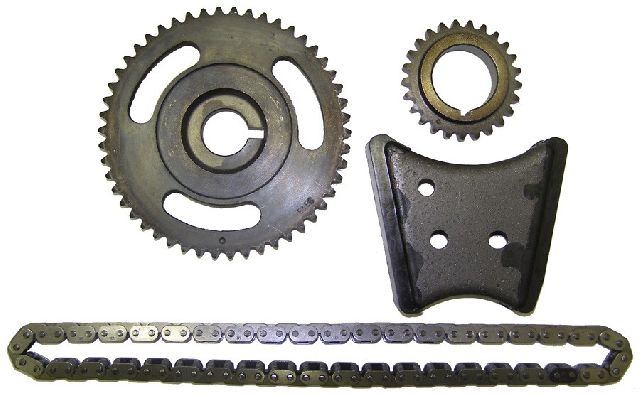
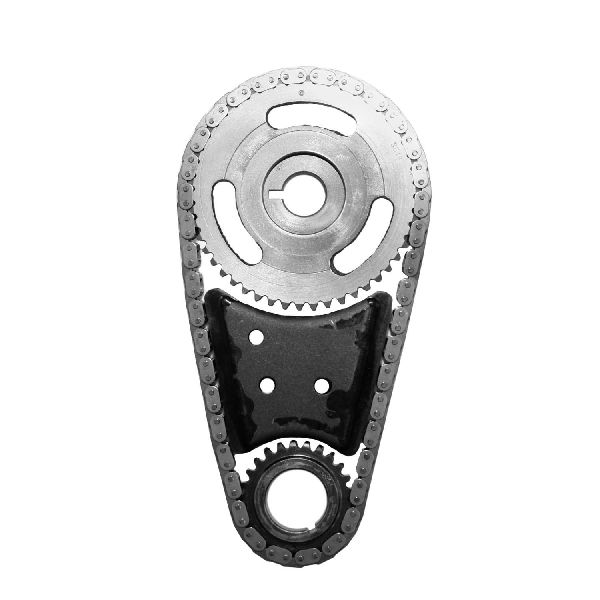
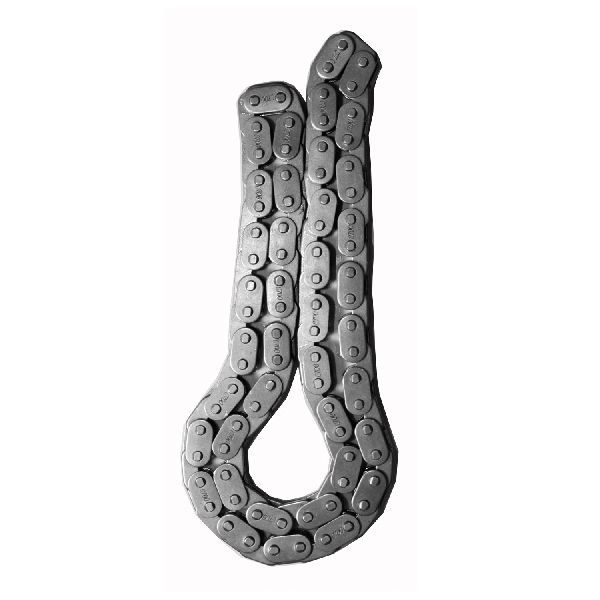
Typical fix: Replace all three timing chains, guides, and tensioners with a new, updated kit (e.g., ACDelco 12651450 or a Cloyes kit). This is a very complex and expensive repair requiring engine removal or significant front-end disassembly.
Est. part cost: $250-$800 - Faulty Ignition System Components 🟡 Medium Probability On the 3.4L and 3.5L, the Ignition Control Module (ICM) that sits under the three coil packs is a common failure point. A bad driver in the module can stop sending signal to one coil, killing two cylinders at once and causing a P0300.
How to confirm: On the 3.4L/3.5L, a faulty ICM or one of the three coil packs can cause misfires on two companion cylinders (1-4, 2-5, 3-6). A good diagnostic step is to swap the position of two coil packs; if the misfire does not move, the ICM is the likely culprit. On the 3.6L, swap a suspected bad coil-on-plug unit with one from a known good cylinder to see if the misfire code changes (e.g., P0302 becomes P0304).
Typical fix: Replace the failed ignition control module, coil pack (3.4L/3.5L), or individual ignition coil (3.6L). It's also wise to replace spark plugs at the same time.
Est. part cost: $50-$150 per coil/module - Worn Spark Plugs or Damaged Wires (3.4L/3.5L) 🟡 Medium Probability → Shop Spark Plug
How to confirm: Visually inspect spark plugs for wear, fouling, or damage. Coolant fouling from a leaking intake gasket is a major clue on the 3.4L. Inspect spark plug wires for cracks, corrosion, or arcing, which can be seen by a test light near the wire in the dark. A misfire on two companion cylinders (e.g., 1-4, 2-5, 3-6) on the 3.4L/3.5L points to a shared coil or its wires.
Typical fix: Replace all spark plugs and spark plug wires as a set. Use of correct spec plugs (e.g., AC Delco Iridium) is recommended.
Est. part cost: $60-$120 - Low Fuel Pressure ⚪ Low Probability Fuel pump failures have been reported on the Rendezvous, which can lead to a lean condition and random misfires under load.
How to confirm: Connect a fuel pressure gauge to the fuel rail's service (Schrader) valve. With the key on and engine off, pressure should be 358-405 kPa (52-59 psi). Pressure that drops quickly after the pump primes could indicate a leaking injector or faulty check valve.
Typical fix: Replace the in-tank fuel pump module and/or the fuel filter.
Est. part cost: $150-$300
Rare But Worth Checking
- Clogged Catalytic Converter: → Shop Catalytic Converter If the engine feels extremely sluggish and lacks power, especially at higher RPMs, the exhaust may be restricted. A previous severe misfire can cause the converter to melt internally. A technician can test for backpressure.
- Blown Head Gasket: While less common than the intake gasket failure on the 3.4L, a head gasket can fail and cause similar symptoms, including overheating, coolant loss, and misfires. A combustion leak test (blue fluid test) can confirm this by detecting exhaust gases in the cooling system.
- Faulty Crankshaft Position Sensor: → Shop Engine Crankshaft Position Sensor A failing crankshaft position sensor can send erratic signals to the ECM, causing misfires that appear random. This will often, but not always, set a specific sensor code (e.g., P0335). An un-learned sensor after replacement can also cause P0300.
- Vacuum Leak: A significant vacuum leak from a cracked hose or faulty PCV valve can lean out the air-fuel mixture enough to cause random misfires, often accompanied by codes P0171 and P0174.
Diagnosis Steps
- Read all stored trouble codes with an OBD-II scanner. Note any codes accompanying P0300, as they are critical clues.
- Identify the engine (3.4L, 3.5L, or 3.6L). The diagnostic path depends heavily on this.
- For 3.6L V6: If any timing codes (P0011, P0016, etc.) are present, the timing chain system is the primary suspect. Check engine oil level and condition. Low or dirty oil accelerates chain wear. Proceed to professional diagnosis of cam deviation.
- For 3.4L V6: Check the coolant level in the radiator (when cool) and overflow tank. If it's low, suspect a leaking intake manifold gasket. Remove the oil cap and check for a milky, brown sludge. Perform a cooling system pressure test to confirm an internal leak.
- If no obvious gasket leak or timing issues are present, begin ignition system diagnosis. For the 3.4L/3.5L, swap the coil packs between positions. If the misfire stays on the same cylinders, the Ignition Control Module (ICM) is likely bad. If the misfire moves, the coil pack is bad.
- For the 3.6L, swap the coil-on-plug from a misfiring cylinder (identified by a P030X code) to a good cylinder. Clear codes and see if the misfire code follows the coil.
- Inspect spark plugs and wires (3.4L/3.5L). Look for cracks, corrosion, or coolant fouling. A visual inspection can reveal obvious faults like a cracked wire boot.
- Check for a missing ground to the ICM on the 3.4L/3.5L. A bad ground at location G111 (on the bellhousing) or G102 (left rear of engine) can cause a no-spark or intermittent spark condition.
- If a Crankshaft Position Sensor, PCM, or engine has been replaced, perform the 'Crankshaft Position System Variation Learn' procedure using a compatible scan tool (like a Tech 2) to prevent a false P0300 code.
Parts You'll Likely Need
- Intake Manifold Gasket Set (3.4L V6)
(OEM #89017825 (ACDelco updated design))— This is the most common failure point on the 3.4L engine causing a P0300 code. The original plastic design fails, requiring an upgrade.
Trusted brands: Fel-Pro (MS98014T), ACDelco
OEM price range: $70-$120
Aftermarket price range: $40-$80 - Engine Timing Chain Kit (3.6L V6)
(OEM #12651450 (This part number may be superseded, check with dealer))— This is the most probable cause of P0300 on the 3.6L V6, especially if timing-related codes are also present.
Trusted brands: ACDelco, Cloyes
OEM price range: $400-$750
Aftermarket price range: $250-$500 - Ignition Control Module (3.4L V6)
(OEM #19353734 (ACDelco))— A common failure on the 3.4L engine that causes a misfire on two cylinders simultaneously, triggering a P0300.
Trusted brands: ACDelco, Standard Motor Products, Delphi
OEM price range: $100-$180
Aftermarket price range: $60-$120 - Ignition Coil Pack (3.4L V6)
(OEM #19353733 (ACDelco))— The three coil packs on the 3.4L can fail, but are less common to fail than the ICM. Each coil fires two cylinders.
Trusted brands: ACDelco, Delphi, NGK
OEM price range: $40-$70
Aftermarket price range: $25-$50
Related Codes That Often Appear With This One
- P0301-P0306 — These codes specify which cylinder is misfiring (e.g., P0301 for Cylinder 1). They often appear with P0300 to help pinpoint the problem area, though P0300 can appear alone if the misfire moves randomly between cylinders.
- P0011, P0016, P0017, P0018 — On the 3.6L V6, these camshaft position timing codes are a strong indicator that the P0300 is caused by stretched timing chains, as noted in TSB #PIP5064C.
- P0171, P0174 — These codes indicate a lean fuel condition on Bank 1 and Bank 2, respectively. They can be caused by a large vacuum leak (like from the intake gaskets on the 3.4L) or a weak fuel pump affecting the whole engine.
- P0420, P0430 — Catalyst System Efficiency Below Threshold. These codes often appear after a P0300 has been active for a while, indicating the misfire has damaged the catalytic converters by sending unburnt fuel into the exhaust.
- P1336 — This code indicates the Crankshaft Position (CKP) System Variation has not been learned. This is common after replacing a crankshaft sensor, engine, or PCM and will cause a P0300 until the relearn procedure is performed with a scan tool.
Technical Service Bulletins (TSBs) & Recalls
- PIP5628G: Communicates information needed for diagnosing misfire codes P0300-P0308, indicating the complexity of some misfire diagnostics on this platform.
- PIP5064C: Directly links P0300 on the 3.6L V6 with rough running, potential camshaft codes (P0011/P0016), and the need to check engine oil pressure, pointing strongly to timing chain issues.
Platform-Specific Known Issues
- The Inevitable 3.4L Intake Gasket Failure: Owners and mechanics widely agree that for the 3.4L V6, the question is not *if* the lower intake manifold gaskets will fail, but *when*. The original plastic-frame gaskets are a known design flaw. An owner on Car Talk Community mentioned their 2002 Rendezvous had three 'head gasket' replacements, which other users pointed out were likely misdiagnosed intake gasket jobs. The repair involves replacing the faulty gaskets with an updated metal-framed set, like the Fel-Pro MS98014T, to prevent recurrence.
- 3.6L Timing Chain and Oil Consumption: → Shop Engine Timing Chain For the 3.6L LY7 engine, the P0300 code is often the first sign of a stretched timing chain. This issue can be exacerbated by extended oil change intervals or low oil levels, which were problems on early GM High Feature V6 engines. Some owners have noted that modifying the PCV system to have larger orifices can help with oil consumption, a related issue on the Alloytec engine family. Ignoring the P0300 and related timing codes (P0011, P0016) can lead to catastrophic engine failure.
Mechanic-Grade Diagnostic Values
- 3.4L/3.5L Ignition Control Module (ICM) Power Supply — expected: 10-12 Volts DC. Failure: 0 Volts indicates a blown fuse or wiring issue preventing the module from powering on.
- 3.4L/3.5L Ignition Control Module (ICM) Ground Circuit — expected: 10-12 Volts DC (when testing between battery positive and the ground wire). Failure: 0 Volts indicates a broken ground wire or loose ground connection (e.g., at G102/G111), preventing the module from functioning.
- 3.6L VVT Camshaft Actuator Solenoid Resistance — expected: Between 5.0 and 15.0 Ohms.. Failure: A reading outside this range indicates a faulty solenoid, which can affect cam timing and cause misfires.
- Fuel Pressure (All Engines, Key On, Engine Off) — expected: 358-405 kPa (52-59 psi). Failure: Pressure below this range indicates a weak fuel pump or clogged filter. Pressure that bleeds off quickly indicates a leaking injector or faulty check valve.
Scan Tool Commands That Help
- Tech 2 / Professional Scan Tool: Crankshaft Position System Variation Learn (CASE Relearn) — Required after replacing the crankshaft position sensor, PCM, harmonic balancer, or engine. Failure to perform this procedure can cause the ECM to misinterpret normal crankshaft variations as misfires, setting a P0300 and/or P1336.
- Tech 2 / Professional Scan Tool: Misfire Graph / Misfire Counters — To identify which specific cylinders are contributing to a P0300 random misfire code. This allows you to focus diagnosis on the affected cylinders (e.g., checking the specific coil, plug, or injector) instead of guessing.
- Tech 2 / Professional Scan Tool: Injector Balance Test / Cylinder Deactivation — To isolate a weak or non-responsive cylinder. By disabling injectors one by one, a technician can observe the RPM drop for each cylinder. A cylinder with little to no RPM drop when its injector is disabled indicates a problem with that cylinder.
Wiring & Ground Locations
- G102 — Located at the left rear of the engine.. This is a primary ground for the ignition coils/ignition control module on the 3.4L/3.5L engines. A poor connection here can cause weak or no spark, leading to random misfires.
- G111 — Located on the engine bellhousing, to the left of the starter.. This is another critical engine ground. On some GM platforms, this serves as the ground for the Ignition Control Module. A loose or corroded connection here can cause intermittent misfires that are hard to trace.
- ICM Connector (3.4L/3.5L) — The main electrical connector plugging into the Ignition Control Module, under the coil packs.. Pin 'A' (Pink wire) should have 12V+ with the key on. Pin 'B' (Black/White wire) is the ground circuit. Verifying power and ground at this connector is the first step in diagnosing a faulty ICM.
Real Owner Repair Stories
- GM Forum user (Buick Regal GS (with 3.8L V6, similar waste-spark ignition to 3.4L/3.5L Rendezvous)) — P0300 code that only appeared at light throttle load on the highway (50+ mph) when the torque converter clutch (TCC) was locked. Misfire counters on a scanner showed misfires only on cylinders 3 and 6.
❌ Tried (didn't work) Replaced spark plugs and wires., Replaced the coil pack for cylinders 3/6., Swapped coil packs around (misfire stayed on 3/6).
✅ What actually fixed it Replacing the Ignition Control Module (ICM). The user concluded that the ICM was failing intermittently under specific light-load, high-gear conditions, which is a non-typical failure mode. - YouTube video by 'Pine Hollow Auto Diagnostics' (2005 Buick Rendezvous 3.4L V6) — Long crank time, overheating, and codes P0300, P0420. A chemical test confirmed combustion gases in the coolant.
❌ Tried (didn't work) The video focuses on diagnosis, not failed part swaps.
✅ What actually fixed it The definitive diagnosis was a blown head gasket, confirmed with a chemical block tester and a cylinder leak-down test. This shows that while less common than intake gaskets, a head gasket failure can present with a P0300.
OEM Part Supersession History
GM OEM Nylon/Plastic LIM Gaskets (e.g., for 3.4L LA1)→Fel-Pro MS98014T (or similar steel-frame gaskets)— The original nylon/plastic carriers were prone to cracking and degradation from heat cycles and exposure to Dex-Cool coolant. The updated design uses a rigid steel carrier that resists warping and corrosion.Early GM 3.6L LY7 Timing Chain Kits→ACDelco 12651450 (and subsequent revisions)— Original timing chains were prone to premature stretching. Updated kits feature improved chain, guide, and tensioner designs to increase longevity.
Heads up: It is critical to use a complete kit with all three chains, guides, and tensioners. Mixing old and new components is not recommended.
Model Year Variations Within This Range
- 2002-2005: Primarily used the 3.4L LA1 V6 engine, which is highly susceptible to P0300 caused by Lower Intake Manifold Gasket failure.
- 2004-2006: Offered the 3.6L LY7 V6 engine. On this engine, P0300 is most commonly caused by stretched timing chains, a completely different issue from the 3.4L engine.
- 2006-2007: Introduced the 3.5L LX9 V6 as the base engine, replacing the 3.4L. It shares the same basic architecture and waste-spark ignition system as the 3.4L but had some improvements, including a better intake gasket design, though ignition component failures can still cause P0300.
Helpful Videos
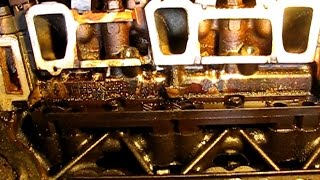
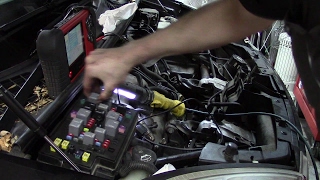
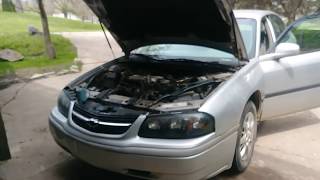
Used OEM Parts in Stock
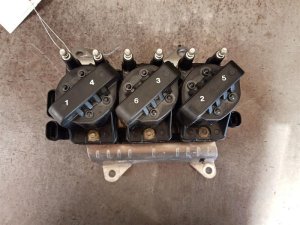
New Aftermarket Parts Available


The information in this article is provided for general reference and educational purposes only. Vehicle specifications, procedures, and part compatibility can vary by production date, trim level, and region. Always consult your vehicle's factory service manual and verify part numbers before purchasing or performing repairs. Safety-critical components such as airbags, seat belts, and braking systems should be installed by a qualified professional.
- Buick RENDEZVOUS:
- 🧭 Diagnostic Flowchart
- 🎬 Helpful Videos
- 🛍️ Shop This Part
- What's Unique About the 2002-2006 Buick RENDEZVOUS
- Symptoms You May Notice
- Most Likely Causes
- Rare But Worth Checking
- Diagnosis Steps
- Parts You'll Likely Need
- Related Codes That Often Appear With This One
- Technical Service Bulletins (TSBs) & Recalls
- Platform-Specific Known Issues
- Mechanic-Grade Diagnostic Values
- Scan Tool Commands That Help
- Wiring & Ground Locations
- Real Owner Repair Stories
- OEM Part Supersession History
- Model Year Variations Within This Range
- 🎟️ Get 5% Off