

P0300 on 2007 Buick Rendezvous: Random Misfire Causes and Fixes
On a 2007 Buick Rendezvous, P0300 is often caused by basic ignition issues like worn spark plugs or faulty coils. However, if you have the 3.6L V6 engine, this code is a strong warning sign for stretched timing chains, a serious and expensive repair often accompanied by codes like P0011 or P0016. For the 3.5L V6, a failed ignition control module is a very common cause.
- P0300 on a 2007 Buick Rendezvous means multiple cylinders are misfiring randomly.
- First, identify your engine. The 3.6L V6 is prone to timing chain failure, a major repair. The 3.5L V6 is more likely to have a failed ignition control module or intake gasket leak.
- Do not ignore a flashing check engine light. This signals a severe misfire that can quickly damage your expensive catalytic converters.
- Start diagnosis with the basics: check for other codes, inspect spark plugs, and look for vacuum leaks.
- If you have the 3.6L engine and see codes like P0011 or P0016 alongside P0300, the timing chains are the most likely cause.
What's Unique About the 2007-2007 Buick RENDEZVOUS
For the 2007 model year, the Buick Rendezvous was available with two different V6 engines, and the cause of a P0300 code is often engine-specific. The 3.5L LX9 V6 is prone to failures of the ignition control module and intake manifold gaskets. The more powerful 3.6L LY7 V6 is notorious for stretched timing chains, a significant mechanical issue that can cause random misfires. The provided TSB #PIP5064B directly links P0300 to oil pressure checks on these engines, which is a key diagnostic step before suspecting timing chain failure.
Diagnostic Flowchart
Tap your situation to follow the diagnostic path that matches what you're seeing on this vehicle.
Symptoms You May Notice
- Rough or shaky idle
- Hesitation or stumbling during acceleration
- Flashing Check Engine Light
- Reduced fuel economy
- Engine stalling
- Noticeable loss of power
- Rattling noise from engine on cold start (3.6L only)
- Replacing only spark plugs and coils when the underlying cause is a faulty ignition control module on the 3.5L engine.
- Replacing ignition components on the 3.6L engine when the true cause is a stretched timing chain.
- Replacing a crankshaft position sensor without performing the required Crankshaft Variation Relearn procedure, which can cause a P0300 to persist.
Most Likely Causes
- Stretched Timing Chains (3.6L V6 Only) 🔴 High Probability → Shop Engine Timing Chain The 3.6L LY7 V6 engine has a well-documented history of premature timing chain wear. This can be exacerbated by extended oil change intervals recommended by the original oil life monitor system or low oil pressure, as the chain tensioners are hydraulic.
How to confirm: Check for accompanying timing-related codes (P0011, P0016, P0017, P0018). Perform an engine oil pressure test as suggested by TSB #PIP5064B. A rattling noise on cold startup is a strong audible clue. A physical inspection is the ultimate confirmation, but it is labor-intensive.
Typical fix: Replace all three timing chains, the tensioners, and the guides with an updated kit. This is a major repair, often requiring 12+ hours of labor. An updated OEM kit part number is ACDelco 12651450.
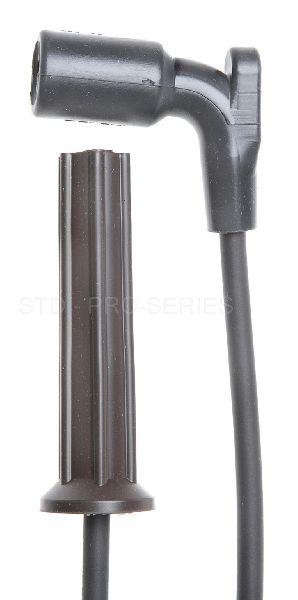
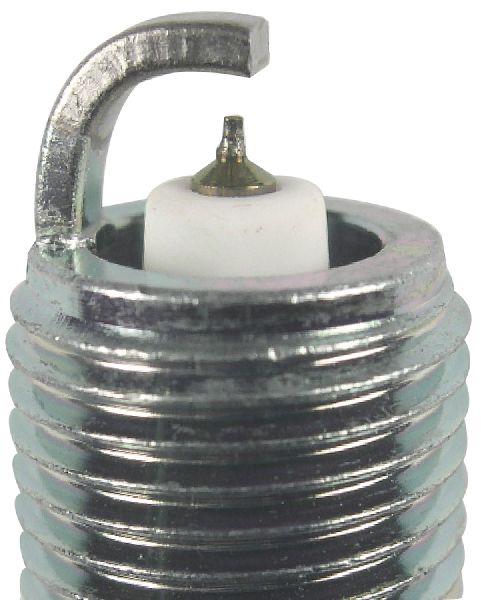
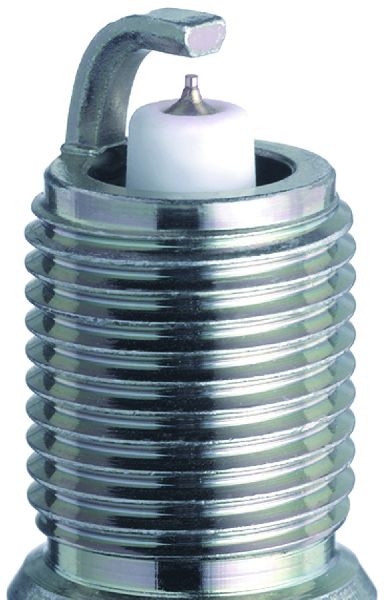
Est. part cost: $250-$500 - Worn Spark Plugs and/or Wires 🔴 High Probability → Shop Spark Plug Spark plugs are a routine maintenance item. On the transversely mounted V6, the rear three plugs are extremely difficult to access, often requiring the engine to be tilted forward with a strap. This leads many owners to neglect changing them, causing misfires as they wear out.
How to confirm: Inspect the spark plugs for wear, fouling, or damage. Check spark plug wires (on the 3.5L engine) for cracks or arcing.
Typical fix: Replace all six spark plugs. It is highly recommended to replace the spark plug wires at the same time on the 3.5L engine.
Est. part cost: $50-$120 - Faulty Ignition Components (Coils or ICM) 🟡 Medium Probability The 3.5L engine uses a waste-spark system with an Ignition Control Module (ICM) under the three coil packs. This ICM is a very common failure point, where an internal driver for one coil fails, killing spark to two cylinders (e.g., 3 and 6). The 3.6L uses a more reliable coil-on-plug design, but individual coils can still fail.
How to confirm: On the 3.5L, swap coil packs to see if the misfire moves; if not, the ICM is the prime suspect. On the 3.6L, swap a coil from a misfiring cylinder (if one can be identified with a scan tool's Mode $06 data) to a good cylinder and see if the misfire code follows.
Typical fix: Replace the failed Ignition Control Module (3.5L), often as an assembly with the coils. A common part is the ACDelco D593A. For the 3.6L, replace the single failed ignition coil.
Est. part cost: $70-$250 - Vacuum Leak 🟡 Medium Probability Intake manifold gaskets on the 3.5L LX9 engine can degrade over time, causing unmetered air to enter the engine, which leans out the air-fuel mixture and causes misfires. Other vacuum hoses, like the PCV hose, can also become brittle and crack.
How to confirm: Listen for a hissing sound at idle. Perform a smoke test or carefully spray carb cleaner around the intake manifold gaskets and vacuum hoses with the engine running; a change in engine idle indicates a leak.
Typical fix: Replace the leaking gasket or hose. The Fel-Pro MS98014T is a widely recommended, updated metal-frame gasket for the lower intake on the 3.5L engine that resolves the original design's flaws.
Est. part cost: $20-$100 - Clogged or Dirty Fuel Injectors ⚪ Low Probability → Shop Fuel Injector
How to confirm: Use a scan tool to check fuel trims; high positive numbers can indicate the engine is compensating for a lack of fuel. A professional injector balance test can confirm a problem.
Typical fix: Clean the fuel injectors or replace them if they are faulty.
Est. part cost: $50-$100 per injector
Rare But Worth Checking
- Low Fuel Pressure: A failing fuel pump can cause lean conditions and random misfires, especially under load. Check fuel pressure with a gauge to confirm.
- Faulty Crankshaft Position Sensor: → Shop Engine Crankshaft Position Sensor An erratic signal from the crankshaft position sensor can prevent the ECM from accurately tracking engine speed, leading it to report a random misfire. This will often set its own code, like P0335. After replacement, a 'Crankshaft Variation Relearn' procedure is required using a scan tool to prevent a false P0300.
- Clogged Catalytic Converter: → Shop Catalytic Converter A clogged converter creates excessive exhaust backpressure, which can lead to misfires. This is usually a result of a long-term misfire, not the initial cause, and is often accompanied by code P0420 or P0430.
Diagnosis Steps
- Read all fault codes with an OBD-II scanner. 🎬 See this helpful guide on diagnosing and fixing a P0300 code. Pay close attention to any other codes present, especially timing (P00xx), lean condition (P017x), or CKP relearn (P1336) codes.
- Use a scan tool with Mode $06 capabilities to view raw misfire data counts for each cylinder, which can help identify which cylinders are contributing most to the random misfire.
- If the Check Engine Light is flashing, minimize driving to prevent catalytic converter damage.
- Identify the engine (3.5L or 3.6L) as the diagnostic path differs significantly.
- For the 3.6L V6, listen for a chain rattle on cold startup. If timing codes are present, suspect the timing chains. Check engine oil level and condition. Per TSB #PIP5064B, an oil pressure test is a critical next step.
- For the 3.5L V6, focus on the ignition system. Swap the three coil packs between positions. If the misfire stays on the same cylinders (e.g., 1 and 4), the Ignition Control Module is the likely failure. If the misfire moves with a coil, that coil is bad.
- Inspect the ignition system. Examine spark plugs for wear and proper gap. Accessing the rear plugs will likely require tilting the engine forward.
- Check for vacuum leaks using a smoke machine or by carefully spraying starter fluid around gasket areas (especially the intake manifold on the 3.5L) and listening for a change in engine RPM.
- Test fuel pressure using a fuel pressure gauge to rule out a weak fuel pump or faulty regulator.
- If a crankshaft sensor or ECM has been replaced, perform the Crankshaft Variation Relearn procedure with a compatible scan tool to prevent the computer from falsely reporting misfires.
Parts You'll Likely Need
- Spark Plugs
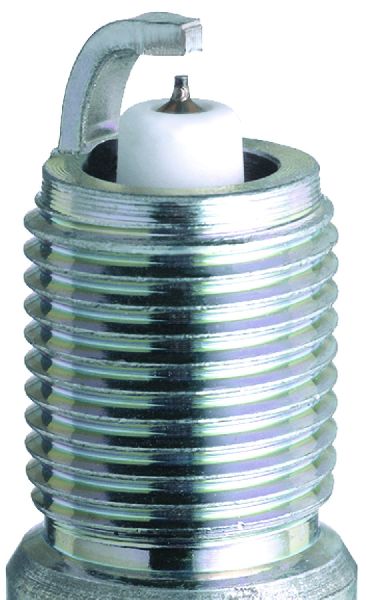
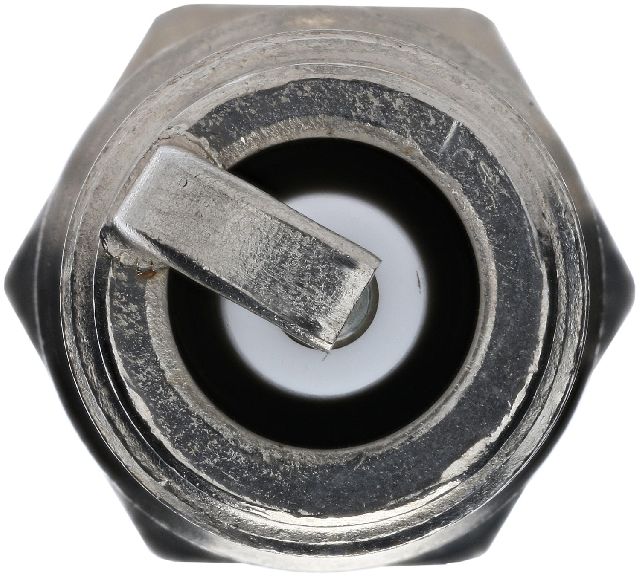
(OEM #ACDelco 41-107 (for 3.6L LY7))— Worn or fouled spark plugs are a primary cause of misfires. They are a standard maintenance item, but often neglected on the rear bank due to difficult access.
Trusted brands: ACDelco, NGK
OEM price range: $8-$15 per plug
Aftermarket price range: $4-$10 per plug - Ignition Control Module & Coil Assembly
(OEM #ACDelco D593A (for 3.5L LX9))— The ICM is a very common failure point on the 3.5L engine, causing a loss of spark to two cylinders at once.
Related Codes That Often Appear With This One
- P0301-P0306 — These codes specify which cylinder is misfiring. They often appear with P0300 when the misfire is severe but still somewhat localized.
- P0011, P0016 — On the 3.6L V6, these camshaft position timing codes are a very strong indicator that the P0300 is caused by stretched timing chains.
- P0171, P0174 — These codes indicate the engine is running too lean on both banks, which points towards a large vacuum leak or a fuel delivery issue as the cause of the P0300.
- P1336 — This GM-specific code means the Crankshaft Position System Variation has not been learned. It will often accompany a P0300 if a crank sensor, PCM, or engine has been replaced without performing the relearn procedure.
Technical Service Bulletins (TSBs) & Recalls
- PIP5628G: A general GM bulletin providing a diagnostic template for technicians to use when contacting the Technical Assistance Center (TAC) for persistent misfire codes (P0300-P0308). It emphasizes using advanced tools like a PICO scope for relative compression tests.
- PIP5064B: Specifically addresses rough running and P0300/P0011/P0016 on the 3.6L V6. It instructs technicians to verify engine oil pressure is within spec before proceeding with other diagnostics, directly pointing to oil pressure as a key factor in timing system health.
Platform-Specific Known Issues
- The 3.6L LY7 V6 engine is widely known for premature timing chain stretching, which directly causes random misfires and will set a P0300 code, often along with P0011 or P0016.
- On both the 3.5L and 3.6L engines, the rear bank of spark plugs is located against the firewall and is very difficult to access, often requiring the engine to be tilted forward for replacement. This leads to neglected spark plug changes.
- The 3.5L LX9 V6 is susceptible to failure of the Ignition Control Module (ICM), which can cause a P0300 by failing to fire one or more coil packs.
Mechanic-Grade Diagnostic Values
- Fuel Pressure (3.5L LX9 & 3.4L LA1) — expected: 48-55 psi (Key On, Engine Off). Failure: Pressure below 48 psi indicates a potential weak fuel pump or clogged filter.
- Fuel Pressure (3.6L LY7) — expected: ~45 psi. Failure: Significantly lower pressure suggests a fuel delivery issue.
- Ignition Coil Primary Resistance (3.5L LX9 Waste Spark) — expected: 0.3 - 1.0 ohms. Failure: A reading outside this range suggests a faulty primary winding in the coil.
- Ignition Coil Secondary Resistance (3.5L LX9 Waste Spark) — expected: 8.0 - 15.0 kOhms. Failure: A reading outside this range suggests a faulty secondary winding in the coil.
- Crankshaft Position Sensor Resistance (Typical GM) — expected: 500 - 900 Ohms. Failure: A reading outside this range confirms a bad sensor.
- Fuel Injector Coil Resistance (3.6L LY7) — expected: ~12.5 Ohms. Failure: Significant deviation from this value indicates a faulty injector coil.
Hidden / Shadow Codes Worth Checking
- Mode $06 Misfire Data (e.g., TID $A2-$AD): This function allows viewing of raw misfire counts per cylinder for the current and previous 10 driving cycles, even if the counts aren't high enough to set a specific P0301-P0306 code. It can reveal which cylinders are contributing to the P0300 count before a hard fault develops. (see via A professional scan tool with Mode $06 capability is required. The specific Test ID (TID) for misfire counts varies by manufacturer but is often in the $A0 range for GM.)
Scan Tool Commands That Help
- Tech2/GDS2 or equivalent professional scanner: Crankshaft Position (CKP) Variation Relearn — This procedure is mandatory after replacing the crankshaft position sensor, PCM, or making major engine repairs. Failure to perform the relearn can cause the ECM to misinterpret normal crankshaft speed variations as misfires, setting a false P0300 or P1336 code.
- Tech2/GDS2 or equivalent professional scanner: Fuel Injector Balance Test — This function allows the technician to individually fire each injector for a set period and measure the corresponding drop in fuel pressure. It's used to confirm if one or more injectors are clogged or failing, which could cause a random misfire.
Wiring & Ground Locations
- G117 — On the transmission bell housing, above or near the starter motor.. This is a primary engine ground point. A loose or corroded connection here can cause a host of electrical issues, including erratic sensor readings and insufficient ground for the ignition system, leading to misfires or a no-start condition.
- Main Engine Harness Ground — A large ground cable from the negative battery terminal is bolted to the engine block or transmission to handle high current return for the starter and alternator.. While less likely to cause a specific P0300, a poor main ground can create system-wide low voltage and erratic behavior in all electronic modules, including the ECM.
- ECM/PCM Connectors — Located at the left side of the engine compartment, often integrated into the air cleaner assembly.. All signals for the ignition coils, injectors, and sensors pass through these connectors. Corrosion or a loose pin related to the ignition control module (3.5L) or individual coils (3.6L) can directly cause misfires.
Real Owner Repair Stories
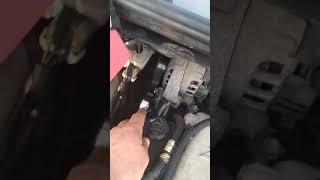
- YouTube video by 'Repairs and Rides' (Buick Rendezvous (year not specified, but with similar ignition system)) — Crank no-start condition, which can be preceded by misfires.
❌ Tried (didn't work) Initial diagnosis pointed towards ignition components.
✅ What actually fixed it The ground wire for the ignition coil system (a black and white wire) was found to have a bad connection. The ground point was identified as G117 on the bell housing. Bypassing the faulty ground with a jumper wire allowed the car to start immediately, confirming the root cause was a bad ground, not a failed component.
Model Year Variations Within This Range
- 2007: The 2007 model was the final year for the Rendezvous. The primary variation affecting a P0300 is the engine choice: the 3.5L LX9 V6 (standard) or the 3.6L LY7 V6. Diagnostic paths are significantly different, with the 3.5L pointing toward the ICM/coil pack assembly and the 3.6L pointing toward timing chains.
Helpful Videos
We Have This Part in Stock

The information in this article is provided for general reference and educational purposes only. Vehicle specifications, procedures, and part compatibility can vary by production date, trim level, and region. Always consult your vehicle's factory service manual and verify part numbers before purchasing or performing repairs. Safety-critical components such as airbags, seat belts, and braking systems should be installed by a qualified professional.
- Buick RENDEZVOUS:
- 🧭 Diagnostic Flowchart
- 🎬 Helpful Videos
- 🛍️ Shop This Part
- What's Unique About the 2007-2007 Buick RENDEZVOUS
- Symptoms You May Notice
- Most Likely Causes
- Rare But Worth Checking
- Diagnosis Steps
- Parts You'll Likely Need
- Related Codes That Often Appear With This One
- Technical Service Bulletins (TSBs) & Recalls
- Platform-Specific Known Issues
- Mechanic-Grade Diagnostic Values
- Hidden / Shadow Codes Worth Checking
- Scan Tool Commands That Help
- Wiring & Ground Locations
- Real Owner Repair Stories
- Model Year Variations Within This Range
- 🎟️ Get 5% Off