

P0300 on 2005-2007 Buick Terraza: Random Misfire Causes and Fixes
P0300 on a Buick Terraza indicates random engine misfires. The most common causes are worn spark plugs, faulty ignition coils, or a vacuum leak from the intake manifold gasket. A notable issue for these V6 engines, cited in a GM TSB, is misfire caused by low oil pressure affecting engine timing. For the Terraza and its platform mates (Chevy Uplander, etc.), a failed intake manifold gasket is a very frequent culprit.
- P0300 means your engine is misfiring on multiple cylinders, which requires immediate attention to prevent catalytic converter damage.
- Start your diagnosis with the basics: check the engine oil level, then inspect common failure items like spark plugs, wires, and ignition coils.
- Be aware of platform-specific issues: leaking intake manifold gaskets are a very common cause of P0300 on these vans.
- If you also have codes P0011 or P0016, the misfire may be caused by low engine oil pressure affecting the timing system, as noted in a GM TSB.
What's Unique About the 2005-2007 Buick TERRAZA
For the Buick Terraza and its GM U-body van brethren with the High Value V6 engines, a P0300 code has a specific diagnostic path that owners should be aware of. A manufacturer Technical Service Bulletin (TSB #PIP5064C) directly links random misfires (P0300) with camshaft timing codes (P0011/P0016) and recommends checking the engine oil pressure. This suggests that low oil pressure can affect the variable valve timing (VVT) system, leading to incorrect timing and causing misfires—a problem not immediately obvious from the P0300 code alone. Additionally, the original plastic/rubber intake manifold gaskets on these engines are known to degrade and fail, causing significant vacuum leaks that trigger a P0300, often accompanied by lean codes P0171 and P0174.
Diagnostic Flowchart
Tap your situation to follow the diagnostic path that matches what you're seeing on this vehicle.
Symptoms You May Notice
- Flashing or solid Check Engine Light
- Rough or shaky engine idle
- Engine hesitation or stumbling during acceleration
- Noticeable loss of engine power
- Reduced fuel economy
- Difficulty starting the engine
- Hissing or sucking noises from the engine bay, indicating a vacuum leak
- Strong smell of fuel from the exhaust
- Replacing only one spark plug or coil when a full set is needed.
- Replacing oxygen sensors when the actual problem is a vacuum leak from the intake manifold gasket causing lean codes (P0171/P0174) alongside the P0300.
- Assuming the cause is ignition-related without checking fuel pressure or for vacuum leaks, which are very common issues on this platform.
- Replacing ignition coils when the underlying Ignition Control Module (ICM) is the actual point of failure.
Most Likely Causes
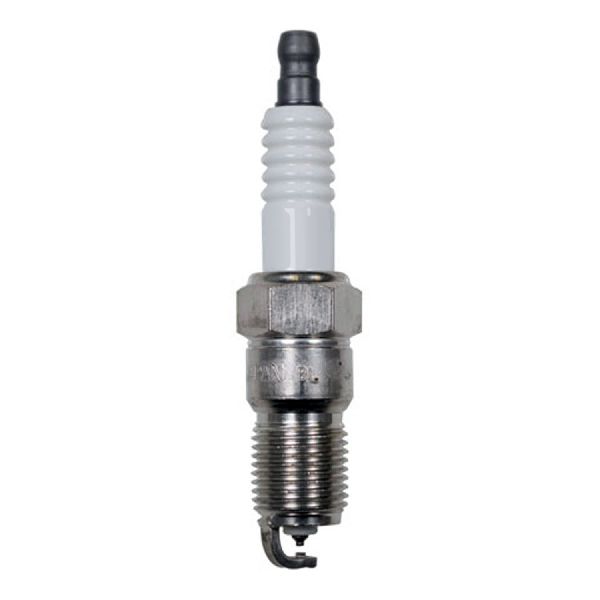
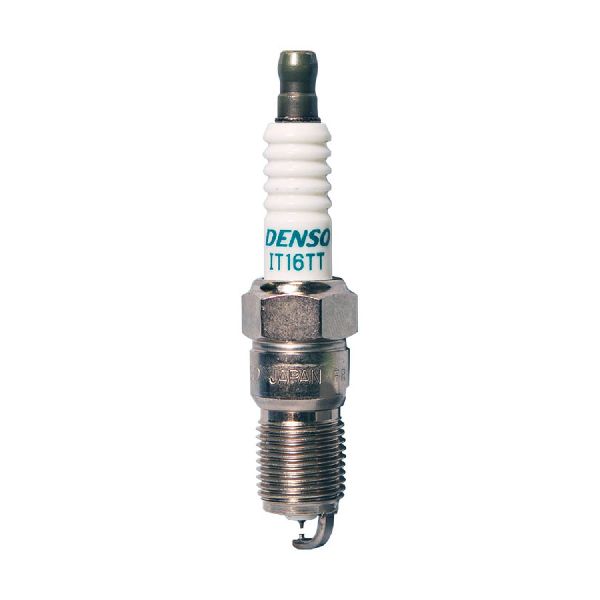
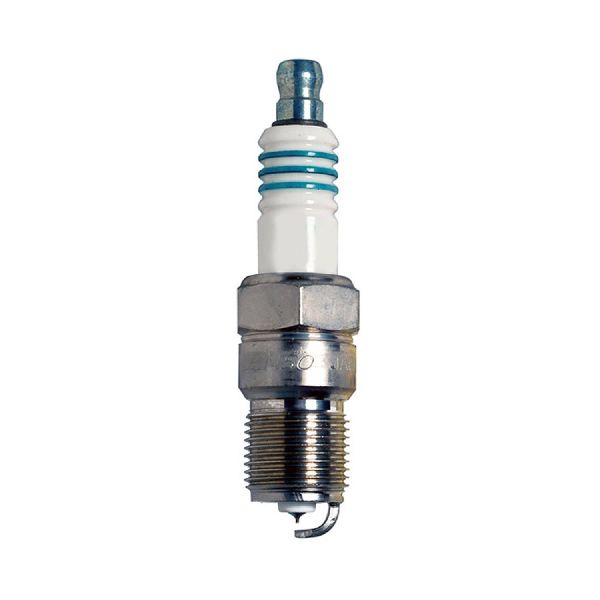
- Worn Spark Plugs and/or Ignition Wires 🔴 High Probability → Shop Spark Plug Spark plugs and wires are regular maintenance items that wear out over time, leading to a weak or inconsistent spark. This is the most common starting point for a P0300 diagnosis on any vehicle. High mileage can lead to a significantly increased spark plug gap, causing misfires under load.
How to confirm: Inspect spark plugs for wear, fouling, an incorrect gap, or oil contamination from a leaking valve cover gasket. Inspect wires for cracks, corrosion, or damage. On the Terraza's V6 engines, accessing the rear three spark plugs (cylinders 1, 3, 5) is known to be difficult due to tight space, sometimes requiring the engine to be rocked forward by removing the upper motor mounts.
Typical fix: Replace all six spark plugs and the set of ignition wires. Using quality Iridium plugs like ACDelco 41-101 is recommended for longevity. Ensure plugs are gapped correctly, typically to 0.060 inches for the 3.8L engine, though specs should be verified for the 3.5L/3.9L.
Est. part cost: $50-$150 - Faulty Ignition Coil Pack(s) or Ignition Control Module (ICM) 🟡 Medium Probability → Shop Ignition Coil The GM 3.5L and 3.9L V6 engines in the Terraza use a coil pack system with a separate Ignition Control Module (ICM) mounted underneath. Over time, heat and vibration can cause the coils or the ICM to fail, resulting in no spark to one or more cylinders. A failing ICM can cause misfires on paired cylinders (e.g., 3 and 6) even if the coil itself is good.
How to confirm: Use a scan tool to check for misfire counts on specific cylinders. You can swap a suspected bad coil with a known good one to see if the misfire follows the coil. If the misfire stays on the same cylinders after swapping coils, the ICM is the likely culprit.
Typical fix: Replace the faulty ignition coil pack (e.g., ACDelco D597A) or the ICM. It is often recommended to replace them as a set if they are original and high-mileage.
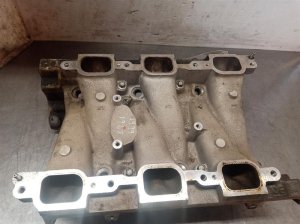
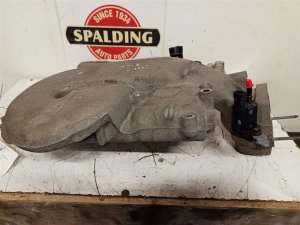
Est. part cost: $70-$200 per coil pack, $100-$250 for ICM - Leaking Intake Manifold Gasket 🔴 High Probability → Shop Engine Intake Manifold The original plastic-carrier intake manifold gaskets on these GM V6 engines are notorious for failing, causing a vacuum leak. This unmetered air leans out the air-fuel mixture, leading to random misfires, often setting P0171/P0174 codes alongside P0300. In some cases, the gasket can also fail internally, causing coolant to leak into the engine oil, creating a 'milky' appearance on the dipstick.
How to confirm: Listen for a hissing or whistling sound near the top of the engine. Spray carburetor cleaner or a propane torch (unlit) around the intake manifold gasket sealing area with the engine running; if the engine idle changes, a leak is present. A professional smoke test is the most definitive way to confirm.
Typical fix: Replace the upper and lower intake manifold gaskets. This is a labor-intensive job. It is highly recommended to use the updated metal-frame gasket set, such as Fel-Pro MS 98015 T or equivalent, to prevent repeat failure.
Est. part cost: $60-$120 for an upgraded gasket set - Low Fuel Pressure 🟡 Medium Probability A weak fuel pump or a clogged fuel filter can fail to deliver the required fuel pressure, causing a lean condition and random misfires across all cylinders. The fuel pressure regulator is part of the in-tank fuel pump module on these vans, making the pump assembly the primary suspect for pressure issues.
How to confirm: Connect a fuel pressure gauge to the fuel rail's test port. With the key on and engine off, pressure should be within the manufacturer's specification, typically 50-60 psi for these models. Pressure should hold steady and not drop off quickly.
Typical fix: Replace the clogged fuel filter first as a maintenance item. If pressure is still low, the entire fuel pump module assembly will likely need to be replaced.
Est. part cost: $20 (filter) - $350 (pump assembly) - Low Engine Oil Pressure or Level ⚪ Low Probability As noted in TSB #PIP5064C, low oil pressure can cause the camshaft phasers (part of the VVT system) to function incorrectly. This throws off camshaft timing and can result in rough running and a P0300 code, often with P0011 or P0016.
How to confirm: First, check the engine oil level and condition. A low or dirty oil level is a simple but critical check. If the level is correct, the actual engine oil pressure must be tested with a mechanical gauge to verify it is within specification.
Typical fix: If the oil level is low, top it off and re-evaluate. If the pressure is low despite a correct oil level, it could indicate a failing oil pump, worn engine bearings, or other internal engine issues requiring professional diagnosis.
Est. part cost: $10 (oil) - $500+ (oil pump/engine work)
Rare But Worth Checking
- Clogged or Dirty Fuel Injectors: → Shop Fuel Injector While less common than a fuel pressure issue, one or more dirty injectors can disrupt the fuel spray pattern enough to cause random misfires. Sometimes running a quality fuel injector cleaner can help.
- Failing Crankshaft Position Sensor (CKP): → Shop Engine Crankshaft Position Sensor The CKP sensor tells the ECM the engine's speed and position. A failing sensor can send erratic signals, causing the ECM to miscalculate timing and trigger a P0300 code. This can sometimes be heat-related, causing misfires only when the engine is warm.
- Clogged Catalytic Converter: → Shop Catalytic Converter A clogged catalytic converter can create excessive exhaust backpressure, choking the engine and causing a loss of power and random misfires. This is often a result of long-term misfiring, not the initial cause.
Diagnosis Steps
- Check for any other stored trouble codes with an OBD-II scanner. Pay close attention to codes like P0171, P0174, P0011, or P0016, as they provide strong clues.
- Check the engine oil level and condition. A low oil level is a simple but critical check due to the TSB linking oil pressure to misfires on V6 models.
- Perform a thorough visual inspection of the engine bay. Look for cracked or disconnected vacuum hoses, damaged wiring, or signs of coolant leaks around the intake manifold.
- Listen for a hissing sound at idle, which strongly suggests a vacuum leak from the intake manifold area.
- Inspect the ignition system. Check the condition of spark plugs and ignition wires. Test the ignition coils by swapping them between cylinders to see if the misfire follows.
- Test the fuel system. Connect a fuel pressure gauge and verify the pressure is within the 50-60 psi range and holds steady.
- If a vacuum leak is suspected, perform a smoke test or carefully spray carb cleaner around the intake manifold gasket to see if the engine idle changes. A smoke test is safer and more effective.
- If timing-related codes (P0011/P0016) are present, test the actual engine oil pressure with a mechanical gauge as recommended by TSB #PIP5064C.
Parts You'll Likely Need
- Spark Plugs
(OEM #ACDelco 41-101 (Iridium))— Worn spark plugs are the most frequent cause of engine misfires. They are a standard maintenance item.
Trusted brands: ACDelco, NGK
OEM price range: $8-$15 per plug - Intake Manifold Gasket Set
(OEM #Fel-Pro MS 98015 T (Upgraded metal design))— The original plastic gaskets are a common failure point on this platform, causing vacuum leaks and misfires.
Trusted brands: Fel-Pro, ACDelco
OEM price range: $60-$120 - Ignition Coil Pack
(OEM #ACDelco D597A / D515C)— Coil packs can fail from heat and age, causing a lack of spark to paired cylinders.
Trusted brands: ACDelco, Delphi
OEM price range: $70-$150 per coil - Ignition Control Module (ICM) — The ICM, located under the coils, can fail and cause misfires even when the coils themselves are good.
Trusted brands: ACDelco, Standard Motor Products
OEM price range: $100-$250
Related Codes That Often Appear With This One
- P0301-P0306 — These are cylinder-specific misfire codes. P0300 often appears first, and as the ECM narrows down the problem, it may also set a code for a specific cylinder (e.g., P0304 for cylinder 4).
- P0171 / P0174 — These codes mean 'System Too Lean' on Bank 1 and Bank 2. They are frequently caused by a vacuum leak from a bad intake manifold gasket, which is a very common failure on the Terraza and its platform mates, also causing the P0300 misfire code.
- P0011 / P0016 — As per TSB #PIP5064C, these camshaft position timing codes can accompany a P0300 if the misfire is caused by low oil pressure affecting the variable valve timing (VVT) system.
Technical Service Bulletins (TSBs) & Recalls
- PIP5064C: Links P0300, P0011, P0016 to low engine oil pressure affecting VVT system.
- PIP5628G: Preliminary information for diagnosing P0300-P0308 and P050D codes.
Platform-Specific Known Issues
- TSB #PIP5064C points to a connection between P0300, rough idle, and low engine oil pressure on the High Value V6 engines. This can cause issues with the variable valve timing system, leading to misfires.
- TSB #PIP5628G also acknowledges P0300 as a common misfire code on this platform, indicating it's a known issue requiring careful diagnosis.
Mechanic-Grade Diagnostic Values
- Lower Intake Manifold Bolt Torque — expected: Center lower bolts to 15 ft/lbs; corner and hidden lower bolts to 18 ft/lbs.. Failure: Improper torque can lead to vacuum/coolant leaks or damaged gaskets.
- Fuel Injector Balance Test (using Tech 2 / Pro-level scanner) — expected: Each injector should show a similar fuel pressure drop, typically within 1.5-3 PSI of each other.. Failure: An injector with a significantly smaller or larger pressure drop indicates it is clogged or leaking.
Hidden / Shadow Codes Worth Checking
- P1336: Crankshaft Position (CKP) System Variation Not Learned. This code indicates the ECM has not learned the subtle variations of the crankshaft reluctor wheel, which is critical for accurate misfire detection. (see via Standard OBD-II scanner. It often appears after a CKP sensor or ECM replacement if the mandatory relearn procedure is skipped, and can be the root cause of a persistent P0300.)
Scan Tool Commands That Help
- GM Tech 2 / GDS2 or equivalent: Crankshaft Position Variation Learn (CASE Relearn) — This is mandatory after replacing the crankshaft position sensor, ECM, or major engine components. Failure to perform this can cause the ECM to falsely detect misfires and set a P0300 or P1336 code.
- GM Tech 2 or capable bidirectional scanner: Fuel Injector Balance Test — To identify a single clogged or failing fuel injector that may be causing a random misfire code. The tool measures the pressure drop as it fires each injector individually.
- GM Tech 2 or capable bidirectional scanner: Fuel Composition Reset (Alcohol Fuel Trim Reset) — On 2007 FlexFuel (LGD V6) models, if the ECM incorrectly learns a high fuel alcohol content, it can cause a rich condition (P0172/P0175) and P0300. This function resets the learned value.
Wiring & Ground Locations
- Engine Harness Chafe Point 1 — Against the sharp edge of the metal ECM/TCM bracket in the engine bay.. Vibration can cause the engine wiring harness to rub through on the bracket, shorting various sensor or actuator circuits, including those for the ignition or fuel system, leading to random misfires. A GM service document highlights this as a known issue.
- Engine Harness Chafe Point 2 — Contact with the driver's side upper control arm and/or the shock tower bolt.. Engine roll and movement can cause the harness to chafe against these suspension components, leading to intermittent shorts that are difficult to diagnose and can trigger a P0300.
- G102 / G103 — G102 is located on the left rear of the engine and grounds the ignition coils. G103 is on the cowl at the left rear of the engine compartment.. A loose or corroded G102 ground can directly cause weak or no spark from the ignition coils, leading to misfires. A bad G103 can affect the BCM and other modules that communicate with the ECM.
- G113 — Located at the engine-to-transmission stud.. This is a primary engine ground point. Corrosion or a loose connection here can cause a wide range of difficult-to-diagnose electrical issues, including erratic sensor readings that could lead to a P0300.
Real Owner Repair Stories
- Reddit user comment in r/ChevyTrucks (2004 Suburban 5.3L (similar GM V8 platform with similar diagnostic logic)) — Persistent P0300, P0174 (Lean Bank 2), and P1153 codes.
❌ Tried (didn't work) Fuel Pressure Regulator, MAP sensor, Upstream O2 sensors, Intake manifold gaskets, Throttle body gasket, All spark plugs and wires, Fuel pump
✅ What actually fixed it A commenter on the thread reported they had the exact same issue and what finally fixed it was performing a 'Crankshaft Position Sensor Relearn' procedure with a scan tool.
"I Checked Everything" — The Actual Cause
- A smoke test will successfully find vacuum leaks from a bad intake manifold gasket, but it will NOT identify other common causes for a P0300 on this platform. If a smoke test comes back clean, the root cause could be electrical or software-related. For example, a chafed wiring harness shorting intermittently against the ECM bracket or a mandatory 'CASE Relearn' procedure being missed after a sensor replacement will not be found with a smoke machine. Similarly, an incorrect fuel composition value learned by the ECM on a FlexFuel model requires a scan tool reset, not a physical repair.
OEM Part Supersession History
Original plastic-carrier intake manifold gasket→Fel-Pro MS 98015 T— The upgraded Fel-Pro gasket uses a rigid, aluminized steel carrier instead of plastic, making it resistant to heat and coolant degradation. It also includes torque limiters to prevent overtightening and splitting the gasket.ACDelco 41-993 (Platinum), 41-932→ACDelco 41-101 (Iridium)— The 41-101 uses an Iridium fine-wire tip, which offers a longer service life and better performance compared to the older platinum and standard plug designs.
Model Year Variations Within This Range
- 2005: The standard and only engine was the 3.5L LX9 V6. Both Front-Wheel Drive and All-Wheel Drive options were available.
- 2006: The 3.9L LZ9 V6 became an optional engine for Front-Wheel Drive models. The 3.5L LX9 remained the base engine. All-Wheel Drive was still available, but likely only with the 3.5L engine.
- 2007: The 3.5L V6 and the All-Wheel Drive system were discontinued. The 3.9L V6 was the only engine offered. A FlexFuel (E85 compatible) version of the 3.9L, coded LGD, became available. The independent rear suspension was also replaced with a less complex beam axle.
Helpful Videos
Used OEM Parts in Stock
New Aftermarket Parts Available



The information in this article is provided for general reference and educational purposes only. Vehicle specifications, procedures, and part compatibility can vary by production date, trim level, and region. Always consult your vehicle's factory service manual and verify part numbers before purchasing or performing repairs. Safety-critical components such as airbags, seat belts, and braking systems should be installed by a qualified professional.
- Buick TERRAZA:
- 🧭 Diagnostic Flowchart
- 🎬 Helpful Videos
- 🛍️ Shop This Part
- What's Unique About the 2005-2007 Buick TERRAZA
- Symptoms You May Notice
- Most Likely Causes
- Rare But Worth Checking
- Diagnosis Steps
- Parts You'll Likely Need
- Related Codes That Often Appear With This One
- Technical Service Bulletins (TSBs) & Recalls
- Platform-Specific Known Issues
- Mechanic-Grade Diagnostic Values
- Hidden / Shadow Codes Worth Checking
- Scan Tool Commands That Help
- Wiring & Ground Locations
- Real Owner Repair Stories
- "I Checked Everything" — The Actual Cause
- OEM Part Supersession History
- Model Year Variations Within This Range
- 🎟️ Get 5% Off