

P0300 on 2016-2020 Cadillac CT6: Random Misfire Causes and Fixes
P0300 on a Cadillac CT6 indicates random engine misfires. While commonly caused by worn spark plugs or bad ignition coils, check for vehicle-specific issues like a faulty Oil Control Valve (OCV) solenoid per TSB #21-NA-036. A cold-start-only misfire could point to a more serious issue involving engine block porosity, outlined in TSB #18-NA-115, or broken rocker arms as detailed in TSB #PIP5493E.
- P0300 means multiple cylinders are misfiring randomly; a flashing check engine light is a critical warning to stop driving.
- Start diagnosis with the most common culprits: spark plugs and ignition coils.
- Be aware of Cadillac-specific TSBs. Inspect the Oil Control Valve (OCV) solenoids for leaks or damage, as this is a known issue (TSB #21-NA-036).
- If the misfire ONLY happens on a cold start and then goes away, investigate the possibility of a coolant leak into the cylinder per TSB #18-NA-115 before attempting other expensive repairs.
- P0300 can be a symptom of a deeper mechanical problem, such as timing chain stretch or internal engine damage, especially if basic fixes don't resolve the issue.
What's Unique About the 2016-2020 Cadillac CT6

While P0300 is a generic code, the Cadillac CT6, particularly models with the 3.6L (LGX) and 3.0L (LGW) V6 engines, has specific documented failure points that go beyond typical tune-up parts. Manufacturer bulletins point to issues like faulty Oil Control Valve (OCV) solenoids causing misfires and oil leaks (TSB #21-NA-036). [NHTSA Bulletin #21-NA-036] An even more serious, though rarer, issue involves engine block porosity leading to coolant leaks into the cylinders, causing a P0300 specifically on cold starts (TSB #18-NA-115). [NHTSA Bulletin #18-NA-115] Additionally, TSB PIP5493E points to broken rocker arms (SRFFs) as a potential cause for persistent misfires on these V6 engines.
Diagnostic Flowchart

Tap your situation to follow the diagnostic path that matches what you're seeing on this vehicle.
Symptoms You May Notice
- Rough or shaky idle, especially during a cold start. [NHTSA Bulletin #18-NA-115, 5]
- Engine hesitation or stumbling during acceleration.
- Solid or flashing Check Engine Light.
- Noticeable loss of engine power.
- The 'Service StabiliTrak' message may appear on the driver information center, as the engine misfire can affect the traction control system.
- A temporary misfire immediately after refueling could point to a faulty EVAP purge valve.
- Replacing only spark plugs when a faulty ignition coil, clogged injector, or OCV solenoid is the true cause.
- Replacing oxygen sensors. While O2 sensors can fail and cause fuel trim issues, they are usually a symptom of the misfire (detecting unburnt fuel/air) rather than the root cause of a P0300.
- Attributing a cold-start only misfire to spark plugs when it could be the early signs of engine block porosity as described in TSB #18-NA-115. [NHTSA Bulletin #18-NA-115]
Most Likely Causes

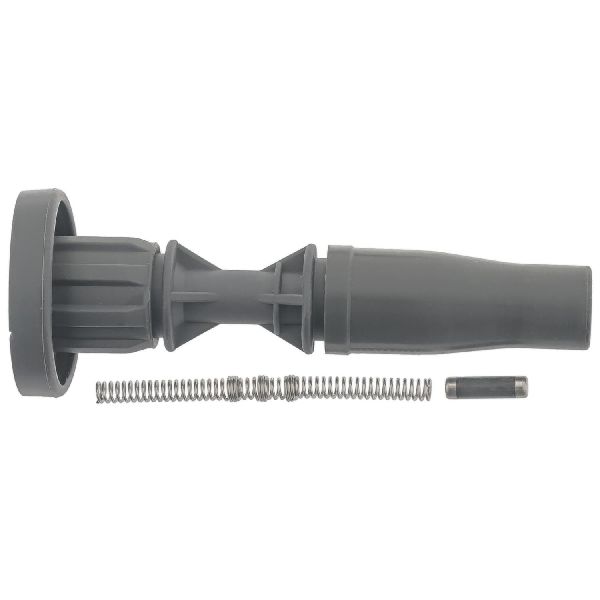
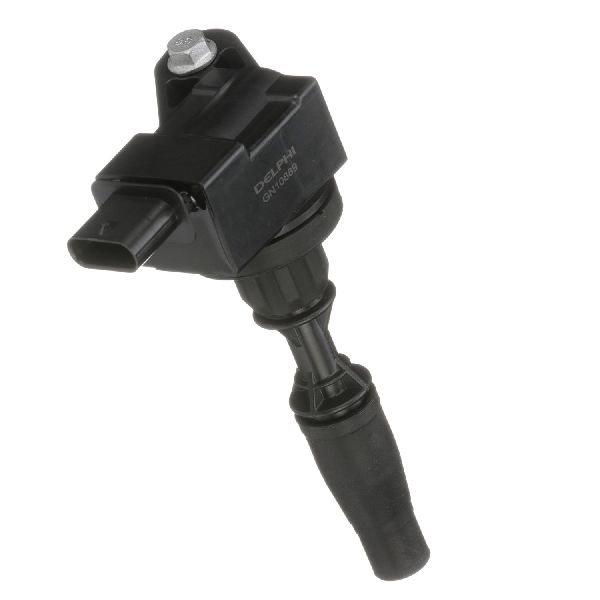
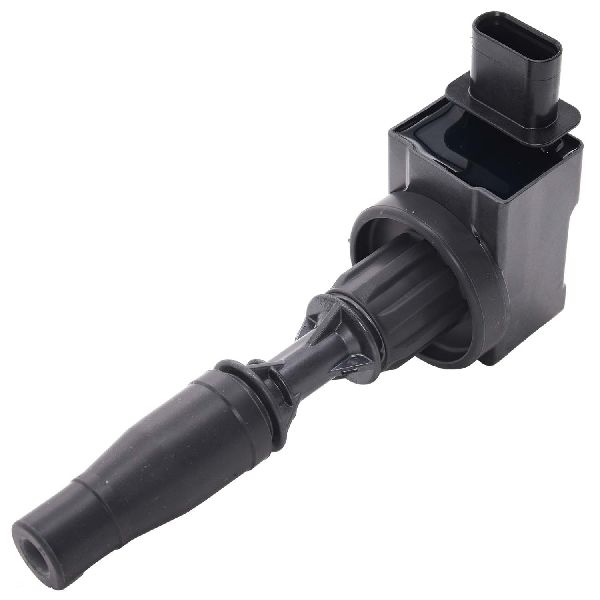
- Worn Spark Plugs or Faulty Ignition Coils 🔴 High Probability → Shop Ignition Coil These are standard maintenance items that wear out over time. Direct injection engines are sensitive to spark quality, and a weak spark from a worn plug or failing coil is a primary cause of misfires.
How to confirm: Inspect spark plugs for wear (electrode erosion), fouling (carbon or oil), or damage. The recommended gap for the 3.6L LGX is often 0.035"-0.036". Swap the ignition coil from a misfiring cylinder (if identified with a more specific P030x code) with a known good cylinder to see if the misfire follows the coil.
Typical fix: Replace all spark plugs as a set. Replace the faulty ignition coil(s). It is best practice to replace all plugs at once to ensure consistent performance.
Est. part cost: $80-$300 - Damaged Oil Control Valve (OCV) Solenoid 🟡 Medium Probability → Shop Engine Variable Valve Timing (VVT) Oil Control Valve TSB #21-NA-036 specifically identifies a damaged OCV solenoid as a cause for P0300, P0302, and/or P0305, potentially accompanied by an oil leak. [NHTSA Bulletin #21-NA-036] TSB PIP5493 also suggests replacing the Rocker Arm Oil Control Valve (OCV) if a P0300, P0302, or P0305 is present for the first time.
How to confirm: Visually inspect the OCV solenoids (part of the variable valve timing system) for physical damage or oil leaks as described in the TSB. A diagnostic tool can also command the solenoids to check for response.
Typical fix: Replace the damaged OCV solenoid. 🎬 Watch: A simple walkthrough for replacing the variable valve timing solenoid. Per TSB PIP5493E, if broken rocker arms are found, it is also necessary to replace the AFM OCV in the camshaft cover for both banks.
Est. part cost: $150-$220 - Clogged or Faulty Fuel Injectors 🟡 Medium Probability → Shop Fuel Injector Direct injection systems, like those in all CT6 engines, operate under high pressure and can be prone to carbon buildup on injector tips. This disrupts the spray pattern and fuel volume, leading to incomplete combustion.
How to confirm: A professional diagnostic tool can perform a fuel injector balance test. Resistance can also be checked with a multimeter. In some cases, a very rough idle may smooth out after a professional cleaning service.
Typical fix: Professional fuel system cleaning (e.g., 'walnut blasting' for intake valves, injector-specific cleaning). If cleaning fails, replacement of the faulty injector(s) is necessary.
Est. part cost: $70-$250 per injector - Vacuum Leak ⚪ Low Probability Vacuum hoses, particularly the PCV (Positive Crankcase Ventilation) lines, can become brittle and crack over time due to engine heat, allowing unmetered air to enter the engine and disrupt the air/fuel ratio. A faulty EVAP purge solenoid stuck open can also cause a vacuum leak, often noticeable after refueling.
How to confirm: Listen for a hissing sound at idle. A smoke test is the most effective way to locate the source of a vacuum leak. Pay close attention to the intake manifold gaskets and all connected vacuum lines.
Typical fix: Replace the cracked or disconnected vacuum hose or faulty gasket/solenoid.
Est. part cost: $5-$50 for hoses, $50-$150 for a purge solenoid 🎬 See how to diagnose and fix a faulty purge valve quickly.
Rare But Worth Checking
- Engine Block Porosity: → Shop Engine Block Extremely rare but documented in TSB #18-NA-115 for V6 engines. Causes a cold-start misfire that disappears when warm due to a microscopic coolant leak path into a cylinder at the deck face. [NHTSA Bulletin #18-NA-115] If confirmed via a cooling system pressure test (losing pressure overnight) and borescope inspection (finding coolant in a cylinder), the only official fix is engine replacement.
- Stretched Timing Chain: → Shop Engine Timing Chain While the LGX V6 has an improved timing chain system over its predecessors (LLT/LFX), stretch is still possible, especially with poor oil maintenance. Lack of oil pressure can cause the tensioners to fail, leading to chain slack. This typically sets camshaft/crankshaft correlation errors (e.g., P0016, P0017) along with P0300.
- Internal Mechanical Failure (Rocker Arms): TSB PIP5493E/G specifically instructs technicians to inspect for broken or dislodged rocker arms (SRFFs) on 3.0L and 3.6L engines in cases of persistent misfires after checking ignition and fuel. This requires removing the cam cover for inspection. If a broken rocker is found, all four on that cylinder must be replaced. In severe cases, a damaged piston can cause a complete loss of compression in one cylinder, leading to a P0300.
Diagnosis Steps
- Read the trouble codes with an OBD-II scanner and record the freeze frame data to see the engine conditions (RPM, temperature, load) when the code was set.
- Check for any accompanying codes (e.g., P0301-P0306, P0017) to see if the misfire is more frequent on certain cylinders or related to timing.
- Visually inspect the ignition system. Check spark plugs for wear and proper gap (typically ~0.035" for the V6). Swap ignition coils between cylinders to see if a specific misfire code follows the coil.
- Inspect for vacuum leaks by performing a smoke test, paying close attention to the PCV system and intake manifold gaskets.
- Check for relevant Technical Service Bulletins (TSBs). Specifically, review #21-NA-036 (OCV solenoid), #18-NA-115 (cold-start block porosity), and #PIP5493E (broken rocker arms). [6, NHTSA Bulletin #18-NA-115, NHTSA Bulletin #21-NA-036]
- Inspect the OCV solenoids for oil leaks or damage as per TSB #21-NA-036.
- If the misfire only occurs on a cold start and disappears when warm, perform a cooling system pressure test overnight. If pressure drops, use a borescope to inspect cylinders for coolant, as outlined in TSB #18-NA-115. [NHTSA Bulletin #18-NA-115]
- Test fuel pressure to ensure the fuel pump and regulator are functioning correctly. For direct injection systems, this includes both the low-pressure and high-pressure pumps.
- If other causes are ruled out, perform an engine compression test to check for mechanical issues. A reading of near-zero on one cylinder could indicate 🎬 Watch: Why some 3.6L misfires won't trigger a check engine light. a broken rocker arm or damaged piston.
- If compression is good but a misfire persists on V6/V8 models, consider removing the valve covers to inspect for broken rocker arms per TSB #PIP5493E.
Parts You'll Likely Need
- Ignition Coil
(OEM #12676668)— A failed ignition coil is a primary cause of misfires. It fails to deliver the high voltage needed to create a spark.
Trusted brands: ACDelco
Related Codes That Often Appear With This One
- P0301, P0302, P0303, P0304, P0305, P0306 — These are cylinder-specific misfire codes that often appear with P0300. Their presence helps narrow down the problem to a specific coil, plug, or injector, even if the misfire is happening randomly across multiple cylinders.
- P050D — This code for 'Cold Start Rough Idle' is mentioned alongside P0300 in TSB #PIP5628G, indicating a related diagnostic path for cold-start issues. [NHTSA Bulletin #PIP5628G]
- P0016, P0017, P0018, P0019 — These codes indicate a camshaft and crankshaft position correlation error, often pointing towards a stretched timing chain or a problem with the VVT system (phasers, solenoids) as the root cause of the misfires.
- P0299, P1101 — On turbocharged engines (2.0L LTG, 3.0L LGW), a P0300 might be accompanied by P0299 (Turbo Underboost) and P1101 (Intake Air Flow Performance). A severe misfire from a mechanical failure, like a damaged piston, can cause low compression, which in turn leads to these airflow and boost-related codes.
Technical Service Bulletins (TSBs) & Recalls

- 18-NA-115: Cold Start Misfire and/or Rough Idle – DTC P0300 May Be Set. [NHTSA]
- 21-NA-036: Damaged OCV solenoid may cause an oil leak and misfire, illuminating the MIL and setting DTCs P0300, P0302 and/or P0305. [NHTSA]
- PIP5628G: Preliminary information for diagnosing misfire codes P0300 - P0308 and/or P050D. [NHTSA]
- PIP5493E: Diagnostic information for misfire with DTCs P0300, P0301-P0306, pointing to potential rocker arm issues.
Platform-Specific Known Issues
- TSB #18-NA-115 / #18NA115: Addresses a cold start misfire (P0300) that resolves when the engine warms up. The cause can be engine block porosity allowing coolant to seep into a cylinder. The bulletin shows examples of the specific pitting to look for at the cylinder liner interface. The official repair is engine replacement.
- TSB #21-NA-036: Points to a damaged Oil Control Valve (OCV) solenoid causing an oil leak and setting misfire codes P0300, P0302, and/or P0305. [NHTSA Bulletin #21-NA-036]
- TSB #PIP5493E / #PIP5493G: For the 3.0L LGW and 3.6L LGX engines, this bulletin advises checking for broken or dislodged rocker arms (SRFFs) if a persistent misfire is present. It requires removing the valve cover for inspection and may necessitate replacing all four rocker arms on the affected cylinder if damage is found.
Mechanic-Grade Diagnostic Values
- Low-Side Fuel Pressure (Key On, Engine Off) — expected: 50-60 PSI (jumps up when priming). Failure: Pressure below 50 PSI or pressure that bleeds off quickly could indicate a weak in-tank pump or a leak.
- Engine Compression — expected: All cylinders should be within 15% of the highest reading.. Failure: A cylinder with pressure more than 15% lower than the highest indicates a mechanical issue (rings, valves, head gasket). For example, if the highest is 150 PSI, the lowest should not be below 127.5 PSI.
- Ignition Coil Resistance — expected: While specific OEM values are not published for public use, a common technique is to compare the resistance readings between all coils. They should be nearly identical.. Failure: A coil with a significantly different resistance reading (higher or lower) than the others is likely faulty.
Hidden / Shadow Codes Worth Checking
- Mode $06 Misfire Data: Mode $06 is a diagnostic function that provides test results for non-continuously monitored systems. Before a P0300 code is officially set, the ECU tracks misfires per cylinder. Accessing Mode $06 with a capable scanner can reveal which specific cylinder(s) are accumulating misfire counts, even if a cylinder-specific code (P0301-P0306) has not been triggered. This is invaluable for pinpointing the source of a random misfire. (see via A professional OBD-II scan tool with Mode $06 capability. The data is often presented as Test IDs (TID) and Component IDs (CID).)
- History Misfire Counters: GM's GDS2/Tech2 software allows technicians to view not just current misfires, but a history of misfire events over many drive cycles. This can show if a misfire is intermittent, happens under specific loads, or is consistently on one cylinder over time, which is more detailed than a standard freeze frame. (see via GM GDS2 or Tech2 dealer-level scan tool, or a high-end aftermarket scanner with GM-specific software.)
Scan Tool Commands That Help
- GDS2 (or equivalent high-end scanner): Cylinder Power Balance Test — Use this function when the engine is idling to identify a weak cylinder. The tool will sequentially disable fuel to each cylinder and measure the drop in RPM. A cylinder that produces a smaller RPM drop when disabled is not contributing as much power as the others, pointing to a potential issue with its plug, coil, or injector.
- GDS2 (or equivalent high-end scanner): Injector Balance Test — This test helps determine if a fuel injector is clogged or failing. The tool commands the fuel pump to pressurize the system, then individually fires each injector for a set duration while measuring the pressure drop. If an injector causes a significantly different pressure drop than the others, it is faulty.
- GDS2 (or equivalent high-end scanner): Crankshaft Position Variation Learn (Case Relearn) — This procedure should be performed after replacing a crankshaft position sensor, ECM, or making major engine repairs. The ECM learns the minor variations in the crankshaft reluctor wheel to accurately detect misfires. An incorrect learn profile can cause false P0300 codes. In some cases, simply performing the relearn procedure can resolve an otherwise untraceable P0300.
Wiring & Ground Locations
- G102 — Located at the left rear of the engine.. This ground is specifically for the ignition coils. A loose or corroded G102 can cause a weak or intermittent spark on multiple cylinders, leading directly to a P0300 code.
- G106 — Located on the front center of the frame cross rail, under the crank pulley.. This is a primary engine-to-chassis ground point. Poor connection here can cause a voltage drop across the entire engine management system, affecting the ECM, sensors, and actuators, potentially causing random misfires and other electrical gremlins.
- ECM/Ignition Coil Harness — Routing across the top of the engine and near exhaust manifolds.. Harnesses can be susceptible to heat damage, becoming brittle and causing wires to chafe. A short-to-ground or open circuit in the wiring for the ignition coils or their control signals from the ECM can cause misfires on one or more cylinders.
Real Owner Repair Stories
- Reddit user in r/ChevyTrucks (applicable to GM V8/V6) (2004 Suburban 5.3L) — Persistent P0300, P0174 (Lean Bank 2), and P1153.
❌ Tried (didn't work) Fuel pressure regulator, MAP sensor, Upstream O2 sensors, Intake manifold gaskets, Throttle body gasket, Spark plugs and wires, Fuel pump
✅ What actually fixed it A 'Crankshaft Position Sensor Relearn' procedure performed with a capable scan tool resolved the issue. This suggests the ECM's learned profile for detecting misfires was inaccurate.
Model Year Variations Within This Range
- 2019-2020: For the 2019 model year, the base 2.0L Turbo LTG engine was replaced with the newer 2.0L Turbo LSY engine, and the 8-speed automatic was replaced by a 10-speed automatic across most of the lineup. The 4.2L Twin-Turbo V8 (LTA) was also introduced. These powertrain changes mean diagnostic procedures and specific parts may differ from the 2016-2018 models.
- 2019-2020: The 2.0L four-cylinder engine option was discontinued entirely for the 2020 model year in North America, leaving only the 3.6L V6 and the limited-production 4.2L V8.
Helpful Videos
We Have This Part in Stock


The information in this article is provided for general reference and educational purposes only. Vehicle specifications, procedures, and part compatibility can vary by production date, trim level, and region. Always consult your vehicle's factory service manual and verify part numbers before purchasing or performing repairs. Safety-critical components such as airbags, seat belts, and braking systems should be installed by a qualified professional.
- Cadillac CT6:
- 🧭 Diagnostic Flowchart
- 🎬 Helpful Videos
- 🛍️ Shop This Part
- What's Unique About the 2016-2020 Cadillac CT6
- Symptoms You May Notice
- Most Likely Causes
- Rare But Worth Checking
- Diagnosis Steps
- Parts You'll Likely Need
- Related Codes That Often Appear With This One
- Technical Service Bulletins (TSBs) & Recalls
- Platform-Specific Known Issues
- Mechanic-Grade Diagnostic Values
- Hidden / Shadow Codes Worth Checking
- Scan Tool Commands That Help
- Wiring & Ground Locations
- Real Owner Repair Stories
- Model Year Variations Within This Range
- 🎟️ Get 5% Off