

P0300 on 2016-2018 Cadillac CTS-V: Random Misfire Causes and Fixes
For a 2016-2018 Cadillac CTS-V, a P0300 random misfire code is frequently caused by simple issues like loose spark plug wires or worn/fouled spark plugs. However, several Technical Service Bulletins (TSBs) point to platform-specific problems like faulty Oil Control Valve (OCV) solenoids, internal coolant leaks, failed AFM lifters, or air trapped in the supercharger's cooling system causing heat soak.
- P0300 on a 2016-2018 CTS-V indicates a random misfire affecting multiple cylinders.
- Always start with the simplest checks: ensure all spark plug wires are securely fastened, as this is a known issue (TSB #PIP5159C).
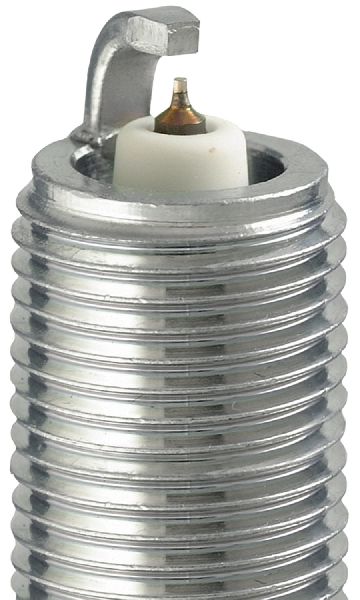
- Worn spark plugs are a very common cause; replace them with the correct OEM-spec iridium plugs.
- Be aware of the more serious, platform-specific issues identified in TSBs, such as faulty OCV solenoids, coolant leaks into cylinders, and failed AFM lifters.
- If the check engine light is flashing, stop driving immediately to prevent catastrophic damage to the catalytic converters.
What's Unique About the 2016-2018 Cadillac CTS-V
The 2016-2018 CTS-V uses the high-performance, supercharged 6.2L LT4 V8 engine. This direct-injection, high-compression powerplant is sensitive to spark, fuel, and air delivery. While common misfire causes apply, this platform and its LT4-equipped cousins (Corvette Z06, Camaro ZL1) have several documented issues leading to a P0300 code. Manufacturer TSBs specifically mention problems like loose spark plug wire clips (TSB #PIP5159C), damaged oil control solenoids (TSB #21-NA-036), coolant leaks into the cylinders (TSB #PIP5498M), and collapsed AFM lifters (TSB #15-06-01-002K). Furthermore, the supercharger's charge air cooling system is prone to trapping air, which can cause a spike in intake air temperatures (IAT2) under load, forcing the ECU to pull timing and triggering a P0300 that feels like a stumble.
Diagnostic Flowchart
Tap your situation to follow the diagnostic path that matches what you're seeing on this vehicle.
Symptoms You May Notice
- Flashing or solid Check Engine Light.
- Rough or shaking idle.
- Engine hesitation or stumbling on acceleration.
- Noticeable loss of power.
- StabiliTrak warning light may illuminate.
- White smoke or coolant odor from the exhaust, especially on a cold start (indicates a serious issue).
- Popping or backfiring sounds from the exhaust under load.
- Reduced fuel economy.
- Replacing oxygen (O2) sensors without confirming they are faulty. O2 sensors will often report issues that are a symptom of the misfire, not the cause.
- Replacing the catalytic converters. Converters are almost always damaged as a result of a persistent misfire, not the cause of it.
- Immediately replacing ignition coils. While coils can fail, it's more common for spark plugs or wires to be the root cause of an ignition-related misfire.
Most Likely Causes
- Loose or Damaged Spark Plug Wires 🔴 High Probability → Shop Spark Plug TSB #PIP5159C specifically calls out that spark plug wires can become loose at the ignition coil due to a missing or damaged 'C' clip on the wire end, leading to misfires across the LT4 platform. Additionally, the high heat of the engine bay can cause the wire boots to degrade or burn, causing arcing.
How to confirm: Visually inspect and physically check each spark plug wire at both the coil and the spark plug. Ensure it 'clicks' into place. Per the TSB, check for the presence of the small metal 'C' clip inside the boot connecting to the coil. Look for any signs of burning, arcing (white marks), or physical damage on the boots or wires.
Typical fix: Reseat any loose wires. If the retaining clip is missing or the wire is damaged/burnt, replace the spark plug wire set. Using dielectric grease inside the boots can help prevent moisture intrusion and corrosion.
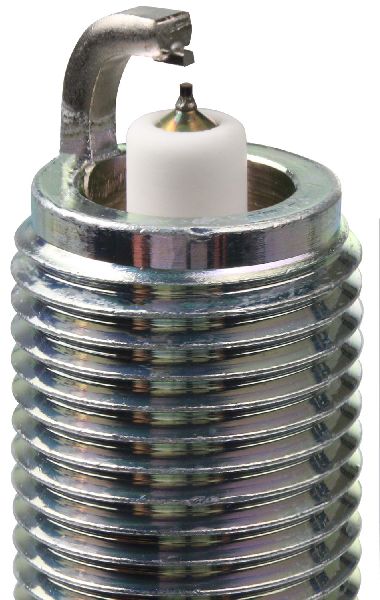
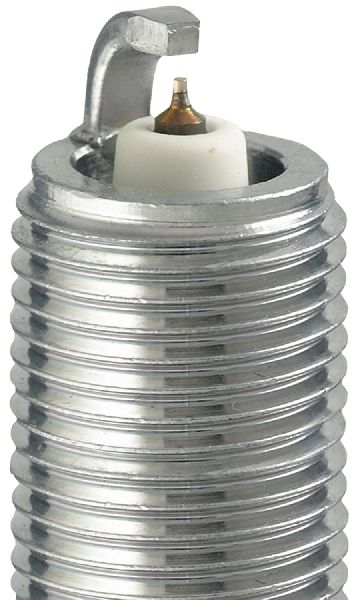
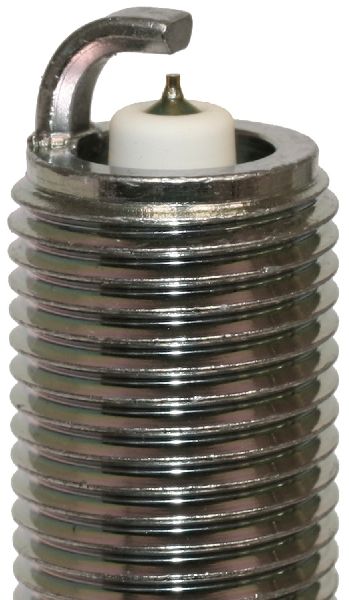
Est. part cost: $70-$150 - Worn or Fouled Spark Plugs 🔴 High Probability → Shop Spark Plug As a high-performance supercharged engine, the LT4 places high demand on spark plugs, leading to a shorter service life. The OEM-recommended ACDelco Iridium plugs can become worn, or the porcelain insulator can develop hairline cracks, causing arcing to the cylinder head.
How to confirm: Remove all eight spark plugs and inspect them for signs of wear (worn electrode), carbon fouling, oil fouling, or damage. Critically, check the entire white ceramic insulator for hairline cracks. Even pre-gapped plugs should have their gap verified before installation.
Typical fix: Replace all eight spark plugs as a set. It is critical to use the correct heat range plug specified for the LT4 engine, such as the OEM ACDelco Iridium plug.
Est. part cost: $80-$160 - Damaged Oil Control Valve (OCV) Solenoid 🟡 Medium Probability → Shop Engine Variable Valve Timing (VVT) Oil Control Valve TSB #21-NA-036 identifies an issue where the AFM Oil Control Valve (OCV) solenoid can break, causing an oil leak and inadequate oil pressure for the AFM system. This can lead to cylinder deactivation issues and trigger misfire codes, including P0300, sometimes with P0302 or P0305.
How to confirm: Inspect the OCV solenoids, located in the camshaft cover, for any signs of physical damage or oil leakage. The TSB shows that the end of the solenoid can break off and remain in the bore.
Typical fix: Replace the damaged OCV solenoid. If the end has broken off, it must be carefully removed from the camshaft cover bore with a pick tool before installing the new part.
Est. part cost: $40-$80 - Faulty Fuel Injectors or Fuel System Issues 🟡 Medium Probability → Shop Fuel Injector The LT4 is a direct-injection engine. While highly efficient, direct injectors can become clogged or fail electronically. Several owners of LT4-powered vehicles have traced P0300 codes to a single faulty injector that eventually caused random misfires before setting a cylinder-specific code.
How to confirm: Use a scan tool to monitor fuel trims and check injector balance rates. A professional may need to perform a fuel pressure test for both the low and high-pressure systems. In some cases, a misfire may be traced to a specific cylinder (e.g., #6 or #8) which turns out to be a failing injector.
Typical fix: Clean or replace the faulty fuel injector(s). If fuel pressure is low, further diagnosis of the high-pressure fuel pump is required.
Est. part cost: $100-$300 per injector, $500+ for a fuel pump - Vacuum Leak ⚪ Low Probability The complex intake and plumbing system on a supercharged engine provides more potential points for a vacuum leak, such as gaskets, seals, or the PCV system hoses, which can introduce unmetered air and disrupt the air/fuel ratio, causing lean misfires.
How to confirm: Perform a smoke test by introducing pressurized smoke into the intake system (with the engine off) and look for smoke escaping from cracked hoses, intake manifold gaskets, or other seals.
Typical fix: Replace the leaking hose or gasket.
Est. part cost: $10-$100
Rare But Worth Checking
- Improperly Bled Charge Air Cooler (Heat Soak): → Shop Intercooler TSB #18-NA-291 and TSB #17-NA-408 for platform mates warn that if the supercharger's charge air cooler system was recently serviced, air trapped in the system can lead to reduced performance. Under load, the air causes the coolant pump to cavitate and shut down, spiking intake air temps (IAT2). The ECU pulls timing drastically to prevent knock, which is registered as a P0300 misfire. This is a common issue on the C7 Z06 and can be confirmed by logging IAT2 with a scan tool during a hard pull. 🎬 Watch: How to properly bleed the LT4 supercharger cooling system.
- Stuck/Failed AFM Lifter: → Shop Engine Valve Lifter TSB #15-06-01-002K details how Active Fuel Management (AFM) lifters can become mechanically collapsed or stuck due to oil aeration or internal damage. This causes a persistent misfire, often with a ticking noise, and sets a P0300. Diagnosis involves inspecting valve operation and may require replacing the lifters on the affected bank and the valve lifter oil manifold. 🎬 Watch: Diagnosing a P0300 misfire caused by a failed AFM lifter.
- Coolant Leaking into Cylinders: TSB #PIP5498M describes how coolant can enter the cylinders, causing a cold start misfire (P0300/P050D), white smoke, and a coolant smell. The cause can be a porous cylinder head casting or a leak at the cylinder liner-to-deck face. This is a very serious issue that may require cylinder head or complete engine replacement.
- Chafed Wiring Harness: TSB #PIP5553A suggests that a chafed wiring jumper harness can cause a P0300 along with a host of other electrical and engine control codes, potentially leading to a stall or no-start condition.
- Weak or Failing Battery: While not specific to the CTS-V, a failing battery can provide unstable voltage to the ECU and ignition system, leading to a variety of electrical gremlins, including a P0300 code. One owner on YouTube fixed their P0300 and StabiliTrak light on a similar Cadillac by replacing an 8-year-old battery.
Diagnosis Steps
- Scan for all DTCs. Pay close attention to any other codes that accompany P0300, as they provide critical clues. Note any pending codes as well. 🎬 See this expert explanation of how P0300 codes are triggered.
- Check freeze frame data to understand the engine conditions (speed, load, temperature) when the misfire occurred. This helps determine if it happens cold, under load, or at high RPM.
- Visually inspect the engine bay for obvious
Parts You'll Likely Need
- Spark Plugs
(OEM #12687032)— Worn or fouled spark plugs are a primary cause of misfires on any engine, especially a high-output supercharged one like the LT4.
Trusted brands: ACDelco (OEM)
OEM price range: $10-$20 per plug - Spark Plug Wires
(OEM #12656553 (example, verify by VIN))— Loose connections due to missing 'C' clips (per TSB PIP5159C) or heat damage to the boots are a common, documented cause of P0300 on the LT4.
Trusted brands: ACDelco (OEM), MSD, Granatelli Motor Sports
OEM price range: $100-$150 per set - AFM Oil Control Valve (OCV) Solenoid
(OEM #12687219 (example, verify by VIN))— A known failure point documented in TSB 21-NA-036 where the solenoid can break, causing cylinder deactivation problems that register as a misfire.
Trusted brands: ACDelco (OEM)
OEM price range: $40-$80
Related Codes That Often Appear With This One
- P0301-P0308 — If the random misfire becomes concentrated in one or more specific cylinders, the PCM will set a cylinder-specific code alongside P0300.
- P050D — This code for 'Cold Start Rough Idle' is specifically mentioned in TSB #PIP5498M as appearing with P0300 when coolant is leaking into the cylinders.
- P0171/P0174 — These codes for 'System Too Lean' can be triggered by a large vacuum leak or a fuel delivery problem that is also causing the P0300 misfire.
- U0078 — In a complex case on a C7 Z06, this code for 'Control Module Communication Bus 'A' Off' appeared alongside a persistent P0300, suggesting an underlying electrical or module issue.
Technical Service Bulletins (TSBs) & Recalls
- 21-NA-036: Mentions a damaged OCV solenoid causing oil leaks and misfires (P0300).
- 18-NA-115: Pertains to a cold start misfire and rough idle that can set a P0300 code.
- PIP5498M: Links P0300 with P050D (cold start rough idle) due to coolant entering the cylinders.
- PIP5159C: Cites loose spark plug wires from a missing 'C' clip as a cause for P0300-P0308.
- PIP5553A: Suggests a chafed wiring harness can cause P0300 along with numerous other electrical DTCs.
- 15-06-01-002K: Discusses stuck or collapsed AFM lifters as a cause for P0300.
- 18-NA-291: Warns that an improperly bled charge air cooler system can cause P0300.
Platform-Specific Known Issues
- Loose Spark Plug Wires: TSB #PIP5159C notes that P0300-P0308 codes can be set by a loose spark plug wire, often due to a missing 'C' clip.
- Damaged OCV Solenoid: TSB #21-NA-036 describes a diagnostic test for a damaged OCV solenoid that may cause an oil leak and set P0300.
- Coolant Intrusion: TSB #PIP5498M details a scenario where P0300 and P050D can set on a cold start due to coolant entering the cylinders, which may require extensive engine repair or replacement.
- Stuck AFM Lifters: TSB #15-06-01-002K addresses engine misfires (P0300) caused by mechanically collapsed or stuck Active Fuel Management (AFM) lifters.
- Charge Air Cooler Service: TSB #18-NA-291 points out that P0300 can occur after servicing the supercharger's charge air cooler if the system is not bled correctly.
Mechanic-Grade Diagnostic Values
- High-Pressure Fuel Rail Pressure (WOT) — expected: ~2900 PSI (20 MPa). Failure: Pressure significantly drops below 2900 PSI, for example to 1000-1200 PSI, under wide-open throttle.
- Low-Pressure Fuel System Pressure (WOT) — expected: ~72 PSI. Failure: Pressure is significantly below 70 PSI under load.
- Manifold Air Temperature (IAT2) under load — expected: Should remain well below 140°F. Failure: A sharp spike past 140°F during a hard pull, which causes the ECU to pull timing and can log a P0300.
- Ignition Coil Primary Resistance — expected: Approximately 0.3 to 1.0 Ohms. Failure: A reading significantly outside the manufacturer's specified range.
- Ignition Coil Secondary Resistance — expected: Approximately 5,000 to 15,000 Ohms (5k-15k Ω). Failure: A reading significantly outside the manufacturer's specified range.
- Spark Plug Internal Resistance/Continuity — expected: Resistance of ~4k-5k Ohms through the center electrode. No continuity between the outer metal shell and the top terminal.. Failure: Continuity is present between the shell and terminal, indicating an internal crack causing the plug to ground out.
Hidden / Shadow Codes Worth Checking
- Misfire Counters (Current & History): A live data parameter that shows the exact number of misfire events per cylinder. This is more sensitive than a DTC and can identify a poorly performing cylinder before it triggers the Check Engine Light. (see via A professional-grade scan tool (like GM's GDS2) accessing live engine data. Look for 'Misfire Data' or similar.)
- Mode $06 Misfire Data: Part of the generic OBD-II standard, Mode 6 stores results from non-continuous monitor tests. It contains misfire counts for the last 10 driving cycles and can be used to find intermittent misfires that haven't set a code. (see via A scan tool that supports Mode 6 data display. The data is presented in hexadecimal and needs to be interpreted, but many modern tools translate it automatically.)
Scan Tool Commands That Help
- GDS2 / Professional Scan Tool: Cylinder Power Balance Test — This should be one of the first diagnostic steps. It quickly identifies which cylinder(s) are not contributing power by deactivating them one by one and measuring the RPM drop, pinpointing the location of the misfire without disassembly.
- GDS2 / Professional Scan Tool: Charge Air Cooler Coolant Pump Control — This is mandatory when bleeding the supercharger's intercooler system. The pump must be commanded on and cycled repeatedly while a vacuum is pulled on the system to purge all trapped air, as per TSB #18-NA-291.
- GDS2 / Professional Scan Tool: Crankshaft Position System Variation Learn — After replacing a crankshaft, flywheel, or crankshaft position sensor. This procedure calibrates the PCM to the minor variations in the crankshaft reluctor wheel to ensure accurate misfire detection.
Wiring & Ground Locations
- Chafed Wiring Jumper Harness — Location not specified in TSB, but requires inspection of engine wiring harnesses where they may rub against engine or chassis components.. TSB #PIP5553A explicitly states that a chafed harness can cause short circuits, leading to a P0300 and a wide array of other electrical and engine control DTCs, stalls, or no-start conditions.
- Main Engine/Chassis Grounds — Key locations include the primary ground post near the underhood fuse box and engine-to-chassis ground straps.. A loose or corroded ground can cause unstable voltage supply to the ECM, ignition coils, and fuel pump control module, leading to erratic behavior and phantom misfire codes.
Real Owner Repair Stories
- CorvetteForum & YouTube owner stories (2018 Chevrolet Corvette Z06 (shared LT4 engine)) — P0300 code, rough running that got progressively worse, multiple DIC warnings.
❌ Tried (didn't work) Replacing only one plug/wire, Replacing ignition coils, Replacing spark plug wires
✅ What actually fixed it Replacing all eight spark plugs. The cause was a hairline crack in the porcelain insulator of a single spark plug, which was not visible to the naked eye but was causing the spark to ground out against the cylinder head. - YouTube video on C7 Z06 Heat Soak (Chevrolet Corvette C7 Z06 (shared LT4 engine)) — P0300 misfire code, engine stumbling or hesitation only during hard acceleration or track use.
❌ Tried (didn't work) Replacing spark plugs, Replacing ignition coils
✅ What actually fixed it Performing the multi-cycle vacuum bleed procedure for the supercharger's charge air cooling system as outlined in GM TSBs. Trapped air was causing the intercooler pump to cavitate and shut down, spiking intake air temperatures and forcing the ECU to pull timing, which registered as a misfire. - YouTube user 'Handy Val' (2011 Cadillac CTS (similar platform, different engine)) — P0300 code, car shaking, StabiliTrak warning light on.
❌ Tried (didn't work) Owner was hesitant to replace plugs, coils, or injectors on a relatively low-mileage car.
✅ What actually fixed it Replacing the old, weak battery. The unstable voltage supplied by the failing battery was causing the car's computer to malfunction and trigger a random misfire code.
"I Checked Everything" — The Actual Cause
- A hairline crack in a spark plug's porcelain insulator. This allows spark to arc to the cylinder head under compression instead of firing at the electrode. This is an ignition failure, not a vacuum leak, so a smoke test will be clean. The crack can be nearly impossible to see with the naked eye.
- Air trapped in the supercharger's intercooler coolant circuit. This causes a 'heat soak' condition under high engine load, where intake air temperatures spike, the ECU pulls timing, and a P0300 is triggered. The system has no vacuum leaks; the problem is internal to the cooling circuit and only manifests under specific high-performance conditions.
When the Usual Fixes Don't Work
- Multiple owner reports from the LT4 platform (Corvette Z06) indicate that replacing ignition coils and spark plug wires—common first steps for a P0300—did not resolve the issue. The actual fix was replacing the spark plugs, as one had a hairline crack in the insulator. This suggests that for the LT4, plugs should be considered a primary suspect over coils, even on lower mileage vehicles.
OEM Part Supersession History
12688607, 126423287, 12694529, 12679090, 12673410→12711668— Updated design for the LT4/LT5 High Pressure Fuel Pump (HPFP).
Heads up: This is the correct high-pressure pump for the LT4, operating at ~2900 PSI. Do not confuse with the lower-pressure LT1 pump.N/A→23377989 (ACDelco M100183)— Standard in-tank low-pressure fuel pump for the LT4 application.
Heads up: The tanks between LT1 and LT4 cars are different; ensure the correct pump assembly is used for the vehicle.
Model Year Variations Within This Range
- 2016-2018: The core 6.2L LT4 engine and its potential P0300 causes remained consistent. The primary difference from its platform-mate, the Corvette Z06, is the CTS-V's use of a wet-sump oil system versus the Z06's dry-sump system, which does not materially affect this specific trouble code. Minor software calibrations were made in 2017 but did not change the fundamental hardware.
Helpful Videos
We Have This Part in Stock


The information in this article is provided for general reference and educational purposes only. Vehicle specifications, procedures, and part compatibility can vary by production date, trim level, and region. Always consult your vehicle's factory service manual and verify part numbers before purchasing or performing repairs. Safety-critical components such as airbags, seat belts, and braking systems should be installed by a qualified professional.
- Cadillac CTS-V:
- 🧭 Diagnostic Flowchart
- 🎬 Helpful Videos
- 🛍️ Shop This Part
- What's Unique About the 2016-2018 Cadillac CTS-V
- Symptoms You May Notice
- Most Likely Causes
- Rare But Worth Checking
- Diagnosis Steps
- Parts You'll Likely Need
- Related Codes That Often Appear With This One
- Technical Service Bulletins (TSBs) & Recalls
- Platform-Specific Known Issues
- Mechanic-Grade Diagnostic Values
- Hidden / Shadow Codes Worth Checking
- Scan Tool Commands That Help
- Wiring & Ground Locations
- Real Owner Repair Stories
- "I Checked Everything" — The Actual Cause
- When the Usual Fixes Don't Work
- OEM Part Supersession History
- Model Year Variations Within This Range
- 🎟️ Get 5% Off