

P0300 on 2000-2002 Cadillac Eldorado: Random Misfire Causes and Fixes
On a 2000-2002 Cadillac Eldorado with the 4.6L Northstar V8, a P0300 code is most often caused by worn spark plugs, faulty ignition coil boots, or a vacuum leak from a deteriorated intake plenum boot or PCV hose. These are affordable DIY fixes, typically costing between $50 and $150 in parts.
- For a P0300 on a 2000-2002 Eldorado, always suspect a vacuum leak from the intake boot or PCV hoses first.
- If vacuum leaks are ruled out, perform a basic tune-up with new high-quality spark plugs (ACDelco Iridium or Platinum) and new ignition coil boots.
- A flashing check engine light is a critical warning. Stop driving immediately to prevent catastrophic damage to your catalytic converters.
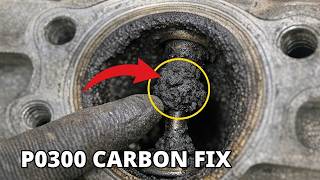
- Be aware of the Northstar engine's reputation for carbon buildup and head gasket issues as more serious, but possible, causes for a persistent misfire.
- Using a scan tool that can read live misfire data is extremely helpful in confirming the repair and narrowing down intermittent problems.
What's Unique About the 2000-2002 Cadillac ELDORADO
The 2000-2002 Eldorado uses the 4.6L Northstar V8, an engine known for specific issues that can lead to a P0300 code. A very common cause on this platform is vacuum leaks from brittle rubber parts in the intake system, such as the intake plenum boot and PCV hoses. These parts degrade with age and engine heat, causing unmetered air to enter the engine, leading to a lean condition and random misfires. The intake boot often cracks on the underside, making it difficult to see without a smoke test or partial disassembly. Additionally, while the Northstar engine is known for carbon buildup and infamous for head gasket issues due to head bolts pulling from the aluminum block, these are less common causes for P0300 than the simple vacuum leaks and ignition component wear.
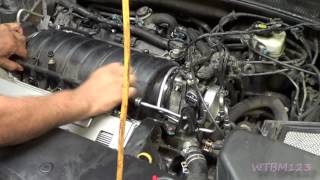
🎬 Watch: A quick diagnostic walkthrough for Northstar random misfires.Diagnostic Flowchart
Tap your situation to follow the diagnostic path that matches what you're seeing on this vehicle.
Symptoms You May Notice
- Rough or shaky idle
- Hesitation or stumbling during acceleration
- Flashing or steady Check Engine Light
- Reduced engine power
- Poor fuel economy
- Engine stalling
- TCS (Traction Control System) fault light may illuminate simultaneously
- Replacing entire ignition coil cassettes when only the boots are faulty.
- Replacing the Mass Airflow (MAF) sensor, which is rarely the cause for a P0300 on this engine. Owners often replace it with no change in symptoms.
- Replacing oxygen (O2) sensors, which are more likely to be a symptom of the misfire, not the cause. A misfire allows unburnt oxygen into the exhaust, which can make the O2 sensors report a false lean condition.
Most Likely Causes
- Vacuum Leak (Intake Plenum Boot / PCV Hoses) 🔴 High Probability The rubber components used in the intake system become brittle and crack from years of heat cycles, a very common issue on this engine. The large intake boot is a known pattern failure, often tearing on the bottom where it's not visible.
How to confirm: Perform a smoke test on the intake system to find the source of the leak. Alternatively, listen for a hissing sound at idle or carefully spray short bursts of carb cleaner around the intake boot and vacuum lines; a change in engine RPM indicates a leak. Misfire counts on a scan tool that are high at idle but improve or disappear with throttle are a classic sign of a vacuum leak.
Typical fix: Replace the cracked rubber intake boot (GM Part #24508729 or aftermarket equivalent) and any damaged PCV hoses or elbows. The intake manifold must be removed for this repair, so it is highly recommended to replace the intake manifold gaskets at the same time.
Est. part cost: $20-$80 - Worn Spark Plugs 🔴 High Probability → Shop Spark Plug Spark plugs are a regular maintenance item. The Northstar engine can be hard on plugs, and due to difficult access for the rear bank, they are often neglected. Using incorrect plugs or failing to gap them properly can also cause issues.
How to confirm: Remove and inspect the spark plugs for wear (worn electrode), carbon fouling, or oil/coolant contamination. A diagnostic swap with a new plug can also confirm the issue. In one documented case, swapping a suspected bad plug to another cylinder caused the misfire to follow, confirming the plug was the sole issue.
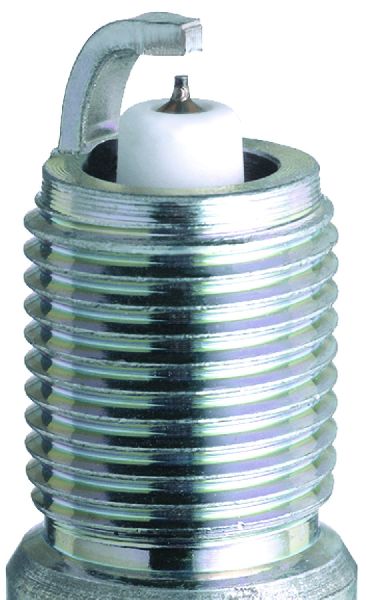
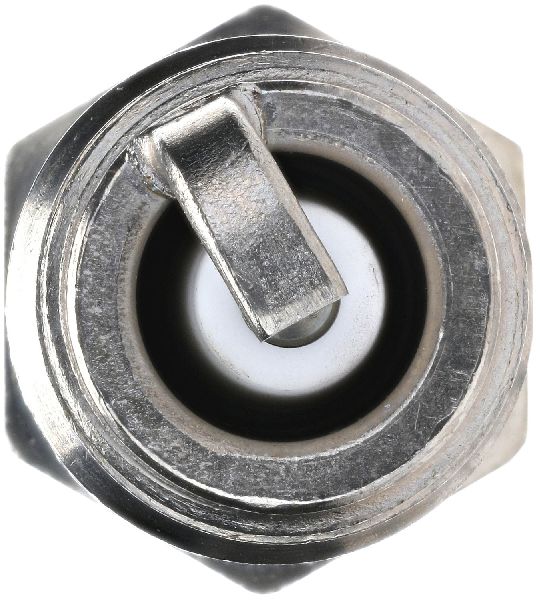
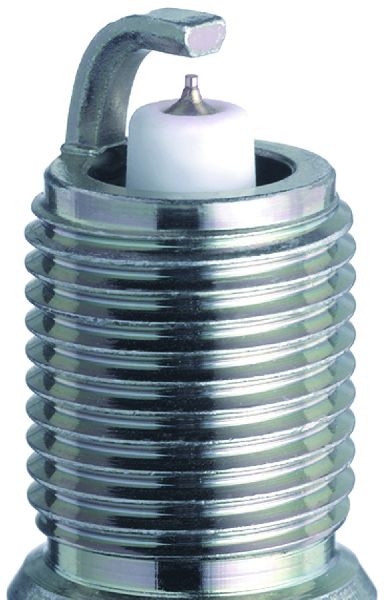
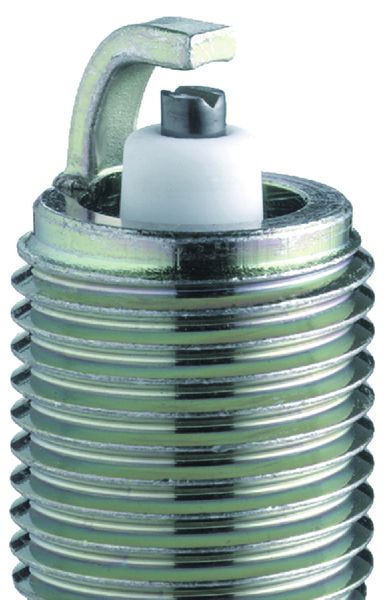
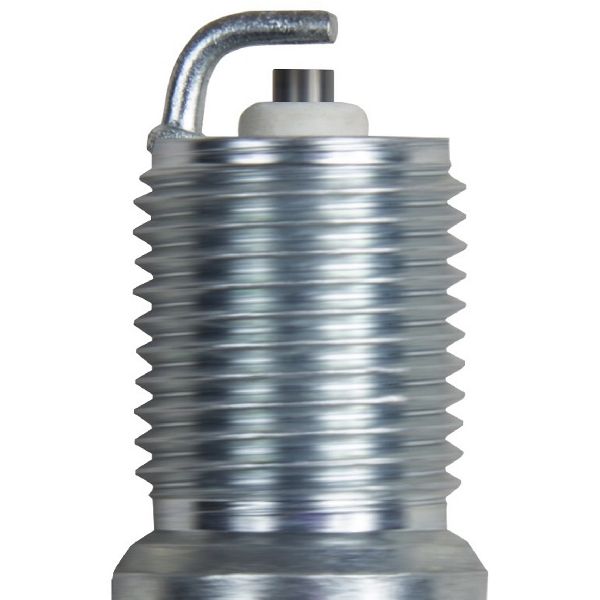
Typical fix: Replace all eight spark plugs with high-quality Iridium or double platinum plugs, such as the OEM ACDelco 41-987. It is critical to use a torque wrench to avoid damaging the aluminum cylinder heads.
Est. part cost: $50-$100 - Faulty Ignition Coil Boots 🟡 Medium Probability → Shop Ignition Coil The Northstar uses two ignition coil 'cassettes'. The rubber boots that connect the coils to the spark plugs can degrade, crack, or become contaminated with oil, causing a poor connection and misfires. This is a common failure point.
How to confirm: Remove the coil cassettes and inspect the boots for cracks, swelling, or signs of carbon tracking or arcing (a white, chalky line).
Typical fix: Replace all eight ignition coil boots and springs. This is much cheaper than replacing the entire coil cassette and is a very common repair. A boot kit like GM part #19366089 can be used.
Est. part cost: $40-$80 - Low Fuel Pressure / Clogged Fuel Filter ⚪ Low Probability → Shop Fuel Filter The fuel filter is a maintenance item that is often overlooked. A clogged filter can restrict fuel flow, starving the engine for fuel and causing misfires across all cylinders. One owner found their filter was completely clogged.
How to confirm: Connect a fuel pressure gauge to the fuel rail's service port. Pressure should be within the manufacturer's specification (typically 48-55 PSI for this system). A reading of 36-38 PSI, as seen in one forum post, is too low and indicates a problem.
Typical fix: Replace the fuel filter. If pressure is still low, the fuel pump may be failing or the fuel pressure regulator could be at fault.
Est. part cost: $20-$50
Rare But Worth Checking
- Failing Crankshaft Position Sensor: → Shop Engine Crankshaft Position Sensor A failing crankshaft position sensor can cause erratic spark and fuel injector timing, leading to random misfires. This is a known, though less common, issue on these vehicles. A relearn procedure may be needed after replacement.
- Clogged Fuel Injectors: → Shop Fuel Injector If multiple injectors become restricted, it can lead to a lean condition and random misfires that don't respond to ignition system repairs. In one documented repair on a DeVille, replacing four clogged front injectors was the final fix after a new coil pack didn't solve the P0300.
- Internal Engine Problems (Head Gasket Failure): The Northstar engine is infamous for head gasket failure caused by head bolts pulling their threads from the aluminum block. A P0300 can be an early symptom if coolant is leaking into multiple cylinders. Check for unexplained coolant loss, a wet spark plug (with coolant), or milky residue under the oil cap. However, do not assume this is the cause without ruling out all more common and cheaper possibilities first.
Diagnosis Steps
- Check for any other stored DTCs that could point to a specific system (e.g., P0171/P0174 for vacuum leaks).
- Use a scan tool with live data to monitor misfire counts per cylinder. Even with a P0300, one or two cylinders may show significantly more misfires, helping to narrow the search.
- Perform a visual inspection of the engine bay, looking for obvious issues like cracked or disconnected vacuum hoses, especially the PCV lines and the large intake plenum boot.
- Conduct a smoke test to definitively identify any vacuum leaks in the intake system. This is the most reliable method for finding the common intake boot leak.
- If no vacuum leaks are found, remove and inspect all eight spark plugs for wear, damage, and oil or coolant fouling. Ensure correct ACDelco 41-987 plugs are used.
- While the plugs are out, inspect the ignition coil boots for cracks, carbon tracking, or oil saturation.
- Test fuel pressure at the fuel rail to ensure it meets the 48-55 PSI specification. Readings below 40 PSI are a clear indicator of a fuel delivery problem.
- If the basics check out, consider that multiple fuel injectors may be clogged. A professional cleaning or testing may be required. This was the fix in at least one documented case.
- As a final step for persistent issues, perform a compression test and a cooling system pressure test (or a chemical block test) to rule out serious mechanical problems like a failing head gasket.
Parts You'll Likely Need
- Spark Plugs
(OEM #ACDelco 41-987)— Worn or fouled spark plugs are a primary cause of misfires. The 41-987 is the correct double platinum plug for the 2000+ Northstar; the 41-950 is for earlier models.
Trusted brands: ACDelco, NGK, Denso
OEM price range: $8-$12 per plug
Aftermarket price range: $5-$10 per plug - Ignition Coil Boot Kit
(OEM #19366089)— The rubber boots are a common failure point, causing spark to arc to ground instead of reaching the plug. Replacing them is a cost-effective alternative to new coil cassettes.
Trusted brands: ACDelco, Standard Motor Products, Delphi
OEM price range: $40-$80 for a set of 8
Aftermarket price range: $25-$50 for a set of 8 - Intake Plenum Gasket/Boot
(OEM #24508729)— This large rubber boot is the single most common cause of vacuum leaks on this engine, leading to P0300, P0171, and P0174 codes. It becomes brittle and cracks with age.
Trusted brands: GM, Fel-Pro, Mahle
OEM price range: $30-$50
Aftermarket price range: $15-$30
Related Codes That Often Appear With This One
- P0171 — System Too Lean (Bank 1) - Often appears with P0300 when the cause is a major vacuum leak from the intake boot or PCV system.
- P0174 — System Too Lean (Bank 2) - Often appears with P0300 when the cause is a major vacuum leak from the intake boot or PCV system.
- P0301-P0308 — Cylinder-specific misfire codes. A random P0300 may eventually be joined by or turn into a specific cylinder code as the fault worsens in one location.
Technical Service Bulletins (TSBs) & Recalls
- PIP5628G - Preliminary information for diagnosing misfire DTCs P0300-P0308.
Platform-Specific Known Issues
- Intake System Leaks: The rubber intake plenum boot and various PCV hose elbows are known to crack and cause major vacuum leaks, which is a leading cause of P0300 on this engine. Many owners have chased the code by replacing expensive parts only to find this simple rubber boot was the culprit.
- Head Gasket Concerns: While the Northstar's reputation for head gasket failure is well-deserved, it should not be the first assumption for a P0300. Exhaust all other possibilities like vacuum leaks, plugs, and boots before considering this expensive repair. A chemical test for combustion gases in the coolant is a definitive way to check.
Mechanic-Grade Diagnostic Values
- Fuel Pressure (at fuel rail Schrader valve) — expected: 48-55 PSI with key-on, engine-off (KOEO) and at idle.. Failure: Pressure below 40 PSI indicates a problem. One documented case showed 36-38 PSI with a clogged filter and weak fuel pump. Pressure that bleeds off quickly after the pump primes can indicate a bad check valve or leaking regulator.
- Long-Term Fuel Trim (LTFT) at Idle — expected: Within +/- 5% on a healthy engine.. Failure: Sustained positive values greater than +10% on both banks strongly suggest a vacuum leak, as the PCM is adding fuel to compensate for unmetered air. If trims are high at idle but return to near normal at 2500 RPM, a vacuum leak is almost certain.
- Live Misfire Counts at Idle vs. Raised RPM — expected: Zero or near-zero misfires across all cylinders.. Failure: A high number of misfires at idle that disappear as soon as the throttle is opened (e.g., held at 1500 RPM) is a classic symptom of a vacuum leak. The higher manifold vacuum at idle pulls in the most unmetered air, leaning out the mixture and causing the misfire.
Hidden / Shadow Codes Worth Checking
- OBD-II Mode 6 Data: Mode 6 is not a 'code' but a diagnostic function that provides access to the results of self-tests for non-continuously monitored systems, including the misfire monitor. Before a misfire is frequent enough to set a P0300 and turn on the light, the raw misfire counts for each cylinder are often logged here. This can help identify a cylinder that is beginning to fail. (see via A professional scan tool (like a GM Tech 2) or a high-quality consumer OBD-II scanner with Mode 6 capability is required. The data is presented as Test IDs (TID) and Component IDs (CID); the user must look up the manufacturer's specific IDs for misfire data.)
Scan Tool Commands That Help
- GM Tech 2 / GDS2: Crankshaft Position System Variation (CASE) Relearn — This procedure must be performed after replacing a crankshaft position sensor or the PCM. It synchronizes the sensor with the actual position of the crankshaft reluctor wheel. Failure to perform the relearn can result in inaccurate misfire detection and a persistent P0300 code, as the PCM may misinterpret normal crankshaft speed variations as misfires.
- GM Tech 2 / GDS2: Injector Balance Test — Use this test when you suspect a clogged or failing fuel injector after ruling out vacuum leaks and ignition problems. The tool commands the PCM to pulse one injector at a time while you monitor the fuel pressure drop on a connected gauge. All cylinders should have a similar pressure drop (within 1-2 PSI). A cylinder with a smaller pressure drop indicates a restricted injector.
Wiring & Ground Locations
- G101 / G102 — On similar GM platforms, G101 (Engine Control Module ground) is on the lower front of the engine block, and G102 (Ignition Coils ground) is at the left rear of the engine. These locations are critical to check.. A corroded or loose ground at G101 can cause erratic PCM behavior, leading to numerous false codes including P0300. A bad ground at G102 can weaken spark energy from the coil packs, directly causing misfires across multiple cylinders.
- Engine Harness Chafe Points — Visually inspect the main engine harness for rubbing against sharp metal edges. Common chafe points on GM vehicles include the corners of cylinder heads, accessory brackets (like alternator or A/C), and where the harness passes the ECM/TCM bracket or shock towers.. Vibration can cause a wire's insulation to wear through, creating an intermittent short to ground. If a wire for a sensor (like Crank/Cam position) or an ignition coil control circuit shorts out, it can cause random stalling and misfires that are extremely difficult to diagnose without a thorough visual inspection of the harness.
Real Owner Repair Stories
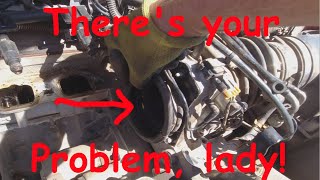
- YouTube channel 'WTBM123 Car repair' (2003 Cadillac DTS (with Northstar, very similar diagnosis)) — P0300 random misfire, but scan tool showed most misfires on cylinder #1, only at idle. Misfire disappeared with any throttle.
❌ Tried (didn't work) Initial diagnosis pointed to a vacuum leak due to the idle-only misfire.
✅ What actually fixed it The mechanic found a cracked PCV hose elbow leaking vacuum. As a preventative measure while the intake was off, he also replaced the main intake plenum boot and intake gaskets, which resolved the P0300 code. - CarKiller forum thread (2004 Cadillac DeVille (with Northstar)) — Persistent P0300, rough running, flashing MIL under load.
❌ Tried (didn't work) Replaced spark plugs, cleaned MAF, fixed a small PCV vacuum leak with a smoke test, ran injector cleaner. A chemical block test for head gasket failure was negative.
✅ What actually fixed it A fuel pressure test revealed low pressure (36-38 PSI vs. spec of 48-55). Replacing the fuel filter, which was completely clogged, did not raise the pressure. The final diagnosis was that the overworked fuel pump was also weak and needed replacement to restore proper pressure and fix the misfire. - YouTube channel 'The Flat Rate Mechanic' (Cadillac DeVille (with Northstar)) — P0308 (Cylinder 8 misfire), but diagnostic process applies to P0300.
❌ Tried (didn't work) The mechanic first swapped the ignition coil from the misfiring cylinder (#8) to a known good cylinder (#6). The misfire did not follow the coil, ruling out a bad coil.
✅ What actually fixed it The mechanic then swapped the spark plug from cylinder #8 to cylinder #6. A scan tool confirmed the misfire moved to cylinder #6. The root cause was a single faulty spark plug.
"I Checked Everything" — The Actual Cause
- A clogged catalytic converter can cause a P0300. If a smoke test is clean and the ignition/fuel systems check out, suspect the exhaust. A clogged converter creates excessive backpressure, preventing cylinders from expelling exhaust gas efficiently. This 'chokes' the engine, causing hesitation, power loss, and random misfires that worsen under load. It can be diagnosed by checking backpressure with a gauge in the upstream O2 sensor port or by temporarily removing the sensor to see if performance improves.
OEM Part Supersession History
ACDelco 41-950→ACDelco 41-987— Change in plug design and heat range for the redesigned 2000+ Northstar engine.
Heads up: The ACDelco 41-987 (or equivalent double platinum/iridium) is correct for the 2000-2002 Eldorado. Using the 41-950, intended for pre-2000 Northstars, can lead to suboptimal performance and misfires. Always verify the part number for the specific model year.
Model Year Variations Within This Range
- 2000-2002: The primary variation affecting performance is the trim level, not the model year. The Eldorado Sport Coupe (ESC) trim used a 275 hp version of the 4.6L Northstar, while the Eldorado Touring Coupe (ETC) used a higher-output 300 hp version with more aggressive engine tuning and a different final drive ratio (3.71 vs 3.11). The P0300 diagnostic process is identical for both, but it's important to be aware of which engine tune the vehicle has.
Helpful Videos
We Have This Part in Stock


The information in this article is provided for general reference and educational purposes only. Vehicle specifications, procedures, and part compatibility can vary by production date, trim level, and region. Always consult your vehicle's factory service manual and verify part numbers before purchasing or performing repairs. Safety-critical components such as airbags, seat belts, and braking systems should be installed by a qualified professional.
- Cadillac ELDORADO:
- 🧭 Diagnostic Flowchart
- 🎬 Helpful Videos
- 🛍️ Shop This Part
- What's Unique About the 2000-2002 Cadillac ELDORADO
- Symptoms You May Notice
- Most Likely Causes
- Rare But Worth Checking
- Diagnosis Steps
- Parts You'll Likely Need
- Related Codes That Often Appear With This One
- Technical Service Bulletins (TSBs) & Recalls
- Platform-Specific Known Issues
- Mechanic-Grade Diagnostic Values
- Hidden / Shadow Codes Worth Checking
- Scan Tool Commands That Help
- Wiring & Ground Locations
- Real Owner Repair Stories
- "I Checked Everything" — The Actual Cause
- OEM Part Supersession History
- Model Year Variations Within This Range
- 🎟️ Get 5% Off