

P0300 on 2003-2010 Cadillac Escalade ESV: Random Misfire Causes and Fixes
On a 2003-2010 Escalade ESV, P0300 is most often caused by aged ignition components like spark plugs and wires, or a vacuum leak from a failed intake manifold gasket. A basic ignition tune-up costs $150-$300 in parts, while an intake gasket job can be $400-$800 at a shop. On 2007+ models, a failed AFM lifter is a more serious and costly possibility.
- P0300 means a random misfire is occurring on multiple cylinders.
- Start your diagnosis with the basics: inspect and replace worn spark plugs and wires, as these are the most frequent culprits.
- The second most likely cause is a vacuum leak from a failed intake manifold gasket. A smoke test is the best way to confirm.
- If the check engine light is flashing, stop driving immediately to prevent damage to the catalytic converters.
- For 2007-2010 models, be aware that a more serious mechanical failure of the AFM lifters could be the cause, especially if you hear a ticking noise from the engine.
What's Unique About the 2003-2010 Cadillac ESCALADE ESV
The 2003-2010 Escalade ESV spans two generations with different V8 engines, which heavily influences the likely causes of a P0300 code. The 2003-2006 (GMT800) models use the 6.0L LQ9 V8, where vacuum leaks from aged, plastic-carrier intake manifold gaskets are a very common cause of random misfires, often accompanied by P0171 and P0174 codes. The 2007-2010 (GMT900) models with the 6.2L L92 V8 introduced Active Fuel Management (AFM), and failures in the specialized AFM lifters are a known, more serious, and expensive cause for P0300 on these later models, often preceded by a ticking noise.
Diagnostic Flowchart
Tap your situation to follow the diagnostic path that matches what you're seeing on this vehicle.
Generation note: This range covers two generations. The 2003-2006 (GMT800 platform) used the 6.0L LQ9 engine. The 2007-2010 (GMT900 platform) used the 6.2L L92 engine, which notably added Active Fuel Management (AFM). AFM lifter failure is a specific and serious potential cause for P0300 on the 2007-2010 models that does not affect the earlier generation.
Symptoms You May Notice
- Rough or shaking idle
- Hesitation or stumbling during acceleration
- Flashing or solid Check Engine Light
- Noticeable loss of engine power
- Reduced fuel economy
- Smell of raw fuel from the exhaust
- Ticking or tapping noise from the engine (especially on 2007-2010 models, indicating possible lifter issue)
- Replacing only one spark plug or coil when a full set is needed for a tune-up.
- Replacing oxygen sensors, which are more likely to be a symptom of the misfire (due to raw fuel) rather than the cause.
- Replacing the fuel pump without first verifying low fuel pressure with a gauge.
- Continuously replacing parts (plugs, coils, injectors) on a 2007+ model without considering a mechanical AFM lifter failure.
Most Likely Causes
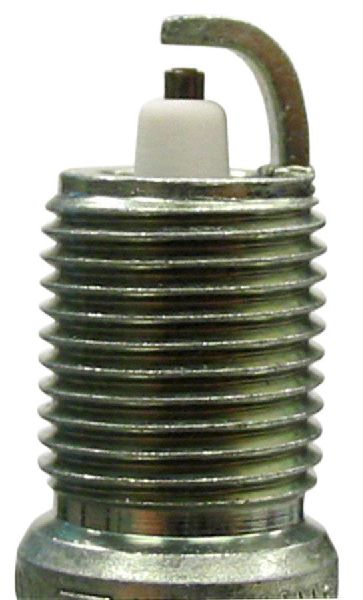
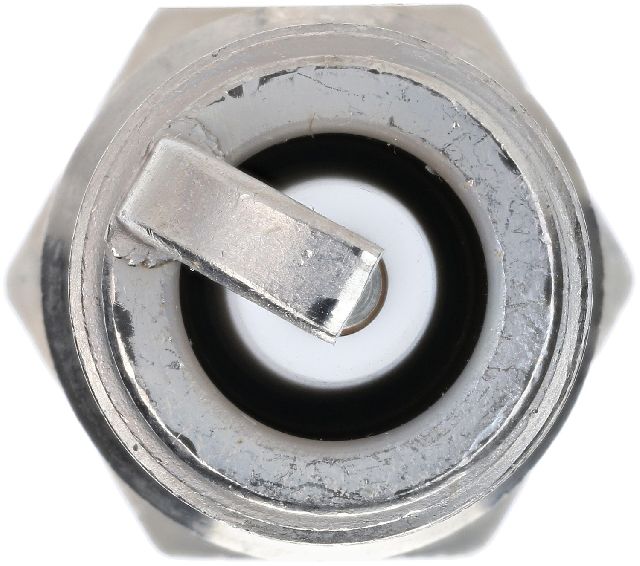
- Worn Spark Plugs and/or Wires 🔴 High Probability → Shop Spark Plug These are standard maintenance items. The manufacturer recommends replacement at 100,000 miles, but they can fail earlier, causing a weak spark and incomplete combustion. This is often the simplest and cheapest first step in diagnosis.
How to confirm: Visually inspect spark plugs for wear, fouling, or incorrect gap. Inspect wires for cracks, burns, or corrosion. A scan tool with live data can sometimes show misfire counts on specific cylinders to help narrow the search.
Typical fix: Replace all spark plugs and spark plug wires as a set. Use high-quality parts like ACDelco Iridium or Platinum plugs specified for the engine year.
Est. part cost: $100-$200 - Vacuum Leak (especially Intake Manifold Gasket) 🔴 High Probability The plastic intake manifold on the V8 engines is notorious for developing leaks at the gasket seals due to age and repeated heat cycles. The original GM gaskets used a plastic carrier that becomes brittle. This allows unmetered air into the engine, leaning out the air/fuel mixture and causing random misfires, often setting P0171 and P0174 codes alongside P0300.
How to confirm: Perform a smoke test on the intake system. A simpler, but less precise, method is to carefully spray brake cleaner or an unlit propane torch around the intake manifold mating surfaces while the engine is idling; a change in idle RPM indicates a leak.
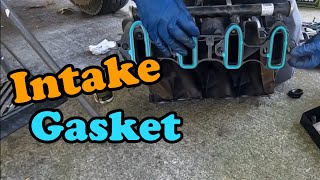
Typical fix: Replace the intake manifold gaskets. It is highly recommended to use an upgraded metal-carrier gasket set like the Fel-Pro MS98016T, which is more durable than the OEM plastic design. It's also wise to replace the knock sensors and harness located under the manifold at the same time. 🎬 See this step-by-step intake manifold gasket replacement walkthrough.
Est. part cost: $70-$150 for an upgraded gasket set - Faulty Ignition Coil(s) 🟡 Medium Probability → Shop Ignition Coil Each cylinder has its own coil. While generally reliable, they can fail with age and heat exposure. A single coil beginning to fail intermittently can contribute to a P0300 before it becomes consistent enough to set a cylinder-specific code like P0302.
How to confirm: Use a scan tool to observe misfire data per cylinder. Swap a suspected faulty coil with a known good one from another cylinder and see if the misfire follows the coil.
Typical fix: Replace the single faulty ignition coil. Many owners choose to replace all coils if they are original and high-mileage as a preventative measure.
Est. part cost: $40-$80 per coil - Dirty or Clogged Fuel Injectors 🟡 Medium Probability → Shop Fuel Injector
How to confirm: Test fuel pressure to rule out a pump issue. A professional can perform a fuel injector balance test. A DIY method is to listen to each injector with a mechanic's stethoscope; they should all have a consistent clicking sound.
Typical fix: Run a high-quality fuel system cleaner (like Techron Concentrate Plus or SeaFoam) through the tank. If this doesn't work, the injectors may need to be professionally cleaned or replaced.
Est. part cost: $20 for cleaner, $50-$150 per injector - Low Fuel Pressure ⚪ Low Probability
How to confirm: Connect a fuel pressure gauge to the fuel rail's Schrader valve. Pressure should be within the manufacturer's specification (typically 55-62 PSI with key on, engine off). Pressure that drops off quickly can indicate a weak pump or leaking injector.
Typical fix: If pressure is low, the cause is likely a weak fuel pump or a clogged fuel filter. The fuel filter is a cheaper and easier part to replace first. The fuel pump is located inside the gas tank.
Est. part cost: $150-$400 for a fuel pump module
Rare But Worth Checking
- Failed Active Fuel Management (AFM) Lifter (2007-2010 models): → Shop Engine Valve Lifter On 6.2L L92 engines, the AFM system deactivates cylinders for fuel economy. The special lifters for this system are a well-documented failure point. A collapsed or stuck lifter can cause a persistent misfire on an AFM cylinder (1, 4, 6, or 7), setting a P0300 code. This is a serious mechanical issue often accompanied by a ticking noise and requires significant engine work to repair, including removing the cylinder heads.
- Clogged Catalytic Converters: → Shop Catalytic Converter If the exhaust is restricted, it can create backpressure that leads to random misfires, loss of power, and a flashing check engine light under heavy acceleration. This is often a secondary failure caused by long-term misfires melting the internal structure of the converter.
- Faulty Crankshaft Position Sensor: → Shop Engine Crankshaft Position Sensor The PCM uses the crankshaft position sensor to detect misfires. If the sensor itself is failing or providing erratic data, it can incorrectly trigger a P0300 code. This is less common than ignition or fuel issues, but a known possibility.
Diagnosis Steps
- Check for other stored DTCs with an OBD-II scanner. Codes like P0301-P0308 or P0171/P0174 can provide valuable clues.
- Check freeze frame data to see the engine conditions (RPM, load, temperature) when the P0300 was set.
- Visually inspect the engine bay for obvious issues like disconnected vacuum hoses, damaged wiring, or signs of arcing around ignition coils/wires.
- If due for maintenance (approaching 100,000 miles), perform a full ignition tune-up (plugs and wires). This is the most common fix.
- If ignition components are good, check for vacuum leaks, focusing on the intake manifold gasket area. A smoke test is the most reliable method.
- Test fuel pressure at the fuel rail to rule out a weak pump or clogged filter. Pressure should be 55-62 PSI (KOEO).
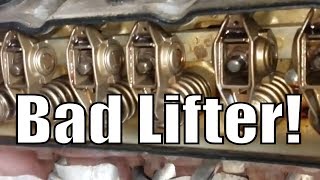
- For 2007-2010 models, listen carefully for any top-end engine ticking. If present, suspect an AFM lifter issue, which may require a compression test or removal of the valve covers for inspection. 🎬 Watch: How to identify and release a collapsed AFM lifter.
- If the above steps do not reveal the cause, move to more advanced diagnostics like checking ignition coil function, testing fuel injectors, and performing a compression test to check for mechanical engine problems.
Parts You'll Likely Need
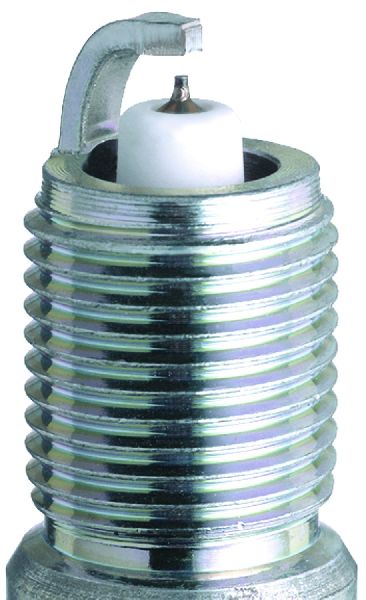
- Spark Plugs
(OEM #ACDelco 41-962 (Platinum for 6.0L) or 41-110 (Iridium for 6.2L))— Worn spark plugs are a primary cause of misfires. There was a GM bulletin suggesting 41-962 for pre-2007 models.
Trusted brands: ACDelco, NGK
OEM price range: $8-$15 per plug
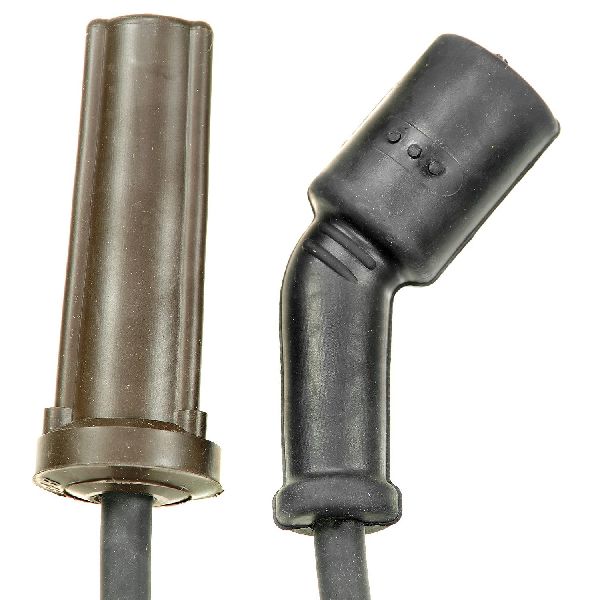
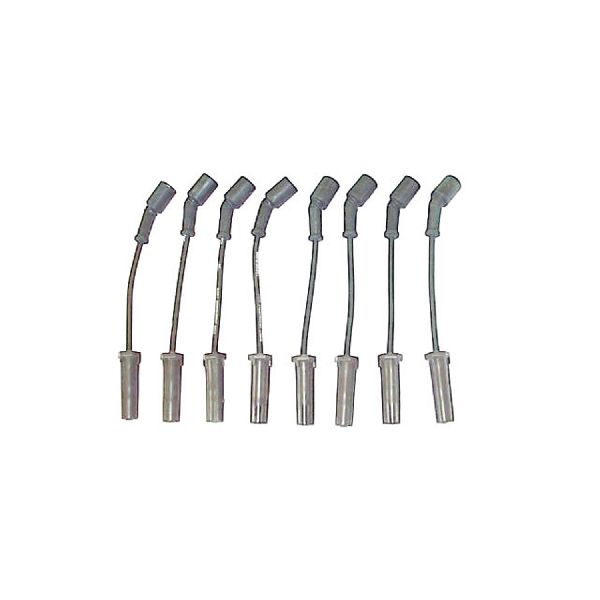
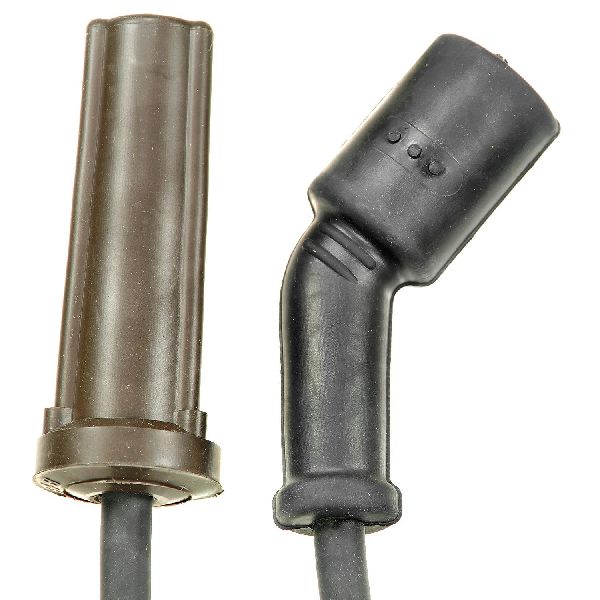
Aftermarket price range: $5-$12 per plug - Spark Plug Wire Set
(OEM #9748RR (ACDelco))— Wires degrade over time, leading to weak spark. They are typically replaced with the spark plugs.
Trusted brands: ACDelco, Delphi
OEM price range: $60-$100
Related Codes That Often Appear With This One
- P0301-P0308 — If the random misfire becomes more consistent on one cylinder, the PCM will set a specific code (e.g., P0301 for cylinder 1) alongside the P0300.
- P0171 / P0174 — These codes indicate a "System Too Lean" condition on Bank 1 and Bank 2, respectively. They often appear with P0300 when the root cause is a vacuum leak, especially from the intake manifold gaskets, as the unmetered air creates both a lean condition and misfires.
- P3400 — This code indicates a problem with the Cylinder Deactivation System on Bank 1. It can appear on 2007-2010 models alongside a P0300 when an AFM lifter issue is the root cause.
Technical Service Bulletins (TSBs) & Recalls
- PIP5628G - General diagnostic aid for P0300-P0308
- 15-06-01-002 (multiple revisions B, C, H, K, L) - Details diagnosis and repair for engine misfire/tick noise caused by failed AFM lifters on 5.3L and 6.2L engines. Specifies replacing the lifter bank and Valve Lifter Oil Manifold (VLOM).
- PIP4568 - Additional diagnostic information for suspected AFM lifter concerns.
Platform-Specific Known Issues
- GMT800 (2003-2006) Intake Manifold Gasket Failure: → Shop Engine Intake Manifold The 6.0L LQ9 engine is highly prone to vacuum leaks from the original plastic-carrier intake manifold gaskets. They degrade from heat and time, causing unmetered air to enter, which triggers P0300, often with P0171/P0174. Upgrading to a metal-carrier gasket like the Fel-Pro MS98016T is the community-recommended permanent fix.
- GMT900 (2007-2010) Active Fuel Management (AFM) Lifter Failure: → Shop Engine Valve Lifter The 6.2L L92 engine's AFM system is a major failure point. The specialized lifters on cylinders 1, 4, 6, and 7 can become stuck or collapse, causing a constant misfire on that cylinder that the PCM logs as a P0300. This is often accompanied by a ticking noise and is a major mechanical repair documented in multiple TSBs.
Mechanic-Grade Diagnostic Values
- Ignition Coil Primary Winding Resistance — expected: 0.4 to 2 ohms. Failure: A reading outside this range indicates a faulty coil.
- Ignition Coil Secondary Winding Resistance — expected: 6,000 to 10,000 ohms (6k-10k Ω). Failure: A reading outside this range indicates a faulty coil.
- Fuel Injector Resistance (High Impedance, typical for this platform) — expected: 11.0 to 16.0 ohms. Failure: A reading significantly outside this range, or a large variance between injectors, points to a bad injector.
- Fuel Pressure (Key On, Engine Off) — expected: 55-62 PSI. Failure: Pressure below this range indicates a potential fuel pump or filter issue. Pressure that drops quickly can indicate a leak.
Hidden / Shadow Codes Worth Checking
- Mode 6, Test ID $A2-$A7: Misfire data for each cylinder. A professional scan tool can access Mode 6 data to view misfire counts per cylinder, even if they aren't high enough to set a specific P0301-P0308 code. This is crucial for identifying which cylinders are contributing to the P0300. (see via Professional OBD-II Scan Tool with Mode 6 capability.)
Scan Tool Commands That Help
- Tech2 / GDS2 (GM Dealer Tools) or equivalent professional scanner: Crankshaft Position Variation Learn (CASE Relearn) — This procedure is REQUIRED after replacing the crankshaft position sensor, engine control module (ECM), or performing major engine work. Failure to perform the relearn can cause the ECM to misinterpret crankshaft speed variations, leading to false P0300 codes.
- Tech2 / GDS2 or equivalent: Fuel Injector Balance Test — This test fires each injector for a specific duration and measures the resulting pressure drop in the fuel rail. It is the most accurate way to identify a mechanically or electrically failing injector that may be causing a misfire.
- Tech2 / GDS2 or equivalent: Cylinder Deactivation (AFM) — On 2007+ models, a technician can use the scan tool to command the Active Fuel Management system on and off to see if the misfire is related to AFM operation. If the misfire only occurs when AFM is active, it strongly points to a failing AFM lifter or solenoid.
Wiring & Ground Locations
- G103 & G104 — G103 is on the front of the right cylinder head. G104 is on the front of the left cylinder head.. These are primary engine grounds. A loose or corroded ground at these locations can cause erratic signals for various sensors and actuators, including the ignition system, potentially leading to random misfires.
- G102 — Located on the lower left front of the engine block.. This ground is critical for the Engine Control Module (ECM). A poor connection here can cause a host of seemingly unrelated issues, including P0300, due to unstable power and signal reference for the ECM.
- Ignition Coil Harness — Runs along the valve covers to each ignition coil.. The wiring harness, especially the connectors to the coils, can become brittle from heat and age. Inspect for cracked connector tabs, corrosion on the pins, or chafed wires that could cause an intermittent connection and misfires.
Real Owner Repair Stories
- Tahoe Yukon Forum user 'iamdub' (GM SUV with AFM (similar platform)) — P0300 code, erratic oil pressure gauge, random misfire on cylinder 5.
❌ Tried (didn't work) Replaced oil pressure sensor, Replaced spark plugs and wires, Used fuel system cleaner, Checked battery, alternator, and grounds, Replaced #5 ignition coil, Replaced crankshaft position sensor
✅ What actually fixed it The owner discovered the P0300 code was only set when the vehicle went into AFM (V4) mode. The root cause was suspected to be a faulty solenoid in the Valve Lifter Oil Manifold (VLOM). The owner had the AFM system turned off via an ECM tune for $50, which completely resolved the P0300 code.
"I Checked Everything" — The Actual Cause
- In some cases on the 2003-2006 GMT800 models, a smoke test may not reveal a leak from the fuel pressure regulator. The classic failure for this part is the internal diaphragm tearing, which allows raw fuel to be sucked into the intake through the vacuum line. This causes a rich condition and misfires but won't show up as a vacuum leak. The definitive test is to pull the vacuum line off the regulator; if fuel is present, the regulator is bad.
OEM Part Supersession History
12571595, 12619820, 12639516 (Various AFM Lifters)→12698946 (Latest GM design), also compatible with newer DFM lifter HL-7025 from Elgin.— The original AFM lifters are a notorious failure point. GM has updated the design multiple times to improve reliability.
Heads up: The newest DFM (Dynamic Fuel Management) lifters are backward compatible with older AFM systems, but the original AFM lifters are NOT forward compatible with DFM engines.
Model Year Variations Within This Range
- 2003-2006: These GMT800 models use the 6.0L LQ9 V8 engine without Active Fuel Management (AFM). P0300 causes are almost always related to ignition, vacuum leaks (intake gaskets), or fuel delivery (fuel pressure regulator).
- 2007-2010: These GMT900 models use the 6.2L L92 V8 engine, which introduced Active Fuel Management (AFM). This adds a major potential failure point: the AFM lifters. A P0300 on these models, especially with a ticking noise, must be investigated for a possible internal mechanical failure related to the AFM system.
Helpful Videos

We Have This Part in Stock

The information in this article is provided for general reference and educational purposes only. Vehicle specifications, procedures, and part compatibility can vary by production date, trim level, and region. Always consult your vehicle's factory service manual and verify part numbers before purchasing or performing repairs. Safety-critical components such as airbags, seat belts, and braking systems should be installed by a qualified professional.
- Cadillac ESCALADE ESV:
- 🧭 Diagnostic Flowchart
- 🎬 Helpful Videos
- 🛍️ Shop This Part
- What's Unique About the 2003-2010 Cadillac ESCALADE ESV
- Symptoms You May Notice
- Most Likely Causes
- Rare But Worth Checking
- Diagnosis Steps
- Parts You'll Likely Need
- Related Codes That Often Appear With This One
- Technical Service Bulletins (TSBs) & Recalls
- Platform-Specific Known Issues
- Mechanic-Grade Diagnostic Values
- Hidden / Shadow Codes Worth Checking
- Scan Tool Commands That Help
- Wiring & Ground Locations
- Real Owner Repair Stories
- "I Checked Everything" — The Actual Cause
- OEM Part Supersession History
- Model Year Variations Within This Range
- 🎟️ Get 5% Off