

P0300 on 2002-2006 Cadillac Escalade EXT 1500: Causes & Fixes for Random Misfires
On a 2002-2006 Escalade EXT, code P0300 is most often caused by leaking intake manifold gaskets creating a vacuum leak. Other likely causes are worn spark plugs and wires. Replacing the intake gaskets with an upgraded steel-carrier design is a common, effective repair for these trucks.
- For the 2002-2006 Escalade EXT, a P0300 code is very frequently caused by failed intake manifold gaskets leading to a vacuum leak.
- Always check for accompanying lean codes (P0171, P0174), as they are a strong indicator of a vacuum leak.
- Start diagnosis with the most likely and cheapest items: a smoke test for vacuum leaks, followed by an inspection of spark plugs and wires.
- Do not immediately replace expensive components like oxygen sensors or catalytic converters, as they are usually victims of the misfire, not the cause.
- Be aware of the TSBs for this vehicle, which point to rare but serious issues like camshaft wear or simple mistakes like crossed injector wiring after a repair.
What's Unique About the 2002-2006 Cadillac ESCALADE EXT 1500
The 6.0L V8 LQ9 engine in this generation of Escalade EXT features a "wet" intake manifold, where engine coolant flows through the manifold itself. The original plastic-frame intake manifold gaskets are a notorious failure point; they degrade from heat cycles and exposure to fuel, causing vacuum leaks that directly lead to the P0300 code. While basic ignition faults are common, this gasket issue is a highly probable cause specific to this GMT800 platform. In rarer, more severe cases, Technical Service Bulletins have also linked this code to internal engine wear, such as on the camshaft, which requires more in-depth mechanical diagnosis. [⭐ MANUFACTURER TSB #PIP4138P]
Diagnostic Flowchart
Tap your situation to follow the diagnostic path that matches what you're seeing on this vehicle.
Symptoms You May Notice
- Rough or vibrating idle
- Hesitation or stumbling during acceleration
- Flashing Check Engine Light
- Noticeable loss of engine power
- Poor fuel economy
- Engine stalling
- Smell of raw fuel from the exhaust
- Replacing oxygen (O2) sensors. Faulty O2 sensor readings are almost always a symptom of the misfire (detecting unburnt fuel or a lean mixture from a vacuum leak), not the cause.
- Replacing only one spark plug or coil when the root cause is a system-wide problem like a vacuum leak or low fuel pressure.
- Replacing the Mass Airflow (MAF) sensor without proper diagnosis. While a dirty MAF can contribute to fuel trim issues, it's a less frequent cause of P0300 on this platform than vacuum leaks or ignition components.
Most Likely Causes
- Leaking Intake Manifold Gaskets 🔴 High Probability → Shop Engine Intake Manifold The original plastic-frame gaskets on the 6.0L V8's 'wet' intake manifold are known to crack and degrade from heat and fuel exposure. This allows unmetered air (a vacuum leak) to enter the engine, disrupting the air-fuel ratio for all cylinders and causing lean conditions (often with P0171/P0174) and random misfires.
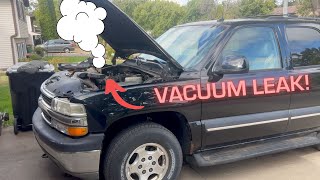
How to confirm: Perform a smoke test on the engine's intake system. Smoke will be visibly escaping from the area where the intake manifold meets the cylinder heads. Alternatively, spray brake cleaner or an unlit propane torch around the gasket area with the engine idling; a noticeable change in engine RPM indicates a leak.
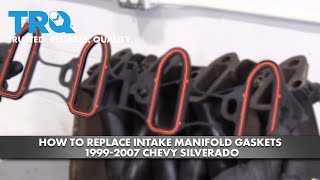
Typical fix: Replace the intake manifold gaskets with an updated design. The Fel-Pro PermaDryPlus MS 98016 T is a highly-regarded 🎬 Watch: Step-by-step guide to replacing your intake manifold gaskets. replacement that uses a more durable steel carrier instead of plastic. This is also an opportune time to replace the two knock sensors and harness located under the intake manifold.
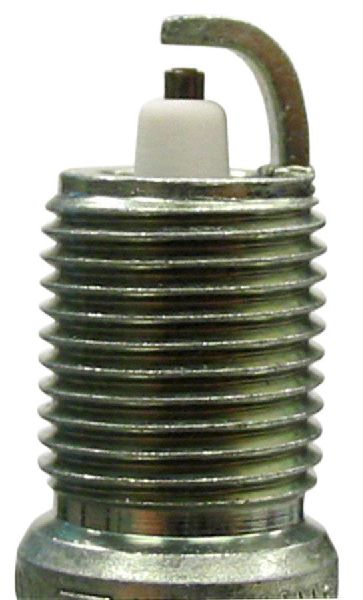
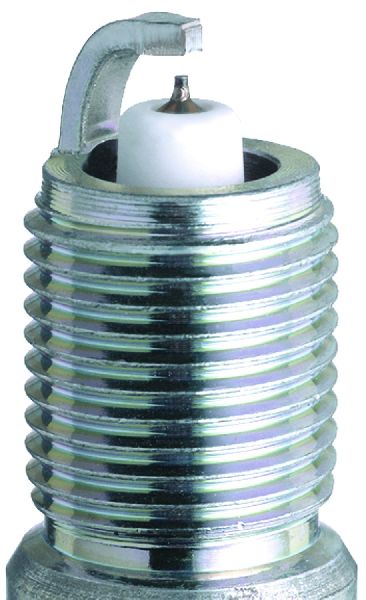
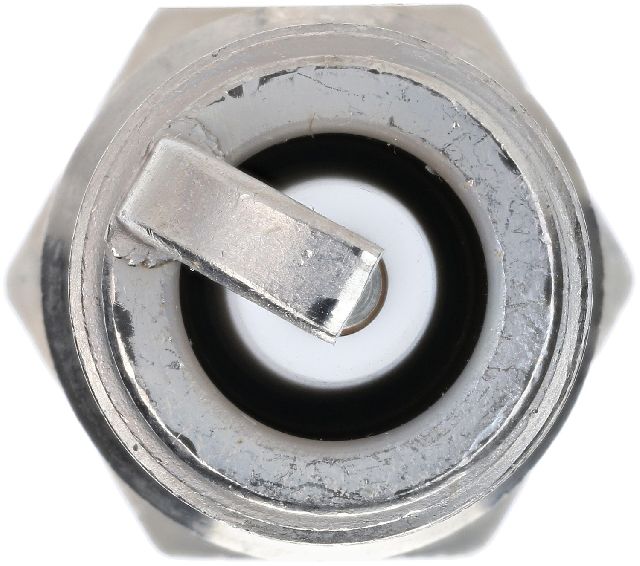
Est. part cost: $40-$90 for gaskets, $40-$80 for knock sensor kit - Worn Spark Plugs and/or Spark Plug Wires 🔴 High Probability → Shop Spark Plug These are standard maintenance items. The high-heat environment of the engine bay causes the spark plug wires to degrade over time, leading to weak or inconsistent spark. Spark plugs wear, increasing the gap and energy required to fire.
How to confirm: Visually inspect spark plugs for wear (rounded electrode), fouling (black, wet, or white deposits), or incorrect gap. Inspect wires for cracks, burns, or corrosion on the terminals. Test wire resistance with a multimeter; high or infinite resistance indicates a bad wire.
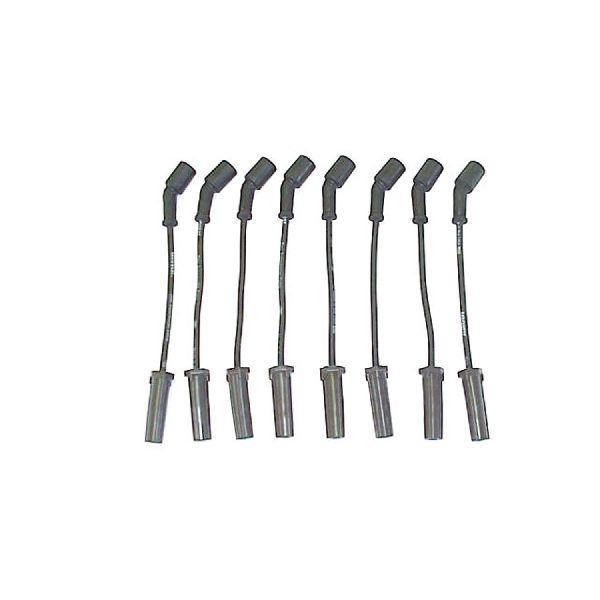
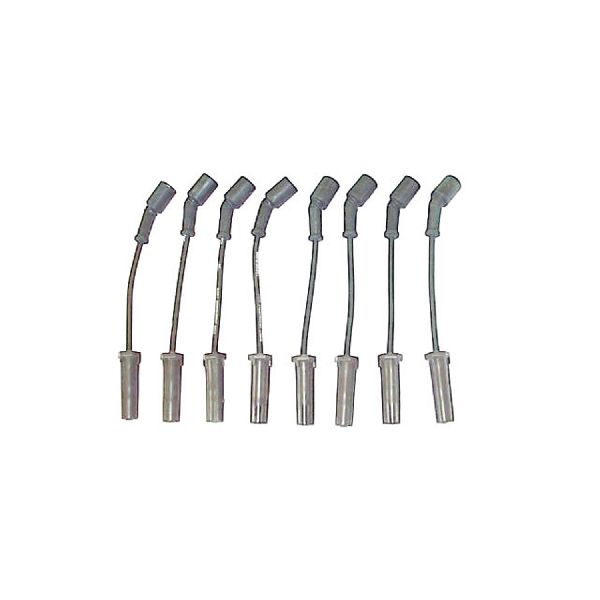
Typical fix: Replace all eight spark plugs and the full set of spark plug wires. It's best practice to replace them together. ACDelco Iridium plugs (P/N 41-110 or its successor 41-162) are the recommended OEM replacement and should not be re-gapped.
Est. part cost: $80-$150 - Failing Ignition Coil(s) 🟡 Medium Probability → Shop Ignition Coil The individual coil-on-plug units are mounted near the valve covers and are subject to intense heat, which can cause their internal windings to break down over time, resulting in a weak or intermittent spark.
How to confirm: Use a scan tool with live data to monitor misfire counts per cylinder. Swap a suspected failing coil with a known good one from another cylinder. If the misfire code follows the coil (e.g., a misfire on cylinder 2 moves to cylinder 4 after swapping their coils), the coil is bad.
Typical fix: Replace the faulty ignition coil. Many mechanics recommend replacing all eight if they are original and high-mileage, as others are likely to fail soon.
Est. part cost: $30-$60 per coil - Low Fuel Pressure 🟡 Medium Probability A weakening fuel pump or a clogged fuel filter can starve the entire engine for fuel, causing a lean condition and random misfires across all cylinders. The fuel pressure regulator, located on the fuel rail for early models in this range, can also fail.
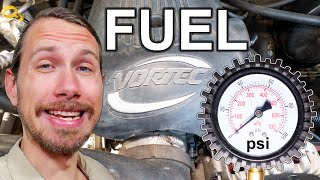
How to confirm: Connect a fuel pressure gauge to the Schrader valve on the fuel rail. 🎬 Watch: How to test and fix low fuel pressure issues. Pressure should be 55-62 PSI with the key on, engine off, and hold steady. Also check for fuel in the vacuum line of the fuel pressure regulator (on models so equipped); if fuel is present, the regulator's diaphragm has ruptured.
Typical fix: Replace the clogged fuel filter first, as it's an inexpensive maintenance item located on the driver's side frame rail. If pressure is still low, test and replace the fuel pressure regulator or the fuel pump assembly as needed.
Est. part cost: $20-$40 for a filter, $70-$100 for a regulator, $200-$400 for a fuel pump assembly
Rare But Worth Checking
- Worn Camshaft Lobe / Lifter Failure: → Shop Engine Camshaft A GM Technical Service Bulletin (PIP4138P, superseded by PIP4138Q) specifically notes that if diagnostics for ignition or fuel issues do not resolve a P0300, a worn camshaft lobe or lifter should be investigated. [⭐ MANUFACTURER TSB #PIP4138P] This can cause a consistent misfire on one cylinder that the ECU logs as a P0300, and may be accompanied by a chirp or tick noise. [⭐ MANUFACTURER TSB #PIP4138P]
- Clogged Catalytic Converters: → Shop Catalytic Converter If the exhaust is restricted, it creates excessive backpressure that chokes the engine and can cause random misfires. This is often a result of long-term, unaddressed misfires melting the converter's internal structure. A technician can confirm this with a backpressure gauge.
- Crossed Fuel Injector Connectors: → Shop Fuel Injector TSB #PIP5169 warns that after engine repairs, the connectors for cylinders 5 & 7 and 6 & 8 can be accidentally swapped, leading to a P0300 code. This should be checked if the fault appeared immediately after recent service. [⭐ MANUFACTURER TSB #PIP5169]
- Crankshaft Position Sensor Variation Not Learned: → Shop Engine Crankshaft Position Sensor If the crankshaft position sensor (CKP) has been replaced, or sometimes after other major repairs, the ECM may need to perform a "CASE Relearn" or "Crank Variation Relearn" procedure. Failure to do this can result in false misfire detection. This procedure requires a bidirectional scan tool.
Diagnosis Steps
- Scan for all stored DTCs. Pay close attention to lean codes (P0171/P0174) or specific cylinder misfire codes (P0301-P0308).
- Using a scan tool, view live misfire data and fuel trims. High positive fuel trims at idle that decrease with RPM strongly suggest a vacuum leak.
- Perform a fuel pressure test. Connect a gauge to the fuel rail's Schrader valve. Pressure should be 55-62 PSI. Check the fuel pressure regulator's vacuum hose for the presence of raw fuel (on applicable models).
- Perform a smoke test to check for vacuum leaks. Focus on the intake manifold gasket sealing area, as this is the most common failure point.
- Visually inspect all spark plugs, spark plug wires, and ignition coils for obvious signs of wear, damage, or corrosion.
- If a specific cylinder is misfiring, swap the ignition coil with a known good cylinder and see if the misfire follows the coil.
- If the vehicle was recently repaired, verify the fuel injector wiring is correct and not crossed for cylinders 5&7 and 6&8 per TSB PIP5169. [⭐ MANUFACTURER TSB #PIP5169]
- If all else fails and a scan tool is available, perform a Crankshaft Variation Relearn procedure to rule out a software-related misfire detection issue.
- If a mechanical noise is present, perform a compression test and cylinder leak-down test to investigate potential internal engine wear as noted in TSB PIP4138Q. [⭐ MANUFACTURER TSB #PIP4138P, 15]
Parts You'll Likely Need
- Intake Manifold Gasket Set
(OEM #89017589)— This is the most common failure point on the 6.0L V8 leading to a P0300 code due to vacuum leaks. The original plastic design is prone to cracking.
Trusted brands: Fel-Pro (MS 98016 T), ACDelco
OEM price range: $60-$90
Aftermarket price range: $40-$70 - Spark Plugs
(OEM #12571164 (ACDelco 41-985, later superseded by 41-110))— Worn spark plugs are a primary cause of weak spark and misfires. They are a fundamental tune-up part.
Related Codes That Often Appear With This One
- P0171 and P0174 — These codes indicate 'System Too Lean' on Bank 1 and Bank 2, respectively. They strongly point to a vacuum leak, such as from failed intake manifold gaskets, as the root cause of the P0300.
- P0301, P0302, etc. — If the random misfire begins to occur more frequently on a specific cylinder, the ECM may also log a cylinder-specific code in addition to P0300. This can help pinpoint a failing coil, plug, or injector.
- P0420 and P0430 — These codes indicate low catalyst efficiency. They are a consequence of long-term misfires damaging the catalytic converters and will appear after the P0300 has been present for some time.
Technical Service Bulletins (TSBs) & Recalls
- PIP5628C: Preliminary information for diagnosing P0300-P0308 codes.
- PIP4138P (superseded by PIP4138Q): Advises checking for worn camshaft lobes if common ignition/fuel diagnostics do not resolve a P0300.
- PIP5169: Warns of crossed fuel injector connectors for cylinders 5&7 and 6&8 after engine repairs, causing a P0300.
Platform-Specific Known Issues
- The original plastic-framed intake manifold gaskets are prone to cracking and leaking, making this a top cause for P0300 on this platform.
- GM TSB #PIP4138P indicates that a worn camshaft lobe can be a cause of P0300-P0308 codes if other diagnostics fail, pointing to a potential for serious mechanical wear.
Mechanic-Grade Diagnostic Values
- Short Term Fuel Trim (STFT) at warm idle — expected: Bouncing around 0% to +/- 5%. Failure: Sustained positive values over +15% strongly indicate a vacuum leak, a primary cause of P0300 on this engine.
- Fuel Pressure (Key On, Engine Off) — expected: 55-62 PSI. Failure: Pressure below 55 PSI indicates a weak fuel pump or clogged filter, which can cause a lean misfire across all cylinders.
Scan Tool Commands That Help
- Tech 2 / GDS2 or equivalent professional scan tool: Crankshaft Position System Variation Learn (also called CASE Relearn) — This procedure is required after replacing the ECM, crankshaft position sensor, crankshaft, or crankshaft balancer. Failure to perform the relearn can cause the ECM to incorrectly interpret minor crankshaft variations as misfires, setting a P0300.
Wiring & Ground Locations
- G102 — On the rear of the left cylinder head.. This is a primary ground point for all eight ignition coils. A loose or corroded connection here can cause weak or intermittent spark across multiple cylinders, directly leading to a P0300 code.
- G103 — On the rear of the right cylinder head.. This is another critical engine ground. While G102 is specific to coils, poor grounding at any major engine point can cause erratic sensor readings and interfere with the ECM's ability to control ignition and fuel.
- G104 / G105 — Located on the front of the engine block (left and right sides).. These grounds are essential for various engine components. A poor connection can create electrical noise that may be misinterpreted by the ECM, potentially contributing to false misfire detection.
- Engine Harness Chafe Points — Inspect the engine harness where it may contact the ECM/TCM bracket, the driver's side upper control arm, and the shock tower bolt.. A GM document highlights that the engine wiring harness can rub through in these locations, causing intermittent shorts to ground for any number of circuits, including those for ignition coils or fuel injectors. This can create a difficult-to-diagnose random misfire.
Real Owner Repair Stories
- YouTube user comment/video summary (GM Truck with V8) — P0300 code, rough running.
❌ Tried (didn't work) Replacing spark plugs, wires, and coils.
✅ What actually fixed it The problem was traced to a bad connection at the Camshaft Position Sensor connector. Wiggling and re-seating the connector, which had visibly browned wires, resolved the P0300 code, suggesting an intermittent short or poor contact was providing bad data to the ECU.
"I Checked Everything" — The Actual Cause
- In cases where a smoke test is clean and intake gaskets are ruled out, a faulty fuel pressure regulator (on models equipped) can leak fuel directly into its vacuum line. This creates a rich condition on one cylinder but can cause the ECM to lean out other cylinders in response, leading to random misfires. Another possibility is a cracked flexplate, which can create vibrations and noises misdiagnosed as an engine misfire, and in some cases, the erratic rotation can send confusing signals to the crankshaft position sensor.
OEM Part Supersession History
ACDelco 41-985 (GM P/N 12571164)→ACDelco 41-110, then ACDelco 41-162— Design and/or supplier changes over time.
Heads up: The 41-162 is physically shorter than the 41-110. While GM lists it as the current replacement, some owners report preferring the performance and build quality of the older 41-110 plugs, which were made in the USA. The original 41-985 plugs specified a 0.040 inch gap.
Model Year Variations Within This Range
- 2002-2003 vs 2004-2006: The fuel system design changed during this period. Early models (approx. 2002-2003) used a return-style fuel system with a vacuum-operated fuel pressure regulator located on the fuel rail. Later models (approx. 2004+) switched to a returnless system where the regulator is integrated with the fuel pump inside the tank. This is critical for diagnosis: on an early truck, a failed regulator can be a cause of P0300, while on a later truck, fuel pressure issues are almost always the pump or filter.
Helpful Videos
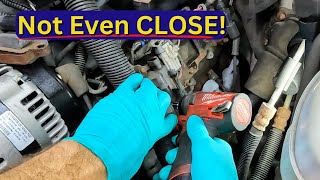
We Have This Part in Stock


The information in this article is provided for general reference and educational purposes only. Vehicle specifications, procedures, and part compatibility can vary by production date, trim level, and region. Always consult your vehicle's factory service manual and verify part numbers before purchasing or performing repairs. Safety-critical components such as airbags, seat belts, and braking systems should be installed by a qualified professional.
- Cadillac ESCALADE EXT 1500:
- 🧭 Diagnostic Flowchart
- 🎬 Helpful Videos
- 🛍️ Shop This Part
- What's Unique About the 2002-2006 Cadillac ESCALADE EXT 1500
- Symptoms You May Notice
- Most Likely Causes
- Rare But Worth Checking
- Diagnosis Steps
- Parts You'll Likely Need
- Related Codes That Often Appear With This One
- Technical Service Bulletins (TSBs) & Recalls
- Platform-Specific Known Issues
- Mechanic-Grade Diagnostic Values
- Scan Tool Commands That Help
- Wiring & Ground Locations
- Real Owner Repair Stories
- "I Checked Everything" — The Actual Cause
- OEM Part Supersession History
- Model Year Variations Within This Range
- 🎟️ Get 5% Off