

P0300 on 2002-2009 Cadillac Escalade EXT: Random Misfire Causes and Fixes
Code P0300 on a Cadillac Escalade EXT most often points to worn-out spark plugs, failing ignition coils, or a vacuum leak from aged intake manifold gaskets. A full set of quality spark plugs and wires costs between $100-$200, while intake gasket replacement is a more involved DIY job costing around $50-$100 in parts. On 2007+ models with the 6.2L engine, failing Active Fuel Management (AFM) lifters are also a significant and common cause.
- P0300 indicates a random misfire affecting multiple cylinders; it requires a systematic diagnosis.
- The most likely culprits on a 2002-2009 Escalade EXT are worn spark plugs, bad ignition coils, or leaking intake manifold gaskets.
- If you also have codes P0171 and P0174, a vacuum leak from the intake gaskets is almost certainly the problem.
- Do not ignore a flashing check engine light, as it signals a severe misfire that can quickly destroy your catalytic converters.
- While many causes are simple DIY fixes, be aware of the possibility of more serious mechanical issues like a worn camshaft, as noted in GM's own service bulletins.
What's Unique About the 2002-2009 Cadillac ESCALADE EXT
The V8 engines in this generation of Escalade EXT are generally robust, but they are well-known for a few specific issues that directly cause a P0300 code. Leaking intake manifold gaskets are a very common source of unmetered air, leading to a lean condition and random misfires. Additionally, while standard ignition wear is expected, some higher-mileage engines can suffer from more serious mechanical problems like worn camshaft lobes or failing Active Fuel Management (AFM) lifters, issues specifically highlighted in GM Technical Service Bulletins.
Diagnostic Flowchart
Tap your situation to follow the diagnostic path that matches what you're seeing on this vehicle.
Generation note: This range covers two generations of the Escalade EXT. The first generation (2002-2006) used a 6.0L V8 (LQ9) on the GMT800 platform. These are known for a 'wet' intake manifold design where failing gaskets can cause both vacuum and coolant leaks. The second generation (2007-2009) on the GMT900 platform used a 6.2L V8 (L92) with a 'dry' intake, where gasket failure primarily causes vacuum leaks. The 6.2L engine also introduced Active Fuel Management (AFM), which can cause P0300 when its specialized lifters fail.
Symptoms You May Notice
- Rough or shaky idle.
- Engine hesitation or stumbling during acceleration.
- Noticeable loss of engine power.
- Flashing or solid Check Engine Light.
- Reduced fuel economy.
- The StabiliTrak / Traction Control warning light may also illuminate, as the engine's instability can be misinterpreted by the traction control system.
- Engine ticking or tapping noise, which can indicate a failing lifter or worn camshaft.
- Replacing oxygen (O2) sensors. While a faulty O2 sensor can affect the air/fuel mixture, it is rarely the direct cause of a P0300 code. More often, the misfire itself causes erratic readings from the O2 sensor, leading to the incorrect assumption that the sensor is bad.
Most Likely Causes
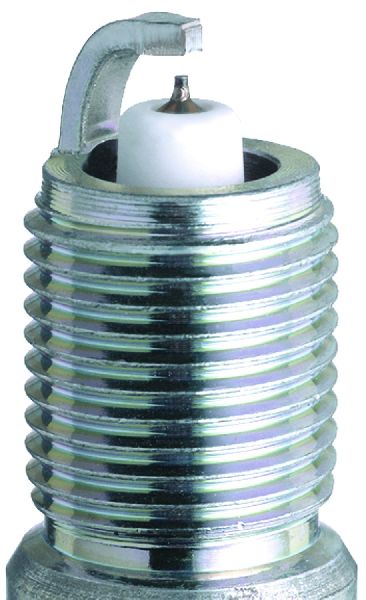
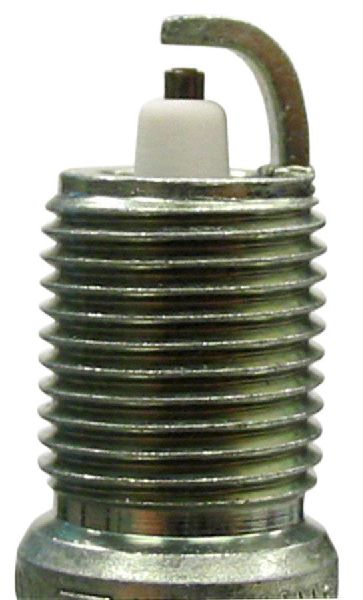
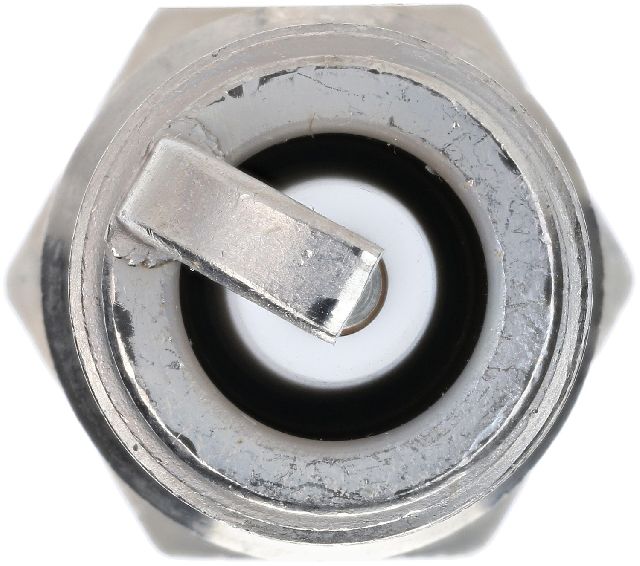
- Worn or Fouled Spark Plugs 🔴 High Probability → Shop Spark Plug Spark plugs are a standard wear item. On these engines, oil leaks from valve covers or oil consumption issues (especially on AFM engines) can foul the plugs, causing a weak or inconsistent spark. TSB PIP4525D specifically notes inspecting plugs for oil fouling and cracks around the porcelain.
How to confirm: Remove and visually inspect the spark plugs for wear, carbon buildup, oil fouling, or cracked porcelain. Check that the spark plug gap is correct; for these engines, it is typically 0.040 inches. Torque new plugs to 15 ft-lbs.
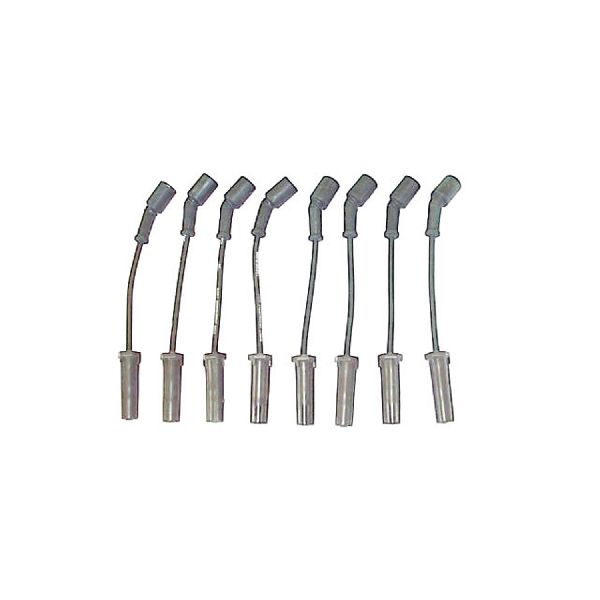
Typical fix: Replace all eight spark plugs as a set. It is also wise to replace the spark plug wires at the same time, as their resistance can increase with age. Use quality ACDelco or NGK plugs.
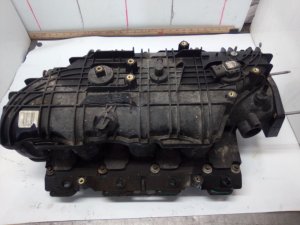
Est. part cost: $60-$150 - Leaking Intake Manifold Gaskets 🔴 High Probability → Shop Engine Intake Manifold The original plastic-carrier gaskets on both the 6.0L and 6.2L V8s are known to harden, shrink, and crack over time from heat cycles and exposure to ethanol in fuel. This allows unmetered air into the engine, creating a lean air/fuel mixture that causes random misfires, especially at idle when vacuum is highest.
How to confirm: With the engine running, spray short bursts of brake cleaner or a combustible fluid around the area where the intake manifold meets the cylinder heads. If the engine RPM changes or stumbles, a leak is present. A professional smoke test is the most definitive method.
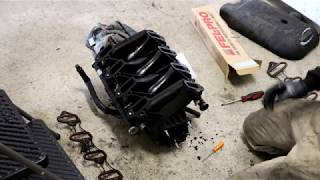
Typical fix: Replace the intake manifold gaskets. It is highly recommended to use the updated metal-carrier gasket set 🎬 Watch: Step-by-step guide to replacing your intake manifold gaskets., such as Fel-Pro MS98016T, which is more durable than the OEM plastic design. This is a moderately difficult DIY job that also provides a good opportunity to replace the knock sensors and harness located under the manifold.
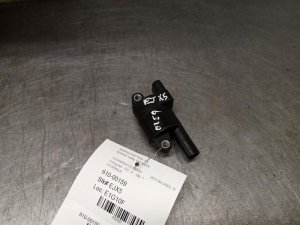
Est. part cost: $40-$100 - Failing Ignition Coils or Wires 🟡 Medium Probability → Shop Ignition Coil Heat and age cause ignition coils and wires to fail. While one bad coil usually sets a specific cylinder code (e.g., P0301), a weak or intermittently failing coil can contribute to a random P0300 before it fails completely. The coil wiring harness itself can also become brittle and cause issues, particularly on the passenger side bank.
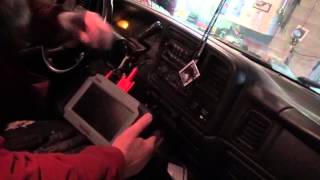
How to confirm: Use a scan tool to monitor misfire counts on each cylinder 🎬 See how to use a scan tool to isolate misfires. in live data. Swap a suspected bad coil with a known good one from another cylinder. If the misfire code follows the coil (e.g., a P0305 becomes a P0301 after swapping coils from cylinder 5 to 1), the coil is bad. Coils can also be tested for resistance.
Typical fix: Replace the faulty ignition coil(s) and/or spark plug wires. It's often best to replace coils in sets if they are original and high-mileage. Be aware there are two different physical styles of coils ('round' and 'square'), so visual confirmation is necessary.
Est. part cost: $40-$80 per coil - Low Fuel Pressure or Dirty Fuel Injectors 🟡 Medium Probability → Shop Fuel Injector A weak fuel pump or a clogged fuel filter can reduce fuel pressure, starving all cylinders for fuel and causing random misfires, especially under load. Fuel injectors can also become clogged over time, leading to poor atomization and misfires.
How to confirm: Connect a fuel pressure gauge to the fuel rail's service port. Pressure should be between 55-62 PSI for these engines. You can test injectors by checking their resistance with a multimeter; they should measure between 8 and 16 Ohms.
Typical fix: Replace the fuel filter first, as it is inexpensive. If pressure is still low, the fuel pump likely needs replacement. Clogged fuel injectors can sometimes be cleaned, but replacement is often necessary.
Est. part cost: $20-$60 (filter), $200-$400 (pump)
Rare But Worth Checking
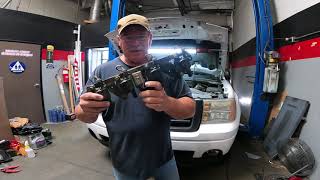
- Failing Active Fuel Management (AFM) Lifters: → Shop Engine Valve Lifter On 6.2L engines equipped with AFM (2010+ models, though some earlier 5.3L/6.0L had it), the special lifters are a known failure point. They can become stuck or collapse, causing a persistent misfire on an AFM cylinder (1, 4, 6, or 7). This often starts as a random P0300 before settling on a specific cylinder. The failure can also damage the camshaft, requiring a much more extensive repair. TSB 15-06-01-002C addresses this issue. 🎬 Watch: Diagnosing a P0300 caused by failing AFM lifters.
- Worn Camshaft Lobe(s): → Shop Engine Camshaft Mentioned in TSB PIP4138P and its successor 19-NA-219, a worn camshaft lobe will prevent the valves for a cylinder from opening fully, causing a persistent misfire that can contribute to a P0300 code. This is a significant mechanical repair often resulting from a previous lifter failure.
- Crossed Fuel Injector Connectors: → Shop Fuel Injector According to TSB PIP5169, if recent engine work was performed, it's possible the injector connectors for cylinders 5 & 7 or 6 & 8 were swapped, which will immediately cause a P0300 code.
- Clogged Catalytic Converter: → Shop Catalytic Converter While usually a result of long-term misfires dumping unburned fuel, a clogged catalytic converter can create excessive exhaust backpressure, leading to poor engine performance and random misfires. A rotten egg smell from the exhaust is a classic symptom.
- Contaminated Fuel: High ethanol content (>15%) or water in the fuel can cause lean running conditions and misfires across all cylinders. This is more likely if the code appeared shortly after refueling.
Diagnosis Steps
- Scan for all stored trouble codes. Pay close attention to any other codes that accompany P0300, like P0171/P0174 or specific cylinder misfire codes.
- Use a scan tool with live data to monitor the misfire counter for each cylinder at idle and while driving. This can reveal if the misfires are truly random or favor certain cylinders or a specific bank (e.g., 2, 4, 6, 8), which could point to a bank-specific issue like a clogged catalytic converter or bad O2 sensor on that side.
- Perform a full visual inspection of the ignition system. Look for worn, damaged, or oil-fouled spark plugs, and check for cracks, arcing, or corrosion on spark plug wires and ignition coils.
- Check for vacuum leaks. Listen for hissing noises around the top of the engine. Carefully spray short bursts of brake cleaner around the intake manifold gaskets and vacuum hoses with the engine idling. If the idle speed changes, you've found a leak. A smoke test is the most reliable method.
- Test fuel pressure. Connect a fuel pressure gauge to the fuel rail and verify it meets OEM specifications (55-62 PSI) both at idle and under load.
- Check fuel trims. High long-term fuel trims (e.g., >10%) on both banks often confirm a vacuum leak or a fuel delivery problem.
- If basic ignition and fuel checks do not reveal the cause, more advanced mechanical diagnosis is needed. This includes a compression test to check for internal engine issues like a bad head gasket or the worn camshaft lobes/failed lifters mentioned in GM TSBs.
Parts You'll Likely Need
- Intake Manifold Gasket Set
(OEM #89060434)— This is one of the most common failure points on these GM V8 engines leading to vacuum leaks and a P0300 code. The original plastic design is prone to cracking.
Trusted brands: ACDelco, Fel-Pro (MS98016T is the recommended upgrade)
OEM price range: $60-$90
Aftermarket price range: $40-$70 - Spark Plugs
(OEM #ACDelco 41-962 (for 6.0L) or 41-110/41-162 (for 6.2L))— Spark plugs are a primary ignition component and a frequent cause of misfires due to normal wear and tear or oil fouling. GM has superseded the part numbers over the years.
Trusted brands: ACDelco, NGK
OEM price range: $8-$15 per plug
Aftermarket price range: $5-$10 per plug - Ignition Coil
(OEM #ACDelco D585 (or 12558693))— Ignition coils are subjected to high heat and can fail over time, causing a lack of spark. The D585 'round' style coil is a common, reliable choice for these engines.
Trusted brands: ACDelco, Delphi, MSD
OEM price range: $40-$80 per coil
Aftermarket price range: $25-$50 per coil
Related Codes That Often Appear With This One
- P0301-P0308 — If the random misfire begins to occur more frequently on one specific cylinder, the PCM will store a cylinder-specific code alongside the P0300. This can help narrow down the diagnosis to a specific coil, plug, wire, or injector.
- P0171 / P0174 — These codes mean 'System Too Lean' on Bank 1 and Bank 2, respectively. They are very commonly seen with P0300 when the root cause is a vacuum leak from the intake manifold gaskets, which allows unmetered air to enter the engine.
- P0315 — This code for 'Crankshaft Position System Variation Not Learned' can appear if the crankshaft position sensor, or the ECM itself, has been replaced without performing the mandatory relearn procedure. Inaccurate crank position data can lead to false misfire detection.
Technical Service Bulletins (TSBs) & Recalls
- PIP5628C: A general bulletin for providing diagnostic information for misfire codes P0300-P0308.
- PIP4138P: Points to checking for a worn camshaft lobe if standard diagnostics don't find the cause of P0300-P0308.
- PIP5169: Warns technicians to check for crossed fuel injector connectors for cylinders 5-7 and 6-8 after engine repairs, which can cause a P0300.
- PIP4525D: Advises inspecting spark plugs for oil fouling and cracks when diagnosing P0300 or P0301.
Platform-Specific Known Issues
- Intake Manifold Gasket Upgrade: → Shop Engine Intake Manifold The original GM intake manifold gaskets use a plastic carrier that becomes brittle and cracks. The widely accepted fix in the owner community is to replace them with the Fel-Pro MS98016T set, which uses a more durable steel carrier and robust rubber seals to prevent future vacuum leaks.
- Active Fuel Management (AFM) Lifter Failure: → Shop Engine Valve Lifter On 2007 and newer models with the 6.2L V8, the AFM system is a significant source of P0300 codes. The specialized lifters on cylinders 1, 4, 6, and 7 are prone to collapsing or sticking, causing misfires and potential camshaft damage. Many owners opt to install an AFM disabler device or have the system tuned out of the vehicle's computer to prevent this failure.
Mechanic-Grade Diagnostic Values
- Ignition Coil Resistance (Square Style, e.g., D510C) — expected: Primary: ~0.660 Ohms; Secondary: ~6.1k Ohms. Failure: Significant deviation from these values or an open circuit (infinite resistance).
- Fuel Injector Resistance (High Impedance) — expected: 8-16 Ohms. A common aftermarket part specifies 12.5 Ohms.. Failure: A reading outside the specified range, or an open/shorted reading. A 2023 repair video showed a good used injector at 1.5 Ohms and a bad one reading open loop, indicating real-world values can be lower but should be consistent across cylinders.
- Mode $06 Misfire Counts — expected: A value of 0 or a very low number.. Failure: A high or incrementing count for a specific cylinder, even without a P030x code. A count of 10 was enough to identify the problem cylinder in one documented case.
- Spark Plug Installation Torque — expected: 15 ft-lbs. Failure: N/A - this is an installation specification.
Hidden / Shadow Codes Worth Checking
- Mode $06, OBDMID $A2-$A9: This is not a DTC, but a function to access raw test data. Monitor IDs $A2 through $A9 correspond to misfire data for cylinders 1 through 8. Specifically, Test ID (TID) $0B shows the 'Exponentially Weighted Moving Average' misfire counts for the last 10 driving cycles, and TID $0C shows counts for the current/last drive cycle. This allows a technician to see which cylinder is misfiring before the count is high enough to set a specific P0301-P0308 code. (see via Requires a professional scan tool capable of displaying Mode $06 data.)
Scan Tool Commands That Help
- Tech2 / GDS2 or equivalent professional scanner: Crankshaft Position Variation Learn — This procedure is mandatory after replacing the crankshaft position sensor, the engine, or the ECM. Failure to perform the relearn can result in the ECM storing DTC P0315 or P1336 and incorrectly identifying misfires, potentially causing a P0300 code. The procedure involves holding the brake and accelerating to a specific RPM (e.g., ~4000 RPM) until the fuel cuts off and the scanner indicates the learn status is complete.
- Professional scanner with bidirectional controls: Injector Balance Test / Cylinder Power Balance — To isolate a misfiring cylinder when the cause is suspected to be fuel-related. The command allows the user to shut off fuel to each injector one by one. If shutting off an injector causes no change in the engine's idle quality, that cylinder was not contributing, pointing to a problem with that injector, spark, or compression.
Wiring & Ground Locations
- G102 — Located at the left rear of the engine.. This is the primary ground point for all 8 ignition coils. A poor connection here can cause weak or intermittent spark across multiple cylinders, leading directly to a P0300 code.
- G103 — Located on the cowl in the engine compartment, typically above the brake booster.. This grounds several critical modules, including the Body Control Module (BCM) and the Data Link Connector (DLC). A TSB for electrical issues (07-08-47-004D) highlights this ground's importance; a poor connection can cause a wide range of bizarre electronic issues that could be misdiagnosed as an engine problem.
- Engine to Frame/Body Grounds — Multiple locations, including straps from the back of the cylinder heads to the firewall and ground points on the frame under the driver's side door area.. Corroded or loose main engine grounds can create electrical noise and voltage drops, affecting sensor readings and module performance, which can contribute to misfire detection.
Real Owner Repair Stories
- Tahoe Yukon Forum user 'silky28' (2003 Chevrolet Tahoe Z71 (GMT800 platform, similar engine/systems)) — Flashing CEL on the highway, P0300 code, rough idle. Long Term Fuel Trims were high (+14% and +10%).
❌ Tried (didn't work) Spraying combustible fluid around the engine to find a vacuum leak (no RPM change was observed).
✅ What actually fixed it The PCV valve was found to have popped out of its hole in the valve cover, creating a large vacuum leak. Reinserting the PCV valve into the cover fixed the leak, and long-term fuel trims returned to normal (-2% / -4%), resolving the P0300. - YouTube channel 'Alex The Car Doctor' (Cadillac Escalade (year not specified, GMT900)) — Ticking/clicking sound from the engine, misfire codes.
❌ Tried (didn't work) Initial diagnosis at another shop was unsuccessful.
✅ What actually fixed it A collapsed AFM lifter had fallen apart and scored the lifter bore in the engine block. The engine was removed, and the owner took the block to a machine shop to have the bore smoothed out. The technician then reassembled the engine with new lifters. A follow-up video confirmed the repair was successful long-term. - YouTube channel 'Branko's Vegas Adventures' (2007 Cadillac Escalade with AFM) — Lifter tick noise, misfire on cylinders 4 & 7, low oil pressure warning.
❌ Tried (didn't work) Replacing spark plugs and ignition coils for the misfire codes.
✅ What actually fixed it The root cause was a faulty oil pressure switch located under the intake manifold. The final successful repair involved multiple steps: replacing the oil pressure switch, replacing the intake manifold gaskets (since it was already removed), replacing fuel injector O-rings, performing a full synthetic oil change, and installing an AFM Disabler device into the OBD-II port to prevent the lifters from deactivating. This combination of repairs resolved the lifter noise and misfires.
"I Checked Everything" — The Actual Cause
- A common diagnostic step for P0300 is a smoke test to find vacuum leaks. However, a leak can be missed if it's intermittent or in an unusual location. In one documented case, a user could not find a leak with spray but later found the PCV valve itself had become dislodged from the valve cover, creating a large, unmetered air leak that caused a P0300.
- Technicians should also be aware that seeing smoke exit the oil dipstick tube during a smoke test is not necessarily a sign of a problem. If an intake valve is open during the test, the smoke can pressurize the cylinder, pass the piston rings into the crankcase, and exit through the dipstick tube. This is normal and can be mistaken for a major internal leak.
When the Usual Fixes Don't Work
- While common causes like spark plugs and vacuum leaks should be checked first, owners should not overlook secondary systems. In one case, a persistent misfire and lifter tick on a 2007 Escalade was ultimately traced to a bad oil pressure sensor. Because the sensor is located under the intake manifold, replacing it also necessitated replacing the intake gaskets. The owner also installed an AFM disabler. This combination of fixing a faulty sensor, renewing the intake seal, and preventing the AFM system from activating finally resolved the issue, demonstrating how a sensor failure can manifest as a seemingly mechanical problem.
OEM Part Supersession History
Multiple, e.g., 12569256, 12571595→Multiple, e.g., 12619820, 12639516, 12645725, up to 12698946— GM has released multiple revisions of the Active Fuel Management (AFM) lifters to address reliability issues.
Heads up: When replacing failed AFM lifters, it is critical to also replace the lifter guide trays to ensure proper alignment and prevent repeat failures.GM OEM Plastic Carrier Intake Manifold Gasket→Fel-Pro MS98016T (Aftermarket Upgrade)— The original plastic carrier gaskets become brittle and crack from heat and exposure to ethanol fuels. The Fel-Pro upgrade uses a more durable aluminized steel carrier with superior rubber seals and locating tabs that hook over head bolts for easier installation.
Model Year Variations Within This Range
- 2007-2008 vs 2009: For 2009, the 6.2L V8 was updated to the L9H engine, which added Flex Fuel (E85) capability. This change included a larger fuel pump and different fuel injectors. The Mass Airflow (MAF) sensor also changed from an inline style (2007-2008) to a bolt-in style for 2009+.
- 2007-2009 (GMT900): Two different styles of ignition coils were used: a 'square' body style (e.g., D510C) and a 'round' body style (e.g., D514A). The correct replacement part must be visually matched to the original coils on the vehicle.
- 2007-2009 vs 2010+: The 6.2L L92 engine used in the 2007-2009 Escalade did NOT have Active Fuel Management (AFM). AFM was added to the Escalade's 6.2L engine starting in the 2010 model year (L94 engine). Therefore, AFM lifter failure is not a cause for P0300 on a 2007-2009 Escalade EXT, though it is a very common cause on later models and other GM trucks/SUVs of the same era with 5.3L/6.0L engines.
Helpful Videos
Used OEM Parts in Stock
New Aftermarket Parts Available


The information in this article is provided for general reference and educational purposes only. Vehicle specifications, procedures, and part compatibility can vary by production date, trim level, and region. Always consult your vehicle's factory service manual and verify part numbers before purchasing or performing repairs. Safety-critical components such as airbags, seat belts, and braking systems should be installed by a qualified professional.
- Cadillac ESCALADE EXT:
- 🧭 Diagnostic Flowchart
- 🎬 Helpful Videos
- 🛍️ Shop This Part
- What's Unique About the 2002-2009 Cadillac ESCALADE EXT
- Symptoms You May Notice
- Most Likely Causes
- Rare But Worth Checking
- Diagnosis Steps
- Parts You'll Likely Need
- Related Codes That Often Appear With This One
- Technical Service Bulletins (TSBs) & Recalls
- Platform-Specific Known Issues
- Mechanic-Grade Diagnostic Values
- Hidden / Shadow Codes Worth Checking
- Scan Tool Commands That Help
- Wiring & Ground Locations
- Real Owner Repair Stories
- "I Checked Everything" — The Actual Cause
- When the Usual Fixes Don't Work
- OEM Part Supersession History
- Model Year Variations Within This Range
- 🎟️ Get 5% Off