

P0300 on 2010-2013 Cadillac Escalade EXT: Random Misfire Causes & Fixes
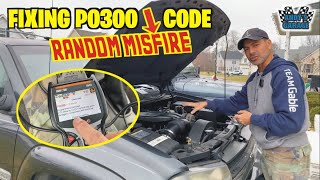
P0300 on a 2010-2013 Escalade EXT signifies a random engine misfire. Common causes are worn spark plugs and wires, or a faulty ignition coil. More specific to this truck, a leaking PCV baffle in the driver-side valve cover causing oil to foul plugs, or issues with the Active Fuel Management (AFM) system lifters are well-documented culprits that often require more in-depth diagnosis.
- P0300 means multiple cylinders are misfiring, not just one.
- Always start with the basics: inspect and replace worn spark plugs and wires first.
- Use a scan tool to check for other codes; codes like P0171/P0174 or P3400 can provide important clues.
- Be aware of Escalade-specific issues like the leaking PCV valve cover baffle and potential AFM lifter problems.
- If the check engine light is flashing, stop driving immediately to prevent catalytic converter damage.
What's Unique About the 2010-2013 Cadillac ESCALADE EXT
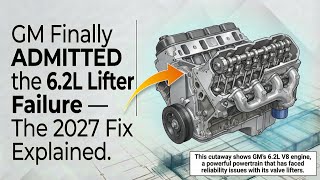
The 6.2L V8 (RPO L94) engine in this generation of Escalade EXT is robust, but has several known quirks that can lead to a P0300 code. Beyond typical ignition system wear, these engines can suffer from a design flaw in the left (driver's side) valve cover. The integrated PCV baffle can leak, allowing oil to be pulled into the intake and foul the spark plugs, particularly cylinders #1 and #7, triggering a P0300 code as noted in GM TSB #PIP5161. Furthermore, the Active Fuel Management (AFM) system, which deactivates cylinders to save fuel, is a major source of problems. The specialized AFM lifters can mechanically collapse or get stuck, leading to a persistent misfire on one or more cylinders that registers as a P0300, often accompanied by a distinct ticking noise and potential camshaft damage 🎬 See this walkthrough on replacing failed AFM lifters and camshafts. if not addressed.
Diagnostic Flowchart
Tap your situation to follow the diagnostic path that matches what you're seeing on this vehicle.
Symptoms You May Notice
- Rough idle or shaking, especially at a stop
- Hesitation or stumbling during acceleration
- Flashing or solid Check Engine Light
- Noticeable loss of engine power
- Reduced fuel economy
- Engine noise, such as ticking or tapping, often indicating a lifter issue
- "Service StabiliTrak" or "Traction Control" warning lights may also illuminate, as the engine misfire can interfere with the traction control system.
- Excessive oil consumption, often linked to the PCV or AFM issues.
- Replacing only spark plugs when the spark plug wires are also bad or when the PCV valve cover leak is the root cause, leading to the new plugs fouling quickly.
- Replacing oxygen sensors, which are more likely to report an issue as a result of the misfire, not the cause of it.
- Assuming a major mechanical failure like lifters before thoroughly checking basic ignition, fuel system components, and known TSBs.
- Replacing a fuel pump when the issue is a clogged fuel injector or vacuum leak.
Most Likely Causes
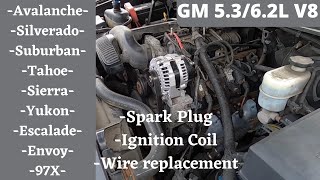
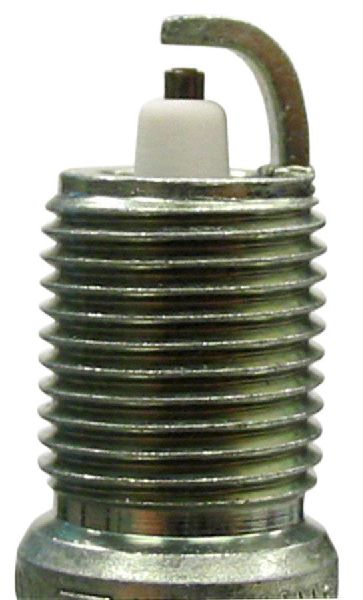
- Worn Spark Plugs or Faulty Spark Plug Wires 🔴 High Probability → Shop Spark Plug Standard wear and tear items. A GM TSB specifically calls out inspecting spark plug wires for this issue. Oil fouling from the PCV issue can also ruin new plugs quickly.
How to confirm: Inspect spark plugs for wear, correct gap (0.040 inches), and fouling (especially oil fouling on cylinders 1 and 7). Inspect wires for cracks, burns, or corrosion. A cracked porcelain insulator is a common, often-missed failure point.
Typical fix: Replace all eight spark plugs and spark plug wires as a set. Use quality OEM-spec brands like ACDelco or NGK. It is not recommended to re-gap modern iridium plugs.
Est. part cost: $80-$200 - Faulty Ignition Coil(s) 🔴 High Probability → Shop Ignition Coil Coils are a common failure point on many vehicles. Heat and vibration can cause them to fail over time, leading to intermittent misfires that can log a P0300 before a cylinder-specific code appears.
How to confirm: Use a scan tool with live data to see misfire counts per cylinder. Swap the suspected coil with a known good one from another cylinder and see if the misfire code follows the coil (e.g., P0304 becomes P0302 after swapping coils from cylinders 4 and 2).
Typical fix: Replace the faulty ignition coil. It is often recommended to replace them all if they are original and high-mileage.
Est. part cost: $40-$80 per coil - Leaking PCV Baffle in Driver's Side Valve Cover 🟡 Medium Probability → Shop Engine Valve Cover A specific, well-documented issue in TSB #PIP5161 for these engines. A defect in the valve cover allows oil to be sucked through the PCV system, fouling spark plugs (especially #1 and #7) and causing misfires.
How to confirm: As per the TSB, remove the valve cover, plug the baffle vents, apply regulated air pressure through the PCV pipe, and spray soapy water on the baffle seam to check for bubbles. A simpler first check is to inspect the #1 and #7 spark plugs for heavy oil fouling.
Typical fix: The PCV baffle is integrated into the valve cover. The entire left (driver's side) valve cover assembly must be replaced with an updated part. The OEM part number for the updated cover is 12625033 or a newer revision.
Est. part cost: $100-$250 - Dirty or Failing Fuel Injectors 🟡 Medium Probability → Shop Fuel Injector Fuel deposits can build up over time, affecting the spray pattern and amount of fuel delivered, causing a lean misfire.
How to confirm: Listen for a consistent ticking sound from each injector. A more advanced test involves a fuel injector balance test using a capable scan tool to see if any injectors are flowing differently.
Typical fix: Professional fuel system cleaning or replacement of the faulty injector(s).
Est. part cost: $70-$150 per injector - Vacuum Leak ⚪ Low Probability Plastic and rubber components in the engine bay, like the intake manifold gaskets or PCV hoses, can crack with age and heat cycles, causing unmetered air to enter the intake and create a lean condition.
How to confirm: Listen for a hissing sound at idle. Spraying carburetor cleaner or smoke from a smoke machine around the intake manifold and vacuum lines can help identify a leak; the engine idle will change when the leak is found.
Typical fix: Replace the cracked hose or faulty gasket.
Est. part cost: $10-$100
Rare But Worth Checking
- Worn Camshaft Lobe / Failed AFM Lifter: → Shop Engine Valve Lifter TSB #PIP4138P and others point to this as a possible cause. The Active Fuel Management (AFM) lifters can become stuck or fail, leading to a misfire and, in severe cases, damage to the camshaft. This is a major mechanical repair often preceded by a ticking noise.
- Low Fuel Pressure: A weak fuel pump or clogged fuel filter can starve the engine for fuel, causing random misfires across all cylinders. This is less common than individual injector issues but affects the whole system.
- Crossed Injector Connectors: TSB #PIP5169 specifically warns that after engine repairs, the injector connectors for cylinders 5 & 7 and 6 & 8 can be accidentally swapped, which will cause a P0300 code.
- Faulty Engine Ground Strap: → Shop Engine Wiring Harness A corroded or loose engine ground strap can cause a weak or inconsistent spark across all cylinders, leading to a random misfire code. This is often overlooked but is a simple check. One owner on a forum resolved their P0300 issue by cleaning the main engine ground.
Diagnosis Steps
- Read all stored fault codes with an OBD-II scanner. Note any codes that accompany P0300, such as lean codes (P0171/P0174) or AFM codes (P3400).
- Use a scanner with live data to monitor misfire counts for each cylinder. This can help determine if the misfire is truly random or more frequent on certain cylinders (e.g., #1 and #7 point towards the PCV issue).
- Perform a visual inspection of the engine bay. Look for obvious issues like disconnected vacuum hoses, damaged wiring, corroded ground straps, or signs of leaks.
- Inspect the spark plugs and spark plug wires. Check for oil fouling on plugs #1 and #7 specifically. Replace plugs and wires if they are worn, fouled, or damaged.
- If certain cylinders show higher misfire counts, swap the ignition coil with a known good cylinder and see if the misfire follows the coil.
- Test for vacuum leaks using a smoke machine or by carefully spraying carburetor cleaner around the intake manifold gasket and vacuum lines while listening for a change in engine idle.
- Check fuel pressure to ensure the fuel pump and filter are functioning correctly. Perform an injector balance test if your scan tool supports it.
- If AFM is suspected, use a capable scanner to command the AFM system on and off to see if the misfire changes. Some owners temporarily disable AFM with a plug-in device or tune to confirm it's the source of the misfire.
- Perform the PCV baffle leak test as described in TSB #PIP5161 if a vacuum leak is suspected but not found, or if plugs are oil-fouled.
- If a persistent ticking noise is present and other tests are inconclusive, perform a compression test. A failed AFM lifter will often result in low or zero compression on the affected cylinder. This step often requires a professional mechanic.
Parts You'll Likely Need
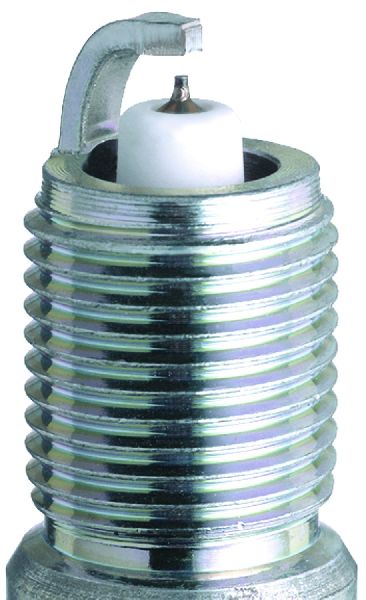
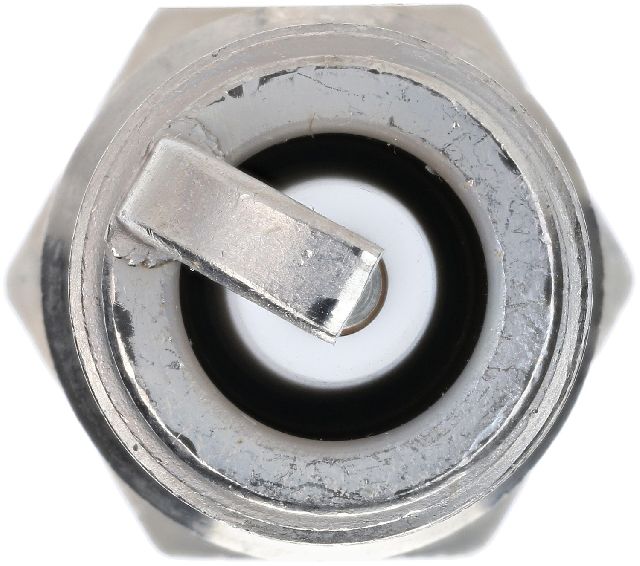
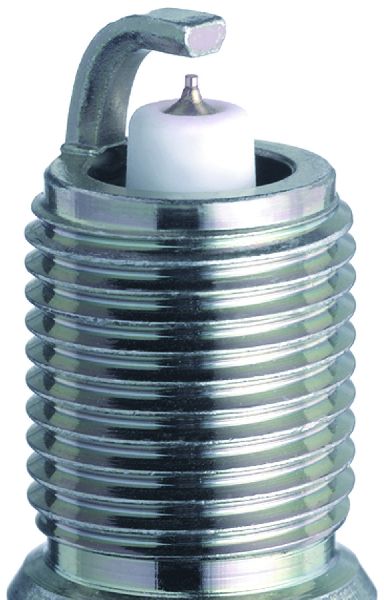
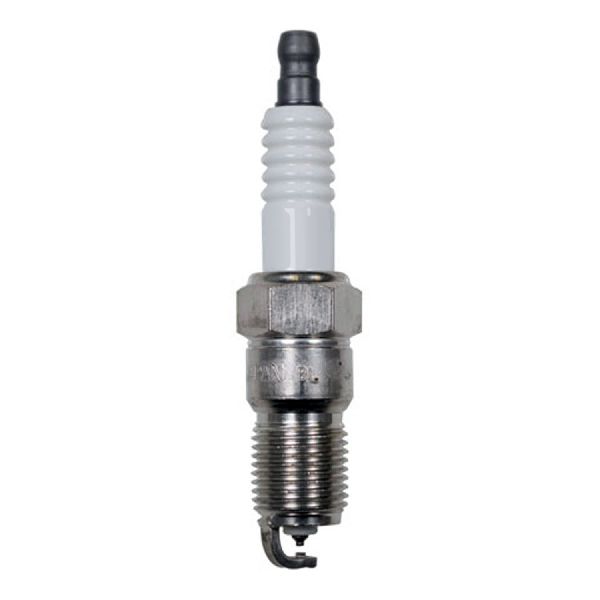
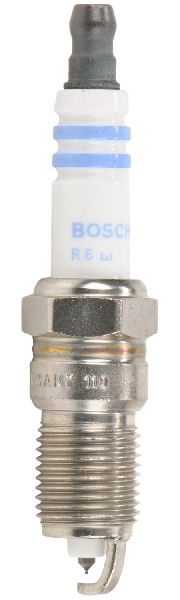
- Spark Plugs
(OEM #ACDelco 41-110 (or superseding #12621258))— These are primary wear items and a leading cause of misfires. The correct Iridium plug is essential.
Related Codes That Often Appear With This One
- P0301-P0308 — These are cylinder-specific misfire codes. A P0300 may be accompanied by one or more of these codes, which can help narrow down the problem area, even if the misfire is intermittent.
- P0171 / P0174 — These codes indicate a "System Too Lean" condition on Bank 1 and Bank 2, respectively. They often appear with P0300 when the cause is a vacuum leak or a widespread fuel delivery issue.
- P3400 — This code relates to the Cylinder Deactivation System (AFM). Its presence alongside a P0300 strongly suggests an issue with the AFM lifters, solenoids in the VLOM (Valve Lifter Oil Manifold), or related components.
Technical Service Bulletins (TSBs) & Recalls
- TSB #PIP5161: Documents the issue of oil consumption and P0300 caused by a leaking PCV baffle in the left valve cover, providing a specific diagnostic test using soapy water and compressed air.
- TSB #PIP4138P: Points technicians toward checking for a worn camshaft lobe and/or failed lifter when a P0300-P0308 misfire code is present, especially with engine noise.
- TSB #PIP4819A: Instructs technicians to inspect spark plug wires as a potential cause for P0300-series misfire codes.
- TSB #PIP5169: Warns technicians to check for crossed injector connectors on cylinders 5 & 7 and 6 & 8 after engine repairs, as this can cause a P0300 code.
- TSB #15-06-01-002 (and revisions): Details the diagnosis of a mechanically collapsed or stuck AFM lifter causing a P0300 code and ticking noise, recommending replacement of the lifter bank and inspection of the camshaft.
Platform-Specific Known Issues
- Leaking PCV Baffle: TSB #PIP5161 describes how a leak between the PCV baffle and the valve cover can cause a P0300 code with a rough running engine. The fix is to replace the valve cover assembly.
- Worn Camshaft Lobe: TSB #PIP4138P indicates that a worn camshaft lobe can be a cause for P0300-P0308 codes, often accompanied by engine noise. This is a significant mechanical repair.
- Faulty Spark Plug Wires: TSB #PIP4819A points to faulty spark plug wires as a direct cause for misfire codes, including P0300.
- Crossed Injector Connectors: TSB #PIP5169 warns technicians to ensure injector connectors for cylinders 5-7 and 6-8 are not swapped after engine repairs, as this will set a P0300.
- AFM Lifter Failure: Other GM TSBs for similar engines (like TSB #PIP4568P) mention that stuck or collapsed Active Fuel Management (AFM) lifters are a known cause of misfires on these V8s.
Mechanic-Grade Diagnostic Values
- Fuel Pressure (at fuel rail) — expected: 50-60 PSI (Key On, Engine Off). Failure: Pressure below 50 PSI indicates a weak fuel pump or clogged filter.
- Fuel Injector Resistance — expected: Approx. 12-15 Ohms. Failure: A reading significantly outside this range, or an open circuit (infinite resistance), indicates a failed injector coil.
- Ignition Coil Primary Resistance — expected: 0.3 - 1.0 Ohms. Failure: A reading outside this range suggests a faulty coil.
Scan Tool Commands That Help
- GDS2 / Tech2: Cylinder Power Balance / Injector Kill — To isolate a misfiring cylinder. When a specific cylinder's injector is disabled, a healthy cylinder will cause a noticeable drop in RPM. If there's no change, that cylinder wasn't contributing, confirming the misfire location.
- GDS2 / Tech2: Fuel Injector Balance Test — To identify a clogged or failing injector. This test fires each injector for a set duration and measures the corresponding drop in fuel pressure, allowing comparison of flow rates between cylinders.
- GDS2 / Tech2: Cylinder Deactivation (AFM) System Test — To diagnose AFM-related misfires. A technician can command the system to enter and exit V4 mode to see if the misfire occurs only when AFM is active, pointing towards a faulty AFM lifter or VLOM solenoid.
Wiring & Ground Locations
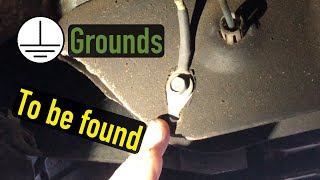
- G103 / G104 — G103 is on the front of the passenger side cylinder head. G104 is on the rear of the driver's side cylinder head.. These are the primary engine-to-chassis grounds. A poor connection at these points can cause a weak or inconsistent spark, erratic sensor readings, and random misfires. They are critical to check and clean when diagnosing a P0300.
- G102 — Located at the left rear of the engine, provides ground for all 8 ignition coils.. Since this single point grounds all coils, corrosion or looseness here can cause a random, multi-cylinder misfire (P0300) that is difficult to trace to a single component.
- Main Battery Ground — The main negative battery cable harness grounds to the left front of the engine block.. This is the foundational ground for the entire engine management system. Any issue here can cause widespread electrical problems, including misfires.
Real Owner Repair Stories
- Tahoe Yukon Forum user @RAFJR (2012 Yukon Denali 6.2L, 65,000 miles) — P0300 code, erratic oil pressure gauge, random misfire on cylinder #5.
❌ Tried (didn't work) Replaced oil pressure sensor, Replaced spark plugs and wires, Used fuel system cleaner (Techron), Checked battery, alternator, and all grounds, Replaced #5 ignition coil, Replaced crankshaft sensor
✅ What actually fixed it The owner discovered the P0300 code would only set when the vehicle went into AFM (V4) mode. The final fix was sending the ECM to be tuned to disable the AFM system, which solved the misfire problem. This pointed to a failing AFM solenoid in the VLOM as the likely root cause.
OEM Part Supersession History
Unknown, multiple prior revisions→12625033— This part number is for the updated driver's side valve cover designed to fix the PCV baffle leak issue described in TSB #PIP5161. While this part number is also associated with valve springs in some catalogs, it is the correct number for the complete valve cover assembly in this context.
Model Year Variations Within This Range
- 2010-2013: The 2010 model year marked the introduction of the L94 engine, which replaced the previous L9H. The key difference was the addition of Active Fuel Management (AFM). Therefore, AFM-related issues (like lifter failure) are a primary concern for the 2010-2013 range but not for earlier Escalades with the 6.2L engine.
Helpful Videos

We Have This Part in Stock

The information in this article is provided for general reference and educational purposes only. Vehicle specifications, procedures, and part compatibility can vary by production date, trim level, and region. Always consult your vehicle's factory service manual and verify part numbers before purchasing or performing repairs. Safety-critical components such as airbags, seat belts, and braking systems should be installed by a qualified professional.
- Cadillac ESCALADE EXT:
- 🧭 Diagnostic Flowchart
- 🎬 Helpful Videos
- 🛍️ Shop This Part
- What's Unique About the 2010-2013 Cadillac ESCALADE EXT
- Symptoms You May Notice
- Most Likely Causes
- Rare But Worth Checking
- Diagnosis Steps
- Parts You'll Likely Need
- Related Codes That Often Appear With This One
- Technical Service Bulletins (TSBs) & Recalls
- Platform-Specific Known Issues
- Mechanic-Grade Diagnostic Values
- Scan Tool Commands That Help
- Wiring & Ground Locations
- Real Owner Repair Stories
- OEM Part Supersession History
- Model Year Variations Within This Range
- 🎟️ Get 5% Off