

P0300 on 2019-2022 Cadillac XT4: Random Misfire Causes and Fixes
P0300 on a Cadillac XT4 means the engine is randomly misfiring. The most common causes are worn spark plugs or faulty ignition coils. Start by inspecting these parts. If the issue persists, especially on a cold start (with code P050D), fuel injectors are a likely culprit. Several GM Technical Service Bulletins (TSBs) address specific, more severe causes like internal coolant leaks.
- P0300 means multiple cylinders are misfiring randomly, not just one.
- Start your diagnosis with the cheapest and most common culprits: spark plugs and ignition coils.
- If the check engine light is flashing, stop driving immediately to avoid expensive catalytic converter damage.
- If the misfire only happens on a cold start, especially with code P050D, the problem is likely related to the fuel system (injectors) or a rare internal coolant leak.
- Due to the complexity of modern turbocharged engines, if a simple spark plug and coil inspection doesn't reveal the issue, professional diagnosis is recommended.
What's Unique About the 2019-2022 Cadillac XT4

The 2019-2022 Cadillac XT4 uses a 2.0L Turbo (LSY) engine, a modern Gasoline Direct Injection (GDI) design. While misfire causes are often universal, GDI engines are inherently prone to carbon buildup on intake valves because fuel doesn't wash over them. GM has issued multiple Technical Service Bulletins (TSBs) that are highly relevant to this platform. TSB PIP5628G provides specific diagnostic guidance for P0300, especially when paired with P050D (Cold Start Rough Idle), pointing towards complex fuel system or compression issues. More severe issues documented in other TSBs include internal coolant leaks from a porous engine block (TSB 18-NA-115) and issues with Active Fuel Management (AFM) lifters.
Diagnostic Flowchart

Tap your situation to follow the diagnostic path that matches what you're seeing on this vehicle.
Symptoms You May Notice

- Rough or shaky idle.
- Hesitation or stumbling during acceleration.
- Reduced engine power and performance.
- Flashing or solid Check Engine Light.
- Poor fuel economy.
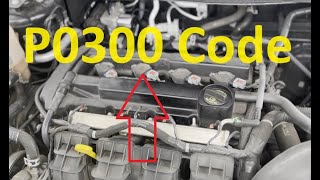
- Difficulty starting the engine. 🎬 Watch: A guide to understanding common P0300 causes and fixes
- Exhaust may smell like gasoline.
- Replacing only one spark plug or coil when others are near the end of their service life.
- Replacing oxygen sensors without confirming they are the root cause; O2 sensors often report issues caused by misfires rather than causing them.
- Assuming a fuel system cleaner in the tank will fix clogged direct injectors or remove heavy carbon buildup on valves.
Most Likely Causes

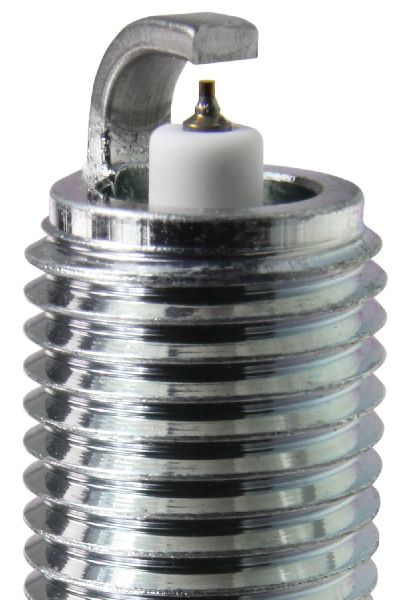
- Worn or Fouled Spark Plugs 🔴 High Probability → Shop Spark Plug Spark plugs are a primary wear item. The turbocharged LSY engine puts high stress on the ignition system, potentially leading to a shorter effective lifespan. A broken spark plug insulator is also a known, specific cause outlined in GM TSB 21-NA-255.
How to confirm: Remove and inspect all four spark plugs. Look for worn, rounded electrodes, heavy carbon deposits, oil fouling, or cracks in the white porcelain insulator. Per TSB 21-NA-255, you should invert the spark plug to see if a broken insulator piece slides down the electrode.
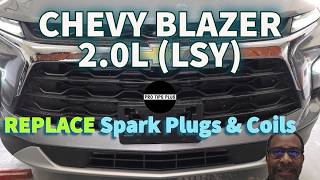
Typical fix: Replace all four spark plugs as a set. It's recommended to use OEM-spec Iridium plugs like the ACDelco 41-166 to ensure proper performance 🎬 See this walkthrough for replacing LSY spark plugs and coils and longevity.
Est. part cost: $40-$80 - Faulty Ignition Coil(s) 🔴 High Probability → Shop Ignition Coil Ignition coils are subjected to high heat cycles in the engine bay and can fail electronically over time, leading to a weak or non-existent spark. Oil leaks from the valve cover gasket can also seep into the spark plug tubes and damage the coils.
How to confirm: Use a scan tool with live data to view misfire counts per cylinder. If a specific cylinder shows a high count (e.g., P0301), swap that cylinder's ignition coil with a known good one. Clear the codes and drive the vehicle. If the misfire code follows the coil to the new cylinder, the coil is bad.
Typical fix: Replace the faulty ignition coil. Many mechanics recommend replacing them as a set if they are original and the vehicle has high mileage, as others may fail soon.
Est. part cost: $50-$100 per coil - Faulty Fuel Injectors 🟡 Medium Probability → Shop Fuel Injector The LSY's high-pressure direct injection system can be sensitive to fuel quality. Injectors can become clogged with deposits or fail electronically. GM TSB PIP5628G specifically calls out performing a fuel injector balance test as a key diagnostic step for P0300, especially when accompanied by a P050D code.
How to confirm: This requires a professional scan tool (like GM's GDS2) to perform a fuel injector balance test, which measures the pressure drop for each injector to ensure they are all flowing equally. An AFIT (Active Fuel Injector Tester) is the preferred tool for definitive results.
Typical fix: Replace the faulty fuel injector(s). Due to the high labor cost of accessing the injectors under the intake manifold, some shops recommend replacing all four at once. The seals must always be replaced.
Est. part cost: $100-$300 per injector, but total repair cost is much higher due to labor. - Vacuum Leak 🟡 Medium Probability Leaks can develop in various places like the intake manifold gasket, PCV system hoses, or the charge air cooler piping. A common failure point is the PCV hose becoming brittle and cracking, introducing unmetered air and disrupting the air-fuel ratio.
How to confirm: A mechanic will use a smoke machine to pressurize the intake system and visually identify where smoke escapes. Listening for a hissing sound at idle can also sometimes pinpoint a large leak. A scan tool showing high positive fuel trims at idle that decrease with RPM is another strong indicator.
Typical fix: Replace the leaking gasket or hose. This can range from a simple hose clamp to replacing the entire intake manifold gasket.
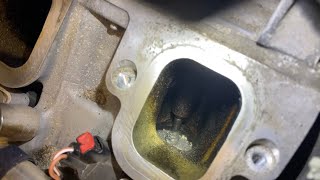
Est. part cost: $20-$200 depending on the part - Carbon Buildup on Intake Valves ⚪ Low Probability As a GDI engine, the LSY sprays fuel directly into the cylinders, so gasoline detergents don't clean the intake valves. Oil vapor from the PCV system bakes onto the hot valves, restricting airflow and causing misfires, particularly at idle. A teardown of an LSY engine with only 24,000 miles showed significant carbon deposits.
How to confirm: Requires a borescope inspection of the intake ports and valves, which usually involves removing the intake manifold for a clear view.
Typical fix: The valves need to be manually cleaned. The most effective method is walnut blasting, which uses crushed walnut shells under high pressure to scrub the carbon off without damaging the metal surfaces. Some chemical cleaning services are offered, but are often less effective.
Est. part cost: N/A (Labor-intensive service, often costing $500-$1000+)
Rare But Worth Checking
- Internal Coolant Leak (Porous Block): GM TSB 18-NA-115 describes a condition where porosity in the engine block casting can create a pinhole leak between a coolant passage and a cylinder. This causes a cold start misfire (often with P050D) as coolant fouls the spark plug. The misfire may disappear as the engine warms up and burns off the coolant. The official fix is engine replacement.
- Moisture in Charge Air Cooler (Intercooler): → Shop Intercooler TSB 18-NA-020 mentions that on some 2.0L Turbo engines, moisture can accumulate in the intercooler, especially in cold or humid weather. During acceleration, this water can be ingested by the engine, causing a sudden misfire.
- Broken Spark Plug Insulator: → Shop Spark Plug TSB 21-NA-255 was issued because technicians were finding P0300 caused by a broken center insulator on a spark plug. The broken piece can interfere with the spark. The fix is to remove all plugs and inspect them for this specific failure.
- Active Fuel Management (AFM) Lifter Failure: → Shop Engine Valve Lifter Though more commonly discussed on V8 engines, the LSY does have an Active Fuel Management system. A collapsed or stuck AFM lifter can cause a persistent misfire that may be interpreted as a random P0300 code. This is a major mechanical repair.
Diagnosis Steps
- Retrieve all stored fault codes with an OBD-II scanner. Note any codes that accompany P0300, especially P050D or cylinder-specific codes (P0301-P0304).
- Check the freeze-frame data to see the engine conditions (speed, load, temperature) when the misfire occurred.
- Inspect the spark plugs for wear, damage, or fouling. Specifically check for broken insulators per TSB 21-NA-255. Replace if they are worn or past their service interval.
- Inspect the ignition coils for any signs of damage or swelling. Test them by swapping a coil from a known misfiring cylinder to a good cylinder and see if the misfire moves.
- If ignition components are good, check for vacuum leaks using a smoke machine. Pay close attention to the PCV hoses and intake manifold gaskets.
- If the misfire is worst on a cold start and you also have a P050D code, suspect a fuel injector issue or internal coolant leak per TSB 18-NA-115.
Parts You'll Likely Need
- Spark Plugs
(OEM #ACDelco 41-166)— These are the most common wear item that causes misfires. They are a critical part of routine maintenance and a known failure point per TSB 21-NA-255.
Trusted brands: ACDelco, NGK
OEM price range: $12-$20 per plug
Aftermarket price range: $8-$15 per plug - Ignition Coil
(OEM #ACDelco 12699539)— Ignition coils provide the voltage for the spark plugs and are a frequent failure point leading to misfires.
Trusted brands: ACDelco, Delphi, Bosch
OEM price range: $70-$110
Aftermarket price range: $40-$80 - Fuel Injector — Clogged or failing direct injectors are a common cause of P0300 on GDI engines. Replacement is labor-intensive, making it a costly repair.
Trusted brands: GM Genuine Parts, ACDelco, Standard Motor Products
OEM price range: $150-$180 per injector
Aftermarket price range: $80-$130 per injector
Related Codes That Often Appear With This One
- P0301-P0304 — These are cylinder-specific misfire codes. P0300 often appears alongside one or more of these, which can help narrow down the diagnosis by identifying the most frequently misfiring cylinders.
- P050D — This code for 'Cold Start Rough Idle' is frequently associated with P0300 in GM service bulletins. If you have both codes, it strongly suggests a fuel delivery issue (like a faulty injector) or a slow internal coolant leak (per TSB 18-NA-115) that is most prominent before the engine warms up.
- P0171/P0172 — These codes indicate a lean (P0171) or rich (P0172) fuel mixture. A vacuum leak causing a P0300 will often trigger a P0171 (System Too Lean), while a leaking fuel injector might cause a P0172 (System Too Rich).
Technical Service Bulletins (TSBs) & Recalls
- PIP5628G: Diagnostic aid for technicians when encountering P0300-P0308 and/or P050D, providing a template of information to gather for GM's Technical Assistance Center (TAC).
- 18-NA-115: Addresses cold start misfires (P0300) caused by a porous engine block allowing coolant to leak into a cylinder. The prescribed fix is engine replacement.
- 18-NA-020: Notes that moisture can accumulate in the charge air cooler (intercooler) and be ingested by the engine, causing misfires, particularly in cold/humid weather.
- 21-NA-255: Points to a broken spark plug insulator as a potential cause for P0300. The fix is to inspect all plugs and replace any found with a broken insulator.
- PIP5498M: Connects P0300 with P050D on cold starts, suggesting a potential internal coolant leak into the cylinders as the cause.
Platform-Specific Known Issues
- A known issue for the 2.0L LSY engine involves the potential for moisture to collect in the charge air cooler (intercooler), which can be ingested and cause misfires, as noted in TSB 18-NA-020.
- TSB 18-NA-115 points to a severe but rare issue of engine block porosity causing an internal coolant leak into a cylinder, leading to a cold-start P0300 misfire. This requires engine replacement.
- TSB PIP5628G provides a detailed diagnostic worksheet for technicians to follow when diagnosing P0300, indicating that GM has specific procedures for this common code on the LSY engine.
Mechanic-Grade Diagnostic Values
- Low-Side Fuel Pressure (Key On, Engine Off) — expected: 55-60 psi. Failure: Pressure below this range indicates a weak in-tank fuel pump or a leak.
- Ignition Coil Primary Winding Resistance — expected: 0.4 - 2.0 Ohms. Failure: A reading of 0 (short) or infinity/OL (open) indicates a bad coil.
- Ignition Coil Secondary Winding Resistance — expected: 6,000 - 15,000 Ohms (6k-15k Ω). Failure: Readings significantly outside this range suggest an internal failure of the coil.
- Manifold Absolute Pressure (MAP) Sensor at Idle — expected: 3.8 - 7.5 PSI. Failure: Readings outside this range, especially if they don't change with throttle input, can indicate a sensor or vacuum issue.
- Short-Term Fuel Trim (STFT) at Idle — expected: Close to 0%, typically within +/- 10%. Failure: Consistently high positive values (e.g., +15% or more) indicate the ECM is adding fuel to compensate for a lean condition, often caused by a vacuum leak.
Hidden / Shadow Codes Worth Checking
- Mode $06, MIDs $A2-$A5, TID $0C: Misfire counts for the current or last driving cycle for cylinders 1-4. This data can reveal which cylinder is misfiring most frequently, even if a specific P030x code has not yet been set. (see via An advanced OBD-II scan tool capable of displaying Mode $06 test results.)
- Mode $06, MIDs $A2-$A5, TID $0B: Exponentially Weighted Moving Average (EWMA) misfire counts for the last 10 driving cycles for cylinders 1-4. This helps identify intermittent misfires that occur over a longer period. (see via An advanced OBD-II scan tool capable of displaying Mode $06 test results.)
Scan Tool Commands That Help
- GM GDS2 / Professional Scan Tool: Cylinder Power Balance Test — Used to graphically display the contribution of each cylinder, helping to quickly identify which one(s) are underperforming and causing the misfire.
- GM GDS2 / Professional Scan Tool: Fuel Injector Balance Test — This is a key diagnostic step called for in TSB PIP5628G. It commands each injector to fire and measures the corresponding fuel pressure drop to see if an injector is clogged or flowing poorly.
- GM GDS2 / Professional Scan Tool: Intake System Learn Value Reset — This procedure is required after replacing components like the MAF sensor, throttle body, or fixing an intake leak. Failure to perform this reset can cause the code to return even if the part was fixed.
- GM GDS2 / Professional Scan Tool: Fuel Trim Reset — After repairing a fuel delivery or vacuum leak issue, resetting the long-term fuel trim values forces the ECM to relearn the fuel mixture from a baseline, ensuring proper engine operation.
Wiring & Ground Locations
- Engine Harness Chafe Point 1 — At the sharp edge of the black ECM/TCM bracket on the driver's side of the engine bay.. Vibration can cause the engine harness to rub through on this bracket, potentially shorting circuits related to ignition coils, fuel injectors, or critical sensors, leading to random misfires. This is a known issue on related GM platforms.
- Engine Harness Chafe Point 2 — Near the driver's side upper control arm.. An improperly secured harness can come into contact with the moving upper control arm, causing chafing and intermittent shorts that are difficult to diagnose.
- Engine Harness Chafe Point 3 — Near the driver's side shock tower bolt and harness canal.. The harness can rub against the shock tower hardware, creating another potential point for a short to ground that could affect any system controlled by the ECM.
Real Owner Repair Stories
- YouTube Commenter on 'Dallas Auto Diag' video (2019 Cadillac XT4) — P0300, P1101, and other codes persisted after replacing a damaged MAF sensor. Check engine light returned after clearing codes.
❌ Tried (didn't work) Replacing the Mass Air Flow (MAF) sensor., Performing a smoke test on the intake system.
✅ What actually fixed it The final solution was replacing the charge air cooler (intercooler), which presumably had a crack or leak that was difficult to detect. - Carly Community Author (2020 Cadillac XT4, 33,188 km) — Engine refuses to start, multiple error codes stored in memory.
❌ Tried (didn't work) Initial diagnosis at first garage after a previous repair.
✅ What actually fixed it A second garage found a pinched wire in the main power supply harness near the battery. The insulation was damaged during a previous repair, causing intermittent voltage drops. Repairing the section of wiring and securing the harness resolved all issues.
"I Checked Everything" — The Actual Cause
- In one documented case on a 2019 XT4, the vehicle presented with P0300 and P1101 (Intake Airflow System Performance). A smoke test was performed per TSB guidance to find a leak in the charge air induction system but did not immediately reveal the cause. The ultimate fix, confirmed by another owner with the exact same issue, was the replacement of the charge air cooler (intercooler), suggesting a leak that may only manifest under boost pressure or was otherwise undetectable by a low-pressure smoke test.
OEM Part Supersession History
84524531→84879789— Unknown, likely a revision for manufacturing, material, or routing improvement.
Heads up: Both part numbers are listed for the 2019 AWD model, suggesting one replaces the other. Verification with a VIN is required before ordering.
Model Year Variations Within This Range
- 2022: The 2.0L LSY engine was slightly re-rated from 237 hp to 235 hp. This is a minor software/tuning change and is not expected to materially affect the diagnosis of P0300.
- 2019-2022: While the engine is the same (LSY), the Cadillac version is tuned to recommend premium fuel for full performance, whereas the same base engine in other GM products like the Buick Envision may recommend regular 87 octane. Using lower octane fuel could potentially contribute to knock and misfire events under high load, though the knock sensor system is designed to prevent this by retarding timing.
Helpful Videos
We Have This Part in Stock


The information in this article is provided for general reference and educational purposes only. Vehicle specifications, procedures, and part compatibility can vary by production date, trim level, and region. Always consult your vehicle's factory service manual and verify part numbers before purchasing or performing repairs. Safety-critical components such as airbags, seat belts, and braking systems should be installed by a qualified professional.
- Cadillac XT4:
- 🧭 Diagnostic Flowchart
- 🎬 Helpful Videos
- 🛍️ Shop This Part
- What's Unique About the 2019-2022 Cadillac XT4
- Symptoms You May Notice
- Most Likely Causes
- Rare But Worth Checking
- Diagnosis Steps
- Parts You'll Likely Need
- Related Codes That Often Appear With This One
- Technical Service Bulletins (TSBs) & Recalls
- Platform-Specific Known Issues
- Mechanic-Grade Diagnostic Values
- Hidden / Shadow Codes Worth Checking
- Scan Tool Commands That Help
- Wiring & Ground Locations
- Real Owner Repair Stories
- "I Checked Everything" — The Actual Cause
- OEM Part Supersession History
- Model Year Variations Within This Range
- 🎟️ Get 5% Off