

P0300 on 2017-2024 Cadillac XT5: Random Misfire Causes and Fixes
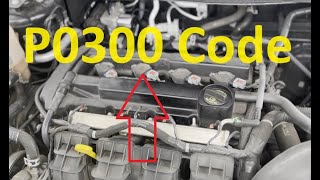
P0300 on a Cadillac XT5 means random engine misfires. Start by checking the easiest fixes: worn spark plugs and bad ignition coils. If that doesn't solve it, clogged fuel injectors and carbon buildup on intake valves are other common culprits on the 3.6L LGX engine. Expect to pay $100-$300 for a DIY plug and coil replacement.
- P0300 means the misfire is random; don't assume it's a single bad part without diagnosis.
- Always start with the basics: check the age and condition of your spark plugs and ignition coils.
- On the XT5's 3.6L engine, fuel injectors and carbon buildup are strong possibilities if spark and coil are good.
- A flashing Check Engine Light is a serious warning to stop driving to prevent catalytic converter damage.
- Be aware of the TSBs; if the problem is not a simple fix, it could be a more complex, documented issue requiring a professional technician.
What's Unique About the 2017-2024 Cadillac XT5
The Cadillac XT5, particularly those with the 3.6L LGX V6 engine, has several known issues that can lead to a P0300 code. Beyond typical spark plug or coil failures, this engine is susceptible to problems with fuel injectors and significant carbon buildup on intake valves due to its direct injection design. Furthermore, General Motors has issued multiple Technical Service Bulletins (TSBs) for this engine family related to misfires, pointing towards specific issues with valvetrain components like Active Fuel Management (AFM) lifters, rocker arms, and even rare cases of cylinder block porosity causing coolant leaks into the cylinders.
Diagnostic Flowchart
Tap your situation to follow the diagnostic path that matches what you're seeing on this vehicle.
Symptoms You May Notice
- Rough or choppy idle
- Shaking or vibrating, especially at idle or under load
- Sluggish acceleration and loss of power
- Flashing or steady Check Engine Light
- StabiliTrak warning light may illuminate
- Smell of raw fuel from the exhaust
- Decreased fuel economy
- Replacing only one spark plug or coil when a full set is needed.
- Replacing oxygen sensors, which are rarely the root cause of a P0300, though a persistent misfire can damage them over time.
- Assuming a major mechanical failure before ruling out simple ignition, fuel system issues, and carbon buildup.
- Mistaking the normal ticking sound of the high-pressure fuel pump for a valvetrain issue.
Most Likely Causes
- Worn or Fouled Spark Plugs 🔴 High Probability → Shop Spark Plug Spark plugs are a regular maintenance item and a primary point of failure for any ignition system. Misfires can occur if they are worn, have an incorrect gap, or are fouled by oil or carbon.
How to confirm: Inspect the spark plugs for wear, carbon tracking, oil fouling, or incorrect gap. A scan tool may show misfire counts that are high across all cylinders. Swapping a plug from a misfiring cylinder to a good one can confirm a bad plug if the misfire follows it.
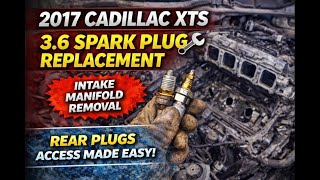
Typical fix: Replace all six spark plugs. It is recommended to use the OEM-specified ACDelco Iridium plugs (P/N: 41-123 🎬 Watch: This DIY walkthrough shows how to replace the spark plugs. or superseding numbers).
Est. part cost: $60-$150 - Faulty Ignition Coil(s) 🔴 High Probability → Shop Ignition Coil Coil-on-plug systems are common failure points. When one or more coils become weak, they can cause random misfires before failing completely.
How to confirm: Use a scan tool with live data to monitor misfires per cylinder. Swap a suspected bad coil with a known good one and see if the misfire moves to the new cylinder.
Typical fix: Replace the faulty ignition coil(s). The OEM ACDelco part is 12707304, which may be superseded by 12741091. It is often wise to replace the corresponding spark plug at the same time.
Est. part cost: $50-$100 per coil - Dirty or Clogged Fuel Injectors 🟡 Medium Probability → Shop Fuel Injector Direct injection (DI) engines like the 3.6L LGX are sensitive to fuel quality. Injector tips are in the combustion chamber and can become clogged with carbon, disrupting the spray pattern and causing misfires.
How to confirm: A professional can perform a fuel injector balance test using a scan tool. A DIY method is to swap a suspected injector with one from a non-misfiring cylinder; if the misfire code moves, the injector is faulty. Using a quality fuel system cleaner with Polyetheramine (PEA) is a good first step.
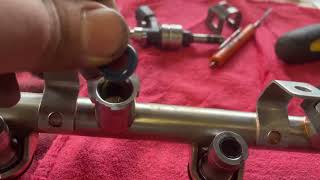
Typical fix: Professional ultrasonic cleaning or replacement of the faulty injector(s). Note that DI injector seals are single-use and must be replaced upon removal 🎬 See this guide for removing the intake and fuel injectors. to prevent leaks.
Est. part cost: $70-$200 per injector - Intake Valve Carbon Buildup 🟡 Medium Probability As a direct injection engine, fuel is not sprayed over the intake valves. This allows oil vapor from the PCV system to bake onto the hot valves, forming hard carbon deposits that restrict airflow and cause misfires, especially during cold starts.
How to confirm: Visual inspection with a borescope camera inserted into the intake ports is the only definitive way to check. Symptoms often include a rough idle that smooths out as the engine warms.
Typical fix: Manual cleaning of the valves (walnut blasting) is the most effective method. This is a labor-intensive job that requires removing the intake manifold.
Est. part cost: $0 (for chemicals, if attempted) to $600+ (for professional walnut blasting service) - Faulty Oil Control Valve (OCV) Solenoid ⚪ Low Probability → Shop Engine Variable Valve Timing (VVT) Oil Control Valve TSB #21-NA-036 specifically identifies a damaged OCV solenoid as a cause for oil leaks and misfires (including P0300) on the 2017 XT5.
How to confirm: Diagnosis involves checking for oil leaks near the solenoid and testing the solenoid's operation with a capable scan tool, as outlined in the service bulletin.
Typical fix: Replace the faulty OCV solenoid.
Est. part cost: $50-$120
Rare But Worth Checking
- Active Fuel Management (AFM) Lifter Failure: → Shop Engine Valve Lifter Mentioned in GM service bulletins (e.g., PIP5493E), a stuck or collapsed AFM lifter can cause a persistent misfire on one or more cylinders, sometimes presenting as a P0300. This is a significant mechanical repair requiring removal of the cylinder head.
- Vacuum Leak: A leak in a vacuum hose, PCV system, or intake manifold gasket can introduce unmetered air, leaning out the air/fuel mixture and causing random misfires. A smoke test is the most effective way to find the source.
- Low Fuel Pressure: A weak high-pressure or low-pressure fuel pump or a clogged fuel filter can starve the engine of fuel under load, leading to misfires across all cylinders. A fuel pressure test is needed to confirm. A service campaign (#16029) was issued for some 2017 XT5s for improperly torqued high-pressure fuel pump fasteners, which could cause leaks and pressure loss.
- Cylinder Block/Head Porosity (Coolant Leak): A very rare but documented issue in TSB 18-NA-115 where microscopic porosity in the engine block or cylinder head casting allows coolant to seep into a cylinder. This typically causes a pronounced misfire on cold starts that lessens as the engine heats up and the metal expands. The only fix is engine or cylinder head replacement.
Diagnosis Steps
- Read the code with an OBD-II scanner and check for any other pending or stored codes, paying close attention to cylinder-specific misfires (P0301-P0306).
- Check the freeze-frame data to see the engine conditions (RPM, load, temperature) when the misfire occurred. This can provide crucial clues (e.g., only happens when cold, or under heavy load).
- Use a scan tool with live data to view misfire counters for each cylinder. This can help determine if the misfire is truly random or biased towards one or two cylinders.
- Perform a thorough visual inspection of the engine bay. Look for cracked vacuum hoses, loose electrical connectors, and signs of oil or coolant leaks.
- Start with the ignition system. Inspect all spark plugs for wear and correct gap. If their age is unknown, replace them with OEM spec plugs.
- Test the ignition coils. The easiest way is to swap a coil from a cylinder that shows high misfire counts with a cylinder that shows none. If the misfire follows the coil, the coil is bad.
- If ignition components are good, consider the fuel system. Try a high-quality fuel injector cleaner (with PEA) first. If this doesn't help, further diagnosis like a professional injector balance test is needed.
- Check for vacuum leaks using a smoke machine. This is the most reliable method to find small leaks in gaskets and hoses that can cause lean misfires.
- If the misfire is worst on cold starts and improves as the engine warms up, suspect carbon buildup on the intake valves. A borescope inspection can confirm this.
- If all else fails, the problem may be more complex, such as an internal mechanical issue (lifters, timing chain) or a coolant leak into a cylinder as described in TSBs. At this point, professional diagnosis is strongly recommended.
Parts You'll Likely Need
- Spark Plugs
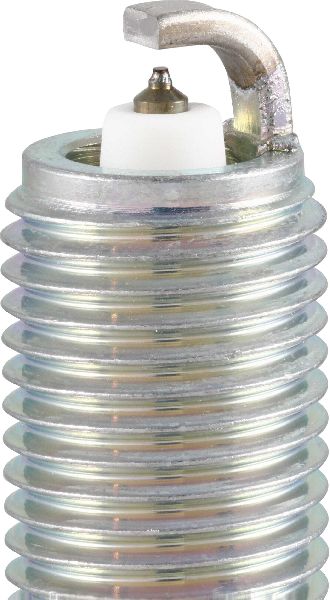
(OEM #ACDelco 41-123)— This is the most common and fundamental cause of misfires and is a standard maintenance item.
Trusted brands: ACDelco, NGK
OEM price range: $15-$25 per plug
Aftermarket price range: $8-$15 per plug - Ignition Coil
(OEM #ACDelco 12707304 (or 12741091))— A common failure point that can cause random misfires before failing completely on a single cylinder.
Trusted brands: ACDelco, Delphi
OEM price range: $50-$100 per coil
Aftermarket price range: $30-$60 per coil - Fuel Injector — Direct injectors on the LGX engine are prone to clogging from carbon, leading to poor fuel atomization and misfires.
Trusted brands: ACDelco, Bosch
OEM price range: $70-$200 per injector
Aftermarket price range: $50-$120 per injector
Related Codes That Often Appear With This One
- P0301-P0306 — If the ECM can eventually isolate the misfire to a specific cylinder, a P0300 will often be accompanied by a cylinder-specific code (e.g., P0304 for cylinder 4).
- P050D — TSB #PIP5628G links P0300-P0308 codes with P050D (Cold Start Rough Idle), indicating a potential shared cause during cold starts that requires specific diagnostic data for GM's technical assistance.
- U0401 — Invalid Data Received From ECM/PCM. This code can appear in other modules like the TCM or EBCM when a severe misfire causes the engine to enter a limp mode, disrupting normal communication.
Technical Service Bulletins (TSBs) & Recalls
- 18-NA-115 — Cold Start Misfire and/or Rough Idle – DTC P0300 May Be Set — Addresses a rare but severe issue where engine cylinder block porosity allows coolant to leak into a cylinder, causing a misfire on cold starts that may disappear when the engine warms up. The definitive fix is engine replacement.
- PIP5628G — Diagnostic Aids for Gas Engine Misfire/rough running with DTC P0300-P0308 and/or DTC P050D — A guide for technicians to gather specific data (freeze frame, fuel trims, injector balance tests) when diagnosing persistent misfires, especially when P050D (Cold Start Rough Idle) is also present. It standardizes the information needed by GM's Technical Assistance Center (TAC).
- 21-NA-036 — Damaged OCV Solenoid May Cause Oil Leak and Misfire — Identifies a damaged Oil Control Valve (OCV) solenoid as a potential cause for oil leaks and specific misfire codes, including P0300, P0302, and/or P0305 on 2017 models.
- PIP5493E / 21-NA-278 — Misfire with DTC's P0300, P0301-P0306 — These related bulletins instruct technicians to first check for updated ECM calibrations. If issues persist, they guide inspection of mechanical valvetrain components like broken rocker arms (SRFFs), camshaft actuators, and faulty AFM lifters, which can cause various misfire codes.
- PIP5029D — Engine Misfires due to Major Carbon Deposits on the Intake and or Exhaust Valves — Describes how significant carbon buildup on the intake valves of direct-injected engines (like the LGX) can cause the valves to stick, leading to misfires (P0300-P0306), especially on cold starts.
Platform-Specific Known Issues
- TSB #18-NA-115 notes that a P0300 code can be related to a cold start misfire or rough idle.
- TSB #21-NA-036 points to a potentially damaged OCV solenoid causing oil leaks and misfires on 2017 models.
- TSB PIP5493B (for 2017 XT5) documented a specific misfire condition (P0300/P0306) that could occur under heavy acceleration after a cold start, for which GM was investigating a software solution at the time.
- TSB PIP5493E (for 2017-2018 XT5) suggests that if basic diagnostics don't find a cause, technicians should inspect for broken rocker arms (SRFFs) and damage to camshaft actuators.
Mechanic-Grade Diagnostic Values
- Ignition Coil Primary Resistance — expected: 0.4 to 2.0 ohms. Failure: A reading outside this range indicates a faulty coil winding.
- Ignition Coil Secondary Resistance — expected: 6,000 to 10,000 ohms (6k-10k Ω). Failure: A reading outside this range suggests a failure in the secondary coil winding.
- Ignition Coil Bolt Torque — expected: 89 in-lb (10 Nm). Failure: Improper torque can lead to a poor ground or damage to the coil or valve cover.
- Long Term Fuel Trim (LTFT) at Idle — expected: -5% to +5%. Failure: High positive trims (e.g., >+10%) suggest a vacuum leak, while high negative trims suggest an over-fueling condition like a leaking injector.
Hidden / Shadow Codes Worth Checking
- Mode $06, TID $0A, CID $01-$0C: Misfire count for each cylinder during the last ten driving cycles. Even with a generic P0300, this data (on a capable scanner) can show if the 'random' misfire is actually biased towards specific cylinders. (see via An advanced OBD-II scanner that supports Mode $06 data.)
Scan Tool Commands That Help
- GDS2 (GM Dealer Tool) or equivalent professional scanner: Cylinder Power Balance — Used to identify a weak cylinder. The tool sequentially disables fuel injectors and measures the RPM drop for each. A cylinder with little to no RPM drop when disabled indicates it wasn't contributing power, pointing to a potential ignition, fuel, or mechanical issue on that specific cylinder.
- GDS2 (GM Dealer Tool) or equivalent professional scanner: Fuel Injector Balance — This test fires each injector for a specific duration and measures the corresponding drop in fuel rail pressure. It's a precise way to identify a clogged or failing injector that isn't flowing the correct amount of fuel.
- GDS2 (GM Dealer Tool): ECM Reprogramming — GM Preliminary Information bulletin PIP5493E suggests that before extensive mechanical diagnosis, technicians should verify the vehicle has the latest ECM calibration, as software updates were released to address certain misfire conditions.
Wiring & Ground Locations
- Engine Block Grounds (e.g., G103, G104) — Typically located on the engine block or cylinder heads, secured by bolts. Specific locations vary slightly by year but are generally found near the front and rear of the cylinder heads.. The ignition coils are grounded through their mounting bolts to the cylinder head/engine block. A loose, corroded, or broken ground strap can create high resistance, weakening spark across all cylinders and causing random misfires.
- ECM/PCM Main Connector — On the 2017-2023 XT5, the Engine Control Module is located in the engine bay on the driver's side, near the firewall and brake fluid reservoir.. Corrosion or backed-out pins in the main ECM harness connector can disrupt signals to and from the ignition coils, fuel injectors, and various sensors, leading to intermittent and random misfire codes.
Real Owner Repair Stories
- Youcanic (2019 Cadillac XT5 3.6L) — Check engine light on, misfiring under load in higher gear (1500-3000 RPM), traction control and ABS lights would come on, vehicle entered limp mode.
❌ Tried (didn't work) Swapped spark plug and ignition coil from misfiring cylinder #4 to cylinder #2; the misfire remained on cylinder #4., Performed a chemical intake valve cleaning; the misfire still remained on cylinder #4.
✅ What actually fixed it The fuel injector for cylinder #4 was faulty. After swapping the injector from cylinder #4 to cylinder #2, the misfire moved to cylinder #2. Replacing the bad injector resolved the issue.
OEM Part Supersession History
ACDelco 12666339→ACDelco 12707304, which is now superseded by ACDelco 12741091— Standard part evolution for improved durability, materials, or manufacturing process.
Heads up: The parts are interchangeable for the specified applications. Always use the latest part number available.ACDelco 41-123→This part number remains current for many applications, but cross-references to other ACDelco numbers like 41-130 and 41-151 exist for different GM engines. It's critical to verify the correct plug for the specific vehicle VIN.— N/A
Heads up: Using the wrong heat range or gap spark plug can cause misfires or engine damage. While 41-123 is common, always confirm the exact part number required.
Model Year Variations Within This Range
- 2017-2019: These models were originally equipped with an 8-speed automatic transmission.
- 2020-2024: The 2020 model year introduced a mid-cycle refresh. A new base engine, the 2.0L Turbo LSY I4, became standard on Luxury and Premium Luxury trims. The 3.6L LGX V6 remained available. All engines were paired with a new 9-speed automatic transmission.
Helpful Videos
We Have This Part in Stock

The information in this article is provided for general reference and educational purposes only. Vehicle specifications, procedures, and part compatibility can vary by production date, trim level, and region. Always consult your vehicle's factory service manual and verify part numbers before purchasing or performing repairs. Safety-critical components such as airbags, seat belts, and braking systems should be installed by a qualified professional.
- Cadillac XT5:
- 🧭 Diagnostic Flowchart
- 🎬 Helpful Videos
- 🛍️ Shop This Part
- What's Unique About the 2017-2024 Cadillac XT5
- Symptoms You May Notice
- Most Likely Causes
- Rare But Worth Checking
- Diagnosis Steps
- Parts You'll Likely Need
- Related Codes That Often Appear With This One
- Technical Service Bulletins (TSBs) & Recalls
- Platform-Specific Known Issues
- Mechanic-Grade Diagnostic Values
- Hidden / Shadow Codes Worth Checking
- Scan Tool Commands That Help
- Wiring & Ground Locations
- Real Owner Repair Stories
- OEM Part Supersession History
- Model Year Variations Within This Range
- 🎟️ Get 5% Off