

P0300 on 2005-2012 Chevrolet Corvette: Random Misfire Causes and Fixes
For a 2005-2012 Corvette, a P0300 code almost always points to a basic ignition system problem. The most common culprits are worn spark plug wires and old spark plugs. Start by inspecting and replacing these parts, as they are affordable and a frequent source of misfires on LS engines. In many cases, owners report that using only OEM ACDelco plugs and wires resolves issues that persist with aftermarket brands.
- Start with the basics: P0300 on a C6 Corvette is most often caused by bad spark plug wires or worn spark plugs.
- Inspect wires carefully for heat damage, especially if you have aftermarket headers.
- A flashing Check Engine Light indicates a severe misfire; avoid driving to prevent expensive catalytic converter damage.
- If plugs and wires don't solve the issue, the next most likely cause is a vacuum leak.
- Don't immediately replace expensive components like O2 sensors or fuel pumps without proper diagnosis.
What's Unique About the 2005-2012 Chevrolet CORVETTE

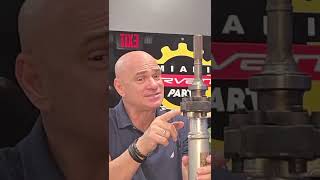
The C6 Corvette's LS-series engines (LS2, LS3, LS7, LS9) have a coil-near-plug ignition system with short spark plug wires. These wires are highly susceptible to heat damage from the exhaust manifolds, making them a very common failure point that leads to random misfires. Aftermarket headers with tight clearances can exacerbate this issue. While many vehicles can trigger a P0300, on the C6 platform, degraded spark plug wires are a uniquely frequent cause that should be checked first. Additionally, specific issues like worn valve guides on the LS7 engine are a known, serious cause of misfires on that particular motor. A unique-to-platform issue is that worn torque tube bearings can create drivetrain vibrations that the crankshaft position sensor misinterprets as a random misfire, setting a P0300 code even with a perfectly healthy engine.
🎬 Watch: How torque tube vibrations can cause false misfire codes.Diagnostic Flowchart

Tap your situation to follow the diagnostic path that matches what you're seeing on this vehicle.
Symptoms You May Notice
- Rough or unstable idle, sometimes only when the engine is fully warm.
- Engine hesitation or stumbling during acceleration.
- Noticeable loss of power.
- Flashing or solid Check Engine Light.
- Reduced fuel economy.
- A smell of raw fuel from the exhaust.
- Engine shaking violently under load, especially at highway speeds.
- Unusual valvetrain noise (ticking or squeaking), which could point to internal engine issues like worn lifters or valve guides.
- Replacing oxygen sensors. While O2 sensor codes can sometimes accompany a P0300 (like in NHTSA complaint #10257817), the root cause is often a vacuum leak or misfire that affects the exhaust gas composition, not a faulty sensor itself.
- Replacing the Mass Airflow (MAF) sensor. While a dirty MAF can cause issues, it's a less common cause for P0300 than ignition parts or vacuum leaks. Cleaning the MAF sensor is a reasonable diagnostic step, but replacement is often unnecessary.
Most Likely Causes

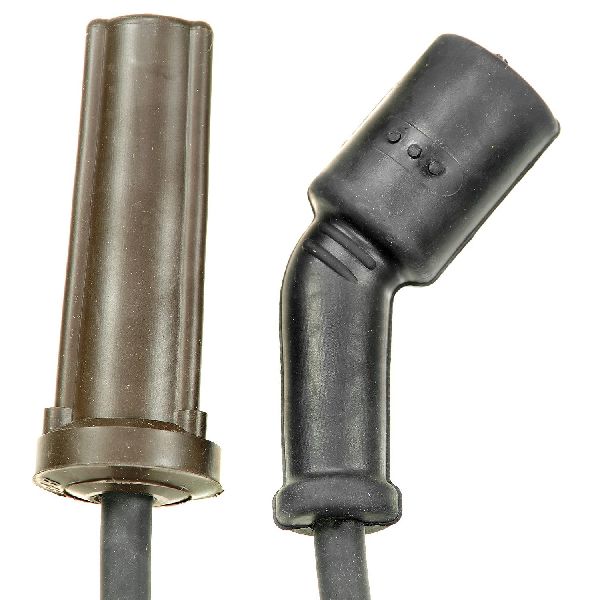
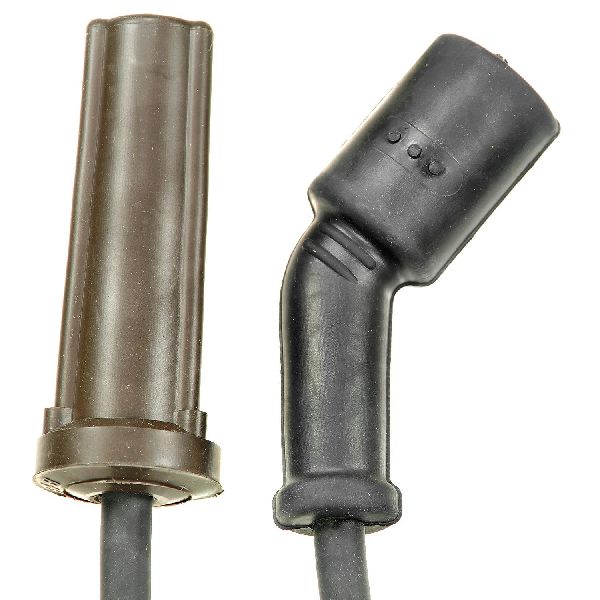
- Worn or Damaged Spark Plug Wires 🔴 High Probability → Shop Spark Plug The spark plug wires on LS engines are short and close to the hot exhaust manifolds, causing them to degrade over time. Aftermarket headers can accelerate this process. The boots can fail to seal properly or the internal conductor can break from being pulled on during service.
How to confirm: Visually inspect wires for cracks, burns, or loose connections at the coil and spark plug. Ensure they 'click' securely onto the plugs and coils. Test resistance with a multimeter; values should be low and consistent across all wires (typically 250-750 ohms for OEM-style wires). A simple and effective test is to start the engine in a dark garage and look for blue arcing around the wires, which indicates a leak to ground.
Typical fix: Replace the full set of spark plug wires. 🎬 See this step-by-step guide for replacing C6 plugs and wires. Many forum users report solving persistent issues by using only OEM ACDelco wires after aftermarket sets failed to fix the problem. Consider high-temperature performance wires and protective sleeves if running aftermarket headers.
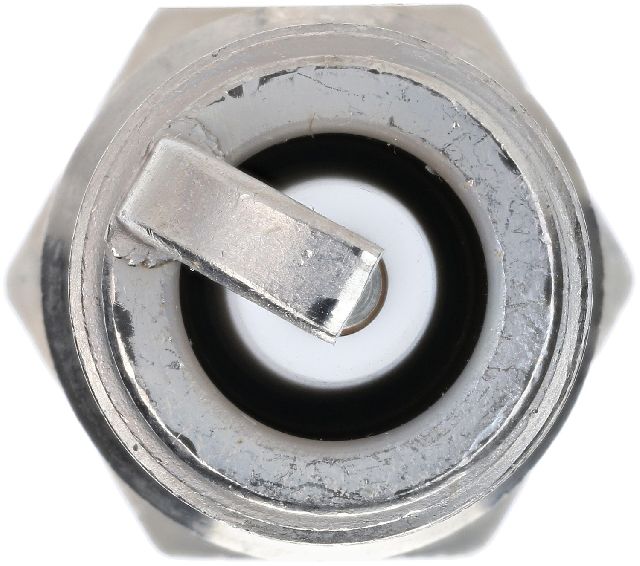
Est. part cost: $50-$150 - Worn or Incorrect Spark Plugs 🔴 High Probability → Shop Spark Plug Spark plugs are a standard maintenance item. Worn electrodes, incorrect gaps, or cracked porcelain will cause a weak or inconsistent spark. LS engines are known to be sensitive to plug types, and using non-OEM plugs (like certain Bosch models) has been cited by owners as a direct cause of P0300.
How to confirm: Remove and inspect all eight spark plugs. Look for heavy carbon fouling, oil contamination, a worn-down electrode, or cracks in the white porcelain insulator. Even new plugs can be faulty out of the box.
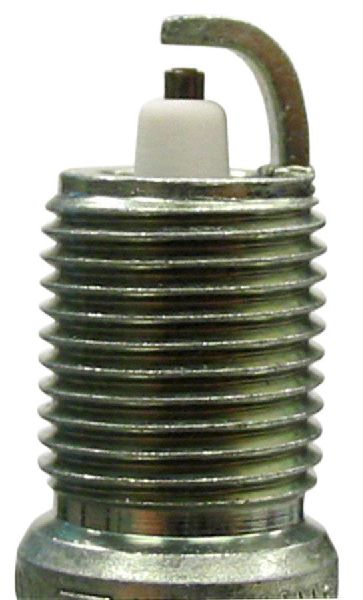
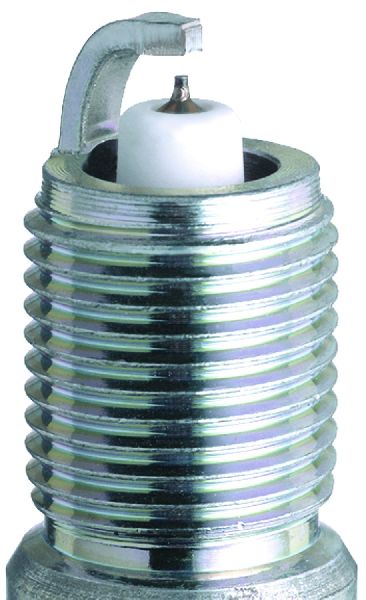
Typical fix: Replace all eight spark plugs. Use the OEM-specified ACDelco Iridium plugs (e.g., 41-162 for LS3) for best results and to avoid compatibility issues. Be aware of part number supersessions (e.g., 41-985 -> 41-110 -> 41-162).
Est. part cost: $60-$120 - Vacuum Leak 🟡 Medium Probability The composite intake manifold gaskets can harden and fail over time, creating a significant vacuum leak that causes a lean condition and random misfires. This issue is common on GM V8s of this era. Other sources include cracked or disconnected PCV hoses or a leaking brake booster hose.
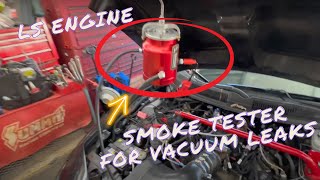
How to confirm: Perform a smoke test by injecting smoke into the intake system and watching for leaks. Alternatively, with the engine running, carefully spray short bursts of brake cleaner or unlit propane around the intake manifold gaskets; a change in engine idle indicates a leak. High positive fuel trims at idle that decrease with RPM on a scan tool also strongly suggest a vacuum leak.
Typical fix: Replace the leaking gasket or hose. If replacing intake manifold gaskets, the throttle body seal should also be replaced.
Est. part cost: $20-$200 - Faulty Ignition Coil(s) ⚪ Low Probability → Shop Ignition Coil While GM coils are generally very reliable, a failing coil can produce a weak or intermittent spark. A P0300 can result if multiple coils are failing or if one is failing intermittently enough that the ECM can't isolate it to one cylinder. A loose ground for a coil pack can also cause issues.
How to confirm: Use a scan tool to monitor misfire counts per cylinder in real-time. Swap the suspected coil with a known good one from another cylinder. If the misfire code follows the coil (e.g., changes from P0302 to P0304), the coil is bad. Resistance can also be tested: primary resistance should be 0.4-0.6 ohms and secondary should be 5,000-7,200 ohms.
Typical fix: Replace the faulty ignition coil. It is generally not necessary to replace all eight.
Est. part cost: $40-$80 per coil
Rare But Worth Checking
- Clogged or Leaking Fuel Injectors: → Shop Fuel Injector Injectors can become dirty, causing a poor spray pattern, or leak, causing a rich condition. An injector balance test can help diagnose this. In some cases, a faulty injector can cause a misfire without setting a specific injector code.
- Low Fuel Pressure: A weak fuel pump or clogged filter can starve the engine of fuel, leading to lean misfires across all cylinders, especially under load. Fuel pressure should be tested at the rail to confirm; it should be a steady 58-60 PSI.
- Internal Engine Issues (LS7 Valve Guides): On 2008-2011 LS7 engines, premature valve guide wear is a well-documented factory issue caused by a machining error. This allows the valve to move side-to-side, causing poor sealing, oil consumption, noise, and eventually misfires. If left unaddressed, it can lead to catastrophic engine failure when a valve head breaks off. A 'wiggle test' by a qualified machine shop is the definitive diagnostic.
- Crankshaft Position Sensor (CKP) Relearn Needed: → Shop Engine Crankshaft Position Sensor The ECM uses the CKP sensor to detect misfires by monitoring tiny variations in crank speed. Drivetrain vibrations from other sources (like worn torque tube couplers) or sensor inaccuracies can be misinterpreted as misfires. If no physical misfire is felt, performing a 'crankshaft variation relearn' procedure with a dealership-level scan tool can resolve false P0300 codes.
- Loose or Corroded Engine Ground Straps: → Shop Engine Wiring Harness A poor ground connection between the engine block and the chassis can cause a host of electrical issues, including random misfires. There are multiple ground points on the frame near the engine that should be inspected, cleaned, and tightened, especially G106 on the engine block and the grounds under the battery tray.
- Active Fuel Management (AFM) Lifter Failure: → Shop Engine Valve Lifter On LS engines equipped with AFM (L76, L99, etc., primarily not in Corvettes but in platform mates), a stuck or collapsed AFM lifter can cause a persistent misfire on a specific cylinder, which may initially present as a P0300. This often comes with a distinct ticking noise.
Diagnosis Steps
- Check for any other stored trouble codes with an OBD-II scanner. Codes like P0171/P0174 or specific cylinder misfires (P0301-P0308) provide valuable clues.
- Use a scan tool with live data to monitor 'misfire current counters' for each cylinder to see if the misfires are truly random or concentrated on one or two cylinders.
- Visually inspect the spark plug wires for any signs of burning, cracking, or loose connections. Ensure they 'click' securely onto the spark plugs and coil packs.
- In a dark environment, start the engine and look for any blue sparks arcing from the plug wires or boots to any metal part of the engine, which indicates a bad wire.
- Remove and inspect all spark plugs. Look for signs of wear, fouling, or damage. Replace if they are old, incorrect, or in poor condition. Many owners solve issues by switching from aftermarket plugs back to ACDelco.
- If plugs and wires are good, check for vacuum leaks. A professional smoke test is the most effective method. Pay close attention to the intake manifold gaskets and the PCV hose system. Listening for hissing or using the propane/brake cleaner method can also pinpoint leaks.
- Check engine ground straps. Locate the main grounds from the engine to the chassis, remove them, clean the contact surfaces until they are shiny, and re-tighten securely. Pay special attention to the grounds under the battery tray.
- If a specific cylinder is suspected from scan tool data, swap its ignition coil with another cylinder's coil to see if the misfire follows the coil.
Parts You'll Likely Need
- Spark Plug Wire Set
(OEM #ACDelco 9748HH (Check application, fits many but not all LS engines))— This is the most frequent failure item causing a P0300 on C6 Corvettes due to heat degradation.
Trusted brands: ACDelco, NGK
OEM price range: $60-$90
Aftermarket price range: $50-$150 - Iridium Spark Plugs
(OEM #ACDelco 41-162 (LS3/LS9), 41-110 (LS2/LS7))— Worn or incorrect spark plugs are a primary cause of weak spark and misfires. Using OEM plugs is highly recommended by owners to avoid issues.
Trusted brands: ACDelco, NGK
OEM price range: $8-$15 per plug
Aftermarket price range: $6-$12 per plug - Intake Manifold Gasket Set
(OEM #GM 19207929 (for LS3))— If a vacuum leak is diagnosed at the intake manifold, these gaskets must be replaced to seal the leak. This is a very common failure point on GM V8s.
Trusted brands: ACDelco, Fel-Pro
OEM price range: $40-$70
Aftermarket price range: $20-$50
Related Codes That Often Appear With This One
- P0301-P0308 — If the ECM can isolate the misfire to a specific cylinder, it will set a code for that cylinder (e.g., P0301 for Cylinder 1) in addition to or instead of P0300.
- P0171 / P0174 — These codes indicate a 'System Too Lean' condition on Bank 1 and Bank 2, respectively. They are often caused by a vacuum leak, which allows unmetered air into the engine and is also a common cause of P0300.
Technical Service Bulletins (TSBs) & Recalls
- PIP5628G: Preliminary information requesting specific data be sent to GM's Technical Assistance Center (TAC) when diagnosing P0300-P0308, indicating potential for complex or unusual root causes.
- PIP4786C: While for a P0521 (low oil pressure), this TSB is relevant to platform mates with AFM and discusses a clogged Valve Lifter Oil Filter, which can be related to the oiling issues that cause AFM lifter failure and subsequent misfires.
- PIP5259B: Discusses P0300 caused by a mechanically collapsed or stuck AFM lifter due to internal damage from oil aeration, a known issue on some GM V8s.
Platform-Specific Known Issues
- The provided TSB #PIP5628G from 2023 indicates that diagnosing misfire codes P0300-P0308 may require specific information to be relayed to GM's Technical Assistance Center (TAC), suggesting some diagnostic complexity.
- Owner complaint NHTSA ODI #10257817 for a 2006 model shows P0300 appearing alongside fuel trim (P0171) and O2 sensor (P0131, P1133) codes, highlighting how a single root cause like a vacuum leak can trigger multiple codes.
- LS7 Valve Guide Failure: 2008-2011 Z06 and 427 Convertible models are known for a factory defect in the cylinder head valve guides. This can cause noise, oil consumption, and misfires, potentially leading to catastrophic engine failure. Owners on CorvetteForum extensively discuss preventative inspection and repair, often involving replacing the guides and switching to solid stainless steel exhaust valves.
- False Misfires from Drivetrain Vibration: On cars with manual transmissions or high mileage, worn torque tube couplers can create vibrations that the crankshaft position sensor misinterprets as an engine misfire, setting a P0300 code when no real misfire is occurring. A crank relearn procedure may help, but addressing the mechanical vibration is the true fix.
Mechanic-Grade Diagnostic Values
- Fuel Pressure at Fuel Rail Schader Valve — expected: 58-60 PSI (400-414 kPa). Failure: Pressure below 55 PSI or that drops off under load indicates a weak fuel pump or clogged filter.
- Ignition Coil Primary Resistance — expected: 0.4 - 0.6 ohms. Failure: A reading significantly outside this range indicates a faulty coil.
- Ignition Coil Secondary Resistance — expected: 5,000 - 7,200 ohms. Failure: A reading of infinity (open circuit) or well outside this range points to a bad coil.
- Spark Plug Wire Resistance — expected: 250 - 750 ohms per wire (for OEM). Failure: Extremely high resistance or an open circuit (OL) means the wire's internal conductor is broken.
- Upstream O2 Sensor Voltage (Live Data) — expected: Fluctuating rapidly between ~0.1V and ~0.9V (100mV - 900mV). Failure: A sensor 'stuck' high (above 450mV) can indicate a rich condition, while one stuck low can indicate a lean condition or false air from an exhaust leak.
Hidden / Shadow Codes Worth Checking
- Mode $06 Misfire Data: This is not a 'code' but a diagnostic function. Before a P0300 or P030x code is officially set, the ECM tracks misfire events for each cylinder. Advanced scan tools can access this Mode $06 data to see which specific cylinders are accumulating misfire counts, even if the count is not yet high enough to trigger a Check Engine Light. This allows a technician to see the problem developing and identify the offending cylinder(s) early. (see via An advanced OBD-II scan tool with Mode $06 functionality (e.g., Tech 2, Autel, etc.). The data is typically found under 'On-Board Monitor Test' or similar menus.)
Scan Tool Commands That Help
- Tech 2 / GDS2 / Advanced Scan Tool: Crankshaft Variation Relearn (CASE Relearn) — This procedure is essential after replacing a crankshaft position sensor, ECM, or flywheel/flexplate. It should also be performed to rule out false misfires if drivetrain vibrations (e.g., from a bad torque tube) are suspected of causing a P0300 code.
- Tech 2 / GDS2 / Advanced Scan Tool: Injector Balance Test — Used to identify a clogged or faulty fuel injector. The tool commands each injector to fire and measures the corresponding drop in fuel pressure. An injector with a smaller pressure drop than the others is likely restricted.
- Engine Control Module (ECM): → Shop Engine Control Module (ECM) Clear Flood Crank — This is a built-in diagnostic mode, not a scan tool command. By holding the accelerator pedal to the floor while cranking the engine, the ECM shuts off the fuel injectors. This allows a technician to listen to the sound of the engine cranking to detect mechanical issues (like uneven compression) without the engine trying to start.
Wiring & Ground Locations
- G104 & G108 — On the top of the right front frame rail, just ahead of or under the battery tray.. This is a major grounding point for the BCM, instrument panel, and portions of the engine compartment fuse box. Corrosion here can cause widespread, difficult-to-diagnose electrical issues that can manifest as false codes.
- G106 — On the right side of the engine block, typically above the starter motor.. This is a critical ground for the engine's electronics, including the PCM (ECM), Mass Airflow (MAF) sensor, and ignition system components. A loose or corroded connection here can directly cause misfires and other engine management faults.
- ECM Connector X1, Pin 19 (PK wire) — On the E38 ECM (2006+), this is in the larger of the two main connectors.. This is the main 'Ignition 1 Voltage' feed that powers up the ECM when the key is on. An intermittent connection or voltage drop on this circuit can cause the ECM to behave erratically, potentially leading to misfire detection issues.
Real Owner Repair Stories
- CorvetteForum user stories (2006 C6 Automatic, 90k miles) — P0300 code, engine shakes violently under heavy throttle, but idle is mostly smooth. No specific cylinder codes.
❌ Tried (didn't work) Replacing spark plugs with non-OEM Bosch plugs, Cleaning injectors, Checking for vacuum leaks
✅ What actually fixed it The final fix was replacing worn torque tube couplers (bushings). The rubber couplers had deteriorated, causing a drivetrain vibration that the crankshaft position sensor misinterpreted as an engine misfire. Replacing the couplers eliminated the false P0300 code. - CorvetteForum user story (2005 C6 Corvette) — P0300 code, very rough idle, and strong fuel smell immediately after removing and reinstalling the intake manifold to replace the oil pressure sender.
❌ Tried (didn't work) Double-checking all injector and spark plug wire connections.
✅ What actually fixed it The owner had broken an intake manifold bolt during reassembly. This prevented the intake gasket from sealing on cylinder #1, causing a massive vacuum leak and a complete loss of compression on that cylinder. Replacing the broken bolt and properly torquing the manifold resolved the issue. - CorvetteForum user story (2007 C6 Corvette, 120k miles) — Initial P0300 (random misfire) code along with a P0302 (cylinder 2 misfire). Rough idle and clunking noises.
❌ Tried (didn't work) The P0300 was resolved by replacing a faulty torque tube, but the P0302 and rough running remained.
✅ What actually fixed it The persistent cylinder 2 misfire was caused by a failed roller lifter which had, in turn, worn down the corresponding camshaft lobe. The ultimate fix required a major internal engine repair, including a new camshaft and a full set of lifters.
"I Checked Everything" — The Actual Cause
- A very common scenario for a P0300 on a C6 Corvette, especially on automatic transmission models, is when the code appears with no noticeable engine performance issues. After standard diagnostics like checking plugs, wires, coils, and performing a smoke test for vacuum leaks reveal nothing, the actual cause is often found to be worn rubber couplers inside the torque tube. The resulting drivetrain vibration is detected by the crankshaft position sensor and falsely registered by the ECM as a random engine misfire.
When the Usual Fixes Don't Work
- In several documented cases, owners have replaced the entire ignition system (plugs, wires, coils), fuel system components (injectors, pump), and confirmed no vacuum leaks, yet the P0300 code persisted. The final resolution was often mechanical or electrical in a way that fools the engine's sensors. The most prominent example is a worn torque tube causing vibrations that the crankshaft sensor misreads as misfires. This highlights that on this platform, if common causes don't resolve the code and no actual misfire is felt, the source of the problem may not be in the engine at all, but in the driveline.
OEM Part Supersession History
ACDelco 41-985 (Iridium)→ACDelco 41-110, then ACDelco 41-162— Design updates and consolidation of part numbers by the manufacturer.
Heads up: While 41-110 superseded 41-985, GM later issued guidance that for some older applications, the platinum 41-962 or the original 41-985 should be used instead of the 41-110, causing confusion. For the C6 LS2/LS3, the 41-162 is the currently accepted replacement for the 41-110.
Model Year Variations Within This Range
- 2005 only: The 2005 Corvette uses the E40 Engine Control Module (ECM) with a 24x crankshaft reluctor wheel. This ECM is considered a one-year-only 'hybrid' module and is notoriously difficult to source replacements for. It has different connectors, pinouts, and tuning capabilities than later models.
- 2006-2013: These model years use the more common and capable E38 ECM with a 58x crankshaft reluctor wheel. This system is not interchangeable with the 2005 E40 system without extensive modification, including changing the crankshaft, wiring harness, and BCM.
Helpful Videos
We Have This Part in Stock

The information in this article is provided for general reference and educational purposes only. Vehicle specifications, procedures, and part compatibility can vary by production date, trim level, and region. Always consult your vehicle's factory service manual and verify part numbers before purchasing or performing repairs. Safety-critical components such as airbags, seat belts, and braking systems should be installed by a qualified professional.
- Chevrolet CORVETTE:
- 🧭 Diagnostic Flowchart
- 🎬 Helpful Videos
- 🛍️ Shop This Part
- What's Unique About the 2005-2012 Chevrolet CORVETTE
- Symptoms You May Notice
- Most Likely Causes
- Rare But Worth Checking
- Diagnosis Steps
- Parts You'll Likely Need
- Related Codes That Often Appear With This One
- Technical Service Bulletins (TSBs) & Recalls
- Platform-Specific Known Issues
- Mechanic-Grade Diagnostic Values
- Hidden / Shadow Codes Worth Checking
- Scan Tool Commands That Help
- Wiring & Ground Locations
- Real Owner Repair Stories
- "I Checked Everything" — The Actual Cause
- When the Usual Fixes Don't Work
- OEM Part Supersession History
- Model Year Variations Within This Range
- 🎟️ Get 5% Off