

P0300 on 2011-2018 Chevrolet Cruze: Random Misfire Causes and Fixes
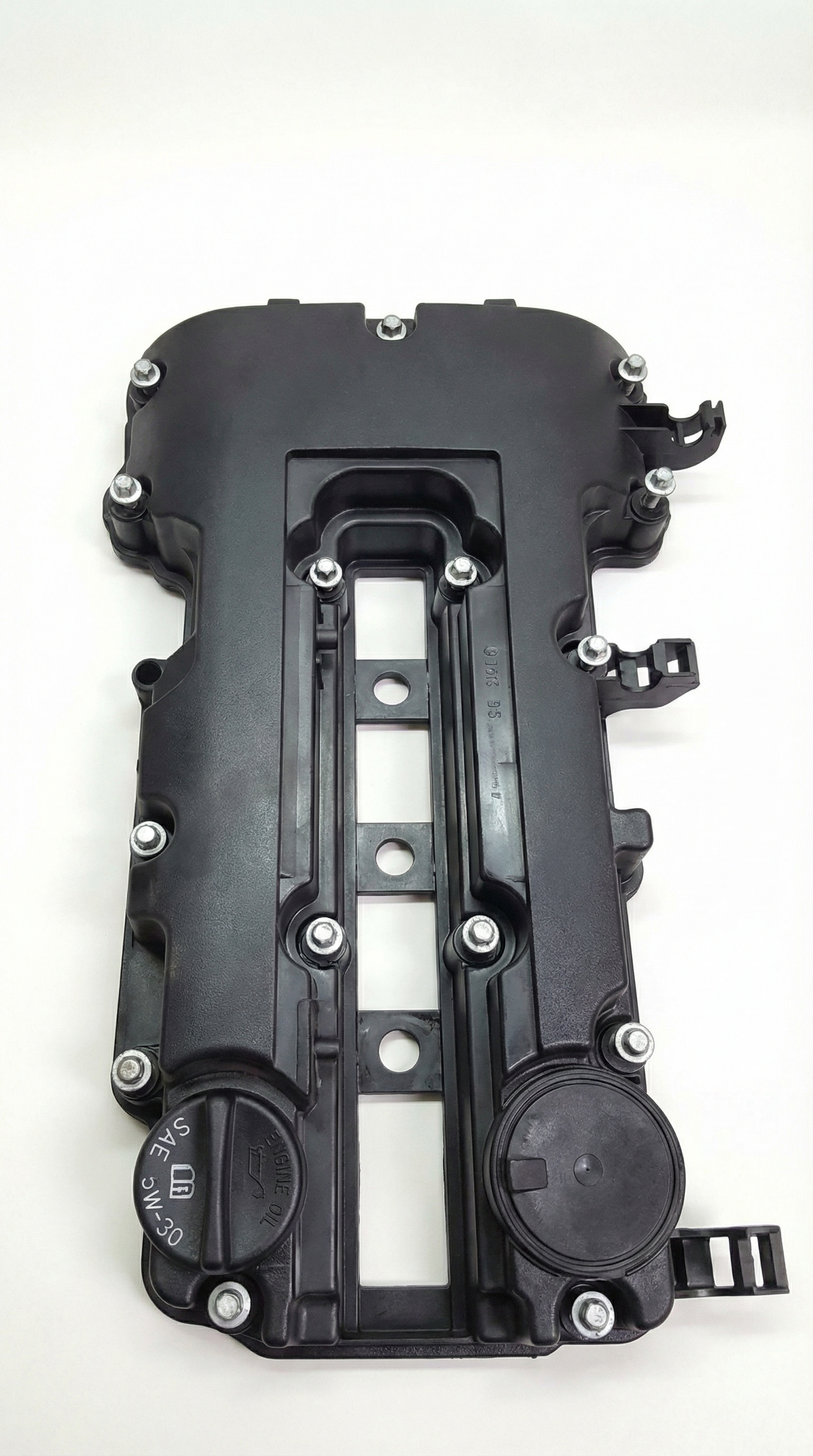
On the 1.4L Turbo Cruze, code P0300 is most often caused by a failed PCV system, creating a significant vacuum leak. This usually involves a ruptured diaphragm in the valve cover or a failed check valve inside the intake manifold. Replacing the entire valve cover assembly is the most common fix, costing between $60 for an aftermarket part and $150 for an OEM part.
- For the 1.4L Turbo Cruze, P0300 is most likely caused by a failed PCV system within the valve cover; listen for a hissing sound at idle.
- Always check for other codes. P0171 (System Too Lean) appearing with P0300 strongly points to a vacuum leak.
- Do not ignore a flashing check engine light, as this signals a severe misfire that can quickly destroy your catalytic converter.
- Basic maintenance items like OEM-quality spark plugs and a functional ignition coil are also common culprits and should be inspected early in the diagnosis.
- While rare, severe engine damage like cracked pistons can cause this code, so a compression test is warranted if the common causes are ruled out.
What's Unique About the 2011-2018 Chevrolet CRUZE

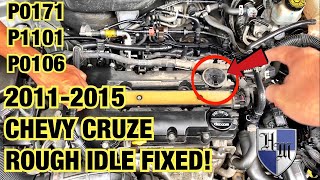
The Chevrolet Cruze, particularly the first generation (2011-2016) with the 1.4L turbo engine (RPOs LUJ, LUV), is uniquely prone to P0300 due to its PCV (Positive Crankcase Ventilation) system design. A critical check valve inside the intake manifold can fail and get ingested by the engine, and a rubber diaphragm in the valve cover can rupture. Both failures create significant vacuum leaks that the ECM cannot compensate for, leading to a lean condition (often with code P0171) and random misfires. This issue is so common that it's often the first thing experienced owners and technicians check, with multiple forum threads and videos dedicated to the diagnosis.
Diagnostic Flowchart

Tap your situation to follow the diagnostic path that matches what you're seeing on this vehicle.
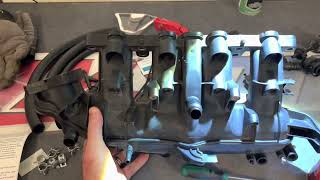
Generation note: The 2011-2018 range covers two Cruze generations. The first generation (2011-2016) used 1.8L (non-turbo) and 1.4L LUJ/LUV turbo engines. The second generation (2016.5-2019) introduced a redesigned 1.4L LE2 turbo engine. While both generations can experience P0300 from common causes like spark plugs or coils, the notorious PCV system and valve cover 🎬 Watch: How to diagnose and fix common PCV vacuum leaks. failure is almost exclusively associated with the first-generation 1.4L turbo engine and its platform mates.
Symptoms You May Notice

- Rough or unstable idle
- Hesitation or stumbling during acceleration
- Flashing or solid Check Engine Light
- Noticeable loss of engine power
- Vehicle may seem to almost stall.
- Service StabiliTrak or Traction Control warning lights may illuminate.
- Audible hissing or whistling sound from the top of the engine at idle (from a torn PCV diaphragm).
- Increased oil consumption.
- High-pitched chirp from the crankcase seal area at idle (due to excessive vacuum).
- Replacing only spark plugs when the underlying cause is a failed PCV system in the valve cover or a missing intake manifold check valve.
- Replacing oxygen sensors, which may report lean conditions (like code P0171) that are actually symptoms of a vacuum leak upstream.
- Replacing the Mass Airflow (MAF) sensor when codes P0171 and P1101 are present, as these are often triggered by the PCV vacuum leak, not a faulty sensor.
Most Likely Causes

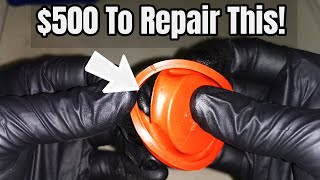
- Failed PCV System (Valve Cover Diaphragm or Intake Manifold Check Valve) 🔴 High Probability The 1.4L turbo engine's PCV system has two common, high-failure-rate components: a rubber diaphragm in the valve cover can tear, and a check valve in the intake manifold can dislodge or degrade. Both create a large, unmetered vacuum leak, causing a lean air-fuel mixture (P0171) and random misfires (P0300). This is the most well-documented issue for this platform.
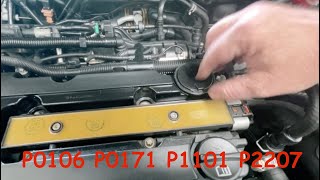
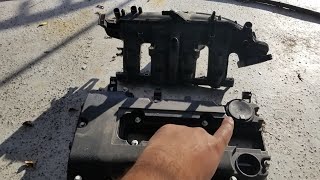
How to confirm: Listen for a distinct hissing or whistling sound from the small hole on top of the PCV housing on the valve cover. While the engine is running, try to remove the oil cap; if a strong vacuum makes the cap very difficult to remove, the PCV diaphragm has failed. To check the intake manifold valve, remove the corrugated PCV hose and look inside the port for a small orange or black 'nipple'; if it's missing, it has failed and likely been ingested by the engine.
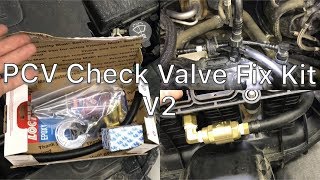
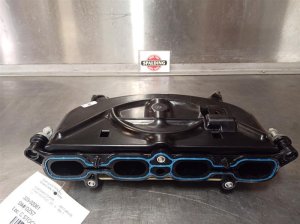
Typical fix: Replace the entire valve cover assembly (the diaphragm is not sold separately). If the intake manifold check valve is missing, the official fix is to replace the intake manifold. However, many owners opt for an aftermarket external check valve kit (from vendors like CruzeKits.com or ZZPerformance) which is cheaper and provides a serviceable, more durable solution.
Est. part cost: $60-$150 for valve cover; $75-$100 for external PCV kit. - Worn or Fouled Spark Plugs 🔴 High Probability → Shop Spark Plug Spark plugs are a standard maintenance item. The high cylinder pressures in a turbocharged engine can shorten their effective lifespan. Oil leaks from a failed valve cover gasket can also foul the plugs, causing misfires.
How to confirm: Remove the spark plugs and inspect them for wear, oil fouling, or heavy carbon deposits. The OEM recommended plug for the 1.4L Turbo is the ACDelco 41-103 Iridium plug. These come pre-gapped (around 0.040") and should not be adjusted.
Typical fix: Replace all four spark plugs with high-quality OEM-spec (ACDelco Iridium) plugs. It is highly recommended to replace plugs when replacing the ignition coil.
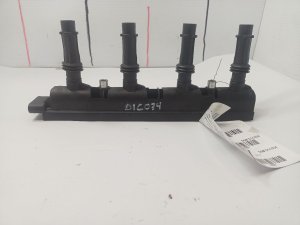
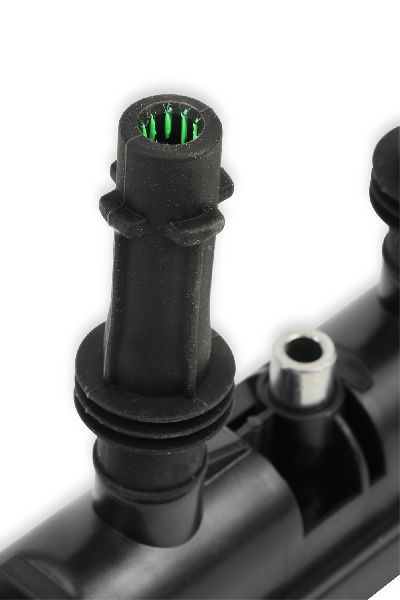
Est. part cost: $30-$60 - Faulty Ignition Coil Pack 🟡 Medium Probability → Shop Ignition Coil The single coil pack assembly provides spark for all four cylinders. Over time, heat and vibration can cause it to crack or fail internally, resulting in a weak or inconsistent spark to one or more cylinders. Oil leaking from the valve cover gasket is a known cause of premature coil pack failure.
How to confirm: With a scan tool, monitor misfire counts on each cylinder in real-time. Since it's a single unit, swapping is not possible for diagnosis. Visually inspect the coil pack for cracks in the housing and check the spark plug wells for oil. If plugs are good and a misfire persists across cylinders, the coil is a likely suspect.
Typical fix: Replace the entire ignition coil pack assembly. Using a quality OEM (ACDelco/Delphi) or reputable aftermarket brand is recommended over cheap alternatives.
Est. part cost: $80-$200 - Clogged or Faulty Fuel Injectors ⚪ Low Probability → Shop Fuel Injector Fuel injectors can become clogged over time, leading to a poor spray pattern and an incorrect fuel mixture. GM also issued a TSB (#PIP5353F) regarding misfires caused by reversed fuel injector control circuit wires from the factory on some models.
How to confirm: A professional can perform a fuel injector balance test. For the wiring issue, a technician would need to compare the wire colors at the injector connectors to the official schematic as noted in TSB PIP5353F.
Typical fix: Clean or replace the faulty fuel injectors. Correct any wiring harness errors.
Est. part cost: $50-$150 per injector
Rare But Worth Checking
- Cracked Piston / Broken Piston Ring Land: This is a severe mechanical engine failure. GM TSB #19-NA-090 specifically addresses P0300 on the 1.4L engine caused by a broken piston ring land, leading to low compression. Symptoms include oil consumption and misfires. TSB #18-NA-171 also discusses damaged pistons. Confirmation requires a compression test followed by a cylinder leak-down test. If the cylinder wall is not scored, the repair involves replacing all four pistons and rings.
- Low Fuel Pressure: A weak fuel pump or clogged fuel filter can starve the engine of fuel, causing lean misfires across all cylinders, especially under load. This is confirmed by testing fuel pressure at the fuel rail.
Diagnosis Steps
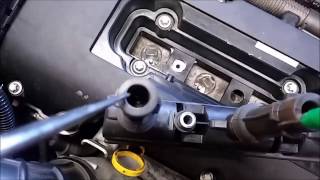
- Read all stored DTCs with an OBD-II 🎬 Watch: A professional walkthrough for diagnosing a P0300 code. scanner. Note any other codes present, especially P0171 or P1101, which strongly point to a vacuum leak.
- With the engine running, listen for a loud hissing or whistling sound from the PCV diaphragm on the engine cover. Confirm by placing a finger over the hole; the sound should stop and the idle may change.
- Perform the 'oil cap test': with the engine idling, try to remove the oil filler cap. If it's held on by strong vacuum, the valve cover's PCV diaphragm is ruptured and the cover must be replaced.
- Check the intake manifold PCV port. Remove the plastic engine beauty cover and the PCV tube connecting the valve cover to the intake manifold. Shine a light into the port on the manifold. If the orange or black check valve 'nipple' is missing, it has failed.
- Check fuel trims with a scan tool. High positive short-term and long-term fuel trims at idle (e.g., >15-20%) that decrease as RPMs increase strongly confirm a vacuum leak.
- Inspect the ignition system. Remove the coil pack and check for cracks or oil contamination. Remove and inspect all four spark plugs for wear, damage, or oil fouling.
- If ignition and PCV system checks are inconclusive, perform an engine compression test and a cylinder leak-down test to check for internal mechanical problems like bad valves or damaged pistons, as outlined in TSB 19-NA-090.
Parts You'll Likely Need
- Valve Cover / Camshaft Cover Assembly
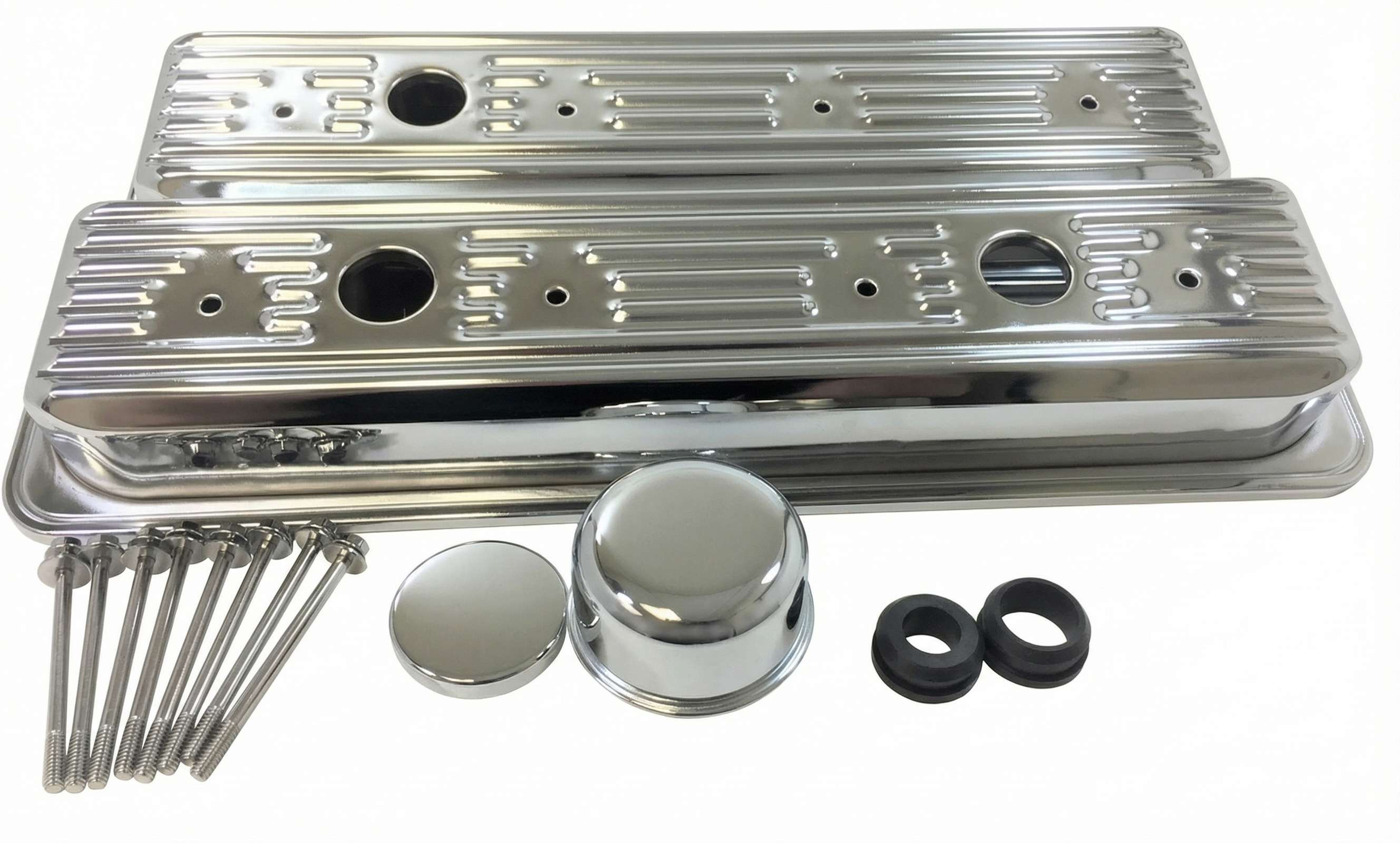
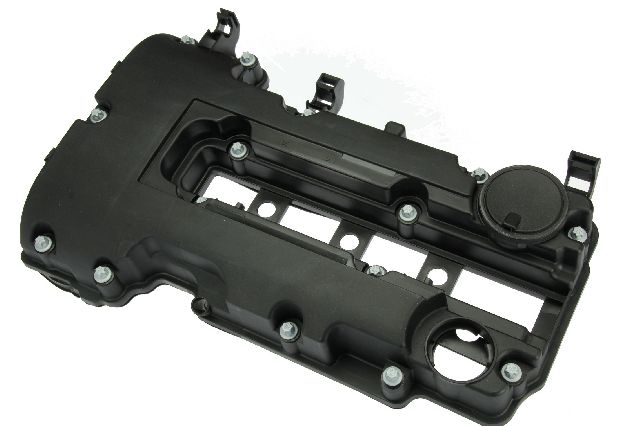
(OEM #25198874 (latest), supersedes 55573746, 25198498)— This is the most common fix for the 1.4L Turbo engine. The PCV diaphragm is integrated into the cover and is not sold separately. The replacement assembly includes a new cover, gaskets, and bolts.
Trusted brands: ACDelco (OEM), Dorman
OEM price range: $115-$150
Aftermarket price range: $60-$90 - Ignition Coil Pack
(OEM #25186687 (For 1.8L), 55579072 (For 1.4L))— A common failure point that causes weak or no spark, leading to misfires across multiple cylinders. Often fails due to age or oil contamination from a leaking valve cover.
Trusted brands: ACDelco, Delphi, NGK
OEM price range: $150-$200
Aftermarket price range: $80-$120 - Spark Plugs (Set of 4)
(OEM #ACDelco 41-103 (For 1.4L Turbo))— A basic but critical component for ignition. Should be replaced as regular maintenance, or when replacing a failed ignition coil.
Trusted brands: ACDelco, NGK
OEM price range: $30-$50
Aftermarket price range: $20-$40 - Aftermarket PCV Intake Manifold Fix Kit — A popular and cost-effective alternative to replacing the entire intake manifold when the internal check valve fails. These kits re-route the PCV system to use a more durable, external, and serviceable check valve.
Trusted brands: CruzeKits.com, ZZPerformance
OEM price range: N/A
Aftermarket price range: $75-$100
Related Codes That Often Appear With This One
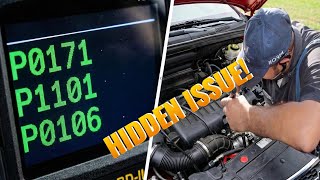
- P0171 — System Too Lean. This code is frequently triggered alongside P0300 because a major vacuum leak from the PCV system allows too much unmetered air into the engine, creating a lean condition the ECM detects.
- P1101 — Intake Air Flow System Performance. This code is often caused by the same vacuum leaks that trigger P0300, as the Mass Airflow (MAF) sensor readings don't match what the engine expects due to the unmetered air.
- P0106 — Manifold Absolute Pressure (MAP) Sensor Performance. This can be set along with P1101 and P0171 due to the erratic vacuum signal caused by the failed PCV system.
- P0301, P0302, P0303, P0304 — Cylinder-specific misfire codes. A random misfire (P0300) may eventually be isolated by the ECM to one or more specific cylinders as the condition worsens or if a component like a single spark plug is the primary issue.
Technical Service Bulletins (TSBs) & Recalls
- 21-NA-255: General bulletin for engine misfire, P0300.
- PIP5353F: Information regarding misfires caused by reversed fuel injector control circuit wires.
- 19-NA-090: Details diagnosis for P0300 caused by broken piston ring lands, leading to low compression.
- 18-NA-171: Information on diagnosing P0300 with low compression due to damaged pistons.
- PIP5628G: Preliminary information for diagnosing P0300-P0308.
- PIP5421G: Discusses P0300 on the related 1.5L LFV engine due to damaged pistons, indicating a pattern in GM small displacement engines.
Platform-Specific Known Issues
- PCV System Design Flaw (1.4L LUJ/LUV Engine): The primary unique issue for this platform is the PCV system. It has two key failure points: a non-serviceable diaphragm in the valve cover that tears, and a non-serviceable check valve in the intake manifold that gets dislodged. Both failures cause a massive vacuum leak, triggering P0300 and P0171. The community has developed robust aftermarket solutions (external check valve kits) to bypass the intake manifold flaw permanently.
- Piston Ring Land Failure (1.4L LUJ/LUV Engine): As documented in GM TSB 19-NA-090, these engines are susceptible to breaking the piston ring lands, which causes low compression, oil consumption, and a P0300 misfire code. This is a serious mechanical failure requiring significant engine work to replace the pistons.
Mechanic-Grade Diagnostic Values
- Low-Side Fuel Pressure (Engine Off, Pump Commanded On) — expected: 50 - 94 PSI. Failure: Pressure below 50 PSI indicates a potential issue with the fuel pump, restricted fuel lines, or wiring.
- Low-Side Fuel Pressure (At Idle) — expected: Approximately 40 - 58 PSI. Failure: Significantly lower pressure can indicate a failing fuel pump, though idle pressure alone is not a definitive test.
- GM Misfire Counter (Live Data) — expected: Near zero counts on all cylinders at idle and under load.. Failure: A GM scan tool displays misfires in a 200-ignition-cycle block. Rapidly accumulating counts on one or more cylinders confirms an active misfire that the ECM is detecting.
Scan Tool Commands That Help
- GDS2 / Tech2: Crankshaft Position Variation Learn — This procedure is required if the ECM, crankshaft position sensor, or engine has been replaced. Failure to perform the relearn can result in a P1336 DTC or cause the ECM to inaccurately detect misfires. The procedure involves accelerating the engine to fuel cut-off (around 4000 RPM) to allow the ECM to learn the minor variations in the crankshaft reluctor wheel.
- GDS2 / Tech2: Misfire Graphic / Misfire Data — To view live and history misfire counts for each individual cylinder. This is the primary step to determine if the misfire is truly random (counts spread across cylinders) or isolated to a specific cylinder, which helps narrow down the cause (e.g., a single bad spark plug vs. a vacuum leak affecting all cylinders).
Wiring & Ground Locations
- Negative Battery Cable & Ground Connection — The main negative cable runs from the battery terminal to a grounding point on the vehicle's chassis/frame in the engine bay.. A known issue on 2011-2015 models involves an insufficient crimp on the negative battery terminal, causing high internal resistance (GM TSB 14311B). This can lead to fluctuating voltage, causing random, unrelated electrical issues including StabiliTrak warnings, radio problems, and incorrect sensor readings that can trigger a P0300 code.
- Ignition Coil Connector (X1 at ECM) — The ignition control signals originate from the Engine Control Module (ECM). For example, on a Delphi MT80 ECU, Pin 1 is for Ignition Control Timing Control (Cylinder 2) and Pin 5 is for Ignition Control (Cylinder 1).. Damage or corrosion to these specific pins or wires in the harness can cause a misfire on an individual cylinder. A coolant leak from a faulty thermostat housing has been reported to drip onto connectors, shorting out circuits and causing misfires or melting ignition coils.
Real Owner Repair Stories
- Reddit user (2018 Chevy Cruze LS) — P0300, P0202 (Injector Circuit), P1101 (MAF Performance), shaking, rough idle, acceleration lag, Service StabiliTrak message.
❌ Tried (didn't work) Replacing air filters and spark plugs., Swapping ignition coils.
✅ What actually fixed it The user was strongly advised by others that the combination of seemingly unrelated electrical codes is a classic symptom of the faulty negative battery cable, which is a known failure point causing poor grounding and erratic module behavior. - YouTube channel 'GQnnostics and Repair' (2017 Chevy Cruze LT 1.4L Turbo with 151,000 miles) — P0300 and P0302 (Cylinder 2 Misfire).
❌ Tried (didn't work) Initial diagnosis focused on a full tune-up due to high mileage.
✅ What actually fixed it Upon inspection, two of the four spark plugs were found to be loose in the cylinder head. The looseness was enough to cause compression leakage and misfires. Replacing all four spark plugs and tightening them to the correct torque specification resolved the issue. - YouTube channel 'MELTING COIL RAIL ON CYLINDER 1 SOLVED' (2014 Chevy Cruze) — P0300/P0301, repeatedly melting new ignition coils specifically on cylinder 1.
❌ Tried (didn't work) Replacing the ignition coil multiple times.
✅ What actually fixed it The root cause was a leaking aftermarket thermostat housing. Coolant was leaking from the housing into the coolant temperature sensor connector, causing a short in the wiring harness that ultimately overloaded and melted the ignition coil. The fix was to replace the faulty thermostat housing with an OEM part and thoroughly clean the contaminated electrical connector.
OEM Part Supersession History
25198874→25209141— Standard part revision by the manufacturer.
Heads up: The new part number is the current OEM replacement for the valve cover assembly. Aftermarket listings often reference multiple numbers including 25198874, 55573746, and 25198498 as interchangeable.GM 13355784 / 13355825→GM 19119634 / ACDelco PT3106— Part revision for the ignition coil connector service kit.
Heads up: This is the service pigtail/connector for the ignition coil. The connector housing itself is Aptiv F444110, which supersedes Delphi 55563971.
Model Year Variations Within This Range
- 2011-2012 vs 2013-2016: The ignition coil wiring harness connector design changed around 2013. Early models used a connector with a large metal shield, while 2013+ models used a different connector with a purple/magenta colored locking tab and no shield. The pinout remains the same, but the physical housing is different.
- 2011-2016: The 1.4L turbo engine was available in two main RPO codes, LUJ and LUV, which are mechanically very similar and share the same common P0300 causes. Aftermarket intake manifolds designed for the Sonic's LUJ/LUV engine have been confirmed to also fit the Cruze.
Helpful Videos
Used OEM Parts in Stock
New Aftermarket Parts Available

The information in this article is provided for general reference and educational purposes only. Vehicle specifications, procedures, and part compatibility can vary by production date, trim level, and region. Always consult your vehicle's factory service manual and verify part numbers before purchasing or performing repairs. Safety-critical components such as airbags, seat belts, and braking systems should be installed by a qualified professional.
- Chevrolet CRUZE:
- 🧭 Diagnostic Flowchart
- 🎬 Helpful Videos
- 🛍️ Shop This Part
- What's Unique About the 2011-2018 Chevrolet CRUZE
- Symptoms You May Notice
- Most Likely Causes
- Rare But Worth Checking
- Diagnosis Steps
- Parts You'll Likely Need
- Related Codes That Often Appear With This One
- Technical Service Bulletins (TSBs) & Recalls
- Platform-Specific Known Issues
- Mechanic-Grade Diagnostic Values
- Scan Tool Commands That Help
- Wiring & Ground Locations
- Real Owner Repair Stories
- OEM Part Supersession History
- Model Year Variations Within This Range
- 🎟️ Get 5% Off