

P0300 on 2018-2024 Chevrolet Equinox 1.5L Turbo: Causes and Fixes for Random Misfires
On a 2018-2024 Equinox 1.5L Turbo, code P0300 is very often caused by moisture accumulating and freezing in the Charge Air Cooler (CAC), a known issue covered by GM service bulletins. This is especially true if the misfire occurs in cold or wet weather. If not the CAC, the next most likely causes are worn spark plugs or faulty ignition coils.
- For the 2018-2024 Equinox 1.5L, P0300 is very frequently caused by moisture or ice in the Charge Air Cooler (CAC), especially in cold or rainy weather.
- Always check for TSBs related to the CAC (18-NA-020, 22-NA-065) before replacing common ignition parts.
- If the check engine light is flashing, pull over as soon as it is safe to do so to prevent expensive damage to the catalytic converter.
- If the CAC is not the issue, the next logical steps are to inspect and replace worn spark plugs (ACDelco 41-163) and test the ignition coils (ACDelco 12697989).
What's Unique About the 2018-2024 Chevrolet Equinox
The 1.5L Turbo (LYX) engine in this generation of Equinox has a well-documented weakness related to its Charge Air Cooler (CAC), also known as an intercooler. Moisture from the PCV system and humid air can build up inside the CAC. In cold weather (especially below 20°F/-7°C), this moisture can freeze, restricting airflow and causing a misfire. In rainy or high-humidity conditions, this water can be ingested by the engine during heavy acceleration, causing a severe, sudden misfire. This issue is so common that GM has issued multiple Technical Service Bulletins (TSBs) with specific fixes, including TSB 18-NA-020 for cold weather and TSB 22-NA-065 for rain/humidity.
Symptoms You May Notice
- Flashing or solid Check Engine Light
- Rough or shaky idle
- Engine hesitation or stumbling during acceleration
- Reduced engine power, sometimes with a "Reduced Power" message
- Poor fuel economy
- Engine stalling
- "Service StabiliTrak" message appearing with the Check Engine Light
- Replacing only spark plugs or coils without first investigating the Charge Air Cooler (CAC) for moisture, especially if the misfire occurs in cold or wet weather.
- Assuming a P0300 is always a major issue. On this platform, it can be triggered by a single faulty spark plug with broken porcelain, which is a simple fix.
Most Likely Causes
- Moisture/Icing in Charge Air Cooler (CAC) 🔴 High Probability → Shop Intercooler The design of the charge air system on the 1.5L turbo engine is susceptible to moisture buildup from the PCV system and high ambient humidity. This is a widely documented issue covered by multiple revisions of GM TSBs, primarily 18-NA-020 (for cold weather icing) and 22-NA-065 (for moisture ingestion in rain/humidity).
How to confirm: Inspect the inside of the charge air cooler and its ducts for moisture, ice (in cold weather), or an oily, milky sludge. The issue is most common in temperatures below freezing or after long drives in heavy rain followed by a heavy acceleration event. Codes P0299 (Underboost) and P2227 (Barometric Sensor) often appear alongside P0300 when this is the cause.
Typical fix: The fix varies by model year and conditions. For misfires in rain/humidity, GM's TSB 22-NA-065 recommends installing a lower grille cover (P/N 84624274 for 2018-2021 standard models, 84624275 for Redline/Sport models). The cover should not be used above 85°F (30°C) or when towing. For 2018 models built before March 1, 2018, the CAC may need to be replaced with an updated part (P/N 85163204) if it hasn't been already. In some cases, a dealer may simply need to thaw and clean the CAC and reprogram the ECM.
Est. part cost: $40-$500 - Worn or Fouled Spark Plugs 🟡 Medium Probability → Shop Spark Plug Spark plugs are a standard wear item. On direct injection (GDI) engines like the LYX, they can be more susceptible to fouling from carbon buildup or oil contamination. A single broken plug can also cause a P0300. GM also issued a preliminary information bulletin (PIE0505) to investigate misfires caused by the ceramic insulator at the firing end breaking and becoming a 'rattler' that slides up and down, covering the plug gap.
How to confirm: Remove and inspect all four spark plugs. Look for worn electrodes, heavy carbon deposits, oil fouling, or cracked porcelain. A YouTube video by 'Quick Diagnostics w/ Tony' shows a 2019 Equinox with a P0300 where the cause was a single spark plug with broken porcelain, identified using a scan tool's live misfire data. Compare the condition to a spark plug wear chart. The specified gap for the OEM ACDelco 41-163 plugs is critical. A 9/16 inch thin-wall socket is required.
Typical fix: Replace all four spark plugs. It is highly recommended to use the specified OEM Iridium plugs (ACDelco P/N 41-163) for best performance. Torque to 15 ft-lbs.
Est. part cost: $40-$100 - Faulty Ignition Coil(s) 🟡 Medium Probability → Shop Ignition Coil
How to confirm: Use a scan tool with live data to see if misfires are concentrated on one cylinder, even with a P0300 code. Swap the suspected ignition coil with one from a known good cylinder. If the misfire code changes to follow the coil (e.g., a misfire on cylinder 3 moves to cylinder 1 after swapping coils), the coil is bad.
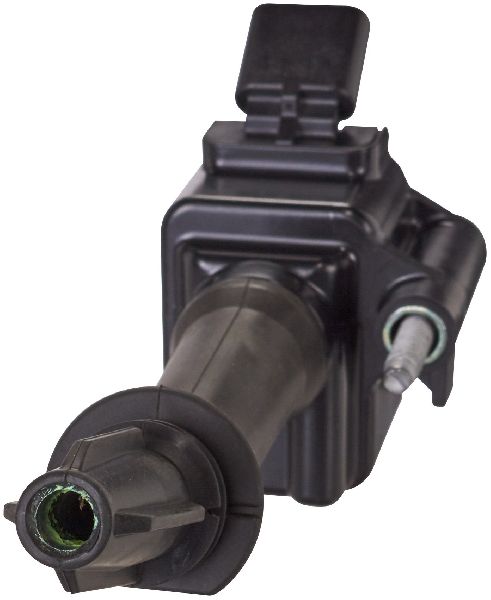
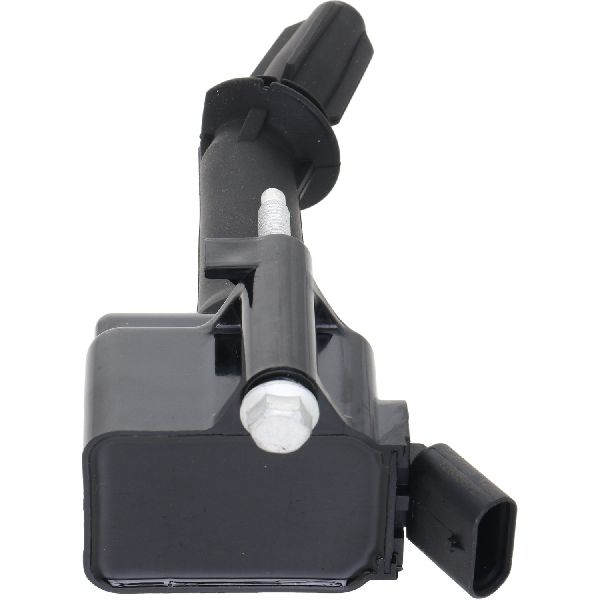
Typical fix: Replace the faulty ignition coil (OEM P/N 12697989 or ACDelco D521C). Many owners choose to replace all four at once as a preventative measure, especially on higher mileage vehicles.
Est. part cost: $50-$120 per coil - Intake Valve Carbon Buildup ⚪ Low Probability As a Gasoline Direct Injection (GDI) engine, fuel is sprayed directly into the cylinder, so it doesn't wash over and clean the intake valves. Over time, oil vapor from the PCV system can bake onto the valves, restricting airflow and causing misfires, especially at idle or during cold starts.
How to confirm: This requires a borescope to visually inspect the intake valves, which usually involves removing the intake manifold. Symptoms include rough idle when cold that may improve as the engine warms up.
Typical fix: The intake valves need to be manually cleaned, most often through walnut blasting. This is a labor-intensive job best left to a professional shop.
Est. part cost: $0 (consumables only)
Rare But Worth Checking
- Leaking Fuel Injectors: → Shop Fuel Injector While a single leaking injector usually causes a specific cylinder code, multiple faulty injectors or a severe leak can trigger a P0300. This is a known issue on GDI engines.
- Low Fuel Pressure: A weak high-pressure or low-pressure fuel pump can starve the engine of fuel, causing lean misfires across all cylinders, especially under load.
- Cracked Pistons / Ring Land Failure: A known, though less common, catastrophic failure on some early LYX engines (approx. 2018-2020) that causes excessive crankcase pressure, severe oil consumption, low compression, and a persistent P0300 code. This is documented in TSBs 18-NA-171 and 19-NA-122.
- Clogged PCV Orifice: → Shop PCV Valve TSB 20-NA-047 details how a clogged PCV orifice in the camshaft cover can cause excessive crankcase pressure. While this typically sets a P1101, the high pressure can contribute to the CAC moisture issue and potentially lead to misfires.
Diagnosis Steps
- Check for other diagnostic trouble codes. Codes like P0299 and P2227 strongly suggest the Charge Air Cooler (CAC) issue.
- Consider the weather conditions when the misfire occurred. If it was cold (below freezing) or during/after heavy rain or high humidity, prioritize inspecting the CAC system.
- Inspect the CAC system. Remove the air ducts to the intercooler and check for any signs of water, ice, or a milky oil/water sludge.
- If the CAC is dry and clean, proceed to the ignition system. Use a scan tool with live misfire data to identify if one cylinder is misfiring more than others, even with a P0300 code.
- Inspect all four spark plugs for wear, fouling, and correct gap. Pay close attention to the porcelain for cracks. Replace if they are worn or past their service life (ACDelco 41-163 is the OEM plug).
- Test the ignition coils. The easiest method is to swap a coil from a misfiring cylinder (identified with a scan tool) with a coil from a non-misfiring cylinder. If the misfire follows the coil, the coil is faulty.
- Check for vacuum leaks. A smoke test is the most effective way to find cracks in hoses or leaking gaskets in the intake system.
- Test fuel pressure. Ensure both the low-pressure and high-pressure fuel systems are operating within specification.
- If all else fails, a compression test should be performed to check for mechanical engine problems like worn piston rings or valve issues, which could point to the more serious cracked piston issue.
Parts You'll Likely Need
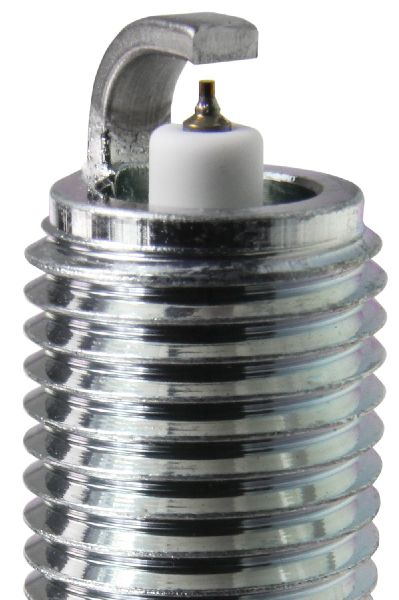
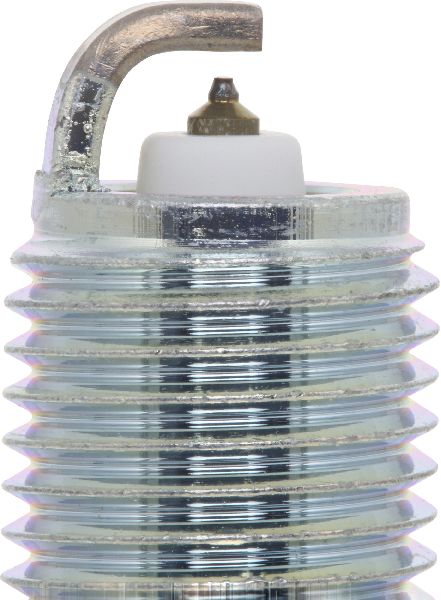
- Iridium Spark Plugs
(OEM #41-163 (supersedes 12683541))— Spark plugs are a common wear item and a primary cause of misfires if the CAC issue is not present.
Trusted brands: ACDelco, NGK
OEM price range: $12-$20 per plug
Aftermarket price range: $8-$15 per plug - Ignition Coil
(OEM #12697989 (ACDelco D521C))— Ignition coils are a common failure point leading to misfires. Swapping coils between cylinders is a key diagnostic step.
Trusted brands: ACDelco, Delphi
OEM price range: $50-$120 per coil
Aftermarket price range: $30-$80 per coil - Lower Grille Cover
(OEM #84624274)— This is the specific part called for in TSB 22-NA-065 to fix the rain/humidity induced misfire from water ingestion into the CAC.
Trusted brands: GM Genuine Parts
OEM price range: $30-$50
Aftermarket price range: N/A
Related Codes That Often Appear With This One
- P0299 — Turbo/Supercharger Underboost. This code often appears with P0300 when a frozen or restricted CAC prevents the turbo from building proper boost pressure.
- P2227 — Barometric Pressure Sensor Range/Performance. This sensor's readings can be skewed by the restricted airflow from a clogged or frozen CAC.
- P1101 — Intake Air Flow System Performance. This can point to a clogged PCV orifice, which is a root cause of the CAC moisture issue detailed in TSB 20-NA-047.
- P0301, P0302, P0303, P0304 — These are cylinder-specific misfire codes. A P0300 may be stored along with one or more of these if the misfire is random but also has a preference for certain cylinders. A scan tool's live data can reveal which cylinder is the primary offender.
Technical Service Bulletins (TSBs) & Recalls
- 22-NA-065: Addresses P0300 set when driving in high humidity or heavy rain, recommending a grille cover.
- 18-NA-020: Addresses P0300 caused by icing in the Charge Air Cooler in cold weather, recommending an updated CAC for early 2018 models. Manufacturer Bulletin #18-NA-020 specifically provides a procedure to replace the charge air cooler due to moisture getting inside and causing a malfunction indicator lamp with DTC P0300 and/or P0299/P2227.
- 20-NA-047: Details issues with a plugged PCV orifice leading to excessive crankcase pressure, a contributing factor to the CAC moisture problem.
- 18-NA-171 / 19-NA-122: Relates to potential cracked pistons and oil consumption, which can cause a P0300 code.
Platform-Specific Known Issues
- Moisture accumulation in the Charge Air Cooler (CAC) is the most significant known issue for this engine, causing misfires in cold or wet weather. This is addressed by GM TSBs 18-NA-020 and 22-NA-065.
- A plugged PCV orifice in the camshaft cover can cause excessive crankcase pressure, contributing to the CAC moisture problem and setting codes like P1101. This is covered in TSB 20-NA-047.
Mechanic-Grade Diagnostic Values
- High-Pressure Fuel Rail at Idle (2018-2022 LYX) — expected: 2.9-3.2 MPa (429-470 PSI). Failure: Pressure significantly below this range suggests a failing High-Pressure Fuel Pump (HPFP), a leak, or a low-side supply issue.
- High-Pressure Fuel Rail Under Load — expected: Rises dynamically, can exceed 20 MPa (2900 PSI). Failure: If 'Actual Pressure' on a scan tool consistently fails to meet 'Desired Pressure' during acceleration, the HPFP is a primary suspect.
- Ignition Coil Primary Winding Resistance — expected: 0.4 – 2.0 ohms. Failure: A reading outside this range suggests a faulty coil.
- Ignition Coil Secondary Winding Resistance — expected: 6,000 – 10,000 ohms (6k-10k Ω). Failure: A reading outside this range suggests a faulty coil.
- Crankcase Pressure (at hot idle) — expected: -1 to -5 inches of water. Failure: Pressure above 0 inches of water (positive pressure) indicates a problem, potentially a clogged PCV orifice or, in severe cases, piston blow-by from a cracked piston.
Hidden / Shadow Codes Worth Checking
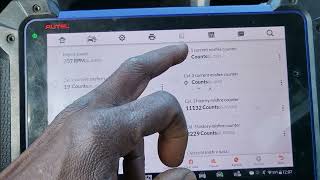
- Mode 6, Test ID $A2-$A5: Misfire counts for cylinders 1-4. While P0300 indicates a random misfire, Mode 6 data can reveal which cylinder(s) are contributing the most misfires, even before a cylinder-specific code (P0301-P0304) is set. This is crucial for targeted diagnosis. (see via A scan tool capable of reading Mode 6 diagnostic data.)
Scan Tool Commands That Help
- GDS2 (GM Dealer Tool): Misfire Graphic / Misfire History — This is the most effective way to diagnose a P0300. It provides live and historical counts of misfires for each cylinder, allowing a technician to see if the 'random' misfire is actually heavily biased toward one or two cylinders, pointing to a specific coil, plug, or injector.
- GDS2 (or high-level aftermarket scanner): Crankshaft Position Variation Learn — This procedure should be performed after any service that disturbs the crankshaft, crankshaft sensor, or ECM. An incorrect learned value can cause the ECM to misinterpret slight rotational variations and falsely set misfire codes. It helps the ECM learn the specific signature of the crankshaft reluctor wheel.
- GDS2 (or high-level aftermarket scanner): Fuel Injector Balance Test — If an ignition issue is ruled out, this test can help identify a weak or clogged fuel injector. The tool commands the ECM to fire each injector individually while monitoring the fuel pressure drop, allowing for comparison between cylinders.
Wiring & Ground Locations
- G102 — Located at the left rear of the engine.. This is the primary ground for the ignition coils. A loose or corroded G102 can cause weak spark and random misfires across all cylinders.
- G103 — Located on the cowl in the left rear of the engine compartment, above the brake booster.. This ground serves the Engine Control Module (ECM), Body Control Module (BCM), and Data Link Connector (DLC). A poor connection here can cause a wide range of unpredictable issues, including setting false trouble codes like P0300.
- Engine Compartment Fuse Block — Located in the engine bay, typically on the driver's side.. This block contains fuses and relays critical for the ignition system and fuel pump. Specifically, it protects the ECU, fuel injection, and ignition system circuits. Corrosion or loose connections in this block can interrupt power and cause misfires.
Real Owner Repair Stories
- YouTube channel 'Quick Diagnostics w/ Tony' (2019 Chevrolet Equinox 1.5L) — Rough running and Check Engine Light with code P0300.
❌ Tried (didn't work) Initial diagnosis was a generic P0300 'random misfire'.
✅ What actually fixed it Using a scan tool's live misfire data, the technician identified that cylinder 3 was the primary source of misfires, despite the P0300 code. Upon removing the spark plug from cylinder 3, he found the porcelain insulator was broken and sliding freely, intermittently blocking the spark gap. Replacing the single broken spark plug resolved the issue. - Chevrolet Forum user 'apache snow' (2021 Equinox Premier 1.5T with 15,000 miles) — Rough running, engine RPM fluctuation until warm, Check Engine Light on with codes P0300, P0171 (System Too Lean), and P0133 (O2 Sensor Circuit Slow Response).
❌ Tried (didn't work) Dealer initially could not duplicate the problem and only cleared the codes.
✅ What actually fixed it The dealer ultimately replaced the upstream O2 (oxygen) sensor, which resolved all three codes, including the P0300 misfire. This indicates the faulty sensor was providing incorrect data, leading to improper fueling and causing the misfire. - NHTSA ODI #11714585 — An owner reported that moisture from the PCV system and ambient humidity built up in the CAC and froze, causing reduced engine power, stalling, and illuminated check engine lights with DTCs P0299, P2227, and P0300.
OEM Part Supersession History
12683541→41-163— Standard part evolution and number consolidation within the ACDelco system.N/A→84624274 (Standard) / 84624275 (Redline/Sport)— This part was created as a field fix under TSB 22-NA-065 to address water ingestion into the CAC during rain/humidity.
Heads up: This is a grille cover, not a direct replacement part. It is not recommended for use above 85°F (30°C) or when towing. Some sources indicate this part may be discontinued, but it is the part number specified in the TSB.
Model Year Variations Within This Range
- 2018-2022: These model years use the LYX 1.5L Turbo engine. They are particularly susceptible to the cracked piston issue (2018-2020) and the CAC moisture issues addressed by TSBs. The high-pressure fuel system operates at 20 MPa (2900 PSI).
- 2023-2024: These model years use the updated LSD 1.5L Turbo engine. This engine features an enhanced piston design and a higher-pressure fuel system operating at 35 MPa (5076 PSI). While the general causes of P0300 are similar, the HPFP and other fuel system components are not interchangeable with earlier LYX models.
Diagnostic Flowchart
Other Known Issues on This Vehicle
Issues unrelated to this code that are worth knowing about as an owner of this generation:
- Brake Vacuum Pump Failure 🔴 High — Common enough to be the subject of a class-action lawsuit. Can fail at various mileages, leading to a hard brake pedal and loss of braking assist. (Ref: TSB 21-NA-268, PIP5835)
- Cracked Piston / Ring Land Failure 🔴 High — A known, but less widespread, catastrophic failure on early 1.5L LYX engines (approx. 2018-2020). Often presents with excessive oil consumption and P0300 misfire codes. (Ref: TSB 18-NA-171, TSB 19-NA-122)
- PCV System Orifice Clogging 🟠 Medium — The PCV orifice in the camshaft cover can clog, leading to high crankcase pressure, oil leaks, and code P1101. This contributes to the CAC moisture problem. (Ref: TSB 20-NA-047)
- Transmission Shudder (9T45) 🟠 Medium — Some owners report shudder, hesitation, or harsh shifting from the 9-speed automatic transmission. Fixes can range from fluid changes to software updates. (Ref: TSB 22-NA-015, TSB 21-NA-169)
- Engine Wiring Harness Chafing 🔴 High → Shop Engine Wiring Harness — The engine wiring harness can rub against the transmission case, causing shorts that can lead to a no-start or stalling condition and communication codes like U0100. (Ref: TSB 19-NA-206)
Used vs. New Parts: Buying Guide for This Vehicle
When a used part is the smart pick: A used Charge Air Cooler (CAC) can be a good value if it's confirmed to be the updated design and is thoroughly inspected for damage or internal sludge. Used ignition coils are acceptable for diagnosis (swapping to confirm a fault) but are risky for permanent replacement due to unknown service life.
Donor-vehicle mileage cap: roughly under 75000 miles for the part to have meaningful remaining life.
What to inspect on the donor part:
- For a CAC, inspect for heavy fin damage, cracks in the plastic end tanks, and look inside for excessive, thick black sludge which indicates severe blow-by from the donor engine.
- For ignition coils, check for cracks in the housing and ensure the boot is pliable and free of carbon tracking.
OEM-only on this vehicle (don't cheap out):
- Spark Plugs (ACDelco Iridium plugs are highly recommended to avoid compatibility issues).
- High-Pressure Fuel Pump (HPFP) and Direct Fuel Injectors (GDI fuel systems are sensitive; OEM parts ensure correct pressure and spray patterns).
- Internal engine components (Pistons, rings, etc.).
Aftermarket brands forum-validated for this vehicle:
- Delphi (Ignition Coils)
- NGK (Spark Plugs, as an alternative to OEM)
Brands owners have reported issues with on this vehicle:
- Unbranded or 'white box' ignition coils and sensors from online marketplaces are frequently reported by owners to have a short service life or be dead-on-arrival.
Real Owner Stories
Aggregated from forums and TSBs cited above. Mileages and costs reflect what owners reported in those sources.
2019 Chevrolet Equinox 1.5L Turbo
Symptoms: P0300 code with a single spark plug showing broken porcelain (a 'rattler' where the insulator slides up and down covering the gap).
What fixed it: Identified the specific cylinder using scan tool live misfire data and replaced the faulty spark plug.
Source hint: YouTube video by 'Quick Diagnostics w/ Tony'
2019 Chevrolet Equinox 1.5L Turbo
Symptoms: P0300 misfire symptoms with spark plugs found to be coated in oil.
What fixed it: The oil-coated plugs pointed towards a more severe internal engine issue, specifically a cracked piston.
Source hint: Reddit r/AskAMechanic
2018 Chevrolet Equinox 1.5L Turbo
Symptoms: Misfires occurring specifically in cold weather due to icing in the charge air system.
What fixed it: Dealer thawed and cleaned the Charge Air Cooler (CAC) and performed an ECM reprogram per TSB 18-NA-020.
Source hint: TSB 18-NA-020
Chevrolet Equinox 1.5L Turbo
Symptoms: Reduced engine power and stalling accompanied by a check engine light.
What fixed it: Investigation into the CAC revealed moisture from the PCV system and ambient humidity had built up and frozen, triggering codes P0299, P2227, and P0300.
Source hint: NHTSA ODI #11714585
Related OBD-II Codes
Frequently Asked Questions
My 2019 Equinox is misfiring in heavy rain. Does TSB 22-NA-065 apply to me?
I have a 2018 Equinox built in early 2018 with icing issues in the intercooler. What is the fix?
Can I use the GM grille cover all year round to prevent misfires?
Which spark plugs should I use for my 1.5L Turbo Equinox to avoid P0300 codes?
My 'Service StabiliTrak' message came on at the same time as the Check Engine Light. Is this related to the misfire?
Could a PCV issue be causing the moisture buildup in my Charge Air Cooler?
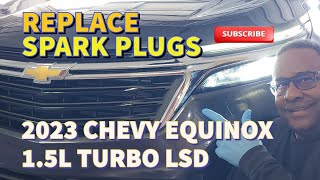
Helpful Videos
We Have This Part in Stock


The information in this article is provided for general reference and educational purposes only. Vehicle specifications, procedures, and part compatibility can vary by production date, trim level, and region. Always consult your vehicle's factory service manual and verify part numbers before purchasing or performing repairs. Safety-critical components such as airbags, seat belts, and braking systems should be installed by a qualified professional.
- Chevrolet Equinox:
- 🧭 Diagnostic Flowchart
- 🎬 Helpful Videos
- 🛍️ Shop This Part
- What's Unique About the 2018-2024 Chevrolet Equinox
- Symptoms You May Notice
- Most Likely Causes
- Rare But Worth Checking
- Diagnosis Steps
- Parts You'll Likely Need
- Related Codes That Often Appear With This One
- Technical Service Bulletins (TSBs) & Recalls
- Platform-Specific Known Issues
- Mechanic-Grade Diagnostic Values
- Hidden / Shadow Codes Worth Checking
- Scan Tool Commands That Help
- Wiring & Ground Locations
- Real Owner Repair Stories
- OEM Part Supersession History
- Model Year Variations Within This Range
- Other Known Issues on This Vehicle
- Used vs. New Parts: Buying Guide for This Vehicle
- Real Owner Stories
- 2019 Chevrolet Equinox 1.5L Turbo
- 2019 Chevrolet Equinox 1.5L Turbo
- 2018 Chevrolet Equinox 1.5L Turbo
- Chevrolet Equinox 1.5L Turbo
- Related OBD-II Codes
- Frequently Asked Questions
- 🎟️ Get 5% Off