

P0300 on 2004-2008 Chevrolet Express: Random Misfire Causes and Fixes
P0300 on a 2004-2008 Chevy Express indicates random cylinder misfires. The most common causes are worn spark plugs, faulty ignition wires, or a failing ignition coil. If these are ruled out, suspect a fuel delivery problem like a weak fuel pump, a vacuum leak from the intake manifold gasket, or the need for a crankshaft position sensor relearn.
- P0300 means your engine is misfiring on random cylinders, and you should not ignore it.
- Start your diagnosis with the cheapest and most common culprits: spark plugs, ignition wires, and ignition coils.
- If ignition components are good, test fuel pressure. A weak fuel pump is a known issue on these vans.
- Check for vacuum leaks, especially around the intake manifold gasket.
- Be aware of rare but documented issues like worn camshaft lobes if simple fixes don't solve the problem.
What's Unique About the 2004-2008 Chevrolet EXPRESS
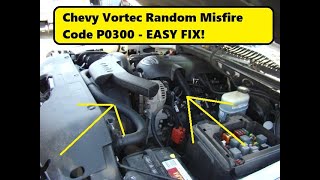
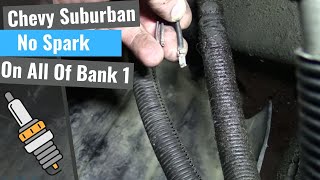
On this generation of Chevrolet Express, a P0300 code can point to common ignition and fuel system faults, but it can also be a symptom of more serious, documented mechanical issues. Manufacturer technical service bulletins specifically mention the possibility of worn camshaft lobes causing misfires, often accompanied by a distinct chirp, squeak, or tick noise. [7, TSB #PIP4138R] Additionally, owner complaints and forum discussions frequently point towards failing fuel pumps as a root cause, sometimes accompanied by lean codes (P0171, P0174). [ODI #10127644, 18] Another known issue is a corroded or broken ground wire for an entire bank of ignition coils, which can cause multiple cylinders to misfire simultaneously. The specific ground point for the ignition coils is G102, located at the left rear of the engine.
🎬 See how to diagnose a misfire affecting an entire bank.Diagnostic Flowchart
Tap your situation to follow the diagnostic path that matches what you're seeing on this vehicle.
Symptoms You May Notice
- Rough or shaky idle, sometimes described as a stutter at stoplights
- Hesitation or stumbling during acceleration
- Flashing or solid Check Engine Light (a flashing light indicates a severe, catalyst-damaging misfire)
- Reduced engine power, especially under load or going uphill
- Poor fuel economy
- Difficulty starting the engine, or extended cranking time
- Fuel smell from the exhaust
- Engine noise described as a chirp, squeak, or tick, which could indicate camshaft wear
- Replacing oxygen (O2) sensors. While a faulty O2 sensor can contribute to fuel trim issues, it's rarely the direct cause of a P0300. Often, lean codes (P0171/P0174) caused by a vacuum leak or fuel pump issue are misdiagnosed as a bad O2 sensor.
- Replacing parts without diagnosis. One owner on a forum detailed a long and expensive journey replacing O2 sensors, MAF sensor, crank sensor, and cam sensor before the issue was traced to an EVAP system component causing erratic fuel tank pressure signals.
Most Likely Causes
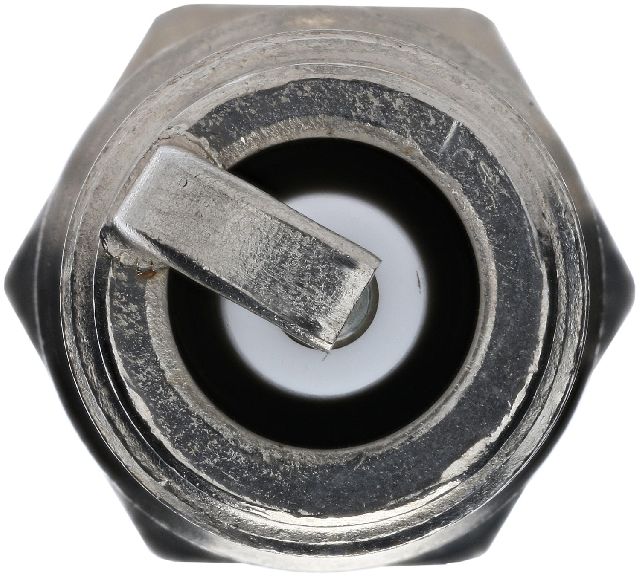
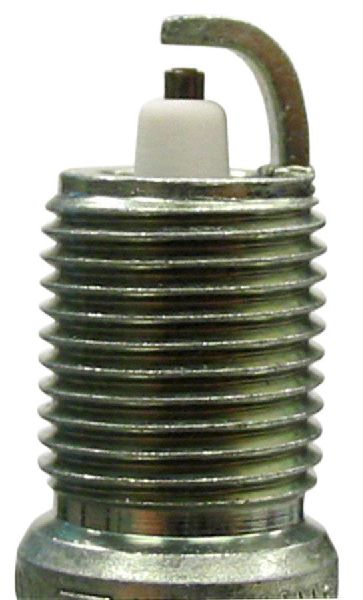
- Worn Spark Plugs and/or Ignition Wires 🔴 High Probability → Shop Spark Plug These are standard maintenance items that wear out over time. The large engine bays can sometimes lead to neglect of the rear-most plugs and wires, making them common failure points.
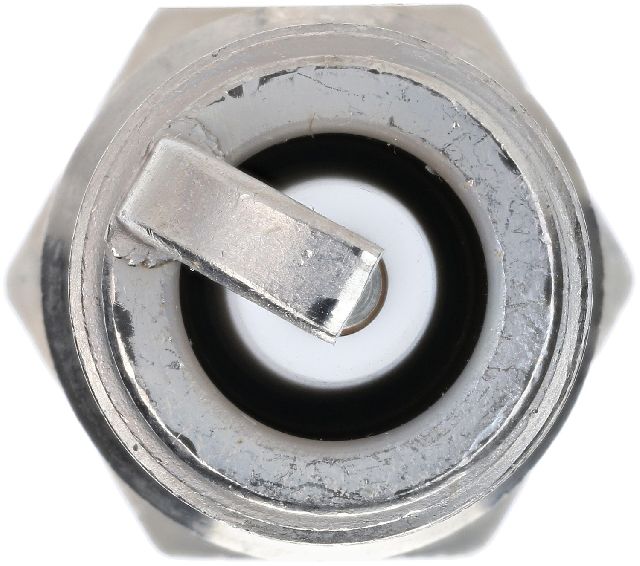
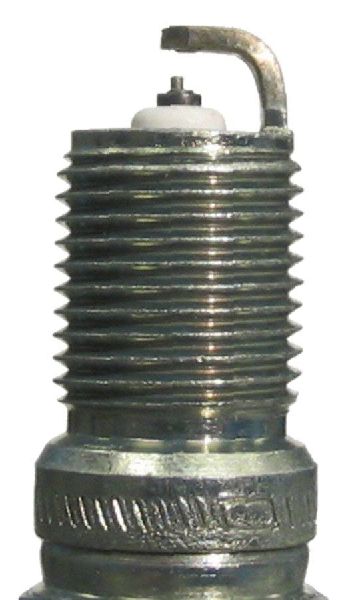
How to confirm: Inspect spark plugs for wear (worn electrode), fouling (black, sooty, or oily deposits), or incorrect gap. Per a GM bulletin, pre-2007 models should use platinum plug 41-962, while 2007+ models use iridium 41-110. Inspect wires for cracks, burns, or corrosion. A spark tester can verify spark delivery.
Typical fix: Replace all spark plugs and ignition wires as a set. Use quality brands like ACDelco or NGK. Ensure the correct plug type is used for the model year.
Est. part cost: $50-$150 - Faulty Ignition Coil(s) 🔴 High Probability → Shop Ignition Coil Coils are subjected to high heat and vibration, leading to eventual failure. While one failing coil usually sets a specific cylinder code (e.g., P0301), a weak or intermittently failing coil can contribute to a random P0300. A broken ground strap or corroded ground point G102 for a coil bank is also a known issue.
How to confirm: Use a scan tool with live data to watch for misfire counts per cylinder. Swap a suspected bad coil with a known good one and see if the misfire follows the coil. Check for 12V power at the pink wire on the coil connector. Using a multimeter, check the coil's primary resistance (0.4-2.0 Ohms) and secondary resistance (6,000-15,000 Ohms).
Typical fix: Replace the faulty ignition coil. It is often recommended to replace them all if they are original and high-mileage. Be aware that some model years have 'round' coils (e.g., UF262) while others have 'square' coils (e.g., UF271); visual confirmation is necessary.
Est. part cost: $40-$80 per coil - Vacuum Leak (especially Intake Manifold Gasket) 🟡 Medium Probability The intake manifold gaskets on GM V8s of this era are a very common failure point. The original plastic/rubber gaskets harden over time, crack, and create a vacuum leak. This is often misdiagnosed as an ignition or fuel problem.
How to confirm: A key symptom is a rough idle that only appears when the engine is warm. On a scan tool, look for high positive long-term fuel trims (e.g., >15%) at idle that decrease significantly when RPMs are raised to ~2000. A mechanic can perform a smoke test to pinpoint the leak's location.
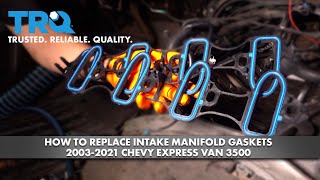
Typical fix: Replace the intake manifold gaskets. It is critical to also replace the throttle body seal at the same time. A user on ChevroletForum.com noted that high long-term fuel trims of 12.5% and 16.5% pointed towards a vacuum leak or fuel issue. Using an upgraded gasket from a brand like Fel-Pro with a metal carrier is recommended over the OEM plastic design. 🎬 Watch: Step-by-step guide to replacing your intake manifold gaskets.
Est. part cost: $50-$200 depending on the source of the leak - Low Fuel Pressure (Weak Fuel Pump or Clogged Filter) 🟡 Medium Probability There are numerous owner complaints and forum discussions about fuel pump failures on these vans, leading to lean conditions and random misfires, especially under load. [11, ODI #10127644] A weak pump may provide enough pressure at idle but fail to keep up at highway speeds. Corrosion at the Fuel Pump Driver Module (FPDM), often located above the spare tire, can also cause intermittent fuel pressure loss.
How to confirm: Connect a fuel pressure gauge to the fuel rail's service port. Check that the pressure is within the manufacturer's specified range (typically 55-60 PSI for these models) with the key on and engine running. An advanced method involves using an oscilloscope to analyze the fuel pump's electrical waveform, which can reveal a weak pump even if pressure seems borderline acceptable.
Typical fix: Replace the fuel filter first as it's inexpensive. If pressure is still low, inspect the FPDM and its connector for corrosion before replacing the in-tank fuel pump module, which requires dropping the fuel tank.
Est. part cost: $20-$40 for a filter, $200-$400 for a quality fuel pump module - Clogged or Dirty Fuel Injectors ⚪ Low Probability → Shop Fuel Injector
How to confirm: Listen to each injector with a mechanic's stethoscope; they should all have a consistent clicking sound. A professional injector balance test is the most definitive diagnostic method. You can test an injector's coil resistance with a multimeter; it should be between 12.0 and 12.5 Ohms. Sometimes, running a high-quality fuel system cleaner like Gumout Multi-System Tune-up or Techron can resolve minor clogging.
Typical fix: Professional fuel system cleaning or replacement of the faulty injectors.
Est. part cost: $50-$100 per injector
Rare But Worth Checking
- Worn Camshaft Lobe(s) / Collapsed Lifter: → Shop Engine Camshaft A GM Technical Service Bulletin (TSB #PIP4138R) specifically calls out checking for a worn camshaft lobe or a collapsed/stuck lifter if other diagnostics for P0300 do not isolate the cause. Symptoms often include a consistent tick, chirp, or squeak at half of engine speed. For V8s with Active Fuel Management (AFM), a collapsed AFM lifter on cylinders 1, 4, 6, or 7 is a known failure mode that will set a P0300.
- Faulty Crankshaft Position Sensor (CKP) or Needs Relearn: → Shop Engine Crankshaft Position Sensor A failing CKP sensor can send erratic signals to the ECM, causing it to misinterpret engine speed and trigger a random misfire code. More commonly, after other repairs or due to adaptive learning drift, the ECM's stored crankshaft variation profile becomes inaccurate. Performing a 'Crankshaft Position Variation Learn' (also called a CASE relearn) with a capable scan tool can resolve a P0300 that appears after other work has been done. Multiple owners have reported this as a final, inexpensive fix 🎬 Watch: How to perform a crankshaft sensor relearn at home. after replacing many other parts.
Diagnosis Steps
- Read all stored trouble codes with an OBD-II scanner. Note any codes that accompany P0300, such as P0171/P0174 or specific cylinder misfire codes. Record the freeze frame data.
- Use a scanner with live data to view Short-Term and Long-Term Fuel Trims (STFT/LTFT) at idle. High positive numbers (e.g., >15%) suggest a vacuum leak.
- While monitoring live data, raise engine RPM to 2000-2500. If high fuel trims drop to near zero, a vacuum leak from the intake manifold gasket is highly probable.
- Perform a visual inspection of the engine bay. Look for obvious issues like cracked or disconnected vacuum hoses, damaged wiring, or signs of arcing around ignition components. Check the engine ground points, especially G102 at the left rear of the engine which grounds the ignition coils.
- Test the fuel system. Connect a fuel pressure gauge and verify pressure is within spec (typically 55-60 PSI). If pressure is low, replace the fuel filter first. If still low, inspect the Fuel Pump Driver Module and its connector for corrosion before condemning the fuel pump.
- Inspect the ignition system. Remove and check spark plugs for wear or fouling. Test spark plug wires for resistance. Test ignition coils by swapping them between cylinders to see if a specific misfire (e.g., P0301) follows the coil.
- If no obvious cause is found, and especially if parts have been recently replaced, consider performing a Crankshaft Position Variation Learn procedure with a compatible scan tool.
- If a persistent ticking or chirping noise is present, more advanced mechanical checks are needed, such as a compression test or investigating potential camshaft wear as noted in TSB #PIP4138R.
Parts You'll Likely Need
- Spark Plugs
(OEM #ACDelco 41-962 (Platinum, for pre-2007 models))
Related Codes That Often Appear With This One
- P0301-P0308 — If the misfire becomes consistent on one or more specific cylinders, the ECM will store these codes alongside P0300. The last digit indicates the cylinder number.
- P0171, P0174 — These codes indicate a 'System Too Lean' condition on Bank 1 and Bank 2. They frequently appear with P0300 when the cause is a major vacuum leak (like an intake manifold gasket) or a weak fuel pump. [1, ODI #10127644]
Technical Service Bulletins (TSBs) & Recalls
- PIP4138R - Details diagnostic steps for a P0300 accompanied by engine noise, pointing towards worn camshaft lobes or collapsed AFM lifters as potential causes when other diagnostics fail.
- PIP5628G - A preliminary information bulletin indicating ongoing manufacturer data collection for P0300-P0308 codes, suggesting the complexity of the issue.
- ACDelco Bulletin (pre-2007 models) - A bulletin advising the use of platinum spark plug 41-962 instead of iridium plug 41-110 for 2006 and older LS-based engines.
Platform-Specific Known Issues
- Worn Camshaft Lobes: TSB #PIP4138R indicates that for P0300-P0308 codes where diagnostics don't find a cause, technicians should inspect for a worn camshaft lobe. This is a serious mechanical failure.
- Fuel Pump Failure: An NHTSA complaint (ODI #10127644) for a 2004 Express with P0300, P0171, and P0174 resulted in the replacement of the fuel pump module (part number 89060662), which resolved the issue.
Mechanic-Grade Diagnostic Values
- Fuel Pressure (Key On, Engine Running) — expected: 55-60 PSI. Failure: Pressure below 55 PSI indicates a fuel delivery issue (pump, filter, or driver module).
- Ignition Coil Primary Resistance — expected: 0.4 - 2.0 Ohms. Failure: A reading of zero (short) or infinity (open) indicates a bad coil.
- Ignition Coil Secondary Resistance — expected: 6,000 - 15,000 Ohms. Failure: A reading outside this range indicates faulty secondary windings.
- Fuel Injector Resistance — expected: 12.0 - 12.5 Ohms. Failure: A reading significantly higher or lower indicates a faulty injector coil.
Hidden / Shadow Codes Worth Checking
- Mode 6 Data: This is not a code, but a diagnostic mode on capable scan tools. It can show misfire counts per cylinder in real-time, even before the counts are high enough to set a specific P030x code. This helps identify which cylinders are contributing to the random misfire count. (see via A quality bidirectional scan tool with Mode 6 functionality is required.)
Scan Tool Commands That Help
- Tech2 / GDS2 or equivalent bidirectional scanner: Crankshaft Position Variation Learn (CASE Relearn) — Use this after replacing a crankshaft position sensor, ECM, or as a final step if a P0300 code persists with no other identifiable cause. The ECM can 'drift' over time and misinterpret minor crankshaft speed variations as misfires. This procedure recalibrates the sensor's profile. The procedure requires setting the parking brake, applying the service brake, and then accelerating the engine to the fuel cut-off RPM (around 4,000 RPM for V8s) when prompted by the tool.
Wiring & Ground Locations
- G102 — Located at the left rear of the engine block.. This is the primary ground point for all eight ignition coils. A loose or corroded connection here can cause weak or intermittent spark to multiple cylinders, directly causing a P0300 code.
- G103 / G104 — Located on the rear (G103) or front (G104) of the right-side cylinder head.. These are major engine grounds for the ECM and various sensors. Poor grounding can introduce electrical noise and cause the ECM to make incorrect calculations, potentially leading to misfire detection.
- Ignition Coil Power Wire — A pink wire in the harness going to each ignition coil connector.. This wire supplies 12V power to the ignition coils on each bank, fed by a fuse in the underhood fuse block. A break or chafe in this wire before it splits to the individual coils can disable an entire bank, causing a severe P0300.
Real Owner Repair Stories
- Mechanics Stack Exchange (2005 Chevrolet Express 3500 4.8L V8, 130k miles) — Flashing check engine light (P0300) only on the highway after going above ~52 MPH for a few minutes. No other noticeable performance issues.
❌ Tried (didn't work) New spark plugs and wires, Cleaned MAF sensor and throttle body, Ran SeaFoam through gas tank, An initial attempt at a Crank Relearn procedure
✅ What actually fixed it The owner took it to a mechanic who, after confirming the misfires on a test drive, performed another Crankshaft Position Variation Relearn procedure. This second, properly executed relearn resolved the issue completely. - scannerdanner.com forum user (2007 Chevrolet Express 3500, 57k miles) — Persistent P0300 with steady check engine light, appearing after about 30 minutes of highway driving, especially under load.
❌ Tried (didn't work) Replaced B1S2 O2 sensor, Full tune-up (plugs, wires), Cleaned and then replaced MAF sensor, Cleaned throttle body, Replaced Crankshaft Position Sensor (CKP) with non-OEM, then with OEM ACDelco, followed by multiple relearn procedures, Replaced Camshaft Position Sensor (CPS), Dealer suggested timing chain replacement
✅ What actually fixed it A diagnostic shop commanded the EVAP vent solenoid and noticed the Fuel Tank Pressure (FTP) sensor had erratic voltage (jumping between 1.5V and 2.8V with key on, engine off). Even though there were no FTP-specific codes, this erratic signal was causing the fueling issue and the P0300. Replacing the FTP sensor was the final fix.
"I Checked Everything" — The Actual Cause
- In one documented case, a persistent P0300 was not caused by a vacuum leak (which a smoke test would find) or a common ignition/fuel part. The root cause was an erratic Fuel Tank Pressure (FTP) sensor. The bad sensor data, related to the EVAP system, was altering the ECM's fueling calculations enough to cause misfires under certain conditions, even without setting a specific EVAP or FTP trouble code.
When the Usual Fixes Don't Work
- While part replacement is often necessary, a P0300 on these vans can frequently be resolved without buying new parts. In one case, a 2005 Express that had already received new plugs and wires was ultimately fixed by a mechanic performing a 'Crankshaft Position Variation Relearn' with a proper scan tool. This highlights that the ECM's calibration can be the source of the fault, not a physical part. In another complex case, a 2007 Express had nearly every common part replaced (plugs, wires, coils, MAF, crank sensor, cam sensor) to no effect. The final fix was an obscure, unrelated part: the Fuel Tank Pressure sensor, whose erratic signal was confusing the engine's fuel calculations. This demonstrates that chasing common causes can be expensive and ineffective if deeper scan tool data is not analyzed.
OEM Part Supersession History
UF262 / D585 (and others)→UF271 / D581 (and others)— Change in ignition coil design during the production run.
Heads up: These vans used two different physical styles of ignition coil: a 'round' body coil (UF262) and a 'square' body coil (UF271). They are not interchangeable. The mounting bracket and wiring connector are different. Visual confirmation of the coils on the engine is required before ordering replacements.
Model Year Variations Within This Range
- 2003-2007 vs 2007-2008: The ignition coil style changed for some engines during this period. Earlier models typically use a 'round' style coil (like ACDelco D585 / UF262), while later models use a 'square' style (like ACDelco D581 / UF271). Always visually verify before purchasing.
- 2007-2008: The 5.3L V8 (LM7) gained Flex-Fuel (E85) capability in 2007, becoming standard in 2008 (LMF). This introduces a fuel composition sensor that, if faulty, could affect the air/fuel mixture and potentially contribute to misfires.
- 2008: In 2008, the Gen III V8 engines were updated to Gen IV. The 4.8L LR4 was replaced by the LY2, and the 6.0L LQ4 was replaced by the LY6. This change involves different engine management systems (ECMs) and internal components, which can affect diagnostics and part selection.
Helpful Videos
We Have This Part in Stock


The information in this article is provided for general reference and educational purposes only. Vehicle specifications, procedures, and part compatibility can vary by production date, trim level, and region. Always consult your vehicle's factory service manual and verify part numbers before purchasing or performing repairs. Safety-critical components such as airbags, seat belts, and braking systems should be installed by a qualified professional.
- Chevrolet EXPRESS:
- 🧭 Diagnostic Flowchart
- 🎬 Helpful Videos
- 🛍️ Shop This Part
- What's Unique About the 2004-2008 Chevrolet EXPRESS
- Symptoms You May Notice
- Most Likely Causes
- Rare But Worth Checking
- Diagnosis Steps
- Parts You'll Likely Need
- Related Codes That Often Appear With This One
- Technical Service Bulletins (TSBs) & Recalls
- Platform-Specific Known Issues
- Mechanic-Grade Diagnostic Values
- Hidden / Shadow Codes Worth Checking
- Scan Tool Commands That Help
- Wiring & Ground Locations
- Real Owner Repair Stories
- "I Checked Everything" — The Actual Cause
- When the Usual Fixes Don't Work
- OEM Part Supersession History
- Model Year Variations Within This Range
- 🎟️ Get 5% Off