

P0300 on 2000-2005 Chevrolet Impala 3.4L: Random Misfire Causes and Fixes
On a 2000-2005 Impala with the 3.4L V6, code P0300 is most often caused by failed lower intake manifold gaskets or a basic ignition system failure (plugs, wires, coils, or ICM). The intake gasket is a very common, well-documented issue on this engine. A leaking fuel pressure regulator is another common, platform-specific cause.
- P0300 on this Impala means multiple cylinders are misfiring, and it's a serious issue that requires prompt attention.
- Do not drive if the Check Engine Light is flashing to avoid destroying your catalytic converter.
- The most common causes are specific to this engine: failed lower intake manifold gaskets and bad ignition components (plugs, wires, coils, and the ICM).
- Start diagnosis with the simplest checks: inspect for fuel in the fuel pressure regulator's vacuum line, then inspect spark plugs and wires.
- If you are losing coolant and have a P0300, the lower intake manifold gaskets are the most probable cause.
What's Unique About the 2000-2005 Chevrolet Impala
The 3.4L LA1 V6 engine in the 2000-2005 Impala is notorious for two specific failures that directly cause a P0300 code. The most significant is the failure of the original nylon lower intake manifold (LIM) gaskets. These gaskets degrade from heat and exposure to Dex-Cool coolant, leading to vacuum leaks or internal coolant leaks that cause misfires. Additionally, the Ignition Control Module (ICM), which sits under the three ignition coils, is a very common failure point due to engine heat, often causing random misfires that mimic bad coils. A third, very common issue is a leaking fuel pressure regulator, which allows raw fuel into the vacuum system, fouling plugs and causing misfires.
Symptoms You May Notice
- Rough or shaking idle
- Hesitation or stumbling during acceleration
- Noticeable loss of engine power
- Flashing Check Engine Light (especially under load)
- Poor fuel economy
- Engine stalling in severe cases
- Hard starting, where the engine cranks longer than usual
- A smell of gasoline from the exhaust due to unburned fuel
- Replacing only one spark plug or ignition coil when the others are of the same age and condition.
- Replacing fuel injectors. A single bad injector would typically cause a specific cylinder misfire code (e.g., P0301), not a random P0300. Multiple clogged injectors are possible but less common than ignition or gasket failures.
- Replacing the Crankshaft Position Sensor without proper diagnosis. While a failing CKP sensor can cause misfires, it often sets its own specific trouble codes and may cause a no-start condition. However, a Crank Variation Relearn may be needed after other repairs.
- Replacing the Mass Airflow (MAF) sensor. While a dirty MAF can cause driveability issues, it's a less frequent cause for a P0300 on this specific platform compared to the primary causes listed above.
Most Likely Causes
- Leaking Lower Intake Manifold (LIM) Gaskets 🔴 High Probability → Shop Engine Intake Manifold The original GM gaskets used a plastic/nylon frame that cracks and degrades from heat cycles and exposure to Dex-Cool coolant, a well-documented issue on the 3.4L LA1 engine. This can cause both vacuum leaks (lean misfires) and internal coolant leaks (coolant fouling spark plugs). GM issued a TSB (#03-06-01-010B) for this issue.
How to confirm: Visually inspect the top of the engine where the intake manifold meets the cylinder heads for signs of coolant leaks (orange or green residue). Check the oil for a milky, 'milkshake' appearance, which indicates coolant contamination. A cooling system pressure test can also confirm a leak. A smoke test can reveal vacuum leaks around the gasket area.
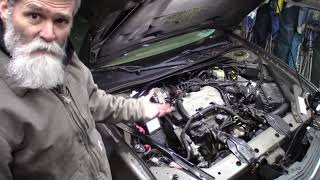
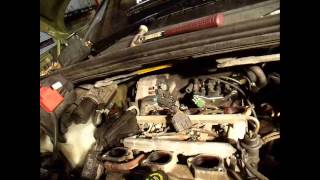
Typical fix: Replace the lower intake manifold gaskets with an upgraded metal-frame design, such as the Fel-Pro MS98014T set. This is an involved but permanent fix. 🎬 Watch this step-by-step guide on replacing the intake manifold gaskets. The job takes 4-6 hours for an experienced mechanic.
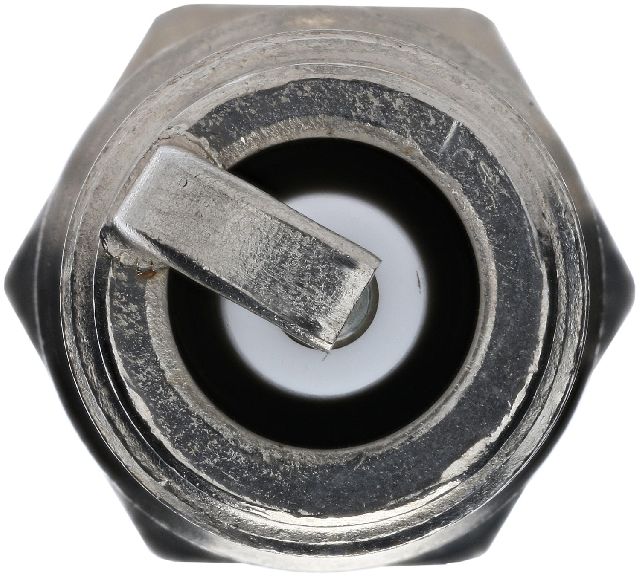
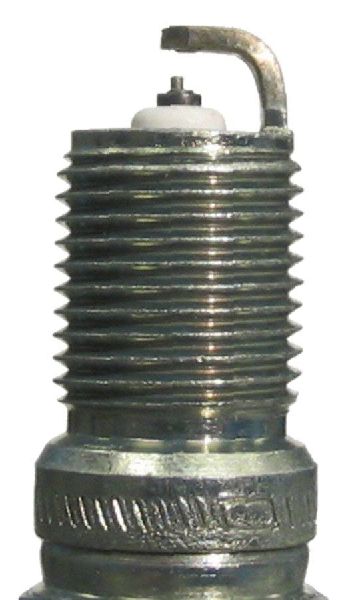
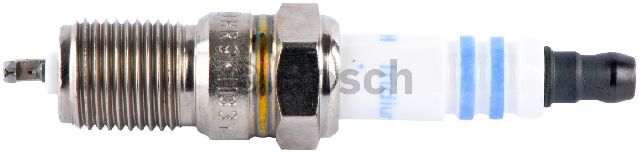
Est. part cost: $50-$100 for the gasket set - Worn Spark Plugs or Damaged Spark Plug Wires 🔴 High Probability → Shop Spark Plug These are standard maintenance items. The rear three spark plugs are difficult to access, so they are often neglected, leading to misfires as they wear out. Wires can be damaged by heat or rub through their insulation. Carbon tracking (a black line down the ceramic) on a spark plug is a sure sign it's bad and likely the wire is too.
How to confirm: Perform a visual inspection of spark plugs for wear, fouling, or damage. Inspect wires for cracks, burns, or carbon tracking inside the boots. Check resistance of wires with a multimeter.
Typical fix: Replace all six spark plugs (ACDelco Iridium or Platinum are recommended) and the full set of spark plug wires. It is recommended to do both at the same time.
Est. part cost: $60-$120 - Faulty Ignition Control Module (ICM) 🟡 Medium Probability The ICM is mounted directly to the engine block underneath the coil packs, where it is subjected to intense heat. This heat soak leads to electronic failure over time, a very common issue for this platform. Failure is often intermittent and heat-related, causing misfires only after the engine has warmed up.
How to confirm: If new plugs, wires, and coils do not resolve the misfire, the ICM is a prime suspect. Some auto parts stores can test the module off the vehicle, but these tests may not catch heat-related failures. A definitive test involves swapping coils; if the misfire doesn't follow a specific coil, the ICM is likely at fault.
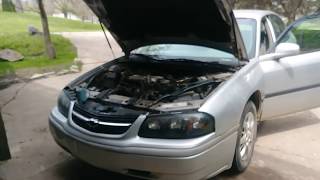
Typical fix: Replace the Ignition Control Module. It is critical to apply new dielectric grease or thermal paste to the back of the new module to ensure proper heat dissipation. 🎬 See how to diagnose and replace a faulty ignition module.
Est. part cost: $70-$150 - Faulty Ignition Coil(s) 🟡 Medium Probability → Shop Ignition Coil The engine uses a waste-spark system with three coils, each firing two cylinders (1-4, 2-5, 3-6). Age and heat cause the epoxy housings to crack and the internal windings to fail. When one coil fails, it takes out two cylinders, but may present as a P0300 before the PCM isolates it.
How to confirm: Using a scan tool with live data, observe which cylinders are misfiring. Swap a suspected bad coil with a known good one and see if the misfire follows the coil to the new cylinders. You can also use a spark tester to check for a strong, blue spark from each coil tower.
Typical fix: Replace the faulty ignition coil. Many owners replace all three as a set since they are of the same age. ACDelco is the OEM supplier.
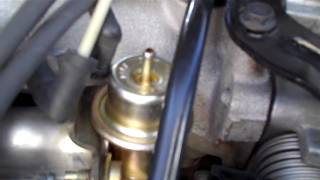
Est. part cost: $30-$70 per coil - Leaking Fuel Pressure Regulator 🟡 Medium Probability → Shop Fuel Injection Pressure Regulator The diaphragm inside the regulator is a known high-failure part on the 3.4L V6. It can rupture, allowing raw fuel to be sucked into the intake manifold through its vacuum line. This causes a rich condition, fouling spark plugs and leading to misfires.
How to confirm: Locate the fuel pressure regulator on the fuel rail. Disconnect the small vacuum hose attached to it. If fuel is present in the hose or drips from the port, the regulator has failed. The smell of raw gas from the vacuum line is also a strong indicator.
Typical fix: Replace the fuel pressure regulator. This is a relatively simple and inexpensive repair. 🎬 Watch this quick fix for a leaking fuel pressure regulator.
Est. part cost: $40-$90
Rare But Worth Checking
- Clogged Catalytic Converter: → Shop Catalytic Converter A severe, long-term misfire can cause the catalytic converter to overheat and melt internally, creating a blockage. This blockage increases exhaust backpressure, which in turn causes more misfires, loss of power, and can eventually prevent the engine from running. If the car has been driven with a flashing check engine light for an extended period, this is a high possibility.
- Low Fuel Pressure: A weak fuel pump or a clogged fuel filter can cause a lean condition that leads to random misfires, especially under load. This can be checked with a fuel pressure gauge connected to the Schrader valve on the fuel rail. Expected pressure is typically 48-55 PSI with the key on, engine off.
- Low Engine Compression: While less common, internal mechanical issues like a leaking head gasket, worn piston rings, or bad valves can cause a loss of compression and misfires. This is a worst-case scenario and should be investigated after all ignition and fuel system possibilities are exhausted. A compression test is required for diagnosis.
- Clogged Fuel Injectors: → Shop Fuel Injector While a single clogged injector usually causes a specific cylinder code, multiple dirty injectors can contribute to a P0300. This can sometimes be resolved with a quality fuel system cleaner additive, but may require professional cleaning or replacement.
Diagnosis Steps
- Scan the vehicle for any other trouble codes. Note the freeze-frame data to see the conditions (engine temp, RPM, load) when the code was set.
- If the check engine light is flashing, stop the engine as soon as safely possible to prevent catalytic converter damage.
- Check the easy things first. Pull the vacuum line from the fuel pressure regulator and check for the presence of raw fuel. If fuel is found, replace the regulator.
- Perform a thorough visual inspection of the engine bay. Look for cracked or disconnected vacuum hoses, damaged wiring, and especially for signs of coolant leakage around the intake manifold (a common failure).
- Inspect the ignition system. Remove and examine all spark plugs and wires. The rear bank is difficult but crucial to inspect. Look for worn electrodes, oil/coolant fouling, and especially carbon tracking on the plug's ceramic insulator. Replace if they are worn, fouled, or original.
- Test the ignition coils. Using a scan tool with live data is ideal to see which cylinders are misfiring. Swap a suspected bad coil with a known good one and see if the misfire follows the coil to the new cylinders.
Parts You'll Likely Need
- Lower Intake Manifold Gasket Set
(OEM #89017825)— The original plastic-frame gaskets are a notorious failure point on the 3.4L V6, causing vacuum and coolant leaks that lead directly to P0300. An upgraded metal-frame gasket is the only reliable, long-term fix. - Spark Plugs
(OEM #ACDelco 41-993 (Iridium))— Standard maintenance item that is often neglected, especially on the hard-to-reach rear bank, leading to weak spark and misfires. - Spark Plug Wire Set
(OEM #ACDelco 9746T)— Insulation breaks down from heat over time, causing spark to arc to ground instead of firing the plug. - Ignition Control Module (ICM)
(OEM #ACDelco D585)— Common failure due to heat soak from its location on the engine block. Often causes intermittent, heat-related misfires. - Fuel Pressure Regulator
(OEM #ACDelco 217-3073)— Internal diaphragm ruptures, leaking raw fuel into the intake manifold via the vacuum line, causing rich conditions and misfires.
Related Codes That Often Appear With This One
- P0301-P0306 — If the PCM can eventually isolate the misfire to a specific cylinder, it will set one of these codes in addition to P0300.
- P0171/P0174 — These 'System Too Lean' codes often appear with P0300 if the root cause is a major vacuum leak, such as from failed intake manifold gaskets.
- P0420 — 'Catalyst System Efficiency Below Threshold.' This code is a consequence, not a cause. It indicates the misfire has been happening long enough to dump raw fuel into the exhaust, damaging the catalytic converter.
Technical Service Bulletins (TSBs) & Recalls
- 03-06-04-030F — Various Driveability Symptoms Due to Clogged Fuel Injectors — A general GM bulletin that addresses various symptoms, including P0300, caused by clogged fuel injectors. It recommends using Top Tier gasoline and performing on-vehicle cleaning procedures.
- Bulletin #PIP5628G — This manufacturer bulletin provides preliminary information to aid in diagnosing vehicles that present with misfires and DTC codes P0300 through P0308.
Platform-Specific Known Issues
- The failure of the factory nylon Lower Intake Manifold gaskets is the most significant known issue for the 3.4L LA1 engine that causes a P0300 code. This can lead to coolant mixing with engine oil, which can cause catastrophic engine failure if not addressed promptly.
Mechanic-Grade Diagnostic Values
- Fuel Pressure (Key On, Engine Off) — expected: 48-55 PSI. Failure: Pressure below 48 PSI indicates a weak fuel pump, clogged filter, or faulty regulator.
- Ignition Coil Primary Resistance — expected: 0.5 - 1.5 Ohms. Failure: A reading outside this range (especially an open circuit) indicates a failed coil.
- Ignition Control Module Ground Circuit (at ICM connector) — expected: Less than 1.0 Volt. Failure: Voltage significantly above 0V indicates a poor ground connection (check G111).
- Crankshaft Position Sensor (CKP) Signal (at ICM connector) — expected: Voltage should switch between 0V and 5-6V as the engine is cranked by hand.. Failure: If voltage does not switch and the sensor has power, the CKP sensor is likely faulty.
Scan Tool Commands That Help
- Tech 2 / GDS2 (or equivalent professional scanner): Crankshaft Position System Variation Learn (CASE Relearn) — Required after replacing the PCM, crankshaft position sensor, engine, or harmonic balancer. Failure to perform this procedure can cause the PCM to misinterpret normal crankshaft speed variations as misfires, setting a false P0300 or P1336.
- Tech 2 / GDS2 (or equivalent professional scanner): Power Balance Test — This function allows a technician to disable one cylinder at a time to observe the corresponding drop in RPM. A cylinder that causes little or no RPM drop when disabled is not contributing power, helping to isolate the source of a misfire even if no specific P030x code is present.
- Tech 2 / GDS2 (or equivalent professional scanner): Misfire History / Misfire Counters — Viewing the live and historical misfire counts for each cylinder can reveal which cylinders are misfiring most, even if it's not enough to set a specific P030x code. This helps narrow down the diagnosis from a 'random' misfire to a few suspect cylinders.
Wiring & Ground Locations
- G111 — Lower left rear of the engine, below the Ignition Control Module (ICM).. This is a primary ground for the Ignition Control Module (ICM). A loose or corroded connection here can cause weak or erratic spark, leading directly to random misfires.
- G113 / G117 — Lower left of the engine, on a transaxle stud.. These are major engine block and transmission ground points. A poor connection can affect the Crankshaft Position Sensor's signal integrity, as the PCM relies on a stable ground reference to interpret the sensor's readings accurately.
- PCM C1 Connector, Pin 60 (BLK/WHT wire) — At the Powertrain Control Module (PCM).. This is a primary ground pin for the PCM itself. A fault in this circuit can cause a wide range of unpredictable issues, including false misfire detection.
Real Owner Repair Stories
- YouTube video by 'Charles And Cars' (2003 Chevrolet Impala 3.4L) — Flashing check engine light, bad miss, P0300 code stored.
❌ Tried (didn't work) Initial diagnosis ruled out fuel pressure and compression issues.
✅ What actually fixed it The root cause was worn ignition components. A bad spark plug wire on a rear cylinder and another plug/wire on the front showing carbon tracking were found. Replacing all spark plugs and wires resolved the P0300 code. - Mechanics Stack Exchange user (2004 Chevrolet Monte Carlo 3.4L (same engine/platform)) — P0300 random misfire code.
❌ Tried (didn't work) Changed spark plugs and wires, Tapped on fuel injectors, Reconnected an unplugged O2 sensor, Tested battery and alternator
✅ What actually fixed it A mechanic suggested checking the main engine ground strap. The user found the ground strap was loose. After cleaning the contact points and tightening the ground strap, the misfire issue was resolved.
OEM Part Supersession History
GM 24504025, 12538693→Fel-Pro MS98014T (aftermarket upgrade)— The original GM lower intake manifold gaskets used a nylon/plastic carrier that would crack and degrade from heat and Dex-Cool coolant. The Fel-Pro MS98014T set is an industry-standard upgrade that uses a more durable aluminized steel carrier to prevent this common failure.
Model Year Variations Within This Range
- 2000-2005: The LA1 3.4L V6 engine remained largely unchanged throughout its use in the 8th generation Impala, meaning the common causes and fixes for P0300 are consistent across this entire model year range.
Diagnostic Flowchart
Other Known Issues on This Vehicle
Issues unrelated to this code that are worth knowing about as an owner of this generation:
- GM Passlock Anti-Theft System Failure 🔴 High — Extremely common. Can occur at any mileage. The security light will illuminate or flash, and the vehicle will refuse to start for a 10-minute timeout period.
- Intermediate Steering Shaft Clunk 🟠 Medium — Very common, typically starts after 50,000 miles. A clunking or popping noise is heard and felt through the steering wheel, especially at low speeds. (Ref: GM TSB 00-02-35-003N)
- Transmission Pressure Control Solenoid (PCS) Failure 🔴 High — Common on the 4T65-E transmission, often occurring after 80,000 miles. Results in harsh shifting, delayed engagement, and slipping.
- Erratic Instrument Cluster Gauges 🟡 Low — Common issue where the speedometer, tachometer, or other gauges may behave erratically, stick, or stop working altogether.
- Leaking Power Steering Hoses 🟠 Medium — The high-pressure power steering hose is prone to leaking at the NHTSA manufacturer communications crimped connections, causing a loss of fluid and power steering assist.
Used vs. New Parts: Buying Guide for This Vehicle
When a used part is the smart pick: For this specific repair, used parts are generally not recommended for the most common failure items. However, a used ignition coil assembly (coils + ICM) from a low-mileage donor could be a cost-effective diagnostic step or temporary fix if you suspect a faulty module.
Donor-vehicle mileage cap: roughly under 80000 miles for the part to have meaningful remaining life.
What to inspect on the donor part:
- For an ignition module/coil assembly, look for no visible cracks in the coil pack epoxy.
- Check for minimal corrosion on the electrical connector pins.
- Ask for the donor vehicle's mileage if possible; lower is always better for electronics.
OEM-only on this vehicle (don't cheap out):
- Crankshaft Position Sensor: Aftermarket crank sensors for GM vehicles are notoriously unreliable and can cause persistent issues. Stick with ACDelco (OEM) for this critical part.
- Ignition Control Module (ICM): While some aftermarket brands are acceptable, low-quality modules fail quickly. ACDelco is the safest bet for longevity.
Aftermarket brands forum-validated for this vehicle:
- Fel-Pro (MS98014T) for Lower Intake Manifold Gaskets. This is considered the definitive fix.
- ACDelco for ignition components (plugs, wires, coils, ICM) and sensors.
- NGK or Denso for spark plugs as reliable alternatives to ACDelco.
Brands owners have reported issues with on this vehicle:
- No-name, unbranded 'white box' electronic parts like ignition modules, coils, or sensors from online marketplaces. These often have high failure rates and can make diagnosis more difficult.
Real Owner Stories
Aggregated from forums and TSBs cited above. Mileages and costs reflect what owners reported in those sources.
2002 Chevrolet Impala 3.4L V6
Symptoms: The vehicle was misfiring, specifically showing a heat-related failure.
What fixed it: The owner suspected and replaced the Ignition Control Module (ICM) after ruling out other components.
Source hint: chevroletforum.com: 2002 Impala misfiring - P0300
2000-2005 Chevrolet Impala 3.4L V6
Symptoms: Heat-related misfire occurring at low speeds.
What fixed it: The diagnosis pointed toward a vacuum leak, fuel pressure regulator, or the Ignition Control Module (ICM) rather than the fuel pump.
Source hint: gmforum.com: Impala Misfire P0300
2000-2005 Chevrolet Impala 3.4L V6
Symptoms: Owner planning to address a lower intake manifold leak.
What fixed it: Installation of Fel-Pro metal-frame gaskets; the job was noted to take approximately 4-5 hours.
Source hint: chevytalk.org: Lower intake manifold leak
Related OBD-II Codes
Frequently Asked Questions
Is there a specific TSB for the 3.4L Impala regarding clogged fuel injectors and P0300?
Why is the P0300 code often associated with the Lower Intake Manifold (LIM) on the 3.4L LA1 engine?
Which specific replacement gasket is recommended for the 3.4L Impala intake leak?
Why does my Impala only misfire after the engine has warmed up?
Can a bad fuel pressure regulator cause a P0300 on this vehicle?
Is it true that the rear spark plugs on the 3.4L V6 are often the cause of the misfire?
Helpful Videos
We Have This Part in Stock


The information in this article is provided for general reference and educational purposes only. Vehicle specifications, procedures, and part compatibility can vary by production date, trim level, and region. Always consult your vehicle's factory service manual and verify part numbers before purchasing or performing repairs. Safety-critical components such as airbags, seat belts, and braking systems should be installed by a qualified professional.
- Chevrolet Impala:
- 🧭 Diagnostic Flowchart
- 🎬 Helpful Videos
- 🛍️ Shop This Part
- What's Unique About the 2000-2005 Chevrolet Impala
- Symptoms You May Notice
- Most Likely Causes
- Rare But Worth Checking
- Diagnosis Steps
- Parts You'll Likely Need
- Related Codes That Often Appear With This One
- Technical Service Bulletins (TSBs) & Recalls
- Platform-Specific Known Issues
- Mechanic-Grade Diagnostic Values
- Scan Tool Commands That Help
- Wiring & Ground Locations
- Real Owner Repair Stories
- OEM Part Supersession History
- Model Year Variations Within This Range
- Other Known Issues on This Vehicle
- Used vs. New Parts: Buying Guide for This Vehicle
- Real Owner Stories
- 2002 Chevrolet Impala 3.4L V6
- 2000-2005 Chevrolet Impala 3.4L V6
- 2000-2005 Chevrolet Impala 3.4L V6
- Related OBD-II Codes
- Frequently Asked Questions
- 🎟️ Get 5% Off