

P0300 on 2008-2015 Chevrolet Impala: Random Misfire Causes & Fixes
P0300 on a 2008-2015 Impala means random cylinder misfires. The most common causes are worn spark plugs and ignition coils. However, on V6 and V8 models with Active Fuel Management (AFM), failed lifters are a significant and well-documented possibility. On 3.6L LFX engines, stretched timing chains are another key platform-specific cause.
- P0300 means multiple cylinders are misfiring, not just one.
- Start your diagnosis with the basics: inspect spark plugs and ignition coils, as they are the most common culprits.
- If your Impala has a V6 or V8 engine (common in 2008-2013 models), be aware that a failed AFM lifter is a distinct possibility and a known issue.
- Do not drive if the check engine light is flashing, as this can cause rapid and expensive damage to your catalytic converter.
- A vacuum leak from a failed intake manifold gasket is another frequent cause of random misfires on these engines.
What's Unique About the 2008-2015 Chevrolet IMPALA

The 2008-2015 Impala spans two generations and includes several engines, some equipped with Active Fuel Management (AFM). While standard ignition issues are common, the V6 and V8 engines with AFM are known for lifter failures that can cause a P0300 code. An owner complaint to the NHTSA specifically mentions a P0300 code resulting from a mechanically collapsed AFM lifter, making this a critical, platform-specific issue to consider beyond typical tune-up parts. Furthermore, the 3.6L LFX V6 used from 2012-2015 is prone to stretched timing chains, which can also manifest as a P0300 code.
Diagnostic Flowchart

Tap your situation to follow the diagnostic path that matches what you're seeing on this vehicle.
Generation note: This range covers the end of the ninth generation (2008-2013) and the start of the tenth generation (2014-2015). The ninth generation offered 3.5L, 3.9L V6, and 5.3L V8 engines, with the 3.9L and 5.3L featuring Active Fuel Management (AFM). The 2012-2013 models used the 3.6L LFX V6. The tenth generation (2014-2015) used a 2.5L I4 and the 3.6L LFX V6. The AFM lifter issue is primarily associated with the V6/V8 engines in the ninth generation. The timing chain and carbon buildup issues are specific to the 3.6L LFX V6.
Symptoms You May Notice
- Flashing or solid Check Engine Light
- Rough or shaky idle
- Hesitation or stumbling during acceleration
- Reduced engine power
- Poor fuel economy
- Engine tries to die while idling
- Audible ticking or rattling noise from the engine, especially with AFM lifter issues
- Replacing oxygen sensors without confirming they are faulty. O2 sensors will report the data they see; a lean or rich reading is often a symptom of the misfire, not the cause.
- Replacing the catalytic converter. A misfire can damage a catalytic converter, but the converter itself rarely causes a P0300 code. A clogged converter is a possible but less common cause.
Most Likely Causes

- Worn Spark Plugs or Faulty Ignition Coils/Wires 🔴 High Probability → Shop Ignition Coil These are standard maintenance items that wear out. On V6 models, the rear three spark plugs are difficult to access and are often neglected, leading to misfires as they age. A cracked ceramic on a spark plug is a common failure point found by owners. Coils can fail electrically, causing a lack of spark.
How to confirm: Visually inspect spark plugs for wear, fouling, or damage like a cracked insulator. Check for carbon tracking on spark plug boots. Use a scan tool with Mode $06 to identify which cylinders have the highest misfire counts. Swap the ignition coil of a misfiring cylinder with a known good one to see if the misfire follows the coil.
Typical fix: Replace all spark plugs and any faulty ignition coils or wires. It is best practice to replace spark plugs as a set. 🎬 Watch: How to replace spark plugs on the 3.6L V6 engine. Many owners report that using OEM ACDelco coils resolves issues that cheaper aftermarket coils do not.
Est. part cost: $50-$300 - Failed Active Fuel Management (AFM) Lifters 🟡 Medium Probability → Shop Engine Valve Lifter This is a known, widespread issue on GM engines with AFM, including the 3.9L V6 and 5.3L V8 in the Impala. The lifters can become mechanically collapsed or stuck due to issues with oil pressure or internal pin damage. An NHTSA complaint (ODI #10821888) directly links P0300 to a collapsed AFM lifter. TSBs like PIP4568 also address this.
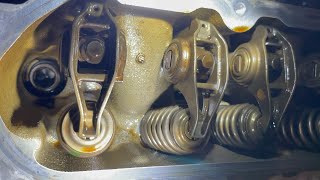
How to confirm: This often starts with a distinct ticking or rattling noise from the top of the engine. A mechanic will use a scan tool to monitor misfires and may perform a compression test. If an AFM cylinder (1, 4, 6, or 7 on V8s) shows low compression, the lifter is suspect. Physical inspection requires removing the valve covers and potentially the cylinder head. 🎬 See how to diagnose ticking noises from AFM lifter failure.
Typical fix: Replace the faulty AFM lifters, plastic lifter guides, and often the Valve Lifter Oil Manifold (VLOM). The camshaft must be inspected for damage from the failed lifter. Many owners opt to replace all AFM lifters at once or install an 'AFM delete kit' for a more permanent solution.
Est. part cost: $300-$750 - Vacuum Leaks (Intake Manifold Gasket, Hoses) 🟡 Medium Probability The plastic upper intake manifold and its gaskets on the 3.5L and 3.9L V6 engines are known to degrade and warp, allowing unmetered air to enter the engine. This disrupts the air/fuel ratio and causes random misfires.
How to confirm: Perform a smoke test on the intake system to see if smoke escapes from any gaskets or hoses. Alternatively, with the engine running, carefully spray brake cleaner around the intake manifold gasket area; a change in engine RPM indicates a leak.
Typical fix: Replace the leaking gasket or hose. For the V6 engines, replacing the upper intake manifold gaskets (plenum) is a common repair.
Est. part cost: $40-$150 - Clogged or Faulty Fuel Injectors ⚪ Low Probability → Shop Fuel Injector Fuel injectors can become clogged with deposits over time, leading to a poor spray pattern and insufficient fuel for combustion. On the direct-injection 3.6L LFX engine, carbon buildup on the intake valves is a more common issue that presents similar symptoms.
How to confirm: Use a scan tool to check fuel trims and perform a fuel injector balance test to measure the flow rate of each injector. A professional cleaning may be attempted first.
Typical fix: Professional fuel system cleaning or replacement of the faulty injector(s). For the LFX engine, walnut blasting the intake valves is often required to remove carbon buildup.
Est. part cost: $50-$150 per injector
Rare But Worth Checking
- Stretched Timing Chain (3.6L LFX Engine): → Shop Engine Timing Chain The 3.6L LFX V6 (2012-2015 models) is notorious for timing chain stretch. This causes the camshaft and crankshaft correlation to be off, which the PCM can interpret as a misfire, setting a P0300 code, often accompanied by codes like P0008, P0016, P0017, P0018, or P0019. Diagnosis involves checking cam/crank correlation with a scan tool or scope.
- Low Fuel Pressure: A weak fuel pump or clogged fuel filter can starve the engine of fuel, causing misfires under load. A fuel pressure test can confirm this.
- Faulty Crankshaft Position Sensor: → Shop Engine Crankshaft Position Sensor A failing crankshaft sensor can send erratic signals to the PCM, leading it to misinterpret engine speed and trigger a P0300 code. 🎬 Watch: A step-by-step guide to fixing random cylinder misfires.
- Internal Coolant Leak: As noted in GM TSB 18-NA-115, a P0300 on a cold start that disappears when warm can be caused by coolant entering the cylinders due to engine block porosity. Diagnosis involves adding dye to the coolant and using a borescope to check cylinders after a cold soak.
Diagnosis Steps
- Read the codes with an OBD-II scanner and check for any other pending or active codes, especially cylinder-specific (P030x) or timing correlation (P001x) codes.
- Check freeze-frame data to see the engine conditions (RPM, load, temperature) when the misfire occurred. Note if it happens when cold, under load, etc.
- Use a scan tool with live data (Mode $06) to view the misfire counters for each individual cylinder. This can help pinpoint a problem cylinder even if only a P0300 is set.
- Perform a visual inspection of the engine bay for obvious issues like cracked vacuum hoses or damaged wiring.
- Inspect the ignition system. Remove and check spark plugs for wear, fouling, or damage. The ACDelco 41-109 Iridium plug is a common OEM part. For V6 models, pay extra attention to the rear bank.
- If a specific cylinder is misfiring, swap its ignition coil with an adjacent cylinder's coil. Clear codes and see if the misfire code follows the coil. If it does, the coil is bad.
- Check oil level and condition. Low or dirty oil can cause problems with the AFM system.
- Test fuel pressure to rule out a weak fuel pump or clogged filter.
- Perform a smoke test to check for vacuum leaks, paying close attention to the intake manifold gaskets.
- If the engine has AFM (3.9L V6, 5.3L V8) and a ticking noise is present, investigate the AFM lifters for failure.
- If the engine is a 3.6L LFX and timing correlation codes are present, diagnose for a stretched timing chain.
Parts You'll Likely Need
- Spark Plugs
(OEM #41-109)— This is the most common maintenance item to fail and cause a misfire. They are a primary component of the ignition system.
Trusted brands: ACDelco, NGK
OEM price range: $8-$15 per plug
Aftermarket price range: $6-$12 per plug - Ignition Coil
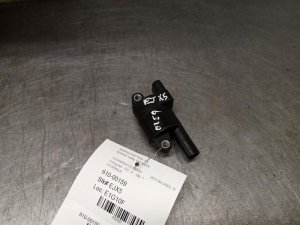
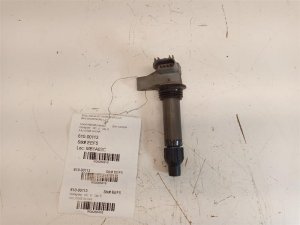
(OEM #D515C)— Ignition coils provide the high voltage needed to create a spark. A failing coil will cause a misfire in its corresponding cylinder.
Trusted brands: ACDelco, Delphi, NGK
OEM price range: $65-$80 per coil
Aftermarket price range: $40-$60 per coil
Related Codes That Often Appear With This One
- P0301-P0308 — If the misfire becomes consistent in one cylinder, the general P0300 code may be accompanied by a cylinder-specific code (e.g., P0304 for cylinder 4).
- P050D — This code for 'Cold Start Rough Idle' is often seen with P0300, as mentioned in TSB #PIP5628G and TSB 18-NA-115, pointing towards potential cold-start related issues like coolant intrusion or carbon buildup.
- P0016, P0017, P0018, P0019 — On the 3.6L LFX engine, these crankshaft/camshaft correlation codes are a strong indicator that the P0300 is being caused by a stretched timing chain.
Technical Service Bulletins (TSBs) & Recalls
- Addresses a cold start misfire and/or rough idle with DTC P0300. The cause may be engine block porosity allowing coolant to leak into a cylinder, which goes away when the engine warms up.
- A preliminary information bulletin for technicians to gather data on vehicles with misfire codes P0300-P0308 and/or P050D (Cold Start Rough Idle). It provides a template for diagnosis, indicating GM is actively tracking these issues.
- Addresses engine misfire (P0300) and/or tick noise on V8 engines with AFM. It details diagnosis for AFM lifters that are stuck, collapsed, or unlock improperly, linking the issue to oil pressure/aeration problems.
Platform-Specific Known Issues

- AFM Lifter Failure (5.3L LS4 V8 & 3.9L LZ9 V6): → Shop Engine Valve Lifter The Active Fuel Management system uses special collapsible lifters that are a common failure point. They can get stuck, causing a persistent tick, a misfire on an AFM cylinder, and the P0300 code. Low oil pressure or aeration exacerbates this.
- Stretched Timing Chains (3.6L LFX V6): → Shop Engine Timing Chain A well-known issue on the direct-injected 3.6L engine is premature timing chain wear and stretch. This throws off cam/crank sync, causing misfires and setting codes P0016-P0019 along with P0300.
- Intake Manifold Gasket Leaks (3.5L & 3.9L V6): → Shop Engine Intake Manifold The intake manifold plenum gaskets on these pushrod V6 engines are prone to leaking, causing a vacuum leak that the PCM cannot compensate for, resulting in random misfires at idle.
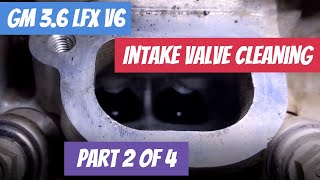
- Carbon Buildup on Intake Valves (3.6L LFX V6): As a direct-injection engine, fuel is sprayed directly into the cylinder, not over the intake valves. This allows oil and crankcase vapors to bake onto the valves, restricting airflow and causing rough idle and misfires.
Mechanic-Grade Diagnostic Values
- Fuel Pressure (Key On, Engine Off) — expected: 56-62 psi (384-425 kPa). Failure: Pressure below 56 psi indicates a potential weak fuel pump or clogged filter.
- Ignition Coil Primary Resistance — expected: ~0.5 - 1.5 Ohms. Failure: A reading of OL (over-limit) or significantly outside this range indicates a faulty coil winding.
- Ignition Coil Secondary Resistance — expected: ~5,000 - 15,000 Ohms. Failure: A reading of OL (over-limit) or significantly outside this range points to a break in the secondary coil winding.
Hidden / Shadow Codes Worth Checking
- Mode $06 Misfire Counts (e.g., Component ID $A2, $A3, etc.): Most OBD-II scanners can access Mode $06 data, which contains raw, non-continuous monitor test results. This includes misfire counts for each individual cylinder, even if the count isn't high enough to set a specific P0301-P0308 code. This is invaluable for identifying which cylinder(s) are contributing to the P0300 count. (see via A quality OBD-II scan tool with Mode $06 or 'Non-Continuous Monitor' viewing capability.)
Scan Tool Commands That Help
- GDS2 / Tech2: Cylinder Power Balance Test — When you have a P0300 but are unsure which cylinder is the primary offender. This test deactivates one injector at a time and measures the RPM drop. A cylinder that shows little to no RPM drop when deactivated is the one that is misfiring.
- GDS2 / Tech2: AFM Solenoid Control (VLOM Test) — On AFM-equipped engines (3.9L V6, 5.3L V8), if an AFM lifter failure is suspected. This allows a technician to command each of the four solenoids in the Valve Lifter Oil Manifold (VLOM) on and off to check for proper electrical response and listen for mechanical actuation.
- GDS2 / Tech2: Crankshaft Position System Variation Learn — This procedure is mandatory after replacing the crankshaft position sensor, flexplate, ECM, or major engine components. Failure to perform the 'crank relearn' can cause the ECM to inaccurately detect misfires and set a P0300 code.
Wiring & Ground Locations
- G111 — On the transmission-to-engine bolt. On non-5.3L engines, it's above the starter; on 5.3L engines, it's below the starter.. This is a primary ground for the Engine Control Module (ECM) and Transmission Control Module (TCM). A loose or corroded G111 can cause erratic sensor readings and insufficient power for ignition components, leading to random misfires.
- G102 — Located near the battery, often on the left rear of the engine.. This is the main ground point for the ignition coils. A poor connection here can weaken spark across all cylinders, causing a random misfire condition.
- Ignition Coil Connector — On top of each ignition coil.. The 4-pin connector provides power, ground, and the trigger signal from the ECM. Checking for 12V on the pink wire (or equivalent) with key-on is a critical diagnostic step. The connector itself or its wiring can become brittle and fail, causing a misfire on that cylinder.
Real Owner Repair Stories
- ImpalaForums user (2008 Impala SS (5.3L V8)) — P0300 code and a distinct ticking noise from the engine.
❌ Tried (didn't work) Replacing the AFM lifters on the cylinder that showed misfires.
✅ What actually fixed it The actual cause was a failed solenoid within the Valve Lifter Oil Manifold (VLOM). Replacing the entire VLOM assembly resolved both the ticking noise and the P0300 code. - YouTube user EZ Auto (2014 Chevrolet Impala (3.6L LFX)) — Flashing check engine light, stability control light on, rough running, P0300, P0301, P0303.
❌ Tried (didn't work) Initial scan showed misfires on multiple cylinders.
✅ What actually fixed it Physical inspection revealed that the spark plugs for cylinders 1 and 3 had cracked ceramics and the electrodes were completely worn away. Replacing all six spark plugs fixed the issue. - Reddit r/MechanicAdvice user (2012 Chevrolet Impala, 122,000 miles) — Initially a P0302 code. After replacing spark plugs, the car ran much worse and threw a P0300 code.
❌ Tried (didn't work) Replacing all spark plugs., Replacing all ignition coils.
✅ What actually fixed it The user did not post the final fix, but a common cause for this scenario is accidentally swapping ignition coil harness connectors between cylinders during the repair, or not fully seating a coil or plug wire, inducing new misfires.
"I Checked Everything" — The Actual Cause
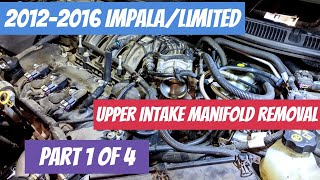
- In some cases, a smoke test for vacuum leaks may come back clean, but the issue is still unmetered air. A common culprit can be a small crack in a PCV hose or tube that is hidden under the engine cover. The crack may only open under specific engine vacuum/temperature conditions, making it difficult to spot during a standard test. Replacing the entire PCV hose assembly can resolve the issue.
When the Usual Fixes Don't Work
- While spark plugs and coils are the most common cause, many owners have replaced all ignition components only to have the P0300 code remain. In these instances, the root cause is often a more platform-specific issue. For example, on a 2008 Impala SS with the 5.3L V8, a persistent P0300 accompanied by a ticking noise was ultimately traced to a faulty Valve Lifter Oil Manifold (VLOM), not the lifters themselves. On a 2014 Impala with the 3.6L V6, a P0300 that seemed ignition-related was actually caused by an internally collapsed catalytic converter creating an intermittent exhaust blockage.
OEM Part Supersession History
Various older AFM lifters→GM 12648846 (or equivalent like Elgin HL-7025)— The original AFM lifters were prone to premature failure (collapsing or sticking). Newer designs offer improved durability.
Heads up: Newer Dynamic Fuel Management (DFM) lifters (like HL-7025) are backward compatible with older Active Fuel Management (AFM) systems, but original AFM-only lifters (like HL-7011) cannot be used in newer DFM engines.GM 12618542 (Ignition Coil)→GM 12632479 (ACDelco D515C)— Standard part evolution and consolidation for multiple vehicle platforms.
Heads up: While D515C is a very common replacement for the 3.6L LFX engine, it is always critical to verify the correct part number by VIN, as different coils were used on the earlier 9th generation engines.
Model Year Variations Within This Range
- 2008-2011: These model years featured the 3.5L V6, 3.9L V6, and 5.3L V8. The P0300 cause on the 3.9L and 5.3L is frequently related to the Active Fuel Management (AFM) system, specifically failed lifters or the VLOM.
- 2012-2015: These models primarily used the 3.6L LFX V6 (a 2.5L I4 was also available from 2014). On the LFX engine, a P0300 is often associated with stretched timing chains (especially if P0016-P0019 codes are present) or significant carbon buildup on intake valves due to the direct injection system.
Helpful Videos
We Have This Part in Stock
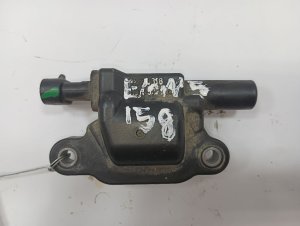

The information in this article is provided for general reference and educational purposes only. Vehicle specifications, procedures, and part compatibility can vary by production date, trim level, and region. Always consult your vehicle's factory service manual and verify part numbers before purchasing or performing repairs. Safety-critical components such as airbags, seat belts, and braking systems should be installed by a qualified professional.
- Chevrolet IMPALA:
- 🧭 Diagnostic Flowchart
- 🎬 Helpful Videos
- 🛍️ Shop This Part
- What's Unique About the 2008-2015 Chevrolet IMPALA
- Symptoms You May Notice
- Most Likely Causes
- Rare But Worth Checking
- Diagnosis Steps
- Parts You'll Likely Need
- Related Codes That Often Appear With This One
- Technical Service Bulletins (TSBs) & Recalls
- Platform-Specific Known Issues
- Mechanic-Grade Diagnostic Values
- Hidden / Shadow Codes Worth Checking
- Scan Tool Commands That Help
- Wiring & Ground Locations
- Real Owner Repair Stories
- "I Checked Everything" — The Actual Cause
- When the Usual Fixes Don't Work
- OEM Part Supersession History
- Model Year Variations Within This Range
- 🎟️ Get 5% Off