

P0300 on 2004-2011 Chevrolet Malibu: Random Misfire Causes and Fixes
P0300 on a 2004-2011 Chevy Malibu indicates a random engine misfire. The most common causes are worn spark plugs and failing ignition coils. Replacing these parts is often the first and most effective step, costing between $100 and $300 for a DIY repair.
- P0300 means your engine is misfiring on multiple cylinders, and you should not ignore it, especially if the check engine light is flashing.
- Start your diagnosis with the cheapest and most common culprits: spark plugs and ignition coils.
- If you have a V6 engine, a vacuum leak from the intake manifold gasket is a highly probable cause.
- Always check for other codes, as they can provide valuable clues to the root cause.
- Driving with a persistent misfire can lead to catastrophic failure of the catalytic converter, turning a relatively minor repair into a very expensive one.
What's Unique About the 2004-2011 Chevrolet MALIBU

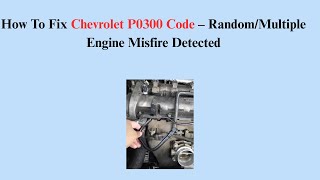
For the 2004-2011 Malibu, which spans two generations and multiple engines (2.2L L61, 2.4L LE5, 3.5L LZ4, 3.6L LY7), the P0300 code is a very common issue with predictable causes. 🎬 Watch: How to fix a random engine misfire code On the 2.2L and 2.4L Ecotec engines, the ignition system, specifically the coil-on-plug units and spark plugs, are frequent failure points. For the V6 engines (like the 3.5L and 3.6L), in addition to ignition components, vacuum leaks from failing intake manifold gaskets are a well-documented problem that can trigger a random misfire. Owners often report this code appearing with a "Service ESC / Service Traction" message, as the engine's instability can affect the traction control system, or because a failing wheel speed sensor or low battery voltage can cause both issues simultaneously.
Diagnostic Flowchart

Tap your situation to follow the diagnostic path that matches what you're seeing on this vehicle.
Generation note: This guide covers the 6th generation (2004-2008) and 7th generation (2008-2012) Chevrolet Malibu. While the causes for P0300 are similar, the specific part numbers for ignition coils, spark plugs, and intake gaskets will differ between the 4-cylinder Ecotec engines and the various V6 engines offered across these years.
Symptoms You May Notice
- Flashing or solid Check Engine Light
- Rough or vibrating idle
- Engine hesitation or stumbling during acceleration
- Noticeable loss of engine power
- Reduced fuel economy
- Engine is hard to start
- Fuel or 'rotten egg' smell from the exhaust
- "Service ESC" or "Service Traction Control" message on the dash
- Replacing only one spark plug or coil when multiple are worn.
- Replacing the Mass Airflow (MAF) sensor without testing it first. While a bad MAF can cause a P0300, it should be properly diagnosed.
- Assuming a major engine failure before checking basic ignition and fuel components.
Most Likely Causes


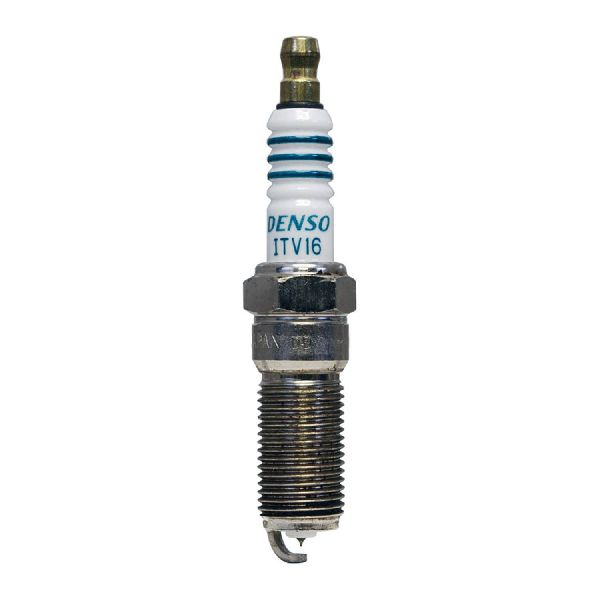
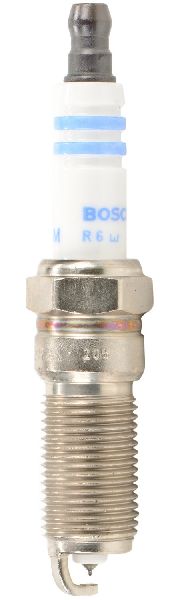
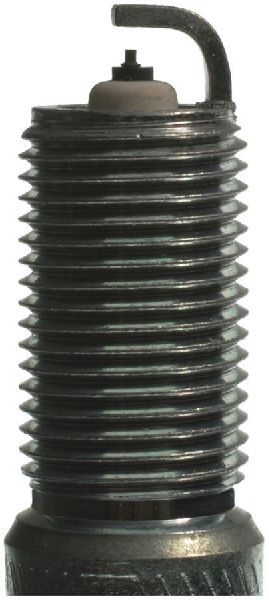
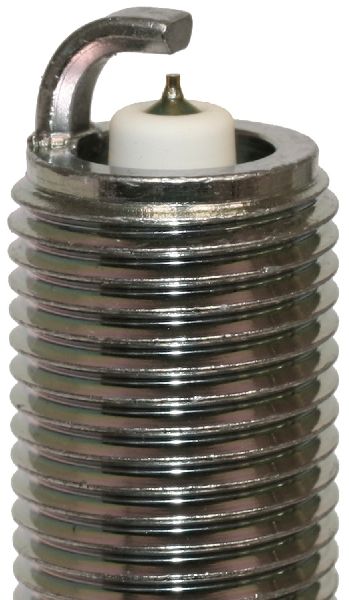
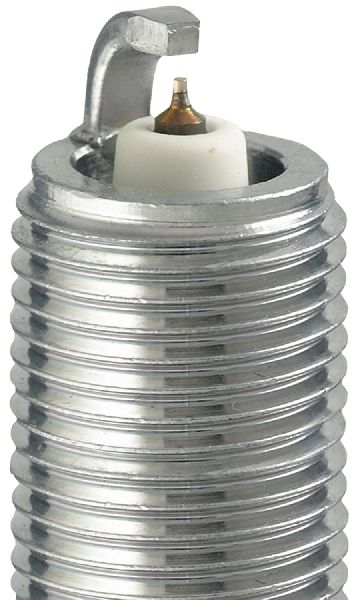
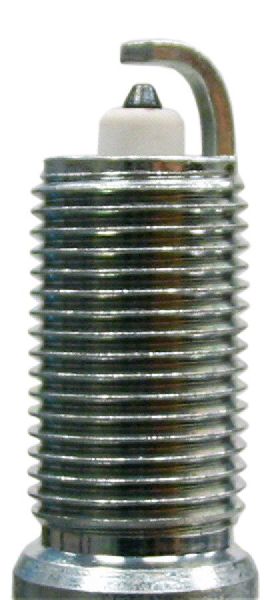
- Worn or Fouled Spark Plugs 🔴 High Probability → Shop Spark Plug Spark plugs are a routine maintenance item and are the most frequent cause of misfires as they wear out. Using incorrect plugs (e.g., non-ACDelco or non-iridium) can also lead to premature failure.
How to confirm: Remove the spark plugs and inspect them for wear, oil fouling, or carbon buildup. Check the electrode gap against specifications; for the popular 2.4L engine, the ACDelco 41-103 plug should have a gap of 0.043 inches.
Typical fix: Replace all spark plugs as a set. It's recommended to use OEM-spec ACDelco Iridium plugs like the 41-103 for best performance and longevity on many Malibu engines.
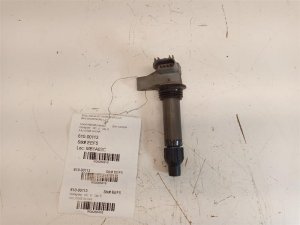
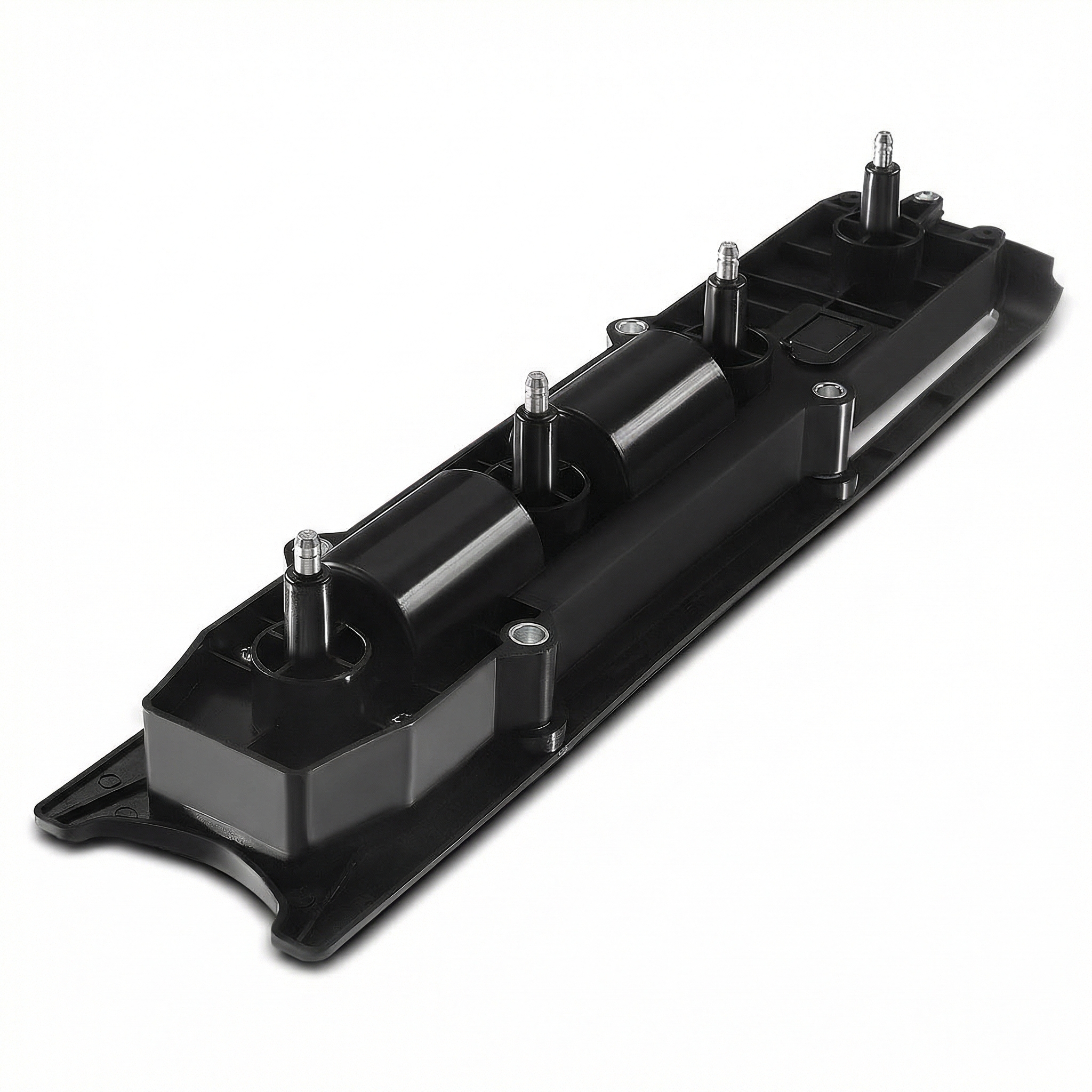
Est. part cost: $40-$80 - Failing Ignition Coil(s) 🔴 High Probability → Shop Ignition Coil The coil-on-plug ignition systems on these engines are prone to failure with age and heat cycles. When one coil fails, others may be near the end of their service life.
How to confirm: Use a scan tool with live data to watch for misfire counts on specific cylinders. If the misfire moves when you swap a coil to a different cylinder, that coil is bad. You can also test for spark at the coil boot.
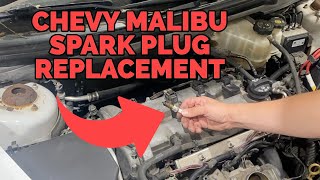
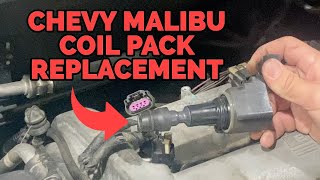
Typical fix: Replace the faulty ignition coil. Many owners choose to replace all coils at the same time 🎬 See this walkthrough for replacing spark plugs and coil packs as a preventative measure. The ACDelco D521C is a common replacement for 2011+ models.
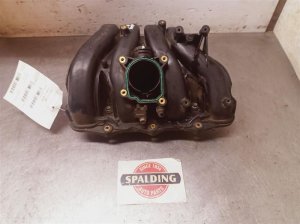
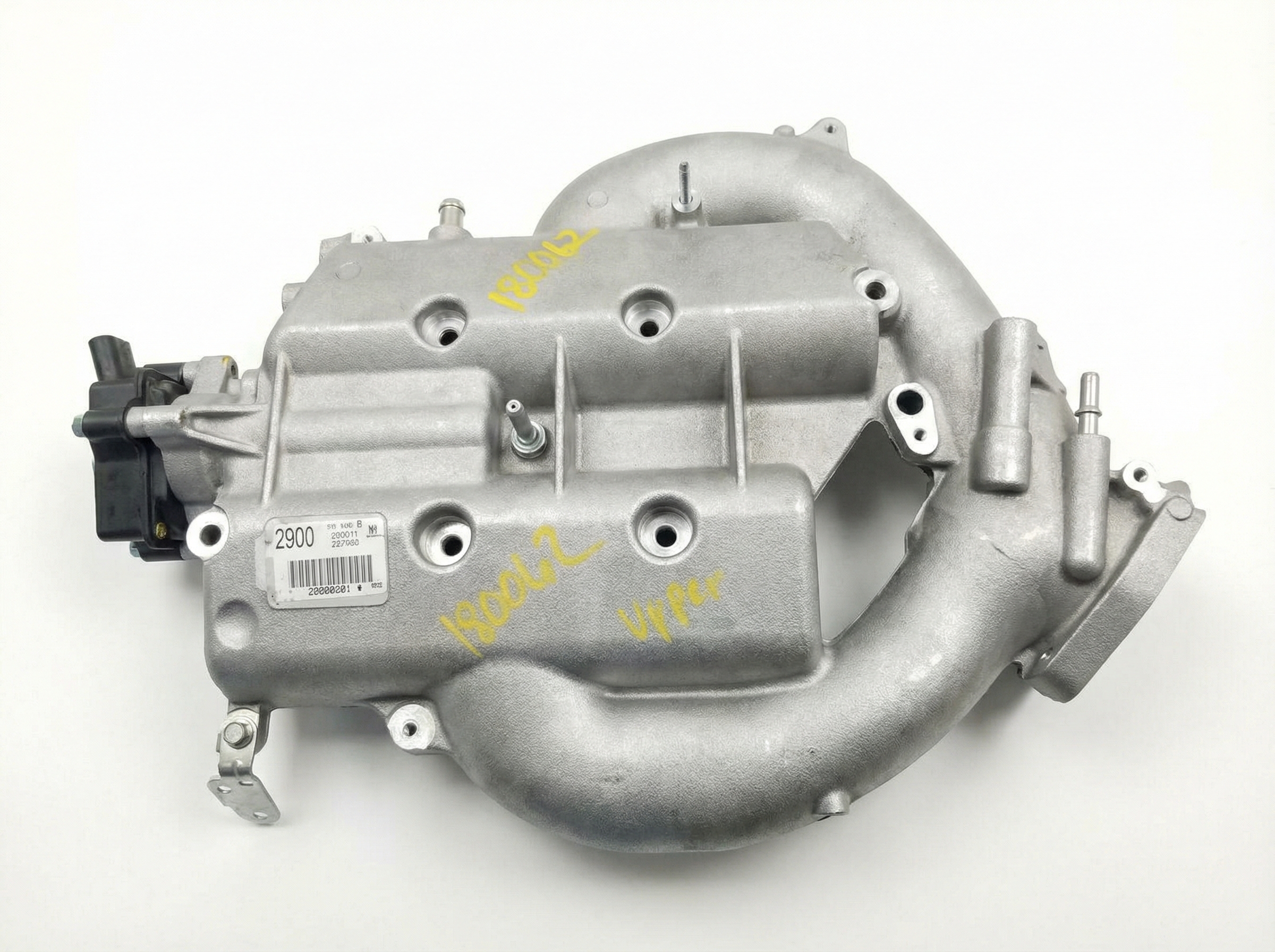
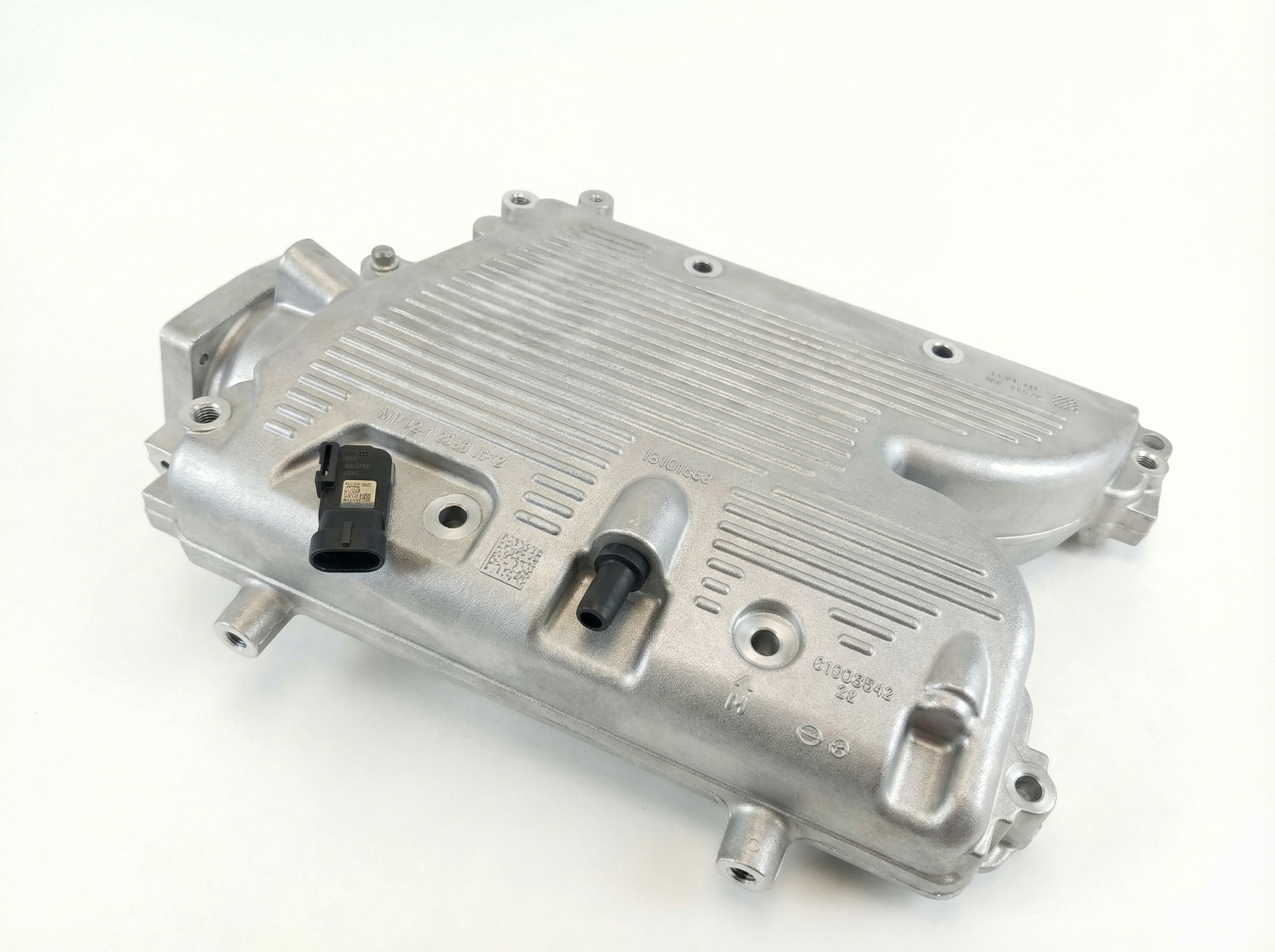
Est. part cost: $40-$80 per coil - Vacuum Leak (especially Intake Manifold Gasket) 🟡 Medium Probability The V6 engines in this generation of Malibu are known for intake manifold gasket failures. The original plastic-carrier gaskets can degrade, allowing unmetered air to enter the engine and disrupt the air-fuel ratio, causing lean conditions and misfires.
How to confirm: With the engine running, spray carburetor cleaner or smoke around the intake manifold sealing area. If the engine RPM changes, a leak is present.
Typical fix: Replace the upper and lower intake manifold gaskets. Upgraded gaskets with a metal carrier, such as the Fel-Pro MS 98014 T, are recommended over the OEM plastic design for improved durability.
Est. part cost: $50-$120 - Clogged or Failing Fuel Injectors 🟡 Medium Probability → Shop Fuel Injector Over time, fuel injectors can become clogged with deposits from fuel, leading to an improper spray pattern and a lean condition in one or more cylinders.
How to confirm: Listen to each injector with a mechanic's stethoscope for a consistent clicking sound. A more advanced test involves a fuel injector balance test using a capable scan tool, or sending them out for professional cleaning and flow testing.
Typical fix: First, try a high-quality fuel system cleaner like Lucas. If that fails, the specific faulty injector(s) must be identified and replaced.
Est. part cost: $50-$150 per injector
Rare But Worth Checking
- Failing Engine Control Module (ECM): → Shop Engine Control Module (ECM) As documented in NHTSA complaint #10705647, a faulty ECM can cause random misfires and injector circuit codes. This should only be considered after all other ignition and fuel system possibilities have been exhausted.
- Low Fuel Pressure: A weak fuel pump or clogged fuel filter can starve the entire engine for fuel, causing misfires across all cylinders, especially under load. This can be confirmed with a fuel pressure test at the fuel rail's Schrader valve.
- Stretched Timing Chain: → Shop Engine Timing Chain Particularly on higher-mileage Ecotec and 3.6L V6 engines, a stretched timing chain can throw off cam/crank correlation, leading to misfires. This is usually accompanied by rattling noises on startup and other timing-related codes.
- Low Engine Compression: A burnt valve (a known issue on some Ecotec engines) or failing head gasket can cause low compression in a cylinder, leading to a misfire. This is less common for a P0300 and more likely to cause a specific cylinder misfire code (e.g., P0301), but if multiple cylinders are affected, it can trigger a P0300.
Diagnosis Steps
- Read the freeze frame data with an OBD-II scanner to see the engine conditions (RPM, load, temperature) when the misfire occurred.
- Check for any other stored trouble codes that can point to a specific system (e.g., lean codes, injector codes, MAF codes).
- Inspect all spark plugs for wear, damage, or fouling. Replace with OEM-spec plugs if they are old or in poor condition. For the 2.4L Ecotec, the ACDelco 41-103 with a 0.043" gap is common.
- Inspect ignition coils and their wiring for any visible damage. Use the scanner's live data to monitor misfire counts per cylinder. Swap a suspected bad coil with a known good one to see if the misfire follows the coil.
- Test for vacuum leaks. Pay close attention to the intake manifold gasket area, especially on V6 models. A smoke test is the most effective method.
- Check fuel pressure using a fuel pressure gauge connected to the fuel rail's Schrader valve. Compare the reading to the manufacturer's specification (typically 50-60 PSI for these models).
- If all else fails, consider more advanced diagnostics like a compression test to check for mechanical engine problems (like burnt valves) or testing the ECM.
Parts You'll Likely Need
- Ignition Coil
(OEM #ACDelco D521C (example for 2011+ 2.4L))— This is one of the most common failure points for a P0300 code on this vehicle. Heat and age cause the internal windings to fail.
Trusted brands: ACDelco, Delphi, NGK
OEM price range: $60-$90
Aftermarket price range: $35-$60 - Spark Plugs
(OEM #ACDelco 41-103 (example for 2.4L Ecotec))— As a standard maintenance item, worn spark plugs are a primary and frequent cause of misfires.
Trusted brands: ACDelco, NGK, Bosch
OEM price range: $10-$15 per plug
Aftermarket price range: $6-$12 per plug - Intake Manifold Gasket Set (V6)
(OEM #Fel-Pro MS 98014 T (upgraded aftermarket))— The original gaskets on V6 engines are a common failure point leading to vacuum leaks and random misfires. The Fel-Pro metal-carrier design is a popular, durable upgrade.
Trusted brands: Fel-Pro, ACDelco
OEM price range: $70-$100
Aftermarket price range: $50-$80
Related Codes That Often Appear With This One
- P0301-P0308 — These codes specify which cylinder is misfiring (e.g., P0301 for Cylinder 1). They often appear with P0300 before the ECM determines the misfire is random.
- P0171 / P0174 — These codes indicate a "System Too Lean" condition, which is a common result of a vacuum leak from a bad intake manifold gasket, a primary cause of P0300 on V6 models.
- P0201-P0208 — These are injector circuit codes. Their presence alongside P0300, as seen in NHTSA complaint #10705647, can point towards an electrical issue or a failing ECM.
Technical Service Bulletins (TSBs) & Recalls
- PIP5628G — This Technical Service Bulletin provides diagnostic guidance for technicians encountering misfire codes P0300-P0308. It outlines a template of information to collect (freeze frame data, misfire duplication, relative compression tests) before contacting the Technical Assistance Center (TAC) to ensure efficient diagnosis of ignition, fuel, or mechanical issues. (2023-08-10)
Platform-Specific Known Issues
- A slight vibration at idle while in Park or Neutral can be a symptom of the P0300 code, even if the engine seems to run fine otherwise.
Mechanic-Grade Diagnostic Values
- Fuel Pressure (Key On, Engine Off) — expected: 58-62 PSI. Failure: Pressure below this range indicates a weak fuel pump or clogged filter.
- Ignition Coil Primary Resistance — expected: 0.4 to 2.0 ohms. Failure: A reading outside this range, or an open circuit (OL), indicates a faulty coil winding.
- Ignition Coil Secondary Resistance — expected: 6,000 to 10,000 ohms (6k-10k Ω). Failure: A reading significantly outside this range suggests the secondary winding has failed.
- Fuel Injector Resistance (2.4L Ecotec) — expected: ~12.5 ohms. Failure: A reading far from this value suggests a bad injector coil.
Scan Tool Commands That Help
- GM Tech2 / GDS2: Crankshaft Position Variation Learn — Required after replacing the crankshaft position sensor, ECM, or performing major engine work. Failure to perform this relearn can cause a P0300 code because the ECM cannot accurately detect misfires.
- Professional Scan Tool: Fuel Injector Balance Test — To identify a specific fuel injector that is flowing less fuel than the others, which can cause a random misfire before it becomes consistent enough to set a cylinder-specific code.
Wiring & Ground Locations
- G103 — On the cowl at the left rear of the engine compartment, often near the brake booster.. This is a critical ground for the Body Control Module (BCM) and the Data Link Connector (DLC). A poor connection here can cause numerous, seemingly unrelated electrical issues, including problems with engine management.
- G106 / G107 — On the left rear (G106) or lower left side (G107) of the engine block for the 2.4L engine.. These are primary engine grounds. Corrosion or a loose connection at these points can cause erratic sensor readings and directly impact ECM and ignition system performance, leading to misfires.
- ECM/Ignition Coil Main Ground Strap — Typically a braided strap from the engine block or cylinder head to the chassis/firewall.. This is the main ground path for the ignition system. If this strap is corroded, loose, or broken, it can cause a weak spark across all cylinders, leading directly to a P0300 code.
Real Owner Repair Stories
- Chevy HHR Forum (similar Ecotec engine) (2009 Chevrolet HHR with 2.4L Ecotec engine) — P0304 (Cylinder 4 misfire) and traction control light.
❌ Tried (didn't work) Replacing spark plugs, Swapping ignition coils to different cylinders
✅ What actually fixed it The owner suspected a faulty fuel injector. After testing a replacement set of injectors on the bench (verifying 12.5 ohms resistance), the plan was to swap the fuel rail and injectors to resolve the persistent cylinder-specific misfire.
OEM Part Supersession History
12672037→12700744— Updated design for the upper intake manifold gasket for some V6 applications.
Heads up: Always verify part number by VIN, but the newer part number is the current replacement for the old one.
Model Year Variations Within This Range
- 2009-2011: The 2.4L Ecotec engine gained an E85 flex-fuel compatible version, coded LE9. While mechanically very similar to the gasoline-only LE5, it uses different fuel injectors designed for E85 compatibility. Using the wrong injectors can cause fuel trim issues and potential misfires.
- 2008-2012 (7th Gen): The 7th generation Malibu introduced the 3.6L LY7 V6 engine. Unlike the 3.5L V6, this engine is known for timing chain stretch issues at higher mileage, which can be a direct cause of P0300 codes, often accompanied by rattling noises.
Helpful Videos

Used OEM Parts in Stock
New Aftermarket Parts Available

The information in this article is provided for general reference and educational purposes only. Vehicle specifications, procedures, and part compatibility can vary by production date, trim level, and region. Always consult your vehicle's factory service manual and verify part numbers before purchasing or performing repairs. Safety-critical components such as airbags, seat belts, and braking systems should be installed by a qualified professional.
- Chevrolet MALIBU:
- 🧭 Diagnostic Flowchart
- 🎬 Helpful Videos
- 🛍️ Shop This Part
- What's Unique About the 2004-2011 Chevrolet MALIBU
- Symptoms You May Notice
- Most Likely Causes
- Rare But Worth Checking
- Diagnosis Steps
- Parts You'll Likely Need
- Related Codes That Often Appear With This One
- Technical Service Bulletins (TSBs) & Recalls
- Platform-Specific Known Issues
- Mechanic-Grade Diagnostic Values
- Scan Tool Commands That Help
- Wiring & Ground Locations
- Real Owner Repair Stories
- OEM Part Supersession History
- Model Year Variations Within This Range
- 🎟️ Get 5% Off