

P0300 on 2003-2006 Chevrolet SSR: Random Misfire Causes and Fixes
P0300 on a Chevy SSR indicates random engine misfires. Start by checking basic wear items like spark plugs and wires. If the issue persists, more serious platform-specific problems cited in TSBs, like worn camshaft lobes, could be the cause, requiring professional diagnosis. Vacuum leaks and faulty ignition coils are also very common culprits.
- P0300 means multiple cylinders are misfiring randomly, not just one.
- You MUST know if you have the 5.3L (2003-04) or 6.0L (2005-06) engine before buying parts, as they are not interchangeable.
- Start diagnosis with the basics: spark plugs, spark plug wires (on 5.3L), and ignition coils.
- Be aware of TSBs pointing to serious issues like worn camshafts or simple mistakes like crossed injector wiring if the basics don't solve the problem.
- Do not ignore a flashing check engine light, as it signals a severe misfire that can quickly damage expensive catalytic converters.
What's Unique About the 2003-2006 Chevrolet SSR
The SSR used two distinct V8 engines: the 5.3L LM4 (2003-2004) and the 6.0L LS2 (2005-2006). While they share common misfire causes like bad spark plugs, parts are not interchangeable. More importantly, GM has issued Technical Service Bulletins (TSBs) for this platform that link a persistent P0300 code to serious mechanical issues, such as worn camshaft lobes, which is a known issue on some LS-family engines. [TSB #PIP4138R] Another TSB warns of crossed fuel injector connectors for cylinders 5 & 7 and 6 & 8 after engine service, a specific and unusual cause for a P0300 code. [TSB #PIP5169] Notably, the 5.3L LM4 in the SSR is an all-aluminum engine and does not have the Active Fuel Management (AFM) system that is a notorious cause of lifter failure and misfires in other GM trucks and SUVs.
Diagnostic Flowchart
Tap your situation to follow the diagnostic path that matches what you're seeing on this vehicle.
Generation note: The SSR was a single-generation vehicle, but it had a major powertrain update. 2003-2004 models used the 5.3L LM4 V8, while 2005-2006 models received the more powerful 6.0L LS2 V8. Ignition and fuel system components are often different between these two engines, so verifying the engine type before ordering parts is critical.
Symptoms You May Notice
- Rough or shaking idle
- Hesitation or stumbling during acceleration
- Noticeable loss of engine power
- Flashing or solid Check Engine Light
- Reduced fuel economy
- Possible fuel smell from the exhaust
- Engine is hard to start
- Fluttering or ticking noise from the engine [TSB #PIP4138R]
- Replacing oxygen (O2) sensors. While a bad O2 sensor can contribute to fuel trim issues, it's rarely the direct cause of a P0300 code and is more often a symptom of the underlying misfire.
- Replacing the catalytic converters. A misfire can destroy a catalytic converter, but the converter itself does not cause the misfire. Replacing it without fixing the misfire will result in the new converter failing as well.
Most Likely Causes
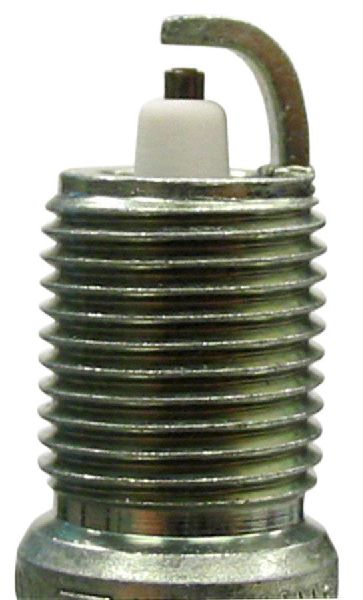
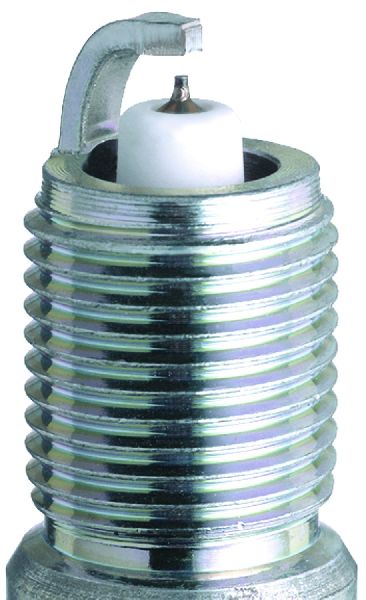
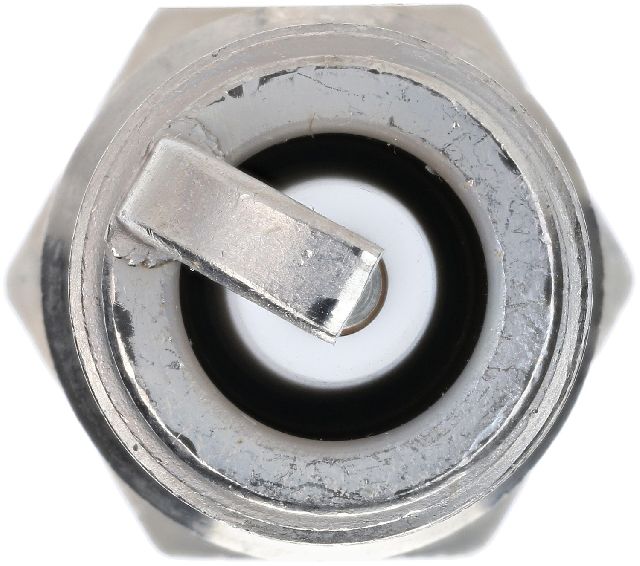
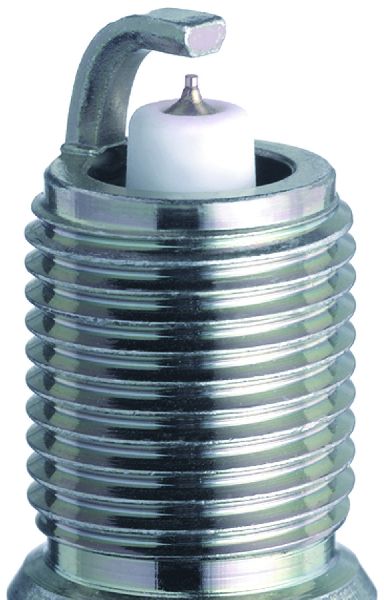
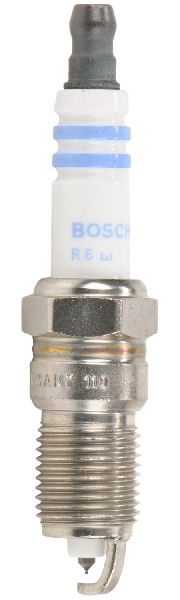
- Worn or Fouled Spark Plugs 🔴 High Probability → Shop Spark Plug Spark plugs are a standard maintenance item. The SSR's V8 engines originally used iridium plugs, which have a long but finite life of up to 100,000 miles. Fouling or wear is the most common starting point for any misfire diagnosis. 🎬 Watch a mechanic diagnose a P0300 misfire on a GM 5.3L.
How to confirm: Remove the spark plugs and inspect them for wear (rounded electrodes) or fouling (black, sooty, or oily deposits). A lean misfire can leave a plug looking white or blistered. Compare them to a chart of spark plug conditions.
Typical fix: Replace all eight spark plugs. It's critical to use the correct plug for your specific engine (5.3L or 6.0L). Ensure they are gapped correctly; a GM TSB updated the service gap to 0.040 inches for many LS engines.
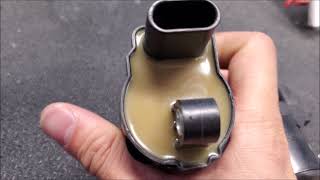
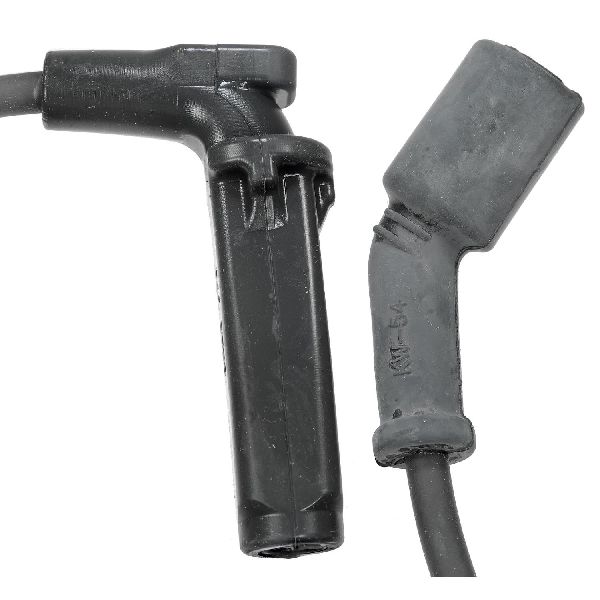
Est. part cost: $60-$120 - Faulty Ignition Coils or Spark Plug Wires 🟡 Medium Probability → Shop Ignition Coil The SSR uses a coil-per-cylinder ignition system. Heat from the exhaust manifolds and vibration cause these coils and the short spark plug wires to fail over time. Loose or poorly seated spark plug wires are also a known issue on GM trucks with similar engines.
How to confirm: Use a scan tool to identify which cylinders are misfiring most. Swap the ignition coil from a misfiring cylinder with one from a known good cylinder. If the misfire code follows the coil (e.g., P0302 becomes P0304), the coil is bad. Inspect wires for cracks, burns, or loose connections at the coil and plug.
Typical fix: Replace the faulty ignition coil and/or spark plug wire set. It is often recommended to replace all coils and wires at once on a high-mileage vehicle, using quality OEM brands like ACDelco.
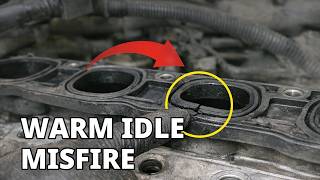
Est. part cost: $40-$80 per coil - Vacuum Leak 🟡 Medium Probability A common cause for a random misfire is unmetered air entering the engine, which leans out the air-fuel mixture for all cylinders. Aging intake manifold gaskets and brittle vacuum hoses are frequent culprits on GM V8s of this era. The intake manifold gaskets in particular are known to flatten and fail, causing lean codes (P0171/P0174) along with P0300.
How to confirm: Visually inspect all vacuum hoses for cracks. Listen for a hissing sound around the intake manifold at idle. A professional can perform a smoke test to pinpoint the exact location of the leak, which is the most reliable method.
Typical fix: Replace the leaking gasket or hose. Intake manifold gaskets are a common failure point and are often replaced as a set. 🎬 See how a leaking intake gasket causes rough idle misfires.
Est. part cost: $50-$150 for gaskets - Worn Camshaft Lobe(s) ⚪ Low Probability → Shop Engine Camshaft TSB #PIP4138R specifically calls out worn camshaft lobes as a cause for P0300-P0308 codes on the 2006 SSR and other V8-equipped GM vehicles. [TSB #PIP4138R] This is a known, though not universal, issue with some LS-family engines, causing valves not to open properly, leading to misfires. The issue can present with a distinct chirp, squeak, or tick noise. [TSB #PIP4138R]
How to confirm: This is an advanced diagnosis. A consistent ticking noise that doesn't disappear when disabling a fuel injector is a strong clue. Diagnosis may involve measuring valve lift at the pushrod or physically removing the valve covers and intake manifold to inspect the camshaft and lifters for wear.
Typical fix: Requires replacement of the camshaft, all 16 lifters, and associated gaskets. This is a major, labor-intensive engine repair.
Est. part cost: $500-$1500+
Rare But Worth Checking
- Crossed Fuel Injector Connectors: → Shop Fuel Injector TSB #PIP5169 warns that after engine repairs, the injector connectors for cylinders 5 & 7 and 6 & 8 can be accidentally swapped. [TSB #PIP5169] This will cause a P0300 code and is a simple but easily overlooked mistake that should be checked if work was recently performed.
- Clogged or Weak Fuel System: A weak fuel pump or clogged fuel filter can reduce fuel pressure, causing lean misfires across all cylinders, especially under load. Clogged injectors are also a possibility and a common issue on Chevrolet vehicles.
- Crankshaft Position Sensor (CKP) Issues: → Shop Engine Crankshaft Position Sensor A faulty CKP sensor can send incorrect data to the ECM, causing it to misinterpret normal engine operation as a misfire. Sometimes, a 'Crankshaft Variation Learn' procedure is needed after major repairs. One owner on a forum performed this procedure, along with cleaning grounds, but it did not solve their specific misfire issue.
- Poor Engine Grounds: Corroded or loose engine ground straps can cause a host of electrical issues, including random misfires. A technician on a Reddit forum noted cleaning three engine grounds on the left side of the motor as a diagnostic step recommended by GM's technical assistance. Key grounds for the ECM and ignition system include G101, G102, and G103.
Diagnosis Steps
- Read all stored DTCs with an OBD-II scanner. Note any codes accompanying P0300, such as P0171/P0174 or specific cylinder misfires.
- Using the scanner's live data, monitor the misfire counter for each cylinder (Mode $06 data) to see which ones are most active, both at idle and while holding RPMs around 1,500-2,000.
- Perform a full visual inspection. Look for obvious issues like cracked vacuum hoses, damaged wiring, loose connectors, or poorly seated spark plug wires.
- Inspect the spark plugs. Remove them and check for wear, damage, or deposits. Ensure they are the correct type for your engine and gapped properly.
- Test the ignition system. Swap the ignition coil from a misfiring cylinder to a good cylinder. If the misfire code follows the coil, the coil is bad.
- Test fuel pressure. Connect a fuel pressure gauge to the fuel rail to ensure the pump and regulator are functioning within specification. LS-based engines typically require 55-65 psi.
- Check for vacuum leaks. A smoke test is the most reliable method to find leaks from gaskets or hoses. Pay close attention to the intake manifold gaskets.
- Inspect engine grounds. Locate and clean the main engine-to-chassis ground straps to ensure a good connection. Key locations include G101, G102, and G103 on the engine block and cowl.
- If recent engine work was done, verify fuel injector connectors for cylinders 5&7 and 6&8 are not swapped, per TSB #PIP5169. [TSB #PIP5169]
- If all else fails, proceed to mechanical checks. This includes a cylinder compression test and, if a ticking noise is present, an inspection of the valvetrain for issues like the worn camshaft lobes mentioned in TSB #PIP4138R. [TSB #PIP4138R]
Parts You'll Likely Need
- Spark Plugs
(OEM #ACDelco 41-985 (for 5.3L LM4) / ACDelco 41-110 (replaces 41-993 for 6.0L LS2))— This is the most common wear item that causes misfires.
Related Codes That Often Appear With This One
- P0301-P0308 — These codes indicate a misfire on a specific cylinder (e.g., P0301 for Cylinder 1). They often accompany P0300, helping to pinpoint which cylinders are most affected.
- P0171 / P0174 — These codes indicate a 'System Too Lean' condition on Bank 1 and Bank 2, respectively. They frequently appear with P0300 when the root cause is a vacuum leak from the intake manifold gaskets affecting both cylinder banks.
- P1336 — This code indicates that the Crankshaft Position (CKP) System Variation has not been learned. It will appear if the CKP sensor is replaced or the ECM is reprogrammed and the mandatory 'CASE Relearn' procedure is not performed.
Technical Service Bulletins (TSBs) & Recalls
- PIP5628G: Preliminary information for diagnosing misfire codes P0300-P0308.
- PIP4138R: Links P0300-P0308 codes to potential worn camshaft lobes and/or lifters.
- PIP5169: Warns of crossed fuel injector connectors (5-7 and 6-8) causing a P0300 code after engine repairs.
Platform-Specific Known Issues
- Engine Distinction is Critical: The 2003-2004 models use the 5.3L LM4 V8, while 2005-2006 models have the 6.0L LS2 V8. Parts like spark plugs, coils, and intake gaskets are not interchangeable. Always verify your engine before ordering parts.
- No Active Fuel Management (AFM) on 5.3L LM4: Unlike many other GM trucks from this era, the SSR's specific 5.3L LM4 engine does not have the complex and often problematic Active Fuel Management (AFM) or Displacement on Demand (DOD) system. This makes AFM-related lifter failure an unlikely cause for P0300 on 2003-2004 models.
Mechanic-Grade Diagnostic Values
- Fuel Pressure (All Engines) — expected: 55-65 psi. Failure: Pressure below 50 psi can cause stumbling, stalling, and lean misfires under load.
- Ignition Coil Primary Resistance — expected: 0.4 - 0.6 ohms. Failure: A reading outside this range indicates a fault in the primary winding.
- Ignition Coil Secondary Resistance — expected: 5,000 - 7,200 ohms (5.0k - 7.2k Ω). Failure: A reading outside this range indicates a fault in the secondary winding.
Hidden / Shadow Codes Worth Checking
- Mode $06 Misfire Counters: This is not a DTC, but live data accessible via a capable scan tool. It shows the real-time count of misfire events per cylinder before they are frequent enough to set a specific P030x code. This is crucial for identifying which cylinders are the primary offenders in a P0300 random misfire scenario. (see via An advanced OBD-II scan tool with Mode $06 data capability.)
Scan Tool Commands That Help
- GM Tech 2 / GDS2 / Professional Scan Tool: Crankshaft Position (CKP) Variation Learn (also known as CASE Relearn) — This procedure is mandatory after replacing the crankshaft position sensor, the ECM, or after some major engine repairs. Failure to perform the relearn can cause the ECM to incorrectly interpret minor crankshaft speed variations as misfires, setting a P0300 or P1336. The procedure involves warming the engine, setting the brake, and revving the engine to a specific RPM (around 4,000 RPM) until the fuel cut-off is activated.
- GM Tech 2 / GDS2 / Professional Scan Tool: Injector Balance Test (AFIT) — This function allows a technician to command each fuel injector to fire and measures the corresponding pressure drop in the fuel rail. It can identify a weak or clogged injector that may be causing a lean misfire on one or more cylinders, contributing to a P0300. A technician on a forum used this test on an SSR.
Wiring & Ground Locations
- G102 — Located at the left rear of the engine.. This is the primary ground point for all eight ignition coils. A loose or corroded connection here can cause weak or intermittent spark across multiple cylinders, directly leading to a P0300 code.
- G101 — Located at the lower left front of the engine block.. This ground serves the Engine Control Module (ECM) and Transmission Control Module (TCM). A poor connection can cause a wide range of erratic engine management behavior, including misfire detection issues.
- G103 — Located on the cowl in the left rear of the engine compartment, above the brake booster.. This grounds the Body Control Module (BCM), Instrument Panel Cluster (IPC), and the Data Link Connector (DLC). While not a direct cause of misfires, a bad ground here can interfere with proper code reading and diagnostics.
- Engine Block to Frame/Body — Multiple braided straps connecting the engine block/cylinder heads to the vehicle's frame and firewall.. These main straps ensure the entire engine electrical system has a solid return path to the battery. LS engines are sensitive to poor grounds, and missing or corroded straps can cause intermittent electrical gremlins, including misfires.
Real Owner Repair Stories
- Reddit user /u/slothlovr27, a GM mechanic (2004 Chevrolet SSR 5.3L V8) — P0300 code, primarily a cold start misfire that cleared up when warm. Misfire counter went 'crazy' when revving in neutral at 1.5-2k RPM, but no misfires under heavy load (power braking in drive).
❌ Tried (didn't work) Replaced spark plugs and wires., Performed injector and upper engine cleaning per a TSB., Tested injectors with AFIT (GM's injector tester), which showed failures on cylinders that didn't align with misfire data., Cleaned three engine grounds on the left side of the motor per GM technical assistance., Cleaned connections at the underhood fuse block., Performed a crankshaft position variation learn., Verified good compression and no vacuum leaks with a gauge.
✅ What actually fixed it The Reddit thread ends without a final confirmed fix from the original poster, highlighting the diagnostic difficulty of intermittent, no-load misfires even for professional technicians.
OEM Part Supersession History
ACDelco 41-985→ACDelco 41-110, then ACDelco 41-162— Design and/or vendor changes over time. The 41-110 was specified with a 0.040" gap per a GM TSB. The later 41-162 has a slightly different physical design (shorter insulator).
Heads up: While all are generally listed as compatible for LS engines, it is best practice to use the specific part number recommended for the vehicle's VIN or the most current supersession (41-162). Some vendors may incorrectly list the 41-110 as not fitting, while listing the 41-162 as correct.
Model Year Variations Within This Range
- 2003-2004: Used the 5.3L LM4 V8 engine and a 4L60-E automatic transmission. These models have 14 main electrical ground locations.
- 2005-2006: Upgraded to the 6.0L LS2 V8 with a stronger 4L65-E automatic or an optional T-56 manual transmission. These models have 16 main electrical ground locations, adding G106 and G403. They are also prone to a unique failure in the underhood fuse block that can cause misfires when the engine is hot.
Helpful Videos

We Have This Part in Stock

The information in this article is provided for general reference and educational purposes only. Vehicle specifications, procedures, and part compatibility can vary by production date, trim level, and region. Always consult your vehicle's factory service manual and verify part numbers before purchasing or performing repairs. Safety-critical components such as airbags, seat belts, and braking systems should be installed by a qualified professional.
- Chevrolet SSR:
- 🧭 Diagnostic Flowchart
- 🎬 Helpful Videos
- 🛍️ Shop This Part
- What's Unique About the 2003-2006 Chevrolet SSR
- Symptoms You May Notice
- Most Likely Causes
- Rare But Worth Checking
- Diagnosis Steps
- Parts You'll Likely Need
- Related Codes That Often Appear With This One
- Technical Service Bulletins (TSBs) & Recalls
- Platform-Specific Known Issues
- Mechanic-Grade Diagnostic Values
- Hidden / Shadow Codes Worth Checking
- Scan Tool Commands That Help
- Wiring & Ground Locations
- Real Owner Repair Stories
- OEM Part Supersession History
- Model Year Variations Within This Range
- 🎟️ Get 5% Off