

P0300 on 2000-2007 Chevrolet Tahoe: Random Misfire Causes and Fixes
P0300 on a 2000-2007 Tahoe most often means you have a vacuum leak from a failed intake manifold gasket or a basic ignition problem like worn spark plugs and wires. A full tune-up with gaskets costs around $150-$250 in parts and is a common DIY fix. The updated Fel-Pro gasket (MS98016T) is a popular, robust solution.
- For a P0300 on a 2000-2006 Tahoe, suspect a vacuum leak from the intake manifold gasket first, especially if the idle is rough when warm.
- On a 2007 Tahoe, if the misfire is worst at idle, consider a failing Active Fuel Management (AFM) lifter as a strong possibility.
- Always start with the basics: check the condition of your spark plugs and wires, as a simple tune-up often resolves the issue.
- A flashing Check Engine Light is serious. Driving with it can cause expensive damage to your catalytic converters.
- A scan tool that can read live data is extremely helpful in diagnosing whether the misfire is related to a lean condition (vacuum leak) or another issue.
What's Unique About the 2000-2007 Chevrolet TAHOE

For the 2000-2007 Tahoe, the P0300 code is frequently linked to two well-documented, generation-specific issues. On the GMT800 models (2000-2006), the Vortec V8s are known for intake manifold gasket failures, causing hard-to-diagnose vacuum leaks. The original plastic-frame gaskets become brittle and fail, while updated metal-frame designs from Fel-Pro (MS98016T) and ACDelco are available. For the 2007 GMT900 model, the introduction of Active Fuel Management (AFM) brought a new potential cause: failing AFM lifters, which can become mechanically collapsed or stuck, leading to misfires.
Diagnostic Flowchart

Tap your situation to follow the diagnostic path that matches what you're seeing on this vehicle.
Generation note: This range covers two generations: the GMT800 (2000-2006) and the first year of the GMT900 (2007). While many causes are shared, the 2000-2006 models are more prone to intake gasket and fuel pressure regulator failures. The 2007 model introduces Active Fuel Management (AFM) lifter issues as a primary and common cause of P0300, often accompanied by a ticking noise.
Symptoms You May Notice

- Rough or shaking idle, sometimes feeling like the engine will stall.
- Hesitation or stumbling during acceleration.
- Flashing Check Engine Light, which indicates a severe, catalyst-damaging misfire.
- Noticeable loss of engine power.
- Reduced fuel economy.
- A smell of gasoline or 'rotten eggs' from the exhaust.
- Engine is hard to start.
- Whistling or hissing noises from the engine bay, indicating a vacuum leak.
- Replacing only the spark plugs when the intake gasket is the real cause of the lean misfire.
- Replacing O2 sensors because of accompanying fuel trim codes (P0171/P0174), when the root cause is a vacuum leak from the intake manifold gasket or a bad fuel pressure regulator.
- Replacing a single ignition coil when the issue is a system-wide problem like low fuel pressure or a bad ground.
- Replacing knock sensors to fix a P0300 code. Knock sensors detect detonation, they do not cause misfires, though they are often replaced during an intake gasket job due to accessibility.
Most Likely Causes

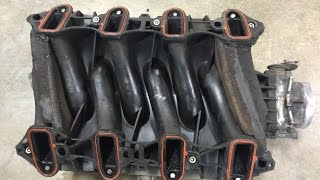
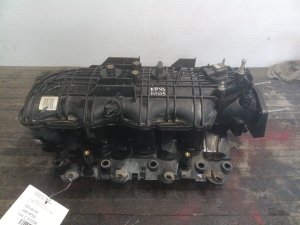
- Leaking Intake Manifold Gaskets 🔴 High Probability → Shop Engine Intake Manifold The original gaskets on the Vortec 5.3L and 4.8L engines use a plastic frame that becomes brittle, cracks, and shrinks from heat cycles, creating a vacuum leak. This is one of the most common failures on the GMT800 platform, often causing a rough idle only when the engine is warm.
How to confirm: With the engine running, spray short bursts of brake cleaner or unlit propane along the seam where the intake manifold meets the cylinder heads. An immediate change in engine idle (smoothing out or stumbling) confirms a leak. A scan tool will also show high positive short-term fuel trims (STFT) at idle (e.g., > +15%) that decrease significantly as RPMs are raised above idle.
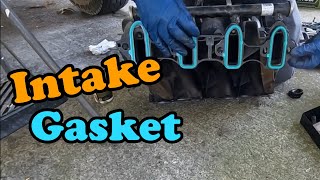
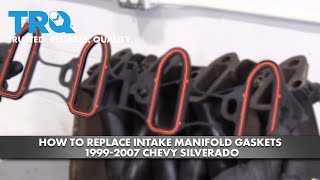
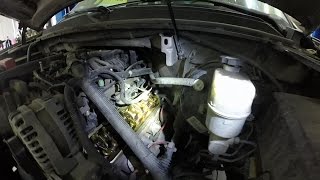
Typical fix: Replace the intake manifold gaskets with an updated design. The Fel-Pro MS98016T 🎬 Watch: Step-by-step guide to replacing your intake manifold gaskets. is a popular, robust metal-frame replacement. It is highly recommended to also replace the two knock sensors and the wiring harness located under the intake manifold at the same time, as the original harness can become brittle and fried.
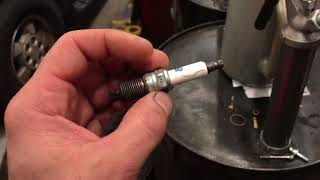
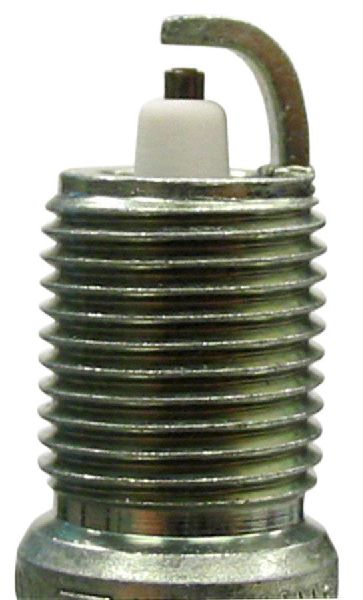
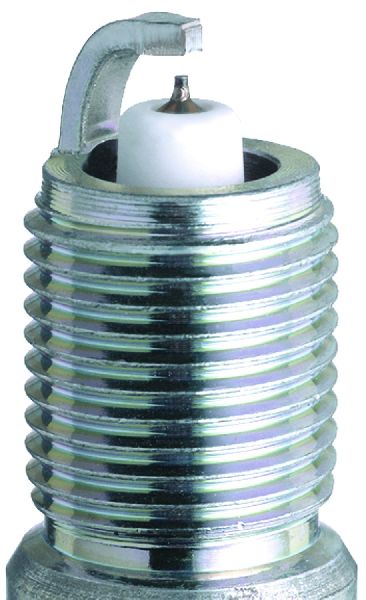
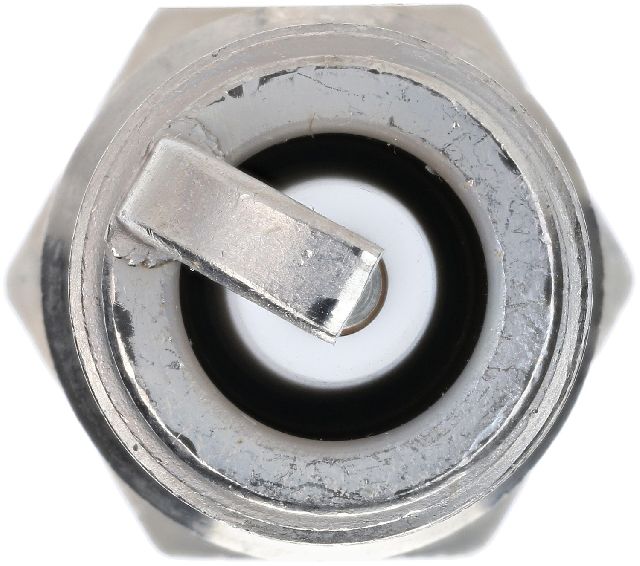
Est. part cost: $40-$80 for gaskets, $50-$100 for knock sensors and harness. - Worn Spark Plugs and/or Wires 🔴 High Probability → Shop Spark Plug These are standard maintenance items with a finite life. High mileage wears down electrodes and degrades wire insulation, leading to a weak or inconsistent spark that can't properly ignite the fuel mixture, especially under load.
How to confirm: Visually inspect the spark plugs for wear (rounded electrodes), fouling (black, sooty deposits), or damage to the porcelain. Inspect wires for cracks, burns, or corrosion at the connection points. A full tune-up is often the first logical step on a high-mileage vehicle with an undiagnosed P0300.
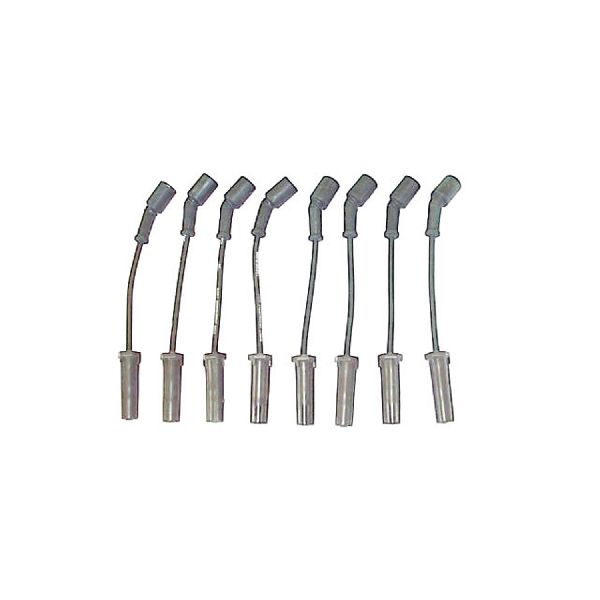
Typical fix: Replace all spark plugs and spark plug wires. Enthusiasts strongly recommend using OEM-spec ACDelco Iridium plugs and quality wires. Avoid boutique brands, as GM electronics can be sensitive.
Est. part cost: $60-$120 - Failing Ignition Coil(s) 🟡 Medium Probability → Shop Ignition Coil Heat and age cause the internal windings of the coil packs to fail, resulting in no spark or a weak spark. While one failing coil usually triggers a specific cylinder code (e.g., P0301), an intermittently failing coil, or multiple weak coils, can contribute to a P0300.
How to confirm: Use a scan tool with live data to identify which cylinders are misfiring. Swap the ignition coil from a misfiring cylinder with one from a known good cylinder. If the misfire count follows the coil to the new cylinder, the coil is bad. An in-line spark tester can also be used to visually confirm spark quality.
Typical fix: Replace the faulty ignition coil. It is often recommended to replace the corresponding spark plug at the same time.
Est. part cost: $30-$60 per coil - Low Fuel Pressure (Weak Pump or Bad Regulator) 🟡 Medium Probability On GMT800 models, the vacuum-operated fuel pressure regulator can fail and leak raw fuel through its vacuum line directly into the intake, causing a rich condition and misfires. Separately, the in-tank fuel pump can weaken with age, failing to supply adequate pressure, especially under load.
How to confirm: For the regulator, pull the vacuum hose off of it; if gasoline is present or smells strongly of fuel, the diaphragm is ruptured and it is bad. To test the pump, connect a fuel pressure gauge to the Schrader valve on the fuel rail. Pressure should be steady while running (around 55-60 PSI). A key sign of a weak pump or leaking check valve is if the pressure bleeds off quickly after the engine is turned off.
Typical fix: Replace the faulty fuel pressure regulator or the in-tank fuel pump assembly.
Est. part cost: $50-$100 for a regulator, $200-$400 for a fuel pump assembly - Dirty or Clogged Fuel Injectors ⚪ Low Probability → Shop Fuel Injector Over time, deposits can build up inside fuel injectors, disrupting the spray pattern and restricting fuel flow, which leads to a lean misfire. This can be more common if the vehicle has sat for a long time.
How to confirm: This is harder to confirm without professional tools. A mechanic can perform a fuel injector balance test. A DIY method is to listen to each injector with a mechanic's stethoscope; they should all have a consistent, rhythmic clicking sound. You can also swap injectors between a misfiring and a good cylinder to see if the problem moves.
Typical fix: Professional fuel system cleaning or replacement of the clogged injectors.
Est. part cost: $40-$90 per injector
Rare But Worth Checking
- Failing Active Fuel Management (AFM) Lifter (2007 models): → Shop Engine Valve Lifter On 2007 Tahoes with the 5.3L engine, a common point of failure is the AFM system. A lifter can collapse or get stuck in its bore, preventing the valve from opening and causing a persistent misfire on that cylinder. This often starts as a P030X code for a specific cylinder but can escalate to a P0300. Symptoms include a noticeable ticking noise that increases with RPM. 🎬 See how to diagnose AFM lifter issues on 5.3L engines. Diagnosis involves removing the valve cover and observing if a rocker arm is stationary while the engine is running.
- Needs Crankshaft Variation Relearn: → Shop Engine Crankshaft The PCM can lose its calibration to the crankshaft position sensor's signal, causing it to falsely detect misfires, a condition known as 'phantom misfire'. This can happen after replacing the sensor, the battery, the PCM, or after an engine swap. A shop with a bidirectional scan tool (like a Tech 2) can perform the 'CASE relearn' procedure in about 5 minutes to fix this. One owner reported this fixed their P0300 after other attempts failed. 🎬 Watch: How to perform a crankshaft variation relearn procedure.
- Faulty Crankshaft Position Sensor: → Shop Engine Crankshaft Position Sensor While less common than ignition or fuel issues, a failing crankshaft position sensor can send erratic signals to the PCM, causing stalling and random misfires. This will usually be accompanied by a P0335 or P1336 code.
Diagnosis Steps
- Scan for Codes: Use an OBD-II scanner to confirm P0300 and check for any other codes. Pay close attention to specific cylinder misfires (P0301-P0308) or lean codes (P0171, P0174).
- Check Live Misfire Data: Use a scanner with live data capabilities to view misfire counts per cylinder. This is crucial for narrowing down the search. Note if misfires are concentrated on one bank or specific cylinders.
- Analyze Fuel Trims: Observe Short-Term (STFT) and Long-Term (LTFT) fuel trims at idle and at 2500 RPM. High positive trims at idle that normalize with RPM strongly suggest a vacuum leak.
- Test for Vacuum Leaks: With the engine idling, carefully spray flammable brake cleaner or propane around the intake manifold gaskets, throttle body base, and vacuum hoses. Listen for any change in engine RPM.
- Inspect Ignition System: Visually inspect spark plugs, wires, and coils. Look for obvious damage, wear, or carbon tracking. If a specific cylinder is misfiring, swap its coil and plug with a known good cylinder and see if the misfire follows.
- Test Fuel Pressure: Connect a fuel pressure gauge to the rail. Check for 55-60 PSI running and ensure the pressure holds after turning the key off. Pull the vacuum line from the fuel pressure regulator (if equipped) and check for fuel.
- Check for Mechanical Issues (2007 AFM): If you have a 2007 model with a ticking noise, remove the valve cover and run the engine briefly to check for stationary rocker arms, which indicates a collapsed AFM lifter.
Parts You'll Likely Need
- Intake Manifold Gasket Set — This is one of the most common failure points on 2000-2006 Vortec engines causing a P0300 code.
Trusted brands: ACDelco, Fel-Pro
OEM price range: $60-$90
Aftermarket price range: $30-$50 - Spark Plugs — Worn or fouled spark plugs are a primary cause of weak spark and misfires. This is a fundamental tune-up part.
Trusted brands: ACDelco, NGK
OEM price range: $6-$10 per plug
Aftermarket price range: $3-$7 per plug - Spark Plug Wires — Wires degrade over time, causing high resistance or spark leakage, leading to misfires.
Trusted brands: ACDelco, NGK/NTK
OEM price range: $50-$80
Aftermarket price range: $30-$60 - Fuel Pressure Regulator — A common failure on earlier models in this range, where it leaks fuel into the intake, causing a rich misfire.
Trusted brands: ACDelco, Delphi, Standard Motor Products
OEM price range: $60-$100
Aftermarket price range: $40-$70
Related Codes That Often Appear With This One
- P0301-P0308 — These codes indicate a misfire on a specific cylinder (e.g., P0301 for Cylinder 1). P0300 is often set alongside one or more of these codes as the PCM tries to isolate the problem. [ODI #11291732]
- P0171 / P0174 — These 'System Too Lean' codes for Bank 1 and Bank 2 are very common companions to P0300 when the cause is a vacuum leak from the intake manifold gasket. The unmetered air forces the PCM to add fuel, but it eventually hits its limit and sets these codes.
- P050D — This code for 'Cold Start Rough Idle' can be associated with general misfire codes like P0300, as noted in GM Technical Service Bulletin #PIP5628G.
Technical Service Bulletins (TSBs) & Recalls
- Bulletin #PIP5628G (2007 ENGINE, dated 2023-08-10): Communicates that special information is needed to diagnose misfire codes P0300-P0308 on 2007 models.
Platform-Specific Known Issues
- A Technical Service Bulletin for 2007 models, #PIP5628G, mentions that specific diagnostic information is needed for troubleshooting misfire codes P0300-P0308, highlighting that diagnosis can be complex. [⭐ MANUFACTURER TSB — highest authority]
- On 2007 models with Active Fuel Management (AFM), failing valve lifters for the deactivation cylinders are a known cause of misfires that are often most noticeable at idle.
- The plastic intake manifold on the 5.3L and 4.8L engines is prone to developing cracks in addition to the gasket failing, which also results in a vacuum leak.
Mechanic-Grade Diagnostic Values
- Ignition Coil Primary Resistance — expected: 0.4 to 2.0 ohms. Failure: A reading outside this range indicates a faulty coil winding.
- Ignition Coil Secondary Resistance — expected: 6,000 to 10,000 ohms. Failure: A reading outside this range suggests the coil cannot produce a strong enough spark.
- Fuel Injector Resistance (Standard Vortec) — expected: 11 to 14 ohms. Failure: Significantly lower or higher resistance points to a failing injector coil. A reading of 4.6 ohms was found on a bad injector in one case.
- Fuel Injector Resistance (Flex Fuel L59) — expected: 12.5 ohms. Failure: Readings outside the specified range indicate a faulty injector.
- Short Term Fuel Trim (STFT) at idle with intake leak — expected: > +15%. Failure: High positive fuel trims at idle that drop near zero when RPMs are raised to ~2,000 RPM is a classic sign of a vacuum leak from the intake manifold gaskets.
- Voltage Drop Test on Main Ground Cable — expected: Near 0 volts. Failure: A reading significantly above 0V when testing between the negative battery terminal and the engine block indicates a poor ground connection, which can cause numerous electrical issues including misfires.
Hidden / Shadow Codes Worth Checking
- Mode $06 Misfire Data: This is not a formal trouble code but a diagnostic function. Mode $06 on a capable scan tool allows a technician to view the raw misfire counter for each individual cylinder. This data can reveal which cylinder(s) are misfiring intermittently before the count is high enough to trigger a specific P0301-P0308 code, helping to isolate the problem when only a general P0300 is present. (see via A professional-grade scan tool (like a GM Tech 2 or equivalent aftermarket) with Mode $06 capabilities.)
Scan Tool Commands That Help
- GM Tech 2 / Professional Aftermarket Scanner: Crankshaft Position Variation Learning (CASE Relearn) — Use this function after replacing the crankshaft position sensor, PCM, or making major engine repairs. Failure to perform the relearn can cause the PCM to inaccurately detect misfires and set a false P0300 code. The procedure involves revving the engine to a specific RPM (~4000 RPM) to allow the PCM to learn the minute variations of the crankshaft reluctor wheel.
- GM Tech 2 / Professional Aftermarket Scanner: Fuel Injector Balance Test — This bidirectional test allows the technician to fire each fuel injector individually while monitoring fuel pressure drop. It is used to confirm if an injector is clogged or flowing less fuel than the others, which would cause a lean misfire on that cylinder.
Wiring & Ground Locations
- G102 — Located at the left rear of the engine, on a cylinder head stud.. This is the primary ground point for all 8 ignition coils. A loose or corroded connection here can cause weak or intermittent spark across multiple cylinders, directly leading to a P0300 code.
- G103 / G104 (GMT900) — On 2007+ models, G103 is on the front of the passenger side cylinder head, and G104 is on the rear of the driver's side cylinder head.. These are main engine-to-chassis grounds. Poor connections can cause a host of erratic sensor readings and module communication errors, including those that the PCM uses to detect misfires.
- G101 / G103 (GMT800) — On 2000-2006 models, G101 is on the lower front of the engine block, and G103 is on the cowl above the brake booster.. G101 grounds the Engine Control Module (ECM). A bad ground here can cause the entire engine management system to malfunction. G103 grounds the Body Control Module (BCM) and Data Link Connector (DLC), and a fault can cause strange diagnostic behavior.
- Fuel Pump Ground — On the driver's side frame rail, near the driver's side tire.. A corroded or loose ground for the fuel pump can cause intermittent low fuel pressure, leading to lean misfires under load that can trigger a P0300 code.
Real Owner Repair Stories
- ScannerDanner Forum (2005 Chevrolet Tahoe 4.8L) — P0300 code, erratic oxygen sensor readings on scan tool.
❌ Tried (didn't work) Initial diagnosis pointed towards O2 sensors.
✅ What actually fixed it Used a scan tool to monitor live misfire data per cylinder, which showed cylinder #1 was the primary culprit. Swapped the ignition coil from cylinder #1 to cylinder #3. The misfire followed the coil to cylinder #3, confirming a bad ignition coil was the cause. Replacing the single coil resolved the P0300. - YouTube - Corey Sedrel (2000 Chevrolet 2500 6.0L with 74,000 miles) — Flashing check engine light with P0300 at highway speeds.
❌ Tried (didn't work) Replaced O2 sensor, Replaced spark plugs, Replaced spark plug wires
✅ What actually fixed it Took the truck to a shop to perform a 'crankshaft sensor relearn' (CASE Relearn) procedure with a capable scan tool. This resolved the high-RPM misfire detection issue. - YouTube - Parts shooter (2007 Tahoe) — P0300, hesitation, misfire on cylinder 7.
❌ Tried (didn't work) Owner had previously replaced ignition wires, spark plugs, one fuel injector, and the mass airflow sensor.
✅ What actually fixed it The technician discovered a missing bolt on the cylinder #7 ignition coil. After installing the missing bolt to properly secure and ground the coil, the misfire code did not return. This highlights that even with internally grounded coils, a secure physical mount is critical.
"I Checked Everything" — The Actual Cause
- A common scenario is an intake manifold gasket that passes a smoke test when the engine is cold, but leaks when hot. The aluminum intake manifold and cylinder heads expand at different rates, which can open a gap in an old, hardened gasket only after reaching operating temperature. This causes a warm-idle-only misfire that is hard to diagnose with a cold engine.
OEM Part Supersession History
GM plastic frame intake manifold gaskets→Fel-Pro MS98016T (metal frame), updated ACDelco gaskets— The original plastic-framed gaskets were prone to cracking and shrinking from heat cycles, causing vacuum leaks. The updated design uses a more durable metal frame.
Model Year Variations Within This Range
- 2000-2003 (approx.): These earlier GMT800 models typically used a return-style fuel system with a vacuum-referenced fuel pressure regulator located on the fuel rail. This regulator is a common failure point.
- 2004-2006 (approx.): GM switched to a returnless fuel system during this period. In this system, the fuel pressure regulator is integrated with the fuel pump module inside the gas tank. This changes the diagnostic procedure for fuel pressure issues, as there is no regulator to inspect under the hood.
- 2007: The 2007 model year (GMT900) introduced Active Fuel Management (AFM) on the 5.3L V8. This system adds AFM-specific lifters, a Lifter Oil Manifold Assembly (LOMA), and different PCM logic, all of which can be a source of misfires not present on earlier models.
Helpful Videos
Used OEM Parts in Stock
New Aftermarket Parts Available


The information in this article is provided for general reference and educational purposes only. Vehicle specifications, procedures, and part compatibility can vary by production date, trim level, and region. Always consult your vehicle's factory service manual and verify part numbers before purchasing or performing repairs. Safety-critical components such as airbags, seat belts, and braking systems should be installed by a qualified professional.
- Chevrolet TAHOE:
- 🧭 Diagnostic Flowchart
- 🎬 Helpful Videos
- 🛍️ Shop This Part
- What's Unique About the 2000-2007 Chevrolet TAHOE
- Symptoms You May Notice
- Most Likely Causes
- Rare But Worth Checking
- Diagnosis Steps
- Parts You'll Likely Need
- Related Codes That Often Appear With This One
- Technical Service Bulletins (TSBs) & Recalls
- Platform-Specific Known Issues
- Mechanic-Grade Diagnostic Values
- Hidden / Shadow Codes Worth Checking
- Scan Tool Commands That Help
- Wiring & Ground Locations
- Real Owner Repair Stories
- "I Checked Everything" — The Actual Cause
- OEM Part Supersession History
- Model Year Variations Within This Range
- 🎟️ Get 5% Off