

P0300 on 2005-2009 Chevrolet Uplander: Random Misfire Causes and Fixes
P0300 on a Chevy Uplander indicates random engine misfires. The most common causes are worn spark plugs, faulty ignition coil packs, or bad plug wires. Due to difficult access to the rear cylinders, it's best to replace all three components at once. Vacuum leaks from the intake manifold gasket are also a very common culprit on the 3.5L engine.
- P0300 means random cylinders are misfiring, and a flashing Check Engine Light indicates a severe problem that can damage the catalytic converter.
- The most likely cause is a basic ignition system failure: worn spark plugs, bad wires, or a faulty ignition coil.
- Accessing the rear three cylinders is very difficult and requires tilting the engine; therefore, always replace plugs, wires, and coils at the same time using quality parts.
- If basic ignition and fuel checks don't solve the problem, investigate for vacuum leaks, low oil pressure (per TSB #PIP5064C), or an incorrect fuel composition reading on FlexFuel models.
What's Unique About the 2005-2009 Chevrolet UPLANDER
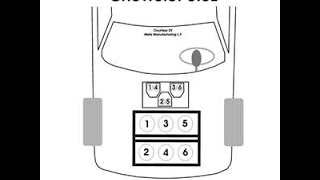
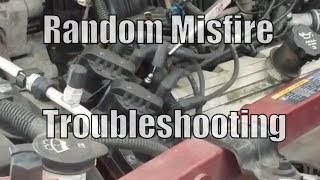
The Chevrolet Uplander uses a 'High Value' V6 engine where accessing the rear three cylinders (1, 3, and 5, against the firewall) is notoriously difficult. Mechanics and DIYers often have to unbolt the upper engine mounts and use a ratchet strap or rope to tilt the engine forward just to reach the spark plugs and coils. 🎬 Watch: How to tilt the engine and reach those rear plugs. Because of this high-labor process, it's crucial to use high-quality parts (like ACDelco) and replace plugs, wires, and coils simultaneously. Additionally, a manufacturer TSB (#PIP5064C) links P0300 on these engines to potential low oil pressure issues, a less common cause on other vehicles. The 3.5L LX9 is also known for intake manifold gasket failures that cause vacuum leaks and misfires.
Diagnostic Flowchart
Tap your situation to follow the diagnostic path that matches what you're seeing on this vehicle.
Symptoms You May Notice
- Flashing or solid Check Engine Light
- Rough or shaking idle
- Engine hesitation or stumbling during acceleration
- Noticeable loss of engine power
- Reduced fuel economy
- Difficulty starting the engine
- Smell of unburned fuel from the exhaust
- Replacing only the spark plugs without also replacing the wires, especially on the difficult-to-access rear bank.
- Replacing oxygen sensors, which are more likely to be a symptom of the misfire rather than the cause.
- On the 3.5L engine, repeatedly replacing ignition components when the root cause is a vacuum leak from the intake manifold gasket.
Most Likely Causes
- Worn Spark Plugs and/or Wires 🔴 High Probability → Shop Spark Plug Access to the rear three spark plugs is extremely difficult, leading many owners to neglect their replacement. Original wires can degrade over time, causing weak spark. Forum users confirm this is a primary cause.
How to confirm: Inspect spark plugs for wear, fouling, or incorrect gap. Inspect wires for cracks, burns, or corrosion. The rear bank requires tilting the engine forward for access, which is a well-documented procedure in owner forums. A universal joint and long extension for your socket wrench are considered essential tools for the rear plugs.
Typical fix: Replace all six spark plugs and the full set of spark plug wires. Given the labor, this should always be done together. Use dielectric grease on the plug boots.
Est. part cost: $50-$120 - Faulty Ignition Coil Pack(s) 🔴 High Probability → Shop Ignition Coil The engine uses a coil-on-plug system where individual coils can fail. Heat and vibration contribute to failure over time. Aftermarket or unbranded coils are a frequent source of repeat failures.
How to confirm: A scan tool with Mode 6 data can help identify which cylinders are misfiring most often. Swap a suspected bad coil with a known good one and see if the misfire follows the coil. This is a standard diagnostic step recommended by technicians.
Typical fix: Replace the faulty ignition coil(s). It is often wise to replace all three on a bank, or all six, if they are original and the budget allows. Stick with OEM (ACDelco) or reputable brands like Delphi.
Est. part cost: $40-$80 per coil - Vacuum Leak (Intake Manifold Gasket) 🔴 High Probability The 3.5L LX9 engine, in particular, used original plastic-carrier intake manifold gaskets that are known to degrade and fail, causing both vacuum and coolant leaks. This is a very common cause of P0300 and lean codes (P0171/P0174) on these vans.
How to confirm: With the engine running, spray short bursts of brake cleaner or starting fluid around the intake manifold gasket area. If the engine RPM changes, a leak is present. A smoke test performed by a professional is a more precise and safer method.
Typical fix: Replace the upper and lower intake manifold gaskets. The recommended replacement is an upgraded metal-carrier gasket set, such as Fel-Pro PermaDryPlus (Part #MS 98013 T).
Est. part cost: $40-$100 - Clogged or Failing Fuel Injectors 🟡 Medium Probability → Shop Fuel Injector Injectors can become clogged with deposits over time, especially if lower-quality fuel is used, leading to a poor spray pattern and an incorrect air/fuel mixture.
How to confirm: Listen for a consistent clicking sound from each injector. A professional can perform a fuel injector balance test to measure flow rates. A scan tool may show fuel trims are high on one bank.
Typical fix: Professional fuel system cleaning or replacement of the faulty injector(s).
Est. part cost: $50-$150 per injector
Rare But Worth Checking
- Low Engine Oil Pressure: TSB #PIP5064C specifically calls out that P0300, sometimes with P0011/P0016, can be caused by low oil pressure on these 'High Value' V6 engines. This should be investigated if ignition and fuel issues are ruled out. The TSB directs technicians to verify actual oil pressure with a mechanical gauge before proceeding with other repairs.
- Incorrect Fuel Alcohol Content Reading (FlexFuel models): On FlexFuel (LGD 3.9L) versions, the ECM can incorrectly 'learn' a high alcohol percentage in the fuel, causing a rich condition (P0172/P0175) and misfires. This can happen after running the tank low and adding small amounts of fuel. A scan tool is needed to perform a 'Fuel Composition Reset'.
- Clogged Catalytic Converter: → Shop Catalytic Converter A restricted exhaust can cause backpressure, leading to random misfires, especially under load or at higher RPMs. This is often a result of long-term misfires that have already damaged the converter by dumping raw fuel into it.
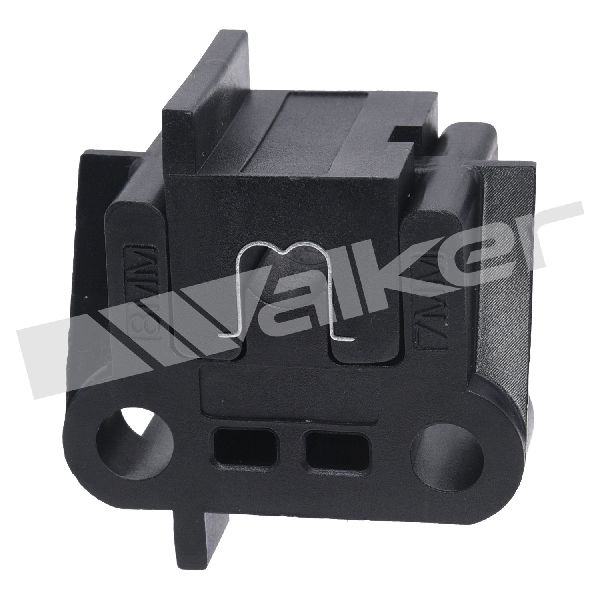
- Faulty Crankshaft Position Sensor: → Shop Engine Crankshaft Position Sensor The sensor that detects misfires can itself be faulty, sending erratic signals. If replaced, a 'CASE Relearn' (Crankshaft Position Sensor Variation Learn) procedure is required with a capable scan tool.
Diagnosis Steps
- Check for other stored trouble codes. Codes for specific systems (fuel, camshaft timing) can provide valuable clues.
- Use a scan tool with live data to view misfire counts per cylinder (Mode 6). This can help narrow down if the misfire is truly random or concentrated on one or two cylinders.
- Inspect the ignition system. Start with the basics: check the condition of spark plugs and wires. On the Uplander, this will require planning for the difficult rear bank access.
- Test ignition coils. If you have a specific cylinder misfire code (e.g., P0302), swap that coil with one from a cylinder that is not misfiring and see if the code follows the coil.
- Check for vacuum leaks. Use a smoke machine or carefully spray carb cleaner around the intake manifold gaskets and vacuum hoses, listening for a change in engine idle. Pay close attention to the intake manifold area on 3.5L engines.
- Test fuel pressure. Connect a fuel pressure gauge to the fuel rail's service port. Pressure should be within the manufacturer's specification (typically 49-52 PSI for this vehicle).
- Check engine oil pressure. If other codes like P0011 or P0016 are present, verify the engine oil pressure with a mechanical gauge to rule out the issue mentioned in TSB #PIP5064C.
- Check for a restricted exhaust. A backpressure test can determine if the catalytic converter is clogged. An easy, though less precise, check is to temporarily remove the upstream O2 sensor and see if engine performance improves.
- For FlexFuel models, check the 'Fuel Composition' percentage with a scan tool. If it is incorrectly high (e.g., >15% when running regular gasoline), perform a reset.
Parts You'll Likely Need
- Spark Plugs
(OEM #41-101 (for 3.5L), 41-100 (for 3.9L))— Spark plugs are a primary wear item and a leading cause of misfires. ACDelco Iridium plugs are the recommended original equipment.
Trusted brands: ACDelco, NGK
OEM price range: $8-$15 per plug
Aftermarket price range: $5-$12 per plug - Spark Plug Wire Set
(OEM #9746UU (ACDelco Professional))— Wires degrade over time, causing weak spark. They should always be replaced with the plugs due to the difficult labor.
Related Codes That Often Appear With This One
- P0301-P0306 — These codes specify which cylinder is misfiring (e.g., P0301 for Cylinder 1). They often appear with P0300 before the misfire becomes completely random.
- P0171 / P0174 — These 'System Too Lean' codes indicate too much air or not enough fuel, often caused by a vacuum leak from a failing intake manifold gasket, which is also a common cause of P0300.
- P0172 / P0175 — These 'System Too Rich' codes indicate too much fuel or not enough air. This can be caused by leaking fuel injectors or an incorrect fuel alcohol reading on FlexFuel models.
- P0011 / P0016 — As noted in TSB #PIP5064C, these camshaft position codes appearing with P0300 strongly suggest an engine oil pressure problem that needs to be verified with a mechanical gauge.
Technical Service Bulletins (TSBs) & Recalls
- PIP5064C: Diagnostic Information for Engine Misfire or Rough Idle with P0300, P0011, P0016. Points to checking engine oil pressure.
- PIP5628G: Preliminary information request for diagnosing P0300-P0308 and P050D codes, indicating ongoing manufacturer data collection for misfire issues.
Platform-Specific Known Issues
- Difficult Rear Cylinder Access: Access to the rear bank of cylinders (1, 3, 5) requires tilting the engine forward. Forum users describe unbolting the two top 'dog bone' engine mounts and using a ratchet strap to pull the engine forward, creating enough space to work. This is considered standard procedure for this job.
- TSB #PIP5064C - Low Oil Pressure Misfire: A GM Technical Service Bulletin indicates a potential link between P0300 and low engine oil pressure, especially when accompanied by cam/crank correlation codes (P0011/P0016). This should be checked with a mechanical gauge before expensive engine work is performed.
- 3.5L Intake Manifold Gasket Failure: → Shop Engine Intake Manifold The original equipment intake manifold gaskets on the 3.5L LX9 V6 use a plastic frame that is prone to cracking and deteriorating, causing coolant and vacuum leaks. This is a very common source of a P0300 code on these vans. Upgrading to a metal-framed gasket set (like Fel-Pro MS 98013 T) is the recommended fix.
Mechanic-Grade Diagnostic Values
- Ignition Coil Primary Resistance — expected: 0.8 - 2.0 Ω. Failure: A reading outside this range, or an open circuit (infinite resistance), indicates a faulty coil.
- Ignition Coil Secondary Resistance — expected: 10,000 - 15,000 Ω (10k - 15k Ω). Failure: A reading outside this range points to a coil failure.
- Short-Term Fuel Trim (STFT) at warm idle — expected: Fluctuating between -10% and +10%. Failure: Consistently high positive values (e.g., > +15%) suggest the computer is adding excess fuel to compensate for unmetered air from a vacuum leak.
- Short-Term Fuel Trim (STFT) at 2,000-2,500 RPM (when idle trims are high) — expected: STFT should drop to near 0% (e.g., +/- 5%). Failure: If high positive idle fuel trims drop to normal at a steady raised RPM, it strongly confirms a vacuum leak is the cause.
- Spark Plug Gap (3.5L LX9) — expected: 1.52 mm (0.060 in). Failure: An incorrect gap can cause inefficient spark and misfires.
Hidden / Shadow Codes Worth Checking
- Misfire Data Counters (Mode 6): While not a 'hidden code', professional scan tools like the GM Tech2 can display live and historical misfire counts for each individual cylinder. This is the primary tool for diagnosing a P0300. It allows a technician to see if the 'random' misfire is actually weighted heavily toward one or two specific cylinders, guiding further diagnosis. (see via Connect a professional-grade scan tool (e.g., Tech2, GDS2, high-end Autel/Launch) and navigate to the 'Misfire Data' or 'Engine Data 2' menu.)
Scan Tool Commands That Help
- Tech2 / GDS2 / Professional Scan Tool: Crankshaft Position (CKP) System Variation Learn (CASE Relearn) — This procedure is mandatory after replacing the crankshaft position sensor or the Engine Control Module (ECM). The ECM uses this learned data to accurately detect misfires. Failure to perform the relearn can cause a false P0300 code to be set.
- Tech2 / GDS2 / Professional Scan Tool: Fuel Composition Reset — On FlexFuel (3.9L LGD) models, if the alcohol content sensor learns an incorrect, high value, it will cause a rich fuel mixture and misfires. This function resets the learned value back to a default, allowing the system to relearn the actual fuel composition. This is often needed after running the tank very low or after a battery disconnect.
Wiring & Ground Locations
- G102 — Typically located on the rear of the left (front) cylinder head.. This is a primary ground point for the ignition coils. A loose or corroded connection here can cause weak or intermittent spark to multiple cylinders, leading to a P0300 code.
- G101 / G106 — Located on the lower front of the engine block, sometimes jumpered to the frame cross rail under the crank pulley.. These points provide the main ground for the Engine Control Module (ECM) and Transmission Control Module (TCM). A poor connection can cause a wide range of erratic sensor readings and codes, including P0300.
- G103 — Located on the cowl in the engine compartment, often above the brake booster.. Grounds numerous components including the Body Control Module (BCM) and the Data Link Connector (DLC). While not a direct cause of misfire, a bad ground here can cause communication issues during diagnosis.
- Engine Harness Chafe Points — General areas to inspect include where the harness passes over the corner of a cylinder head, near accessory brackets, or close to the upper control arms.. Vibration can cause the wiring harness to rub through on sharp metal edges, potentially shorting out ignition coil or fuel injector control wires. This can cause intermittent misfires that are difficult to trace.
Real Owner Repair Stories
- Blazer Forum user (1997 Chevy Blazer (similar GM V6 architecture)) — P0300 code immediately after replacing the intake manifold gasket.
❌ Tried (didn't work) Checking distributor, Inspecting EGR valve
✅ What actually fixed it The dealer diagnosed and replaced a faulty fuel injector assembly. This suggests the original misfire may have been fuel-related, or the injector was damaged during the initial repair. - YouTube channel 'Fixing With Passion' (GM vehicle with P0300) — Persistent P0300 Check Engine Light.
❌ Tried (didn't work) Full ignition system check (plugs, wires, coils), Compression test (engine was healthy)
✅ What actually fixed it The P0300 code was resolved after unplugging and firmly reconnecting the electrical connector for the camshaft position sensor. This indicates the root cause was a poor electrical connection, not a failed part. - YouTube channel 'Fleet Maintenance' (Chevy Aveo (demonstrates a common diagnostic trap)) — P0300 random misfire.
❌ Tried (didn't work) Checked fuel pressure, Checked spark plugs and wires
✅ What actually fixed it A smoke test indicated a vacuum leak at the intake and valve cover gaskets. However, during disassembly for the gasket replacement, the mechanic discovered an injector wire had been pinched between the valve cover and the cylinder head. This pinched wire was the true root cause of the misfire.
"I Checked Everything" — The Actual Cause
- In one documented case, a persistent P0300 was not caused by a vacuum leak (which a smoke test would find) or a hard part failure. The final fix was simply unplugging and securely reconnecting the camshaft position sensor connector. A poor connection at a critical sensor can create erratic signals that the ECM interprets as a misfire, even though no mechanical or vacuum-related fault exists.
OEM Part Supersession History
GM plastic-carrier intake manifold gasket→Fel-Pro PermaDryPlus MS 98013 T— The original GM gaskets for the 3.5L LX9 engine used a plastic carrier that would become brittle from heat cycles and degrade from contact with coolant, leading to cracks and leaks.
Heads up: The Fel-Pro MS 98013 T is an upgraded design featuring a rigid aluminized steel carrier that resists cracking and has built-in torque limiters to prevent over-tightening, making it a more durable, long-term repair.
Model Year Variations Within This Range
- 2005-2006: These years primarily used the 3.5L LX9 V6 engine, which features a 'wet' intake manifold design where coolant flows through the manifold. This makes the lower intake manifold gaskets a very common failure point, leading to vacuum leaks (P0300, P0171/P0174) and potential coolant leaks into the engine oil.
- 2007-2009: These years primarily used the 3.9L V6 (LZ9 or the FlexFuel LGD). These engines feature a 'dry' intake manifold design where coolant does not pass through it. Therefore, the catastrophic intake manifold gasket leak common on the 3.5L is not a frequent cause of P0300 on these later models.
Helpful Videos


We Have This Part in Stock


The information in this article is provided for general reference and educational purposes only. Vehicle specifications, procedures, and part compatibility can vary by production date, trim level, and region. Always consult your vehicle's factory service manual and verify part numbers before purchasing or performing repairs. Safety-critical components such as airbags, seat belts, and braking systems should be installed by a qualified professional.
- Chevrolet UPLANDER:
- 🧭 Diagnostic Flowchart
- 🎬 Helpful Videos
- 🛍️ Shop This Part
- What's Unique About the 2005-2009 Chevrolet UPLANDER
- Symptoms You May Notice
- Most Likely Causes
- Rare But Worth Checking
- Diagnosis Steps
- Parts You'll Likely Need
- Related Codes That Often Appear With This One
- Technical Service Bulletins (TSBs) & Recalls
- Platform-Specific Known Issues
- Mechanic-Grade Diagnostic Values
- Hidden / Shadow Codes Worth Checking
- Scan Tool Commands That Help
- Wiring & Ground Locations
- Real Owner Repair Stories
- "I Checked Everything" — The Actual Cause
- OEM Part Supersession History
- Model Year Variations Within This Range
- 🎟️ Get 5% Off