

P0300 on 2011-2018 Chevrolet Volt: Random Misfire Causes and Fixes
P0300 on a Chevy Volt indicates random engine misfires, often due to worn spark plugs or a failing ignition coil assembly. Because the gas engine runs intermittently, these parts can foul or corrode. A DIY spark plug and coil replacement costs around $150-$300, while a shop repair can range from $400 to $800.
- P0300 on a Chevy Volt is most often an ignition system problem.
- Start your diagnosis by inspecting and likely replacing the spark plugs, especially if their age is unknown.
- For 2011-2015 models, the one-piece ignition coil cassette is a very common point of failure and should be inspected for corrosion or damage.
- For 2016-2018 models, check for carbon buildup on intake valves as a possible cause, in addition to individual ignition coils.
- Do not drive if the check engine light is flashing, as this can cause rapid and expensive damage to the catalytic converter.
What's Unique About the 2011-2018 Chevrolet VOLT

The Chevrolet Volt is a plug-in hybrid where the gasoline engine acts as a range extender, often running infrequently. This unique operation can lead to issues not as common in conventional cars. Stale fuel can clog injectors, and short run times can lead to moisture buildup and corrosion on ignition components or carbon buildup on valves, all of which can cause a P0300 code. Several service bulletins for the Volt specifically address misfires that occur during cold starts after periods of inactivity.
Diagnostic Flowchart

Tap your situation to follow the diagnostic path that matches what you're seeing on this vehicle.
Generation note: This range covers two Volt generations. Gen 1 (2011-2015) uses a 1.4L LUU engine with a single ignition coil cassette. Gen 2 (2016-2018) uses a 1.5L L3A direct-injected engine with individual coil-on-plug units. Carbon buildup on intake valves is a more prominent concern on the Gen 2 direct-injected engine, while the Gen 1 coil cassette is a common failure point due to corrosion.
Symptoms You May Notice
- Check engine light is on (solid or flashing)
- Rough idle or shaking when the gasoline engine is running
- Hesitation or stumbling during acceleration
- Reduced engine power
- Noticeable drop in fuel economy
- "Engine Not Available" message on the driver display
- Engine running aggressively or violently, especially on a cold start
- Replacing oxygen (O2) sensors. O2 sensors will report the abnormal air/fuel mixture caused by a misfire, but they are rarely the root cause of a P0300 code.
- Replacing only one spark plug or coil. Misfires often indicate that multiple ignition components are near the end of their service life. It's best practice to replace spark plugs and (if affordable) coils in sets.
Most Likely Causes


- Worn or Fouled Spark Plugs 🔴 High Probability → Shop Spark Plug The intermittent use of the Volt's gas engine can lead to spark plugs fouling from moisture and carbon before they wear out from high mileage.
How to confirm: Remove and inspect the spark plugs. Look for heavy carbon deposits, oil fouling, a white ashy appearance, or worn electrodes. Also, carefully inspect the porcelain insulator for fine cracks, which can cause the spark to ground out.
Typical fix: Replace all four spark plugs as a set. It is recommended to use the OEM-specified ACDelco Iridium plugs.
Est. part cost: $40-$80 - Failing Ignition Coil(s) 🔴 High Probability → Shop Ignition Coil The Gen 1 (2011-2015) Volt uses a single coil cassette that is a known failure point on the 1.4L engine platform. The internal contact springs that connect to the spark plugs are highly prone to rust and corrosion from moisture, causing a weak or intermittent spark. On Gen 2 (2016-2018) models, individual coils can fail from heat and age.
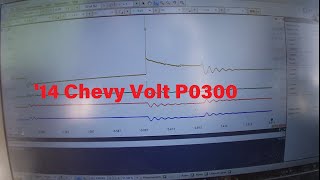
How to confirm: On Gen 1, remove the coil cassette and inspect the metal contact springs inside each boot for greenish-white corrosion or rust. On Gen 2, you can swap the suspected bad coil with a coil from a known good cylinder and see if the misfire code follows the coil (e.g., P0302 becomes P0304). A scan tool can monitor misfire counts per cylinder 🎬 Watch: Diagnosing a secondary ignition misfire on a Gen 1 Volt to pinpoint the issue.
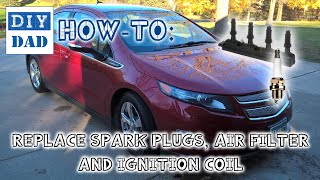
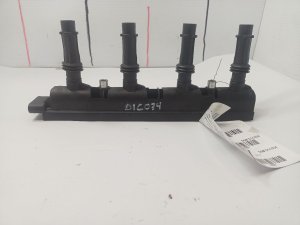
Typical fix: Replace the failed ignition coil. On Gen 1 models, the entire coil pack assembly is replaced. 🎬 See this walkthrough for replacing the coil pack and plugs On Gen 2, individual coils can be replaced. It is best practice to replace all spark plugs at the same time.
Est. part cost: $75-$200 - Dirty or Clogged Fuel Injectors 🟡 Medium Probability → Shop Fuel Injector Infrequent engine use can lead to gasoline sitting in the tank for long periods, potentially going stale and forming deposits that clog fuel injectors. This is a common issue on many Chevrolet vehicles.
How to confirm: A professional can perform a fuel injector balance test to measure the flow rate of each injector. A lean condition indicated by O2 sensor data can also point to a clogged injector.
Typical fix: Clean the fuel injectors using a professional service or replace the clogged injector(s). Using Top Tier gasoline can help prevent deposits.
Est. part cost: $50-$150 per injector - Intake Valve Carbon Buildup 🟡 Medium Probability This is more common on the Gen 2 (2016-2018) 1.5L direct-injection (GDI) engine. GDI engines spray fuel directly into the cylinder, so gasoline detergents don't wash over the intake valves, allowing carbon to accumulate and restrict airflow. GM has issued service bulletins regarding this issue.
How to confirm: Requires a borescope inspection of the intake ports and valves with the intake manifold removed.
Typical fix: The intake valves need to be cleaned, typically through walnut blasting or a similar manual cleaning process. Using Top Tier fuel is recommended to mitigate buildup.
Est. part cost: $0 (if cleaning manually), or cost of cleaning service ($400-$800)
Rare But Worth Checking
- Sticking Hydraulic Lash Adjusters (Lifters): A GM Technical Service Bulletin (PIP5472E) notes that on 2016-2018 models, a P0300 code during a cold start can be caused by exhaust valve lifters not bleeding off thick, cold oil correctly, preventing the valve from sealing.
- Stuck-Open EVAP Purge Valve: → Shop Vapor Canister A common issue on the related 1.4L Chevy Cruze, a faulty EVAP purge valve can stick open, creating a constant vacuum leak. This becomes most apparent after refueling, when heavy fuel vapors are drawn into the intake, creating a rich mixture that causes stumbling and a P0300 code.
- Cracked Piston: On the Gen 2 1.5L engine platform (shared with the Malibu and Cruze), there have been documented cases of cracked pistons causing low compression and a persistent P0300 code. This is a major mechanical failure requiring engine teardown.
- Low Fuel Pressure: A weak fuel pump or clogged fuel filter can starve the engine for fuel, causing lean misfires across all cylinders.
- Vacuum Leak: A leak in a vacuum hose or intake manifold gasket can introduce unmetered air, throwing off the air-fuel ratio and causing random misfires.
Diagnosis Steps
- Check for other stored DTCs with an OBD-II scanner. Specific cylinder misfire codes (P0301-P0304) or fuel trim codes (P0171) can help narrow the search.
- Use a scan tool with live data to monitor misfire counters for each cylinder while the engine is running. This can often pinpoint a problematic cylinder even if only P0300 is set.
- Inspect the ignition system. Remove the spark plugs and check for wear, fouling, or damage, paying close attention to the porcelain for cracks. For Gen 1 Volts, inspect the coil pack contact springs for rust or greenish-white corrosion. For Gen 2, swap the ignition coil from a misfiring cylinder to a good one and see if the misfire follows the coil.
- Check for vacuum leaks. Listen for hissing sounds around the intake manifold and vacuum hoses. A smoke test is the most effective way to find small leaks. Test the EVAP purge valve by unplugging it and trying to blow through it; if air passes, it's stuck open and needs replacement.
- Test fuel pressure to ensure the fuel pump and filter are functioning correctly.
- If you have a Gen 2 Volt (1.5L GDI) and high mileage, consider a borescope inspection of the intake valves for carbon buildup, as noted in TSB 16-NA-383.
- If all else fails, a compression test can check for mechanical engine issues like a leaking head gasket, valve problems, or a cracked piston.
Parts You'll Likely Need
- Spark Plugs
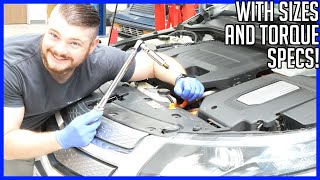
(OEM #ACDelco 41-122 (Gen 1) 🎬 Watch: How to replace spark plugs with torque specs / ACDelco 41-124 (Gen 2))— Worn or fouled spark plugs are the most frequent cause of misfires. The intermittent engine use in the Volt makes them prone to fouling.
Trusted brands: ACDelco
OEM price range: $40-$60 (set of 4)
Aftermarket price range: $30-$50 (set of 4) - Ignition Coil Assembly (Gen 1)
(OEM #ACDelco 55579072)— The Gen 1 (2011-2015) uses a single coil cassette which is a very common failure item due to corrosion on the contact springs, causing misfires across multiple cylinders.
Trusted brands: ACDelco, Delphi
OEM price range: $170-$230
Aftermarket price range: $90-$150
Related Codes That Often Appear With This One
- P0301, P0302, P0303, P0304 — These codes indicate a misfire on a specific cylinder. A random P0300 may eventually become a specific cylinder code as a component fails completely, or a scan tool's misfire counter may reveal the specific cylinder at fault.
- P0171 — This code means 'System Too Lean (Bank 1)' and can be caused by a vacuum leak or a fuel delivery problem, both of which are also common causes of a P0300 misfire.
- P050D — This code for 'Cold Start Rough Idle' is mentioned alongside P0300 in TSB PIP5472E for 2016-2018 Volts, pointing to a potential issue with engine hardware like hydraulic lash adjusters during cold starts.
Technical Service Bulletins (TSBs) & Recalls
- PIP5628G: A diagnostic aid for technicians contacting GM's Technical Assistance Center (TAC) for P0300-P0308 codes. It provides a template for required information, such as freeze-frame data, fuel trims, and compression test results, to streamline diagnosis.
- PIP5472E: Notes that on 2016-2018 models, a P0300 code during a cold start can be caused by exhaust valve lifters not bleeding off thick, cold oil correctly, preventing the valve from sealing. This is often seen with code P050D.
- 16-NA-383: Addresses major carbon build-up on intake and/or exhaust valves as a cause for P0300, often due to fuel quality. It recommends using Top Tier detergent gasoline as a preventative measure.
- PIP5201B: A TSB for the 1.4L engine specifically mentioning cold-start misfires with a P0300 code, where checking the ignition coil is a key diagnostic step.
- Unnamed 2012 Volt TSB: Describes troubleshooting for cold start misfires (P0300), including checking for excessive carbon buildup and inspecting oxygen sensors for a white powdery coating caused by contamination.
Platform-Specific Known Issues
- TSB #PIP5628G: This bulletin indicates that diagnosing P0300 on these vehicles can be complex, requiring specific data to be sent to GM's technical assistance for analysis.
- TSB #PIP5472E: For 2016-2018 models, this bulletin addresses a cold start misfire (P0300/P050D) caused by Stationary Hydraulic Lash Adjusters (SHLAs) sticking in cold weather.
- TSB #PIP5201B: For the 1.4L engine, this bulletin for cold-start misfires with a P0300 code lists checking the ignition coil as a key diagnostic step.
Mechanic-Grade Diagnostic Values
- Ignition Coil Primary Winding Resistance — expected: 0.4 to 2.0 Ohms. Failure: A reading outside of this range, or an open loop (OL), indicates a faulty coil.
- Ignition Coil Secondary Winding Resistance — expected: 6,000 to 10,000 Ohms (6kΩ - 10kΩ). Failure: A resistance reading significantly outside this range suggests the coil's internal windings are compromised.
- Fuel Pressure (Gen 1, 1.4L LUU) — expected: ~55 PSI. Failure: Significantly lower pressure indicates a weak fuel pump or clogged filter, which can cause a lean misfire condition across all cylinders.
- Scan Tool Live Data - Misfire Counters — expected: Near zero on all cylinders when the engine is running smoothly.. Failure: A rapidly increasing count on one or more cylinders, even without a specific P030x code, pinpoints the source of the misfire. Counts over 10,000 are considered significant.
Scan Tool Commands That Help
- GDS2 / Tech2 or equivalent professional scanner: Misfire History Data / Misfire Graphic — This is one of the first steps when diagnosing a P0300. It provides historical and live counts of misfires per cylinder, which can turn a random P0300 code into an actionable diagnosis by identifying the specific cylinder(s) at fault.
- GDS2 / Tech2 or equivalent professional scanner: Crankshaft Position (CKP) Variation Learn — This procedure should be performed after any major engine service, or if the crankshaft position sensor, crankshaft, or ECM has been replaced. An incorrect CKP variation value can cause the ECM to misinterpret crankshaft speed fluctuations, leading to false misfire detection and a P0300 code.
- GDS2 / Tech2 or equivalent professional scanner: Fuel Injector Balance Test — If a specific cylinder is identified via misfire counters but the ignition system checks out, this command can be used to individually fire each injector and measure the corresponding pressure drop, identifying a weak or clogged injector.
Wiring & Ground Locations
- G101 / G106 — Located on the lower front of the engine block and jumpers to the frame cross rail under the crank pulley.. This is a primary ground for the Engine Control Module (ECM) and Transmission Control Module (TCM). A poor connection here can cause erratic ECM behavior, leading to a variety of codes, including false P0300 misfires.
- G103 — Located on the cowl in the left rear of the engine compartment, above the brake booster.. This ground serves the Body Control Module (BCM) and the Data Link Connector (DLC). While not a direct cause of misfires, a poor connection can disrupt communication between modules and interfere with proper diagnosis.
- Ignition Coil Connector (Gen 1) — Single large electrical connector on the top of the ignition coil cassette.. The terminals in this connector provide power and the trigger signal from the ECM to all four coils. Corrosion or a loose connection here can cause a random misfire across all cylinders.
Real Owner Repair Stories
- YouTube video by 'Fix It Rich' (2014 Chevrolet Volt) — Whistling noise from engine, rough idle, and a check engine light. The owner also reported a strange 'downshift' feeling at highway speeds.
❌ Tried (didn't work) The video directly addresses the final fix without mentioning prior failed attempts.
✅ What actually fixed it The Positive Crankcase Ventilation (PCV) valve, which is integrated into the valve cover on the 1.4L engine, had failed. Replacing the entire valve cover assembly, which included a new PCV valve and gasket, resolved the issue. The spark plugs were replaced at the same time. - YouTube video by 'That car guy' (2017 Chevrolet Volt (Gen 2)) — Misfire at idle, especially when cold, but sometimes when hot. Check engine light with P0300.
❌ Tried (didn't work) The user implies this is the first attempted fix.
✅ What actually fixed it The external PCV valve was faulty. On this Gen 2 model, the valve is a separate, replaceable part. The owner had to cut a slot into the special pentagonal bolt head to remove it with a flathead screwdriver before replacing the valve.
OEM Part Supersession History
55579072→25198623— Standard part evolution, likely for improved durability or manufacturing efficiency.
Heads up: The new part number (25198623) is the direct replacement for the original Gen 1 (2011-2015) coil assembly and is fully compatible.
Model Year Variations Within This Range
- 2011-2015 (Gen 1): The PCV valve is integrated into the valve cover and cannot be serviced separately. A failure requires replacing the entire valve cover assembly.
- 2016-2018 (Gen 2): The PCV system uses an external, replaceable valve. However, it is often secured with a non-standard pentagonal bolt, requiring a special tool or modification of the bolt head for removal.
Helpful Videos

We Have This Part in Stock

The information in this article is provided for general reference and educational purposes only. Vehicle specifications, procedures, and part compatibility can vary by production date, trim level, and region. Always consult your vehicle's factory service manual and verify part numbers before purchasing or performing repairs. Safety-critical components such as airbags, seat belts, and braking systems should be installed by a qualified professional.
- Chevrolet VOLT:
- 🧭 Diagnostic Flowchart
- 🎬 Helpful Videos
- 🛍️ Shop This Part
- What's Unique About the 2011-2018 Chevrolet VOLT
- Symptoms You May Notice
- Most Likely Causes
- Rare But Worth Checking
- Diagnosis Steps
- Parts You'll Likely Need
- Related Codes That Often Appear With This One
- Technical Service Bulletins (TSBs) & Recalls
- Platform-Specific Known Issues
- Mechanic-Grade Diagnostic Values
- Scan Tool Commands That Help
- Wiring & Ground Locations
- Real Owner Repair Stories
- OEM Part Supersession History
- Model Year Variations Within This Range
- 🎟️ Get 5% Off