

P0300 on 2011-2014 Dodge Avenger: Random Misfire Causes and Fixes
P0300 on a 2011-2014 Dodge Avenger indicates random engine misfires. For the 2.4L engine, this is often due to worn spark plugs, faulty ignition coils, or oil leaking into the spark plug tubes from a bad valve cover gasket. For the 3.6L V6 (2011-2013 models), a known left cylinder head defect is a primary suspect, covered by an extended warranty (X56) and detailed in TSB 09-002-14 REV. B.
- P0300 means your engine has a random misfire, which needs to be addressed to prevent further damage.
- For all engines, start your diagnosis with the cheapest and most common culprits: spark plugs and ignition coils.
- If you own a 2011-2013 Avenger with the 3.6L V6, be aware of the known cylinder head issue. Contact a dealer with your VIN to check for extended warranty coverage before paying for expensive repairs.
- A flashing check engine light is a serious warning. Pull over and shut off the engine as soon as it is safe to do so to avoid damaging the catalytic converter.
What's Unique About the 2011-2014 Dodge AVENGER
While all engines can suffer from misfires due to bad spark plugs or coils, the 2011-2013 Dodge Avenger with the 3.6L Pentastar V6 has a well-documented, specific weakness. Early versions of this engine were prone to a left cylinder head failure that causes misfires, often triggering codes P0300, P0302, P0304, and P0306. The defect involves premature wear of valve guides and seats, leading to a loss of compression. Chrysler acknowledged this with Technical Service Bulletin (TSB) 09-002-14 REV. B and an extended warranty (X56) for 10 years or 150,000 miles to cover the repair, making it a critical issue to be aware of for V6 owners. On the 2.4L engine, a common point of failure is the valve cover gasket, which allows oil to leak into the spark plug wells, fouling the plugs and causing misfires.
Diagnostic Flowchart
Tap your situation to follow the diagnostic path that matches what you're seeing on this vehicle.
Symptoms You May Notice
- Rough or shaking idle
- Hesitation or stumbling during acceleration
- Noticeable loss of engine power
- Flashing Check Engine Light (indicates a severe, catalyst-damaging misfire)
- Reduced fuel economy
- Engine stalling intermittently
- Difficulty starting the engine
- Gasoline smell from the exhaust due to unburnt fuel
- Replacing only one spark plug or coil when others are near the end of their service life.
- Replacing fuel injectors on a 3.6L V6 before confirming the cylinder head integrity, as the symptoms can be identical.
- Replacing oxygen sensors, which can be flagged due to the misfire but are not typically the root cause.
- On the 2.4L, replacing spark plugs and coils without addressing the root cause of an oil leak from the valve cover gasket, leading to repeat failures.
Most Likely Causes
- Worn Spark Plugs 🔴 High Probability → Shop Spark Plug Spark plugs are a standard maintenance item. Iridium plugs in the 3.6L V6 are rated for 100,000 miles, but wear, fouling, or using the incorrect type of plug can cause severe misfires. On the 2.4L, oil contamination from a leaking valve cover gasket is a frequent cause of plug failure.
How to confirm: Inspect the spark plugs for wear, fouling, or an incorrect gap. A visual check can often reveal a worn-out plug. For the 2.4L, check for engine oil in the spark plug tubes when removing the ignition coils. It's common to replace them as a set if their service life is over.
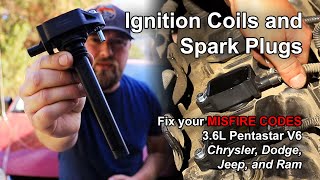
Typical fix: Replace all spark plugs. It is recommended to use plugs that meet OEM specifications. For the 3.6L V6, this requires removing the upper intake manifold to access the rear bank of plugs. 🎬 Watch: Step-by-step guide to replacing V6 plugs and coils.
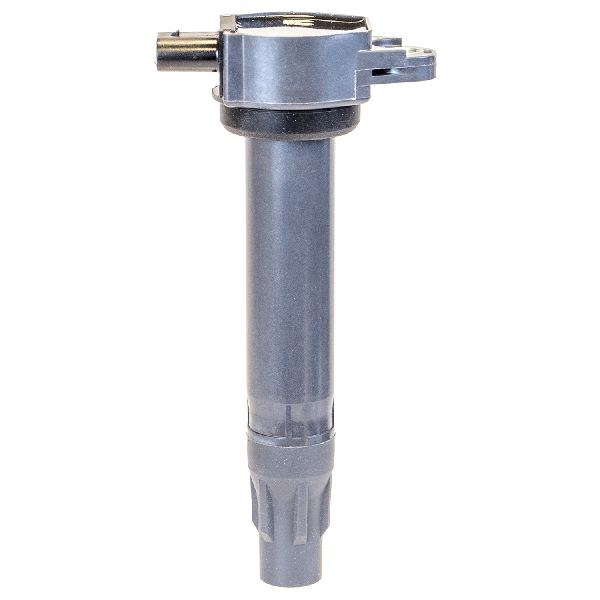
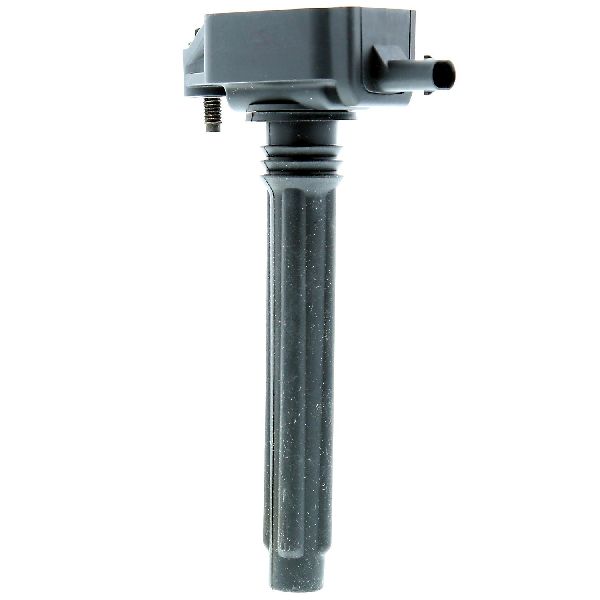
Est. part cost: $20-$125 - Failing Ignition Coil(s) 🔴 High Probability → Shop Ignition Coil Coil-on-plug systems are effective but individual coils can fail with age and heat exposure, leading to misfires. On the 2.4L, oil from a leaking valve cover gasket can saturate and ruin the coil boot.
How to confirm: Use an OBD-II scanner with live data to see if misfires are concentrated on certain cylinders. Swap the ignition coil from a misfiring cylinder with one from a cylinder that is firing correctly. If the misfire code follows the coil (e.g., P0301 moves to P0303 after swapping coils from cylinders 1 and 3), the coil is bad.
Typical fix: Replace the faulty ignition coil. It is often recommended to replace all coils and spark plugs at the same time on higher-mileage vehicles for reliability.
Est. part cost: $30-$90 per coil - Defective Left Cylinder Head (3.6L V6 Only) 🟡 Medium Probability → Shop Engine Cylinder Head Early 3.6L Pentastar engines in 2011-2013 models had a manufacturing defect causing excessive wear on valve guides and seats in the left cylinder head (cylinders 2, 4, and 6), leading to compression loss and misfires. This was addressed by TSB 09-002-14 REV. B.
How to confirm: A technician will perform a cylinder leakage test on cylinders 2, 4, and 6. If leakage is 25% or greater, the cylinder head is considered faulty according to the TSB. This diagnosis should only be performed after ruling out spark plugs and ignition coils.
Typical fix: Replace the left cylinder head with the updated part (PN RL141353AC). This repair was covered under an extended warranty (X56) by Chrysler for 10 years/150,000 miles. Check with a dealer using your VIN to see if coverage is still active.
Est. part cost: $800-$1500 for the part, though it may be covered by warranty. - Faulty Fuel Injector(s) ⚪ Low Probability → Shop Fuel Injector Injectors can become clogged or fail electronically, disrupting the air/fuel mixture and causing misfires. Leaking injectors are a known issue on the 3.6L Pentastar engine.
How to confirm: Listen for an audible clicking sound from each injector. A mechanic can perform a fuel injector balance test or a wet compression test to identify a leaking or clogged injector. Swapping injectors between cylinders (similar to a coil swap) can also help diagnose a bad injector.
Typical fix: Clean or replace the faulty fuel injector(s). On the V6, this is labor-intensive as it requires removing the intake manifold.
Est. part cost: $50-$120 per injector - Leaking Valve Cover Gasket (2.4L Engine) 🟡 Medium Probability → Shop Engine Valve Cover The gasket and spark plug tube seals can degrade over time, allowing engine oil to seep into the spark plug wells. This oil can foul the spark plug and damage the ignition coil boot, leading to misfires.
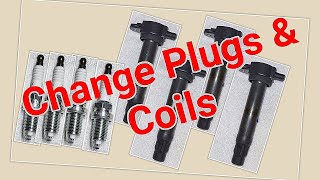
How to confirm: When removing the ignition coils to inspect the spark plugs, look for liquid oil in the spark plug tubes 🎬 See this walkthrough for changing 2.4L plugs and coils. or on the coil boots and plugs.
Typical fix: Replace the valve cover gasket and the spark plug tube seals. Clean the oil out of the tubes and replace any oil-fouled spark plugs and ignition coils.
Est. part cost: $30-$60 for the gasket set
Rare But Worth Checking
- Failing Crankshaft Position Sensor: → Shop Engine Crankshaft Position Sensor A failing crankshaft position sensor can send an erratic signal to the PCM, disrupting ignition and fuel timing and causing random misfires or stalling. This often sets a P0335 code but can sometimes present as a P0300.
- Vacuum Leak: A leak in a vacuum hose, PCV system, or intake manifold gasket can introduce unmetered air into the engine, leaning out the air/fuel mixture and causing random misfires. A smoke test is the most effective way to find a vacuum leak.
- Low Fuel Pressure: A weak fuel pump or clogged fuel filter can starve the engine of fuel, leading to misfires across all cylinders, especially under load. A fuel pressure test is required for diagnosis.
- Failing Rocker Arms/Lifters (3.6L V6): → Shop Engine Rocker Arm As Pentastar engines accumulate high mileage, another failure pattern has emerged involving worn rocker arms and lifters, which can cause a ticking noise and eventually lead to misfires. This is a separate issue from the cylinder head defect but can present with similar codes.
Diagnosis Steps
- Read all stored fault codes with an OBD-II scanner. Note any codes accompanying P0300, especially specific cylinder codes (P0301-P0306).
- Check for a flashing check engine light, which indicates a severe, catalyst-damaging misfire.
- If you have a 3.6L V6 (2011-2013), check with a Dodge dealer using your VIN to see if the X56 extended warranty for the left cylinder head is applicable and still active.
- Inspect the basics: check the age and condition of spark plugs and ignition coil boots. On the 2.4L, specifically look for oil in the spark plug tubes.
- If specific cylinder misfire codes are present (e.g., P0302), swap the ignition coil from the misfiring cylinder to a known good cylinder. Clear codes and see if the misfire follows the coil. If it does, the coil is bad. Repeat this process with the spark plug if the coil is not the issue.
- If coils and plugs are good, check for vacuum leaks. A visual inspection of all vacuum hoses and listening for a hissing sound is a start, but a smoke test is the most definitive method.
- Test fuel pressure to ensure the fuel pump and filter are functioning correctly. The 3.6L system should have 55-65 psi.
- For 3.6L V6 models (2011-2013), if other tests are inconclusive and you have misfires on cylinders 2, 4, or 6, perform or have a shop perform a cylinder leakage test to check for the known cylinder head issue as outlined in TSB 09-002-14 REV. B.
Parts You'll Likely Need
- Ignition Coil
(OEM #5149168AJ)
Related Codes That Often Appear With This One
- P0301-P0306 — These codes specify which cylinder is misfiring (e.g., P0301 for Cylinder 1). They often accompany P0300, helping to narrow down the problem, especially for the 3.6L cylinder head issue which primarily affects cylinders 2, 4, and 6.
- P0420/P0430 — Catalyst System Efficiency Below Threshold. A chronic misfire allows unburnt fuel into the exhaust, which can overheat and damage the catalytic converter, triggering these codes. [TSB #1810216]
- P0335 — Crankshaft Position Sensor 'A' Circuit. A faulty crankshaft sensor can directly cause random misfires, so these codes may appear together.
Technical Service Bulletins (TSBs) & Recalls
- 09-002-14 REV. B: MIL Illumination: P0300, P0302, P0304 or P0306 (X56 Warranty Extension). Involves checking for excessive cylinder leakage and replacing the cylinder head if necessary on 3.6L engines.
- 1810216: Lists P0300 in conjunction with various other misfire, O2 sensor, and catalyst efficiency codes, indicating it can be part of a more complex diagnostic scenario.
Platform-Specific Known Issues
- TSB 09-002-14 REV. B: On 2011-2013 models with the 3.6L V6 engine, P0300, P0302, P0304, or P0306 codes can be caused by excessive cylinder leakage. The bulletin outlines a diagnostic procedure to test for this and recommends replacing the left cylinder head if the test fails.
- Extended Warranty X56: Chrysler issued a 10-year / 150,000-mile warranty extension for the left cylinder head on affected 2011-2013 vehicles with the 3.6L engine. Owners should check with a dealer to see if their vehicle is covered.
- Owner Experience (3.6L V6): Many owners on forums like
avengerforumz.comand Reddit report getting a P0300 code along with a P0302/P0304/P0306, a rough idle, and a flashing check engine light. After initial attempts to fix it with spark plugs and coils fail, the root cause is often diagnosed as the defective left cylinder head, which is then replaced under the extended warranty. - Owner Experience (2.4L I4): A common story for the 2.4L engine involves finding oil in the spark plug wells during a tune-up. Replacing the valve cover gasket, spark plugs, and any oil-soaked ignition coils typically resolves the P0300 code.
Mechanic-Grade Diagnostic Values
- Fuel Pressure (3.6L V6) — expected: 55-65 psi. Failure: Pressure below this range indicates a weak fuel pump or clogged filter.
- Ignition Coil Primary Resistance (2.4L I4) — expected: 0.64 - 0.78 Ohms. Failure: A reading outside this range indicates a faulty coil winding.
- Ignition Coil Secondary Resistance (2.4L I4) — expected: 5.4 - 6.6 kOhms. Failure: A reading outside this range indicates a faulty secondary coil winding.
- Cylinder Leakage Test (3.6L V6 with suspected head issue) — expected: Less than 25% leakage. Failure: Leakage of 25% or greater confirms excessive wear and the need for cylinder head replacement, per TSB 09-002-14 REV. B.
Hidden / Shadow Codes Worth Checking
- Mode 6 Misfire Counters: Even when only a P0300 is set, the PCM tracks misfire events for each individual cylinder. This data can reveal which cylinder(s) are misfiring the most, guiding diagnosis towards a specific coil, plug, or injector without a specific P030x code being present. (see via Requires a full-function scan tool (like wiTECH or a high-end Snap-on) that can access OBD-II Mode $06 data. Basic code readers will not show this.)
Scan Tool Commands That Help
- wiTECH (Chrysler Dealer Tool) or equivalent: Cylinder Kill / Contribution Test — This bidirectional command allows a technician to manually disable one cylinder at a time. If disabling a cylinder causes little to no change in engine RPM, it confirms that cylinder was not contributing power, pinpointing the location of the misfire.
- wiTECH (Chrysler Dealer Tool): PCM Flash / Reprogramming — Chrysler has issued software updates to address specific misfire conditions, such as a P0300 that sets during a 1-2 upshift at high RPM. If basic hardware checks pass, checking for an available PCM update is a necessary step.
Wiring & Ground Locations
- Ignition Coil Connector — Connects directly to the top of each ignition coil.. The plastic connectors and their wiring can become brittle from heat and age. A poor connection or broken wire here will cause a misfire on that cylinder. Aftermarket repair pigtails (e.g., Standard Motor Products S2882) are available.
- Camshaft Position Sensor Connector — On the front of the cylinder heads (3.6L V6) or top of the valve cover (2.4L I4).. A poor connection or damaged wiring at the cam sensor can cause erratic timing signals, leading to a random P0300 misfire code even without a specific camshaft sensor DTC being set.
Real Owner Repair Stories
- YouTube user 'The Auto-Medic' (Chrysler 300 with 3.5L V6 (similar diagnostic principle)) — Running rough, misfiring, stalling, flashing check engine light with P0300.
❌ Tried (didn't work) Initial diagnosis pointed to multiple issues.
✅ What actually fixed it The spark plugs were found to be completely destroyed and were not the correct OEM-type plugs. Replacing all six spark plugs with the correct type resolved the severe misfire. - YouTube user 'JeepSolid' (Jeep with 3.6L Pentastar V6) — Persistent misfire on one cylinder that moved after a component swap.
❌ Tried (didn't work) Inspected rocker arms, which had some wear but were not the primary cause., Replaced spark plugs.
✅ What actually fixed it The owner had swapped ignition coils between cylinder 1 and cylinder 3. The misfire code followed the coil, moving from P0301 to P0303. Replacing the single bad ignition coil was the final fix. - YouTube user 'Brian's Mobile 1' (Vehicle with P0300 code) — P0300 random misfire code, intermittent starting, low fuel pressure readings.
❌ Tried (didn't work) A compression test showed the engine was healthy (160-175 psi across all cylinders)., Fuel pressure was low, but replacing the regulator/filter was not the root cause of the P0300.
✅ What actually fixed it The P0300 code disappeared after the technician disconnected and reconnected the camshaft position sensor plug. The final diagnosis was a poor connection or intermittent short in the wiring to the cam sensor, which was causing the random misfire without setting a specific cam sensor code.
"I Checked Everything" — The Actual Cause
- On the 3.6L Pentastar V6, it is common for a random misfire to be caused by a leaking or 'dribbling' fuel injector. This will not be found with a smoke test, which only checks for vacuum leaks. A technician can identify this by performing a 'wet' compression test (testing compression with the fuel injectors still connected). A cylinder with a leaking injector will show an abnormally high compression reading (e.g., over 200 PSI) because the non-compressible liquid fuel is taking up space in the combustion chamber.
OEM Part Supersession History
Unknown early part numbers for 3.6L left cylinder head→RL141353AC— The original head design for 2011-2013 Pentastar engines was defective, causing premature valve seat wear. This updated part number is for the redesigned head that corrects the flaw.5149168AH, 5149168AI→5149168AJ— Standard revision and improvement of the ignition coil for the 3.6L V6 engine.
Heads up: Older versions may be less reliable, but all are generally interchangeable.5184296AD, AE, AF, AG→5184296AH— The roller bearings on the original rocker arms for the 3.6L V6 were prone to failure. The 'AH' revision is the most current and durable design.
Heads up: It is critical to use the latest revision ('AH') when replacing rocker arms to prevent repeat failures.
Model Year Variations Within This Range
- 2011: The 2011 model year was a significant refresh, introducing an all-new interior and the 283hp 3.6L Pentastar V6 engine paired with a 6-speed automatic transmission, which became the primary V6 option.
- 2011-2013: Models with the 3.6L V6 in this range are highly susceptible to the left cylinder head defect detailed in TSB 09-002-14 REV. B. A P0300, especially with P0302, P0304, or P0306, should lead to an immediate investigation of this issue.
- 2012: Trim levels were renamed. The previous 'Express', 'Mainstreet', and 'Lux' were replaced by 'SE', 'SXT', 'SXT Plus', and 'R/T'. This does not affect the mechanical causes of P0300 but is important for identifying vehicle options.
- 2014: A PCM software update was released under TSB 18-031-14 REV. A for some 2014 Chrysler-family vehicles to correct a P0300 that could occur specifically during a 1-2 upshift above 6000 RPM, indicating software-related causes for misfires on later models.
Helpful Videos
Used OEM Parts in Stock
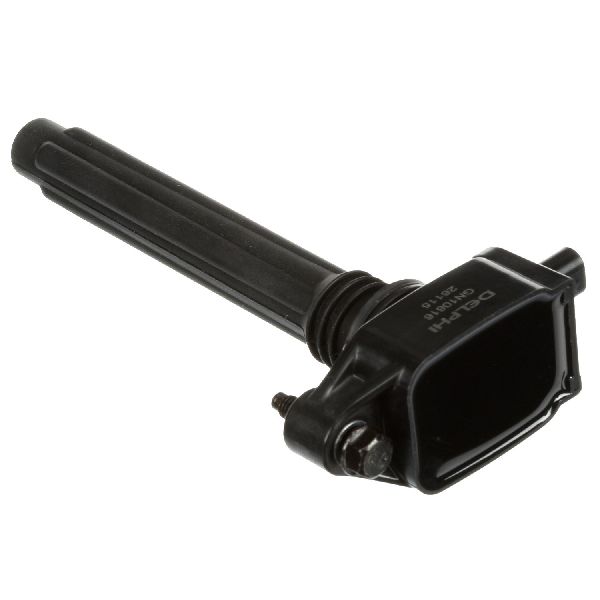
New Aftermarket Parts Available


The information in this article is provided for general reference and educational purposes only. Vehicle specifications, procedures, and part compatibility can vary by production date, trim level, and region. Always consult your vehicle's factory service manual and verify part numbers before purchasing or performing repairs. Safety-critical components such as airbags, seat belts, and braking systems should be installed by a qualified professional.
- Dodge AVENGER:
- 🧭 Diagnostic Flowchart
- 🎬 Helpful Videos
- 🛍️ Shop This Part
- What's Unique About the 2011-2014 Dodge AVENGER
- Symptoms You May Notice
- Most Likely Causes
- Rare But Worth Checking
- Diagnosis Steps
- Parts You'll Likely Need
- Related Codes That Often Appear With This One
- Technical Service Bulletins (TSBs) & Recalls
- Platform-Specific Known Issues
- Mechanic-Grade Diagnostic Values
- Hidden / Shadow Codes Worth Checking
- Scan Tool Commands That Help
- Wiring & Ground Locations
- Real Owner Repair Stories
- "I Checked Everything" — The Actual Cause
- OEM Part Supersession History
- Model Year Variations Within This Range
- 🎟️ Get 5% Off