

P0300 on 2013-2015 Dodge Viper: Random Misfire Causes and Fixes
P0300 on a Gen V Viper indicates a random misfire across multiple cylinders. While common causes like spark plugs and ignition coils are the first suspects, be aware of two manufacturer TSBs that link this code to seemingly unrelated issues: an oil pressure sensor fault (P0521) and a small EVAP leak (P0456). A PCM software update may be required to resolve these false triggers. Additionally, a crankshaft position sensor relearn procedure is a known fix for false misfire detection.
- P0300 means multiple cylinders are misfiring randomly on your Viper's 8.4L V10 engine.
- Start your diagnosis with the basics: inspect and replace worn spark plugs and test the ignition coils.
- Pay close attention to other codes. If P0521 (oil pressure) or P0456 (EVAP leak) are present, investigate those systems first, as they are known causes on this specific vehicle per manufacturer TSBs.
- A flashing check engine light is a critical warning. Do not drive the vehicle, as you risk severe damage to the catalytic converters.
- If basic ignition and fuel checks don't solve the issue, the problem could be a vacuum leak or a more complex sensor communication issue requiring professional diagnosis.
What's Unique About the 2013-2015 Dodge VIPER
On the 8.4L V10 engine in the fifth-generation Viper, a P0300 code requires a broader diagnostic approach than on a typical vehicle. While standard ignition and fuel system faults are still primary causes, Dodge has issued Technical Service Bulletins (TSBs) indicating that other system failures can trigger a P0300. Specifically, TSB #18-108-15 documents that a P0300 can be caused by a fault with the engine oil pressure sensor (P0521). Similarly, TSB #18-065-16 links the P0300 code to a small EVAP system leak (P0456). Both TSBs resolve the issue by reprogramming the PCM with updated software, suggesting the original logic was overly sensitive. Furthermore, forum discussions with SRT engineers confirm that false misfire detection can be caused by the crankshaft position sensor's adaptive learning, requiring a 'Tooth Error Correction' (TEC) relearn.
Diagnostic Flowchart
Tap your situation to follow the diagnostic path that matches what you're seeing on this vehicle.
Symptoms You May Notice
- Rough or shaking idle
- Hesitation or stumbling during acceleration
- Noticeable loss of engine power
- Flashing Check Engine Light (indicates severe, catalyst-damaging misfire)
- Strong fuel smell from the exhaust
- Reduced fuel economy
- Replacing only one spark plug or coil when others are near the end of their service life.
- Replacing oxygen sensors without confirming a fuel trim issue or a specific sensor fault code. An O2 sensor will report the results of a misfire (lean condition due to unburnt oxygen), but it is rarely the cause of the misfire itself.
- Overlooking a vacuum leak, which can affect the air-fuel mixture for all cylinders and is a classic cause of a P0300.
- Immediately assuming a major mechanical failure before ruling out the simpler ignition, fuel, and vacuum-related causes. 🎬 Watch: Step-by-step guide to diagnosing and fixing a P0300 code.
Most Likely Causes
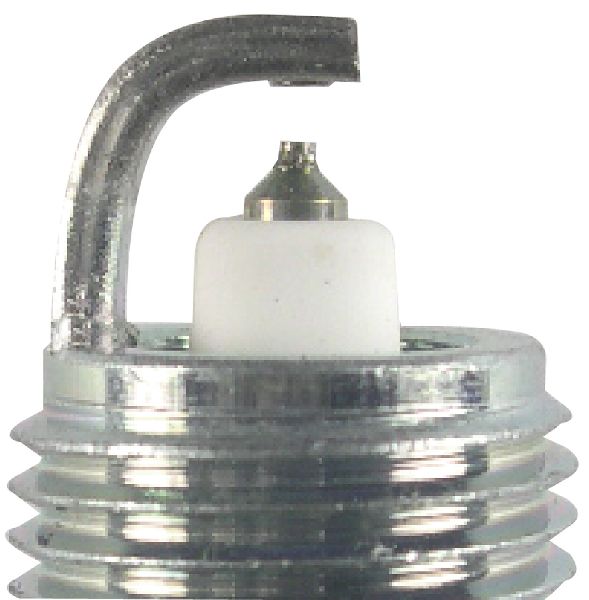
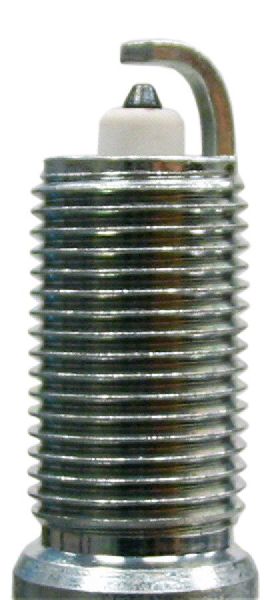
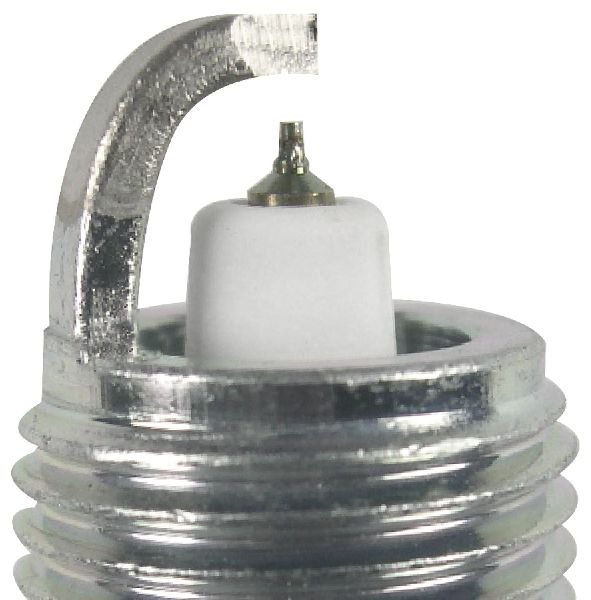
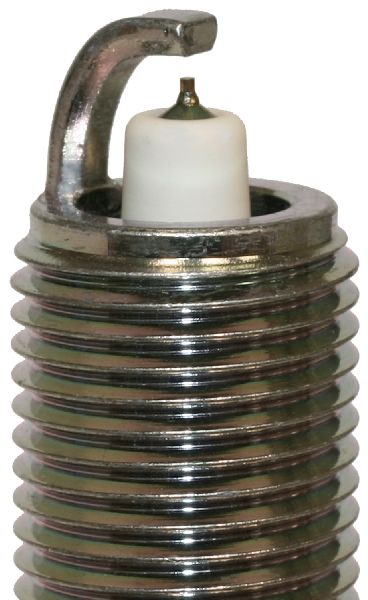
- Worn or Fouled Spark Plugs 🔴 High Probability → Shop Spark Plug The high-performance nature of the V10 engine places high demands on ignition components. Spark plugs are a routine maintenance item and a very common starting point for any misfire diagnosis.
How to confirm: Remove and inspect the spark plugs from several cylinders. Look for worn electrodes, heavy carbon deposits, oil fouling, or a white, ashy appearance. Check for proper spark plug gap.
Typical fix: Replace all 10 spark plugs as a set. It is also recommended to replace the spark plug wires at the same time. 🎬 See this walkthrough for replacing Viper spark plugs and wires.
Est. part cost: $100-$200 for a set of 10 quality plugs. - Faulty Ignition Coils 🟡 Medium Probability → Shop Ignition Coil The Viper uses a coil-on-plug system. Heat and vibration in the engine bay can cause individual coils to fail over time, leading to a weak or absent spark.
How to confirm: If you have a scan tool that can identify which cylinders are misfiring (even with a P0300, some data may be available), swap the ignition coil from a misfiring cylinder with one from a known good cylinder. If the misfire follows the coil, the coil is bad.
Typical fix: Replace the faulty ignition coil. The OEM Mopar part number is 5037127AB. It is often recommended to replace them in sets or all at once if they are original and high-mileage.
Est. part cost: $100-$180 per coil for OEM Mopar parts. - Vacuum Leak 🟡 Medium Probability Complex intake manifolds and numerous vacuum hoses provide multiple potential failure points for gaskets and hoses to crack or degrade over time, introducing unmetered air and causing a lean condition.
How to confirm: Visually inspect all vacuum lines and intake gaskets. A smoke test is the most effective method to find hard-to-see leaks. Spraying starter fluid or a propane torch (unlit) near suspected areas while monitoring engine RPM can also help pinpoint a leak.
Typical fix: Replace the leaking hose or gasket.
Est. part cost: $10-$100 depending on the specific hose or gasket. - Fuel Delivery Issue ⚪ Low Probability
How to confirm: Check fuel pressure at the fuel rail to ensure it's within specification (approximately 58 psi +/- 5 psi). Listen to the fuel injectors with a mechanic's stethoscope to check for consistent clicking. A dirty or clogged injector can also be a cause.
Typical fix: Could involve replacing a weak fuel pump, a clogged fuel filter, or cleaning/replacing faulty fuel injectors.
Est. part cost: $200-$600 for a fuel pump, $50-$150 per fuel injector.
Rare But Worth Checking
- Engine Oil Pressure Sensor Malfunction: Per TSB #18-108-15, a failing oil pressure sensor can trigger a P0300 code along with P0521 on 2015 models. The fix is a PCM software update, indicating the misfire detection was falsely triggered by oil pressure readings. The OEM sensor is available for Vipers from 2003-2017.
- EVAP System Leak: Per TSB #18-065-16, a small leak in the evaporative emissions system can trigger a P0300 code along with P0456. The prescribed fix is a PCM software update, suggesting the EVAP fault was incorrectly interpreted by the engine controller as a misfire.
- Crankshaft Position Sensor 'Tooth Error': → Shop Engine Crankshaft Position Sensor Forum discussions with SRT engineers highlight that the crankshaft position sensor can sometimes require a 'Tooth Error Correction' (TEC) relearn procedure. This adaptive learning can drift, causing the PCM to falsely detect misfires. A dealer scan tool (wiTECH) is needed to clear the old TEC data, followed by a specific drive cycle to relearn the crank signal. 🎬 Watch: How to perform a crankshaft position sensor relearn procedure.
- Low Engine Compression: Internal engine mechanical issues like a worn piston ring, valve train problem, or a failing head gasket can cause a persistent misfire. A compression test would be needed to confirm this. This is a last resort after exhausting all other possibilities.
Diagnosis Steps
- Scan for Codes: Use an OBD-II scanner to confirm the P0300 code and check for any other accompanying codes. Pay special attention to P0301-P0310, P0521, or P0456.
- Check for TSBs: If P0521 or P0456 are present, investigate the corresponding TSBs (#18-108-15 and #18-065-16). The solution is likely a dealer-installed PCM software update, not a physical repair of the oil or EVAP system.
- Inspect Ignition System: Start with the basics. Visually inspect all spark plug wires and ignition coil connections. Remove and inspect spark plugs for wear, fouling, or damage. A standard tune-up (plugs and wires) is a good starting point if they are old.
- Test Ignition Coils: If your scanner shows misfire counts on specific cylinders, swap the coil from a misfiring cylinder to a good cylinder. Clear codes and run the engine. If the misfire code follows the coil (e.g., P0302 becomes P0304 after swapping coils from cylinder 2 to 4), the coil is faulty.
- Check for Vacuum Leaks: Perform a smoke test on the intake system. This is the most reliable way to find small cracks in hoses or leaking gaskets that can cause a random misfire.
- Test Fuel System: Verify fuel pressure is within the specified range of 58 psi +/- 5 psi. Low pressure points to a weak pump or clogged filter. Listen to injectors for consistent operation.
- Consider Crankshaft Position Sensor Relearn: If all else fails, especially if there's no obvious mechanical issue, the 'Tooth Error Correction' (TEC) may need to be reset and relearned by a dealer. This is a known fix for false P0300 codes on this platform.
- Perform a Compression Test: If the above steps do not reveal the cause, a mechanical engine issue is possible. Perform a compression test on all cylinders to check for internal problems like bad rings or valves.
Parts You'll Likely Need
- Spark Plugs
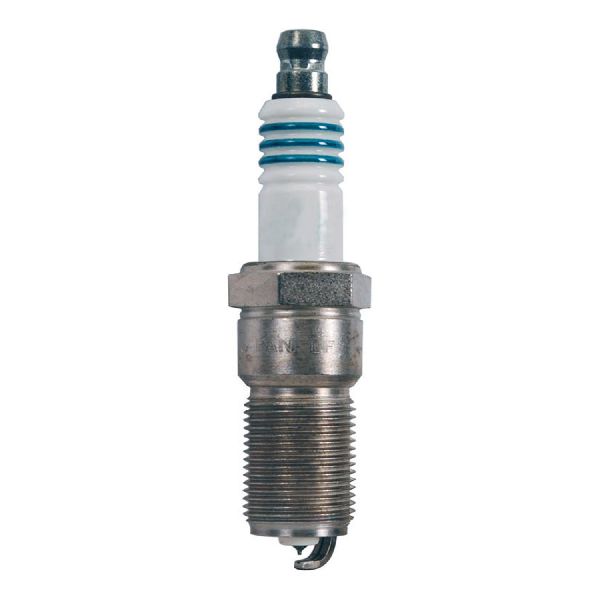
(OEM #68304020AA)— Spark plugs are a primary wear item in the ignition system and the most common cause of misfires. The V10 engine requires 10 plugs.
Trusted brands: Mopar, NGK
OEM price range: $15-$25 per plug
Aftermarket price range: $8-$20 per plug - Ignition Coil
(OEM #5037127AB)— The coil-on-plug units are subjected to intense heat and can fail, causing a weak or non-existent spark.
Trusted brands: Mopar, Bosch
Related Codes That Often Appear With This One
- P0301-P0310 — These codes specify which cylinder is misfiring (e.g., P0301 for Cylinder 1). They often accompany P0300 or can help pinpoint the source of the random misfire by showing which cylinders are most affected.
- P0521 — According to TSB #18-108-15, an Engine Oil Pressure Sensor Performance issue can be directly related to the P0300 code on this vehicle, often requiring a PCM flash to resolve.
- P0456 — According to TSB #18-065-16, an EVAP System Small Leak can be directly related to the P0300 code on this vehicle, often requiring a PCM flash to resolve.
Technical Service Bulletins (TSBs) & Recalls
- 18-108-15: Links P0300 - Multiple Cylinder Misfire with P0521 - Engine Oil Pressure Sensor Performance.
- 18-065-16: Links P0300 - Multiple Cylinder Misfire with P0456 - Evap System Small Leak.
Platform-Specific Known Issues
- TSB #18-108-15: Documents that a P0300 code can be set in conjunction with a P0521 code for the engine oil pressure sensor on 2015 models. The fix is a PCM software update, not a sensor replacement.
- TSB #18-065-16: Notes that a P0300 code may appear alongside a P0456 for a small EVAP leak. The solution is a PCM software update, indicating the misfire detection logic was overly sensitive to EVAP system faults.
- Crankshaft Position Sensor 'Tooth Error Correction' (TEC): A known issue where the PCM's adaptive learning for the crankshaft sensor drifts, causing false misfire detection. Requires a dealer-level scan tool to reset and relearn.
Mechanic-Grade Diagnostic Values
- Fuel Pressure (Key-On, Engine-Off) — expected: 58 psi +/- 5 psi (379 kPa +/- 34 kPa). Failure: Pressure below this range indicates a weak fuel pump, clogged filter, or faulty regulator. Pressure that drops more than 20 psi in 30 minutes after shutdown indicates a leaking injector or bad check valve.
- Fuel Injector Resistance — expected: ~12 Ohms. Failure: A significantly higher or lower resistance reading suggests a faulty injector coil.
Hidden / Shadow Codes Worth Checking
- Mode 6, Test ID $53: Provides raw misfire counts for each individual cylinder for the current and last 10 driving cycles. This data can identify which cylinder(s) are contributing to a P0300 code even when no specific P0301-P0310 codes are present. (see via A professional scan tool capable of displaying OBD-II Mode 6 data. The data will show a test ID (e.g., $53) and component IDs (e.g., $01 for cylinder 1, $02 for cylinder 2, etc.) with their corresponding misfire counts.)
Scan Tool Commands That Help
- wiTECH (Dealer Scan Tool): Tooth Error Correction (TEC) Relearn / Crankshaft Relearn — Use when a P0300 code persists after ignition and fuel system basics have been ruled out. The PCM's adaptive learning for the crankshaft position sensor can drift, causing false misfire detection. This function clears the learned data.
- wiTECH (Dealer Scan Tool): ETC Relearn (Electronic Throttle Control) — This procedure must be performed after replacing the PCM (including with an aftermarket race controller) to ensure the throttle pedal position is correctly calibrated. Failure to do so can cause DTCs and limit throttle response.
- wiTECH (Dealer Scan Tool): VIN and Odometer Reset — Required when the PCM is replaced to prevent DTCs related to mismatched vehicle information.
Wiring & Ground Locations
- Main Engine Ground — Passenger side of the engine block, often connected to an engine mount bolt and then to a stud on the inside of the chassis frame rail.. A loose or corroded main engine ground can cause erratic behavior in the ignition system and sensors, leading to random misfires and other electrical issues.
- PCM Connectors — Under the hood in the engine compartment.. A loose PCM connector, sometimes due to a broken clip, can cause intermittent signal loss for ignition coils or injectors, directly resulting in a P0300 code. Ensuring connectors are fully seated is a crucial check.
- PCM Ground Pins — Specific pins on the PCM connectors serve as the ground circuit for the module itself. For example, on a representative Chrysler PCM, a pin may be designated 'GND (GROUND)'.. An internal or external fault at the PCM's own ground circuit can cause unpredictable behavior, including misfire detection faults. This requires checking the wiring harness and pin integrity at the connector.
Real Owner Repair Stories
- Viper Club of America Forums (2004 Dodge Viper SRT-10) — Recurring P0300 code, sometimes after spirited driving or track use. No noticeable change in engine performance.
❌ Tried (didn't work) Clearing the code multiple times, Replacing spark plugs
✅ What actually fixed it The owner discovered the PCM connector closest to the firewall was slightly loose due to a broken plastic clip. Pushing the connector in securely and clearing the code resolved the issue permanently. - Viper Club of America Forums (SRT Engineer) (General advice for various Viper generations) — False P0300 misfire detection when no actual misfire is occurring.
❌ Tried (didn't work) Standard tune-up parts (plugs, wires)
✅ What actually fixed it The recommended fix from an SRT engineer is to have a dealer use a scan tool to clear the 'Tooth Error Correction' (TEC) adaptive learning. Then, the owner should perform a relearn drive cycle by accelerating moderately to ~4000 RPM in 2nd gear and coasting down to ~2000 RPM without braking, repeated several times. - Viper Club of America Forums (Gen V Viper with aftermarket Arrow Race Controller) — P0300 code after installing the aftermarket PCM.
❌ Tried (didn't work) Standard diagnosis
✅ What actually fixed it The issue was with the software tune on the aftermarket controller itself. The Arrow controller disables misfire detection, indicating the sensitivity of the stock system and how software plays a key role. For users of such controllers, the fix is often a software update from the manufacturer.
"I Checked Everything" — The Actual Cause
- In some cases where a smoke test reveals no vacuum leaks, a faulty or sticking PCV (Positive Crankcase Ventilation) valve can cause an intermittent, unmetered air condition that mimics a vacuum leak and leads to a P0300 code. The valve may not leak during a static smoke test but can malfunction under specific engine load or vacuum conditions.
OEM Part Supersession History
68304020AA→SP070508AA— Standard part evolution and supplier changes.56027275, SP0RC12LYC→68304020AA— Part consolidation and updates for newer model years.
Model Year Variations Within This Range
- 2015: TSB #18-108-15 specifically addresses 2015 models where a P0300 can be falsely triggered by an oil pressure sensor fault (P0521). The fix is a PCM software update unique to this issue.
- 2013: TSB #18-065-16 is specific to 2013 models where a P0300 can be falsely triggered by a small EVAP leak (P0456). The solution is a specific PCM software reflash.
Helpful Videos

We Have This Part in Stock


The information in this article is provided for general reference and educational purposes only. Vehicle specifications, procedures, and part compatibility can vary by production date, trim level, and region. Always consult your vehicle's factory service manual and verify part numbers before purchasing or performing repairs. Safety-critical components such as airbags, seat belts, and braking systems should be installed by a qualified professional.
- Dodge VIPER:
- 🧭 Diagnostic Flowchart
- 🎬 Helpful Videos
- 🛍️ Shop This Part
- What's Unique About the 2013-2015 Dodge VIPER
- Symptoms You May Notice
- Most Likely Causes
- Rare But Worth Checking
- Diagnosis Steps
- Parts You'll Likely Need
- Related Codes That Often Appear With This One
- Technical Service Bulletins (TSBs) & Recalls
- Platform-Specific Known Issues
- Mechanic-Grade Diagnostic Values
- Hidden / Shadow Codes Worth Checking
- Scan Tool Commands That Help
- Wiring & Ground Locations
- Real Owner Repair Stories
- "I Checked Everything" — The Actual Cause
- OEM Part Supersession History
- Model Year Variations Within This Range
- 🎟️ Get 5% Off