

P0300 on 2015-2018 Ford Edge 2.0L EcoBoost: Random Misfire Causes and Fixes
On a 2015-2018 Ford Edge with the 2.0L EcoBoost engine, a P0300 code is a major red flag for a known coolant intrusion issue that requires engine replacement. Before suspecting spark plugs or coils, check your coolant level immediately. If it's low with no visible leaks, this serious defect, which is the subject of TSBs and a class-action lawsuit, is the likely cause.
- For a 2015-2018 Edge 2.0L EcoBoost, P0300 is a critical code that most often points to a catastrophic engine defect.
- Your first and most important diagnostic step is to check the engine coolant level. Unexplained coolant loss is the biggest red flag.
- Do not waste money on spark plugs or ignition coils until you have professionally ruled out the coolant intrusion issue.
- The only permanent repair for the coolant intrusion defect is a complete long block engine replacement with an updated part.
- If the check engine light is flashing, stop driving immediately to prevent expensive damage to the catalytic converter.
What's Unique About the 2015-2018 Ford Edge
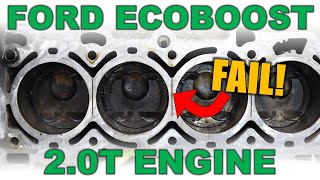
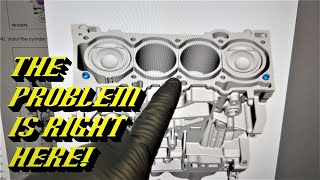
For the 2015-2018 Ford Edge with the 2.0L EcoBoost engine, P0300 is an exceptionally serious code. While it can indicate common issues, it is most notoriously linked to a significant, well-documented engine design flaw. The engine block was designed with grooves on the cylinder head that can allow coolant to leak past the head gasket and directly into the cylinders, causing misfires. This 'coolant intrusion' issue is the subject of multiple Ford Technical Service Bulletins (TSBs) 🎬 Watch: A breakdown of the TSB regarding this major engine flaw. and a class-action lawsuit, and it should be the primary suspicion, especially if accompanied by coolant loss. Manufacturer Bulletin #SSM 47204 specifically notes that this runs rough condition and P0300 code may be due to coolant intrusion caused by corrosion on the engine block.
Symptoms You May Notice
- Check Engine Light (MIL) is on or flashing
- Rough or shaky engine idle, especially on cold start
- Noticeable hesitation or lack of acceleration
- Engine stutters or jerks while driving
- Unexplained loss of engine coolant with no visible external leaks
- White, sweet-smelling smoke from the exhaust, particularly on startup
- Hard starting
- Engine temperature gauge running higher than normal
- Replacing only spark plugs and ignition coils without first checking for coolant loss. This is a common and expensive mistake on this engine, as it does not address the root cause of coolant intrusion. One owner on Reddit noted they replaced plugs and coils before realizing the coolant was leaking into the engine.
Most Likely Causes
- Internal Coolant Leak (Engine Block Defect) 🔴 High Probability A design flaw in the open-deck 2.0L EcoBoost engine block creates a path for coolant to intrude into the cylinders. This is officially recognized by Ford in TSBs 19-2346 and 22-2229 and is the subject of class-action lawsuit Miller, et al., v. Ford Motor Company. TSB 22-2229 confirms this intrusion can cause a runs rough condition with an illuminated malfunction indicator lamp.
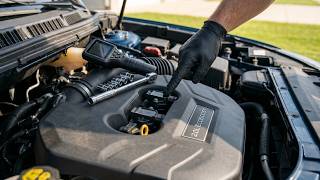
How to confirm: Check the coolant reservoir for a consistently low level with no external leaks. A mechanic must perform a cooling system pressure test and use a borescope to visually inspect cylinders for coolant, as detailed in the TSBs. A technician on YouTube noted the spark plug from the affected cylinder was harder to remove.
Typical fix: The only official and permanent fix is to replace the entire long block engine assembly with a redesigned part. Ford has also initiated Customer Satisfaction Program 21N12 for related engines, which covers this repair under specific conditions.
Est. part cost: $4000-$7000 - Worn or Fouled Spark Plugs 🟡 Medium Probability → Shop Spark Plug Direct injection engines like the EcoBoost are hard on spark plugs. While a common cause for misfires, this should only be considered after ruling out coolant intrusion. Coolant contamination will also foul new plugs quickly.
How to confirm: Remove the spark plugs and inspect them for wear, carbon fouling, or signs of coolant (a white, ashy deposit or an unusually clean appearance).
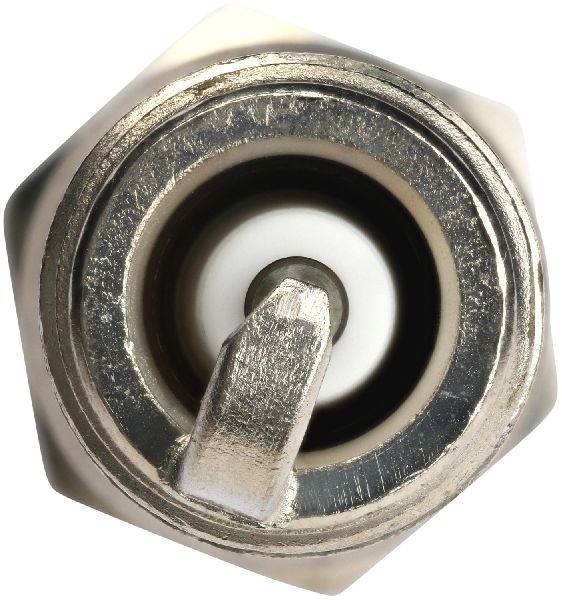
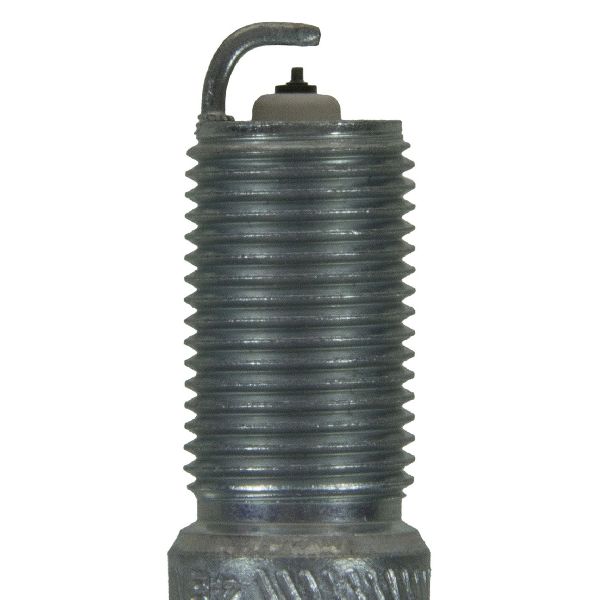
Typical fix: Replace all four spark plugs. It's critical to use the correct Motorcraft plugs and gap them properly. Some tuners recommend a specific gap like 0.028" for tuned vehicles.
Est. part cost: $40-$80 - Faulty Ignition Coils ⚪ Low Probability → Shop Ignition Coil
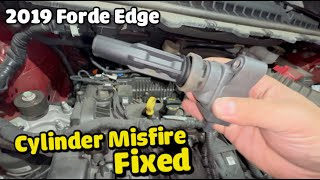
How to confirm: With a scan tool that shows live data, monitor misfire counts per cylinder. Swap the ignition coil from a misfiring cylinder to a known good cylinder. If the misfire follows the coil, the coil is bad.
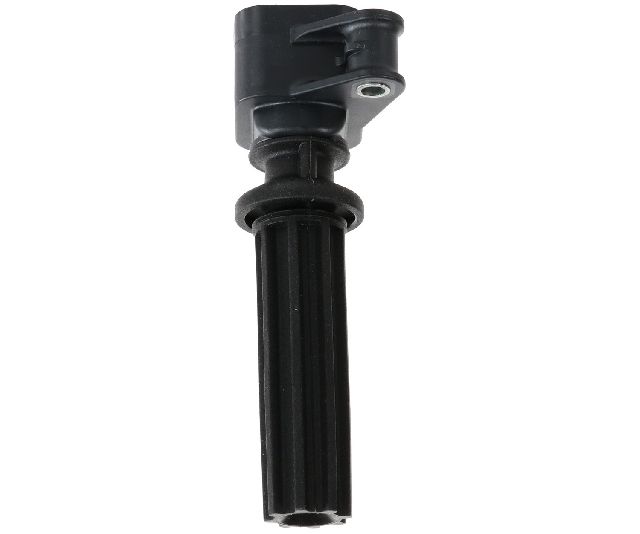
Typical fix: Replace the faulty ignition coil. It is often recommended to replace them as a set if they are original and high-mileage.
Est. part cost: $50-$150 per coil
Rare But Worth Checking
- Clogged Fuel Injectors: → Shop Fuel Injector Carbon buildup is a known issue on GDI (Gasoline Direct Injection) engines. If the misfire persists after addressing ignition and coolant issues, the fuel injectors could be a factor.
- Vacuum Leak: A leak in a vacuum hose or intake manifold gasket can introduce unmetered air, disrupting the air-fuel ratio and causing random misfires.
- Oil Consumption Issues: Manufacturer Bulletin #SSM 54504 and #SSM 46363 note that P0300 may appear alongside excessive oil consumption (up to 1 quart per 1,000 miles) or blue smoke, suggesting the cylinder heads should be suspected as the cause.
Diagnosis Steps
- Check the engine coolant level in the reservoir. If it is low, and there are no visible external leaks, assume the cause is the internal engine defect.
- If coolant is low, do not proceed with other part replacements. The vehicle should be taken to a professional for a cooling system pressure test and a borescope inspection of the cylinders 🎬 See how a mechanic checks for coolant intrusion in the cylinders. to confirm coolant intrusion, per TSB 22-2229.
- If the coolant level is full and stable, scan for any other accompanying trouble codes. Codes like P0316 strongly suggest the coolant issue even if the level hasn't dropped noticeably yet.
- If coolant intrusion is definitively ruled out, proceed with standard misfire diagnosis. Inspect and/or replace all four spark plugs.
- Test the ignition coils by swapping them between cylinders to see if the misfire follows the coil.
- If the misfire persists, investigate less common causes like fuel injectors or vacuum leaks.
Parts You'll Likely Need
- Engine Long Block Assembly
(OEM #Varies by VIN, refer to parts catalog)— This is the only official Ford-recommended repair for the common coolant intrusion defect that causes P0300 on this engine. The replacement must be the updated, redesigned block.
Trusted brands: Motorcraft
OEM price range: $4000-$7000
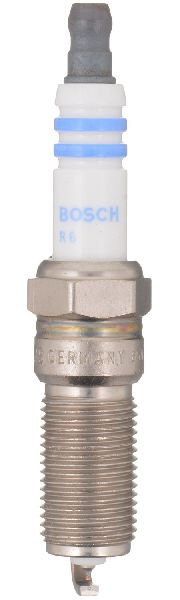
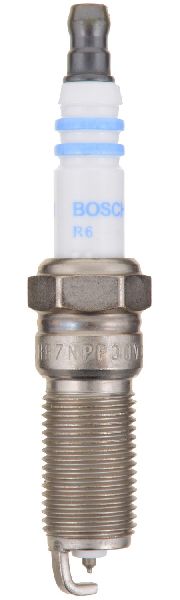
Aftermarket price range: $3000-$5000 - Spark Plugs
(OEM #SP-550 / CYFS-12Y-PCT)— Worn or fouled spark plugs are a general cause of misfires and a routine maintenance item. They should be checked after ruling out coolant intrusion. Coolant will foul them.
Trusted brands: Motorcraft, NGK (LTR6BHX), Bosch (HR7NII332S)
OEM price range: $60-$100
Aftermarket price range: $40-$80 - Ignition Coil
(OEM #DG-562)— An ignition coil provides the high voltage spark. A failing coil can cause a misfire, though this is less likely to cause a random P0300 than a specific cylinder code.
Trusted brands: Motorcraft, Denso, Delphi
OEM price range: $80-$120
Aftermarket price range: $50-$90
Related Codes That Often Appear With This One
- P0301, P0302, P0303, P0304 — These codes indicate a misfire on a specific cylinder. They often appear with P0300 because the coolant leak may initially affect one or two cylinders more than others before becoming a random misfire. These codes are explicitly listed in the relevant TSBs.
- P0316 — This means 'Misfire Detected on Startup (First 1000 Revolutions)'. It is very common with coolant intrusion, as coolant that has leaked into a cylinder overnight causes an immediate misfire on a cold start. This code is also listed in the TSBs.
- P0217, P1285, P1299 — These are engine or cylinder head over-temperature codes. They can be triggered when coolant intrusion leads to a loss of coolant and subsequent overheating. These are also explicitly mentioned in TSBs 22-2229 and 19-2346.
- P0524, P06DD — As noted in Bulletin #SSM 54504, these oil pressure related codes may accompany P0300 if the vehicle is also experiencing excessive oil consumption.
Technical Service Bulletins (TSBs) & Recalls
- TSB 22-2229: The most recent bulletin that supersedes previous versions, confirming the coolant intrusion issue on 2015-2018 Edge 2.0L EcoBoost engines. It lists affected vehicles, common DTCs (P0300, P0316, etc.), and recommends a long block replacement as the definitive fix.
- TSB 19-2346: An earlier TSB that also details the coolant intrusion problem, symptoms, and the engine replacement procedure. It was superseded by later versions but contains the same core diagnostic information.
- Bulletin #SSM 47204: Specifically identifies that 2015-2018 Edge vehicles with the 2.0L EcoBoost may exhibit P0300 due to coolant intrusion caused by corrosion on the engine block.
- Bulletin #SSM 46363: Advises technicians to suspect the cylinder heads as the cause if P0300 is accompanied by white or blue smoke from the exhaust and excessive oil consumption.
- Customer Satisfaction Program 21N12: While primarily targeting the 1.5L engine, this program demonstrates Ford's acknowledgement of the coolant intrusion problem and provides a framework for no-cost repairs for affected customers, setting a precedent that owners of 2.0L engines often reference.
Platform-Specific Known Issues
- A known design defect in the 2.0L EcoBoost engine block can allow coolant to leak into the cylinders, causing misfires and eventual engine failure. This issue is the subject of Ford TSBs 19-2346 and 22-2229 and a class-action lawsuit (Miller, et al., v. Ford Motor Company).
- Ford also has a Customer Satisfaction Program (21N12) for some EcoBoost engines which provides a no-cost, one-time repair for this issue under certain conditions.
- Bulletin #SSM 54504 notes that some vehicles may exhibit P0300 specifically after a cold soak at ambient temperature or after a hot restart, sometimes accompanied by excessive oil consumption.
Mechanic-Grade Diagnostic Values
- Ignition Coil Primary Resistance — expected: 0.52-0.64 Ohms. Failure: A reading outside this range indicates a faulty coil winding.
- Ignition Coil Secondary Resistance — expected: 6.6-7.9 kOhms. Failure: A reading outside this range, or an open circuit, points to a failed coil.
- Variable Camshaft Timing (VCT) Solenoid Resistance — expected: 6.9-7.9 Ohms. Failure: A reading of infinity (open) or zero (short) indicates a failed solenoid.
- High-Pressure Fuel System Pressure (OEM) — expected: Up to 150 bar / 2150 PSI. Failure: Significantly lower pressure, often triggering code P0087, indicates a failing High-Pressure Fuel Pump (HPFP).
- Cooling System Pressure Test (per TSB 22-2229) — expected: Pressure drop of less than 4 PSI over 5 hours from an initial pressure of 20 PSI.. Failure: A pressure drop greater than 4 PSI in 5 hours, with no external leaks, is a strong confirmation of an internal coolant leak (coolant intrusion).
Hidden / Shadow Codes Worth Checking
- Mode 6, Test ID $80-$83, Component ID $01-$04: This refers to Mode 6 data which tracks misfire counts per cylinder for the current and last 10 driving cycles. For example, Test ID $80, Component ID $01 tracks misfires for cylinder 1. Even if no P030x code is set, these counters can reveal which cylinder(s) are contributing to a P0300, helping to isolate a failing coil or injector. (see via A professional scan tool or advanced DIY software like FORScan is required to view Mode 6 data.)
Scan Tool Commands That Help
- Ford IDS / FORScan / High-End Snap-on Scanners: Power Balance Test — This is a critical bidirectional test for diagnosing misfires. The tool disables one fuel injector at a time and graphs the RPM drop for each cylinder. A cylinder with a weak or no RPM drop when its injector is cut is the misfiring cylinder. This is extremely useful for confirming a misfire location when only a P0300 is present.
- Ford IDS / FORScan: Relative Compression Test — This test cranks the engine and measures the electrical current drawn by the starter motor to infer the compression of each cylinder relative to the others. It's a quick, non-invasive way to check for a major mechanical issue (like a cylinder full of coolant) without removing spark plugs for a manual compression test.
- Ford IDS / FORScan: KAM (Keep Alive Memory) Reset — After replacing components like VCT solenoids or a throttle body, or after performing a major repair, a KAM reset should be performed. This clears the PCM's learned adaptive strategies and forces it to relearn values for the new parts, which can resolve rough running or persistent codes after a repair.
Wiring & Ground Locations
- G104 / G105 — Commonly found on the left and right front of the radiator core support in the engine compartment.. These are primary engine bay ground points. The PCM, ignition coils, and various sensors rely on a clean ground connection for accurate readings and operation. A corroded or loose ground at G104 or G105 can cause erratic electrical behavior, leading to phantom misfires or incorrect sensor data that could trigger a P0300.
- PCM (Powertrain Control Module) — Typically located in the right rear of the engine compartment.. The PCM is the brain of the engine management system. Knowing its location is essential for inspecting its connectors (e.g., C175B) for corrosion or pushed-out pins, which could disrupt signals from the crankshaft position sensor or to the ignition coils, causing misfires.
- Ignition Coil Connector — On top of each ignition coil, which is inserted into the valve cover over each spark plug.. The 3-pin connector for each coil supplies power, ground, and the trigger signal from the PCM. A damaged connector, spread terminals, or corroded pins can cause a misfire on that specific cylinder. If a misfire follows a coil swap, but the coil tests good, the connector itself is the next suspect.
Real Owner Repair Stories
- Ford Edge Forum user 'Jhensley1607' (2017 Ford Edge 2.0L EcoBoost) — Rough idle when cold, codes P0301 and P0302.
❌ Tried (didn't work) Initial dealer diagnosis could not confirm the issue.
✅ What actually fixed it After three weeks at a Ford dealer, the vehicle received a new 2022 Valencia-produced long block engine, which resolved the misfire codes. This confirms the TSB-directed repair for coolant intrusion is the definitive solution. - NHTSA ODI #11491282 — An owner reported a check engine code displaying P0300 and a Cylinder 3 misfire. They noted this could potentially cause a fire in the engine due to coolant in the combustion.
OEM Part Supersession History
Pre-2019 Engine Block Assemblies→J2GZ-6006-E (and subsequent revisions)— The original engine block design had a flaw in the coolant passages between cylinders, leading to cracks and coolant intrusion. The new long block assembly features a redesigned engine block to permanently correct this flaw.
Heads up: Using a used or remanufactured engine with the old block design will inevitably lead to a repeat failure. Only the new, redesigned long block is a permanent fix for the coolant intrusion issue.
Diagnostic Flowchart
Other Known Issues on This Vehicle
Issues unrelated to this code that are worth knowing about as an owner of this generation:
- A-Pillar Water Leak 🟠 Medium — Common on early 2015 models built before April 28, 2015. Ford issued a customer satisfaction program to address it. (Ref: Customer Satisfaction Program 15B21)
- Rear Differential (RDU/PTU) Noise/Failure 🔴 High — Reports of whining, grinding, or clunking from the rear, sometimes leading to costly replacement of the Rear Drivetrain Unit (RDU). Noted across multiple model years.
- Cracked Flexplate 🔴 High — Some owners of 2.0L EcoBoost models have reported a rattling sound from the engine area, which is diagnosed as a cracked flexplate. If not addressed, it can lead to significant transmission-related damage.
- MyFord Touch / SYNC 2 Issues 🟡 Low — Primarily affects 2015 models. Complaints include unresponsive screens, freezing, and system crashes. The system was replaced by SYNC 3 in 2016 models, which is considered much more reliable.
Used vs. New Parts: Buying Guide for This Vehicle
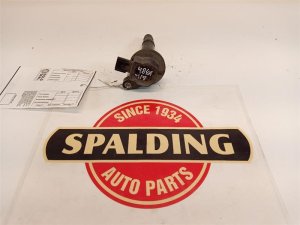
When a used part is the smart pick: For this specific P0300 issue, a used engine is an extremely high-risk purchase and should be avoided unless it can be definitively proven to be the post-2019 redesigned block. Used parts like ignition coils, sensors, or a throttle body from a low-mileage donor vehicle can be a cost-effective choice.
Donor-vehicle mileage cap: roughly under 70000 miles for the part to have meaningful remaining life.
What to inspect on the donor part:
- For an engine, demand documentation proving it is the revised part number (e.g., J2GZ-6006-E or newer) or from a 2020+ model year vehicle.
- Check for any signs of overheating (discolored metal, melted plastic components).
- Inspect ignition coils for cracks in the housing or corrosion on the electrical pins.
- When buying a used valve cover, check for cracks and ensure the integrated PCV diaphragm is intact (if possible to inspect).
OEM-only on this vehicle (don't cheap out):
- Engine Long Block Assembly: Due to the specific design flaw, only the redesigned OEM Motorcraft long block or a remanufactured engine explicitly built with the updated block casting should be used.
Aftermarket brands forum-validated for this vehicle:
- Ignition Coils: Motorcraft (OEM), Denso, Delphi.
- Spark Plugs: Motorcraft (OEM), NGK, Bosch.
Brands owners have reported issues with on this vehicle:
- Remanufactured Engines that do not explicitly state they use the updated/revised block design to fix the inherent coolant intrusion flaw.
Real Owner Stories
Aggregated from forums and TSBs cited above. Mileages and costs reflect what owners reported in those sources.
2017 Ford Edge 2.0L EcoBoost
Symptoms: Rough idle when cold and a P0301/P0302 code. The owner experienced coolant loss and misfires.
What fixed it: Dealer diagnosis confirmed the TSB issue, requiring a full engine replacement.
Cost: $6500-$7700
Source hint: fordedgeforum.com thread titled 'Rough Idle When Cold - P0301/2 Code - coolant intrusion - TSB 22-2133 & TSB 22-2229 - 2.0L Ecoboost'
2015 Ford Edge 2.0L EcoBoost
Symptoms: Steady coolant loss requiring a top-off once a month, white smoke from the exhaust, and rough idling. The car went into safety mode and wouldn't exceed 30 mph.
What fixed it: Replacing the spark plug in the 3rd cylinder provided a temporary fix, but the owner noted the plugs had to be replaced twice in one year due to coolant fouling.
Source hint: Reddit (r/FordEdge) user in thread titled 'Coolant Issue'
Related OBD-II Codes
Frequently Asked Questions
Does TSB 22-2229 apply to my 2015-2018 Ford Edge with the 2.0L EcoBoost?
What is the permanent fix for the P0300 code caused by coolant intrusion on this vehicle?
Is there a Ford program that covers the cost of engine replacement for this issue?
Can I just replace the spark plugs to fix the misfire on my Edge?
What specific spark plugs and gap should I use for the 2.0L EcoBoost?
How can a mechanic confirm if my P0300 is caused by the engine block design flaw?
Helpful Videos

Used OEM Parts in Stock
New Aftermarket Parts Available

The information in this article is provided for general reference and educational purposes only. Vehicle specifications, procedures, and part compatibility can vary by production date, trim level, and region. Always consult your vehicle's factory service manual and verify part numbers before purchasing or performing repairs. Safety-critical components such as airbags, seat belts, and braking systems should be installed by a qualified professional.
- Ford Edge:
- 🧭 Diagnostic Flowchart
- 🎬 Helpful Videos
- 🛍️ Shop This Part
- What's Unique About the 2015-2018 Ford Edge
- Symptoms You May Notice
- Most Likely Causes
- Rare But Worth Checking
- Diagnosis Steps
- Parts You'll Likely Need
- Related Codes That Often Appear With This One
- Technical Service Bulletins (TSBs) & Recalls
- Platform-Specific Known Issues
- Mechanic-Grade Diagnostic Values
- Hidden / Shadow Codes Worth Checking
- Scan Tool Commands That Help
- Wiring & Ground Locations
- Real Owner Repair Stories
- OEM Part Supersession History
- Other Known Issues on This Vehicle
- Used vs. New Parts: Buying Guide for This Vehicle
- Real Owner Stories
- 2017 Ford Edge 2.0L EcoBoost
- 2015 Ford Edge 2.0L EcoBoost
- Related OBD-II Codes
- Frequently Asked Questions
- 🎟️ Get 5% Off