

P0300 on 2011-2019 Ford Explorer 3.5L EcoBoost: Random Misfire Causes and Fixes
For the 2011-2019 Explorer with the 3.5L EcoBoost, a P0300 code is most often caused by worn spark plugs and/or failing ignition coils. The turbocharged nature of the engine requires spark plug changes more frequently than the owner's manual suggests, often every 40,000-60,000 miles. Replacing all six spark plugs (Motorcraft SP-580) and coils (Motorcraft BL3Z-12029-C) is the most common and effective fix, with DIY parts costing between $250 and $450.
- Start with the basics: P0300 on this engine is almost always caused by worn spark plugs and/or ignition coils.
- Don't follow the 100,000-mile service interval for spark plugs; replace them every 40,000-60,000 miles to prevent issues.
- If the check engine light is flashing, pull over and stop driving to avoid catastrophic damage to your catalytic converters.
- If new plugs and coils don't fix the issue, the next most likely causes are carbon buildup on the intake valves or a vacuum leak.
- Always use high-quality Motorcraft or equivalent parts for the ignition system; this engine is sensitive to part quality.
What's Unique About the 2011-2019 Ford Explorer
The 3.5L EcoBoost is a twin-turbocharged, gasoline direct injection (GDI) engine. This design puts significantly more stress on ignition components, causing spark plugs and coils to wear out faster than in non-turbo engines. Many owners and mechanics recommend a 40,000-60,000 mile spark plug interval to prevent misfires. Additionally, because fuel is injected directly into the cylinder and not over the intake valves, these engines are prone to carbon buildup on the valves, which can restrict airflow and cause misfires—an issue not seen on port-injected engines.
Symptoms You May Notice
- Rough or shaky idle
- Hesitation or stumbling during acceleration
- Noticeable loss of engine power
- Flashing check engine light, especially under heavy acceleration or load
- Reduced fuel economy
- A smell of raw fuel from the exhaust
- Engine shaking or vibrating more than usual
- Replacing catalytic converters. Bad cats are almost always a *result* of long-term misfires dumping raw fuel into the exhaust, not the cause. Fix the misfire first.
- Replacing oxygen (O2) sensors. While a faulty O2 sensor can cause air/fuel mixture problems, it's rarely the root cause of a P0300 code. A misfire will cause O2 sensors to read incorrectly, but they are reporting the problem, not causing it.
Most Likely Causes
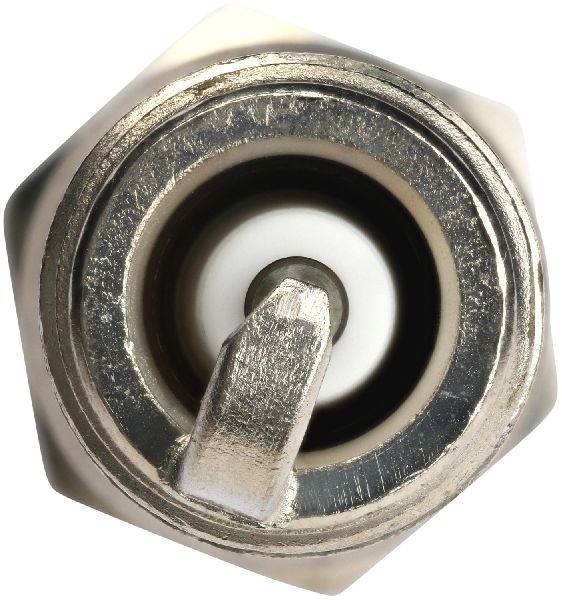
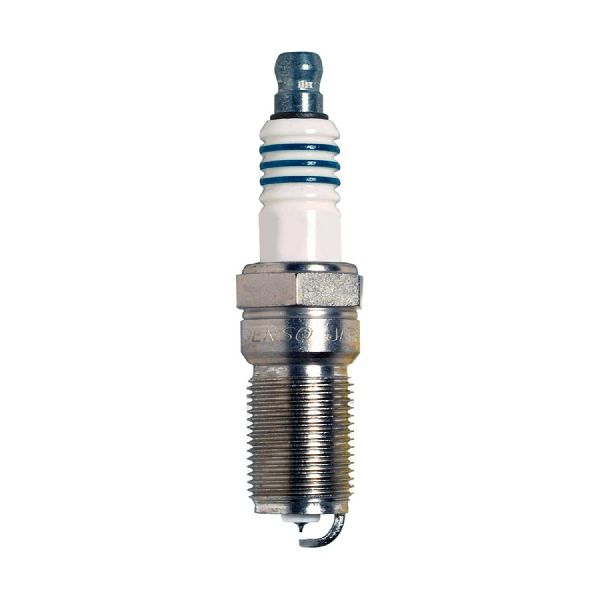
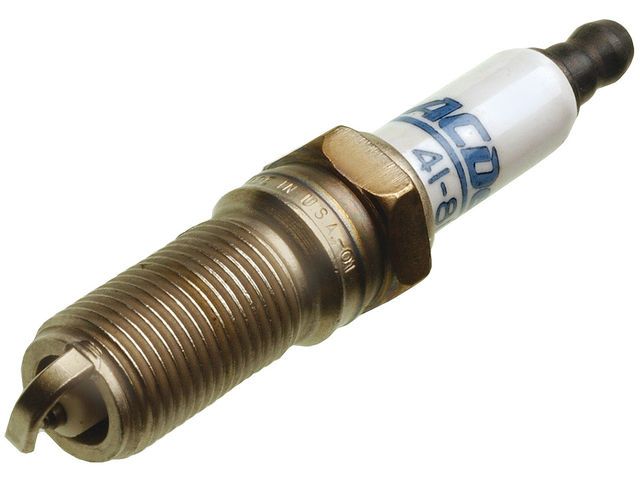
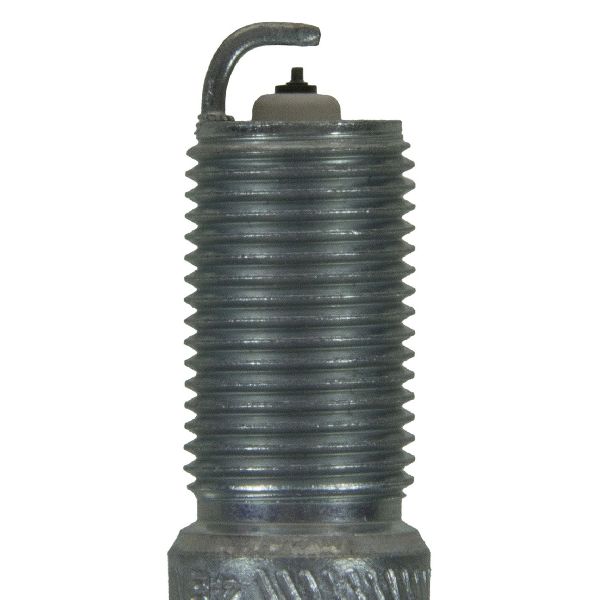
- Worn Spark Plugs 🔴 High Probability → Shop Spark Plug The high cylinder pressures in the EcoBoost engine cause spark plugs to wear out much faster than Ford's 100,000-mile recommendation. Most owners and specialists recommend replacement every 40,000-60,000 miles to maintain performance and prevent misfires. The original plug, SP-534, has been superseded by SP-580.
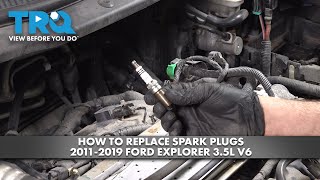
How to confirm: Inspect the spark plugs for wear, carbon fouling, or an incorrect gap. The correct gap is crucial and should be 0.028-0.031 inches. Given the labor to access the rear bank requires removing the intake manifold 🎬 Watch: Step-by-step guide to replacing your spark plugs., it's best to replace all six if they are of questionable age.
Typical fix: Replace all six spark plugs with high-quality OEM replacements, Motorcraft SP-580. Ensure they are gapped correctly before installation, even if advertised as pre-gapped.
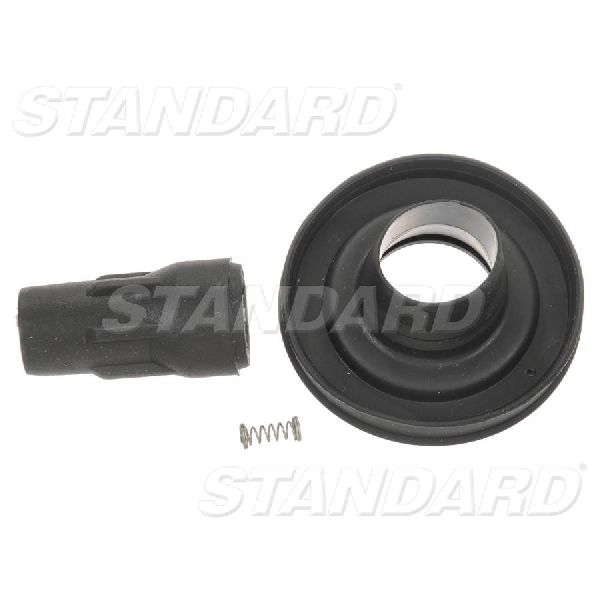
Est. part cost: $60-$120 - Failing Ignition Coils 🔴 High Probability → Shop Ignition Coil Just like spark plugs, ignition coils are under high stress from heat and voltage and are a very common failure item. Often, one failing coil can overwork others, leading to multiple failures. A bad coil boot can also cause a spark leak to the cylinder head.
How to confirm: Use a scan tool with live data to view misfire counts per cylinder (Mode $06). Swap a suspected bad coil with a known good one from another cylinder and see if the misfire code follows (e.g., P0300 changes to P0302). A failing coil can also set codes P0351-P0356.
Typical fix: Replace the faulty ignition coil(s). It is best practice to replace all six coils at the same time as the spark plugs to ensure reliability. The OEM part is Motorcraft BL3Z-12029-C (also known as DG549), which replaces earlier versions.
Est. part cost: $150-$350 for a set of six - Carbon Buildup on Intake Valves 🟡 Medium Probability As a direct-injection engine, fuel doesn't wash over the intake valves. Oil vapor from the PCV system bakes onto the hot valves, forming carbon deposits that restrict airflow and cause misfires, especially at idle and low RPMs.
How to confirm: This requires a visual inspection using a borescope inserted into the intake manifold. Symptoms like a persistent rough idle and misfires after replacing plugs and coils often point to this issue.
Typical fix: Professional cleaning is required, most commonly via walnut shell blasting, which removes the carbon without damaging the engine components. 🎬 Watch: How to safely clean intake valves without disassembly. This service can cost several hundred to over a thousand dollars.
Est. part cost: $0 (service cost is labor) - Leaking Purge Valve (EVAP System) ⚪ Low Probability → Shop Vapor Canister A purge valve stuck open can create a constant vacuum leak, altering the air-fuel mixture and causing random misfires, often at idle or immediately after refueling. This is a known issue on many Ford models of this era.
How to confirm: With the engine running, disconnect the vapor line from the purge valve. If you feel suction from the valve's port, it is stuck open and needs replacement. Often accompanied by EVAP codes like P0456 or P0497.
Typical fix: Replace the canister purge valve. It is a relatively inexpensive and easy part to replace.
Est. part cost: $30-$60
Rare But Worth Checking
- Leaking Fuel Injectors: → Shop Fuel Injector An injector can leak fuel, causing a rich condition in one cylinder and forcing the PCM to lean out other cylinders, leading to random misfires. This can sometimes be identified by a fuel smell on the oil dipstick.
- Weak High-Pressure Fuel Pump (HPFP): → Shop Fuel Pump If the HPFP cannot supply adequate pressure under load, it can starve the engine of fuel and cause misfires across all cylinders. Diagnosis requires monitoring fuel rail pressure with a capable scan tool during a wide-open throttle pull.
- Vacuum Leaks: Cracked hoses (especially PCV lines) or a leaking intake manifold gasket can introduce unmetered air, leading to a lean condition and misfires. A smoke test is the best way to diagnose this.
- Intercooler Condensation Ingestion: → Shop Intercooler Primarily on 2011-2014 models, condensation can build up in the charge air cooler (intercooler) in humid climates. During hard acceleration, this water is ingested, causing a sudden, severe misfire. TSB 13-8-1 was issued to address this. Some owners drill a small 'weep hole' in the bottom of the intercooler to allow moisture to drain.
- Timing Chain Damage: → Shop Engine Timing Chain In some instances, a damaged timing chain can lead to weak compression and misfire codes. NHTSA ODI #10220462 describes a case where P0300 was present alongside weak compression in cylinders 4, 5, and 6 due to a damaged timing chain.
Diagnosis Steps
- Read the codes with an OBD-II scanner. Note all codes, including pending and freeze frame data.
- Check freeze frame data to see the engine conditions (RPM, load, temperature) when the misfire occurred. This can help replicate the issue.
- Using a scan tool with Mode $06, check the misfire counters for each cylinder to see if the misfires are truly random or concentrated on specific cylinders.
- Inspect the ignition system. If spark plugs are over 40,000 miles old, plan to replace them. This is the most common fix.
- When replacing plugs, use Motorcraft SP-580 and verify the gap is 0.028-0.031 inches. Inspect the old plugs for signs of oil, fuel, or coolant fouling.
- Test ignition coils. Swap a coil from a frequently misfiring cylinder (identified in step 3) with a coil from a cylinder with no misfires. Clear codes and drive. If the misfire follows the coil (e.g., moves from P0302 to P0304), you've found a bad coil.
- If ignition components are good, check for vacuum leaks. A smoke test is the most effective method. Pay close attention to the PCV hoses and intake manifold gaskets.
- Test the fuel system. Check fuel pressure for both the low-pressure and high-pressure pumps to ensure they are within specification under load.
- If all else fails, perform a visual inspection of the intake valves for carbon buildup using a borescope. This is especially likely if the vehicle has over 80,000 miles and has persistent idle issues.
Parts You'll Likely Need
- Spark Plugs
(OEM #SP-580 (Motorcraft), supersedes SP-534, SP-542.)— These are a primary wear item on the 3.5L EcoBoost and the most frequent cause of misfires. The high-pressure, turbocharged environment shortens their lifespan significantly.
Trusted brands: Motorcraft, NGK
OEM price range: $60-$90 for a set of 6
Aftermarket price range: $50-$80 for a set of 6 - Ignition Coils
(OEM #BL3Z-12029-C (Motorcraft, also known as DG549). Replaces BL3Z-12029-A and -B.)— Ignition coils are the second most common failure point. They generate the high voltage needed for spark and fail due to heat and stress. It's common to replace them with the spark plugs as a set.
Trusted brands: Motorcraft, MSD, Accel
OEM price range: $180-$300 for a set of 6
Aftermarket price range: $120-$250 for a set of 6
Related Codes That Often Appear With This One
- P0301-P0306 — If the random misfire becomes consistent in one or more specific cylinders, the PCM will set a cylinder-specific code (e.g., P0302 for cylinder 2). This is a strong clue for diagnosing a bad coil or injector.
- P0430 — This code ('Catalyst System Efficiency Below Threshold Bank 2') can appear if long-term misfires have damaged the catalytic converter. TSB 13-8-1 notes this code can appear with misfires on the 3.5L EcoBoost.
- P0171/P0174 — These 'System Too Lean' codes can indicate a vacuum leak, which is also a potential cause of the P0300 misfire code.
- P0351-P0356 — These codes point to a fault in the primary or secondary circuit of a specific ignition coil (e.g., P0351 for cylinder 1), confirming a coil-related issue. NHTSA ODI #11681823 notes a case where P0300 appeared alongside P0304, P0305, P0306, and P0352.
Technical Service Bulletins (TSBs) & Recalls
- TSB 13-8-1: Intermittent Stumble/Misfire on Hard Acceleration: Addresses misfires (P0304, P0305, P0306) and catalyst codes (P0430) on 2011-2012 3.5L GTDI engines after highway driving in humid conditions. The fix involves a PCM reprogram and installing a deflector on the charge air cooler (CAC) to prevent condensation ingestion.
- TSB 15-0131: Cold Start Rattle from Front of Engine: For 2011-2015 vehicles with the 3.5L EcoBoost, this TSB addresses a startup rattle caused by a stretched primary timing chain. The fix involves replacing the timing chain, tensioners, and all four VCT phasers with updated parts.
Platform-Specific Known Issues
- Intercooler Condensation: Early 3.5L EcoBoost engines (primarily 2011-2014) could accumulate condensation in the intercooler, especially in humid climates. During hard acceleration, this water could be ingested by the engine, causing a sudden, violent shudder and misfire. TSB 13-8-1 was released to address this by reprogramming the PCM and adding a deflector to the intercooler. Many owners have found a more permanent solution by drilling a 1/16" weep hole in the bottom of the intercooler driver's side to allow moisture to drain.
Mechanic-Grade Diagnostic Values
- Low-Side Fuel Pressure (at idle) — expected: 40 - 60 PSI. Failure: Pressure below 35-40 PSI may indicate a weak in-tank fuel pump or clogged filter.
- High-Side Fuel Pressure (GDI System) — expected: 500 PSI (cranking), 1,500 - 2,175 PSI (idle to wide-open throttle).. Failure: If the scan tool shows actual pressure lagging significantly behind requested pressure (e.g., by more than 200 PSI) under load, the High-Pressure Fuel Pump (HPFP) may be failing.
- Ignition Coil Primary Resistance — expected: 0.3 - 1.0 Ohms.. Failure: A reading outside this range, or a significant deviation from the other coils, indicates a faulty coil winding.
- Ignition Coil Secondary Resistance — expected: 5,400 - 11,500 Ohms (5.4 - 11.5 kOhms).. Failure: A reading outside this specified range suggests the coil is faulty.
- VCT Solenoid Resistance — expected: 5 - 15 Ohms.. Failure: A reading of 0 Ohms (short circuit) or OL/infinity (open circuit) indicates a failed solenoid.
Hidden / Shadow Codes Worth Checking
- Mode $06, TID $53: This is not a standard DTC but a Test ID within a scan tool's Mode $06 data that provides raw misfire counts for each individual cylinder over the last 10 drive cycles. This data can reveal which cylinder(s) are contributing to a P0300 code, even if they haven't misfired enough to set a cylinder-specific code like P0301. (see via Requires a professional scan tool or an advanced consumer OBD-II scanner with Mode $06 capabilities, such as FORScan.)
Scan Tool Commands That Help
- Ford IDS (or FORScan): Power Balance Test — This is a critical bidirectional test for diagnosing misfires. It graphically displays the power contribution of each cylinder in real-time. A technician can then use the tool to disable individual injectors. If disabling an injector causes no change in engine RPM or smoothness, that cylinder was not contributing, confirming the misfire location. This helps differentiate between ignition, fuel, or mechanical issues.
Wiring & Ground Locations
- G104 / G105 — G104 is on the right side of the engine compartment, near the fender apron. G105 is on the top right side of the engine or on the left side of the engine compartment.. These are primary engine and PCM ground points. Corrosion or a loose connection at these locations can cause erratic voltage, affecting ignition coil performance, sensor readings, and PCM operation, leading to misfire codes.
- Ignition Coil Connector — On top of the valve cover, plugging directly into each ignition coil.. The wiring pigtail or the connector itself can become brittle from heat cycles, leading to poor connections or broken wires. This can cause a misfire on a specific cylinder that might be intermittent, contributing to a P0300.
Real Owner Repair Stories
- Ford F150 Forum (2016 F-150 3.5L EcoBoost with 87k miles (same engine architecture)) — P0300 with specific misfires on cylinders 3 and 5.
❌ Tried (didn't work) Replacing all 6 spark plugs, Replacing all 6 ignition coils, Using a fuel injector cleaner additive
✅ What actually fixed it The dealer found no mechanical faults and ultimately resolved the issue by applying a PCM software update. Ford's rapid response team suggested the update, which fixed the misfires at no charge. - Ford F150 Forum (2016 F-150 3.5L EcoBoost) — Shuddering under heavy acceleration, flashing check engine light, pending codes for random misfire and specific misfires on cylinders 2 and 5.
❌ Tried (didn't work) Replacing all spark plugs with Motorcraft parts gapped to 0.028", Swapping ignition coils to different cylinders (misfire did not move)
✅ What actually fixed it The owner had not posted the final fix, but the symptoms (misfire under load on specific cylinders after plugs/coils are ruled out) strongly point towards a failing fuel injector on one of the noted cylinders. - NHTSA ODI #11614991 — An owner reported that after the check engine light illuminated, an independent mechanic retrieved code P0300. Despite replacing the coil pack and spark plugs, the engine misfire persisted.
- NHTSA ODI #11635503 — One owner noted that the check engine light came on and the car started running as if there were no problem, but a diagnostic check revealed code P0300 for a random misfire.
OEM Part Supersession History
Motorcraft SP-534→Motorcraft SP-542, then Motorcraft SP-580— Improved design and materials to better withstand the high-stress environment of EcoBoost engines and reduce misfire incidents.Motorcraft BL3Z-12029-A / B→Motorcraft BL3Z-12029-C (DG549)— Updated internal windings and boot design for improved durability and resistance to heat-related failure.AA5Z-6A666-D (EV-290)→GB5Z-6758-C— Updated design for the PCV valve assembly. The newer part number is associated with the 2013-2019 models.
Heads up: Ensure the correct part is used for the specific transverse engine application, as there are multiple PCV valve designs for the 3.5L engine family.
Model Year Variations Within This Range
- 2011-2012: These early models used a Hitachi-based direct injection fuel system and had smaller turbochargers. They were also the primary subjects of TSB 13-8-1 for intercooler condensation, which could cause severe misfires under acceleration in humid conditions.
- 2013-2016: Ford transitioned to a Bosch direct injection fuel system, used larger turbos, and an electronic blow-off valve. While less prone to the original intercooler issue, they can still experience it. The PCV valve part number was also updated during this time.
- 2016-2019: The Explorer received a facelift for the 2016 model year, but the 3.5L EcoBoost powertrain remained largely the same as the 2013-2016 versions. The second-generation 3.5L EcoBoost with dual injection (port and direct) was introduced in the F-150 in 2017 but was not used in the Explorer during this timeframe.
Diagnostic Flowchart
Other Known Issues on This Vehicle
Issues unrelated to this code that are worth knowing about as an owner of this generation:
- Internal Water Pump Failure 🔴 High — Commonly occurs between 100,000 and 150,000 miles. Failure can cause coolant to mix with engine oil, leading to catastrophic engine damage.
- Power Transfer Unit (PTU) Overheating/Failure 🔴 High — Can fail under 100,000 miles due to fluid overheating and lack of a drain plug for service. Symptoms include grinding noises and a propane-like smell.
- Timing Chain Rattle / Stretch on Cold Start 🟠 Medium → Shop Engine Timing Chain — Affects earlier models (pre-2016) most often, can occur around 70,000-100,000 miles. Caused by a stretched primary timing chain. (Ref: TSB 15-0131)
- Electronic Throttle Body Malfunction 🟠 Medium → Shop Fuel Injection Throttle Body — Common across the 5th generation, can cause sudden 'limp mode' where the vehicle will not accelerate. (Ref: P2111, P2112 codes are common)
- Exhaust Fumes in Cabin 🟠 Medium — Reported in 2011-2017 models, caused by unsealed seams in the rear of the vehicle allowing exhaust to enter under acceleration. (Ref: Ford addressed this with a customer service program.)
Used vs. New Parts: Buying Guide for This Vehicle
When a used part is the smart pick: For this repair, used parts are generally not recommended for the primary failure items. However, a used Purge Valve from a low-mileage donor vehicle could be a cost-effective option as it is a simple electro-mechanical part with a lower failure rate than ignition components.
Donor-vehicle mileage cap: roughly under 60000 miles for the part to have meaningful remaining life.
What to inspect on the donor part:
- For a purge valve, ensure there are no cracks in the plastic housing or electrical connector.
- Check the vehicle history of the donor car to avoid parts from flood or collision-damaged vehicles.
- If considering used ignition coils, look for matching OEM part numbers and avoid any with cracks, discoloration, or corrosion on the terminals.
OEM-only on this vehicle (don't cheap out):
- Spark Plugs: Never buy used. Always install new Motorcraft or equivalent high-quality plugs.
- Ignition Coils: Strongly recommend new OEM (Motorcraft) or top-tier aftermarket coils. Used coils carry a high risk of being near the end of their service life, leading to a repeat repair.
- High-Pressure Fuel Pump (HPFP): Due to the precision nature and high stress on this part, a new OEM or reputable upgraded aftermarket pump is the only reliable choice.
Aftermarket brands forum-validated for this vehicle:
- Ignition Coils: MSD, Accel
- Spark Plugs: NGK (Ruthenium or Iridium)
- High-Pressure Fuel Pump (for performance): Xtreme-DI (XDI), Nostrum
Brands owners have reported issues with on this vehicle:
- Unbranded, no-name ignition coils and sensors from online marketplaces. These often have high failure rates and can cause persistent issues or even damage the PCM.
Real Owner Stories
Aggregated from forums and TSBs cited above. Mileages and costs reflect what owners reported in those sources.
2011-2012 Ford Explorer 3.5L GTDI
Symptoms: Intermittent stumble or misfire during hard acceleration after driving on the highway in humid or damp conditions.
What fixed it: PCM reprogram and installation of a deflector on the charge air cooler (CAC) as per TSB 13-8-1.
Source hint: TSB 13-8-1: Intermittent Stumble/Misfire on Hard Acceleration
2017 Ford Explorer Sport 3.5L EcoBoost
Symptoms: Misfire occurring specifically under load.
What fixed it: Replacement of spark plugs with Motorcraft SP-580, ensuring a proper gap of 0.028-0.031 inches.
Source hint: https://www.explorerforum.com/forums/index.php?threads/2017-sport-p0300-misfire-under-load.496191/
2011-2015 Ford Explorer 3.5L EcoBoost
Symptoms: Cold start rattle coming from the front of the engine.
What fixed it: Replacing the primary timing chain, tensioners, and all four VCT phasers with updated parts.
Source hint: TSB 15-0131: Cold Start Rattle from Front of Engine
Documented NHTSA Reports
NHTSA ODI #11681823
Symptoms: A certified mechanic retrieved DTCs P0300, P0304, P0305, P0306, and P0352, indicating several cylinder misfires.
What fixed it: The vehicle was towed to the dealer for further diagnosis and repair of the multiple cylinder misfires.
NHTSA ODI #11635503
Symptoms: The check engine light illuminated, and a diagnostic check revealed code P0300, indicating a random misfire detected in the engine.
What fixed it: The owner reported the vehicle began running normally again after the code was checked, though the underlying misfire error was recorded.
NHTSA ODI #11614991
Symptoms: Check engine warning light illuminated; an independent mechanic retrieved DTC P0300 and determined there was an engine misfire.
What fixed it: The owner replaced the coil pack and spark plugs, though the record indicates the misfire issue persisted after these replacements.
NHTSA ODI #10220462
Symptoms: Engine failure accompanied by code P0300. Cylinders 4, 5, and 6 showed weak compression.
What fixed it: Diagnosis revealed a damaged timing chain; the dealer had previously serviced the timing chain twice before this failure.
Related OBD-II Codes
Frequently Asked Questions
My 2011 Explorer 3.5L EcoBoost shudders violently during hard acceleration in the rain. Does TSB 13-8-1 apply to me?
Ford recommends spark plug replacement at 100,000 miles, but I'm getting a P0300 at 50,000 miles. Is this normal?
Which specific spark plugs should I use for my 2017 Explorer Sport 3.5L EcoBoost?
I have a P0300 and a rattling sound when I first start my 2013 Explorer in the morning. Are these related?
Can a bad EVAP purge valve cause a P0300 on the Ford Explorer?
What is the 'weep hole' fix I see mentioned for the Explorer EcoBoost misfire?
Helpful Videos

![How To Safely Clean 3.5 Ecoboost Intake Valves [No Disassembly]](https://img.youtube.com/vi/izXfMwgeV_M/mqdefault.jpg)
Used OEM Parts in Stock
New Aftermarket Parts Available

The information in this article is provided for general reference and educational purposes only. Vehicle specifications, procedures, and part compatibility can vary by production date, trim level, and region. Always consult your vehicle's factory service manual and verify part numbers before purchasing or performing repairs. Safety-critical components such as airbags, seat belts, and braking systems should be installed by a qualified professional.
- Ford Explorer:
- 🧭 Diagnostic Flowchart
- 🎬 Helpful Videos
- 🛍️ Shop This Part
- What's Unique About the 2011-2019 Ford Explorer
- Symptoms You May Notice
- Most Likely Causes
- Rare But Worth Checking
- Diagnosis Steps
- Parts You'll Likely Need
- Related Codes That Often Appear With This One
- Technical Service Bulletins (TSBs) & Recalls
- Platform-Specific Known Issues
- Mechanic-Grade Diagnostic Values
- Hidden / Shadow Codes Worth Checking
- Scan Tool Commands That Help
- Wiring & Ground Locations
- Real Owner Repair Stories
- OEM Part Supersession History
- Model Year Variations Within This Range
- Other Known Issues on This Vehicle
- Used vs. New Parts: Buying Guide for This Vehicle
- Real Owner Stories
- 2011-2012 Ford Explorer 3.5L GTDI
- 2017 Ford Explorer Sport 3.5L EcoBoost
- 2011-2015 Ford Explorer 3.5L EcoBoost
- Documented NHTSA Reports
- NHTSA ODI #11681823
- NHTSA ODI #11635503
- NHTSA ODI #11614991
- NHTSA ODI #10220462
- Related OBD-II Codes
- Frequently Asked Questions
- 🎟️ Get 5% Off