

P0300 on 2004-2010 Ford F-150 5.4L Triton: Random Misfire Causes and Fixes
P0300 on a 5.4L 3V Triton V8 is most often caused by worn ignition components like spark plugs and ignition coils. However, issues unique to this engine, such as failing VCT solenoids, a corroded Fuel Pump Driver Module (FPDM), or vacuum leaks are also very common culprits. A basic ignition system repair can cost $150-$400 in parts, but diagnosis is key to avoid replacing unnecessary components.
- For a P0300 code on this engine, start with the basics: inspect ignition coils and spark plugs, as they are the most likely culprits.
- Be aware of the specific issues for this truck: the problematic 2004-2008 spark plugs, the failure-prone VCT solenoids, and the corroding Fuel Pump Driver Module.
- A flashing check engine light means stop driving immediately to prevent expensive damage to the catalytic converters.
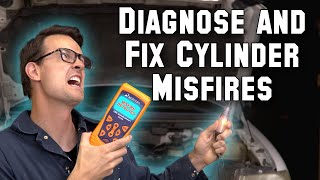
- Using a scan tool that can read Ford-specific data (like Mode $06 or FORScan) is extremely helpful for diagnosing whether the issue is ignition, fuel, or timing related.
- Always use high-quality replacement parts, especially Motorcraft for ignition and timing components, to ensure a lasting repair.
What's Unique About the 2004-2010 Ford F-150

The 2004-2010 F-150 with the 5.4L 3V Triton engine has several well-documented weak points that directly lead to a P0300 code. The most infamous is the two-piece spark plug design used from 2004 to mid-2008, which is notorious for breaking during removal. Additionally, this engine's Variable Camshaft Timing (VCT) system is highly sensitive to oil pressure and prone to failure of its solenoids and phasers, causing rough idle and misfires. Finally, the Fuel Pump Driver Module (FPDM), mounted to the rear frame crossmember, is highly susceptible to galvanic corrosion between the aluminum module and steel frame, which can cause erratic fuel pressure and widespread misfires.
Generation note: This range covers the end of the 11th generation (2004-2008) and the start of the 12th generation (2009-2010) F-150. The most significant difference is the spark plug design. Models from 2004 to mid-2008 use a problematic two-piece plug, originally part number PZH14F, superseded by Motorcraft SP-515 and later SP-546. These are known for breaking in the cylinder head. Late 2008 and newer models use a revised, more reliable one-piece plug (Motorcraft SP-509). Ford issued multiple Technical Service Bulletins (TSBs), including 08-7-6, detailing a specific removal procedure with carburetor cleaner to reduce breakage.
Symptoms You May Notice
- Rough or shaking idle
- Engine stumbling or hesitating during acceleration, especially under load
- Flashing or solid Check Engine Light
- Noticeable loss of engine power
- Reduced fuel economy
- Difficulty starting the engine
- Engine stalling, especially after warm-up or at idle
- Replacing only the spark plugs without inspecting or replacing the ignition coil boots and springs, which can degrade and cause arcing.
- Replacing the fuel pump when the actual problem is the Fuel Pump Driver Module (FPDM).
- Performing an expensive, full timing job (phasers, chains, guides) when only the simpler and cheaper VCT solenoids were faulty.
- Using cheap aftermarket ignition coils or spark plugs, which are known to cause repeat failures and misfires on this engine.
Most Likely Causes

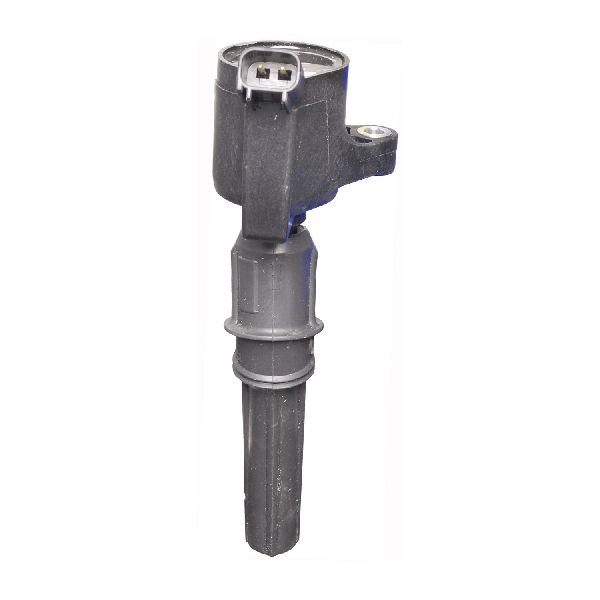
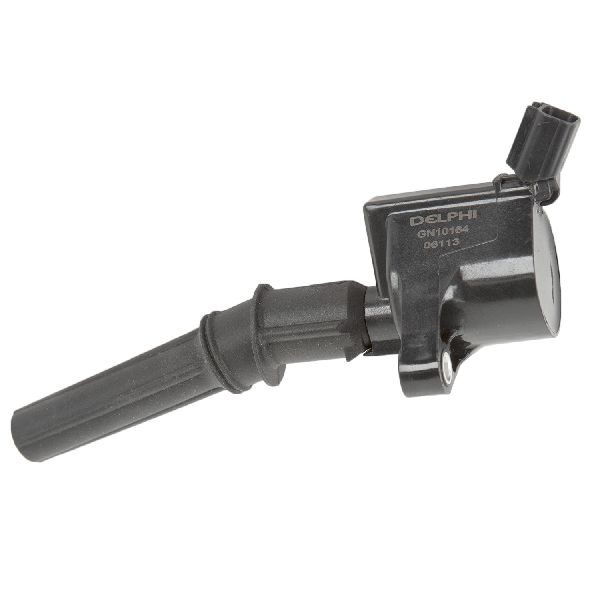
- Worn or Faulty Ignition Coils (COPs) 🔴 High Probability → Shop Ignition Coil The Coil-On-Plug (COP) ignition system is a known weak point on the 5.4L Triton engine, with coils frequently failing after 70,000-100,000 miles due to heat and vibration. Aftermarket coils are often cited as less reliable than OEM Motorcraft parts.
How to confirm: Use a scan tool with Mode $06 data to see misfire counts per cylinder. A tool like FORScan is highly recommended by the community for this. Swap the suspected bad coil with a coil from a non-misfiring cylinder. If the misfire code changes to the new cylinder (e.g., P0302 becomes P0304), the coil is bad. Inspect the coil boots for carbon tracking or moisture.
Typical fix: Replace the faulty ignition coil. It is often recommended to replace all 8 coils and spark plugs at the same time for preventative maintenance, using only Motorcraft parts for best results.
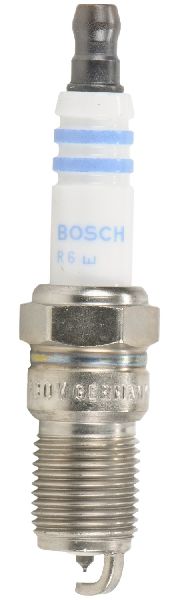
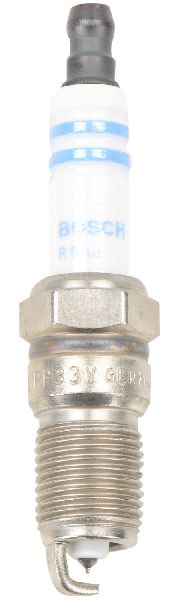
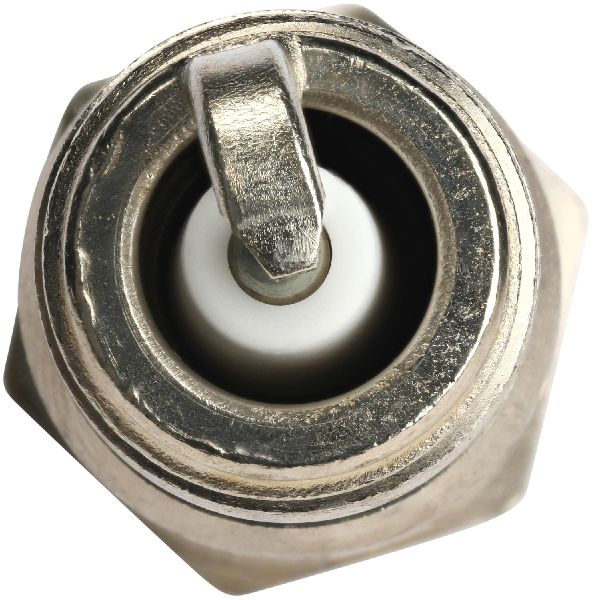
Est. part cost: $25-$60 per coil (Motorcraft DG511) - Worn or Fouled Spark Plugs 🔴 High Probability → Shop Spark Plug The 2004-mid-2008 models use a two-piece spark plug design (Motorcraft SP-515, superseded from SP-507, now SP-546) that is notorious for carbon buildup on the electrode shield, causing it to seize in the head and break upon removal. This often leads to extended plug change intervals, resulting in worn plugs that cause misfires under load.
How to confirm: Visual inspection is key. Look for worn electrodes, carbon tracking, oil fouling, or damage. A misfire under load is a classic symptom of a worn plug with too large a gap for the spark to jump under high cylinder pressures.
Typical fix: Replace all 8 spark plugs. For 2004-2008 models, this job requires special care, following Ford's TSB 08-7-6 which recommends using a solvent like carburetor cleaner and working on a cold engine. A special tool (Lisle 65600) is often necessary 🎬 Watch: How to replace these tricky spark plugs step-by-step. to extract broken plugs. Using Motorcraft plugs and a small amount of nickel anti-seize on the ground shield (not the threads) is highly recommended.
Est. part cost: $80-$150 for a set of 8 Motorcraft plugs - Failing Variable Camshaft Timing (VCT) Solenoids 🟡 Medium Probability → Shop Engine Camshaft The VCT solenoids control oil flow to the cam phasers. They can become clogged with oil sludge from extended oil change intervals or fail electronically, causing erratic cam timing, rough idle, and misfires, particularly at low RPM or when the engine is warm.
How to confirm: Monitor VCT-related PIDs with a scan tool like FORScan. A common test is to unplug both solenoids with the engine running; if the rough idle and misfiring immediately improve, the solenoids are likely faulty. This may also be accompanied by codes like P0011, P0012, P0021, or P0022.
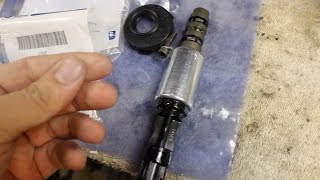
Typical fix: Replace both VCT solenoids. This is a relatively easy job located on the front of each valve cover. Use only OEM Motorcraft solenoids (Part # 8L3Z-6M280-B or a later revision) for best results, as aftermarket versions are known to fail quickly. 🎬 See this walkthrough on replacing your VCT solenoids.
Est. part cost: $80-$150 for a pair - Corroded Fuel Pump Driver Module (FPDM) 🟡 Medium Probability → Shop Fuel Pump The FPDM (OEM part # 4L3Z-9D370-A) is mounted directly to a steel crossmember above the spare tire. Galvanic corrosion occurs between the aluminum module housing and the steel frame, causing the module's circuit board to crack and fail. This leads to intermittent or total loss of fuel pressure, causing stalling and random misfires.
How to confirm: Lower the spare tire and visually inspect the module. If the aluminum casing is cracked, flaking, or heavily corroded, it has likely failed. You can also monitor fuel rail pressure with a scan tool; erratic readings or pressure dropping to zero are strong indicators. The truck may not start at all if it has completely failed.
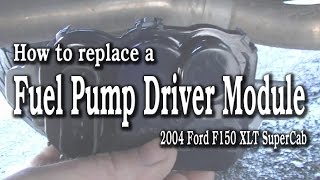
Typical fix: Replace the FPDM. Aftermarket kits (like Dorman 590-001) include new hardware with rubber standoffs to mount the module with an air gap, preventing future corrosion. This is a common and highly recommended upgrade. 🎬 Watch: How to replace and relocate your fuel driver module.
Est. part cost: $60-$100 - Clogged Fuel Injectors ⚪ Low Probability → Shop Fuel Injector Over time, fuel injectors can become restricted with deposits, leading to a lean condition and misfires on one or more cylinders. This can sometimes happen after other repairs disturb sediment in the fuel rail.
How to confirm: Use a scan tool to check long-term and short-term fuel trims (LTFT/STFT). High positive fuel trims (>10%) on one or both banks indicate the PCM is adding fuel to compensate for a lean condition. An injector balance test is the definitive method.
Typical fix: Clean or replace the faulty fuel injectors. If one is clogged, others may be as well. Some owners report success with in-tank fuel system cleaners, but professional cleaning or replacement is more reliable.
Est. part cost: $40-$90 per injector - Vacuum Leak ⚪ Low Probability Intake manifold gaskets can fail, and various vacuum hoses (especially PCV elbows and the line to the brake booster) can become brittle and crack with age, allowing unmetered air into the engine. This creates a lean mixture that leads to random misfires, often at idle.
How to confirm: Perform a smoke test. This involves feeding low-pressure smoke into the intake system and watching for leaks from gaskets, hoses, or the PCV system. You can also carefully spray brake cleaner or propane around suspected areas and listen for a change in engine RPM.
Typical fix: Replace the leaking gasket or hose. The PCV valve and its associated hoses are common failure points.
Est. part cost: $20-$100
Rare But Worth Checking
- Worn Timing Components (Phasers, Guides, Tensioners): While VCT solenoids are a more common failure, the underlying timing components can also cause P0300. If you hear a loud diesel-like rattling or chain slap noise on startup or at warm idle, it could indicate worn cam phasers, broken plastic chain guides, or failed tensioners. This is a complex and expensive repair often referred to as a 'full timing job'.
- Low Oil Pressure: The VCT system is entirely dependent on oil pressure. Using the wrong viscosity oil (5W-20 is specified), letting the oil level get low, or having a failing oil pump can starve the VCT system, leading to cam timing issues and misfires.
- Clogged Catalytic Converter: → Shop Catalytic Converter A clogged catalytic converter creates excessive exhaust backpressure, which can choke the engine and cause random misfires, along with a significant loss of power. This is usually a consequence of long-term misfires dumping raw fuel, not the initial cause, and is often accompanied by a P0420 or P0430 code. A manufacturer service bulletin, TSB 19-2286, notes that misfire conditions with codes P0300 through P0306 can sometimes be caused by improperly assembled internal muffler components.
- Moisture Intrusion in Spark Plug Wells: → Shop Spark Plug Water can leak past the cowl or from a leaking windshield washer hose and pool in the spark plug wells, shorting out the ignition coil and causing a misfire. Some owners have found this to be the surprising cause of a persistent misfire after a car wash or heavy rain.
Diagnosis Steps
- Scan for all stored DTCs. Note any cylinder-specific (P0301-P0308) or system-related (VCT, fuel trim) codes. A flashing check engine light indicates a severe misfire; avoid heavy loads.
- Use a scan tool with live data, preferably Ford-specific software like FORScan, to view Mode $06 misfire counts for each cylinder. This is crucial for identifying the offending cylinders even if no specific P030x code is set.
- Inspect the Fuel Pump Driver Module (FPDM). Lower the spare tire and physically inspect the FPDM mounted on the rear crossmember for cracks, flaking, or heavy corrosion. If it's damaged, replace it.
- Test the ignition system. Start with the cylinders identified by Mode $06. Swap the ignition coil with a known good cylinder and see if the misfire follows the coil. Inspect the coil boot for damage and the spark plug well for oil or water.
- Check for vacuum leaks. With the engine running, listen for hissing sounds. Perform a smoke test for best results. Pay close attention to the PCV hoses, intake manifold gaskets, and brake booster line.
- Test the VCT system. While monitoring idle quality, unplug the electrical connectors to both VCT solenoids (on the front of the valve covers). If the idle smooths out, the solenoids are bad and need to be replaced with Motorcraft parts.
- Analyze fuel trims. Use your scan tool to monitor Short Term and Long Term Fuel Trims (STFT/LTFT). Consistently high positive numbers (e.g., +10% or more) suggest a vacuum leak or a fuel delivery problem like clogged injectors.
- If all else fails, consider more complex issues. If you hear a loud rattling noise, the timing components (phasers, guides, tensioners) may be worn. Low oil pressure can also cause VCT-related misfires.
Parts You'll Likely Need
- Ignition Coil
(OEM #DG511)— Ignition coils are a very frequent failure item on this engine, directly causing misfires.
Trusted brands: Motorcraft, Denso, NGK
OEM price range: $40-$60
Aftermarket price range: $25-$45 - Spark Plugs (2004-mid 2008)
(OEM #SP-515)— These are a required maintenance item and the original two-piece design is prone to causing issues. Worn plugs are a primary cause of misfires.
Trusted brands: Motorcraft
OEM price range: $12-$18 per plug
Aftermarket price range: $8-$15 per plug - Spark Plugs (late 2008-2010)
(OEM #SP-509)— Required maintenance item. These are the revised one-piece plugs that are much more reliable and easier to service.
Trusted brands: Motorcraft
OEM price range: $10-$15 per plug
Aftermarket price range: $7-$12 per plug - VCT Control Solenoid
(OEM #8L3Z-6M280-B)— A very common failure point in the 5.4L 3V's timing system that leads to rough idle and random misfires.
Trusted brands: Motorcraft
OEM price range: $50-$75 each
Aftermarket price range: $30-$50 each - Fuel Pump Driver Module
(OEM #5L8Z-9D370-A)— The module's location leads to guaranteed corrosion and failure, causing fuel pressure problems and misfires.
Trusted brands: Motorcraft, Dorman
OEM price range: $80-$120
Aftermarket price range: $60-$100
Related Codes That Often Appear With This One
- P0301-P0308 — These are cylinder-specific misfire codes that often accompany P0300, helping to pinpoint which cylinders are most problematic.
- P0316 — Indicates a misfire was detected within the first 1,000 engine revolutions. This often points towards issues that are present on a cold start, such as leaking injectors or carbon buildup.
- P0011, P0012, P0021, P0022 — These codes relate to camshaft position timing. Their presence alongside a P0300 strongly suggests the misfire is caused by a problem in the VCT system, such as faulty solenoids, worn phasers, or low oil pressure.
- P0171, P0174 — These 'lean' codes for Bank 1 and Bank 2 indicate too much air or not enough fuel. A vacuum leak is a common cause that can trigger both these codes and a P0300.
- P0420, P0430 — These codes indicate low catalyst efficiency. They are often a result of a long-term misfire condition (like P0300) that has allowed unburnt fuel to damage the catalytic converters, rather than being the initial cause of the misfire.
Technical Service Bulletins (TSBs) & Recalls
- TSB 12-7-10: Addresses intermittent rattle noise and rough idle caused by oscillating cam timing, which can be related to VCT solenoid issues.
- TSB 19-2286: Notes that vehicles may exhibit a lack of power and/or misfire condition with or without diagnostic trouble code (DTC) P0300 through P0306 due to improperly assembled internal muffler components.
Platform-Specific Known Issues

- 2004-mid 2008 models have two-piece spark plugs that are infamous for breaking off in the cylinder head during removal, turning a simple tune-up into a major repair.
- The Fuel Pump Driver Module (FPDM) corrodes and fails due to its mounting location on the rear frame, causing stalling and no-start conditions that are often misdiagnosed as a bad fuel pump.
- The Variable Camshaft Timing (VCT) system is sensitive to oil pressure and viscosity. Failure of the VCT solenoids is common and causes a rough, unstable idle and low-RPM misfires.
Mechanic-Grade Diagnostic Values
- Ignition Coil Primary Resistance (OEM) — expected: 0.55 Ohms. Failure: A reading significantly higher or lower than the specification, or an open circuit (OL).
- Ignition Coil Secondary Resistance (OEM) — expected: 5,500 Ohms (5.5 kOhms). Failure: A reading significantly outside this range indicates a faulty secondary winding.
- Fuel Injector Resistance — expected: 10 to 18 Ohms. Failure: Readings outside this range suggest an internal electrical fault in the injector.
- VCT Solenoid Resistance — expected: 5 to 15 Ohms. Failure: An open circuit (OL) or a reading outside this range indicates a failed solenoid coil.
- Fuel Pressure (Key On, Engine Off) — expected: 35 to 65 PSI (for Electronic Returnless Fuel System). Failure: Pressure below 35 PSI may indicate a weak fuel pump or faulty FPDM.
- Fuel Pressure (Key On, Engine Running) — expected: 27 to 42 PSI. Failure: Pressure dropping below this range at idle can cause lean conditions and misfires.
- Engine Oil Pressure (Hot Idle) — expected: Minimum 15 PSI, ideally 25+ PSI. Failure: Pressure below 15 PSI will cause the VCT system to function improperly, leading to timing-related misfires.
Hidden / Shadow Codes Worth Checking
- Mode $06, Test ID $53 (TID $53): This is not a DTC, but a specific onboard monitor test for cylinder misfire counts. It allows a technician to see which cylinder is misfiring and by how much, even if the misfire rate isn't high enough to set a specific P030x code. Each cylinder (Component ID or CID) will have a count. (see via A professional scan tool or a capable consumer tool like FORScan that can access Mode $06 data. The data is presented as raw counts which can be used to identify the offending cylinder(s).)
Scan Tool Commands That Help

- Ford IDS / FORScan: Power Balance Test — This active test allows the user to shut off fuel to individual cylinders one by one while the engine is running. A healthy cylinder will cause a noticeable drop in RPM when disabled. If disabling a cylinder causes little or no change in RPM, that cylinder is the one misfiring. This is one of the fastest ways to isolate a misfire.
- FORScan: Monitor VCT PIDs (e.g., VCT_ADV_ERR, VCT_ADV2_ERR) — When a VCT system issue is suspected, monitoring the requested camshaft advance versus the actual advance can confirm if the phasers are responding correctly to commands from the PCM. A large error value points to a mechanical (phaser) or hydraulic (solenoid/oil pressure) issue.
Wiring & Ground Locations
- PCM Ground — There are multiple critical grounds. One key location is on the passenger side firewall in the engine bay. Another is near the driver's side kick panel inside the cab.. A poor PCM ground can cause erratic sensor readings and incorrect driver operations for components like ignition coils and fuel injectors, leading to random misfires that are difficult to trace.
- Fuel Injector Harness — Runs across the top of the engine to each bank of injectors.. The plastic conduit and wiring insulation can become brittle from heat and age, leading to chafing against engine components. A short in the injector harness can cause specific injector circuits to fail or operate intermittently, contributing to a P0300.
Real Owner Repair Stories
- Reddit user 'ClemsonStang' in r/Justrolledintotheshop (Ford F-150 5.4L 3V (year not specified)) — Persistent misfire on cylinder 5.
❌ Tried (didn't work) Replaced spark plugs, Replaced ignition coils, Swapped fuel injector locations, Replaced catalytic converter on the affected bank
✅ What actually fixed it A failed intake roller follower (rocker arm) was discovered on cylinder 8. The theory was that since cylinder 8's intake valve wasn't opening properly, that bank's O2 sensor saw a rich condition, causing the PCM to lean out the entire bank. This lean condition then caused cylinder 5 to misfire. Replacing the failed roller follower on cylinder 8 resolved the misfire on cylinder 5. - Ford F150 Forum user (2007 F-150 5.4L 3V with 131,000 miles) — Rough running engine, undergoing a full timing job.
❌ Tried (didn't work) The user was in the middle of a timing job when the discovery was made.
✅ What actually fixed it During disassembly for a timing job, the owner found several roller followers on cylinders 3 and 4 had fallen off the valve springs. This is caused by a collapsed or stuck lash adjuster, which removes the tension holding the follower in place. If an intake follower is ejected, the cylinder will have impaired breathing; if an exhaust follower is ejected, it will be a dead cylinder, causing a severe misfire. The fix is to replace all roller followers and lash adjusters during the timing job. - Ford Truck Enthusiasts Forum user (2001 F-150 5.4L (2V, but principle applies)) — Misfire at low RPM in overdrive under light load, with no check engine light.
❌ Tried (didn't work) Resistance testing of the ignition coils showed no faults.
✅ What actually fixed it The cause was identified as a bad Coil-On-Plug (COP) with shorted internal turns. This type of failure is not detectable with a simple multimeter resistance test but fails under load (a 'lean miss'). The only ways to find it are with a dealer 'stress test' or by swapping coils until the misfire moves.
Documented NHTSA Reports
- An owner reported in NHTSA ODI #10915022 that their vehicle would misfire continuously during acceleration at 60-70 MPH, shaking violently with a blinking check engine light and P0300 codes, despite changing all spark plugs, coil packs, and wires.
- According to NHTSA ODI #10966046, an owner experienced multiple engine misfire events and a P0300 code, which persisted even after replacing six spark plugs and occurred again while towing a 7,000 lb. trailer.
- NHTSA ODI #10561498 describes a situation where a vehicle displayed codes P0300, P0305, and P0306 while driving at 65 MPH and 2578 RPMs.
- In NHTSA ODI #10618835, an owner found codes P0300, P0304, P0305, and P0306 for cylinders misfiring while in heavy traffic.
"I Checked Everything" — The Actual Cause
- In some cases where a smoke test shows no vacuum leaks, the P0300 can be caused by a failing roller follower. A worn or seized follower on one cylinder can cause the PCM to incorrectly adjust fuel trim for the entire bank, inducing a lean misfire on a completely different cylinder.
- A failing alternator with a bad diode can introduce electrical noise (AC ripple) into the vehicle's DC system. This electrical interference can disrupt the operation of the PCM, ignition coils, and fuel injectors, causing random misfires that are impossible to trace to a single mechanical component.
OEM Part Supersession History
Motorcraft PZH14F / SP-515→Motorcraft SP-546— The original two-piece spark plug design was prone to the ground shield seizing in the cylinder head due to carbon buildup, causing it to break during removal. The SP-546 is an improved design, though still two-piece, intended to mitigate this issue.
Heads up: The SP-546 is the correct replacement for all 2004-mid-2008 5.4L 3V engines that originally used the two-piece plug. Late 2008+ engines use a one-piece SP-509 plug and are not compatible.3L3Z-6M280-EA / 8L3Z-6M280-A→Motorcraft 8L3Z-6M280-B— Revisions to the VCT solenoid were made to improve durability and resistance to clogging from oil sludge. The latest revision is considered the most reliable.
Heads up: The newest revision (8L3Z-6M280-B) is backward-compatible and is the recommended replacement for all 2004-2010 5.4L 3V engines. Using older stock or aftermarket versions is a common cause of repeat failures.
Model Year Variations Within This Range
- 2004-Mid-2008: These models use the infamous two-piece spark plug (SP-515/SP-546) that requires a special removal procedure (TSB 08-7-6) and often a specialized extraction tool to deal with breakage.
- Late 2008-2010: These later models use a revised cylinder head design and a one-piece spark plug (Motorcraft SP-509), which eliminates the breakage issue, making spark plug changes a much more straightforward and less risky procedure.
- 2009-2010: These 12th generation F-150s have a different PCM and electrical architecture compared to the 11th generation (2004-2008). While many mechanical causes for P0300 are the same, electrical diagnosis and wiring diagrams may differ.
Diagnostic Flowchart
Related OBD-II Codes
Frequently Asked Questions
I have a 2004-2008 F-150 5.4L. What is TSB 08-7-6 and how does it relate to my spark plugs?
My F-150 is stalling, throwing a P0300, and seems to have no fuel pressure. Is my fuel pump dead?
Should I use aftermarket ignition coils to fix a P0300 on my 5.4L Triton?
How can I test if the VCT solenoids are causing my rough idle and random misfire?
My check engine light is flashing with a P0300, but I don't have a specific cylinder code. How do I find the bad coil?
When replacing the spark plugs on my 5.4L 3V, should I use anti-seize to prevent them from breaking next time?
Helpful Videos
Used OEM Parts in Stock
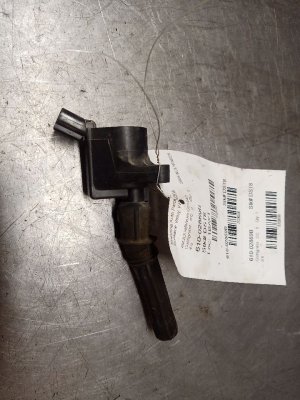
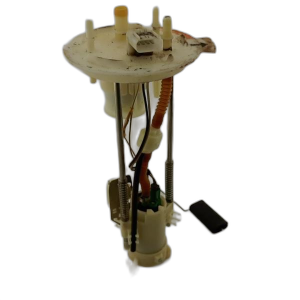
New Aftermarket Parts Available

The information in this article is provided for general reference and educational purposes only. Vehicle specifications, procedures, and part compatibility can vary by production date, trim level, and region. Always consult your vehicle's factory service manual and verify part numbers before purchasing or performing repairs. Safety-critical components such as airbags, seat belts, and braking systems should be installed by a qualified professional.
- Ford F-150:
- 🧭 Diagnostic Flowchart
- 🎬 Helpful Videos
- 🛍️ Shop This Part
- What's Unique About the 2004-2010 Ford F-150
- Symptoms You May Notice
- Most Likely Causes
- Rare But Worth Checking
- Diagnosis Steps
- Parts You'll Likely Need
- Related Codes That Often Appear With This One
- Technical Service Bulletins (TSBs) & Recalls
- Platform-Specific Known Issues
- Mechanic-Grade Diagnostic Values
- Hidden / Shadow Codes Worth Checking
- Scan Tool Commands That Help
- Wiring & Ground Locations
- Real Owner Repair Stories
- Documented NHTSA Reports
- "I Checked Everything" — The Actual Cause
- OEM Part Supersession History
- Model Year Variations Within This Range
- Related OBD-II Codes
- Frequently Asked Questions
- 🎟️ Get 5% Off