

P0300 on 2011-2018 Ford F-150: Random Misfire Causes and Fixes
P0300 on a 2011-2018 F-150 indicates random cylinder misfires. The most common causes are worn spark plugs and faulty ignition coils, especially on the 3.5L EcoBoost engine. A smaller spark plug gap (around 0.028") is often recommended for the EcoBoost. Expect to pay $150-$450 for a DIY or shop repair for these common items.
- P0300 signifies a random misfire that the engine computer cannot assign to a single cylinder.
- For the 2011-2018 F-150, always start your diagnosis with the spark plugs and ignition coils, as they are the most common culprits.
- Be aware of engine-specific issues: 3.5L EcoBoost engines are prone to carbon buildup and intercooler issues, while early 5.0L V8s can have valve wear problems.
- A flashing check engine light is a serious warning that catalytic converter damage is imminent. Reduce engine load and get the vehicle serviced immediately.
- Before replacing expensive parts, always check if there is a Technical Service Bulletin (TSB) for your vehicle, as a software update could be the solution.
What's Unique About the 2011-2018 Ford F-150

This F-150 range spans two generations and multiple engines, each with unique tendencies for a P0300 code. The first-generation 3.5L EcoBoost (2011-2016) is particularly known for issues that cause misfires, such as spark plug wear, carbon buildup on intake valves, and intercooler condensation problems. The 5.0L V8 engine in early models (2011-2014) can suffer from premature intake valve wear, leading to compression loss and misfires. Several Technical Service Bulletins (TSBs) also exist, indicating that in some cases, the fix can be a simple PCM software update for issues ranging from phantom codes to fuel injector problems.
Diagnostic Flowchart

Tap your situation to follow the diagnostic path that matches what you're seeing on this vehicle.
Generation note: This range covers the 12th generation (2011-2014) and the 13th generation (2015-2018). The 3.5L EcoBoost engine was updated for the 2017 model year with a second generation that added port injection, which helps reduce the carbon buildup issues seen in the first generation. The 5.0L V8 also saw revisions over this period. Always verify parts and procedures for your specific model year and engine, as TSBs and common issues can be year-specific.
Symptoms You May Notice

- Flashing or solid check engine light
- Rough or shaky idle
- Engine hesitation or stumbling, especially under load or acceleration
- Reduced engine power and poor acceleration
- Decreased fuel economy
- Engine stutter while towing
- Feeling of a 'rev limiter' or power cut during hard acceleration
- Stumbling or hesitation in cold or humid weather
- Replacing oxygen (O2) sensors. O2 sensors will report the effects of a misfire (like a rich or lean condition), but they are rarely the root cause of the P0300 code itself.
- Replacing only one spark plug or coil when multiple are old or failing, leading to the problem returning on a different cylinder.
- Assuming a vacuum leak is the cause without performing a smoke test, leading to replacement of unnecessary parts.
Most Likely Causes

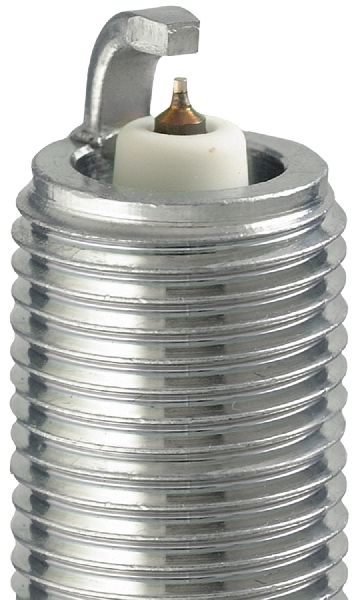
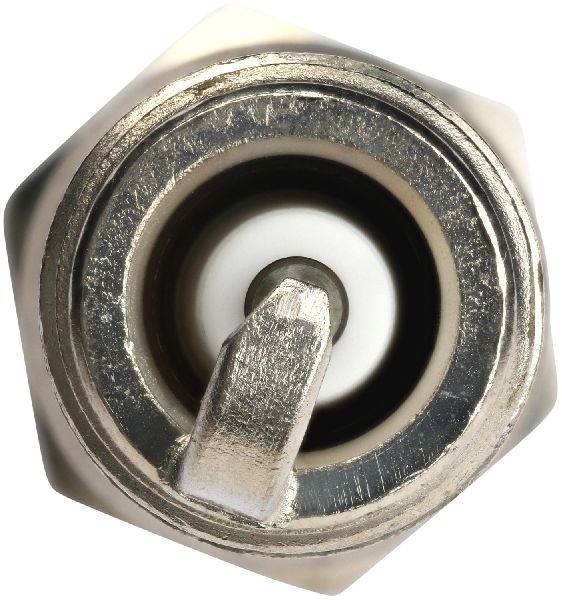
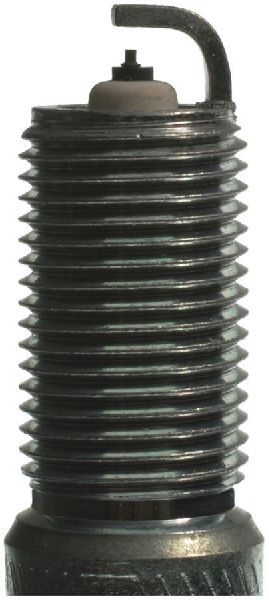
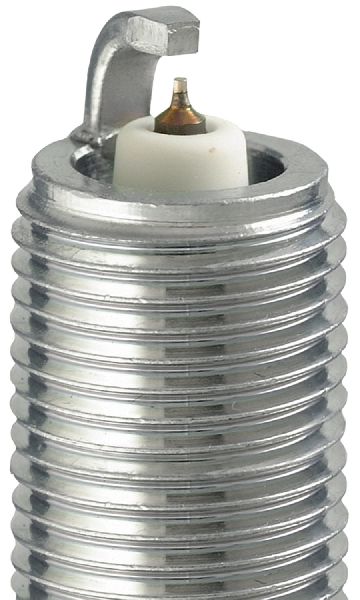
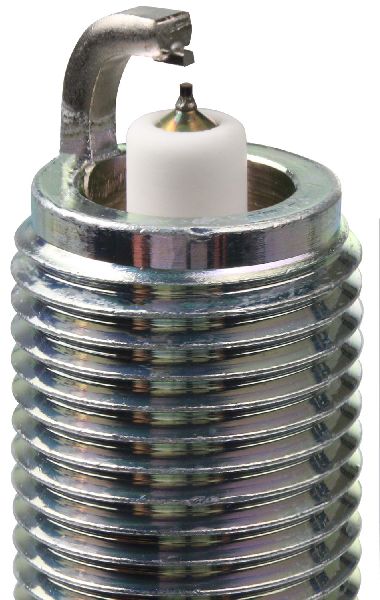
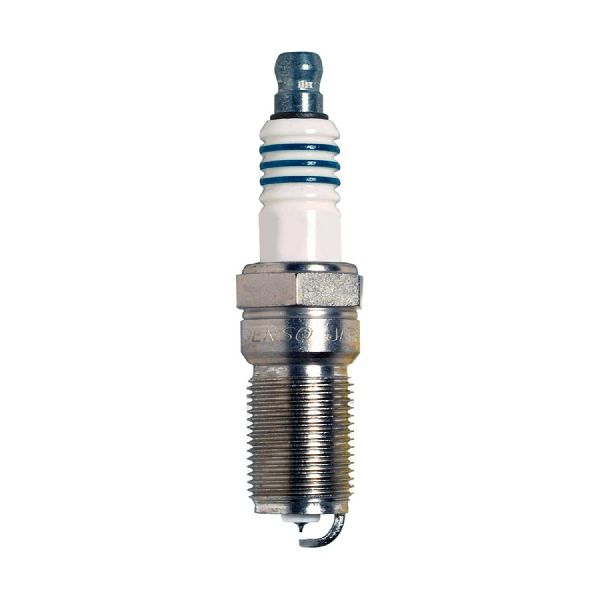
- Worn or Incorrectly Gapped Spark Plugs 🔴 High Probability → Shop Spark Plug The 3.5L EcoBoost engines are notoriously hard on spark plugs due to turbocharging and direct injection, often requiring a shorter change interval than naturally aspirated engines. Many owners and technicians recommend a smaller gap, typically 0.028-0.030 inches, to prevent 'spark blowout' under boost. Factory gaps can be inconsistent.
How to confirm: Remove and inspect the spark plugs for signs of wear (rounded electrodes), fouling (black, oily, or white deposits), or cracks in the porcelain. Use a feeler gauge to verify the gap on every plug.
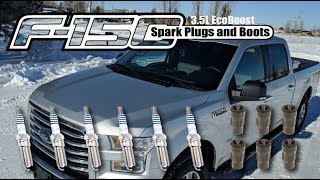
Typical fix: Replace all spark plugs as a set. Use OEM Motorcraft plugs or high-quality equivalents (NGK is a popular choice). Ensure they are gapped correctly before installation. Applying dielectric grease to the coil boot 🎬 See this walkthrough for replacing EcoBoost spark plugs and boots. is recommended.
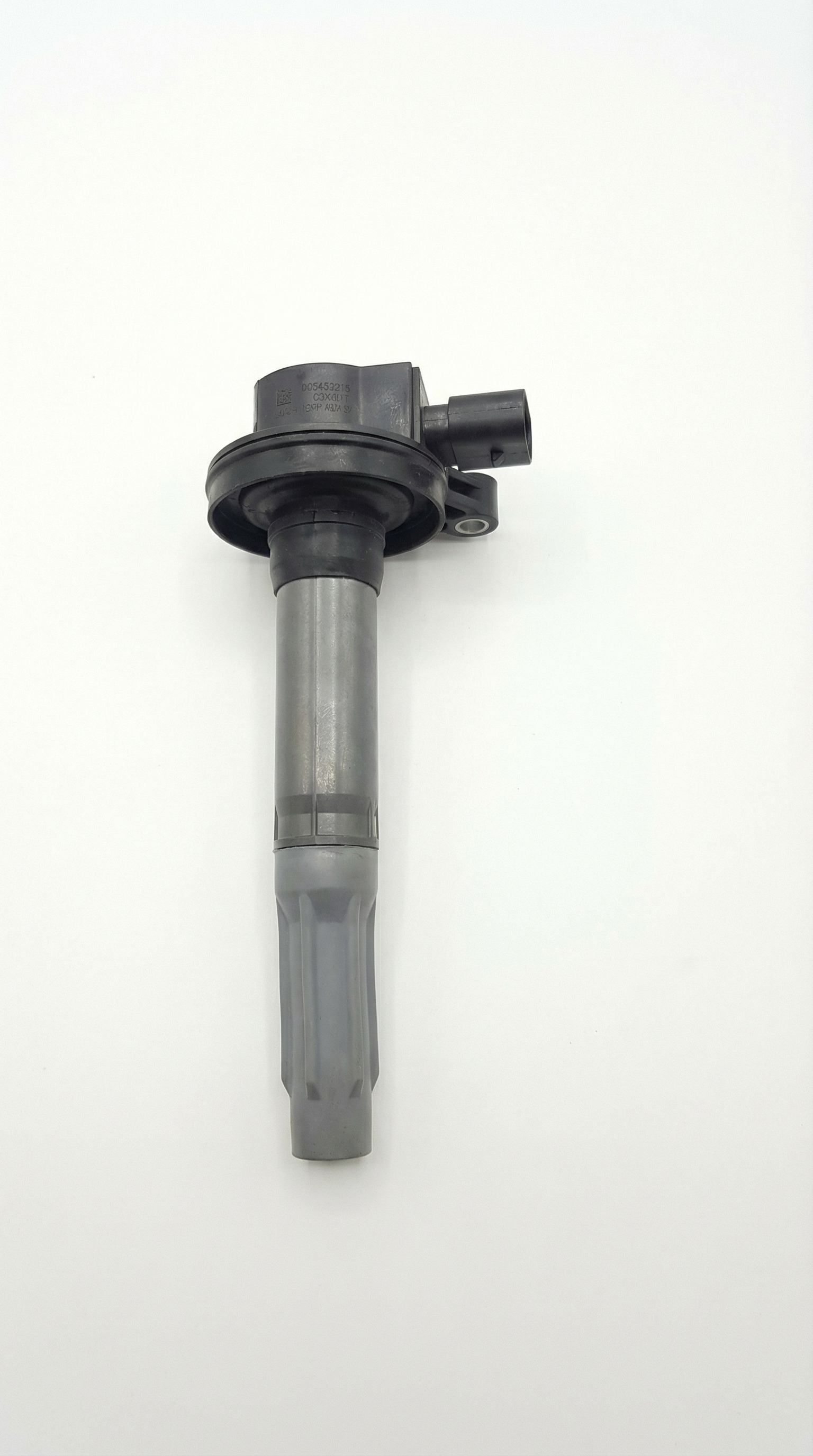
Est. part cost: $60-$120 - Faulty Ignition Coils 🔴 High Probability → Shop Ignition Coil Ignition coils are a common failure item that can cause intermittent misfires as they weaken, especially under heat and load. Many owners report coil failure after 70,000-100,000 miles. Sometimes a failing coil will only cause a misfire under specific conditions, like cold weather.
How to confirm: Use a scan tool with live data (Mode $06) to monitor misfire counts per cylinder. 🎬 Watch: How to use Mode 6 data to find hidden misfires. This can help narrow down which cylinders are misfiring even if only a P0300 is present. Swap a suspected faulty coil with a coil from a known good cylinder to see if the misfire follows the coil.
Typical fix: Replace the failing ignition coil. It is often recommended to replace them as a full set if they are original and have high mileage, as they tend to fail around the same time.
Est. part cost: $40-$80 per coil - Vacuum Leak 🟡 Medium Probability Cracked vacuum hoses, a leaking PCV valve/hose, or failing intake manifold gaskets can introduce unmetered air, leaning out the air-fuel mixture and causing random misfires. On the 5.0L, the intake manifold itself can be a source of leaks.
How to confirm: Perform a visual inspection of all vacuum lines and the air intake tube for cracks or loose connections. A professional method is to use a smoke machine to pressurize the intake system and visually identify the source of the leak.
Typical fix: Replace the cracked hose or faulty gasket. The specific part depends on the source of the leak.
Est. part cost: $20-$300
Rare But Worth Checking
- PCM Software Update Needed: Ford has issued multiple TSBs where a P0300 code can be resolved by reprogramming the PCM. TSB 18-2058 addresses phantom misfire codes on some 2018 5.0L engines with no actual drivability issues. TSB 20-2324 addresses misfires on the 2.7L EcoBoost related to faulty fuel injectors, which also involves a PCM update.
- Intake Valve Carbon Buildup: Primarily affects first-generation (2011-2016) 3.5L EcoBoost engines. Since they are direct-injection only, fuel doesn't wash over the intake valves, allowing carbon to build up and restrict airflow, causing misfires. The fix is typically walnut shell blasting of the intake ports and valves.
- Internal Engine Problems: TSB 19-2384 points to excessive oil consumption and misfires (P0300) on some 2016-2017 2.7L EcoBoost engines due to cylinder head valve guide issues, requiring head replacement. Early 5.0L engines can also suffer from valve wear leading to compression loss and misfires.
- Intercooler Condensation (2011-2014 3.5L EcoBoost): → Shop Intercooler In humid climates, early 3.5L EcoBoost models could accumulate water/oil condensation in the intercooler. During hard acceleration, this liquid can be ingested by the engine, causing a sudden, violent misfire or shudder. A common DIY fix is drilling a small 'weep hole' in the intercooler, while Ford's official fixes included installing deflectors and software updates (TSB 12-6-4).
- Clogged or Leaking Fuel Injectors: → Shop Fuel Injector A dirty or failing fuel injector can disrupt the fuel spray pattern and cause misfires. On some 2.7L EcoBoost engines, TSB 20-2324 identifies leaking direct injectors as a cause for P0300, requiring replacement.
Diagnosis Steps
- Scan the PCM for any accompanying codes. Codes like P0301-P0308 or fuel trim codes (P0171/P0174) can provide valuable clues.
- Check for any applicable Technical Service Bulletins (TSBs) for your vehicle's year and engine. A software update or specific component replacement may be the required fix.
- Inspect the ignition system. Remove and examine all spark plugs for wear, damage, or carbon fouling. Check for correct spark plug gap (critical on EcoBoost, aim for ~0.028"). Inspect ignition coil boots for carbon tracks or damage.
- Use a scan tool to view live misfire data (Mode $06). This can help identify which cylinder(s) are misfiring most, even without a specific P030x code.
- Test for vacuum leaks. Use a smoke machine to check for leaks from the intake manifold gaskets, PCV system, and all vacuum hoses. Visually inspect the air intake tube between the filter and throttle body for cracks.
- Check fuel pressure to ensure the fuel pump is delivering adequate pressure. For direct injection engines, a scan tool is needed to monitor high-side fuel pressure.
- If a specific cylinder is identified as the main offender, perform a compression test to check for mechanical engine issues like worn valves or piston rings.
Parts You'll Likely Need
- Spark Plugs
(OEM #SP-580 (Motorcraft for 3.5L EcoBoost, 2017+), SP-542 (Motorcraft for 3.5L EcoBoost, 2011-2016), SP-534 (Motorcraft for 5.0L))— Worn spark plugs are the most frequent cause of misfires on the F-150, especially the EcoBoost models.
Trusted brands: Motorcraft, NGK
OEM price range: $8-$15 per plug
Aftermarket price range: $6-$12 per plug - Ignition Coil
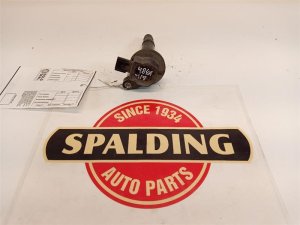
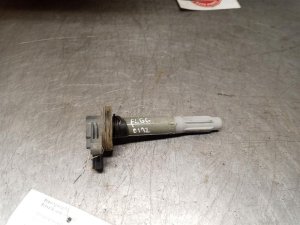
(OEM #BL3Z-12029-C (aka DG-549) for 3.5L EcoBoost (2011-2016))— Ignition coils are a primary cause of ignition misfires. When one fails, others of the same age are often close behind.
Trusted brands: Motorcraft, Delphi, Denso, MSD
OEM price range: $60-$80 per coil
Aftermarket price range: $30-$60 per coil
Related Codes That Often Appear With This One
- P0301-P0308 — These are specific cylinder misfire codes. P0300 often appears with one or more of these codes as the PCM tries to identify the source of the misfire.
- P0316 — Indicates a misfire was detected within the first 1,000 engine revolutions on startup. This is commonly seen with other misfire codes and is mentioned in several TSBs.
- P0171, P0174 — These codes indicate the engine is running too lean on Bank 1 and Bank 2, respectively. A vacuum leak is a common cause for both lean conditions and random misfires.
- P0172, P0175 — These codes indicate the engine is running too rich. This can be caused by leaking fuel injectors or other issues that also lead to misfires. TSB 20-2324 lists these codes in conjunction with P0300 for injector issues.
Technical Service Bulletins (TSBs) & Recalls
- TSB 20-2324: Addresses various DTCs including P0300 on 2018 models, potentially fixed by a PCM software update.
- TSB 17-0007: Links P0300 with excessive oil consumption and rough idle on some 2016 3.5L EcoBoost engines.
- TSB 18-2058: Notes that P0300 and other codes may appear on 2018 models without drivability issues, pointing towards a software fix.
Platform-Specific Known Issues
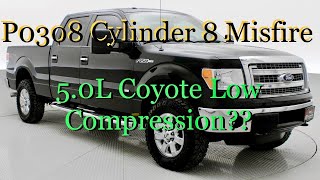
- 2011-2014 5.0L Intake Valve Wear: Early 5.0L Coyote engines in the F-150 (approx. 2011-2013) were known to have issues with intake valves that could wear prematurely, leading to a loss of compression in one or more cylinders. This would often manifest as a persistent misfire on a specific cylinder that doesn't resolve after changing the plug or coil, eventually escalating to a P0300 if the problem worsens or affects multiple cylinders. A compression or cylinder leak-down test is required for diagnosis.
- 2019 3.5L High-Output Muffler Restriction (TSB 19-2286): On some 2019 F-150 Limited models with the High Output 3.5L EcoBoost, an improperly assembled muffler could create an exhaust restriction. This backpressure can cause a range of misfire codes, including P0300, especially under load. The fix involves a dealer inspection and replacement of the muffler assembly.
Mechanic-Grade Diagnostic Values
- 3.5L EcoBoost High-Side Fuel Pressure — expected: 500 PSI (cranking), 1,500 - 2,175 PSI (under load/WOT). Failure: Actual pressure lagging requested pressure by more than 200 PSI on a scan tool.
- 3.5L EcoBoost / 5.0L V8 Low-Side Fuel Pressure — expected: 40 - 60 PSI at idle. Failure: Pressure below 35 PSI may indicate a weak in-tank pump or clogged filter.
- 5.0L V8 (2011-2017 Port Injection) Fuel Pressure — expected: ~55 PSI (returnless system). Failure: Pressure below 45 PSI could indicate a failing fuel pump.
- Ignition Coil Primary Resistance — expected: 0.3 - 1.0 Ohms. Failure: A reading outside this range indicates a faulty coil winding.
- Ignition Coil Secondary Resistance — expected: 5,400 - 11,500 Ohms (5.4 - 11.5 kOhms). Failure: An open lead (O.L.) or a reading far outside the range indicates a failed coil.
- VCT Solenoid Resistance — expected: 5 - 15 Ohms across the two pins. Failure: A reading outside this range suggests a faulty solenoid.
Hidden / Shadow Codes Worth Checking
- Mode $06 Misfire Data: Provides raw misfire counts for each individual cylinder over the last 10 drive cycles. This allows a technician to identify a consistently misfiring cylinder even when the count is not high enough to trigger a specific P030x code. (see via Requires a scan tool with Mode $06 capabilities, such as FORScan software or a professional-grade scanner. The parameter is often listed as 'Misfire counts for cylinder X' or similar.)
- P2BF0, P2BF1, P2BF2, P2BF3: These are manufacturer-specific codes that are often related to fuel system and air/fuel ratio calculations. TSB 20-2324 and TSB 20-2257 list them in conjunction with other codes (like P0172/P0175 Rich Condition) that can be caused by leaking direct fuel injectors or require a PCM software update to resolve. (see via A Ford-specific scanner like IDS or a high-end aftermarket tool is typically required to view these codes.)
Scan Tool Commands That Help
- Ford IDS, FORScan: Power Balance Test — This bidirectional test allows the user to manually disable one cylinder at a time while monitoring engine RPM. A cylinder that is firing correctly will cause a noticeable RPM drop when disabled. If disabling a cylinder causes little or no change in RPM, that cylinder is not contributing (misfiring). This is extremely useful for confirming a misfire on a specific cylinder when only a P0300 is present.
- FORScan: Live Data PID: NUM_MISFIRE — Monitor this Parameter ID (PID) to see a cumulative count of all misfires detected by the PCM. If this number is actively increasing during a test drive, it confirms an active misfire condition, which can then be narrowed down by cylinder using Mode $06 data.
Wiring & Ground Locations
- Main Engine Bay Grounds — On 2015+ models, the main battery ground is on the chassis just in front of the washer fluid reservoir. On all years, look for body-to-frame ground straps, often under the passenger side front door area. Poor grounds can cause countless phantom electrical issues, including sensor data corruption leading to misfires.. A poor ground connection for the PCM or ignition system can cause erratic sensor readings and weak spark, leading to random misfires.
- PCM Location (2011-2014) — Located on the passenger side of the engine bay, mounted directly to the firewall. It has three large multi-pin connectors.. Knowing the PCM location is critical for checking for water intrusion or testing wiring continuity for sensors like the Crankshaft Position Sensor.
- Main Harness Chafe Point — Inspect the main wiring harness where it runs along the frame rail in the driver's side wheel well. On some trucks, the harness was routed too tightly from the factory and can rub through against the frame, causing wires to short out.. A short in a critical sensor wire (like crank or cam position) or an injector wire can absolutely cause intermittent and random misfires that are difficult to trace.
- Air Intake Tube PCV Nipple — On the main air intake tube (Part FL3Z-9B659-B), there is a small plastic nipple for the PCV system's clean air supply.. This nipple is notoriously fragile and can break during routine maintenance (like an air filter change), creating a significant unmetered vacuum leak that will cause lean conditions and a P0300 code.
Real Owner Repair Stories
- f150forum.com user report (2018 Ford F-150 5.0L) — Flashing check engine light with P0300 only during hard acceleration. No noticeable power loss.
❌ Tried (didn't work) Replacing all spark plugs with Motorcraft parts, Replacing all ignition coils, Replacing bank 2 catalytic converter and O2 sensors
✅ What actually fixed it The final fix was replacing all 16 fuel injectors (8 port injectors and 8 direct injectors). The user noted this was an involved, time-consuming repair. - YouTube user report (2015 Ford F-150 5.0L with 117,000 miles) — Random cylinder misfire (P0300) that was most noticeable when the engine was cold and under acceleration.
❌ Tried (didn't work) The owner knew the spark plugs were recently replaced (12,000 miles ago) and the injectors were functioning well.
✅ What actually fixed it Replacing all 8 ignition coils with a new set from Hitachi completely resolved the misfire. The owner also proactively replaced the air inlet tube (FL3Z-9B659-B) because the PCV nipple on the original was previously broken and glued. - DSMtuners.com user report (Non-Ford, but highly relevant diagnostic principle) — Persistent P0300 random misfire for years, worse when cold, started after a timing belt and crank sensor replacement.
❌ Tried (didn't work) Replacing spark plugs (multiple times), Replacing spark plug wires, Fixing boost/vacuum leaks, Replacing O2 sensor, Replacing coil packs
✅ What actually fixed it The problem was finally solved by replacing a cheap, aftermarket Crankshaft Position Sensor with a high-quality OEM part.
"I Checked Everything" — The Actual Cause
- In cases where a smoke test reveals no vacuum leaks, the cause of a P0300 is often fuel or spark related. On a 2018 5.0L, after passing basic checks, the root cause was found to be failing direct and port fuel injectors, which required replacing all 16.
- For intermittent misfires, especially when cold or under load, aging ignition coils can be the culprit even if they test okay when warm. A 2015 5.0L had its P0300 resolved by replacing all 8 coils, despite plugs being recent.
When the Usual Fixes Don't Work
- While spark plugs and coils are the most common cause, do not assume they are the problem. One owner of a 2018 5.0L replaced plugs, coils, and even a catalytic converter, but the P0300 misfire under acceleration persisted. The final solution was a costly replacement of all 16 fuel injectors. This highlights that on newer, dual-injection engines, fuel system problems can mimic ignition issues and should be considered if basic tune-up parts don't solve the code.
OEM Part Supersession History
BL3Z-12029-A, BL3Z-12029-B→BL3Z-12029-C— Standard part revision and improvement by the manufacturer.
Heads up: These part numbers are interchangeable, with BL3Z-12029-C being the latest revision for many 3.5L EcoBoost and 5.0L V8 applications within this year range. It is also sold under the service number DG-549.
Model Year Variations Within This Range
- 2017-2018: The 2nd generation 3.5L EcoBoost engine was introduced in 2017. It features both direct and port fuel injection. This dual-injection system helps keep intake valves clean, reducing the carbon buildup misfires common on 2011-2016 models, but adds complexity to the fuel system.
- 2018: The 5.0L V8 engine was updated for 2018 to include a dual fuel injection system (direct and port injection), similar to the Gen 2 EcoBoost. This means 2018 5.0L engines have 16 fuel injectors (8 direct, 8 port). A P0300 on this engine could be related to either set of injectors, making diagnosis more complex than on the port-injection-only 2011-2017 5.0L engines.
- 2011-2014: The PCM for the 12th generation F-150 is located on the passenger-side firewall. This differs from the 13th generation (2015+) where component locations in the engine bay were revised.
Helpful Videos


Used OEM Parts in Stock
New Aftermarket Parts Available

The information in this article is provided for general reference and educational purposes only. Vehicle specifications, procedures, and part compatibility can vary by production date, trim level, and region. Always consult your vehicle's factory service manual and verify part numbers before purchasing or performing repairs. Safety-critical components such as airbags, seat belts, and braking systems should be installed by a qualified professional.
- Ford F-150:
- 🧭 Diagnostic Flowchart
- 🎬 Helpful Videos
- 🛍️ Shop This Part
- What's Unique About the 2011-2018 Ford F-150
- Symptoms You May Notice
- Most Likely Causes
- Rare But Worth Checking
- Diagnosis Steps
- Parts You'll Likely Need
- Related Codes That Often Appear With This One
- Technical Service Bulletins (TSBs) & Recalls
- Platform-Specific Known Issues
- Mechanic-Grade Diagnostic Values
- Hidden / Shadow Codes Worth Checking
- Scan Tool Commands That Help
- Wiring & Ground Locations
- Real Owner Repair Stories
- "I Checked Everything" — The Actual Cause
- When the Usual Fixes Don't Work
- OEM Part Supersession History
- Model Year Variations Within This Range
- 🎟️ Get 5% Off