

P0300 on 2021-2024 Ford F-150 PowerBoost: Random Misfire Causes & Fixes
On a 2021-2024 F-150 PowerBoost, code P0300 is often caused by a powertrain software issue that requires a dealer update per Ford TSBs. If software is not the cause, the most likely culprits are worn spark plugs or faulty ignition coils. A flashing check engine light indicates a severe misfire requiring an immediate stop to prevent catalytic converter damage.
- Before buying any parts, check if your truck is covered by TSB 22-2151 or 24-2191 for a software-related misfire issue. A call to a Ford dealer with your VIN is the first step.
- If the check engine light is flashing, stop driving as soon as it is safe to do so to prevent expensive damage to your catalytic converters.
- If software is not the issue, the most likely causes are worn spark plugs and/or failing ignition coils.
- Always use high-quality Motorcraft parts for ignition components on this engine to ensure compatibility and longevity.
- When replacing spark plugs, it is best practice to replace all six at once to maintain balanced engine performance.
What's Unique About the 2021-2024 Ford F-150
For the 14th generation F-150 with the 3.5L PowerBoost Hybrid V6, a P0300 code has a uniquely high probability of being caused by a software glitch. Ford has issued multiple Technical Service Bulletins (TSBs) for these trucks, indicating that the PCM's parameters for detecting misfires can be too sensitive, leading to false codes. This is a crucial first check before replacing any physical parts, as a simple dealer reflash of the PCM may be the only required fix.
Symptoms You May Notice
- Flashing or solid check engine light
- Rough or shaking idle
- Engine hesitation or stumbling during acceleration
- A strong, 'up and down...bounce kind of feeling' during the misfire event
- Noticeable loss of power
- Reduced fuel economy
- Engine feels like it's running on a rev limiter under load
- Replacing ignition coils or spark plugs when the root cause is a PCM software issue that requires a dealer update per TSB 22-2151, TSB 21-2085, or 24-2191.
Most Likely Causes
- Powertrain Control Module (PCM) Software Issue 🔴 High Probability → Shop Engine Control Module (ECM) Ford has issued multiple TSBs (e.g., 22-2151, 24-2191, 21-2085) for 2021 and 2024 PowerBoost models where overly sensitive software parameters can incorrectly trigger misfire codes. TSB 22-2151 applies to vehicles built on or before April 23, 2021. TSB 24-2191 applies to 2024 models built on or before May 14, 2024. Additionally, TSB 26-2011 notes that 2024 models may exhibit an illuminated MIL with DTCs P0300, P0316, and/or P0301 through P0308 due to PCM software.
How to confirm: Check your vehicle's VIN and build date against known TSBs. A Ford dealer or a shop with a Ford-specific scan tool (like FDRS) can verify if the required software update (PCM recalibration) has been performed.
Typical fix: Reprogramming (reflashing) the PCM with the latest software at a Ford dealership. This is often covered under the 5-year/60,000-mile powertrain warranty.
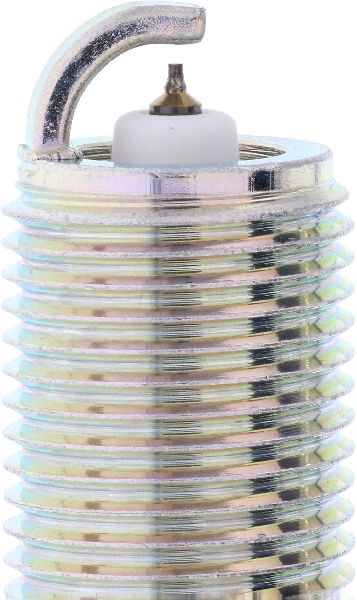
Est. part cost: $0 - Worn or Fouled Spark Plugs 🟡 Medium Probability → Shop Spark Plug Direct-injection, turbocharged engines like the EcoBoost are hard on spark plugs. The electrode can wear down, or the porcelain insulator can develop hairline cracks, leading to a weak or inconsistent spark, especially under boost.
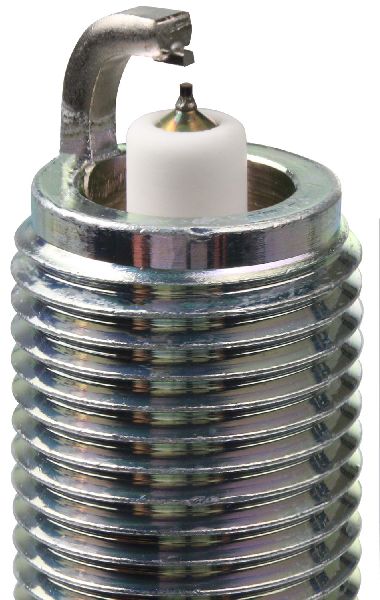
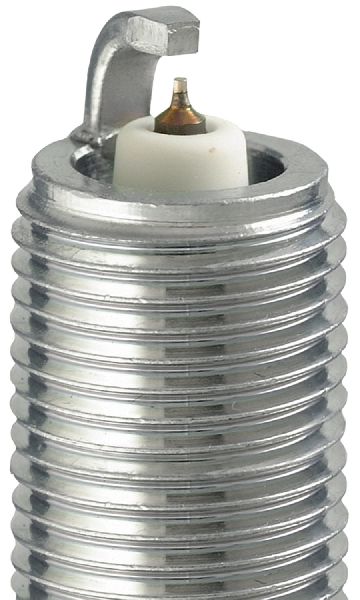
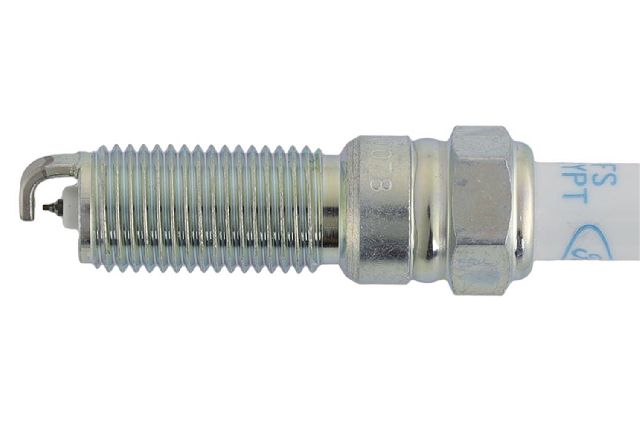
How to confirm: Remove and inspect all six spark plugs. Look for worn electrodes, carbon tracking (a thin black line on the porcelain), oil fouling, or cracks. Ensure the gap is correct; even new plugs should be checked before installation. The correct plug for this engine is indexed, meaning it must be torqued properly to orient the electrode correctly in the cylinder.
Typical fix: Replace all six spark plugs. It is critical to use the correct Motorcraft plugs (SP-596) 🎬 See this walkthrough on changing your spark plugs at home. and ensure they are gapped and torqued to factory specifications.
Est. part cost: $60-$150 - Faulty Ignition Coil(s) 🟡 Medium Probability → Shop Ignition Coil Coil-on-plug systems are common failure points due to constant exposure to high heat and vibration. While a single failed coil usually triggers a specific cylinder code (e.g., P0301), multiple failing coils or an intermittent failure can result in a P0300. Some owners on forums report issues with humidity affecting coil packs.
How to confirm: If you have a scan tool that shows Mode $06 data, you can identify which cylinders have the highest misfire counts. Swap the ignition coil from a frequently misfiring cylinder with one from a known good cylinder. If the misfire code follows the coil to the new cylinder (e.g., P0302 becomes P0304 after swapping coils from cylinders 2 and 4), the coil is bad.
Typical fix: Replace the faulty ignition coil(s). It is best practice to replace the corresponding spark plug at the same time. Many owners choose to replace all coils at once 🎬 Watch: Step-by-step guide for installing new ignition coils. for peace of mind.
Est. part cost: $40-$80 per coil - Vacuum Leak ⚪ Low Probability A leak in a vacuum hose, PCV system, or intake manifold gasket can introduce unmetered air into the engine, leaning out the air/fuel mixture and causing random misfires, often accompanied by P0171/P0174 codes.
How to confirm: A visual inspection may reveal cracked or disconnected hoses. The most effective method is to use a smoke machine to inject smoke into the intake system (with the engine off) and watch for where it escapes.
Typical fix: Replace the leaking hose or gasket.
Est. part cost: $10-$200
Rare But Worth Checking
- Clogged Fuel Injectors: → Shop Fuel Injector If the misfire occurs randomly across all cylinders, dirty or failing fuel injectors could be disrupting the fuel spray pattern. Using a fuel additive with Polyetheramine (PEA) is a good first step before more costly diagnostics.
- Low Fuel Pressure: A weak high-pressure or low-pressure fuel pump can fail to supply enough fuel to the engine, especially under load, leading to lean conditions and misfires across all cylinders.
- Intake Valve Carbon Buildup: As a direct-injection engine, the 3.5L PowerBoost does not spray fuel on the back of the intake valves. Over time, oil vapor from the PCV system can bake onto the valves, restricting airflow and causing turbulence that leads to misfires, particularly at idle or low RPM.
- Cracked Exhaust Heat Exchanger: A known issue on PowerBoost models is a cracked exhaust heat exchanger, which can leak coolant into the exhaust. While this typically causes coolant loss and overheating, it could potentially affect exhaust backpressure and sensor readings, contributing to misfire detection.
Diagnosis Steps
- Check for Technical Service Bulletins (TSBs). This is the most critical first step. Contact a Ford dealer with your VIN to see if TSB 22-2151 (for 2021 models built on/before 04/23/2021), TSB 21-2085 (for 2021 models built on/before 03/01/2021), or TSB 24-2191 (for 2024 models built on/before 05/14/2024) applies to your truck.
- Scan for additional codes. A P0300 is often accompanied by specific cylinder misfire codes (P0301-P0306) which can help narrow the search.
- Analyze freeze frame data. This shows the engine conditions (RPM, load, temperature) when the misfire occurred, which can provide clues (e.g., only happens under heavy load, or only when cold).
- Inspect spark plugs. Remove and check all six plugs for wear, damage, and proper gap. Replace if they are worn or if their replacement history is unknown. Use Motorcraft SP-596.
- Test ignition coils. Use a scan tool's Mode $06 to find misfire counts per cylinder. Swap the coil from a cylinder that is frequently misfiring with a coil from a non-misfiring cylinder. If the misfire follows the coil, the coil is bad.
- Check for vacuum leaks. Perform a visual inspection of all vacuum hoses. For a definitive test, use a smoke machine to check the integrity of the entire intake system.
- Test fuel system. If ignition and air issues are ruled out, check fuel pressure and consider a professional fuel injector cleaning or testing.
Parts You'll Likely Need
- Ignition Coil
(OEM #BL3Z-12029-C)— Ignition coils are a common failure item that directly causes misfires. A failing coil provides insufficient spark to ignite the air/fuel mixture.
Trusted brands: Motorcraft, NGK, Denso
OEM price range: $50-$70
Aftermarket price range: $30-$50 - Spark Plug
(OEM #Motorcraft SP-596)— Worn spark plugs are a primary cause of misfires, especially on turbocharged engines. A worn electrode or cracked insulator increases the voltage required to create a spark, leading to incomplete combustion.
Trusted brands: Motorcraft, NGK
OEM price range: $15-$25
Aftermarket price range: $10-$20
Related Codes That Often Appear With This One
- P0301-P0306 — These codes indicate a misfire on a specific cylinder (e.g., P0301 for cylinder 1). They often accompany P0300 when the PCM can detect both random and specific cylinder misfires. TSB 22-2151 explicitly lists these codes alongside P0300 as part of the software issue.
- P0316 — Misfire Detected on Startup (First 1000 Revolutions). This code is also mentioned in TSB 22-2151 and indicates the misfire is present immediately after starting the engine.
- P0171/P0174 — These codes indicate the engine is running too lean on Bank 1 and Bank 2, respectively. A large vacuum leak is a common cause for both lean conditions and a P0300 random misfire.
- P2451, P0454, P050E, P1674 — These are various EVAP and engine control codes that are also listed in TSB 22-2151, indicating the software issue can cause a range of seemingly unrelated DTCs.
- P060B — This code is associated with PCM software parameters in TSB 21-2085 and may appear alongside P0300 and P0316.
Technical Service Bulletins (TSBs) & Recalls
- TSB 22-2151: For 2021 F-150 3.5L PowerBoost models built on or before 23-Apr-2021. Addresses an illuminated MIL with DTCs P0300, P0301-P0306, P0316, and others due to software parameters. The fix is a PCM reprogram.
- TSB 24-2191: For 2024 F-150 3.5L PowerBoost models built on or before 14-May-2024. Addresses an illuminated MIL with cylinder misfire DTCs P0300, P0316, P0301, etc. The fix is a PCM reprogram.
- TSB 21-2085: For 2021 F-150 models built on or before 01-Mar-2021. Addresses an illuminated MIL with DTCs P060B, P0300, and/or P0316 due to PCM software parameters.
- TSB 26-2011: For 2024 models. Addresses an illuminated MIL with DTCs P0300, P0316, and/or P0301 through P0308, which may be due to the software in the powertrain control module (PCM).
Platform-Specific Known Issues
- Multiple TSBs (22-2151, 24-2191, 21-2085) have been issued for 2021 and 2024 PowerBoost models where PCM software can falsely detect misfires, requiring a dealer reflash.
Mechanic-Grade Diagnostic Values
- High-Pressure Fuel System Pressure — expected: Can exceed 2,175 psi (15,000 kPa) under load.. Failure: A significant drop in pressure under load, viewable on a capable scan tool, can indicate a failing high-pressure fuel pump (HPFP).
- Low-Pressure Fuel System Pressure — expected: Typically 35-60 PSI at idle.. Failure: Pressure below 35 PSI at the rail test port can indicate a weak in-tank fuel pump or a clogged filter.
- Ignition Coil Secondary Resistance — expected: Approximately 8-12 kΩ for many Ford coils.. Failure: A reading significantly outside this range on a multimeter suggests the coil is faulty.
Hidden / Shadow Codes Worth Checking
- Mode $06, Test ID $82, Component ID $01-$0C: This is not a DTC, but a specific monitor within the Ford OBD-II system that tracks misfire counts per cylinder for the current and last ten driving cycles. For a V6, Component IDs $01 through $06 would correspond to cylinders 1-6. This data can reveal which cylinder(s) are misfiring most frequently, even if not enough to set a specific P030x code. (see via Requires a professional-grade scan tool or software like FORScan that can access Mode $06 data.)
Scan Tool Commands That Help
- Ford IDS / FDRS: Power Balance Test — This is a critical bidirectional function for diagnosing misfires. The tool displays a real-time graph of each cylinder's power contribution. A technician can then selectively disable individual fuel injectors to see the effect on the graph. A cylinder that shows a significant drop when disabled is a good cylinder; a cylinder that causes little to no change when disabled is the misfiring cylinder. This test quickly isolates the problem cylinder without swapping parts.
- Ford IDS / FDRS: Relative Compression Test — If ignition and fuel issues are ruled out, this test can identify a base engine mechanical problem without requiring a manual compression test. The scan tool measures the starter motor's current draw as it cranks the engine. A cylinder with low compression will require less current, showing up as a dip on the graph, indicating a potential valve or piston ring issue.
Wiring & Ground Locations
- PCM Connector C1551E (example) — The Powertrain Control Module (PCM) is typically located in the engine bay, often on the firewall or inner fender. Specific connector pinouts are required to test the control signal from the PCM to the ignition coils.. A constant ground on a coil control wire at the PCM connector could indicate a shorted driver in the PCM itself, which is a rare but possible cause of a persistent misfire. For example, on a previous generation F-150, pins 58 and 73 were coil control wires. Verifying the correct pins for the 2021+ PowerBoost is essential before testing.
- G104 / G105 (example locations) — Key engine and chassis ground points are located on the engine block, firewall, and near the battery. A common location is on the frame rail below the battery tray.. A loose or corroded main engine ground can cause a weak spark across all cylinders, leading to random misfires. The PCM and ignition coils rely on a solid ground connection for proper operation. Verifying the integrity of these grounds is a crucial step when electrical issues are suspected.
Real Owner Repair Stories
- f150gen14.com forum user (2021 F-150 PowerBoost) — P0300 and P0303 codes, rough idle, and stumbling under acceleration, especially when cold.
❌ Tried (didn't work) Dealer performed TSB 22-2151 PCM reflash., Swapped ignition coils between cylinders., Replaced all spark plugs with new Motorcraft SP-596s.
✅ What actually fixed it After the new spark plugs didn't fix the issue, the owner removed them for inspection. One of the brand new spark plugs (for cylinder 3) had a hairline crack in the porcelain insulator that was nearly invisible. Replacing just that one faulty new plug with another new one finally resolved the misfire. The theory was the original plug was likely fine and the issue was a brand-new, out-of-the-box defective part. - NHTSA ODI #11647795 — An owner reported that the truck would experience issues for a couple of miles before returning to normal. Diagnostic codes P0300, P0301, and P0305 were present, but the dealership was initially unable to resolve the condition.
OEM Part Supersession History
BL3Z-12029-A, BL3Z-12029-B→BL3Z-12029-C (also known as Motorcraft DG549)— Standard revision and update process for improved reliability and performance.
Heads up: While older revisions might physically fit, it is critical to use the latest specified part number (BL3Z-12029-C) to ensure compatibility with the PCM and correct spark energy.dyfs12ypt→Motorcraft SP-596— Part number consolidation and branding. SP-596 is the service part number.
Heads up: These are effectively the same part. SP-596 is the correct indexed plug for the 3.5L PowerBoost.
Model Year Variations Within This Range
- 2021-2023 vs 2024: The 2024 F-150 received a mid-cycle refresh with significant front-end styling changes, a new standard 12-inch digital instrument cluster, and a new Pro Access Tailgate option. While the 3.5L PowerBoost powertrain is fundamentally the same, software is different, as evidenced by the separate TSB (24-2191) for 2024 models, indicating that diagnostic approaches must account for the specific build year.
- 2024: For the 2024 model year, Ford made the 3.5L PowerBoost Hybrid a no-cost option over the standard 3.5L EcoBoost on XLT through Platinum Plus trims, increasing its adoption rate.
Diagnostic Flowchart
Other Known Issues on This Vehicle
Issues unrelated to this code that are worth knowing about as an owner of this generation:
- 10-Speed Transmission Harsh/Jerky Shifting 🟠 Medium — Widespread owner complaints. A class-action lawsuit has been filed regarding the 10R80 transmission. Some owners report improvement after a software reset of the adaptive learning tables.
- 12V Battery Drain / 'Deep Sleep Mode' 🟠 Medium — Common issue where the 12V battery drains unexpectedly, often attributed to the Battery Management System (BMS) software or modem activity. Owners report frequent 'System Off To Save Battery' messages. (Ref: TSB 24-2442)
- Leaking Exhaust Heat Exchanger 🔴 High — A significant number of PowerBoost owners have experienced coolant leaks from cracked spigots on the exhaust heat exchanger, leading to coolant loss and potential overheating. Parts were on backorder, causing long repair delays. (Ref: SSM 51485)
- Sheared Rear Axle Bolts 🔴 High — A recall was issued for certain 2021-2023 models with the Max Trailer Tow package where the rear axle hub bolt could fatigue and break, potentially allowing the vehicle to roll while in park or causing a loss of drive power. (Ref: Recall 23S27)
- BlueCruise/Driver-Assist System Faults 🟡 Low — Owners report issues with BlueCruise failing to activate, deactivating unexpectedly, or failing to update to newer versions, often requiring dealer intervention for camera calibration or software updates.
Used vs. New Parts: Buying Guide for This Vehicle
When a used part is the smart pick: For this specific P0300 repair, using used parts is generally not recommended. The primary causes are either software (requiring a dealer), or consumable wear items like spark plugs and ignition coils, which should always be replaced with new parts.
Donor-vehicle mileage cap: roughly under 80000 miles for the part to have meaningful remaining life.
What to inspect on the donor part:
- If sourcing a larger component like a wiring harness, inspect for any signs of brittleness, cracking, or previous repairs.
- Ensure no pins are bent or corroded on any electrical connectors.
OEM-only on this vehicle (don't cheap out):
- Spark Plugs (Motorcraft SP-596): These are indexed plugs. Using an incorrect plug or improper torque can result in poor performance and potential engine damage. Aftermarket equivalents may not meet the precise indexing requirement.
- PCM (Powertrain Control Module): A used PCM would need to be reprogrammed by a dealer with the correct software and VIN, often costing as much as a new unit when labor is included.
Aftermarket brands forum-validated for this vehicle:
- Ignition Coils: NGK and Denso are reputable OEM suppliers and offer high-quality alternatives to Motorcraft coils.
Brands owners have reported issues with on this vehicle:
- Unbranded, 'white box' ignition coils and spark plugs from online marketplaces. These often have a high failure rate and may cause more issues than they solve.
Real Owner Stories
Aggregated from forums and TSBs cited above. Mileages and costs reflect what owners reported in those sources.
2021 Ford F-150 3.5L PowerBoost
Symptoms: Illuminated MIL with codes P0300 and P0316; the software parameters were triggering the light despite no mechanical failure.
What fixed it: PCM reprogram (reflash) per TSB 22-2151.
Cost: $0
Source hint: TSB 22-2151
2024 Ford F-150 3.5L PowerBoost
Symptoms: Check engine light on with cylinder misfire DTCs including P0300 and P0301.
What fixed it: PCM reprogram per TSB 24-2191.
Cost: $0
Source hint: TSB 24-2191
2021 Ford F-150 3.5L PowerBoost
Symptoms: Engine hesitation and a 'bounce kind of feeling' during 🎬 Watch: An owner describes the exact feeling of this misfire. misfire events; scan tool showed high misfire counts on specific cylinders in Mode $06.
What fixed it: Swapping ignition coils to identify the failure and replacing the faulty coil and spark plug.
Source hint: f150forum.com
2022 Ford F-150
Symptoms: An owner reported that the vehicle would experience issues for a couple of miles before returning to normal, with codes P0300, P0301, and P0305 stored.
What fixed it: Repeated dealership visits were required as the initial inspections resulted in no action taken.
Source hint: NHTSA ODI #11647795
Related OBD-II Codes
Frequently Asked Questions
Does TSB 22-2151 apply to my 2021 F-150 PowerBoost?
My 2024 PowerBoost is flashing a misfire code; is there a known software fix?
What specific spark plugs should I use for the 3.5L PowerBoost V6?
Is the PCM software update for the P0300 code covered under warranty?
Can a P0300 code on my PowerBoost be related to the 12V battery issues?
Why does my truck feel like it's hitting a rev limiter when the P0300 code triggers?
Helpful Videos
We Have This Part in Stock


The information in this article is provided for general reference and educational purposes only. Vehicle specifications, procedures, and part compatibility can vary by production date, trim level, and region. Always consult your vehicle's factory service manual and verify part numbers before purchasing or performing repairs. Safety-critical components such as airbags, seat belts, and braking systems should be installed by a qualified professional.
- Ford F-150:
- 🧭 Diagnostic Flowchart
- 🎬 Helpful Videos
- 🛍️ Shop This Part
- What's Unique About the 2021-2024 Ford F-150
- Symptoms You May Notice
- Most Likely Causes
- Rare But Worth Checking
- Diagnosis Steps
- Parts You'll Likely Need
- Related Codes That Often Appear With This One
- Technical Service Bulletins (TSBs) & Recalls
- Platform-Specific Known Issues
- Mechanic-Grade Diagnostic Values
- Hidden / Shadow Codes Worth Checking
- Scan Tool Commands That Help
- Wiring & Ground Locations
- Real Owner Repair Stories
- OEM Part Supersession History
- Model Year Variations Within This Range
- Other Known Issues on This Vehicle
- Used vs. New Parts: Buying Guide for This Vehicle
- Real Owner Stories
- 2021 Ford F-150 3.5L PowerBoost
- 2024 Ford F-150 3.5L PowerBoost
- 2021 Ford F-150 3.5L PowerBoost
- 2022 Ford F-150
- Related OBD-II Codes
- Frequently Asked Questions
- 🎟️ Get 5% Off