

P0300 on 2012-2018 Ford Focus: Random Misfire Causes and Fixes
On a 2012-2018 Ford Focus, P0300 is most often caused by a faulty canister purge valve or worn spark plugs. The purge valve was subject to a major recall (18S32 / NHTSA 18V-735) that can cause stalling after refueling. Start by checking for recalls, then inspect spark plugs. A set of OEM-spec plugs costs $40-$80.
- First, check if your vehicle is affected by Ford recall 18S32 for the canister purge valve, as this is a very common cause and the repair may be free.
- The most likely DIY fix is replacing the four spark plugs with correctly gapped, high-quality replacements. This is especially true for the Focus ST model.
- Do not ignore a flashing check engine light. It signals a severe misfire that can cause expensive damage to your catalytic converter in a very short time.
- P0300 is a 'random' misfire code. If you also have a code like P0301, P0302, etc., start your diagnosis on that specific cylinder's spark plug and ignition coil.
- Avoid replacing oxygen sensors to fix this code; they are almost always reporting a symptom, not the cause.
What's Unique About the 2012-2018 Ford Focus
For this generation of Ford Focus, two major issues are strongly linked to P0300. First, a faulty canister purge valve prompted a massive recall (18S32, NHTSA 18V-735) for 1.3 million 2.0L GDI and GTDI (EcoBoost) engines. A stuck-open valve creates a vacuum leak that disrupts the air-fuel mixture, often causing stalling after refueling and throwing P0300 and P1450 codes. Second, the high-performance Focus ST model with the 2.0L EcoBoost engine is known for cold-start misfires, an issue addressed by Ford in Technical Service Bulletin (TSB 18-2093) that requires specific spark plugs and a PCM update. Manufacturer service bulletin SSM 46907 also notes that these vehicles may exhibit a perceived misfire after a cold start until the engine coolant temperature rises.
Generation note: The 2012-2018 year range covers the third generation (Mk3) of the Ford Focus in North America. This generation received a significant facelift for the 2015 model year, but the primary causes for P0300, especially the purge valve and spark plug issues, remain consistent across the pre-facelift (2012-2014) and post-facelift (2015-2018) models.
Symptoms You May Notice
- Rough or shaky idle, especially on a cold start.
- Hesitation or stumbling during acceleration.
- Flashing or solid check engine light.
- Reduced engine power and poor fuel economy.
- Engine stalling, particularly after refueling (a classic symptom of the faulty purge valve).
- Erratic or inaccurate fuel gauge readings (related to the purge valve recall deforming the fuel tank).
- Elevated RPMs staying between 1500-2200 RPM without throttle input, as reported in NHTSA ODI #11185618.
- Replacing oxygen (O2) sensors. Faulty O2 sensor readings are almost always a symptom of the misfire (due to unburned fuel and air in the exhaust), not the root cause. The PCM may even set lean codes (like P2196) as a result of the misfire or purge valve leak.
Most Likely Causes
- Faulty Canister Purge Valve (EVAP Purge Valve) 🔴 High Probability → Shop Vapor Canister A sticking purge valve was the cause of Ford recall 18S32 (NHTSA 18V-735) for over 1.2 million 2012-2018 Focus vehicles. A valve stuck open creates a significant vacuum leak, disrupting the air-fuel mixture and causing random misfires. This issue was so severe it could deform the plastic fuel tank.
How to confirm: Check if your vehicle's VIN is part of the recall. Symptoms often include stalling after refueling and codes P1450 or P2196. NHTSA ODI #11467127 describes a diagnosis where P0300 and P0316 were found alongside P1450, indicating the inability to bleed fuel tank vacuum. A simple test is to remove the valve and try to blow through it; if air passes, it's stuck open and faulty.
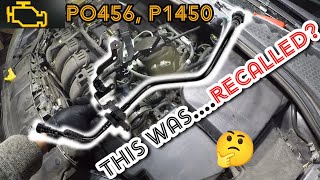
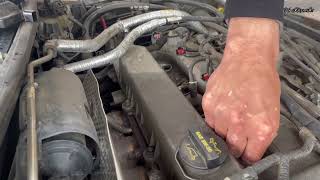
Typical fix: If covered by the recall, a dealer will reprogram the PCM and replace the valve if necessary. In some cases, the fuel tank and carbon canister were also replaced. Otherwise, replace the canister purge valve. It is a relatively simple DIY job. 🎬 Watch: How to diagnose and replace the canister purge valve.
Est. part cost: $30-$70 - Worn or Incorrectly Gapped Spark Plugs 🔴 High Probability → Shop Spark Plug Gasoline Direct Injection (GDI) engines are sensitive to spark plug condition. The Focus ST model in particular has specific spark plug and gapping requirements to prevent cold-start misfires, as detailed in TSB 18-2093. Many owners on forums report fixing P0300 simply by replacing old plugs.
How to confirm: Remove and inspect all four spark plugs for signs of wear (eroded electrode), fouling (oil, carbon), or damage. Check the gap with a feeler gauge. The gap for the standard 2.0L GDI is around 0.035 inches, while the TSB for the ST cold start issue specifies 1.0 mm (0.040 in).
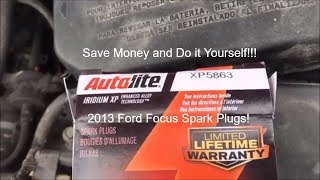
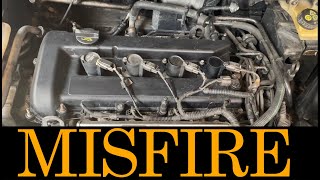
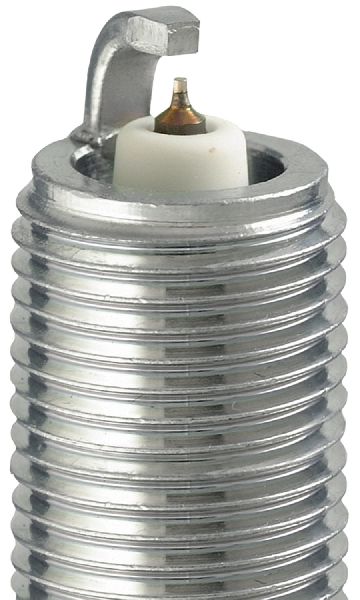
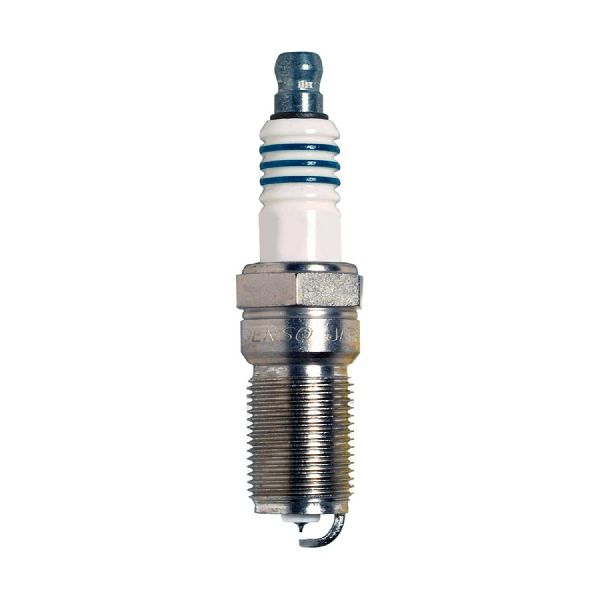
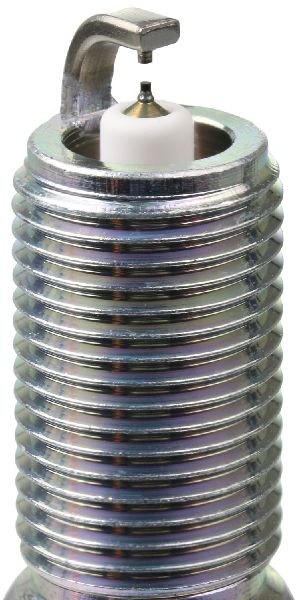
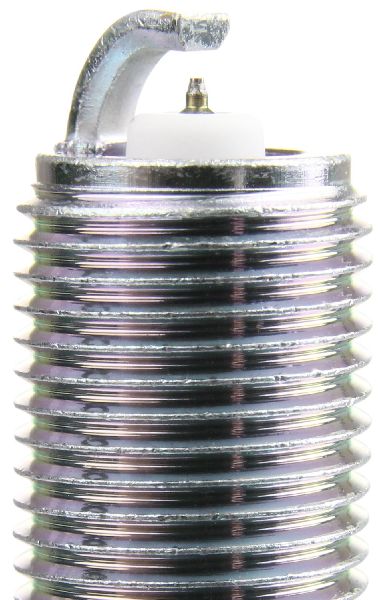
Typical fix: Replace all four spark plugs with high-quality Iridium or Platinum plugs (e.g., Motorcraft, NGK). Ensure they are gapped correctly before installation. 🎬 See this step-by-step guide for replacing 2.0L GDI spark plugs. This is a fundamental tune-up item that is often the solution.
Est. part cost: $40-$80 - Faulty Ignition Coils 🟡 Medium Probability → Shop Ignition Coil Ignition coils are a common wear item. While one failing coil would typically cause a cylinder-specific code (e.g., P0301), multiple weak or intermittently failing coils can result in a P0300. Manufacturer bulletin SSM 46539 notes that Focus ST vehicles may exhibit P0300 alongside specific cylinder codes P0301, P0302, P0303, and P0304 after a cold start.
How to confirm: If you have a scan tool that can show live misfire counts per cylinder (Mode $06 data), identify the most frequent offender. Swap that ignition coil with one from a non-misfiring cylinder. If the misfire follows the coil, the coil is bad.
Typical fix: Replace the faulty ignition coil. It is often recommended to replace all coils at once if they are original and the vehicle has high mileage to prevent future failures.
Est. part cost: $30-$70 per coil - Vacuum Leak ⚪ Low Probability Aside from the very common purge valve issue, leaks can occur at intake manifold gaskets or cracked PCV hoses, allowing unmetered air to enter the engine and lean out the air-fuel mixture, causing misfires.
How to confirm: Listen for a hissing sound from the engine bay at idle. A professional can use a smoke machine to inject smoke into the intake system and visually identify the source of the leak.
Typical fix: Replace the cracked hose or failed gasket.
Est. part cost: $10-$100
Rare But Worth Checking
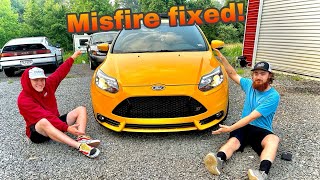
- Carbon Buildup on Intake Valves: GDI engines inject fuel directly into the cylinder, so gasoline detergents don't clean the intake valves. Over time, carbon deposits can build up and disrupt airflow, causing misfires, especially on cold starts. This is a known issue 🎬 Watch: One owner's journey to finally fixing a Focus ST misfire. on all GDI engines, including the Focus ST.
- Low Fuel Pressure: A weak high-pressure or low-pressure fuel pump or a clogged fuel filter can starve the engine for fuel, leading to lean conditions and random misfires across all cylinders.
- Low Engine Compression: Internal engine issues like a leaking head gasket or worn piston rings can cause a loss of compression. This is a much less likely cause for a P0300 than ignition or fuel system faults and would require a compression test to diagnose.
Diagnosis Steps
- Check for Recalls: First, use your VIN to check for open recalls, specifically recall 18S32 (NHTSA 18V-735) related to the canister purge valve. This is the most critical first step.
- Scan for Other Codes: Use an OBD-II scanner to check for any other codes. Look for cylinder-specific misfires (P0301-P0304), EVAP codes (P1450), or misfire on startup (P0316). Note any freeze frame data.
- Inspect Spark Plugs: Remove all four spark plugs. Look for wear, damage, or fouling. Verify the spark plug gap is correct. For the Focus ST with cold start issues, TSB 18-2093 specifies a 1.0 mm (0.040 in) gap. For the standard 2.0L GDI, the gap should be around 0.035 in.
- Test Ignition Coils: If a specific cylinder is misfiring more than others (viewable with some scan tools), swap its coil with a known good cylinder's coil. If the misfire moves, replace the bad coil.
- Test Canister Purge Valve: If not covered by recall, remove the valve and attempt to blow through it. If air passes, it is stuck open and must be replaced. This is a very common failure point.
- Check for Vacuum Leaks: Listen for hissing noises. A common and easy-to-check spot is the PCV valve and its hoses. For a definitive diagnosis, a smoke test is the best method.
- Check for Carbon Buildup: For high-mileage GDI or EcoBoost engines (especially over 80,000 miles), carbon buildup on the intake valves may be the culprit, which requires professional cleaning (e.g., walnut blasting).
Parts You'll Likely Need
- Spark Plugs
(OEM #CYFS-12-YEC (Motorcraft - for 2.0L ST))— Worn or improperly gapped plugs are a top cause of misfires on this platform. TSB 18-2093 specifically calls for this part for the Focus ST cold-start issue.
Trusted brands: Motorcraft, NGK
OEM price range: $50-$90
Aftermarket price range: $40-$80 - Canister Purge Valve — A known major failure point leading to a massive recall. A stuck-open valve creates a vacuum leak causing stalling and misfires.
Trusted brands: Motorcraft, Dorman
OEM price range: $50-$80
Aftermarket price range: $30-$60
Related Codes That Often Appear With This One
- P0301-P0304 — These codes indicate a misfire on a specific cylinder (1, 2, 3, or 4). They often appear with P0300 if the random misfire begins to occur more frequently on one cylinder, helping to pinpoint a potential bad coil or plug.
- P0316 — Indicates a misfire was detected within the first 1,000 engine revolutions after startup. This is very common on Focus ST models and is specifically mentioned in TSB 18-2093 along with P0300 as a cold-start complaint.
- P1450 — Means 'Unable to Bleed Up Fuel Tank Vacuum.' This code points directly to a problem in the EVAP system and is a hallmark indicator of the faulty canister purge valve that was subject to recall 18S32.
Technical Service Bulletins (TSBs) & Recalls
- TSB 18-2093: Addresses cold-start misfires (P0300, P0316) on 2015-2018 Focus ST vehicles when engine coolant temperature is below 49°C (120°F). The fix involves inspecting/replacing spark plugs (gapped to 1.0mm) and reprogramming the PCM.
- Recall 18S32 (NHTSA 18V-735): Addresses a faulty canister purge valve on 2012-2018 Focus 2.0L GDI and EcoBoost engines. Remedy includes a PCM reprogram and, if needed, replacement of the valve, carbon canister, and fuel tank.
- SSM 46907: Notes that some 2015-2018 Focus ST vehicles may exhibit MIL On with DTCs P0300 and/or P0316 stored in PCM memory, often presenting as a perceived misfire after a cold start.
- SSM 46539: Informs that 2015-2017 Focus ST vehicles may exhibit a perceived misfire after cold start with codes including P0300, P0301, P0302, P0303, P0304, and P0316.
Platform-Specific Known Issues
- Stalling After Refueling: A hallmark symptom of the faulty canister purge valve (Recall 18S32). When the valve sticks open, the rush of fuel vapor from the tank after removing the gas cap overwhelms the engine, causing it to stall.
- Focus ST Cold Start Misfire: A well-documented issue on the 2.0L EcoBoost (ST models), specifically addressed by TSB 18-2093. Owners report a rough, shaky idle and a P0300/P0316 code only on the first start of the day, which often smooths out as the engine warms. The fix is specific spark plugs and a PCM update.
Mechanic-Grade Diagnostic Values
- Low-Side Fuel Pressure at Idle — expected: 35-60 PSI. Failure: Pressure below 35 PSI or fluctuating wildly suggests a weak in-tank fuel pump or clogged filter.
- High-Pressure Fuel System (GDI) — expected: Up to 15 MPa (2175 PSI) under load. The sensor has a range up to 26 MPa (3770 PSI).. Failure: Pressure that does not increase with engine load or is significantly below commanded pressure can indicate a failing High-Pressure Fuel Pump (HPFP).
- EVAP Canister Purge Valve Resistance — expected: 30 - 38 ohms. Failure: A reading outside this range indicates a faulty valve solenoid winding. A very low reading (e.g., 10.5 ohms) on an aftermarket part has been noted by owners, even if the valve clicks with 12V applied.
- GDI Fuel Injector Resistance — expected: Approximately 13.0 - 13.2 ohms. Some diesel variants can be much higher, around 200 ohms, but this is not applicable to the 2.0L gas engines.. Failure: An open circuit or a reading that deviates by more than 0.5 ohms from the others can indicate a bad injector coil.
- Ignition Coil Primary Resistance — expected: 0.3 to 1.0 ohms (General Value). Failure: A reading significantly higher than the specification or an open circuit (infinite resistance) points to a bad coil. This is a general specification and should be verified with a model-specific service manual.
Hidden / Shadow Codes Worth Checking
- Mode $06, TID $80-$83, CID $0A-$0D: Mode $06 data provides raw, non-continuous misfire counts for each cylinder (1-4) over the last 10 driving cycles. This is invaluable for a P0300 code because it can reveal which cylinder is the primary offender even if it hasn't misfired enough to set a specific P030x code. (see via Requires a capable scan tool that can access Mode $06, such as FORScan. Navigate to the 'Vehicle Test' or 'Mode 6' section.)
Scan Tool Commands That Help
- FORScan / Ford IDS: Power Balance Test — This is a dynamic test that disables one cylinder at a time and measures the drop in RPM. A cylinder that shows little or no RPM drop when disabled is not contributing power correctly. This is one of the fastest ways to pinpoint a misfiring cylinder when you have a P0300.
- FORScan / Ford IDS: EVAP Canister Purge Valve Duty Cycle — Allows the technician to command the purge valve to open at various percentages (e.g., 10%, 50%, 100%) while monitoring fuel trims or engine RPM. If the engine stumbles or fuel trims change drastically when the valve is commanded open, it confirms the valve is mechanically working, but a stuck-open condition might be the root cause of the P0300.
- FORScan / Ford IDS: Misfire Monitor Neutral Profile Correction — This is a relearn procedure that should be performed after replacing a flywheel, clutch, or crankshaft position sensor. It helps the PCM relearn the subtle variations in crankshaft rotation to accurately detect misfires. If a P0315 (Crankshaft Position System Variation Not Learned) is also present, this is a necessary step.
Wiring & Ground Locations
- Main Negative Ground (G1) — On the vehicle body, connected directly from the battery's negative terminal.. A corroded or loose main body ground can cause a host of electrical issues, including weak spark and erratic sensor readings, leading to a P0300. One owner found this to be the root cause of a misfire that only occurred in damp weather after going through puddles.
- Fuel Rail Pressure Sensor Harness — The wiring harness for the low-pressure fuel sensor on the 2.0L GDI engine.. This harness is often routed too tightly from the factory and can chafe against a sharp plastic barb on the intake manifold. This can cause a short or open in the circuit, leading to code P0192 and subsequent fuel delivery problems that can trigger a P0300 misfire code.
- GDI Injector Connector — On the 2012 Focus, Ford provided a convenient electrical connector for all four injectors in an easy-to-access location, rather than having to remove the intake manifold to test each injector individually.. This allows for rapid resistance and voltage testing of all four fuel injectors from a single point, dramatically speeding up diagnosis of an electrical injector fault that could cause a misfire.
Real Owner Repair Stories
- YouTube user 'drivedy' (2009 Ford Focus 1.6 (Note: Mk2.5 but demonstrates a relevant issue)) — P0300, flashing check engine light, engine running very rough ('like a bag of spanners'), white smoke from exhaust. Problem was worse in damp/wet weather, especially after driving through puddles.
❌ Tried (didn't work) Initial checks of common components revealed nothing obvious.
✅ What actually fixed it The main negative battery cable ground point on the chassis was extremely rusty and corroded. Cleaning the rust off the ground point and re-securing the terminal resolved the misfire. The moisture from puddles was enough to disrupt the poor ground connection and cause the misfire. - Reddit user, r/MechanicAdvice (Unknown year, reporting on a P1450 code which is often linked to P0300 on this car.) — P1450 (Unable to Bleed Up Fuel Tank Vacuum) returned one month after replacing the canister purge valve.
❌ Tried (didn't work) Replacing the canister purge valve with a new part.
✅ What actually fixed it The user discovered the *new* replacement purge valve had a very low resistance (10.5 ohms) compared to spec, even though it clicked when 12V was applied. This suggests that even new, aftermarket parts can be out of spec and fail to resolve the underlying issue, causing codes to return.
Documented NHTSA Reports
- An owner reported in NHTSA ODI #11185618 that after several start cycles, the check engine light issued codes P0300 and P0316, accompanied by a rough idle and elevated RPMs between 1500-2200 without throttle input.
- NHTSA ODI #11467127 describes a case where a certified auto shop diagnosed a check engine lamp with codes P0300, P0316, and P1450, the latter indicating a failure to bleed fuel tank vacuum.
"I Checked Everything" — The Actual Cause
- A common scenario for a P0300 on this Focus is a smoke test that shows no vacuum leaks, yet the problem persists. The actual cause is often the canister purge valve being stuck open. A standard smoke test doesn't always detect this because the valve is not commanded to cycle during the test. The leak is internal to the EVAP system and only presents as a vacuum leak to the intake manifold when the engine is running and the valve is stuck open.
When the Usual Fixes Don't Work
- While the vast majority of P0300 codes on this platform are resolved by addressing the purge valve, spark plugs, or ignition coils, there are documented cases where the root cause was more obscure. One owner on a forum chased a P0300 that only occurred in wet weather. After checking the usual suspects, the problem was traced to a severely corroded main chassis ground connection. Water splashing onto the corroded ground was enough to disrupt the electrical system and cause random misfires. This highlights the importance of checking fundamental electrical connections, especially when symptoms are intermittent and related to environmental conditions.
OEM Part Supersession History
CM5E-9D376-CB→CM5Z-9350-CB, CM5Z-9350-CA— Standard part revision and number updates for the High Pressure Fuel Pump (HPFP).
Heads up: While these parts are generally interchangeable for the 2.0L GDI, always verify the correct part number for your specific VIN and build date, as minor changes can occur.
Model Year Variations Within This Range
- 2012-2014 vs 2015-2018: The 2015 model year introduced a major facelift, but the 2.0L GDI and 2.0L EcoBoost engines, which are the primary subjects for this P0300 code, remained fundamentally the same. The core causes (purge valve, plugs, coils) are consistent across the entire 2012-2018 generation.
- 2012: The 2.0L GDI engine was the primary option. Flex Fuel capability was added mid-2012. The high-performance ST model with the 2.0L EcoBoost was introduced later in the 2012 model year.
Diagnostic Flowchart
Other Known Issues on This Vehicle
Issues unrelated to this code that are worth knowing about as an owner of this generation:
- DPS6 'PowerShift' Automatic Transmission Failure 🔴 High — Extremely common on non-ST automatic models throughout the entire 2012-2018 range. Problems can start early in the vehicle's life. (Ref: Multiple lawsuits, warranty extensions (e.g., 14M01), and TSBs exist.)
- Coolant Leaks (1.0L EcoBoost & others) 🟠 Medium — Commonly reported, especially from the thermostat housing or associated hoses as the vehicle ages.
- Faulty Door Latches 🟠 Medium — Reported frequently enough to be a known annoyance, where doors may not latch or lock correctly.
- Wet Timing Belt Degradation (1.0L EcoBoost) 🔴 High → Shop Engine Timing Chain — A critical issue for the 1.0L EcoBoost engine if not serviced with the exact specified oil. Belt particles can clog the oil pickup and lead to engine failure.
- Electrical and Infotainment Glitches 🟡 Low — Widespread reports of various minor electrical faults, including issues with steering wheel buttons, sensors, and the SYNC infotainment system.
Used vs. New Parts: Buying Guide for This Vehicle
When a used part is the smart pick: Used parts can be a cost-effective option for larger, less critical electronic modules or mechanical components like an intake manifold if it were cracked. However, for the common causes of P0300 on this vehicle, new parts are strongly recommended.
Donor-vehicle mileage cap: roughly under 80000 miles for the part to have meaningful remaining life.
What to inspect on the donor part:
- For any used part, check for physical damage, corrosion, or signs of extreme wear.
- If possible, get the VIN of the donor car to check its history for accidents or flood damage.
- For engine components, look for signs of overheating (discolored plastic) or oil leaks.
OEM-only on this vehicle (don't cheap out):
- High-Pressure Fuel Pump (HPFP): Due to the high pressures and tight tolerances of the GDI system, an OEM or OEM-supplier (like Bosch) part is critical for reliability.
- PCM/ECU: While a used one can work, it will require professional programming (using tools like FORScan or IDS) to match your vehicle's VIN and options, often negating any cost savings.
Aftermarket brands forum-validated for this vehicle:
- Spark Plugs: NGK, Motorcraft (OEM)
- Ignition Coils: Motorcraft (OEM), Delphi, Denso
- Canister Purge Valve: Motorcraft (OEM), Dorman
Brands owners have reported issues with on this vehicle:
- Unbranded 'no-name' ignition coils and sensors from online marketplaces are frequently cited on forums as being dead-on-arrival or failing within a few months. For critical ignition and fuel components, sticking to reputable brands is a safer investment.
Real Owner Stories
Aggregated from forums and TSBs cited above. Mileages and costs reflect what owners reported in those sources.
2015-2018 Ford Focus ST 2.0L EcoBoost
Symptoms: My baby has the infamous P0300 problem... rough, shaky idle and a P0300/P0316 code only on the first start of the day, which often smooths out as the engine warms.
What fixed it: The dealer replaced all my spark plugs and performed a PCM update under warranty.
Cost: $0-$0
Source hint: Reddit user soldersmoker, r/FocusST, in thread "My baby has the infamous P0300 problem :(" and TSB 18-2093
2012-2018 Ford Focus 2.0L
Symptoms: Random misfires and P0300 code.
What fixed it: I eventually got new plugs and around the same time replaced my purge valve and haven't had problems since then.
Source hint: Reddit user cheddarvillains, r/FocusST, in thread "P0300"
Related OBD-II Codes
Frequently Asked Questions
My 2015 Focus ST has a rough idle only on the first start of the day; is there a specific fix for this?
Is there a recall for the stalling issue after I fill up my gas tank?
What is the correct spark plug gap for a standard 2.0L GDI Focus to prevent misfires?
Will the dealer replace my fuel tank if the purge valve failed?
Can I test the EVAP purge valve myself before taking it to a mechanic?
Does the P0300 code on my Focus always mean I need new ignition coils?
Helpful Videos




Used OEM Parts in Stock

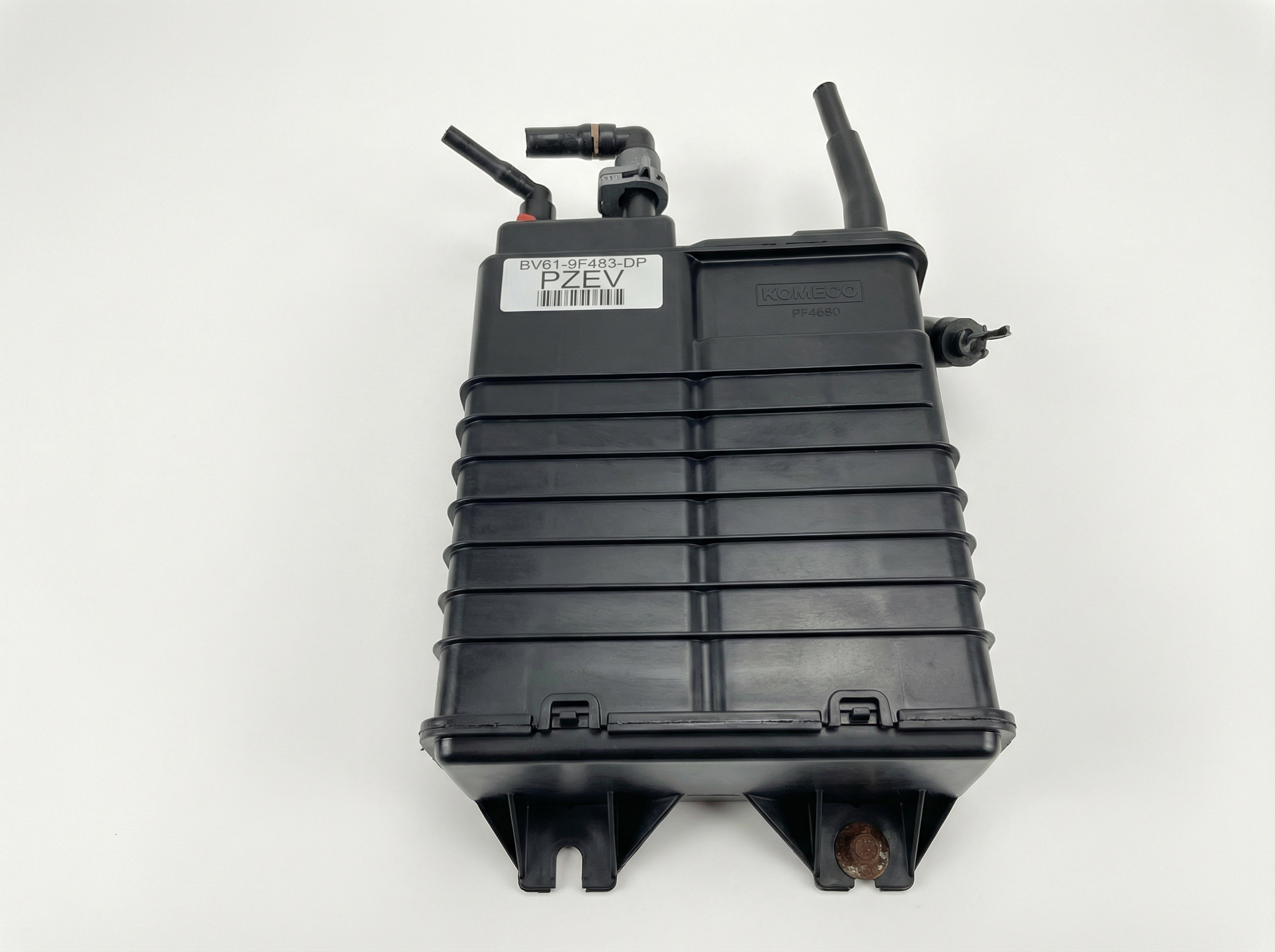
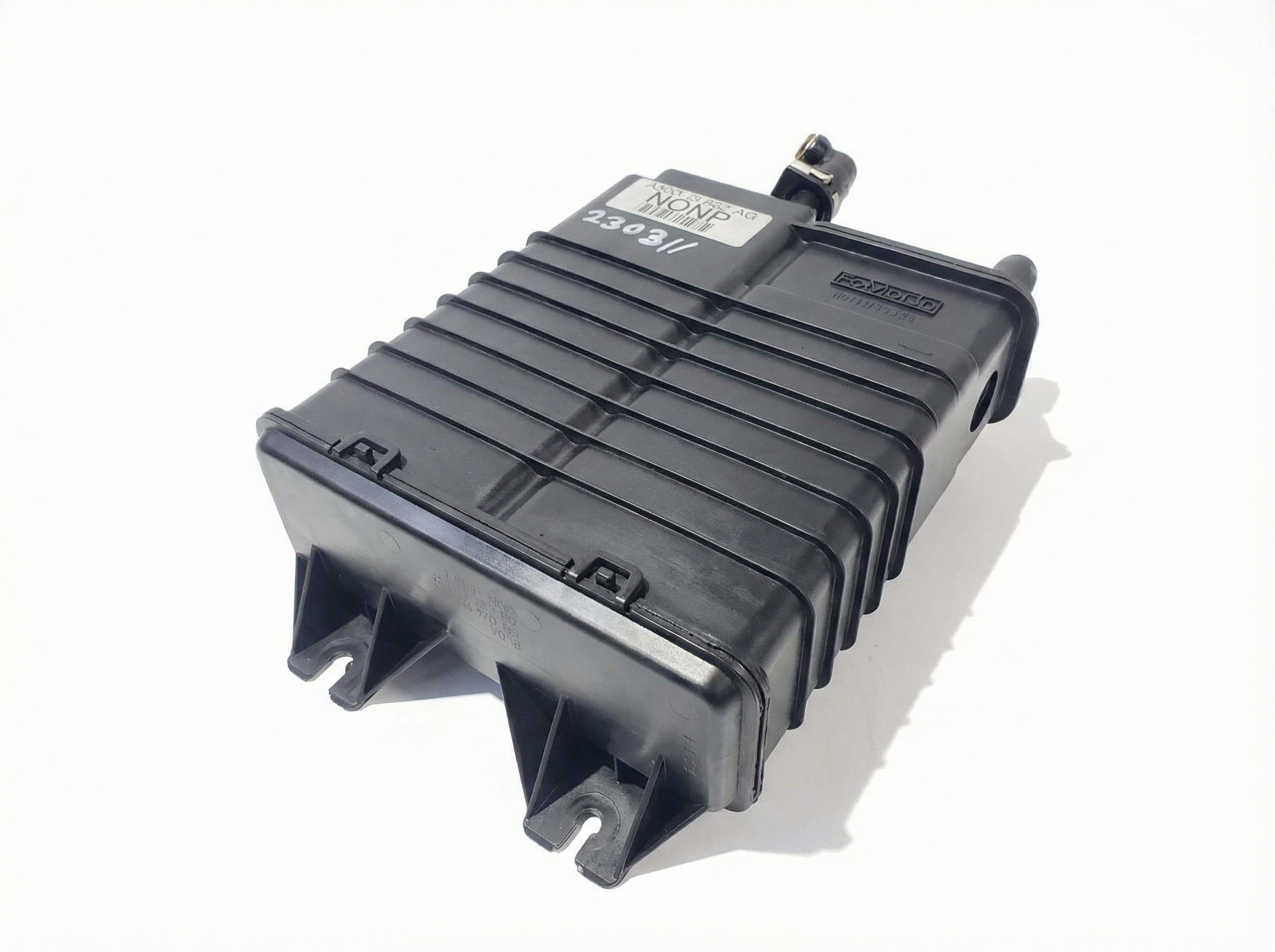
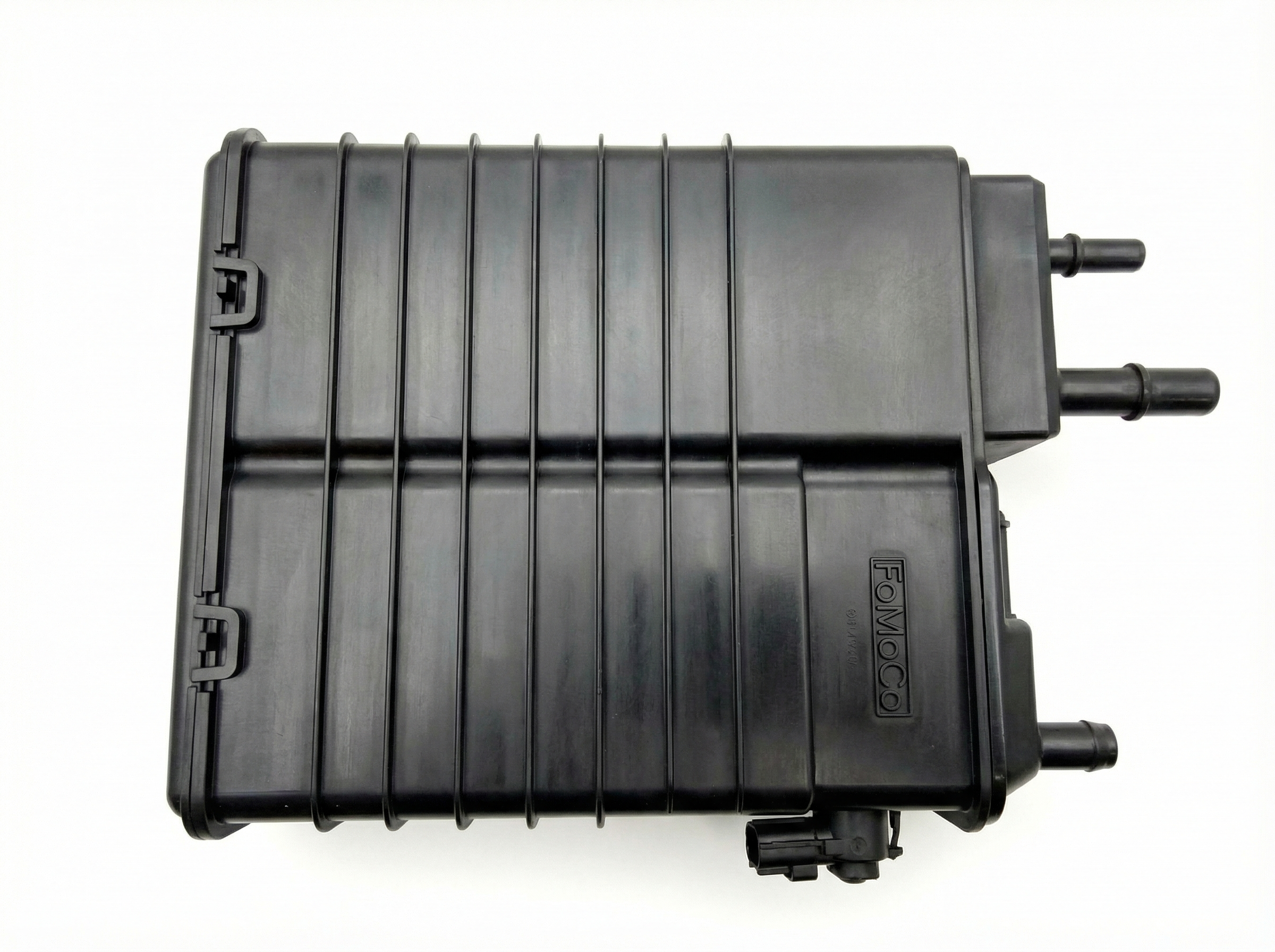
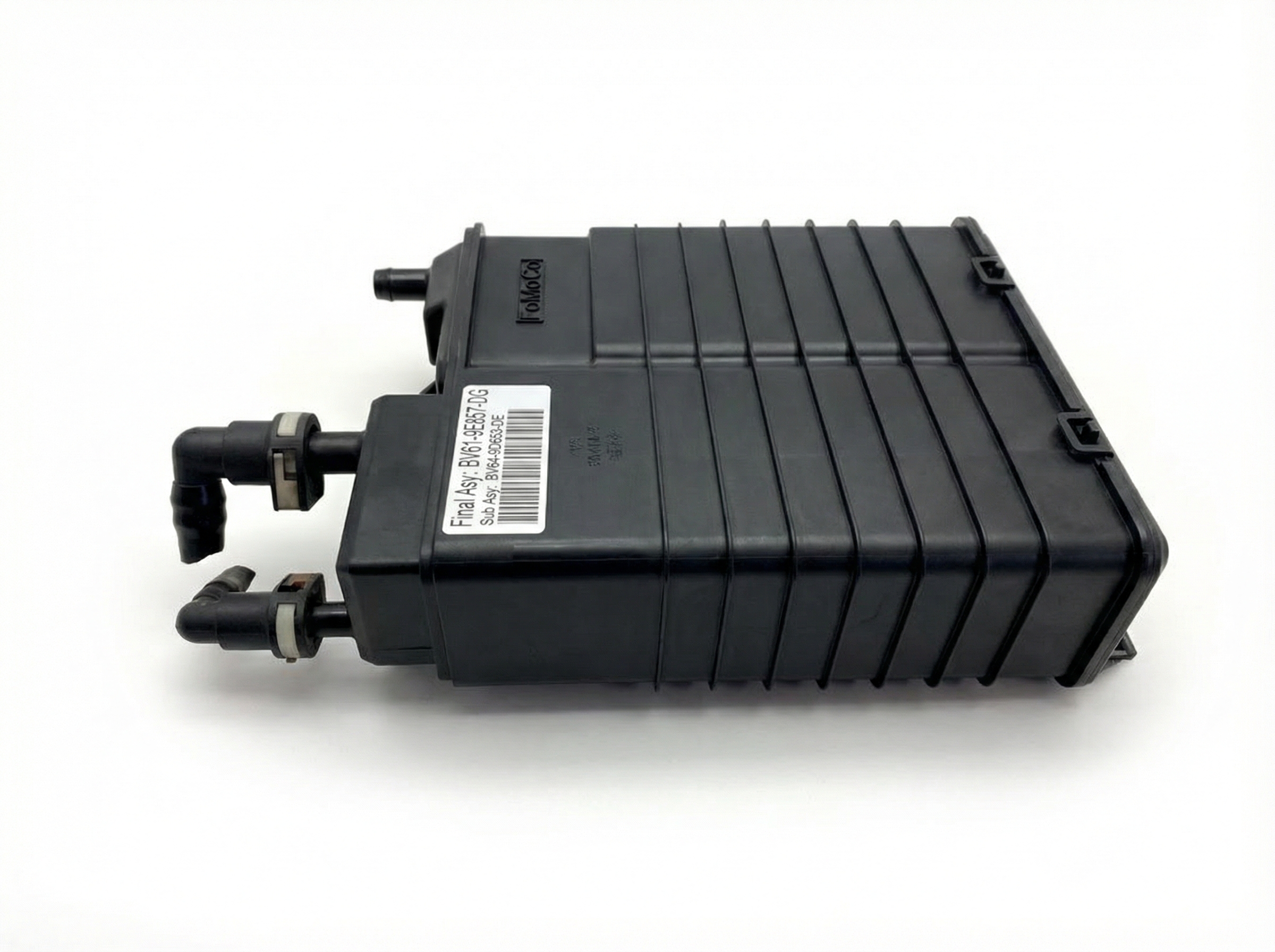
New Aftermarket Parts Available


The information in this article is provided for general reference and educational purposes only. Vehicle specifications, procedures, and part compatibility can vary by production date, trim level, and region. Always consult your vehicle's factory service manual and verify part numbers before purchasing or performing repairs. Safety-critical components such as airbags, seat belts, and braking systems should be installed by a qualified professional.
- Ford Focus:
- 🧭 Diagnostic Flowchart
- 🎬 Helpful Videos
- 🛍️ Shop This Part
- What's Unique About the 2012-2018 Ford Focus
- Symptoms You May Notice
- Most Likely Causes
- Rare But Worth Checking
- Diagnosis Steps
- Parts You'll Likely Need
- Related Codes That Often Appear With This One
- Technical Service Bulletins (TSBs) & Recalls
- Platform-Specific Known Issues
- Mechanic-Grade Diagnostic Values
- Hidden / Shadow Codes Worth Checking
- Scan Tool Commands That Help
- Wiring & Ground Locations
- Real Owner Repair Stories
- Documented NHTSA Reports
- "I Checked Everything" — The Actual Cause
- When the Usual Fixes Don't Work
- OEM Part Supersession History
- Model Year Variations Within This Range
- Other Known Issues on This Vehicle
- Used vs. New Parts: Buying Guide for This Vehicle
- Real Owner Stories
- 2015-2018 Ford Focus ST 2.0L EcoBoost
- 2012-2018 Ford Focus 2.0L
- Related OBD-II Codes
- Frequently Asked Questions
- 🎟️ Get 5% Off