

P0300 on 2019-2025 Ford Ranger: Random Misfire Causes and Fixes
On a 2019-2025 Ford Ranger, a P0300 code is very often caused by water getting into the spark plug wells, especially on models without an engine cover. This is a known design flaw related to the cowl seam. The fix involves drying the wells, replacing the spark plugs and coil boots, and installing an engine cover (OEM Part #L1MZ-6A949-C). For 2025 models, a software glitch after a cold start may be the cause, with a fix expected from Ford in Q2 2026.
- For a 2019-2025 Ford Ranger, P0300 is most likely caused by water in the spark plug wells.
- A flashing check engine light means the misfire is severe and you should stop driving to prevent expensive catalytic converter damage.
- The first diagnostic step should always be a visual inspection of the spark plug wells for moisture or corrosion.
- The most common fix is DIY-friendly: drying the wells, replacing spark plugs and coil boots, and applying dielectric grease.
- If you have a 2025 model, the code may be a harmless software glitch if it only appears after a cold start.
What's Unique About the 2019-2025 Ford RANGER
The 2019-2025 Ford Ranger with the 2.3L EcoBoost engine is particularly susceptible to P0300 due to a well-documented design issue. Multiple Ford Technical Service Bulletins (TSBs) confirm that on models without an engine appearance cover, water from rain or car washes can get past a cowl seam and pool in the deep spark plug wells. This shorts out the ignition coils and spark plugs, causing misfires. Additionally, a separate TSB for 2025 models notes a software issue can cause a false P0300 after a cold start, an issue also affecting the platform-mate Ford Bronco.
Diagnostic Flowchart
Tap your situation to follow the diagnostic path that matches what you're seeing on this vehicle.
Symptoms You May Notice
- Rough or vibrating idle
- Hesitation or stumbling during acceleration
- Flashing or solid Check Engine Light
- Reduced engine power
- Poor fuel economy
- Shaking and jerking as the engine stutters
- Replacing oxygen (O2) sensors before diagnosing the root cause of the misfire. While a bad O2 sensor can cause a P0300, it's less common than ignition or fuel issues.
- Replacing the catalytic converter when it has failed due to damage from unburnt fuel from a persistent misfire, without fixing the misfire itself.
- Replacing only one spark plug or coil when water intrusion has likely damaged multiple components.
- For 2025 models, replacing hardware for the cold-start P0300, which is a known software issue per TSB SSM 54451.
Most Likely Causes
- Water Intrusion in Spark Plug Wells 🔴 High Probability → Shop Spark Plug As documented in multiple Ford TSBs (e.g., #TSB 23-2011), the engine and cowl design on models without an appearance cover allows water to collect in the spark plug wells, causing corrosion and shorting out ignition components. Forum users note this is often caused by a poor cowl seam and is exacerbated by parking nose-downhill.
How to confirm: Remove the ignition coils and visually inspect the spark plug tubes for water, rust, or a white, crusty residue. This often occurs after a car wash or heavy rain.
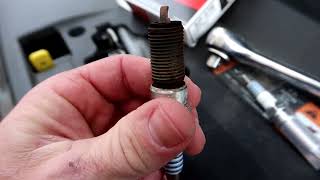
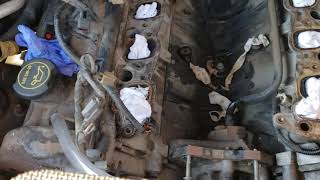
Typical fix: Use compressed air to blow out any water and debris. Replace the spark plugs and ignition coil boots. 🎬 See this easy trick for removing water from spark plug wells. Apply dielectric grease to the inside of the new boots to seal out moisture. Per Ford's TSB, install the Engine Appearance Cover Kit (Part #L1MZ-6A949-C) to prevent recurrence. Some owners also place foam pipe insulation along the cowl seam as an extra preventative measure.
Est. part cost: $50-$150 - Worn or Fouled Spark Plugs 🟡 Medium Probability → Shop Spark Plug The 2.3L is a direct-injection, turbocharged engine, which can be harder on spark plugs. While the official service interval is 100,000 miles, many owners and guides recommend replacement every 60,000 miles as preventative maintenance.
How to confirm: Remove and inspect the spark plugs. Look for excessive wear on the electrode, carbon fouling, oil, or cracks in the ceramic. The correct gap should be between 0.027 - 0.031 inches (0.7-0.8 mm).
Typical fix: Replace all four spark plugs. It is critical to use the correct Iridium or Ruthenium plugs. The OEM part is Motorcraft SP-578, which was superseded by SP-594. Do not use basic copper plugs. Torque to 106 in-lbs (8 ft-lbs). 🎬 Watch: Quick 20-minute spark plug and air filter tune-up guide.
Est. part cost: $40-$80 - Faulty Ignition Coil(s) 🟡 Medium Probability → Shop Ignition Coil
How to confirm: If you have a scan tool that shows live misfire data (Mode 6), you can identify which cylinders are misfiring. Swap the ignition coil from a misfiring cylinder with one from a cylinder that is firing correctly. If the misfire follows the coil (e.g., P0302 becomes P0304 after swapping coils from cylinders 2 and 4), the coil is bad. Also inspect boots for swelling or tears, especially if water was present.
Typical fix: Replace the faulty ignition coil. It is common practice to replace the corresponding spark plug at the same time. Many owners choose to replace all four coils for peace of mind.
Est. part cost: $30-$70 per coil - PCM Software Glitch (2025 Models) ⚪ Low Probability TSB #SSM 54451 specifically calls out an issue on 2025 Ranger and Bronco models where P0300 and P0316 can be stored after a cold start (overnight or even a 2-3 hour soak) with no actual mechanical fault.
How to confirm: The code appears only after a cold soak and there are no actual drivability issues. According to Ford, no diagnosis is required for this specific condition.
Typical fix: Ford is developing a software update. The current instruction is for dealers to clear the codes and return the vehicle to the customer. The fix is expected in Q2 2026. Do not replace any parts.
Est. part cost: $0
Rare But Worth Checking
- Leaking Fuel Injectors: → Shop Fuel Injector A leaky or clogged direct fuel injector can disrupt the air-fuel ratio, causing misfires. This has been reported by owners on both Ranger and Bronco forums, in one case requiring replacement of two injectors on a nearly new vehicle to solve the P0300 code.
- Vacuum Leak: A leak in a vacuum hose, the intake manifold, or the PCV system can introduce unmetered air, leaning out the fuel mixture and causing misfires, especially at idle. A smoke test is the most effective way to find a vacuum leak. A cracked crankcase breather hose is a common source of vacuum leaks on this engine.
- Low Fuel Pressure: A weak fuel pump or clogged fuel filter can starve the engine for fuel under load, leading to misfires across all cylinders. A fuel pressure test can confirm this. The 2.3L EcoBoost requires 35-60 PSI at idle.
- Low Engine Compression: This is a worst-case scenario indicating internal engine mechanical problems, such as a bad valve, worn piston rings, or a head gasket issue. A compression test followed by a leak-down test is needed to confirm and pinpoint the cause.
- Faulty EGR Pressure Sensor: While this typically throws its own code (like P139C), a failing EGR pressure sensor can cause bucking and stuttering at low speeds that feels identical to a misfire, potentially confusing diagnosis.
Diagnosis Steps
- Check if the Check Engine Light is solid or flashing. A flashing light indicates a severe, catalyst-damaging misfire. Avoid driving if possible.
- Scan the PCM for all stored trouble codes. Note any codes that appear alongside P0300, such as P0316 or specific cylinder codes (P0301-P0304).
- For 2025 models, if the code appeared after a cold start with no symptoms, check TSB #SSM 54451. No repair may be needed.
- Begin with a visual inspection. Remove the plastic engine cover if present. Carefully inspect the spark plug wells for any signs of water, oil, or corrosion. This is the most common cause on this vehicle.
- If water is found, use compressed air to thoroughly dry the wells. Remove the ignition coils and spark plugs.
- Inspect the removed spark plugs for wear, fouling, and correct gap (0.027-0.031 in). Inspect the ignition coil boots for swelling, tearing, or corrosion. Replace plugs and boots if any damage is found.
- If the ignition system is confirmed to be working correctly, the next steps involve checking for vacuum leaks (a smoke test is most effective) and verifying fuel pressure against specifications.
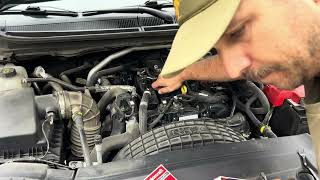
- If available, use a scan tool with Ford Power Balance or Mode 6 data to view live misfire counts per cylinder, which can help isolate a problematic cylinder even with a P0300 code. 🎬 Watch: A professional walkthrough on diagnosing and fixing P0300 misfires.
- If all else fails, more advanced diagnostics like testing fuel injectors or performing an engine compression and leak-down test may be necessary to check for mechanical engine health.
Parts You'll Likely Need
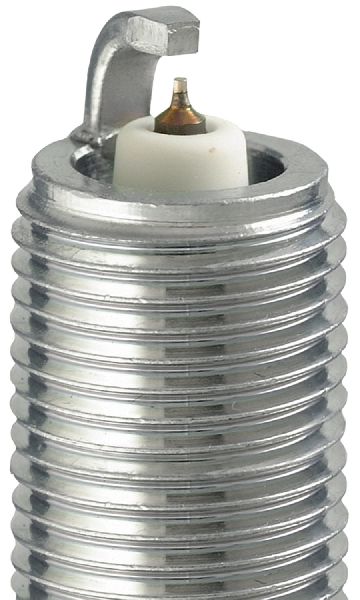
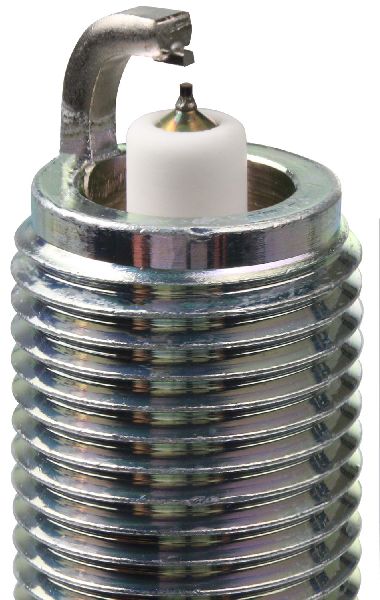
- Spark Plugs
(OEM #SP-594 (supersedes SP-578))— Spark plugs are a primary wear item and are often the first components to fail. They are directly damaged by the common water intrusion issue.
Trusted brands: Motorcraft, NGK, Bosch
OEM price range: $60-$80
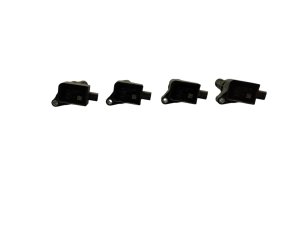
Aftermarket price range: $40-$60 - Ignition Coil
(OEM #L3G2-18-100B)— Ignition coils provide the spark. They can fail from heat and age, or be damaged by water in the spark plug wells.
Trusted brands: Motorcraft, Bosch, Delphi
OEM price range: $50-$70
Aftermarket price range: $30-$50 - Engine Appearance Cover
(OEM #L1MZ-6A949-C)— For vehicles not equipped with one, Ford's own TSBs recommend installing this cover to shield the spark plug wells from water intrusion.
Trusted brands: Ford
OEM price range: $70-$100
Related Codes That Often Appear With This One
- P0301, P0302, P0303, P0304 — These are cylinder-specific misfire codes. They often accompany P0300 if the misfire is widespread but occasionally becomes concentrated on specific cylinders. The TSBs for water intrusion explicitly list these codes alongside P0300.
- P0316 — Misfire Detected on Startup (First 1000 Revolutions). This code is frequently seen with P0300 on the Ranger, especially in cases of cold start issues or water in the plug wells, and is cited in multiple TSBs.
Technical Service Bulletins (TSBs) & Recalls
- TSB 23-2011: Supersedes previous TSBs for water intrusion on 2019-2022 models.
- SSM 54451: Addresses false P0300/P0316 codes on 2025 models after a cold start.
- SSM 51051 / SSM 51239: Earlier bulletins for the water intrusion issue. [pass 1]
- TSB 21-2147 / TSB 22-2025: Earlier bulletins for the water intrusion issue.
Platform-Specific Known Issues
- Water Intrusion: Multiple TSBs (#TSB 23-2011, #SSM 51051, #SSM 51239, #TSB 21-2147) confirm that 2019-2022 Rangers without an engine cover are prone to water collecting in the spark plug wells, leading to corrosion and misfires.
- Cold Start Software Issue (2025): TSB #SSM 54451 identifies a software problem on 2025 models that can trigger false P0300/P0316 codes after a cold soak, with a fix pending.
Mechanic-Grade Diagnostic Values
- Ignition Coil Primary Resistance — expected: 0.3 - 1.0 ohms. Failure: A reading outside this range indicates a faulty coil.
- Ignition Coil Secondary Resistance — expected: 6,500 - 11,500 ohms (6.5kΩ - 11.5kΩ). Failure: Resistance outside this range suggests the coil pack should be replaced.
- Fuel Injector Resistance — expected: 11 - 18 ohms. Failure: An injector with resistance outside this range has likely failed internally.
- High-Pressure Fuel Pump (HPFP) Max Operating Pressure — expected: Up to 250 bar / 3626 psi. Failure: Inability to reach specified pressure under load can indicate a weak HPFP, though low-side pressure should be checked first.
- Low-Side Fuel Pressure at Idle — expected: 35 - 60 PSI. Failure: Pressure below 35 PSI at idle points to a weak in-tank fuel pump or a clogged fuel filter.
Hidden / Shadow Codes Worth Checking
- Mode 6, TID $A2-$AB: This refers to the misfire monitor data for each cylinder (Cylinder 1 is $A2, Cylinder 2 is $A3, etc.). It shows a raw misfire count for the current and last 10 driving cycles, even if the count isn't high enough to set a specific P030x code. This allows a technician to see which cylinder(s) are contributing to the random misfire count. (see via A professional scan tool or an advanced DIY tool/app (like FORScan) that can access OBD-II Mode 6 data.)
Scan Tool Commands That Help
- Ford IDS (or high-end Snap-on/Autel): Power Balance Test — This is a critical bidirectional test for diagnosing a P0300. The tool disables one fuel injector at a time and graphs the RPM drop for each cylinder. A cylinder with a smaller RPM drop is not contributing as much power, indicating a misfire. This can pinpoint a problematic cylinder even when only a general P0300 code is present.
- Ford IDS (or FORScan): Relative Compression Test — This is a quick, non-invasive way to check for a mechanical engine problem. The tool cranks the engine and measures the electrical current drawn by the starter motor as each cylinder goes through its compression stroke. A cylinder with low compression will show a significant variation from the others, pointing to a potential valve or piston ring issue without needing a manual compression gauge initially.
Wiring & Ground Locations
- G104 (example) — While a full diagram is extensive, a key user-accessible ground point is a metal bar with spare ground bolts located under the dashboard, near the Body Control Module (BCM).. A poor ground for the PCM or ignition components can cause erratic behavior and misfires. While not a common cause, checking major engine and chassis grounds is a valid diagnostic step if ignition and fuel systems test okay. This accessible interior ground can be a useful reference point for testing.
- Ignition Coil Connector — On top of the valve cover, connecting to each of the four ignition coils.. The center pin on the 3-pin connector should have 12V+ with the key on. The outer two pins are the trigger signals (ground) from the PCM. Verifying power at this connector is a key step before condemning a coil.
Real Owner Repair Stories
- Ranger5G.com forum user (2019 Ford Ranger) — Rough idle, hesitation, and eventually a P0300 code. Symptoms were worse when the engine was cold and seemed to smooth out when warm.
❌ Tried (didn't work) Replaced spark plugs., Replaced the DPFE (EGR pressure) sensor.
✅ What actually fixed it The user suspected a heat-related failure in an ignition coil. After replacing all four ignition coil packs, the issue was resolved. The theory was that a winding in one of the original coils had a micro-fracture that would separate when cold and make a connection once heated up by engine temperature.
"I Checked Everything" — The Actual Cause
- In some cases, a P0300 is caused by a faulty PCV (Positive Crankcase Ventilation) valve that is stuck open. This creates a vacuum leak that is difficult to detect with a smoke test because the leak is internal to the engine's crankcase system. The unmetered air leans out the air/fuel mixture, causing random misfires. Symptoms can include a rough idle, increased oil consumption, and sometimes a whistling noise.
OEM Part Supersession History
Motorcraft SP-578→Motorcraft SP-594— SP-594 is the updated, current OEM recommended part. It is a Ruthenium-based plug, while the original was Iridium. This is a standard supersession from Ford.
Heads up: While SP-594 is the correct replacement, some owners have reported experiencing misfires with the new plugs and have had to switch back to old stock SP-578s to resolve the issue, suggesting potential sensitivity in some vehicles, though this is anecdotal.
Model Year Variations Within This Range
- 2025: A specific software issue can cause a false P0300 and P0316 after a cold start with no actual mechanical fault. Ford issued TSB #SSM 54451 for this, advising dealers not to perform repairs and that a software update is forthcoming.
- 2019-2022: These earlier models were more likely to be sold without the engine appearance cover, making them highly susceptible to the water intrusion issue in the spark plug wells as documented in TSBs #TSB 23-2011 and #TSB 21-2147.
Helpful Videos
Used OEM Parts in Stock
New Aftermarket Parts Available

The information in this article is provided for general reference and educational purposes only. Vehicle specifications, procedures, and part compatibility can vary by production date, trim level, and region. Always consult your vehicle's factory service manual and verify part numbers before purchasing or performing repairs. Safety-critical components such as airbags, seat belts, and braking systems should be installed by a qualified professional.
- Ford RANGER:
- 🧭 Diagnostic Flowchart
- 🎬 Helpful Videos
- 🛍️ Shop This Part
- What's Unique About the 2019-2025 Ford RANGER
- Symptoms You May Notice
- Most Likely Causes
- Rare But Worth Checking
- Diagnosis Steps
- Parts You'll Likely Need
- Related Codes That Often Appear With This One
- Technical Service Bulletins (TSBs) & Recalls
- Platform-Specific Known Issues
- Mechanic-Grade Diagnostic Values
- Hidden / Shadow Codes Worth Checking
- Scan Tool Commands That Help
- Wiring & Ground Locations
- Real Owner Repair Stories
- "I Checked Everything" — The Actual Cause
- OEM Part Supersession History
- Model Year Variations Within This Range
- 🎟️ Get 5% Off