

P0300 on 2019-2024 Genesis G70 3.3T: Random Misfire Causes and Fixes
P0300 on a G70 3.3T usually means it's time for new spark plugs and possibly ignition coils. Spark plugs are a 42,000-mile maintenance item. If the check engine light is flashing, stop driving immediately to prevent catalytic converter damage. Unlike the 4-cylinder models, this code on the V6 is almost never a software issue.
- P0300 on a G70 3.3T is a real misfire, not a software bug. The most likely causes are worn spark plugs or bad ignition coils.
- If the Check Engine Light is flashing, stop driving immediately to prevent destroying your catalytic converters, which is a very expensive repair.
- The spark plug service interval is 42,000 miles. If your car is over this mileage, start your diagnosis here.
- Repairing the rear bank of cylinders (1, 3, 5) is labor-intensive. It is highly recommended to replace all three rear ignition coils and all six spark plugs at the same time to save on future labor costs.
- While DIY is possible, accessing the rear bank is challenging and may require special tools like swivel sockets. Many owners opt for an independent shop over the dealer to save on labor costs.
What's Unique About the 2019-2024 Genesis G70
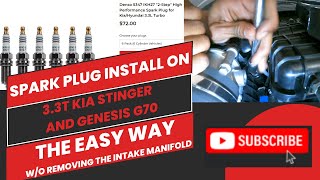
Unlike the 4-cylinder Genesis models which have known software glitches causing false P0300 codes (addressed by TSB 25-01-051G), a P0300 on the 3.3T V6 almost always indicates a genuine hardware or maintenance issue. The primary culprits are typically worn spark plugs or failing ignition coils. The key challenge with this engine is access to the rear bank of cylinders (1, 3, 5), which are tucked against the firewall under the intake manifold 🎬 Watch: How to replace spark plugs without removing the intake manifold., making diagnosis and repair more labor-intensive than the easily accessible front bank. Because of this, many technicians and experienced owners recommend replacing all rear coils and all six spark plugs if a misfire is confirmed on any rear cylinder to avoid repeat labor costs.
Symptoms You May Notice
- Flashing or solid Check Engine Light
- Rough or vibrating idle
- Engine hesitation or stumbling during acceleration
- Noticeable loss of power
- Poor fuel economy
- Difficulty starting the engine
- Smell of raw gasoline from the exhaust
- Engine may enter 'limp mode' with drastically reduced power, especially after a cold start
- Replacing only one spark plug or coil when a full set is due, especially on the difficult-to-access rear bank.
- Assuming a software issue, which is a common problem on the 2.5T engine but not the 3.3T V6.
- Forgetting to replace the intake manifold gaskets after removing the manifold for service, leading to a new vacuum leak and misfire codes.
- Using incorrect aftermarket spark plugs, which can cause misfires and lead to warranty denial for the repair if discovered by the dealer.
Most Likely Causes
- Worn or Fouled Spark Plugs 🔴 High Probability → Shop Spark Plug Spark plugs are a regular maintenance item with a recommended replacement interval of 42,000 miles on the 3.3T engine. Misfires are common if this service is neglected, and owners have reported coil boots tearing and seizing to the plugs around this mileage due to heat. 🎬 See what can go wrong during a DIY spark plug replacement.
How to confirm: Remove and inspect the spark plugs. Look for worn-down electrodes, heavy carbon deposits, oil/fuel fouling, or a cracked porcelain insulator. A technician video noted a misfire caused by a spark plug where the ground strap shape was distorted compared to a new plug.
Typical fix: Replace all six spark plugs as a set. It is highly recommended to do this when replacing ignition coils, especially on the rear bank, due to the labor involved.
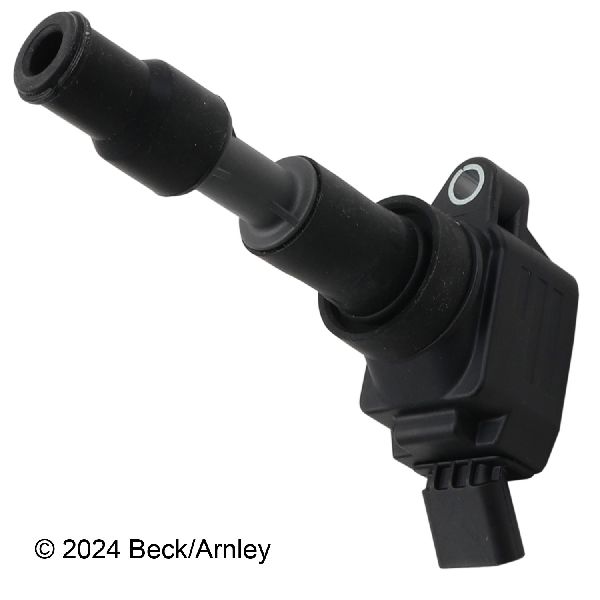
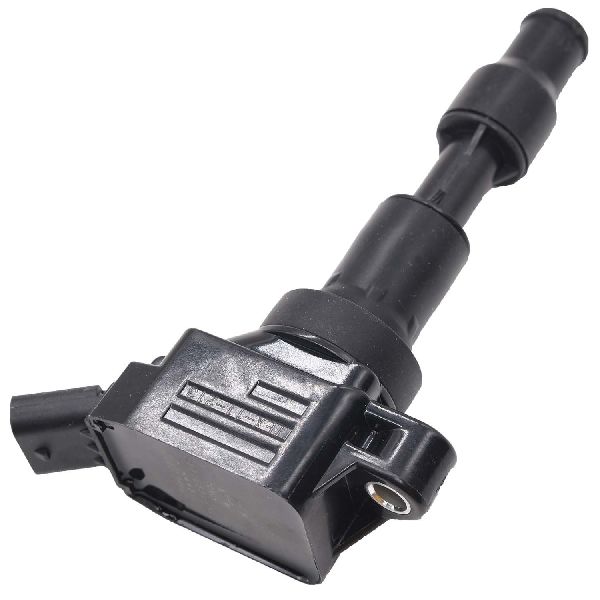
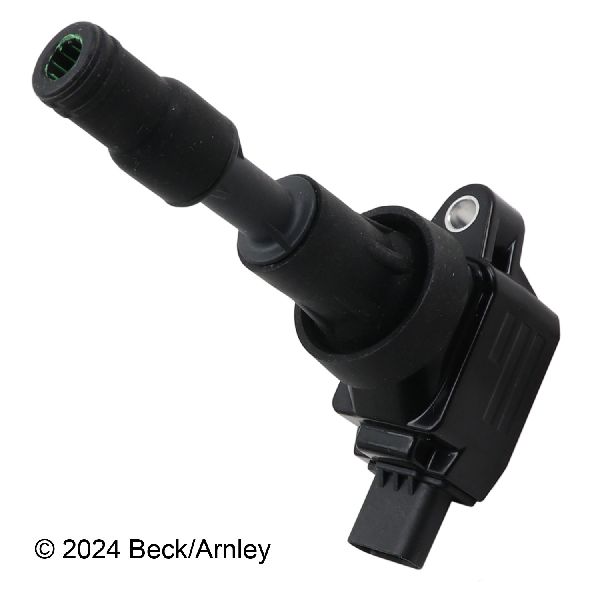
Est. part cost: $75-$150 - Faulty Ignition Coil(s) 🔴 High Probability → Shop Ignition Coil Ignition coils are a common failure point that leads directly to misfires. The rear bank coils (Cylinders 1, 3, 5) are subjected to more heat under the intake manifold, potentially increasing their failure rate. Failures have been reported at relatively low mileage (e.g., 19,000 miles).
How to confirm: If P0300 is accompanied by a specific cylinder code (e.g., P0301, P0302), swap the ignition coil from the misfiring cylinder with a known good one from another cylinder. Clear the codes and see if the misfire code follows the coil to the new cylinder. If the misfire is random, this test is harder, but you can test coils with a multimeter or inspect for cracks.
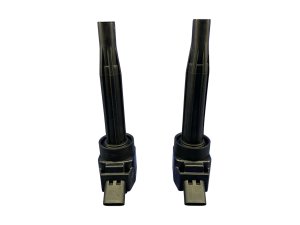
Typical fix: Replace the faulty ignition coil. Due to the labor required to remove the intake manifold for rear bank access, it is strongly advised to replace all three rear coils (cylinders 1, 3, 5) if any one of them fails. The rear bank uses part number 27310-3L000, while the front bank uses 27310-3L030; they are not interchangeable.
Est. part cost: $50-$100 per coil - Intake Valve Carbon Buildup 🟡 Medium Probability Although the 3.3T engine has both direct (GDI) and port injection (MPI) to help keep valves clean, significant carbon buildup can still occur over time, especially on vehicles with higher mileage (60k+ miles). This buildup can restrict airflow, prevent valves from seating properly, and cause misfires.
How to confirm: This requires a visual inspection of the intake valves using a borescope, which usually involves removing the intake manifold.
Typical fix: The intake valves need to be physically cleaned, most commonly through walnut blasting. Chemical induction cleaning services are also offered but may be less effective for heavy buildup.
Est. part cost: $400-$800 for a professional cleaning service. - Vacuum Leak ⚪ Low Probability Vacuum hoses can crack or become disconnected over time, and intake manifold gaskets can fail, introducing unmetered air that throws off the air-fuel ratio and can lead to random misfires. Not replacing the intake manifold gasket after a rear bank coil/plug service is a common cause of a new vacuum leak.
How to confirm: Visually inspect all vacuum lines for cracks or damage. Listen for a hissing sound at idle. The most effective method is to have a professional perform a smoke test to identify the source of the leak.
Typical fix: Replace the cracked or leaking vacuum hose or gasket. The upper intake manifold gasket set (OEM #29215-3L100) is a required replacement part when servicing rear plugs/coils.
Est. part cost: $10-$60
Rare But Worth Checking
- Faulty High-Pressure Fuel Pump (HPFP): → Shop Fuel Pump A failing HPFP can cause a sudden loss of power and trigger random misfire codes across all cylinders, often on a cold start. There is an active recall (NHTSA 24V528) for this issue on 2019-2023 G70 models. One owner reported P0301-P0306 codes that were resolved by replacing the HPFP.
- Faulty Fuel Injectors: → Shop Fuel Injector A clogged or failing fuel injector can cause a misfire. While less common than ignition issues, if the problem persists after addressing spark plugs and coils, the fuel system should be investigated.
- Crankshaft Position Sensor Failure: → Shop Engine Crankshaft Position Sensor The ECM relies on this sensor to determine engine speed and detect misfires. A faulty sensor can provide erratic data, leading to a P0300 code, often accompanied by a P0335 code.
Diagnosis Steps
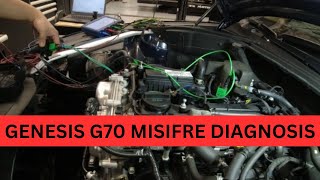
- Scan for Codes: Use an OBD-II scanner to confirm P0300 and check for any other codes (e.g., P0301-P0306, P0171, P0088) that can help narrow the diagnosis. Use Mode $06 on an advanced scanner to check for raw misfire counts per cylinder 🎬 Watch a technician diagnose a G70 misfire using an oscilloscope., which may identify a problem cylinder before a hard code is set.
- Check the Check Engine Light: If it's flashing, stop the engine immediately to prevent catalytic converter damage.
- Check Maintenance History: The spark plug replacement interval is 42,000 miles. If the vehicle is near or over this mileage, plugs are a primary suspect.
- Isolate the Misfire (If Possible): If specific cylinder codes (P0301-P0306) are present, focus on that cylinder's ignition coil and spark plug. If the cylinder is on the front bank (2, 4, 6), perform a coil swap test. If it's on the rear bank (1, 3, 5), proceed to step 6 due to the labor involved.
- Check for Vacuum Leaks: Visually inspect all hoses connected to the intake manifold for cracks or disconnection. Listen for hissing sounds. A smoke test is the most definitive way to find a leak.
- Plan for Rear Bank Service: If misfires are suspected on the rear bank (cylinders 1, 3, 5), or if plugs are due for replacement, plan to remove the intake manifold. It is highly recommended to replace all three rear ignition coils, all six spark plugs, and the intake manifold gaskets at the same time to prevent repeat labor.
- Advanced Diagnostics: If the problem persists, investigate the fuel system. Check for open recalls related to the High-Pressure Fuel Pump (HPFP). A technician can test the HPFP by monitoring fuel pressure during a key-on, engine-off cycle; a drop in pressure indicates a leak. Further testing of fuel injectors and sensors (crankshaft position sensor) may be required, which may necessitate professional help.
Parts You'll Likely Need
- Spark Plugs (Set of 6)
(OEM #18852-09070)— These are a routine maintenance item with a 42,000-mile service interval and a primary cause of misfires when worn.
Trusted brands: NGK (OEM Supplier), Denso
OEM price range: $100-$150 (set of 6)
Aftermarket price range: $75-$120 (set of 6) - Ignition Coil (Rear Bank)
(OEM #27310-3L000)— A common failure part causing misfires. The rear bank coils are often replaced as a set of three due to the high labor cost of accessing them.
Trusted brands: Hyundai/Genesis (OEM), Delphi, NGK
OEM price range: $70-$100 (per coil)
Aftermarket price range: $50-$80 (per coil) - Ignition Coil (Front Bank)
(OEM #27310-3L030)— A common failure part causing misfires on the easily accessible front bank (cylinders 2, 4, 6). Not interchangeable with rear coils.
Trusted brands: Hyundai/Genesis (OEM), Delphi, NGK
OEM price range: $70-$100 (per coil)
Aftermarket price range: $50-$80 (per coil) - Upper Intake Manifold Gasket Set
(OEM #29215-3L100)— This gasket set is a mandatory replacement item anytime the upper intake manifold is removed for service (e.g., rear spark plugs/coils) to prevent post-repair vacuum leaks.
Trusted brands: Hyundai/Genesis (OEM)
OEM price range: $25-$40
Aftermarket price range: $15-$30
Related Codes That Often Appear With This One
- P0301-P0306 — These codes indicate a misfire on a specific cylinder (e.g., P0301 for Cylinder 1). P0300 often appears when the misfire is not confined to one cylinder, is intermittent, or is just starting to develop before the ECM can isolate it.
- P0171 / P0174 — These 'System Too Lean' codes can appear with P0300 if the root cause is a significant vacuum leak, which introduces excess unmetered air.
- P0088 — This 'Fuel Rail/System Pressure - Too High' code can be related to a failing High-Pressure Fuel Pump (HPFP), which can also cause misfires. A warranty extension was issued for this issue on some 2.0T models, but a failing HPFP can also affect the 3.3T.
Technical Service Bulletins (TSBs) & Recalls
- 24-01-032G - Recall notice for LH turbo oil feed pipe replacement on 3.3T engines.
Platform-Specific Known Issues
- Recall 24-01-032G (NHTSA ID 24V195000): Affects 2019-2022 G70 3.3T models. The left-hand turbocharger oil feed pipe can degrade and leak oil onto the hot exhaust manifold, increasing the risk of an engine fire. While not a direct cause of P0300, a significant oil leak could create other engine problems.
- Recall 21V160000 (NHTSA ID 21V160000): Affects 2019-2021 G70 models. The ABS module can short circuit, increasing fire risk. Owners were advised to park outdoors. This is unrelated to engine performance but is a critical safety issue for the vehicle.
Mechanic-Grade Diagnostic Values
- High-Pressure Fuel System (GDI) — expected: Up to 200 bar (2,900 psi) during operation. During a Key-On, Engine-Off test, pressure should build rapidly and hold steady.. Failure: A drop in pressure after the engine is turned off indicates a leak in the high-pressure system, potentially at the HPFP or injectors. Inability to reach target pressure under load can cause misfires.
- Mode $06 Misfire Counts — expected: Zero or very low single-digit counts per cylinder over a drive cycle.. Failure: A high number of misfire counts (e.g., dozens or hundreds) on one or more cylinders, even without a specific P030x code being set, indicates an intermittent or developing misfire that needs investigation.
Hidden / Shadow Codes Worth Checking
- Mode $06 Data: This is not a standard trouble code but a diagnostic mode that shows raw data from the ECU's self-tests. For misfires, it provides a 'misfire count' for each individual cylinder for the current and previous 10 driving cycles. It can reveal which cylinder(s) are the source of a P0300 before a specific P0301-P0306 code is triggered. (see via An advanced OBD-II scanner with Mode $06 capability (e.g., BlueDriver, Autel, or professional-grade scan tools).)
Scan Tool Commands That Help
- Hyundai GDS (or equivalent): Misfire Data Analysis — To view live and historical misfire counts for each cylinder, helping to pinpoint the source of a random P0300 code.
- Oscilloscope: Ignition Coil Primary/Secondary Waveform Analysis — To definitively test an ignition coil's performance. A technician video showed this method being used to identify a lack of 'burn time' in the waveform, pointing to a spark plug issue even when the coil's current ramp was good.
Wiring & Ground Locations
- Engine Control Unit (ECU) — Located in the engine bay on the driver's side, just ahead of the brake fluid reservoir and next to the strut tower.. All ignition coil and fuel injector commands originate here. A poor connection at the ECU or a failed driver circuit (rare) could cause misfires.
- Ignition Coil Connectors — On top of each ignition coil, held to the valve cover by a 10mm bolt. The connector has a safety clip that must be disengaged.. A loose, corroded, or damaged connector/pigtail will prevent the coil from firing correctly, causing a misfire on that cylinder.
Real Owner Repair Stories
- Reddit user, r/GenesisG70 (2023 Genesis G70 3.3T, 46,000 miles) — Sudden 99% power loss shortly after a cold start, rough rumbling engine, check engine light. Turning the car off and on would temporarily resolve it.
❌ Tried (didn't work) Initial dealership visit could not reproduce the issue or find any stored codes.
✅ What actually fixed it Owner used an OBD scanner during an event and found codes P0301 through P0306 (misfire on all 6 cylinders). The suspected final diagnosis was a failing High-Pressure Fuel Pump (HPFP). - Reddit user, r/GenesisG70 (2023 Genesis G70 3.3T (8 months old)) — Check Engine Light on, codes indicating cylinders not firing correctly.
❌ Tried (didn't work) Initial troubleshooting focused on common electronic or component failures.
✅ What actually fixed it The dealership found that a bolt fastening the 'ASSY variable force solenoid' was loose. Tightening the bolt resolved the misfire condition. - Reddit user, r/GenesisG70 (2021 Genesis G70 (CPO)) — Popping noise like an exhaust backfire, multiple misfires detected by the dealer.
❌ Tried (didn't work) The owner purchased the car as a Certified Pre-Owned, assuming it was in perfect mechanical condition.
✅ What actually fixed it The dealer discovered the vehicle had been previously modified with aftermarket spark plugs, which were causing a misfire on cylinder 2. The repair was not covered by warranty due to the non-OEM parts.
"I Checked Everything" — The Actual Cause
- While no stories explicitly mention a passed smoke test, one confirmed repair for a P0300 was a loose bolt on a variable force solenoid, a mechanical issue that would not be found by checking for vacuum leaks, spark, or fuel pressure.
- Another case of random misfires across all cylinders (P0301-P0306) on cold starts was traced to a failing High-Pressure Fuel Pump (HPFP), which is a fuel delivery issue, not a vacuum leak.
When the Usual Fixes Don't Work
- While the vast majority of P0300 codes on the G70 3.3T are caused by spark plugs and ignition coils, there are documented cases where the root cause was more obscure. One owner's random misfire issue was resolved by tightening a loose bolt on a variable force solenoid, a purely mechanical issue. Another owner, experiencing misfires on all cylinders only on cold starts, traced the problem to a failing high-pressure fuel pump (HPFP), a known recall item. These cases highlight the importance of considering non-standard causes if the usual suspects (plugs, coils, vacuum leaks) check out.
OEM Part Supersession History
27310-3L000→27301-3L100— Standard part evolution and supplier changes. Reports indicate the newer revision is compatible.
Heads up: This applies to the rear bank ignition coils (Cylinders 1, 3, 5). They are not interchangeable with the front bank coils (27310-3L030).
Model Year Variations Within This Range
- 2022-2024: The G70 received a major facelift for the 2022 model year, including new front and rear styling and a larger 10.25-inch infotainment screen. The 3.3T engine gained an optional variable-valve active exhaust, slightly increasing horsepower, but the core engine, fuel, and ignition systems related to P0300 remained unchanged from 2019-2021 models.
- 2021-2024: Starting with the 2021 model year, premium fuel (91 octane or higher) is required. Using lower octane fuel could contribute to conditions like carbon buildup over the long term.
Diagnostic Flowchart
Other Known Issues on This Vehicle
Issues unrelated to this code that are worth knowing about as an owner of this generation:
- Leaking Turbocharger Oil Feed Pipe 🔴 High → Shop Turbocharger — Common enough to warrant a recall (NHTSA 019G). Oil leaks onto the hot turbocharger, creating a fire risk and a burning oil smell. (Ref: NHTSA Recall 019G / Hyundai Recall 241)
- High-Pressure Fuel Pump (HPFP) Failure 🔴 High → Shop Fuel Pump — A recall was issued for potential failure, which can cause sudden loss of motive power. Some owners experience this as intermittent limp mode and multiple misfire codes (P0301-P0306) on cold starts before total failure. (Ref: NHTSA Recall 24V528 / Genesis Campaign 023G)
- Harsh Downshifting (8-Speed Automatic) 🟡 Low — Common complaint, particularly on pre-facelift (2019-2021) models during stop-and-go traffic. The 3-2 and 2-1 downshifts can be jerky. Some owners report transmission software updates can mitigate this.
- Interior Rattles 🟡 Low — Some owners report rattles from the sunglasses holder area or behind the rearview mirror. These are typically minor and can often be fixed with felt tape or dealer intervention.
- Infotainment System Lag/Crashes 🟠 Medium — More common on earlier 2019-2021 models. Symptoms include slow boot times, laggy inputs, and Apple CarPlay/Bluetooth connectivity drops. Software updates from the dealer often resolve these issues.
Used vs. New Parts: Buying Guide for This Vehicle
When a used part is the smart pick: For this repair, using used parts is generally not recommended due to the high labor involved, especially for the rear bank. However, if a major component like the intake manifold or an engine wiring harness is physically damaged, a used part from a low-mileage donor vehicle could be a cost-effective option.
Donor-vehicle mileage cap: roughly under 40000 miles for the part to have meaningful remaining life.
What to inspect on the donor part:
- Verify the donor vehicle's mileage.
- For wiring, inspect connectors for corrosion, broken clips, or brittle wires.
- For a manifold, check for cracks, warping, or damage to gasket surfaces.
OEM-only on this vehicle (don't cheap out):
- Spark Plugs: These are wear items and should always be purchased new.
- Ignition Coils: Given the high failure rate and extreme labor for the rear bank, installing new OEM or top-tier aftermarket coils is critical to avoid repeat repairs.
- High-Pressure Fuel Pump (HPFP): Due to its critical function and being the subject of a recall, this part should always be replaced with a new OEM unit.
- Gaskets: All gaskets, especially the intake manifold gasket, are single-use and must be new to ensure a proper seal.
Aftermarket brands forum-validated for this vehicle:
- NGK (Often the OEM supplier for spark plugs and coils)
- Denso (Spark Plugs)
- Delphi (Ignition Coils)
- Worms Racing (For high-performance ignition coil upgrades)
Brands owners have reported issues with on this vehicle:
- Unspecified or generic 'aftermarket' spark plugs have been documented to cause misfires and warranty issues. It is best to stick to OEM or well-regarded OEM-supplier brands unless tuning for a specific performance application.
Real Owner Stories
Aggregated from forums and TSBs cited above. Mileages and costs reflect what owners reported in those sources.
2023 Genesis G70 3.3T — 46000 miles
Symptoms: Intermittent limp mode on cold starts; OBD scan revealed P0301-P0306 misfire codes.
What fixed it: The issue was traced to and resolved by replacing a failing high-pressure fuel pump (HPFP).
Source hint: Reddit: r/GenesisG70 - Engine troubles, help from the boys?
2023 Genesis G70 3.3T — 19000 miles
Symptoms: Check engine light with a P0303 code indicating a Cylinder 3 misfire.
What fixed it: The dealer diagnosed and replaced a faulty ignition coil pack.
Source hint: Reddit: r/GenesisG70 - check engine light / cylinders not firing correctly
Related OBD-II Codes
Frequently Asked Questions
Is there a recall for the 3.3T engine that could be related to my P0300 code?
What is the recommended spark plug replacement interval for the 2019-2024 Genesis G70 3.3T?
Can I swap ignition coils between the front and rear banks to diagnose a misfire?
Why is the labor for fixing a P0300 on the rear bank of the G70 3.3T so expensive?
Does the GDI engine in my G70 suffer from carbon buildup on the valves?
Could a failing fuel pump cause my P0300 code and limp mode?
Helpful Videos
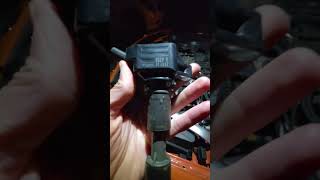
Used OEM Parts in Stock
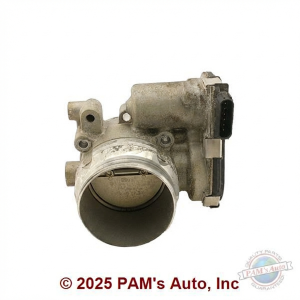
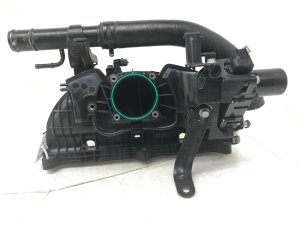
New Aftermarket Parts Available


The information in this article is provided for general reference and educational purposes only. Vehicle specifications, procedures, and part compatibility can vary by production date, trim level, and region. Always consult your vehicle's factory service manual and verify part numbers before purchasing or performing repairs. Safety-critical components such as airbags, seat belts, and braking systems should be installed by a qualified professional.
- Genesis G70:
- 🧭 Diagnostic Flowchart
- 🎬 Helpful Videos
- 🛍️ Shop This Part
- What's Unique About the 2019-2024 Genesis G70
- Symptoms You May Notice
- Most Likely Causes
- Rare But Worth Checking
- Diagnosis Steps
- Parts You'll Likely Need
- Related Codes That Often Appear With This One
- Technical Service Bulletins (TSBs) & Recalls
- Platform-Specific Known Issues
- Mechanic-Grade Diagnostic Values
- Hidden / Shadow Codes Worth Checking
- Scan Tool Commands That Help
- Wiring & Ground Locations
- Real Owner Repair Stories
- "I Checked Everything" — The Actual Cause
- When the Usual Fixes Don't Work
- OEM Part Supersession History
- Model Year Variations Within This Range
- Other Known Issues on This Vehicle
- Used vs. New Parts: Buying Guide for This Vehicle
- Real Owner Stories
- 2023 Genesis G70 3.3T — 46000 miles
- 2023 Genesis G70 3.3T — 19000 miles
- Related OBD-II Codes
- Frequently Asked Questions
- 🎟️ Get 5% Off