

P0300 on 2007-2014 GMC Acadia: Random Misfire Causes and Fixes
On the 2007-2014 GMC Acadia, a P0300 code often points to more than just bad spark plugs. The most common causes are failing ignition coils, but on the 2009+ direct-injected engines, carbon buildup on intake valves is a frequent culprit for cold start misfires. A stretched timing chain is also a serious and well-known possibility for this engine, often accompanied by codes P0008 and P0017. In some cases, loose or corroded ground wires can also cause intermittent misfires.
- P0300 on a 2007-2014 Acadia is a serious code that requires prompt attention to avoid engine or catalytic converter damage.
- Always check for other codes first. P0008 or P0017 strongly suggests a stretched timing chain, a known and expensive issue.
- For 2009-2014 models, if the misfire is worst when the engine is cold, suspect carbon buildup on the intake valves before replacing expensive parts.
- While ignition coils and spark plugs are common culprits, don't assume they are the problem without proper diagnosis, as this platform has other very common root causes.
- Driving with a flashing check engine light is highly discouraged as it can rapidly destroy your catalytic converters.
What's Unique About the 2007-2014 Gmc ACADIA

The first-generation GMC Acadia's 3.6L V6 engine has specific, well-documented vulnerabilities that often lead to a P0300 code. Models from 2009-2014 with the direct-injected (LLT) engine are highly susceptible to carbon buildup on the intake valves, causing cold start misfires as noted in GM Technical Service Bulletin #PIP5029C. Furthermore, the timing chains on both the early LY7 (2007-2008) and later LLT engines are notorious for stretching prematurely, which can cause the cam/crank correlation to be off, leading to random misfires. This is often signaled by companion codes like P0008 and P0017. A less common but notable issue is engine block porosity, which can cause coolant to leak into a cylinder and trigger a cold-start misfire, as detailed in TSB #18-NA-115.
Diagnostic Flowchart

Tap your situation to follow the diagnostic path that matches what you're seeing on this vehicle.
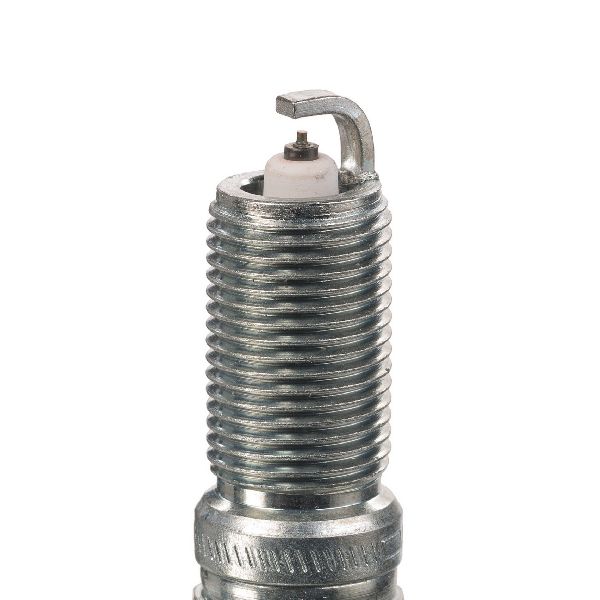
Generation note: This range covers the first-generation Acadia but includes two engine versions with a key difference. 2007-2008 models use the port-injected 3.6L LY7 V6. 2009-2014 models use the direct-injected 3.6L LLT V6, which is significantly more prone to carbon buildup on the intake valves, a common cause of cold start misfires. The LLT engine also has a different recommended spark plug (ACDelco 41-109 Iridium). The 2013 model year received a significant facelift with new styling and interior materials, but the powertrain remained the same 3.6L V6.
Symptoms You May Notice

- Rough or shaking idle, especially when the engine is cold.
- Flashing or steady Check Engine Light.
- Hesitation or stumbling during acceleration.
- Noticeable loss of engine power.
- Reduced fuel economy.
- Engine stalling.
- Strong fuel smell from the exhaust due to unburnt fuel.
- Rattling or ticking noise from the engine, especially after clearing codes, which can indicate a timing chain issue.
- Replacing only spark plugs when an ignition coil is bad.
- Replacing oxygen sensors, which are more likely to be a symptom of the misfire (due to unburnt fuel) rather than the cause.
- Replacing ignition components when the true underlying cause is stretched timing chains or severe carbon buildup.
- Replacing a single ignition coil on the rear bank instead of all three, leading to repeat labor costs when another original coil fails.
Most Likely Causes

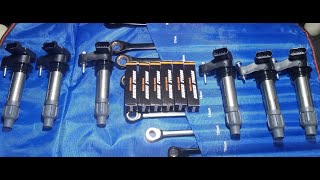
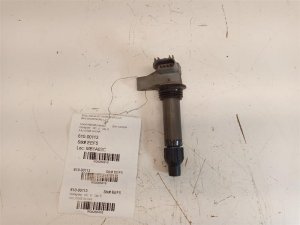
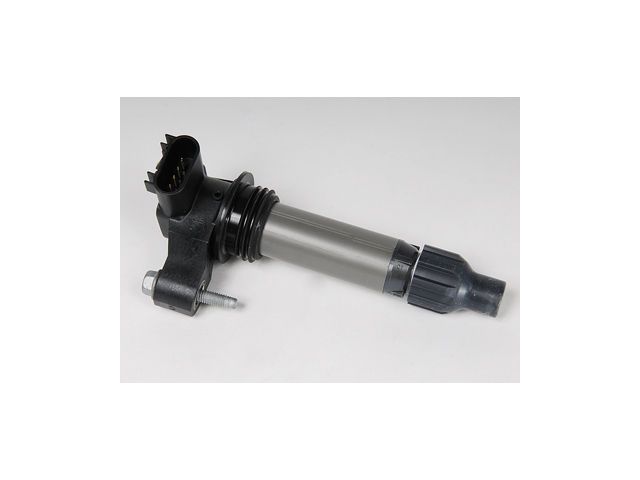
- Failing Ignition Coils or Worn Spark Plugs 🔴 High Probability → Shop Ignition Coil Ignition coils and spark plugs are regular wear-and-tear items. On the Acadia's V6, the rear three coils (Bank 1: cylinders 1, 3, 5) are located under the intake manifold, making their replacement labor-intensive and often deferred, leading to failure. It is highly recommended to replace all three rear coils and all six spark plugs if performing this job. An owner complaint (ODI #10633743) confirms a P0300 was fixed by replacing an ignition coil.
How to confirm: Inspect spark plugs for wear, fouling, or incorrect gap. To test a coil, you can swap it with a coil from a cylinder that is not misfiring (if you have other codes like P0301, P0302, etc.) and see if the misfire code follows the coil. A scan tool can monitor misfire counts per cylinder to help isolate the issue.
Typical fix: Replace the faulty ignition coil(s) and it is highly recommended to replace all six spark plugs at the same time. Use OEM-spec brands like ACDelco for best results. The rear bank requires removal of the upper intake manifold.
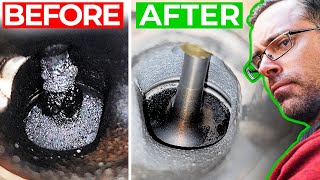
Est. part cost: $30-$70 per coil, $8-$20 per iridium spark plug - Intake Valve Carbon Buildup (2009-2014 LLT Engine) 🔴 High Probability The 3.6L LLT engine uses direct injection, which sprays fuel directly into the cylinder. This design means fuel doesn't wash over the intake valves, allowing oil vapor and combustion byproducts from the PCV system to bake onto them, forming hard carbon deposits. This disrupts airflow and causes misfires, particularly on a cold start. TSB #PIP5029C directly addresses this issue across multiple GM vehicles with direct-injected engines.
How to confirm: The primary symptom is misfiring that is worst on a cold start and improves as the engine warms up. A definitive diagnosis requires a borescope inspection of the intake valves with the intake manifold removed.
Typical fix: The carbon deposits must be physically removed. The most effective method is walnut shell blasting, a professional service that cleans the valves without damaging them. Chemical cleaning methods induced through the throttle body can also be attempted as described in TSB #PIP5029C, but may be less effective for heavy buildup.
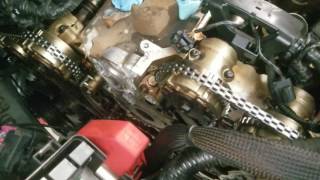
Est. part cost: $20-$50 for chemical cleaners, or $400-$800 for a professional walnut blasting service. - Stretched Timing Chains 🟡 Medium Probability → Shop Engine Timing Chain The 3.6L V6 used in this generation is notorious for premature timing chain stretching due to factors like long oil change intervals and the original chain design. This causes the camshaft timing to deviate from the crankshaft timing, leading to poor engine performance and misfires. An owner complaint (ODI #10887969) explicitly links P0300 with timing chain failure codes P0008 and P0017.
How to confirm: The most telling sign is the presence of codes P0008, P0017, P0018, or P0019 along with P0300. A mechanic can confirm the chain stretch by reading cam/crank correlation data with an advanced scan tool. A rattling noise from the front of the engine (passenger side) is also a strong indicator.
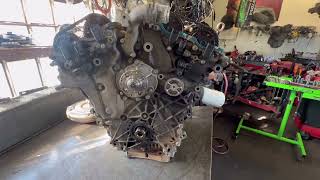
Typical fix: This is a major and expensive repair that involves replacing all three timing chains, the tensioners, and the guides. It is labor-intensive, often requiring the engine to be partially dropped from the vehicle. It is critical to use an updated timing chain kit.
Est. part cost: $250-$600 for a complete timing chain kit (e.g., Cloyes 9-0753S or ACDelco kit). - Clogged or Faulty Fuel Injectors ⚪ Low Probability → Shop Fuel Injector Fuel injectors, especially on direct injection models, can become clogged over time, leading to an improper fuel spray pattern and a lean condition that causes misfires. This can sometimes be exacerbated by using lower-quality fuel.
How to confirm: A fuel injector balance test can be performed with a professional scan tool. One can also swap injectors between cylinders to see if a specific misfire code (e.g., P0301) follows the injector. For DI injectors, this is a much more involved job.
Typical fix: Replace the faulty fuel injector. It's often recommended to replace them as a set if they are high mileage. Using a quality fuel system cleaner is a common first step to try and resolve a sticking injector.
Est. part cost: $40-$100 per injector (port), $70-$150 per injector (direct injection)
Rare But Worth Checking
- Vacuum Leak: A leak in the intake manifold gasket or a cracked vacuum hose can introduce unmetered air, leaning out the air/fuel mixture and causing random misfires. A common source is a failed or cracked PCV tube or valve cover.
- Low Fuel Pressure: A weak fuel pump or a clogged fuel filter can starve the engine of fuel, leading to misfires across all cylinders, especially under load. On LLT engines, this could also involve the high-pressure fuel pump.
- Clogged Catalytic Converter: → Shop Catalytic Converter A restricted exhaust can create excessive backpressure, causing the engine to run poorly and misfire. This is often a consequence of long-term misfiring which melts the converter's internal structure, not the initial cause.
- Loose or Corroded Ground Wires: A loose or corroded engine or coil ground strap can cause intermittent electrical issues for the ignition system, leading to random misfires. TSB #PIP5038B points to checking ignition coil grounds on the engine block for 2009 models. One common ground point is on the left (front) side of the engine block.
- Engine Block Porosity / Coolant Leak: → Shop Engine Block A rare but documented issue in TSB #18-NA-115 describes engine block porosity allowing a small amount of coolant to leak into a cylinder when cold. This causes a cold-start specific misfire that disappears when the engine warms up. Diagnosis involves adding dye to the coolant and checking the cylinder with a borescope.
Diagnosis Steps
- Scan for all stored DTCs. The presence of codes like P0008/P0017 immediately points towards a probable timing chain issue.
- Analyze freeze frame data to determine the engine conditions (speed, load, temperature) when the misfire occurred. Misfires only on a cold start strongly suggest carbon buildup on 2009+ models or a potential coolant leak.
- Check live data for misfire counts on each cylinder to see if the misfire is truly random or concentrated on one bank or specific cylinders.
- Inspect the ignition system. Remove and check the spark plugs for wear, oil fouling, or damage. Test ignition coils by swapping them to see if a specific misfire follows.
- Check for loose or corroded ground straps, particularly the main engine-to-chassis grounds and the ignition coil grounds on the engine block.
- If a 2009+ model has cold start misfires, use a borescope to visually inspect the intake valves for carbon buildup.
- Check for vacuum leaks using a smoke machine or by carefully spraying carb cleaner around the intake manifold gaskets and vacuum hoses while listening for a change in engine idle.
- Perform a fuel pressure test to rule out a weak fuel pump or clogged filter. Check both low and high pressure systems on DI engines.
- If timing chain codes are present or suspected, consult a professional to verify cam/crank correlation with a scan tool or oscilloscope.
Parts You'll Likely Need
- Ignition Coil
(OEM #12632479)— A very common failure item causing misfires. When one fails, others may be near the end of their service life. Replacing in sets, especially the rear bank, is recommended. - Iridium Spark Plugs
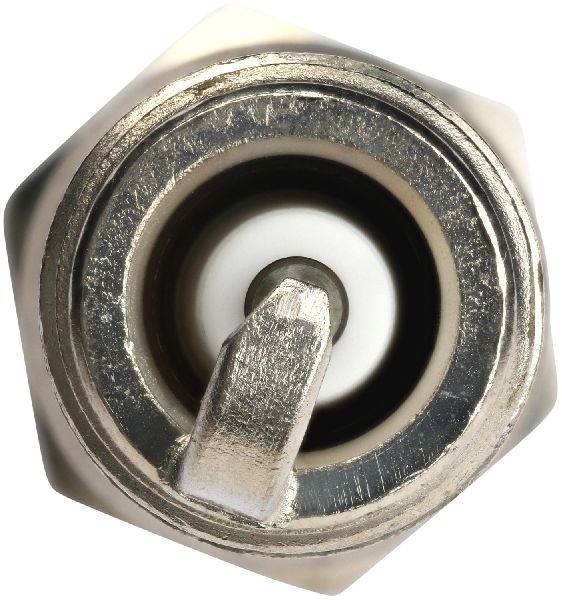
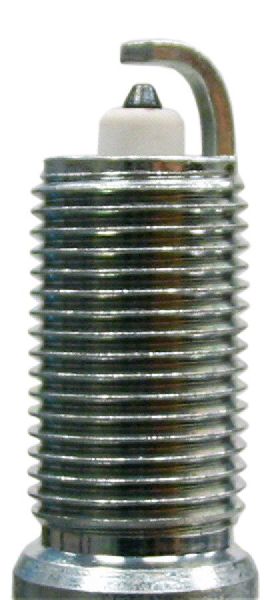
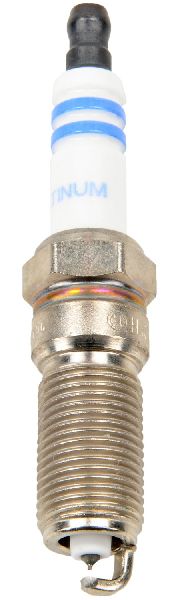
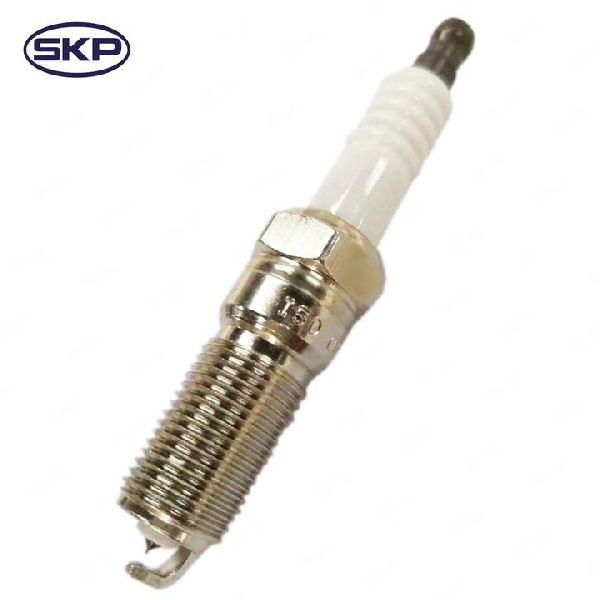
(OEM #41-109)— A required maintenance item that is often the source of misfires. Should always be replaced when replacing coils, especially when the intake manifold is removed. - Timing Chain Kit — A well-known failure point on the 3.6L V6. If codes P0008 or P0017 are present, this is the likely cause of the P0300.
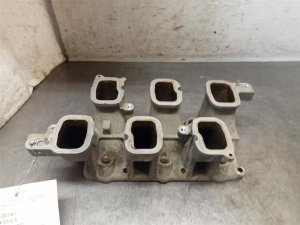
- Intake Manifold Gasket Set — Required when removing the intake manifold to access the rear ignition coils or to inspect/clean intake valves.
Related Codes That Often Appear With This One
- P0301-P0306 — These are specific cylinder misfire codes (e.g., P0301 for Cylinder 1). They often appear with P0300 when the computer can detect both random and specific misfires.
- P0008, P0017 — These codes indicate a correlation problem between the crankshaft and camshaft positions. On the Acadia, they are a strong indicator of stretched timing chains, a common root cause for a P0300. [ODI #10887969]
- P050D — This code means "Cold Start Rough Idle." It can appear alongside P0300 and points towards issues like intake valve carbon buildup or, in rarer cases, coolant intrusion into the cylinder as mentioned in TSBs #PIP5628G and #20-NA-166.
Technical Service Bulletins (TSBs) & Recalls
- 18-NA-115: Addresses cold start misfire (P0300) potentially caused by rare engine block porosity leading to coolant leaks into a cylinder.
- PIP5628G: Diagnostic aid for misfire codes P0300-P0306 and/or P050D.
- PIP5029C: Details engine misfires at cold start due to carbon buildup on intake/exhaust valves on direct-injected engines and recommends a decarbonization procedure.
- PIP5038B: For 2009 models, points to checking for poor ignition coil grounds (G112, G114) as a cause for misfire codes.
Platform-Specific Known Issues
- Premature Timing Chain Stretch: A widely documented issue on the 3.6L V6 engine leading to codes P0008, P0017, and random misfires (P0300).
- Intake Valve Carbon Buildup: Specific to the 2009-2014 direct-injection (LLT) engine, causing cold start misfires as documented in TSB #18-NA-115.
- Oil Leak into Spark Plug Tubes: Failing valve cover gaskets or spark plug tube seals can allow oil to pool around the spark plug, fouling the plug and shorting the ignition coil.
Mechanic-Grade Diagnostic Values
- Low-Side Fuel Pressure (2007-2008 LY7 Port Injection) — expected: 50-60 psi (345-414 kPa) with key on, engine off.. Failure: Pressure below 50 psi indicates a weak fuel pump or clogged filter.
- Low-Side Fuel Pressure (2009-2014 LLT Direct Injection) — expected: 36-72 psi (250-500 kPa) depending on demand.. Failure: Pressure outside this range suggests a fault with the fuel pump or fuel pressure control module.
- High-Side Fuel Pressure (2009-2014 LLT Direct Injection) — expected: Approximately 500 psi (3,447 kPa) at idle, increasing to over 2,000 psi (13,790 kPa) under load.. Failure: Significantly lower pressure indicates a failing high-pressure fuel pump (HPFP).
- Ignition Coil Primary Resistance — expected: 0.4 to 2.0 ohms.. Failure: A reading of infinite resistance (open circuit) or significantly outside the expected range. However, resistance tests are often inconclusive for modern coils.
- Ignition Coil Secondary Resistance — expected: 6,000 to 10,000 ohms (6k-10k Ω).. Failure: An open circuit or a reading far outside this range suggests a faulty coil.
Hidden / Shadow Codes Worth Checking
- Misfire Current/History Counters: While not a separate code, the GM GDS2 or a capable professional scan tool can display 'Misfire Current Counters' and 'Misfire History' for each individual cylinder. This data is crucial for diagnosing a P0300, as it shows which cylinders are misfiring the most, even if a specific P030x code isn't set. (see via GM GDS2 (Global Diagnostic System 2) or Tech2Win software, or high-end professional scan tools with GM-specific software.)
Scan Tool Commands That Help
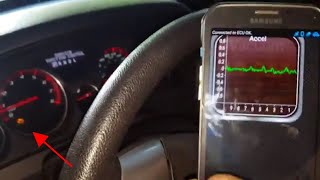
- GDS2 / Tech2Win: Misfire Graphic — To visually monitor the current misfire counts on all six cylinders in real-time while the engine is running. This helps pinpoint which cylinder(s) are contributing to the P0300 code under different engine loads and temperatures.
- GDS2 / Tech2Win: Fuel Injector Balance Test — To test for a clogged or failing fuel injector. The scan tool commands each injector to fire for a set duration and measures the corresponding pressure drop in the fuel rail. An injector with a smaller pressure drop than the others is likely restricted.
- GDS2 / Tech2Win: Cylinder Power Balance — This function deactivates one cylinder at a time and measures the drop in engine RPM. A cylinder that produces a smaller RPM drop when deactivated is contributing less power and is likely the source of the misfire.
Wiring & Ground Locations
- G110 — On the right front of the engine, mounted to the cylinder head.. This is a primary ground for Bank 2 (front bank) ignition components. A loose or corroded connection here can cause intermittent misfires on cylinders 2, 4, and 6.
- G113 — Located on the left side of the engine, at an engine-to-transmission stud.. This is a primary ground for Bank 1 (rear bank) ignition components. A loose or corroded connection here can cause intermittent misfires on cylinders 1, 3, and 5.
- Ignition Coil Ground (Video Documented) — A ground bolt located on the left rear of the engine (Bank 1 side).. A technician in a video found this specific 8mm ground bolt was loose, causing intermittent misfires on cylinders 2, 4, and 6 (Bank 2), leading to a P0300 code and ultimately a melted catalytic converter.
Real Owner Repair Stories
- YouTube channel 'The ASE Mechanic' (2015 GMC Acadia) — P0300 with misfires specifically on cylinders 2, 4, and 6 (Bank 2).
❌ Tried (didn't work) The video implies standard checks were performed before finding the root cause.
✅ What actually fixed it A loose 8mm ground bolt on the left rear of the engine was found to be the cause of the intermittent misfires on the opposite bank. Tightening the ground resolved the electrical issue, though the catalytic converter had already been damaged from the persistent misfires. - YouTube channel 'Cold Start Garage' (2008 GMC Acadia 3.6L V6) — Violent engine shaking, flashing check engine light, P0300 code. Unplugging coils on cylinders 3 & 5 made no difference to the idle.
❌ Tried (didn't work) Swapping fuel injectors, Installing new spark plugs, Swapping known-good ignition coils to the dead cylinders
✅ What actually fixed it The definitive clue was a rattling/ticking noise that appeared immediately after clearing the trouble codes. This pointed to stretched timing chains, which was the actual root cause of the misfires.
"I Checked Everything" — The Actual Cause
- A P0300 with lean fuel trims can be caused by a cracked PCV valve cover or a faulty internal PCV diaphragm, especially on the LLT engine. This creates a vacuum leak that a smoke test might not easily reveal if the crack is internal or only opens under specific vacuum conditions. The fix is to replace the entire valve cover assembly.
OEM Part Supersession History
12590990, 12610626, 12618542→ACDelco D515C (GM 12632479)— Internal design and material improvements for reliability and resistance to electrical breakdown.
Heads up: The D515C is the widely accepted replacement for most 3.6L applications in this generation, but always verify fitment with the vehicle's VIN.
Model Year Variations Within This Range
- 2013-2014: The Acadia received a major facelift for the 2013 model year, including new front and rear-end styling, a redesigned interior with upgraded materials, and the introduction of the IntelliLink touchscreen interface. However, the 3.6L LLT V6 powertrain and its common issues (timing chains, carbon buildup) remained unchanged from the 2009-2012 models.
- 2007-2008: These models use the port-injected LY7 V6 engine (VIN '7'). They are not susceptible to carbon buildup on the intake valves like the later direct-injected LLT engines.
- 2009-2014: These models use the direct-injected LLT V6 engine (VIN 'D'). They are highly prone to intake valve carbon deposits causing cold start misfires.
Helpful Videos


Used OEM Parts in Stock
New Aftermarket Parts Available

The information in this article is provided for general reference and educational purposes only. Vehicle specifications, procedures, and part compatibility can vary by production date, trim level, and region. Always consult your vehicle's factory service manual and verify part numbers before purchasing or performing repairs. Safety-critical components such as airbags, seat belts, and braking systems should be installed by a qualified professional.
- Gmc ACADIA:
- 🧭 Diagnostic Flowchart
- 🎬 Helpful Videos
- 🛍️ Shop This Part
- What's Unique About the 2007-2014 Gmc ACADIA
- Symptoms You May Notice
- Most Likely Causes
- Rare But Worth Checking
- Diagnosis Steps
- Parts You'll Likely Need
- Related Codes That Often Appear With This One
- Technical Service Bulletins (TSBs) & Recalls
- Platform-Specific Known Issues
- Mechanic-Grade Diagnostic Values
- Hidden / Shadow Codes Worth Checking
- Scan Tool Commands That Help
- Wiring & Ground Locations
- Real Owner Repair Stories
- "I Checked Everything" — The Actual Cause
- OEM Part Supersession History
- Model Year Variations Within This Range
- 🎟️ Get 5% Off